
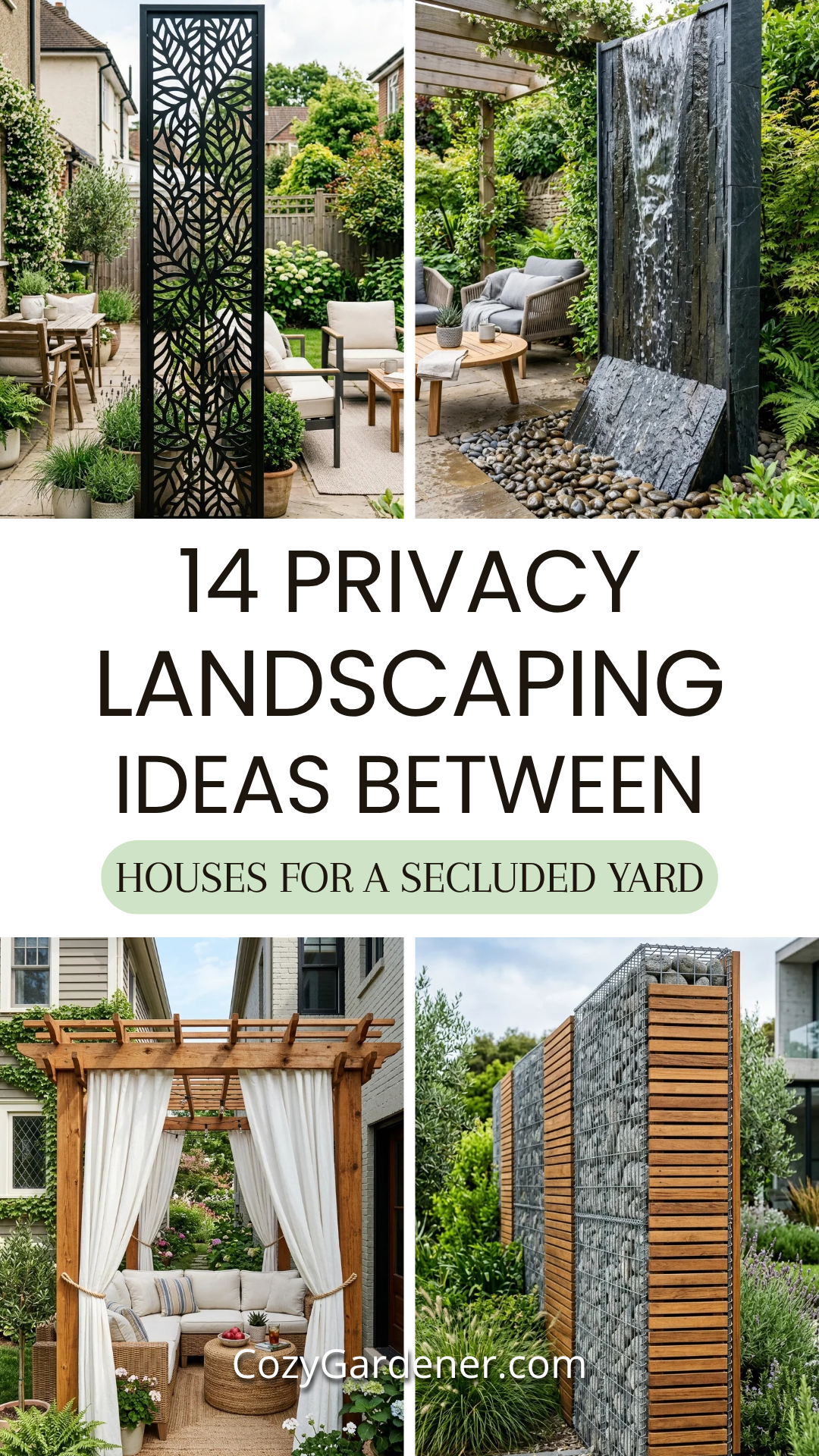
Living in close proximity to neighbors often means sacrificing the feeling of solitude in your own outdoor space. However, the narrow gap between two houses—often referred to as a “side yard” or “corridor”—holds immense potential for transformation. By utilizing strategic landscaping, you can turn these awkward spaces into beautiful, functional barriers that provide both visual and acoustic privacy.
Whether you are dealing with a neighbor’s window overlooking your patio or simply want to define your property line with something more aesthetic than a chain-link fence, these fourteen ideas offer a range of solutions from “living walls” to architectural screens.
1. Columnar Trees
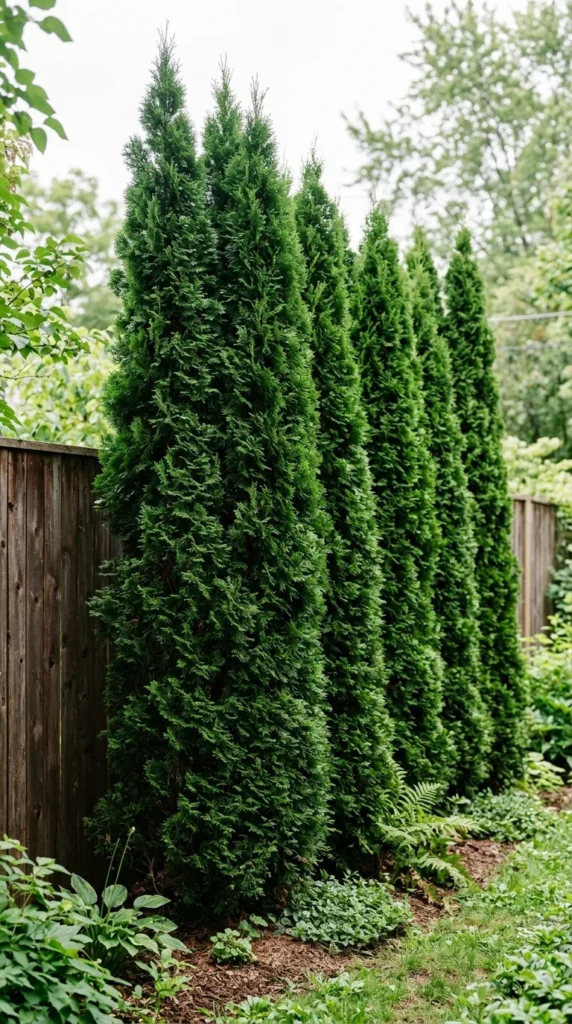
When horizontal space is limited, the only way to go is up. Columnar trees are specifically bred to grow tall and narrow, making them the perfect “living pillars” for narrow side yards.
- Italian Cypress: These iconic Mediterranean trees grow straight and tall, reaching heights of 30 feet while staying only 3 feet wide.
- Sky Pencil Holly: A slow-growing evergreen that maintains a vertical shape without the need for constant pruning.
- Benefits: They provide year-round greenery and can block views from second-story windows without encroaching on your walking path.
2. Trellis Panels
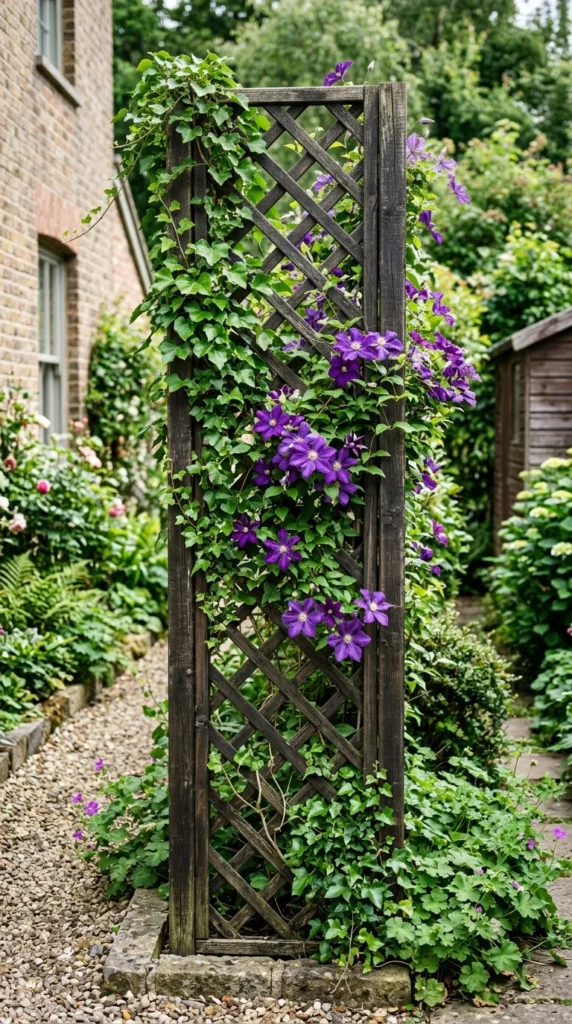
Trellises offer an elegant, semi-transparent boundary. Unlike a solid wall, a trellis allows light and air to circulate while providing enough of a physical barrier to feel secluded.
- Climbing Plants: Enhance the privacy by planting fast-growing climbers like Clematis, Star Jasmine, or Honeysuckle.
- Customization: You can paint or stain the wood to match your home’s exterior, creating a cohesive architectural look.
- Versatility: Trellises can be freestanding or attached to existing fences to add height where needed most.
3. Bamboo Screens
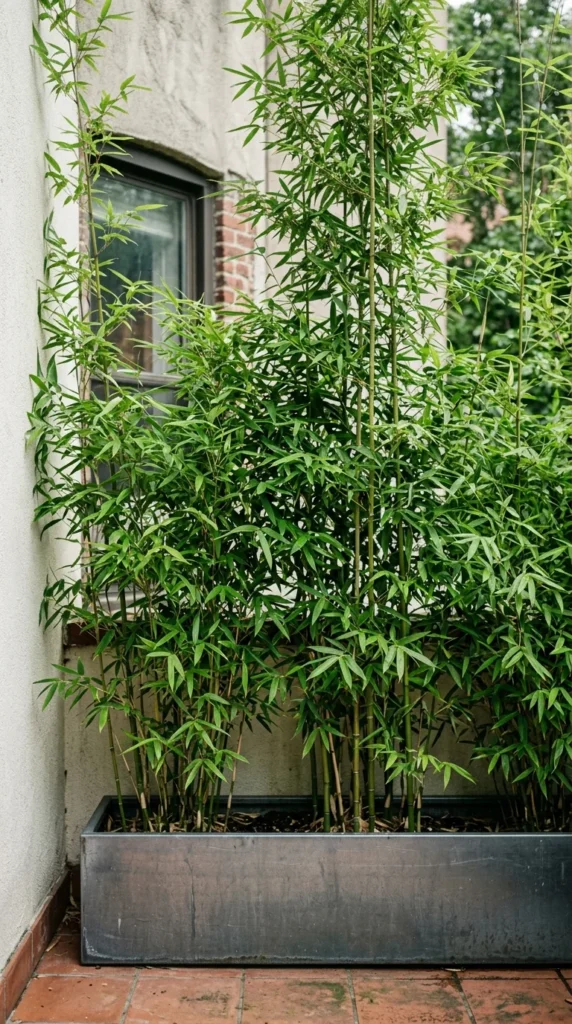
Bamboo is the ultimate privacy solution for homeowners who want results fast. It is one of the fastest-growing plants in the world and offers a contemporary, zen-like aesthetic.
- Clumping vs. Running: Always choose “clumping” bamboo varieties (like Bambusa multiplex) to ensure the plant stays contained and doesn’t invade your neighbor’s yard.
- Planters: For maximum control, plant bamboo in long, narrow troughs. This prevents root spread and allows you to position the “wall” exactly where you need it.
- Sound: The rustling leaves of bamboo provide a gentle white noise that helps mask the sound of nearby conversations.
4. Living Walls
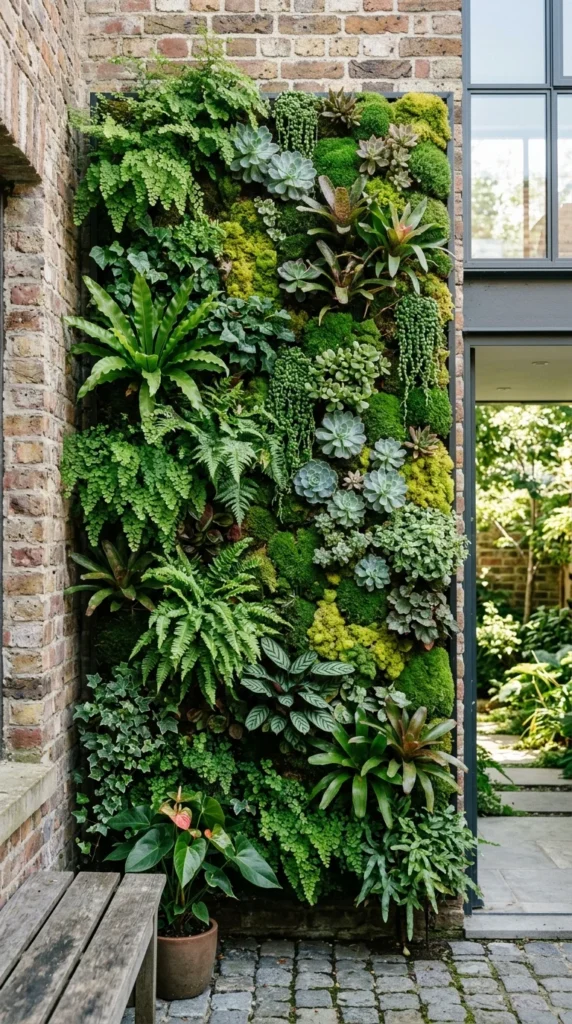
If you have a very narrow passage between houses, a vertical garden or “living wall” is a space-saving masterpiece. Instead of planting in the ground, you utilize the vertical plane of a wall or a dedicated frame.
- Modular Systems: Many kits allow you to snap together pockets for soil and plants.
- Plant Selection: Use a mix of ferns for shade or succulents for sun-drenched walls.
- Artistic Flair: A living wall acts as a piece of living art, drawing the eye away from the neighboring house and toward your own lush sanctuary.
5. Layered Shrubs
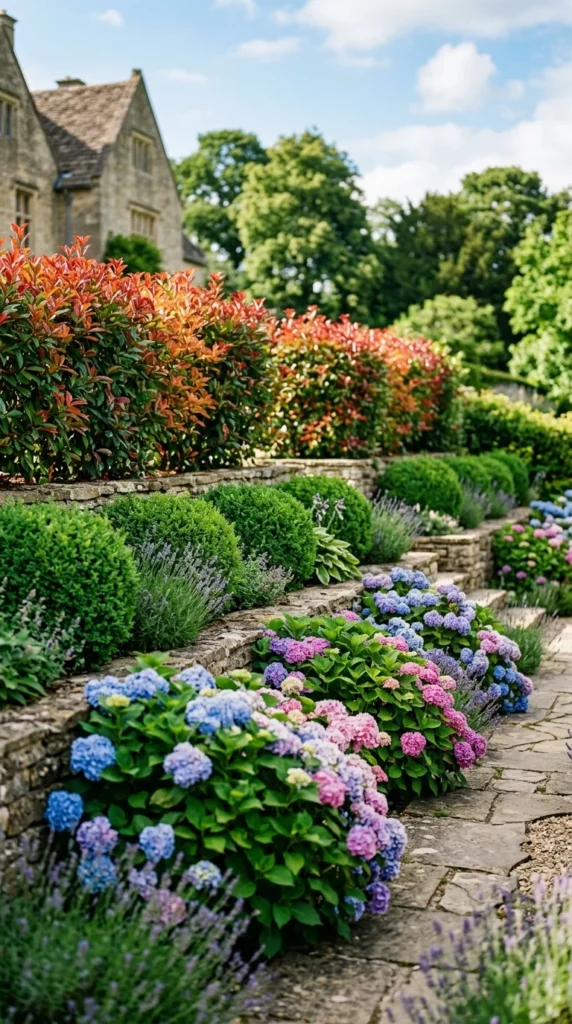
Single-row plantings can sometimes look a bit sterile. By layering shrubs of different heights, textures, and colors, you create a naturalistic woodland feel that feels more like a retreat and less like a barricade.
- Depth Perception: Place taller evergreens in the back (closest to the property line) and shorter, flowering shrubs in front.
- Color Variety: Incorporate plants with variegated leaves or seasonal blooms to keep the view interesting throughout the year.
- Wildlife: A layered approach provides habitats for birds, further enhancing the “nature” feel of your secluded yard.
6. Metal Screens
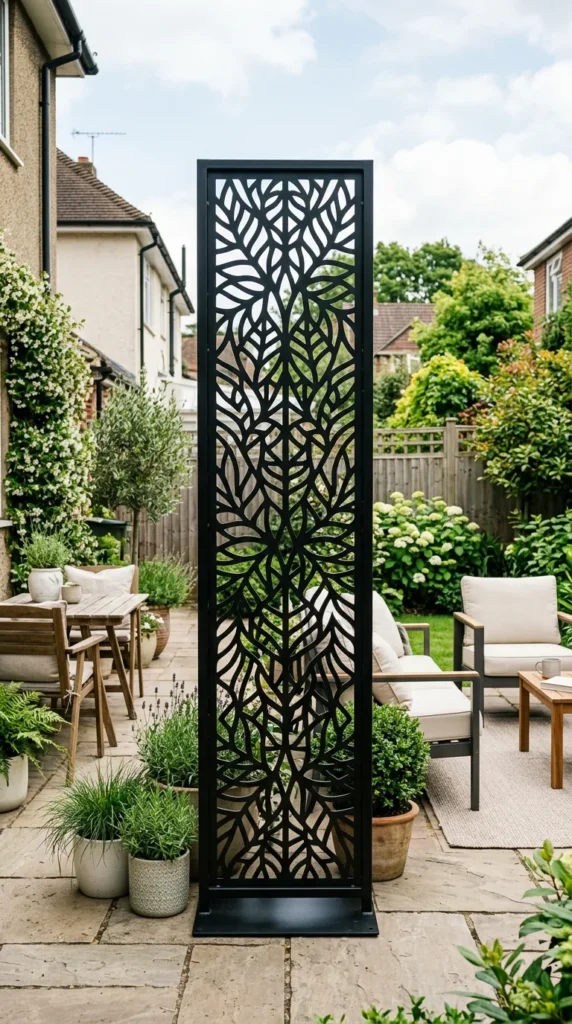
For a modern or industrial aesthetic, laser-cut metal privacy screens are a high-impact choice. These panels come in a variety of patterns, from abstract geometric shapes to organic leaf motifs.
- Durability: Materials like Corten steel develop a beautiful rust patina over time, while powder-coated aluminum remains sleek and maintenance-free.
- Light Play: During the day, they cast intricate shadows; at night, you can backlight them for a dramatic, glowing effect.
- Slim Profile: They take up virtually no ground space, making them ideal for the tightest gaps between buildings.
7. Ornamental Grasses
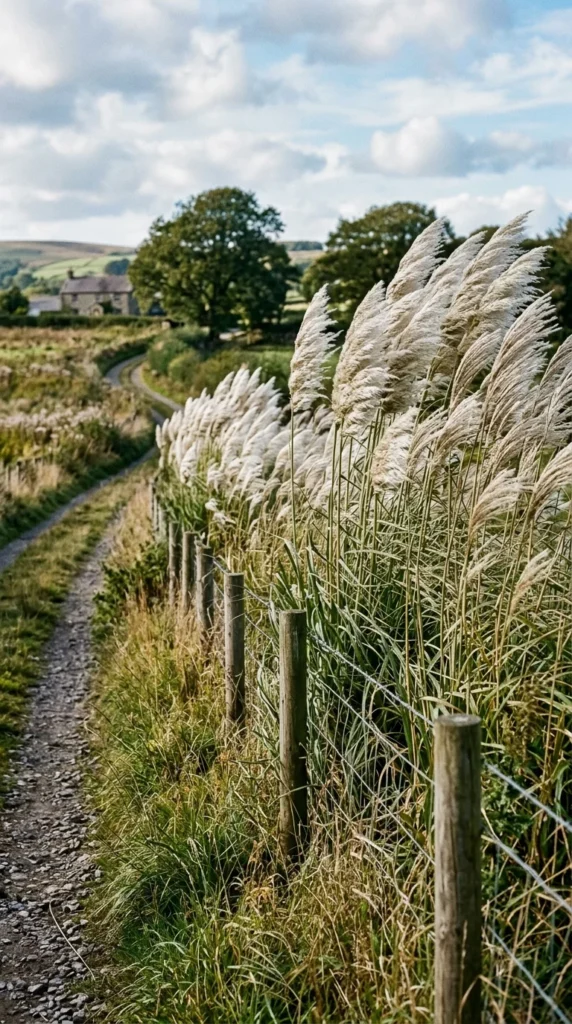
Tall ornamental grasses provide a “soft” privacy screen. They don’t create a solid wall, but their dense, swaying plumes create a visual blur that provides enough seclusion for most backyard activities.
- Movement: Unlike trees or fences, grasses move beautifully in the breeze, adding a dynamic element to your landscape.
- Growth: Varieties like Miscanthus or Pampas Grass can grow 6 to 10 feet tall in a single season.
- Winter Interest: Many grasses maintain their structure through the winter, providing privacy even when the flowers have faded.
8. Water Walls
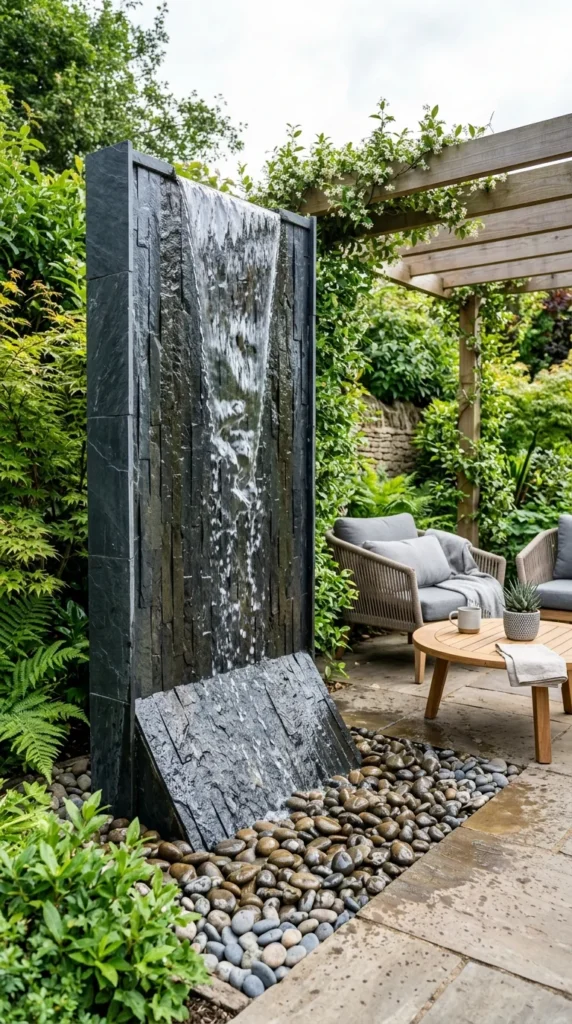
Privacy isn’t just about what you see—it’s also about what you hear. In many suburban settings, the sound of neighbors talking or cars passing can break the illusion of solitude.
- Acoustic Buffer: A vertical water wall or a bubbling fountain creates “white noise” that masks unwanted sounds.
- Visual Focus: The movement of water creates a focal point that keeps your attention within your own yard boundaries.
- Cooling Effect: Water features can slightly lower the ambient temperature in a small, enclosed side yard during hot summer months.
9. Wooden Pergolas
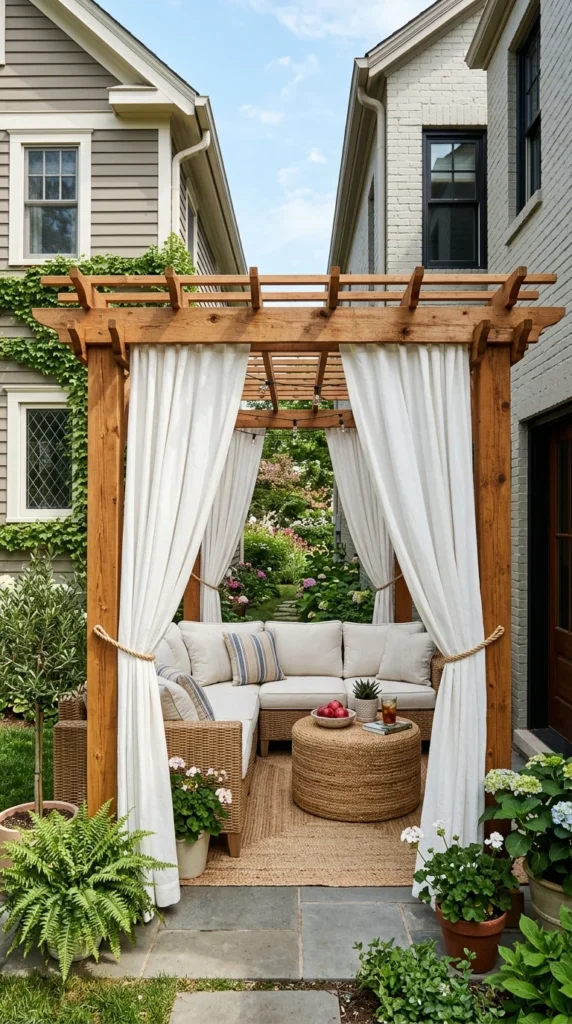
If your neighbor’s second-story windows look directly down into your yard, horizontal privacy is required. A pergola provides an architectural overhead structure that blocks the “downward” view.
- Curtains: Add outdoor-rated fabric curtains to the sides of the pergola for adjustable privacy. You can pull them closed when you’re entertaining and open them to let in the light.
- Climbing Vines: Wisteria or Grapevines growing over the top of a pergola create a thick, natural canopy.
- Room Feel: A pergola helps define the space as an “outdoor room,” making it feel much more intimate.
10. Formal Hedges
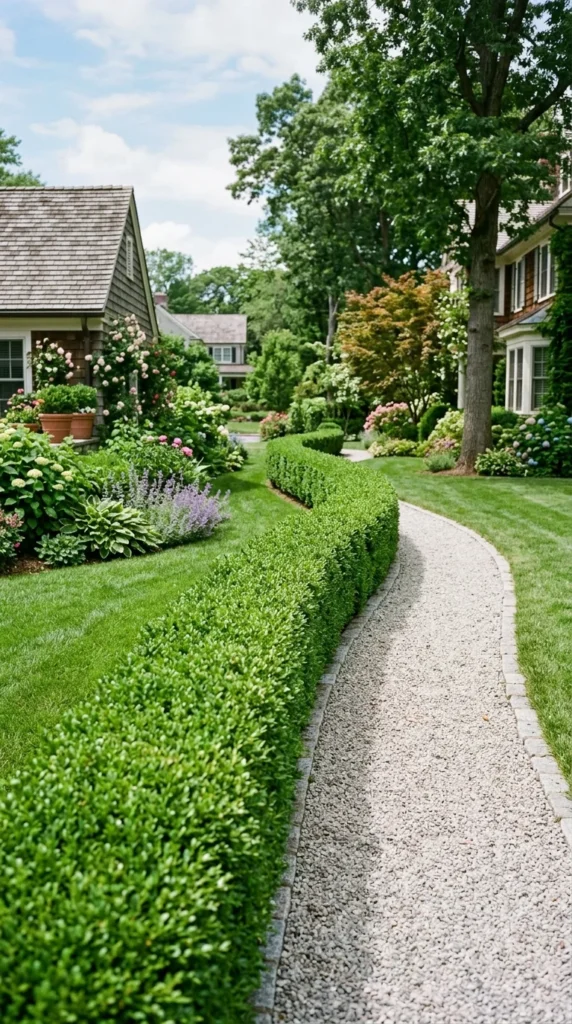
For those who prefer a clean, traditional look, the formal hedge is the gold standard. It creates a crisp, green “wall” that looks intentional and sophisticated.
- Boxwood: The classic choice for lower to mid-height hedges.
- Privet: A faster-growing option that can be sheared into a tall, dense wall.
- Maintenance: Formal hedges require regular pruning to keep their sharp edges, making them a great choice for homeowners who enjoy gardening or have a landscaping service.
11. Raised Planters
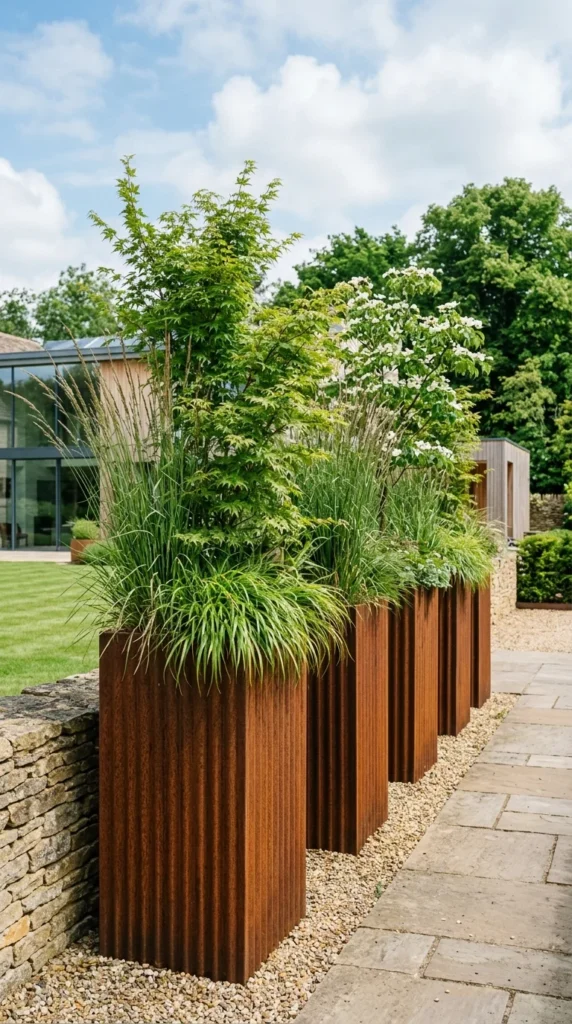
Sometimes, you just need a little extra height to block a specific sightline. Raised beds or tall planters elevate your plants, giving them a “head start” on privacy.
- Strategic Placement: Position a tall planter directly in front of a neighbor’s window to block the view without having to plant a full row of trees.
- Ergonomics: Raised beds are easier to maintain as they require less bending over.
- Material Mix: Use wood, stone, or metal planters to add a new material texture to your side yard.
12. Gabion Walls
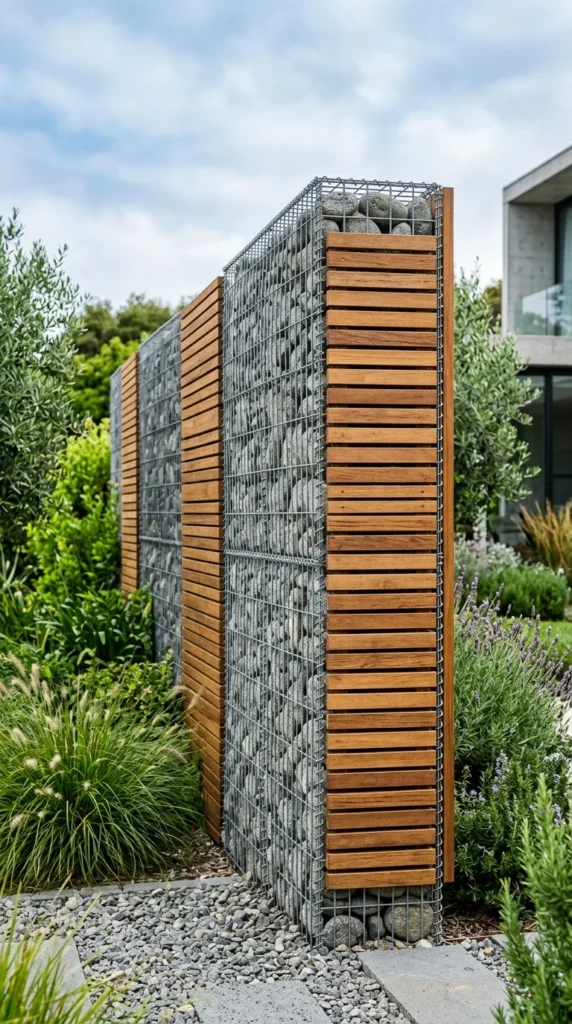
Gabion walls consist of wire baskets filled with stone, glass, or even wood logs. They are incredibly sturdy, provide excellent sound insulation, and offer a unique, rugged texture.
- Modern Design: Gabions are frequently used in contemporary landscape design for their clean lines and natural materials.
- Drainage: Because they are made of loose stone, they provide excellent drainage, which is often a concern in the narrow passages between houses.
- Longevity: These walls are virtually indestructible and require zero maintenance once installed.
13. Strategic Containers
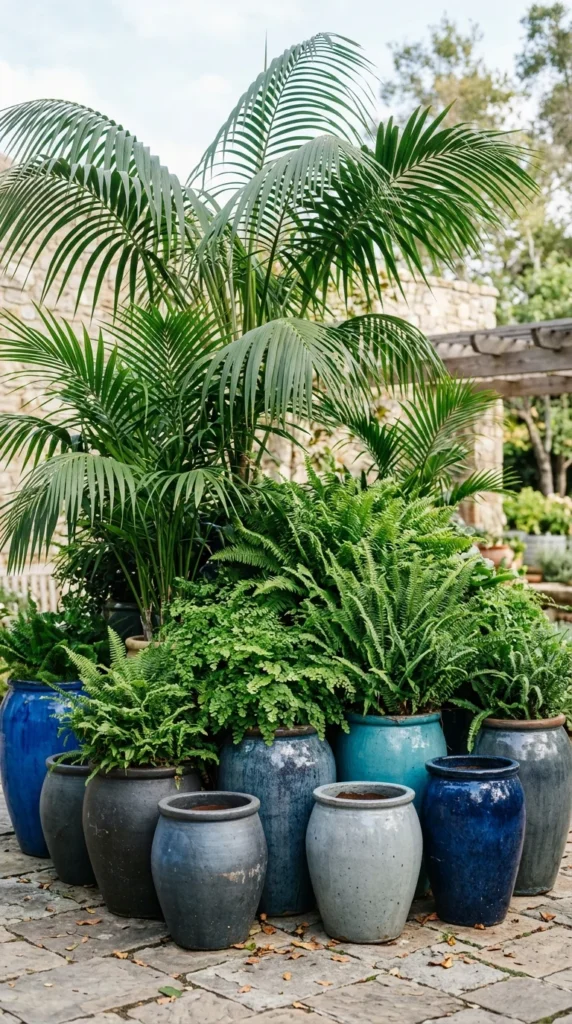
If you aren’t ready for a permanent landscaping project, or if you are renting, a container garden is the perfect solution. Large pots can be moved and rearranged as your privacy needs change.
- Height Variation: Use pots of different heights to create a staggered, impenetrable wall of foliage.
- Seasonal Flexibility: You can swap out plants as the seasons change, ensuring your privacy screen looks beautiful year-round.
- Portability: If you move, your privacy screen goes with you!
14. Arborvitae Borders
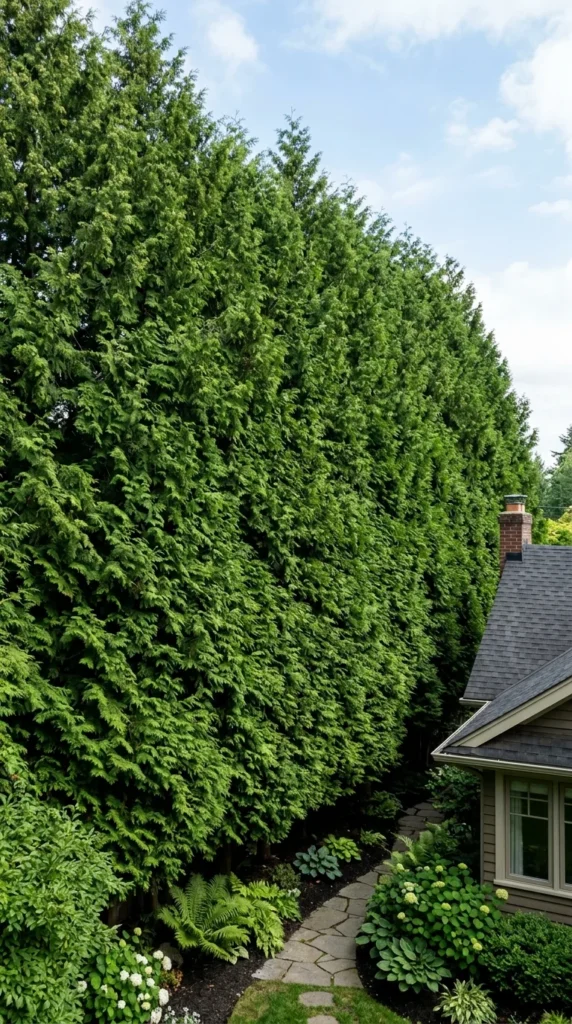
The Arborvitae (specifically the ‘Green Giant’ or ‘Emerald Green’ varieties) is perhaps the most popular privacy plant for a reason. It grows in a tight, pyramidal shape and remains thick from the ground to the tip.
- Year-Round Privacy: As an evergreen, it never loses its leaves, providing 365 days of seclusion.
- Windbreak: These dense trees also act as an excellent windbreak, protecting your patio or deck from harsh gusts.
- Low Maintenance: Once established, they require very little care other than occasional watering during dry spells.