The picket fence is more than just a boundary; it is a symbol of domestic charm and a quintessential element of curb appeal. For decades, homeowners have turned to this classic architectural feature to define their property lines while maintaining an open, welcoming atmosphere. Unlike privacy fences that wall off the world, a picket fence invites the eye in, framing a home’s landscape and highlighting its unique character. Whether you are aiming for a traditional cottage look, a sleek modern aesthetic, or a rustic woodland feel, the right picket fence can transform a standard front yard into a neighborhood showstopper.
1. Classic White
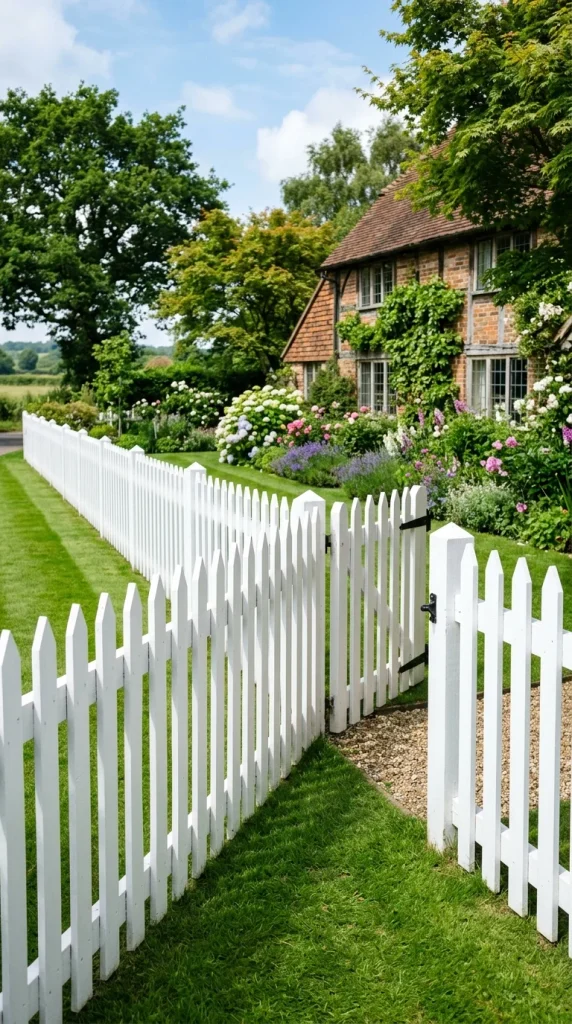
There is perhaps no greater icon of suburban elegance than the classic white picket fence. This style works exceptionally well with traditional architectural designs, such as Colonial, Cape Cod, and Victorian homes. The bright white finish provides a clean, crisp contrast against green lawns and colorful flower beds. To achieve this look, most homeowners opt for wooden pickets—typically cedar or pine—treated with a high-quality outdoor paint. The beauty of the classic white fence lies in its simplicity and its ability to make any home feel instantly more polished and “finished.”
2. Natural Cedar
For those who prefer a more organic, earthy aesthetic, natural cedar is the premier choice. Cedar is naturally resistant to rot and insects, making it as durable as it is beautiful. When left unstained, cedar will eventually weather to a soft, silvery-gray patina that blends seamlessly into wooded or coastal environments. However, applying a clear sealant or a light honey-toned stain can preserve the wood’s original warmth for years. This style is perfect for Craftsman homes or any property looking to emphasize a connection with nature.
3. Scalloped Tops
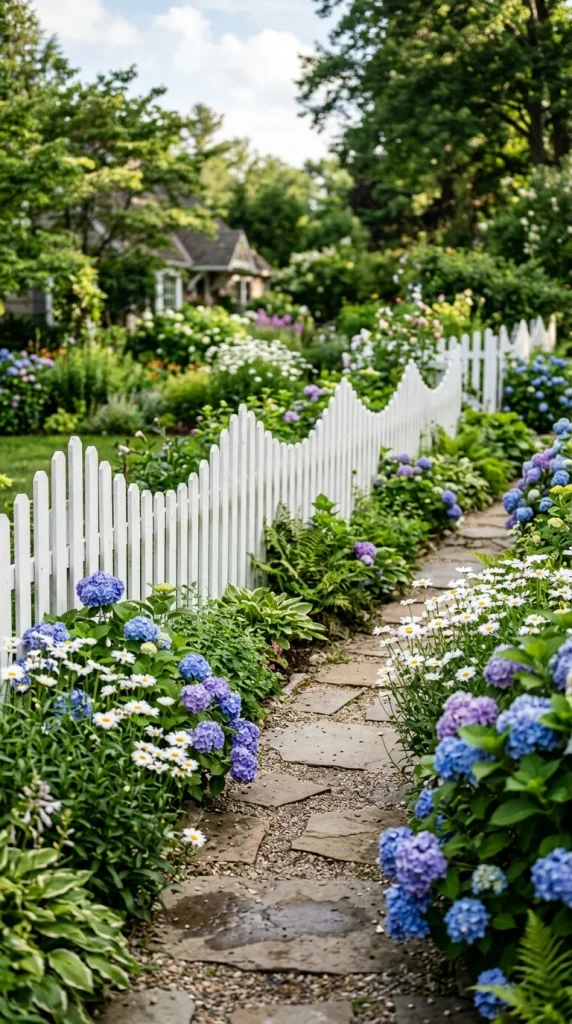
Scalloped picket fences add a touch of rhythmic elegance to a property. Instead of a uniform height, the pickets are cut so that the top line of the fence dips into a graceful curve between each post. This “scooped” look softens the perimeter of the yard and provides a more decorative, whimsical feel. It is an excellent choice for cottage-style gardens where soft lines and flowing greenery are the primary focus. The scalloped design can be deep and dramatic or subtle and shallow, depending on the desired level of visual interest.
4. Gothic Points
Gothic-style pickets are characterized by their ornate, pointed tops, which often resemble a spade or an arrowhead. This design is rooted in historical European architecture and adds a sense of formality and “old-world” charm to a home. The sharp points provide a slightly more defensive silhouette than rounded or flat tops, while still remaining inviting. Gothic pickets are particularly effective when paired with wrought-iron accents or traditional brick homes, lending an air of sophistication and historical gravity to the landscape.
5. Modern Black
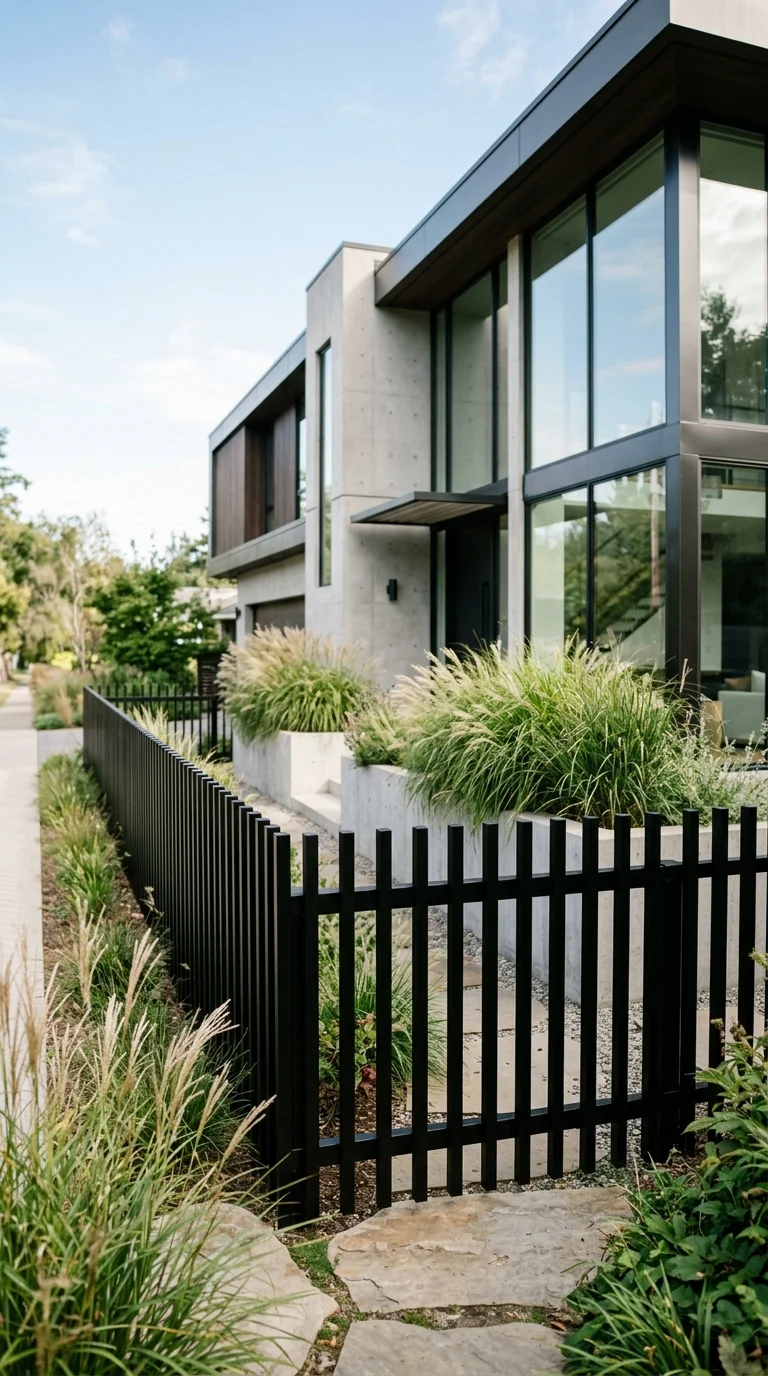
While picket fences are often associated with traditional styles, a matte black finish can instantly bring the concept into the 21st century. A black picket fence creates a bold, dramatic frame for the property, making the colors of the landscaping—especially neon greens and deep purples—pop with intensity. This look is highly popular for modern farmhouses or contemporary urban dwellings. By using thinner slats and a minimalist gate design, the modern black fence offers a sophisticated edge that feels both high-end and architecturally significant.
6. Vinyl Durability
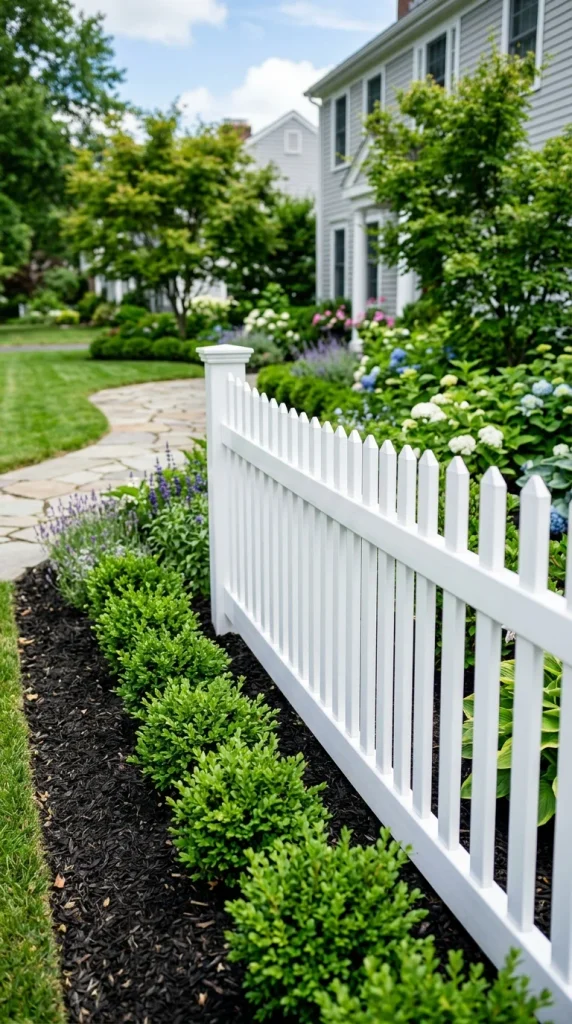
For many homeowners, the biggest drawback of a wooden fence is the maintenance. Vinyl picket fences offer the same aesthetic appeal as wood but with virtually zero upkeep. They don’t require painting, staining, or sealing, and they won’t rot, warp, or fall victim to termites. High-quality vinyl fences today are designed to mimic the look of real wood, often including textured grain finishes. They are an ideal solution for busy families or those living in harsh climates where wood might degrade quickly.
7. French Country
The French Country look is all about “lived-in” elegance. Instead of stark white, these fences are often painted in muted, “dusty” tones like sage green, French blue, or warm taupe. The pickets are often slightly wider, and the overall construction may feel a bit more substantial. To truly capture this aesthetic, allow climbing plants like jasmine, clematis, or rambling roses to weave through the slats. The goal is a look that feels romantic, antique, and perfectly integrated into a lush, blooming landscape.
8. Craftsman Squared
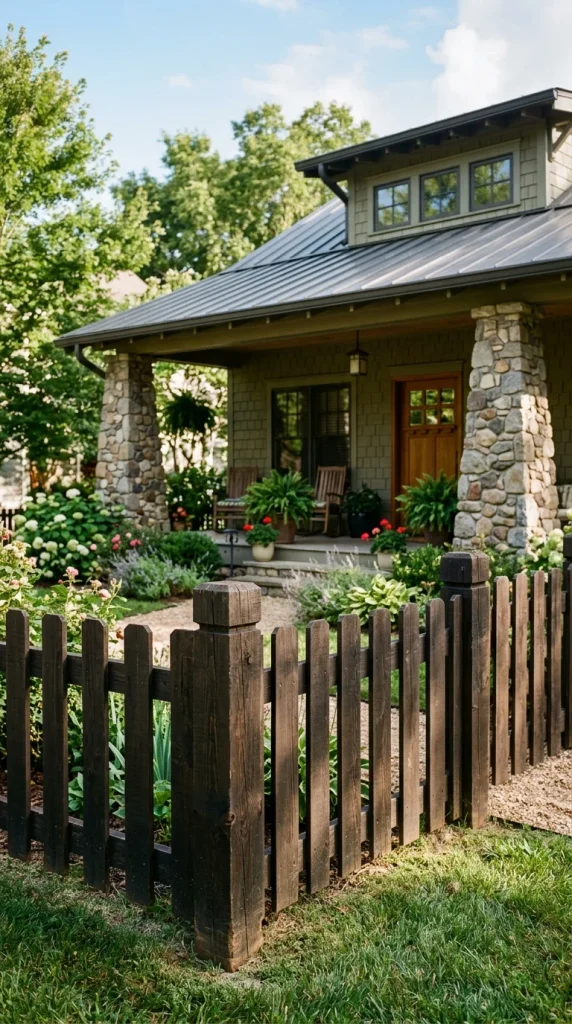
Craftsman architecture prizes heavy, horizontal lines and sturdy, functional beauty. A Craftsman-style picket fence usually features wider pickets with flat, squared-off tops rather than points. These fences are often stained in dark, rich earth tones like walnut or mahogany to match the trim of the house. The posts are frequently capped with decorative, flat “hats” that provide a finished, architectural look. This style communicates strength and permanence, making it a great choice for bungalows and ranch-style homes.
9. Mixed Materials
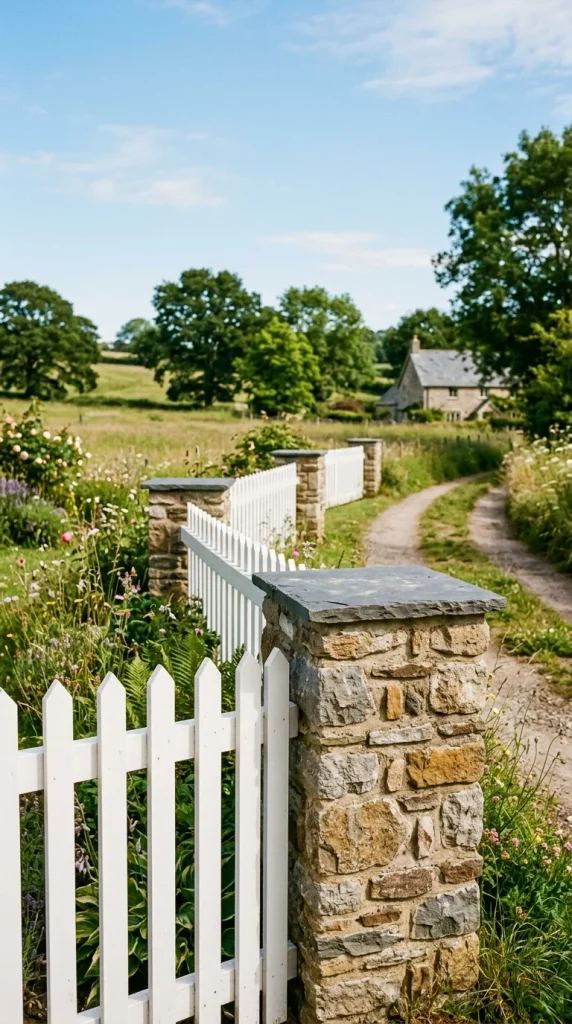
Combining a picket fence with other structural elements like stone or brick pillars creates a look of luxury and custom craftsmanship. By breaking up a long line of wooden pickets with heavy masonry posts, you add a sense of weight and architectural “anchor” to the property. This is a popular choice for larger estates or homes with prominent stone or brick accents. The contrast between the lightness of the pickets and the solidity of the stone creates a dynamic visual balance that boosts curb appeal significantly.
10. Horizontal Pickets
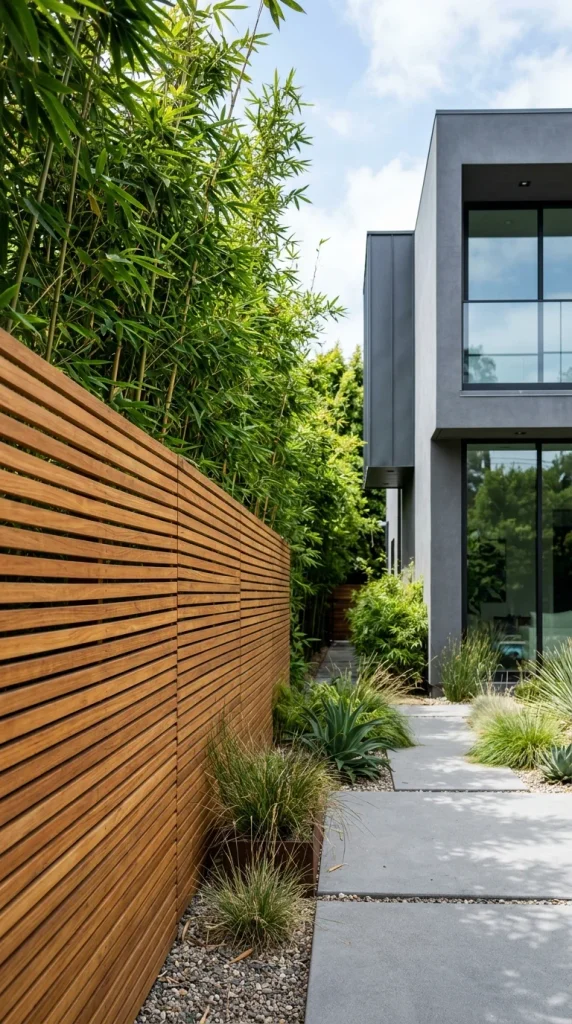
If you want to flip the script on tradition, consider a horizontal picket fence. This design uses the same thin slats as a traditional fence but orients them horizontally. This creates a “transitional” look that bridges the gap between traditional and modern. Horizontal lines have a widening effect, making a small front yard appear more expansive. When constructed with high-end woods like Ipe or Mahogany and finished with a clear coat, horizontal picket fences become a focal point of high-design landscaping.
11. Arched Gate Focal Point
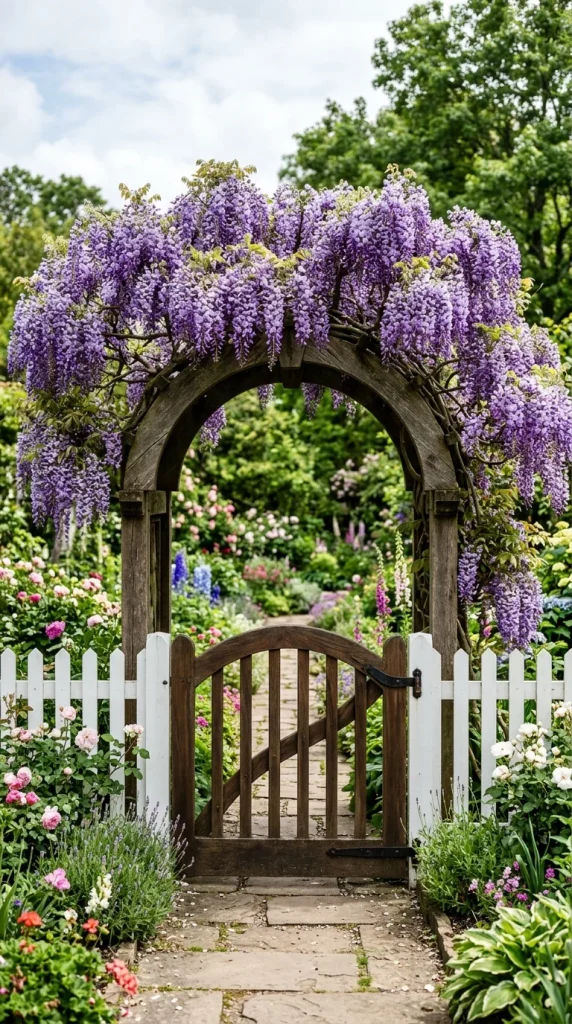
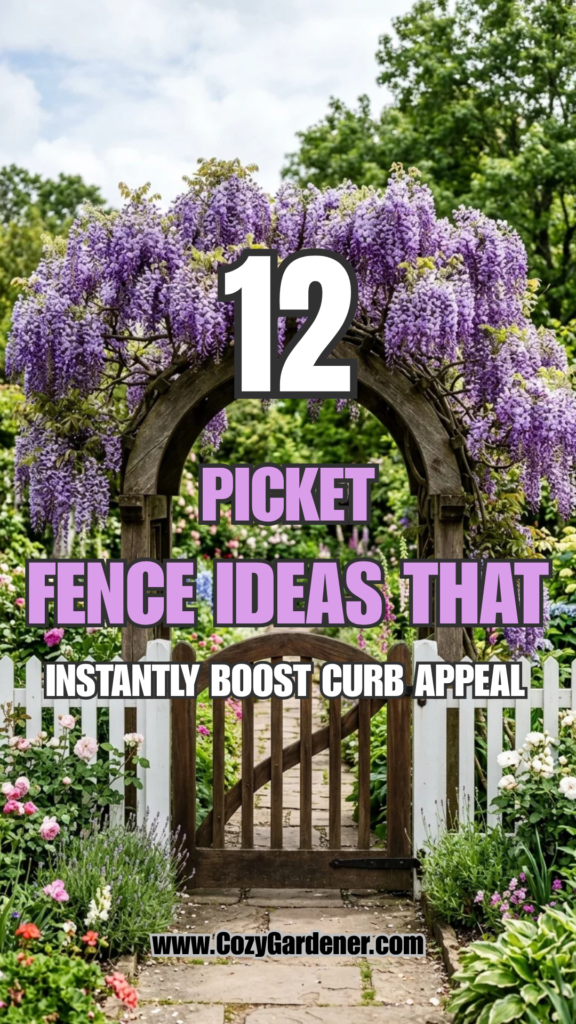
Sometimes, the best way to boost curb appeal is to focus on the entry point. Adding a tall, arched arbor or pergola over your picket fence gate creates a sense of “arrival.” It acts as a portal, framing the front door and inviting guests inside. This architectural feature provides a perfect structure for vertical gardening, allowing you to grow fragrant vines that enhance the sensory experience of entering the yard. Even a simple fence is elevated to something extraordinary when paired with a well-designed, prominent gate.
12. Painted Pastel
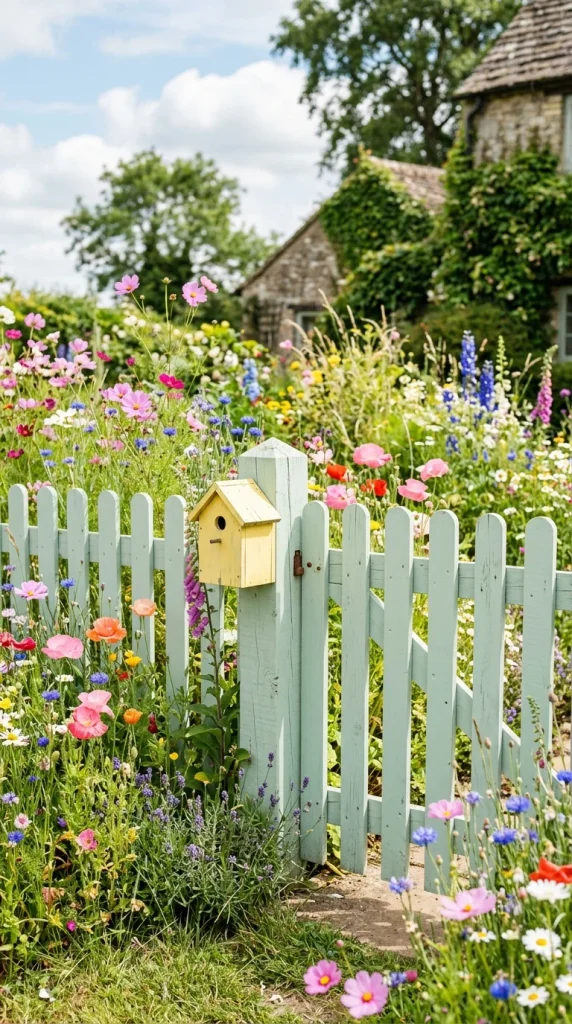
For a touch of whimsy and “cottagecore” charm, look beyond white and wood stains. Pastel-painted picket fences—in shades of pale yellow, soft mint, lavender, or baby blue—add a playful, welcoming personality to a home. This approach works best with smaller homes or seaside cottages where a pop of color feels appropriate and intentional. It’s a bold way to differentiate your home from the neighbors while maintaining the classic, friendly silhouette that only a picket fence can provide.