The picket fence is the quintessential symbol of the American dream, evoking feelings of nostalgia, security, and timeless charm. Beyond its symbolic value, a well-chosen picket fence defines your property boundaries while adding a layer of sophisticated curb appeal that few other landscaping elements can match. Whether you are aiming for a rustic cottage vibe, a clean modern aesthetic, or a stately traditional look, the right fence serves as the perfect frame for your home’s “portrait.”
In this comprehensive guide, we explore 24 unique picket fence ideas that will transform your front yard into a welcoming sanctuary. From classic timber designs to innovative modern materials, these ideas offer inspiration for every architectural style and budget.
1. Classic White
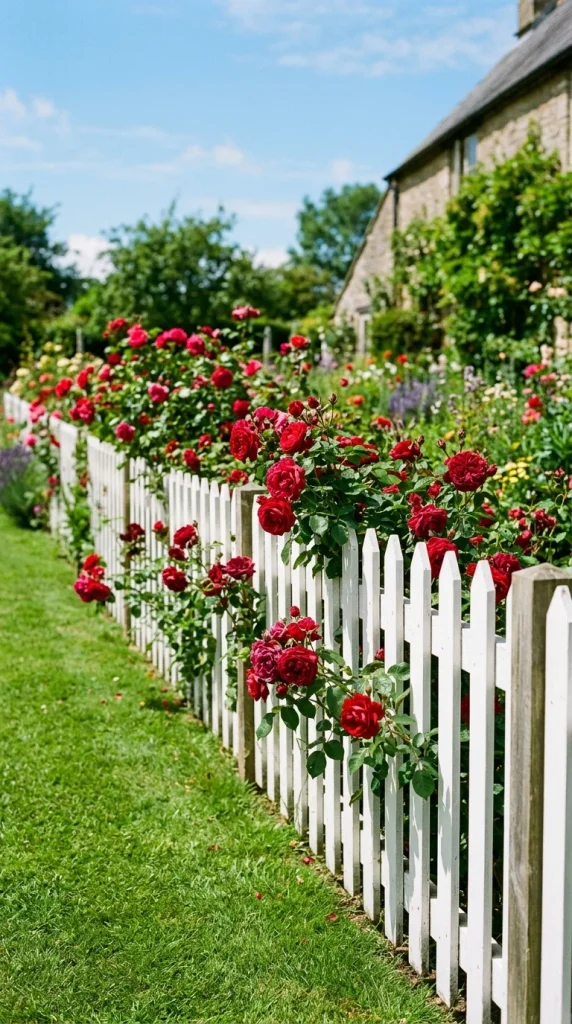
Nothing beats the timeless appeal of the classic white picket fence. Traditionally made of wood and painted in a crisp, clean white, this style complements almost any home architecture, from Victorian to Colonial. It provides a sharp contrast against a green lawn and serves as a bright backdrop for colorful flower beds. To keep this look fresh, regular maintenance including scraping and repainting every few years is essential to prevent peeling and weather damage.
2. Scalloped Top
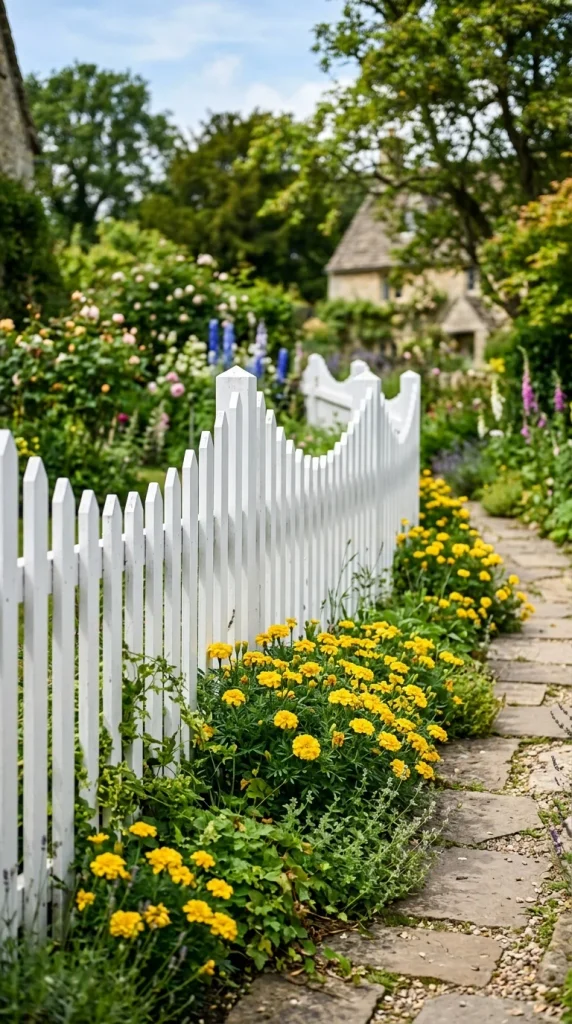
The scalloped picket fence adds a touch of elegance and movement to your yard. By varying the height of the pickets, a gentle downward curve is created between the posts, giving the fence a soft, flowing silhouette. This design is particularly effective for large front yards, as the repetitive “wave” pattern breaks up the visual monotony and guides the eye toward the home’s entrance.
3. Gothic Point
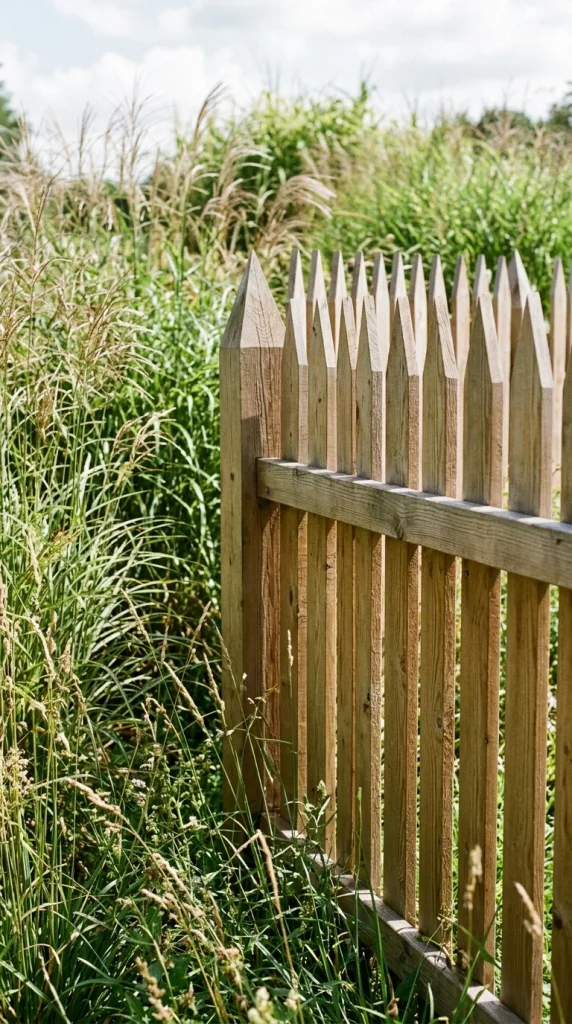
For those who want a bit of historical flair, the Gothic point picket is an excellent choice. Characterized by pickets that come to a sharp, decorative point, this style draws inspiration from medieval architecture. It offers a slightly more formal and imposing look than the standard flat or rounded top, making it a great choice for stately homes or properties looking to add a touch of drama to their perimeter.
4. Cedar Natural
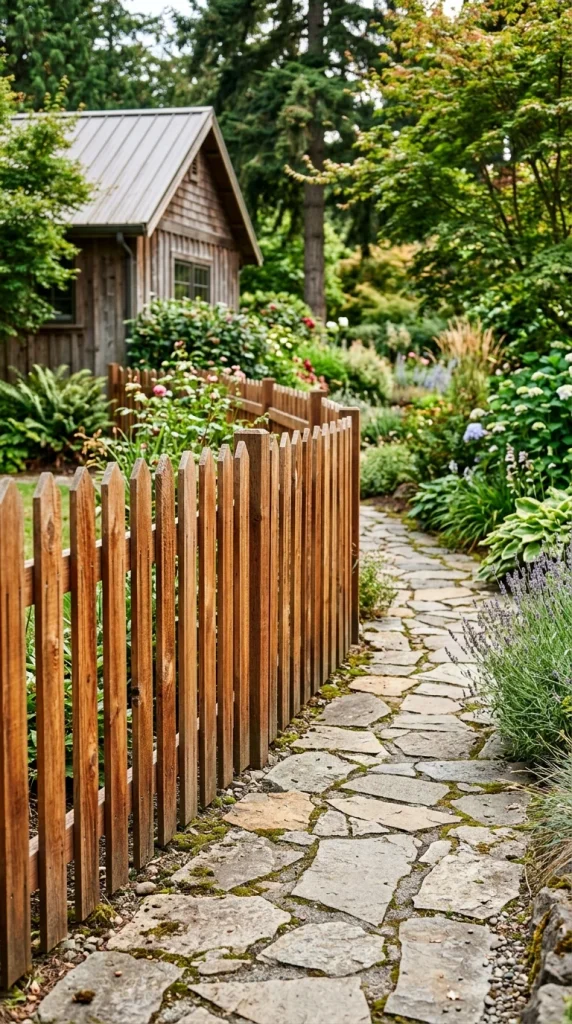
If you prefer a more organic, earthy feel, a natural cedar picket fence is the way to go. Cedar is naturally resistant to rot and insects, making it a durable choice that requires less chemical treatment. When left unpainted, it weathers over time to a beautiful silvery-gray, or it can be sealed with a clear coat to maintain its rich, warm honey tones. This style works perfectly with craftsman-style homes or woodland landscapes.
5. Low Profile
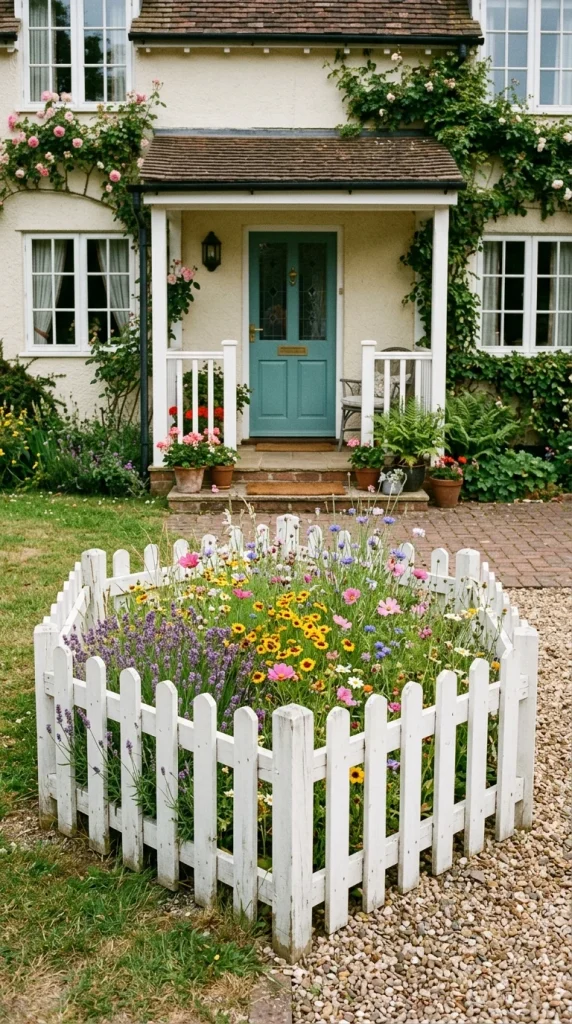
A picket fence doesn’t always have to be about security; sometimes, it’s purely about definition. A low-profile fence, usually standing between 18 and 24 inches tall, serves as a subtle border for your garden beds or lawn. It creates a clear boundary without obstructing the view of your landscaping or the house itself, making it ideal for small front yards that want to avoid feeling boxed in.
6. Arched Gate
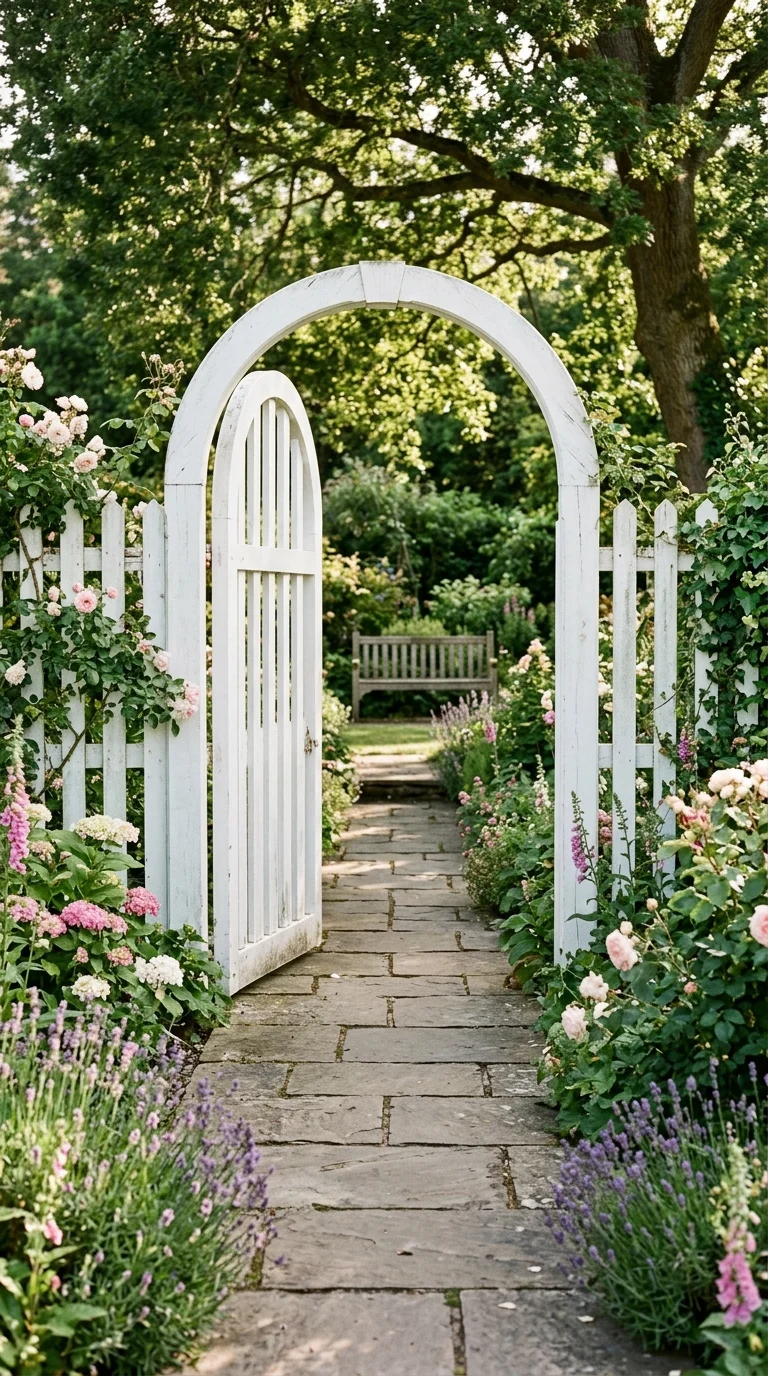
An arched gate acts as a magnificent focal point for your front yard. While the rest of the fence may be straight or scalloped, the gate rises into a graceful arch, signaling the main entrance with a sense of ceremony. This architectural detail adds height and visual interest, making your entryway feel more grand and inviting.
7. Modern Horizontal
While traditional pickets are vertical, the modern trend has turned the design on its side—literally. Horizontal picket fences offer a sleek, contemporary look that emphasizes the width of the property. Using dark stains or composite materials in gray or black creates a sophisticated, high-contrast look that pairs beautifully with modern, minimalist architecture.
8. Mixed Materials
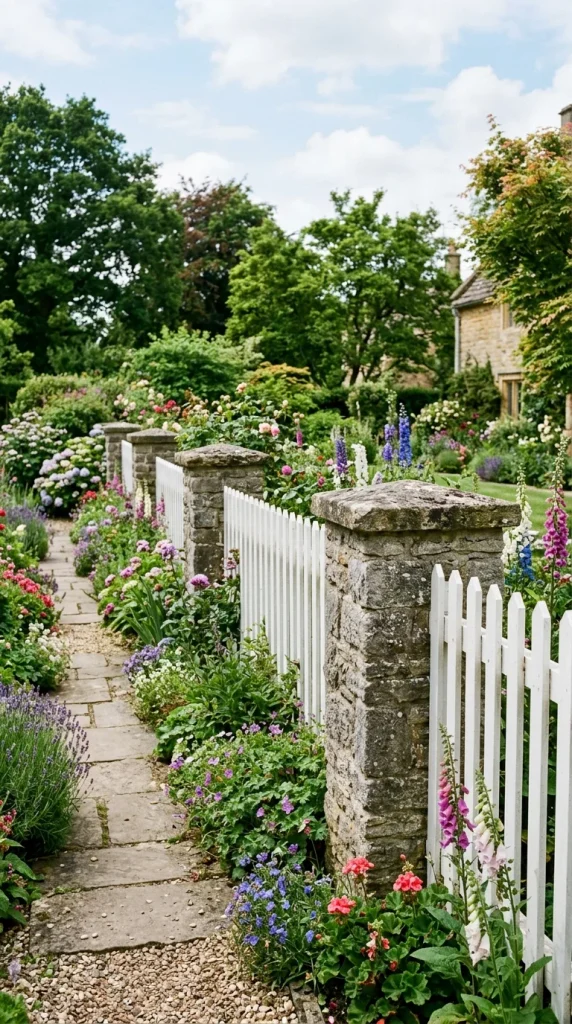
Combining wood pickets with stone or brick pillars creates a sense of permanence and luxury. The “heavy” feel of the masonry posts provides a sturdy anchor for the “lighter” wooden or vinyl pickets. This look is often seen in high-end estates and provides an excellent opportunity to match the fence posts to the stonework or brick used on the house itself.
9. Shadowbox Style
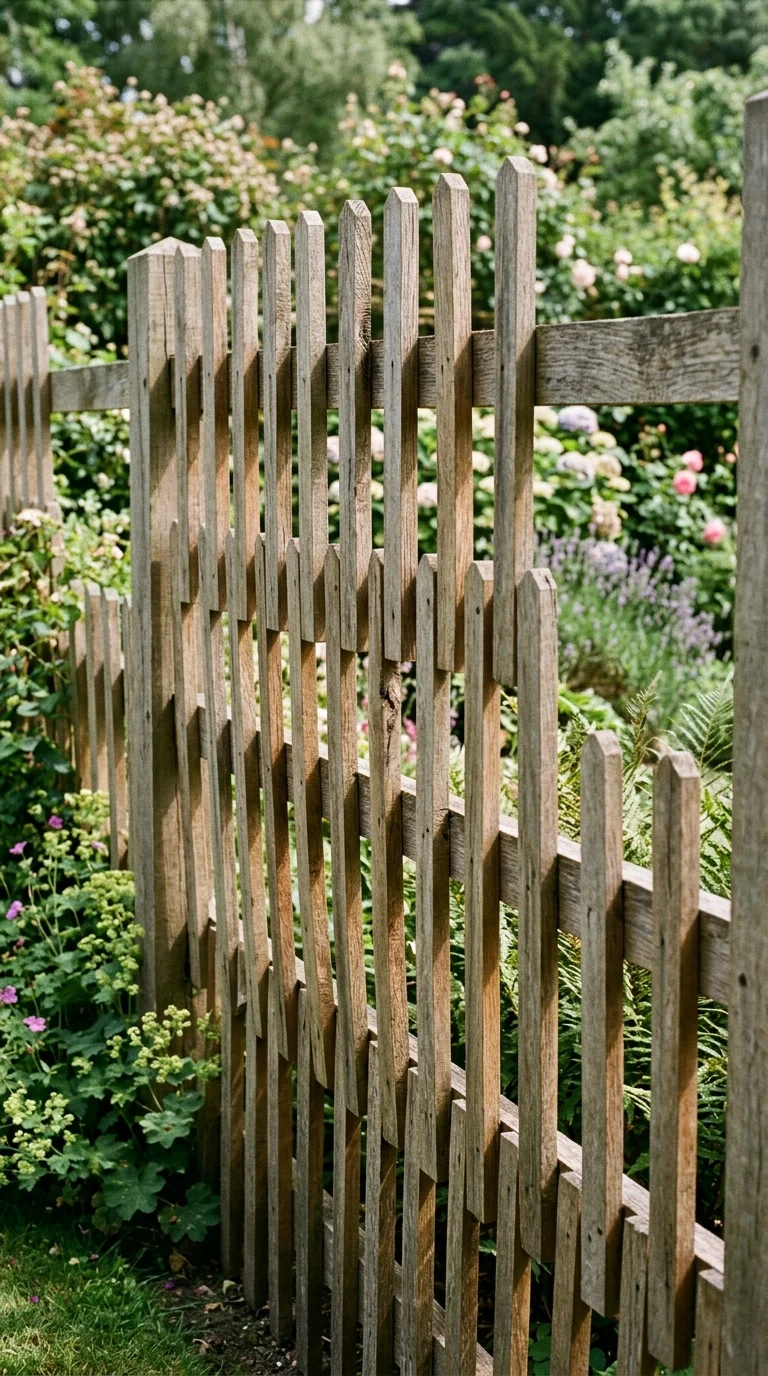
The shadowbox fence is often called a “neighbor-friendly” fence because it looks identical from both sides. By staggering the pickets on the front and back of the horizontal rails, you create a three-dimensional effect that provides more privacy than a standard picket fence while still allowing airflow. It’s a great compromise between a full privacy fence and a traditional open picket design.
10. Bright Colors
Who says picket fences have to be white or brown? Painting your fence in a bold, unexpected color like sage green, navy blue, or even a soft sunny yellow can give your home instant personality. This is a fantastic way to reflect your personal style and make your home stand out in the neighborhood. Just be sure to coordinate the color with your home’s trim or front door for a cohesive look.
11. Vinyl Durability
For homeowners who want the look of a white picket fence without the weekend chores, vinyl is the perfect solution. Modern vinyl fencing is incredibly durable, resisting fading, cracking, and peeling. It never needs painting and can be easily cleaned with a garden hose. It’s a smart long-term investment for busy families who prioritize low maintenance.
12. Wrought Iron
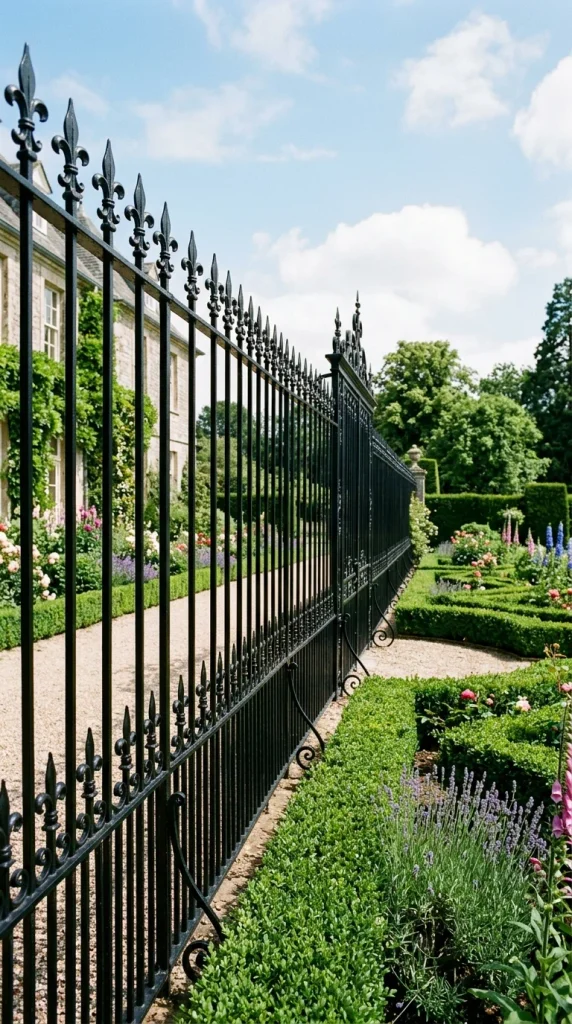
For a look that exudes strength and timelessness, wrought iron (or its modern, more affordable cousin, ornamental aluminum) is an excellent choice. These fences provide a clear boundary while remaining almost transparent, allowing your landscaping to take center stage. The dark metal finish looks particularly striking against historic brick homes or formal European-style gardens.
13. Dog-Ear Pickets
The “dog-ear” style is one of the most common and cost-effective picket designs. The top of each picket has the two corners clipped off at an angle, which prevents the wood from splintering at the top and adds a subtle decorative touch. It’s a versatile look that fits into suburban and rural settings alike.
14. Lattice Accents
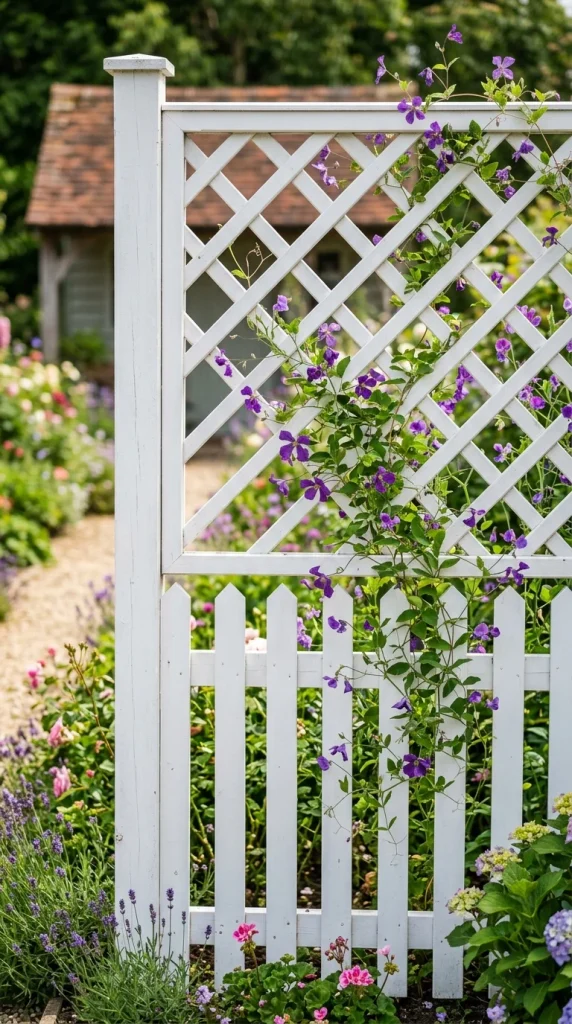
Adding a lattice topper to your picket fence introduces an extra layer of texture and charm. The criss-cross pattern provides a perfect trellis for climbing plants like clematis or ivy. This design works well if you want a slightly taller fence that doesn’t feel too heavy or solid, as the lattice keeps the top section feeling airy and light.
15. Overgrown Roses
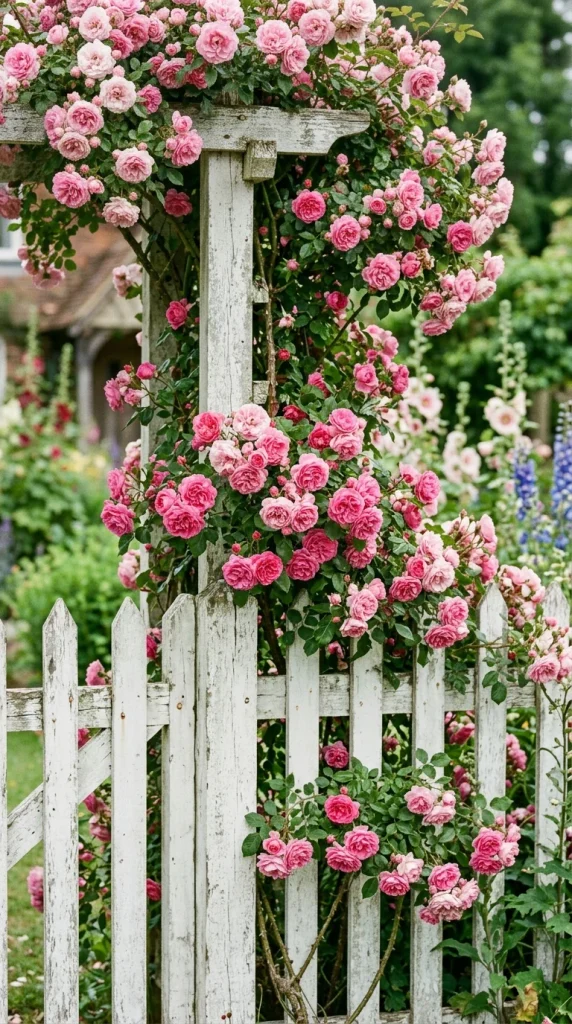
There is nothing more romantic than a picket fence covered in climbing roses. This “cottage-core” aesthetic relies on the fence as a structural support for heavy blooms. Choose “climbing” or “rambling” rose varieties and weave them through the pickets as they grow. Over time, the fence becomes a living wall of fragrance and color.
16. French Provincial
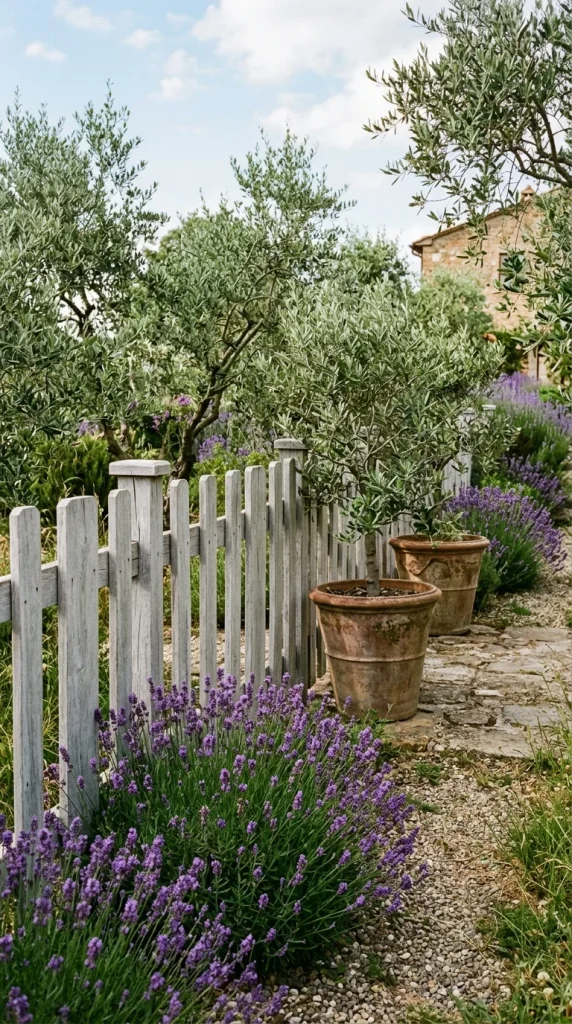
Inspired by the countryside of France, this style emphasizes a rustic, lived-in feel. The pickets are often wider and may feature a distressed or “whitewashed” finish that lets the wood grain peek through. It’s a sophisticated yet relaxed look that pairs beautifully with gravel pathways and Mediterranean-style plantings.
17. Split Rail Picket
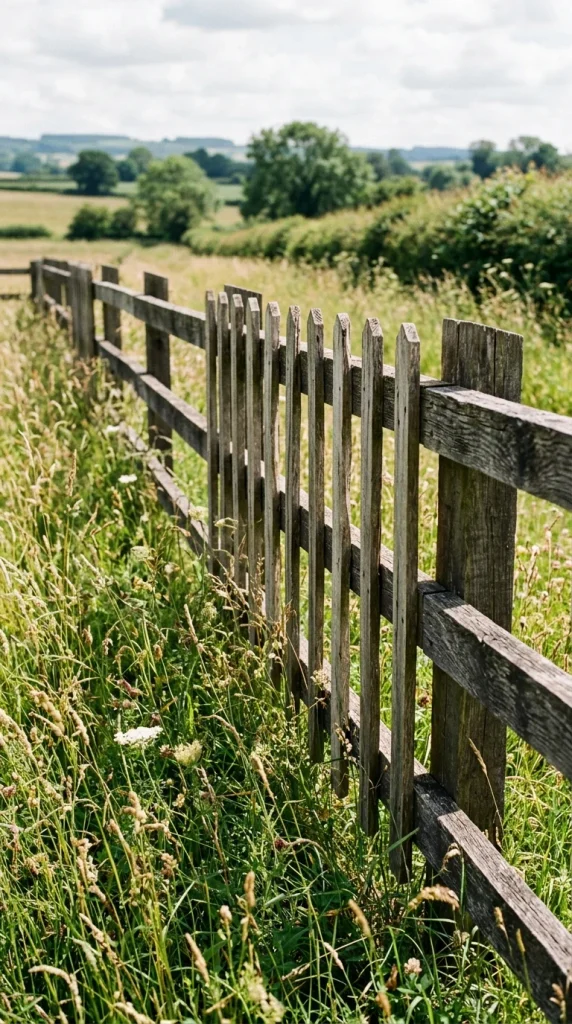
The split rail picket fence is a hybrid of two classic styles. It combines the rugged, ranch-style feel of a split rail fence with the vertical containment of pickets. This is an ideal choice for large, rural properties or homes with a “farmhouse” aesthetic, as it feels less formal than a standard suburban fence.
18. Tall Privacy Picket
While most picket fences are 3 to 4 feet tall, you can opt for a taller version to increase security and privacy. By using taller pickets (5 to 6 feet) and spacing them closely together, you create a solid barrier that still retains the decorative “picket” look. This is a great solution for homes on busy streets that still want to maintain a charming facade.
19. Minimalist Spacing
If you want the structure of a fence without the visual weight, consider minimalist spacing. By using thinner pickets and increasing the gap between them, the fence becomes a delicate frame rather than a wall. This look is very popular in modern landscaping, where the goal is to define space while maintaining a sense of openness and light.
20. Stepped Design
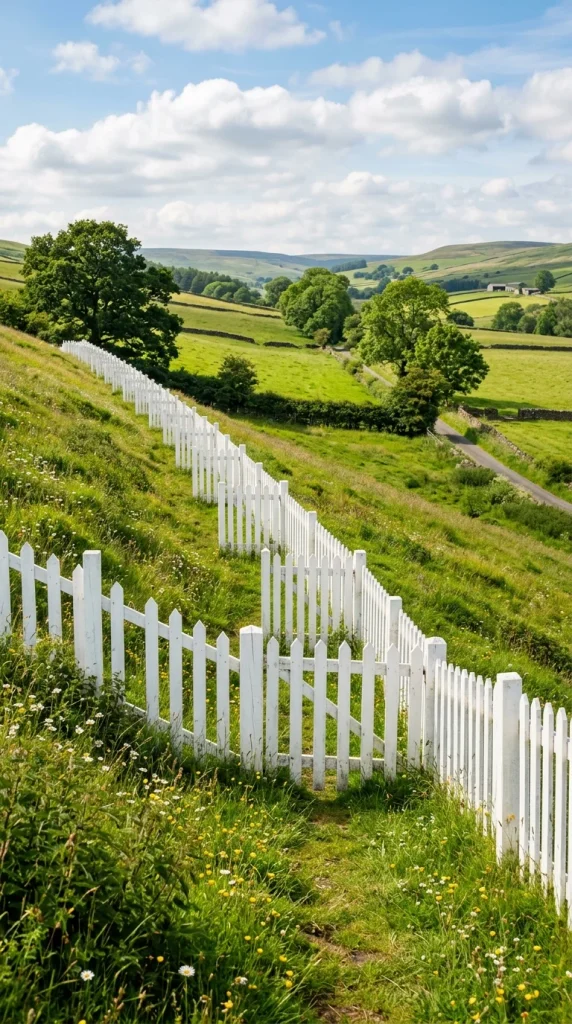
Fencing a sloped yard can be a challenge, but the “stepped” method turns that challenge into a design feature. Instead of following the angle of the ground, the fence is built in level sections that drop down at each post. This creates a clean, architectural look that emphasizes the geometry of the fence and handles changes in elevation gracefully.
21. Post Cap Finials
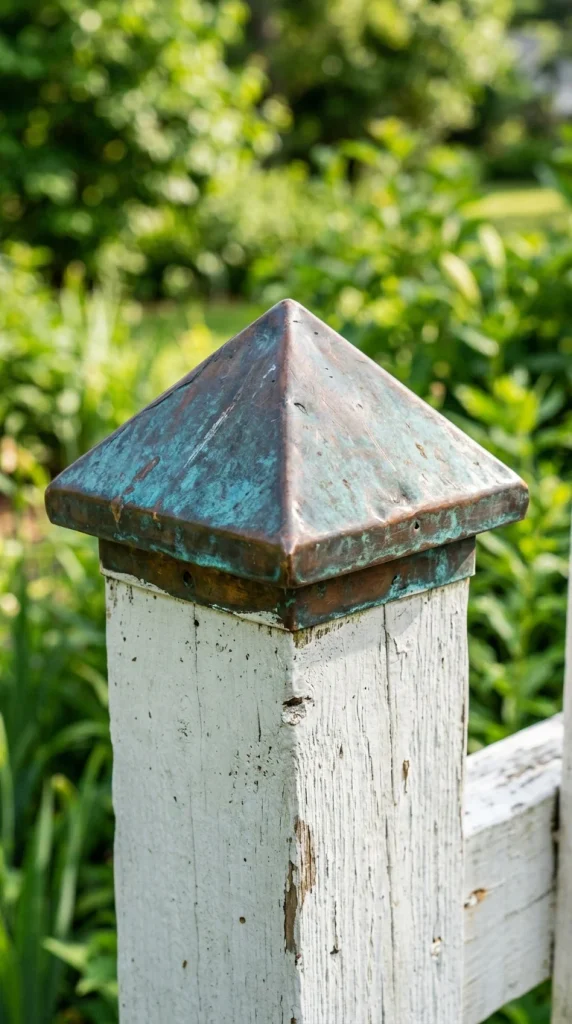
The devil is in the details, and post caps are the perfect finishing touch. You can choose from a variety of finials, including simple pyramids, rounded balls, or even ornate metal designs. For an extra touch of luxury, consider solar-powered post caps that glow at night, providing ambient lighting for your walkway and enhancing safety.
22. Soft Gray Finish
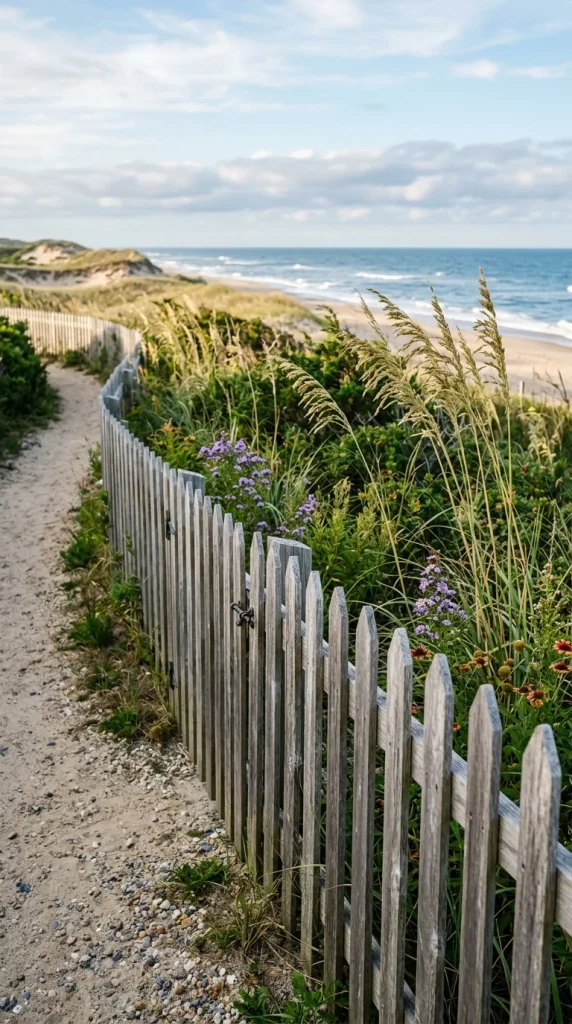
Gray has become the “new white” in exterior design. A soft gray stain or paint gives a picket fence a modern, beachy, or sophisticated neutral look. It’s less stark than bright white and hides dirt and dust much better, making it a practical choice for homes in varied climates.
23. Picket with Planters
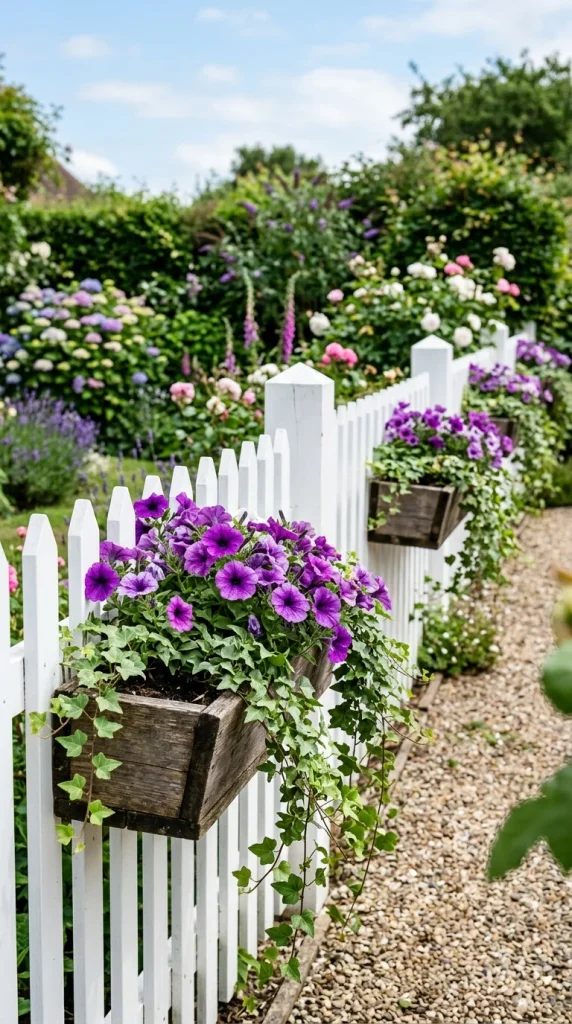
Integrate your gardening directly into your fence design by adding built-in planters. Small window-box style containers can be mounted to the cross-rails of the fence, allowing you to have “floating” gardens at eye level. This is a brilliant way to add vertical interest and keep your favorite herbs or flowers within easy reach.
24. Decorative Cutouts
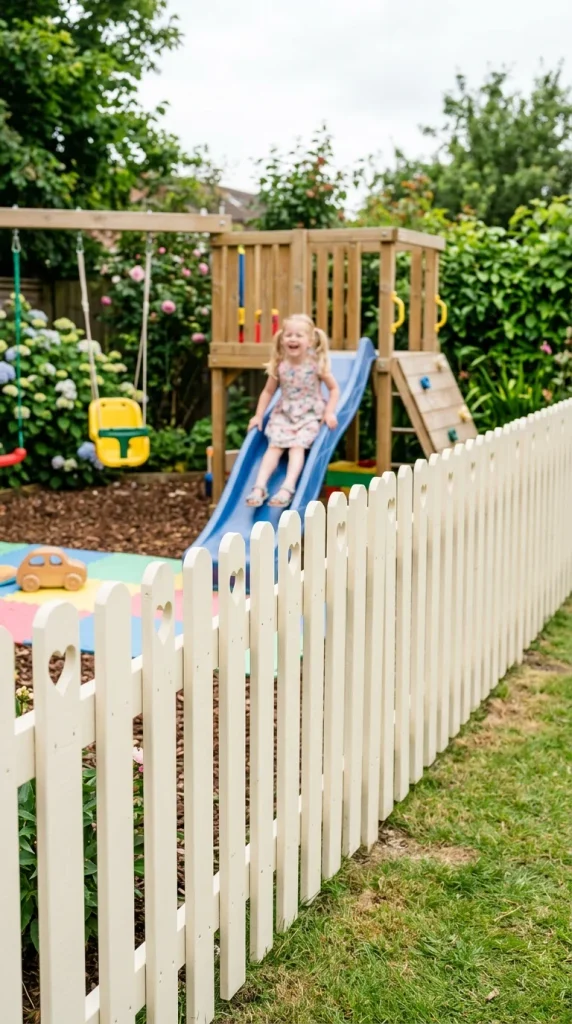
For a truly custom look, consider decorative cutouts. Small shapes like hearts, stars, or diamonds can be precision-cut into the pickets to add a whimsical, handcrafted touch. This style is often found in folk-inspired architecture and adds a unique, playful element to your home’s exterior that is sure to spark conversation.