
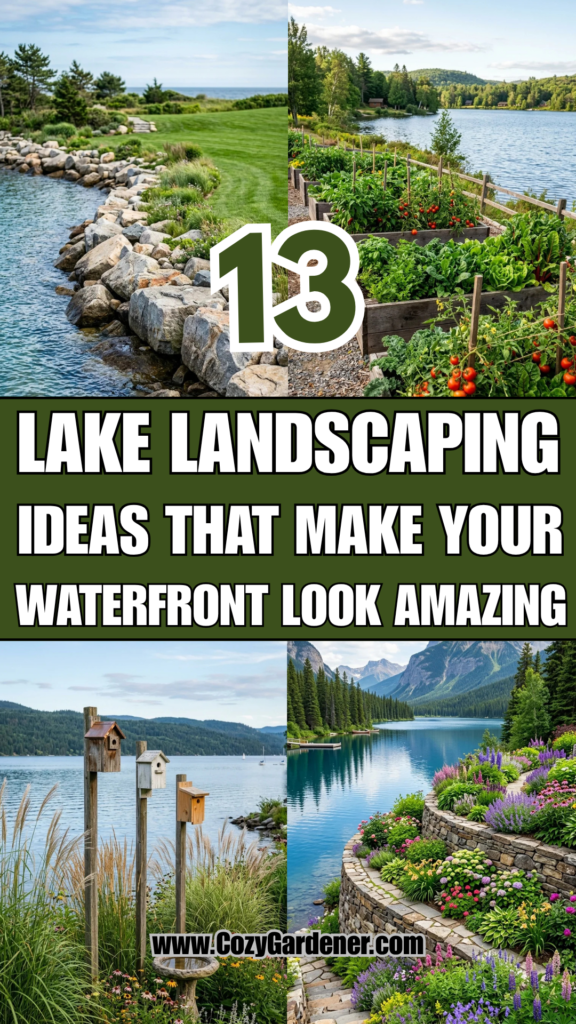
Owning a lakefront property is a dream come true for many, offering a unique blend of tranquility, recreation, and breathtaking natural beauty. However, landscaping a waterfront property presents a specific set of challenges. You aren’t just designing a backyard; you are managing an ecosystem. Between preventing shoreline erosion, adhering to local environmental regulations, and maximizing those million-dollar views, there is a lot to consider.
The key to successful lake landscaping is creating a seamless transition between the built environment and the natural water’s edge. By utilizing the right materials and plant life, you can enhance your property’s aesthetic value while protecting the water quality of the lake you love. Here are 13 lake landscaping ideas to transform your waterfront into a stunning, functional oasis.
1. Natural Riprap
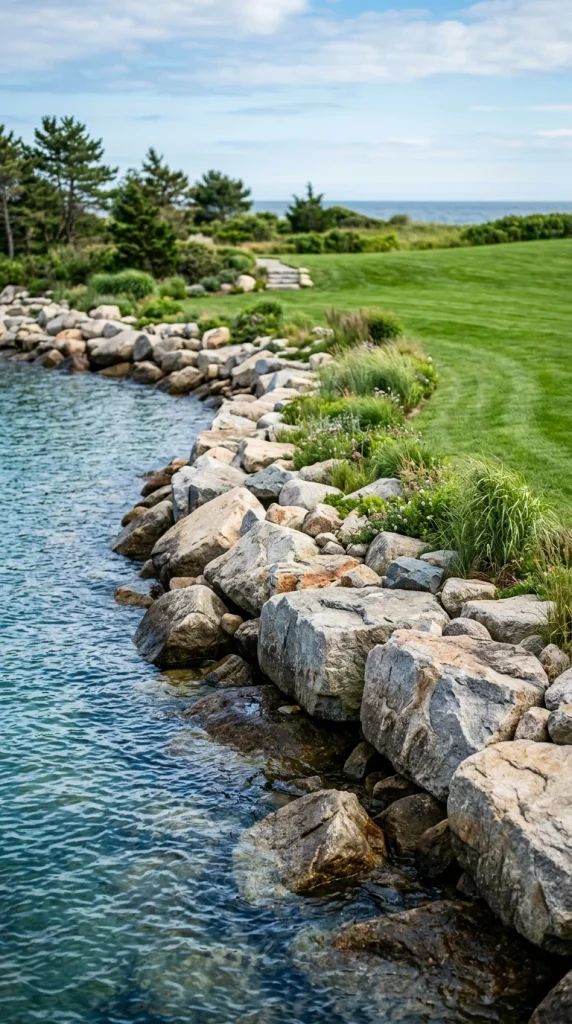
Erosion is the silent enemy of the lakefront homeowner. Constant wave action and seasonal ice heaving can slowly eat away at your land. Natural stone riprap is the gold standard for shoreline protection. Unlike concrete seawalls, which can look industrial and actually cause more erosion by reflecting wave energy elsewhere, riprap absorbs the impact of the water.
Using large, angular stones creates a rugged, natural look that blends perfectly with the environment. To make it truly “amazing,” mix different sizes of rocks and tuck small, water-loving plants like ferns or mosses into the crevices. This gives the appearance that the stones have been there for centuries.
2. Native Buffers
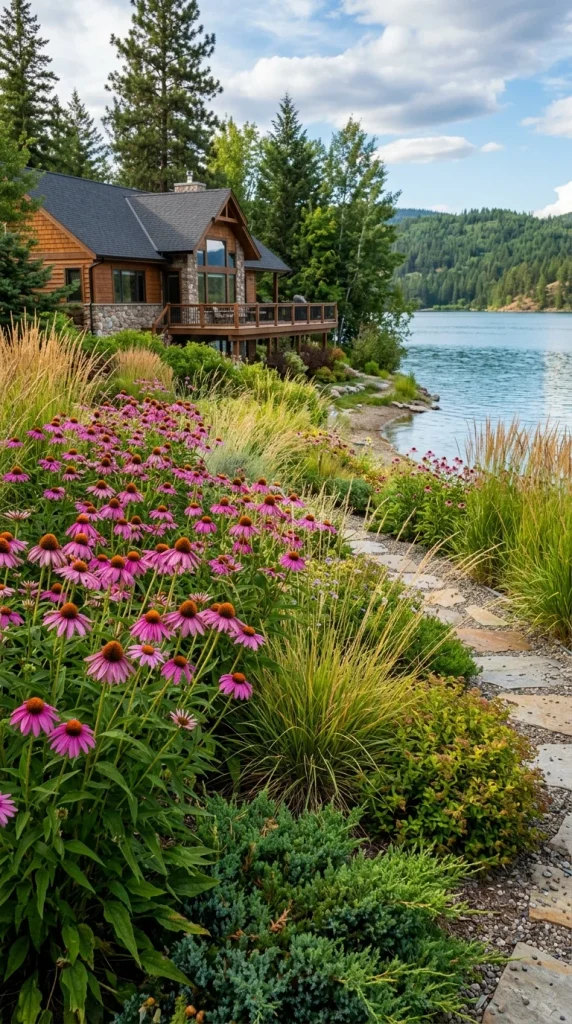
One of the most important things you can do for your lake’s health is to install a native plant buffer. A buffer strip is a zone of vegetation along the shoreline that filters runoff from your lawn, trapping fertilizers and pollutants before they reach the water.
Native plants are the heroes of this design. They have deep root systems that stabilize the soil much better than traditional turf grass. Consider plants like Blue Flag Iris, Swamp Milkweed, or various sedges. Not only do these plants protect the lake, but they also attract beautiful local wildlife, such as butterflies and songbirds, adding a layer of movement and sound to your landscape.
3. Stone Terraces
If your property has a steep drop-off to the water, a flat lawn is likely impossible and prone to washing away. Stone terraces are the perfect solution. By breaking up the slope into several flat levels, you create usable space for gardens, seating areas, or even a small outdoor kitchen.
Terracing allows you to manage water runoff effectively and creates a sense of “rooms” within your landscape. Use natural materials like flagstone or heavy timber to keep the look organic. Each level can have a different theme—perhaps one for dining, one for sunbathing, and one for a lush floral display.
4. Lakeside Firepits
Nothing says “lake life” quite like gathering around a fire as the sun sets over the water. Placing your fire pit close to the shoreline creates an incredible atmosphere where the reflection of the flames dances on the surface of the lake.
For a high-end look, choose a built-in stone fire pit that matches the masonry of your home or patio. Surround it with a permeable base, like pea gravel or crushed granite, to ensure drainage is handled properly. This becomes the ultimate evening destination for roasting marshmallows and sharing stories.
5. Permeable Pathways
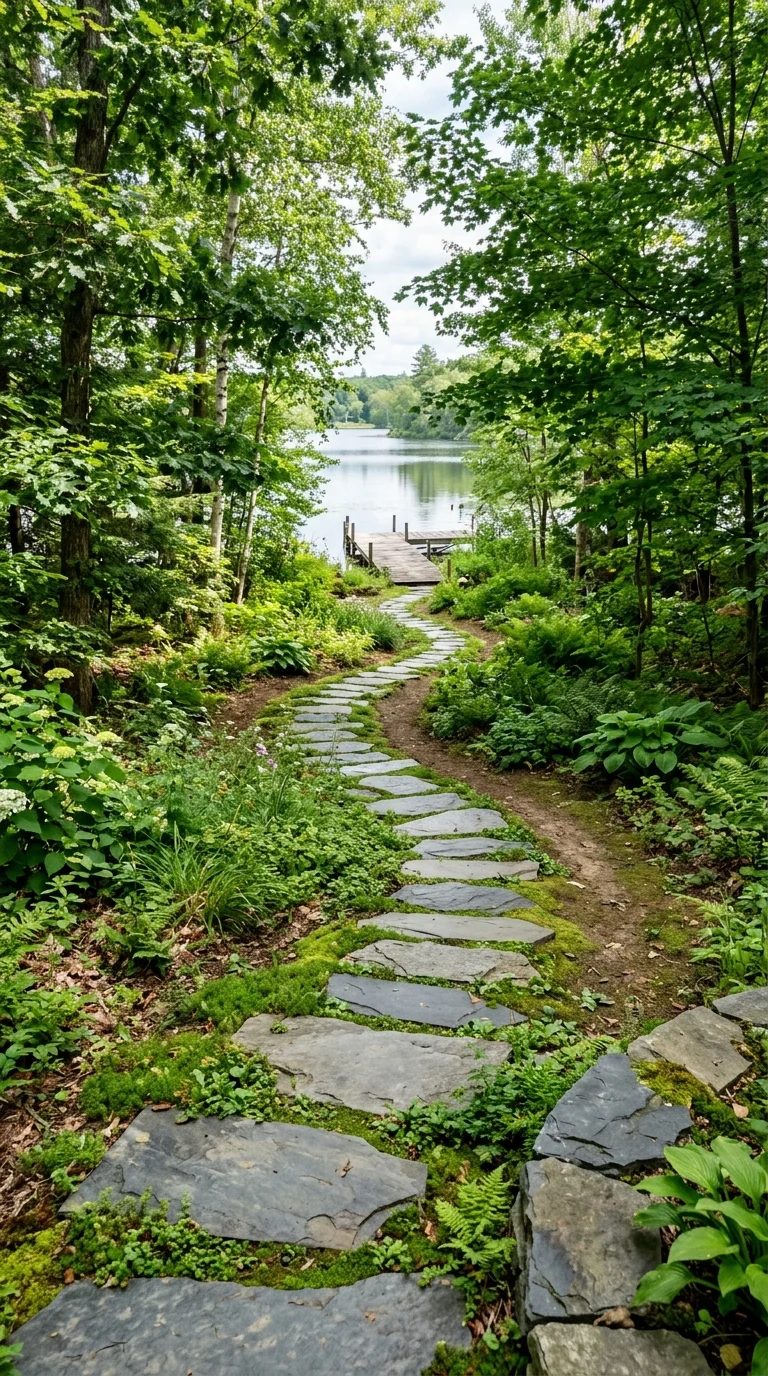
Traditional concrete or asphalt paths can be problematic near the water because they increase runoff. Permeable pathways are the eco-friendly and aesthetically superior choice. Using materials like stepping stones, wood chips, or permeable pavers allows rainwater to soak into the ground rather than rushing into the lake.
A winding path adds a sense of mystery and exploration to your property. Instead of a straight line to the dock, create a gentle curve that follows the contours of the land, providing different vantage points of the water as you walk.
6. Floating Decks
Sometimes the ground near the shore is too soft or damp for a heavy stone patio. In these cases, a “floating” or low-profile wooden deck is an excellent alternative. These structures can be built on top of piers, minimizing the impact on the soil and vegetation below.
A lakeside deck provides a clean, level surface for furniture and allows you to get as close to the water as possible without getting your feet muddy. Use high-quality, rot-resistant wood like Ipe or cedar, or go for high-end composites that mimic the look of real wood without the maintenance.
7. Night Lighting
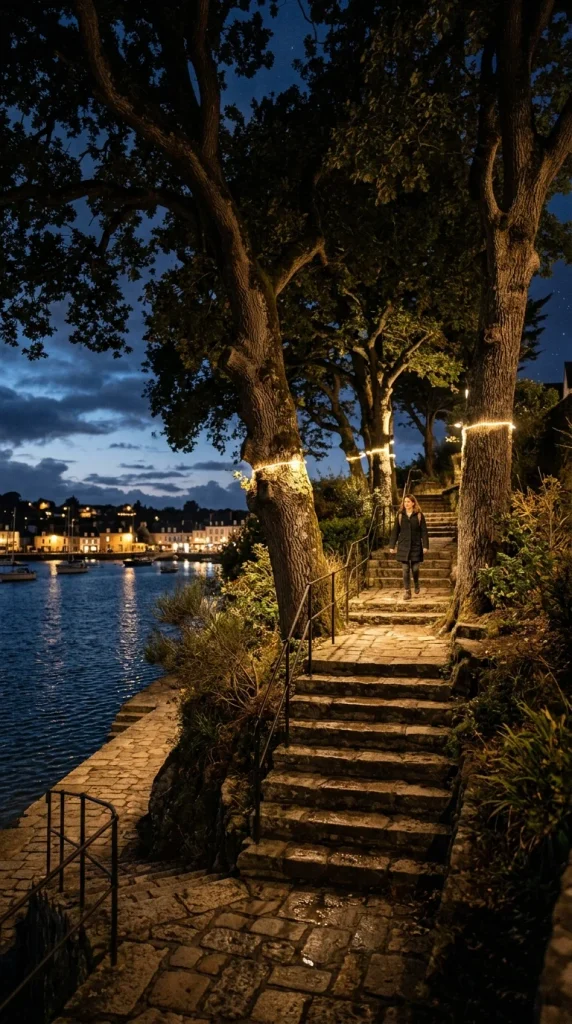
A well-designed lighting scheme can transform your lakefront from dark and intimidating to magical and inviting after the sun goes down. The key to waterfront lighting is subtlety. You want to avoid “light pollution” that disrupts the natural darkness of the lake.
Use low-voltage LED lights to highlight specific architectural features, such as the texture of a stone wall or the canopy of a majestic willow tree. Path lights should be shielded and pointed downward to guide your way to the dock safely. Uplighting trees near the shore can create a beautiful reflection on the water’s surface, extending your view even in the dead of night.
8. Outdoor Showers
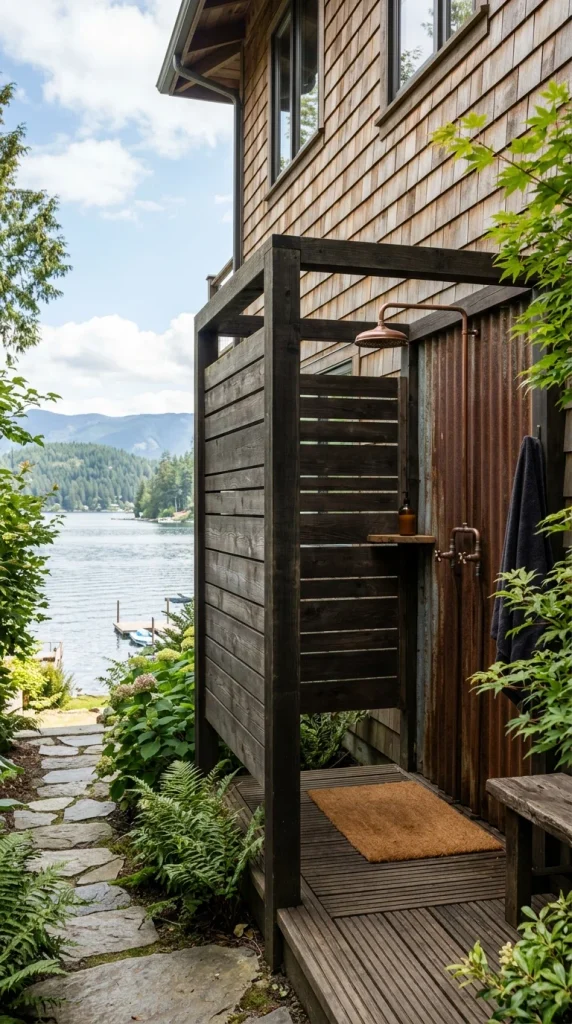
Lake living involves a lot of sand, silt, and lake water. An outdoor shower is a functional luxury that keeps the mess outside. Positioned near the path from the dock to the house, it provides a convenient place to rinse off after a swim or a day on the boat.
To make the shower a design feature, use natural materials like cedar slats or stacked stone. Incorporate some hardy climbing plants like clematis or jasmine to provide a natural privacy screen and a pleasant aroma.
9. Modern Docks
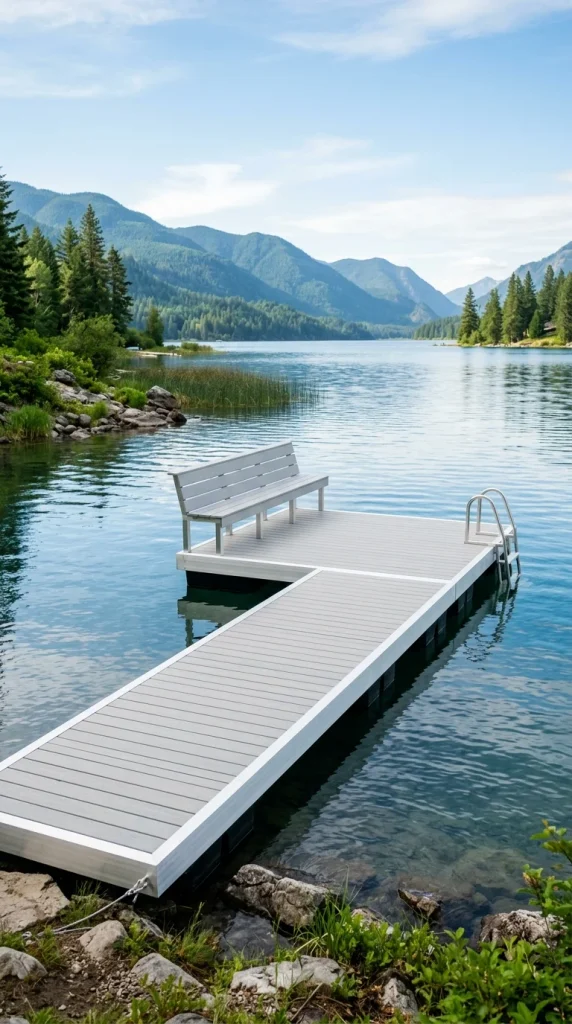
The dock is often the focal point of a lakefront property, so it should be as stylish as the rest of your landscaping. Moving away from the traditional “rickety wooden pier,” modern docks use aluminum frames and composite decking for a clean, architectural look.
Consider adding “living” elements to your dock, such as built-in planters for flowers or a dedicated space for comfortable lounge chairs. A well-designed dock acts as an extension of your home’s living space, providing a platform for everything from morning yoga to evening cocktails.
10. Wildlife Gardens
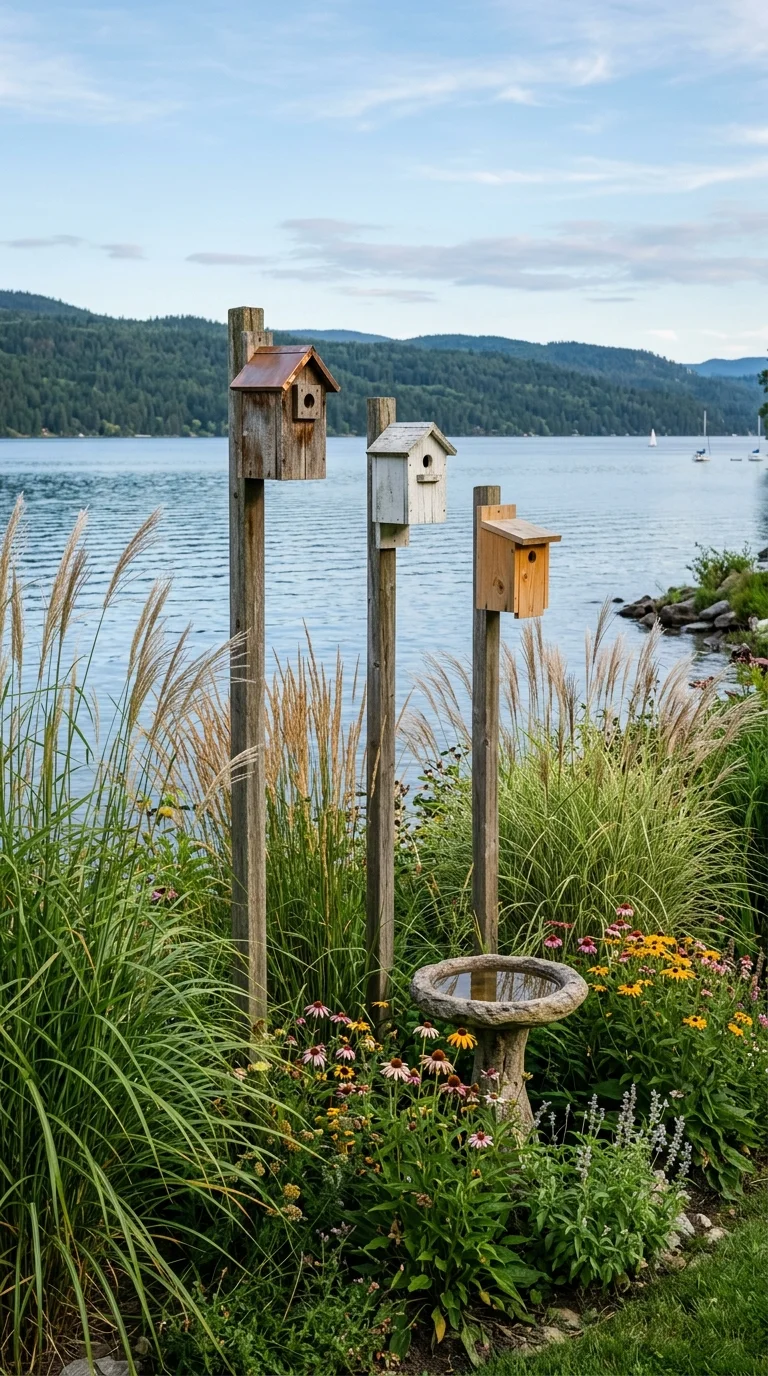
Embracing the local fauna adds a layer of enchantment to any waterfront property. By dedicating a portion of your landscape to wildlife-friendly plants, you can enjoy the presence of herons, turtles, and hummingbirds.
11. Zen Rockscapes
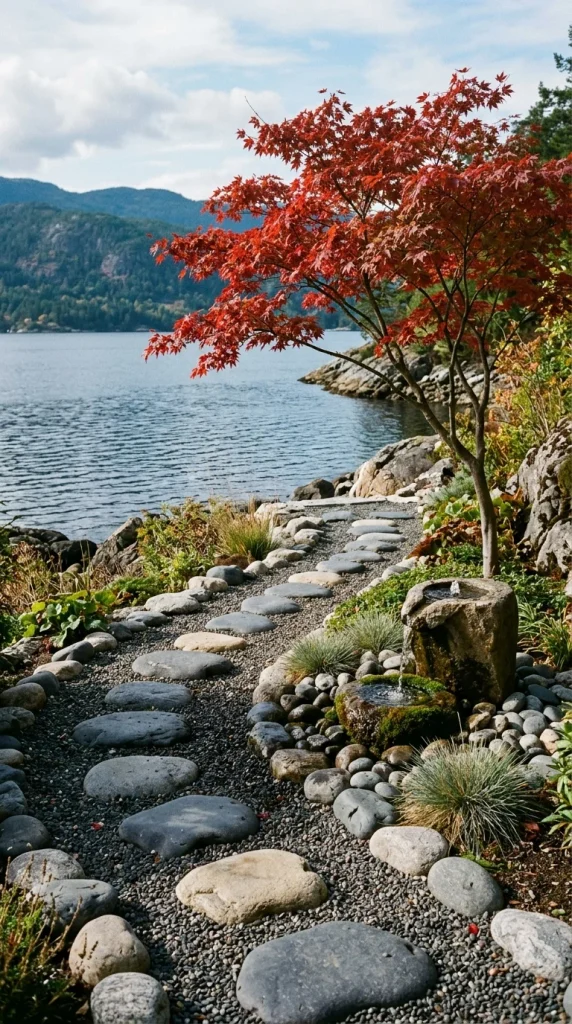
For those who prefer a modern, minimalist aesthetic, a Zen-inspired rockscape can be incredibly effective. Using smooth river stones, gravel, and carefully placed boulders, you can create a landscape that feels calm and ordered.
This style of landscaping is particularly effective in areas where grass struggles to grow or where you want a low-maintenance solution. A small stone water feature that mimics the sound of the lake can create a peaceful auditory backdrop for relaxation.
12. Edible Shorelines

Who says you can’t have a kitchen garden at the lake? Many edible plants thrive in the sun-drenched, moist conditions found near the water. Blueberry bushes, for example, love the acidic soil often found near pine-heavy shorelines and provide beautiful fall foliage.
Incorporate herbs like mint, rosemary, or chives into your lakeside planters. Not only are they useful for summer cooking and cocktails, but they also provide wonderful scents when you brush against them on your way to the water.
13. Beach Entry Points
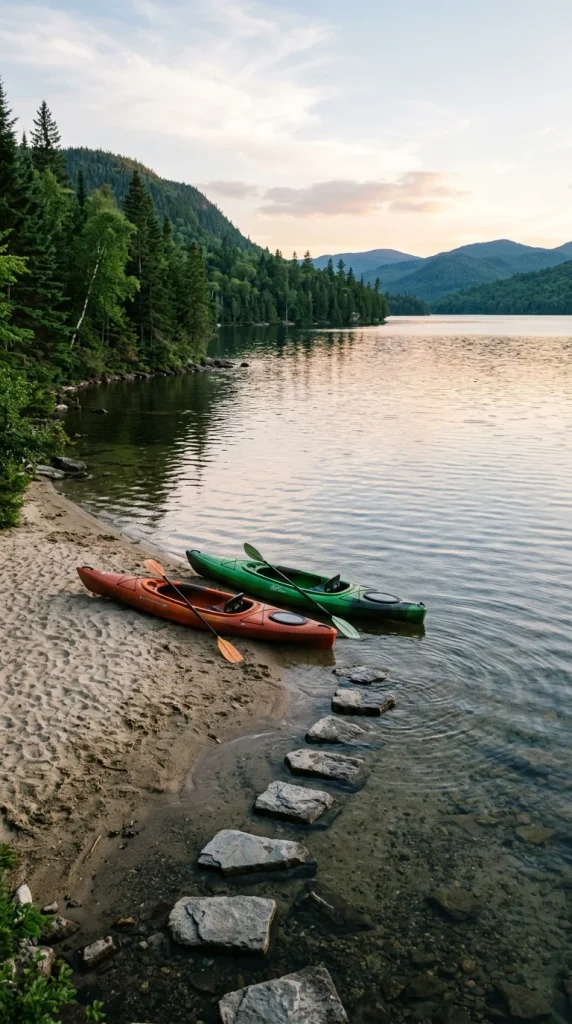
If your shoreline is naturally rocky or muddy, creating a designated beach entry point can significantly enhance your enjoyment of the water. A small, intentional area of soft sand or fine pebbles provides a comfortable place to launch kayaks, paddleboards, or just wade into the water.
To keep the sand from washing away, frame the beach area with large “anchor” stones. This creates a clear boundary between the “wild” shoreline and your curated recreational space. Add a couple of Adirondack chairs and a rack for your water toys to complete the look.