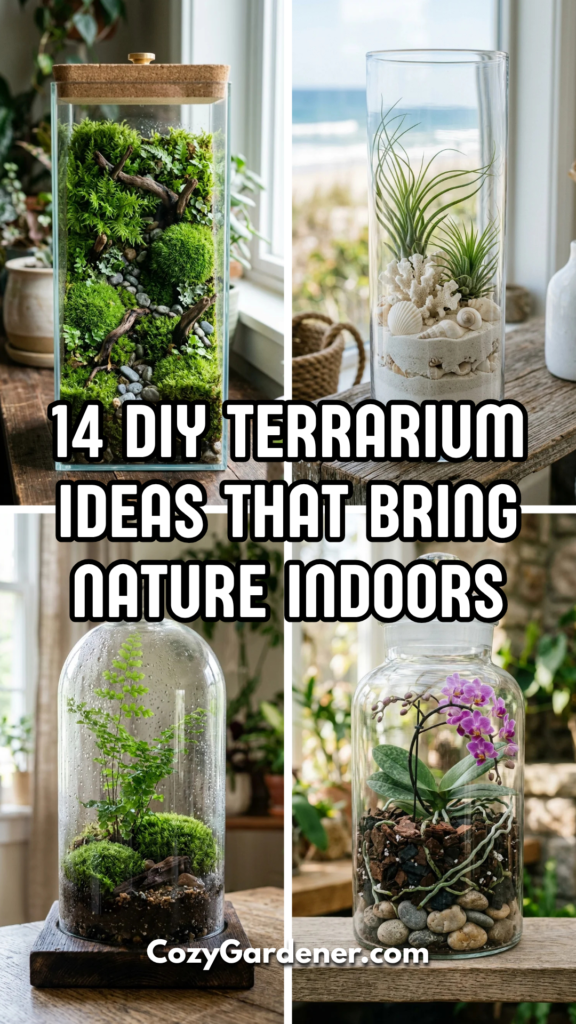
Bringing the outdoors inside has never been more stylish or accessible than through the art of the terrarium. These self-contained miniature ecosystems offer a slice of the natural world that fits perfectly on a bookshelf, desk, or coffee table. Whether you are an urban dweller with limited garden space or a seasoned plant lover looking for a new project, DIY terrariums provide a creative outlet that results in a living piece of decor.
The beauty of a terrarium lies in its versatility. You can recreate a humid tropical jungle or a dry, sandy desert, all within the confines of a glass vessel. Beyond their aesthetic appeal, terrariums are fascinating to observe as they develop their own water cycles and micro-climates. Here are 14 creative DIY terrarium ideas to inspire your next indoor gardening adventure.
1. Mason Jar
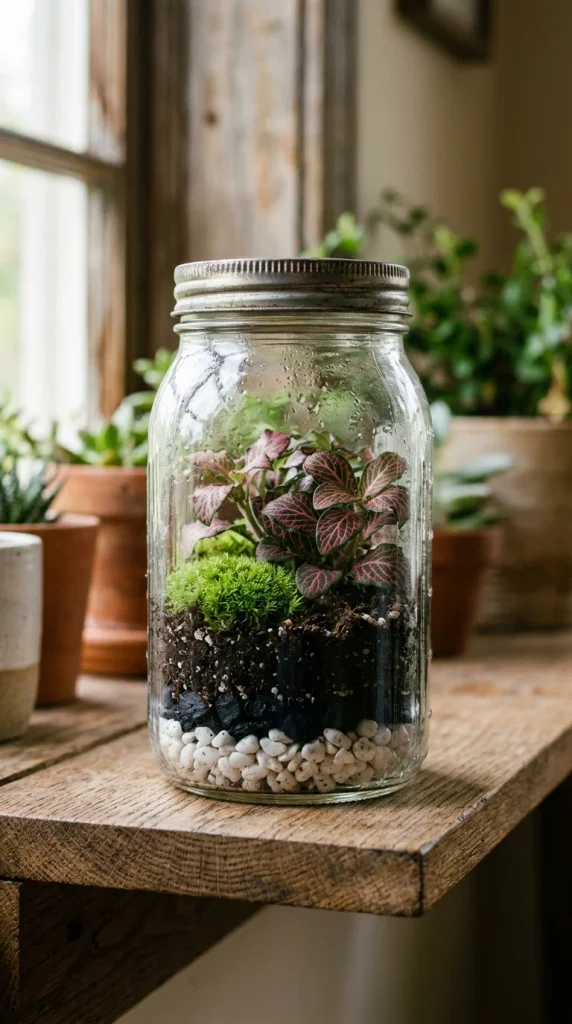
The Mason jar terrarium is the quintessential entry point for beginners. Its accessibility and charming aesthetic make it a favorite for those testing their green thumbs. Because mason jars often come with lids, they are perfect for creating a “closed” system. This means moisture evaporates from the plants and soil, condenses on the glass walls, and falls back down like rain, making it almost entirely self-watering. When building yours, focus on distinct layering for visual appeal—start with pebbles for drainage, a thin layer of charcoal to keep the water fresh, and then your potting mix.
2. Desert Bowl
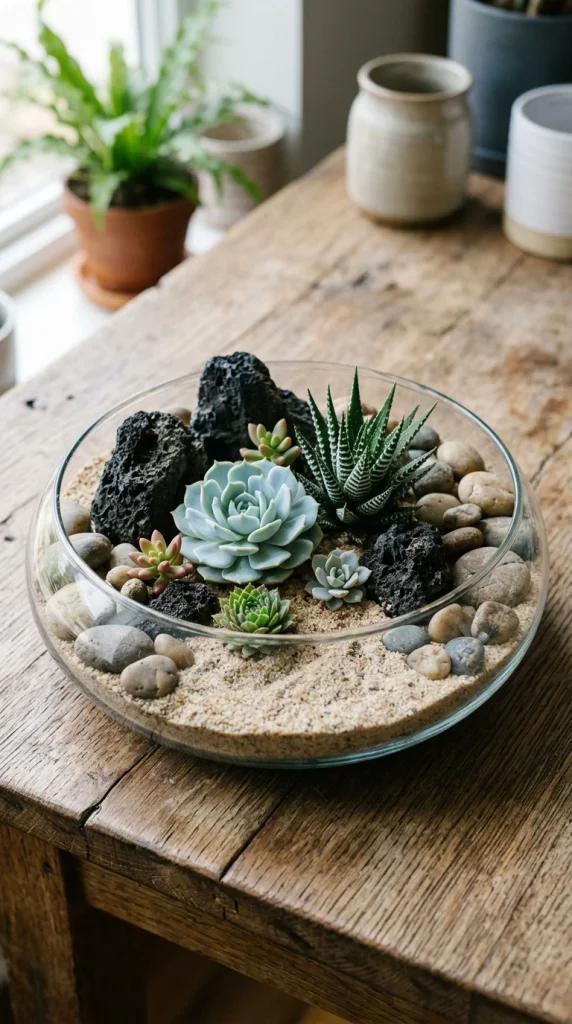
Unlike the high-humidity environment of a closed jar, a desert bowl is an “open” terrarium designed for plants that crave airflow and low moisture. Succulents and cacti are the stars here. Instead of traditional potting soil, use a gritty cactus mix and top it with aesthetic sand or fine gravel. The open top prevents the buildup of humidity that would otherwise cause these desert-dwellers to rot. These are ideal for bright, sunny spots like a south-facing windowsill.
3. Tropical Cloche
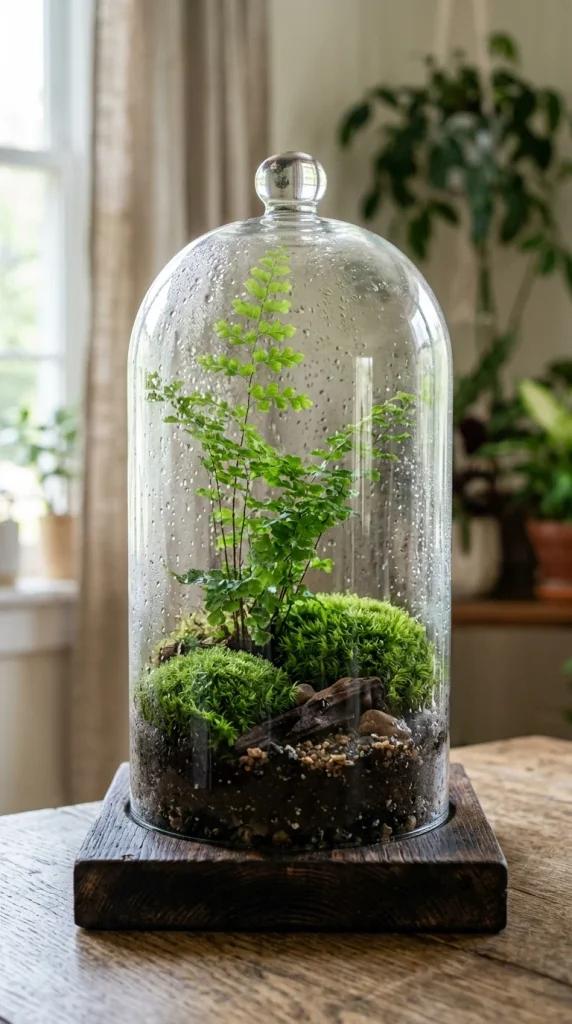
A cloche offers a touch of Victorian elegance to your plant collection. Because the glass dome sits over a base, it traps a significant amount of humidity, making it the perfect home for delicate tropical plants that might struggle in the dry air of a modern home. Ferns, nerve plants, and even small orchids thrive in this environment. The cloche serves as a dramatic centerpiece, turning a simple plant into a curated museum-like display.
4. Moss Forest
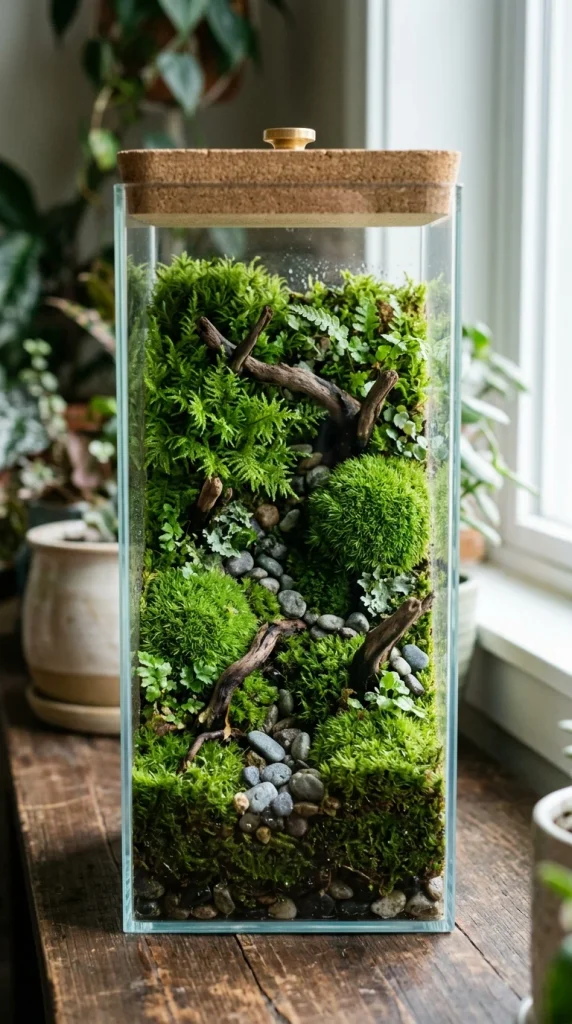
Sometimes, simplicity is the most striking choice. A moss terrarium focuses entirely on the soft textures and varied shades of green found in different moss species. Mosses are incredibly hardy and don’t require deep soil, allowing you to use shallow or uniquely shaped containers. This type of terrarium is low-maintenance and provides a calming, Zen-like atmosphere. Spritzing it with distilled water once a week is usually enough to keep the “forest” vibrant.
5. Geometric Prism

Geometric terrariums bring a modern, architectural feel to your indoor garden. These containers, often made of glass panes joined by metal (usually copper or black), are frequently used for air plants (Tillandsia). Since air plants don’t require soil, you can get creative with the “floor” of the prism using crystals, decorative sand, or even colorful sea glass. The sharp angles of the container contrast beautifully with the organic, spindly shapes of the plants.
6. Hanging Globe

If you’re short on surface space, look up. Hanging globes are small, lightweight glass spheres that can be suspended from the ceiling or a wall hook. They are most commonly used for air plants or very small succulents. When hung in groups at varying heights, they create a “floating garden” effect that is both whimsical and space-saving. They are particularly effective in kitchens or near bright windows where they can catch the morning light.
7. Vintage Wardian
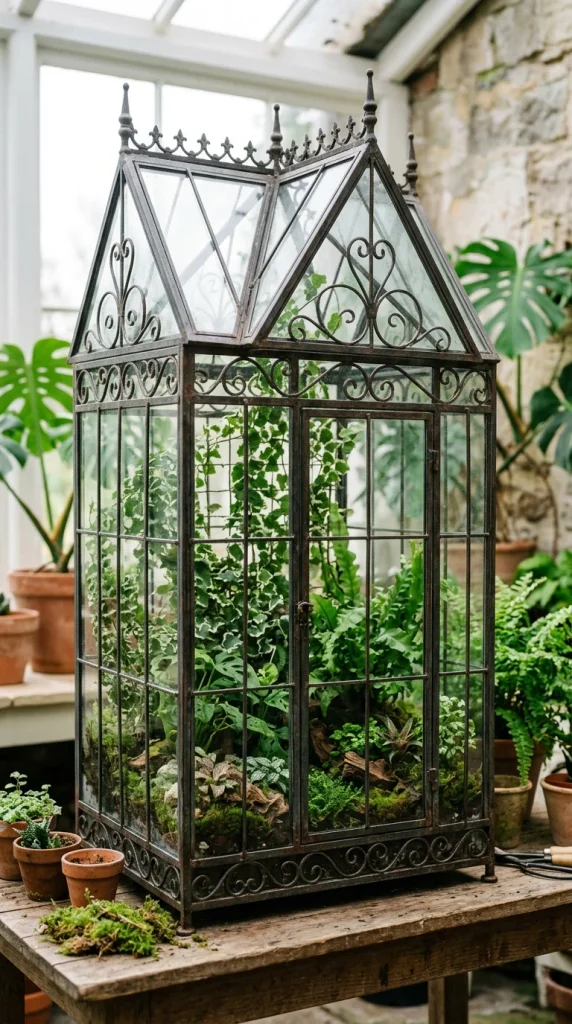
The Wardian case was the original terrarium, invented in the 19th century to transport exotic plants across the ocean. Today, vintage-style Wardian cases serve as a high-end statement piece. These are usually much larger than your average jar and can house a diverse community of plants. Because of their size, you can create height variations using small pieces of wood or different plant tiers, mimicking a true conservatory on a miniature scale.
8. Seashore Jar
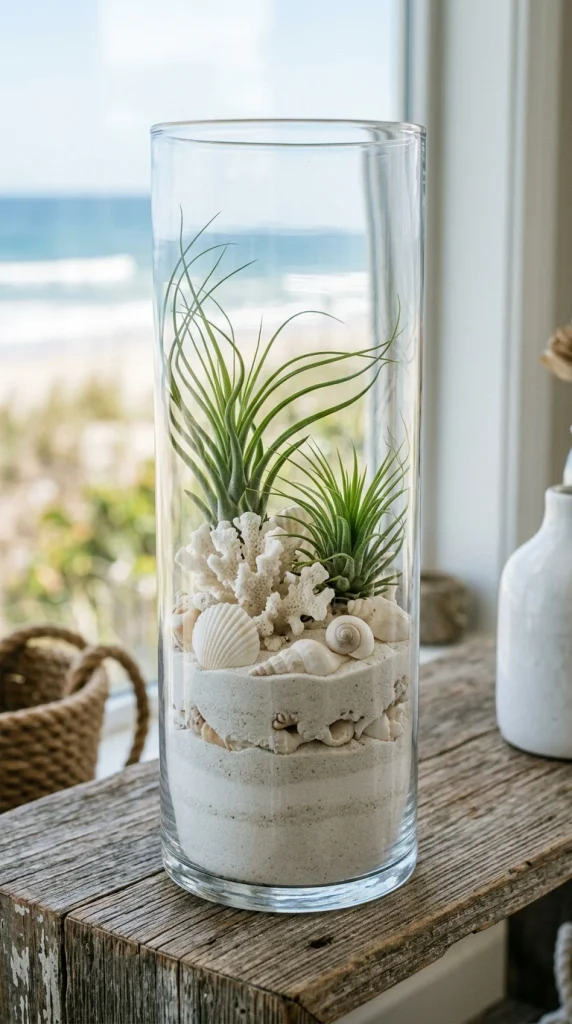
Bring the beach home by incorporating coastal elements into your terrarium design. This theme works best with air plants because they don’t require soil, which would clash with the “sandy beach” aesthetic. Use white or beige sand, weathered driftwood, and shells collected from your travels. This style of terrarium feels breezy and light, making it a perfect addition to a bathroom or a summer-themed mantelpiece.
9. Light Bulb
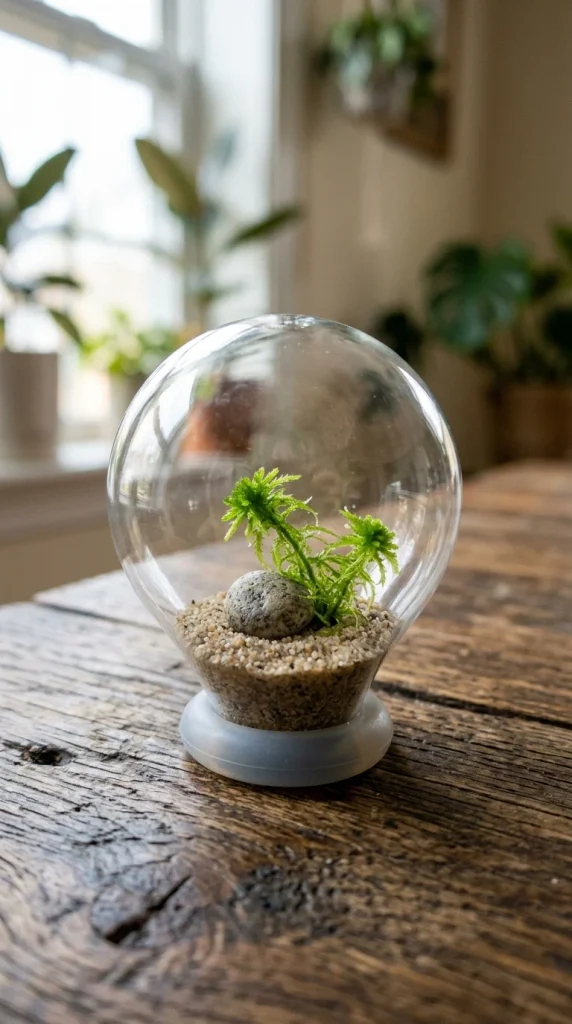
Upcycling at its finest, the light bulb terrarium is a testament to the fact that you can grow a garden anywhere. While the space is limited, it is perfect for a tiny “desk buddy.” Hollowing out a light bulb requires care and safety goggles, but the result is a fascinating, miniature world. Because of the small opening, you’ll need long tweezers to place your moss and pebbles precisely. It’s a delicate project that yields a truly unique conversation piece.
10. Coffee Table
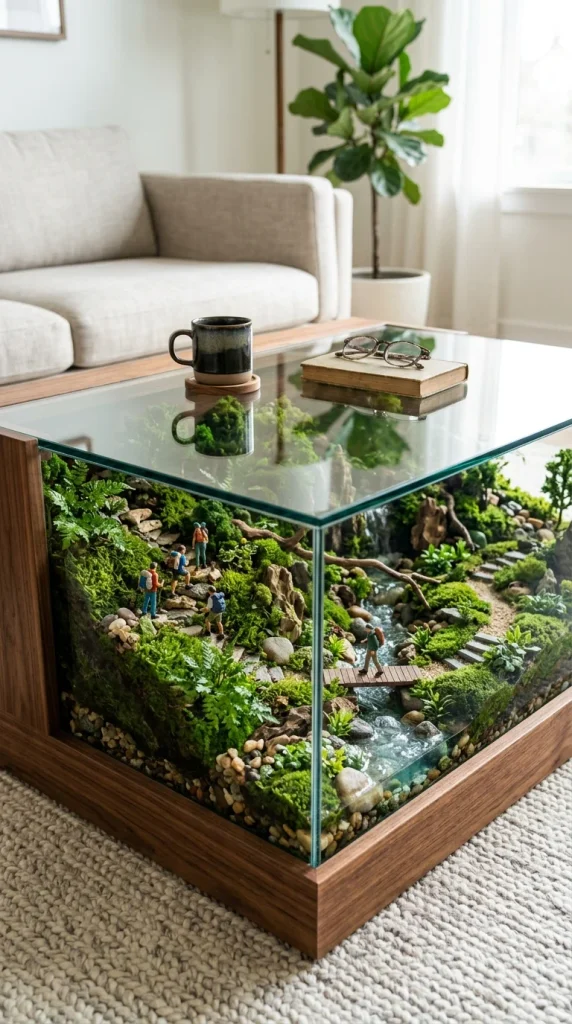
For the ultimate plant enthusiast, a terrarium built into furniture is the pinnacle of DIY decor. Some coffee tables are designed with a deep “shadow box” area under the glass top specifically for this purpose. This allows for a massive, sprawling landscape that you can look down into while enjoying your morning coffee. Because these are large, they require more planning regarding drainage and lighting, often utilizing LED strips hidden under the rim of the table.
11. Spice Jar
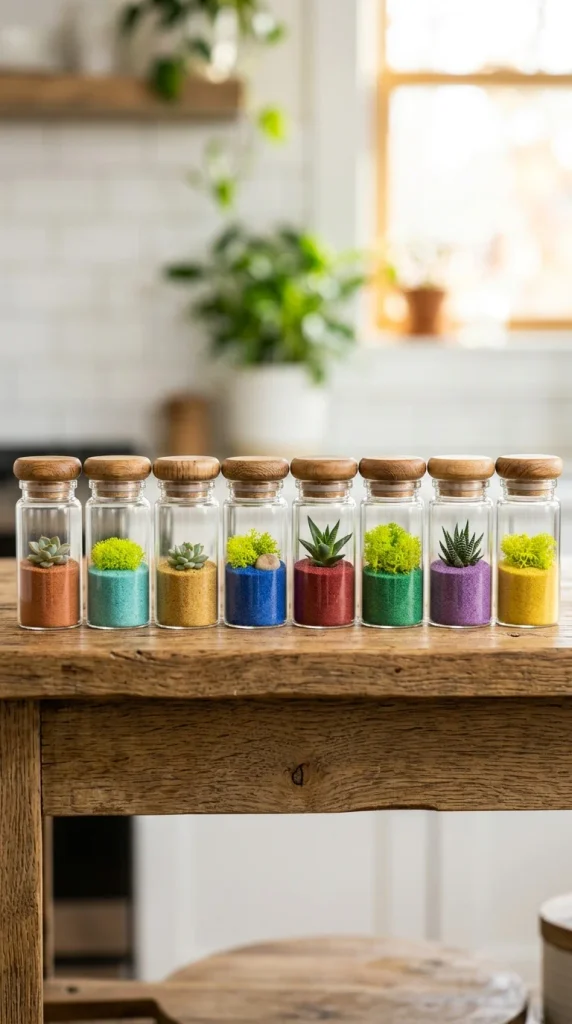
If you have a collection of old spice jars, don’t throw them away. Their small size makes them perfect for a “micro-terrarium” series. You can create a gradient of different environments—one jar with a tiny cactus, one with moss, and one with a single air plant. Lining these up on a window ledge or a tiered spice rack creates a charming, laboratory-style display of botanical specimens.
12. Orchid Oasis
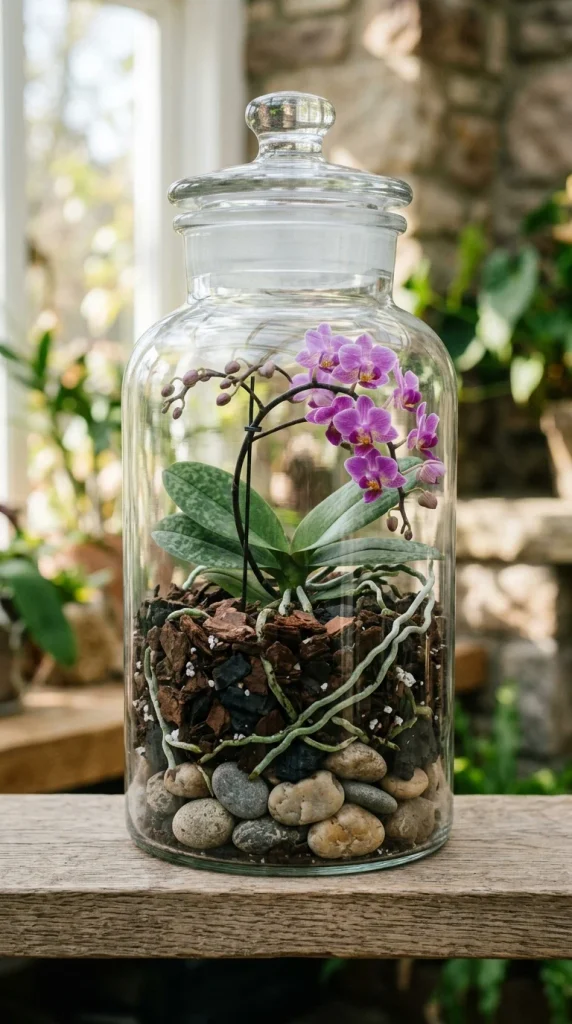
Many people think orchids are too difficult for terrariums, but “miniature” orchid varieties thrive in the high humidity of a glass vessel. The key is to avoid standard soil. Instead, use orchid bark and sphagnum moss to ensure plenty of airflow to the roots. An orchid terrarium provides a pop of floral color that most other terrariums lack, turning the container into a living bouquet that lasts much longer than cut flowers.
13. Fern Gully
Ferns love humidity, indirect light, and consistent moisture—all the things a terrarium provides perfectly. A “Fern Gully” terrarium uses different species of small ferns to create a lush, prehistoric look. Varieties like the Maidenhair fern or the Silver Lace fern offer delicate, feathery textures. When grouped together in a large glass bowl, they create a dense thicket of green that feels like a hidden corner of an ancient forest.
14. Zen Rock Garden
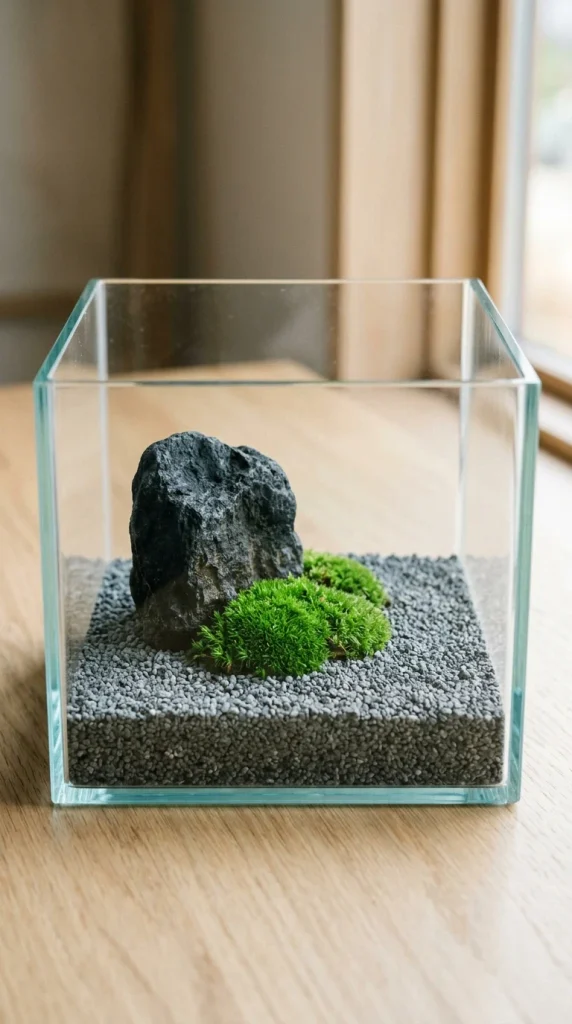
Inspired by Japanese rock gardens, the Zen terrarium focuses on the balance between stone and plant. This is a minimalist approach where “less is more.” Use one or two high-quality stones with interesting textures as the focal point, and use moss as an accent rather than the main feature. The use of negative space (empty areas of gravel or sand) is crucial here, creating a sense of calm and order that can help reduce stress in a home office environment.
Essential Maintenance Tips for Your Terrarium
To keep your miniature world thriving, keep these three rules in mind:
- Lighting: Most terrariums prefer bright, indirect light. Direct sunlight can act like a magnifying glass through the vessel, scorching your plants and overheating the interior.
- Watering: Over-watering is the #1 killer of terrariums. For closed systems, you should rarely need to water. If you see heavy fogging on the glass, open the lid for a few hours. For open systems, use a spray bottle or a small dropper to target the roots.
- Cleaning: Use a damp cloth to wipe the inside and outside of the glass. Removing dust and water spots ensures your plants get maximum light and that your display stays crystal clear.