
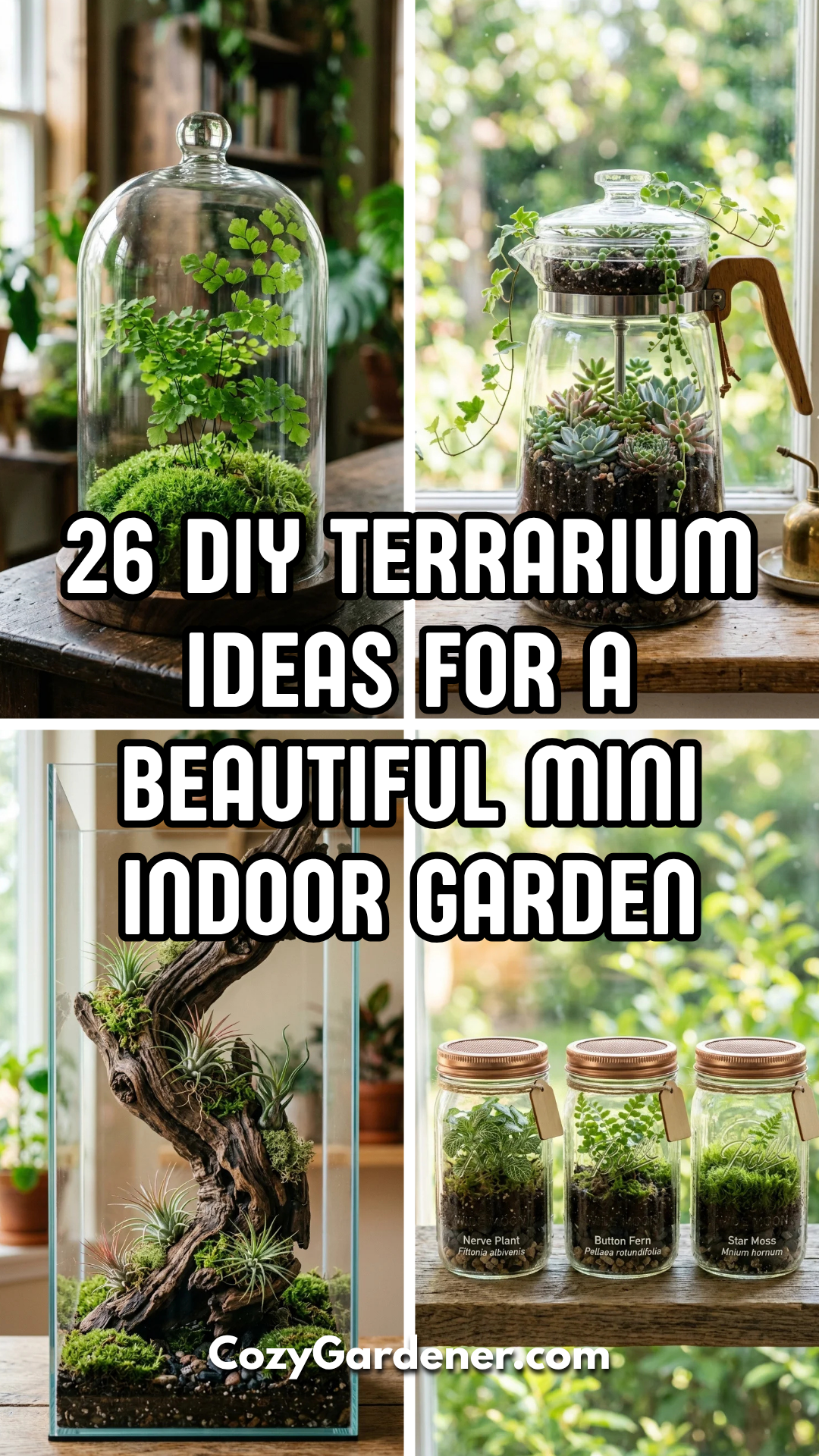
Terrariums are more than just a home decor trend; they are self-sustaining ecosystems that bring a slice of the natural world into your living space. Whether you live in a tiny city apartment or a sprawling suburban house, these “gardens under glass” offer a low-maintenance way to enjoy greenery year-round. From whimsical fairy worlds to sleek, modern geometric designs, the possibilities for customization are endless. Creating your own DIY terrarium is a meditative process that rewards you with a living piece of art.
Here are 26 creative DIY terrarium ideas to inspire your next indoor gardening project.
1. Bell Jar
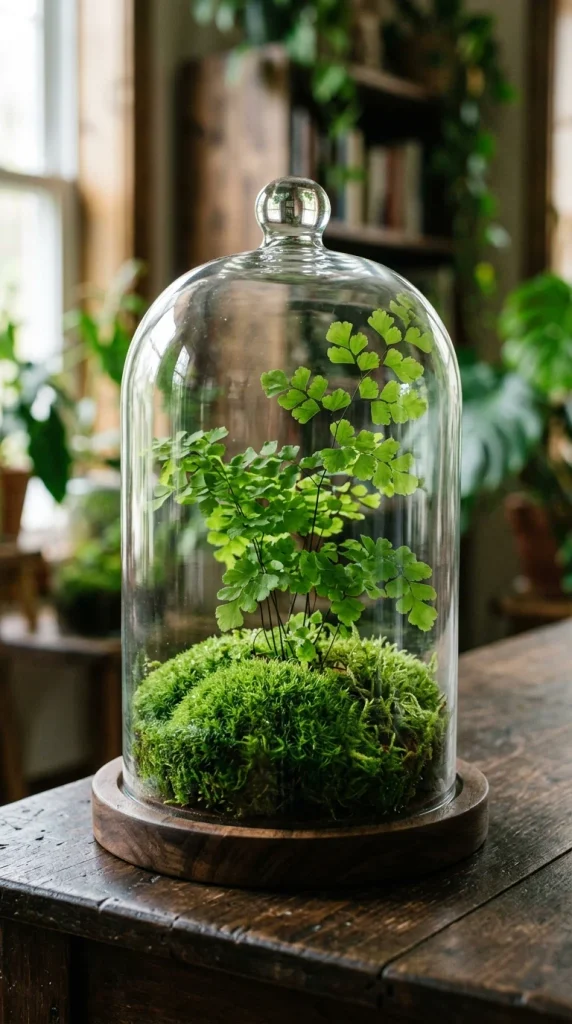
The traditional bell jar, or cloche, offers a timeless and elegant look. Because these are typically closed systems, they create a high-humidity environment perfect for moisture-loving plants. Use a variety of mosses and a single focal plant like a small fern to create a minimalist yet striking forest floor aesthetic.
2. Sand Art
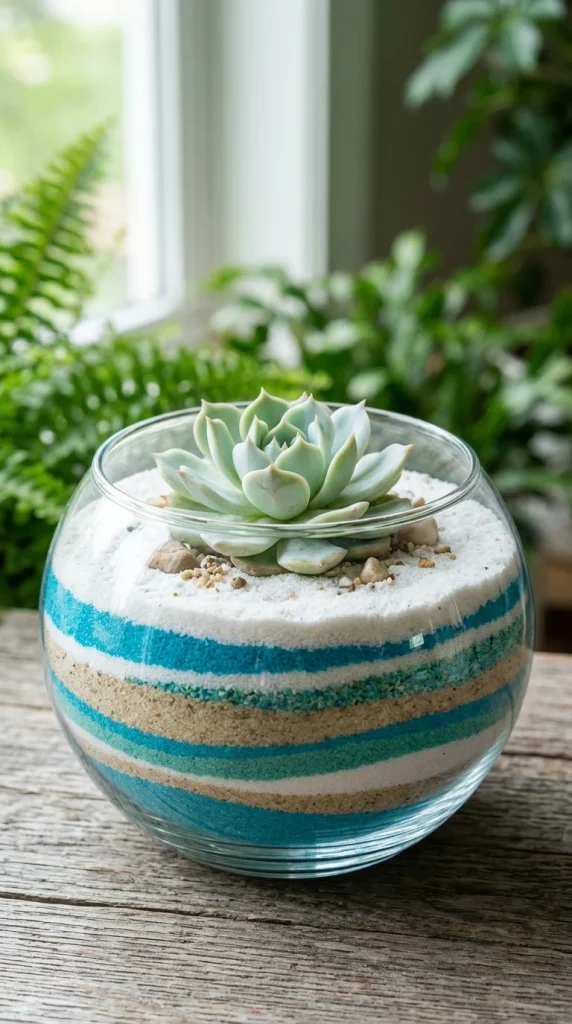
Transform a standard succulent container into a vibrant masterpiece by layering colored sands. Instead of just using traditional soil, use layers of white, charcoal, and pastel sands to create a striped effect against the glass. This style works best for open terrariums with succulents or cacti that require less water.
3. Hanging Globes
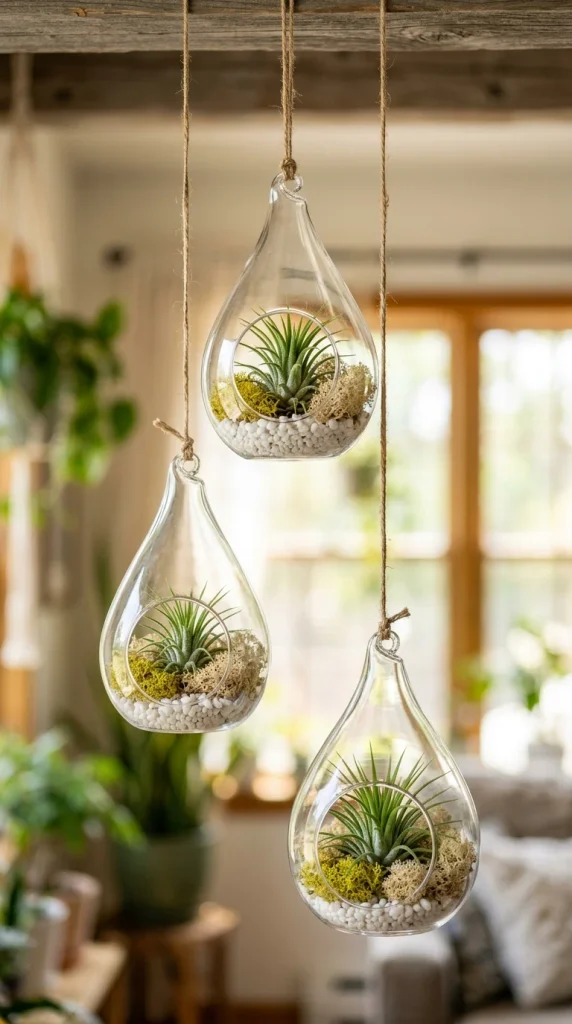
If you are short on surface space, look to the ceiling. Hanging glass globes are perfect for air plants (Tillandsia), which don’t require soil. Place a few pebbles or decorative sea glass at the bottom for weight and visual interest, then nestle the air plant inside for a floating garden effect.
4. Light Bulbs

Upcycling old incandescent light bulbs into micro-terrariums is a fantastic way to practice sustainability. By carefully removing the internal filament, you create a tiny vessel perfect for a single sprig of moss or a very small air plant. These make excellent desk accessories or unique gifts.
5. Desert Bowl

Capture the rugged beauty of the Southwest with a desert-themed bowl. Use a gritty, well-draining cactus mix and a variety of small cacti. Decorate the surface with “canyon” rocks and fine gravel to mimic a parched landscape. Since these are open, they require bright light and very little water.
6. Tropical Jar

Tropical terrariums thrive on humidity. Use plants like Fittonia (nerve plants), Polka Dot plants, and miniature orchids. Because these jars are often closed, the water cycles through the system, meaning you rarely have to water them. The dense, colorful foliage creates a miniature jungle vibe.
7. Mossy Woodland
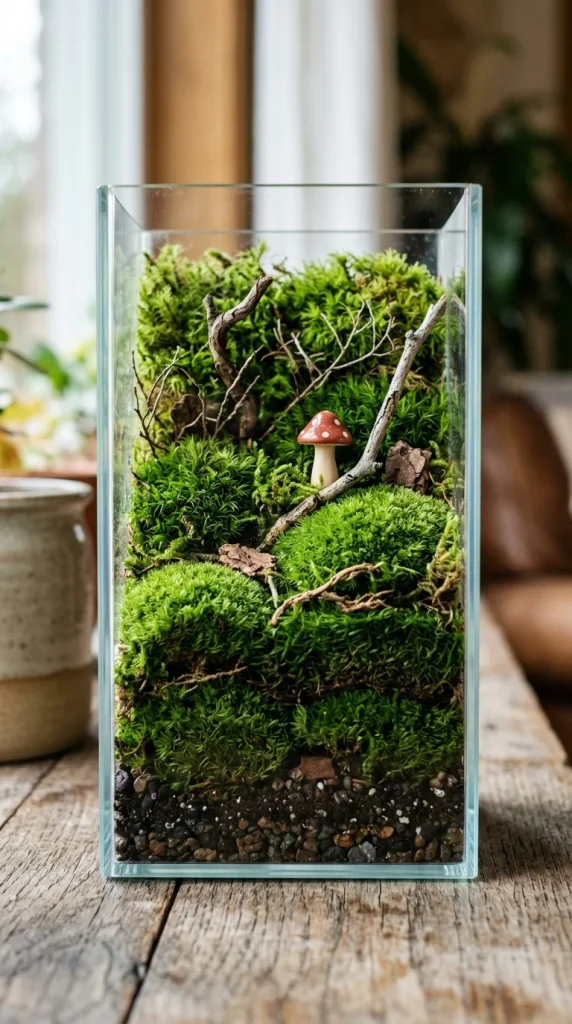
A moss terrarium is the ultimate low-maintenance project. Mosses are incredibly resilient and come in a fascinating array of textures and shades of green. Incorporate natural elements like bark, twigs, and small stones to make it look like a piece of the forest floor was lifted straight from the woods.
8. Coffee Pot
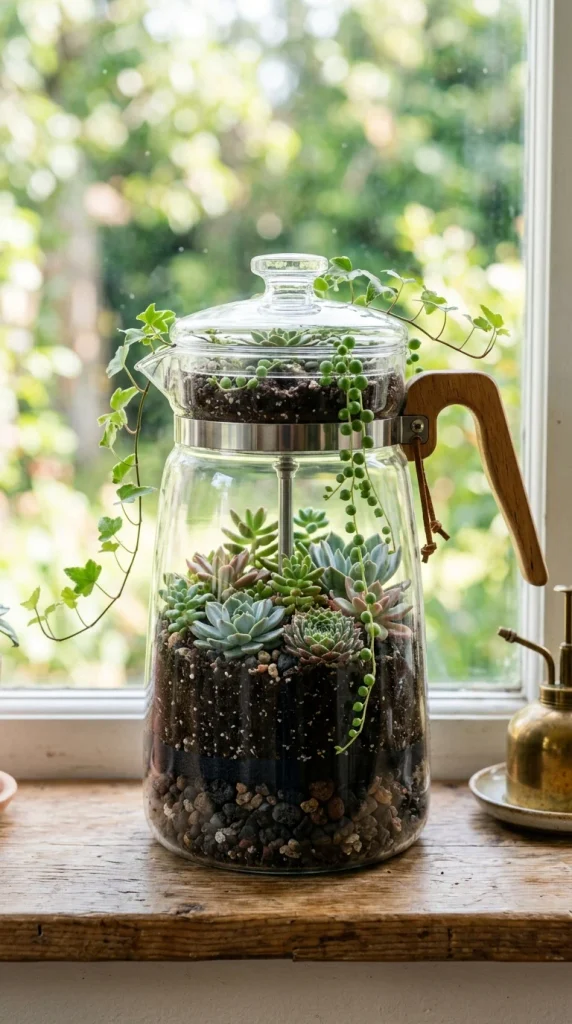
Give a broken or unused glass coffee carafe a second life. The handle and spout add a quirky, vintage character to your indoor garden. This is a great conversation piece for a kitchen counter or a breakfast nook.
9. Apothecary Elegance
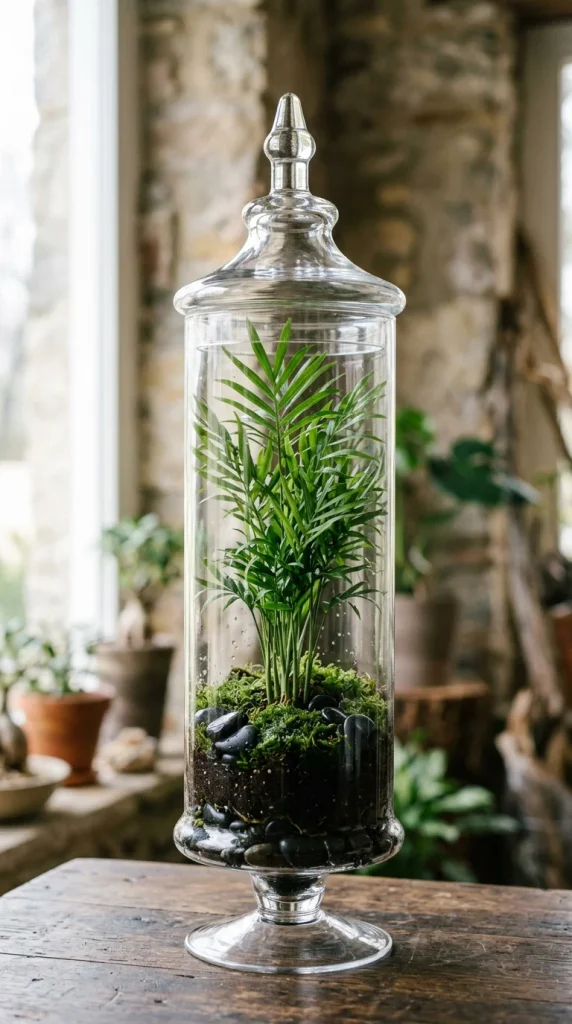
Apothecary jars come in beautiful, antique-inspired shapes that add a touch of sophistication to any room. Their height allows you to use taller plants like Parlor Palms or Alocasia. The lid helps maintain a consistent humidity level, making it an ideal environment for delicate tropicals.
10. Mason Jars
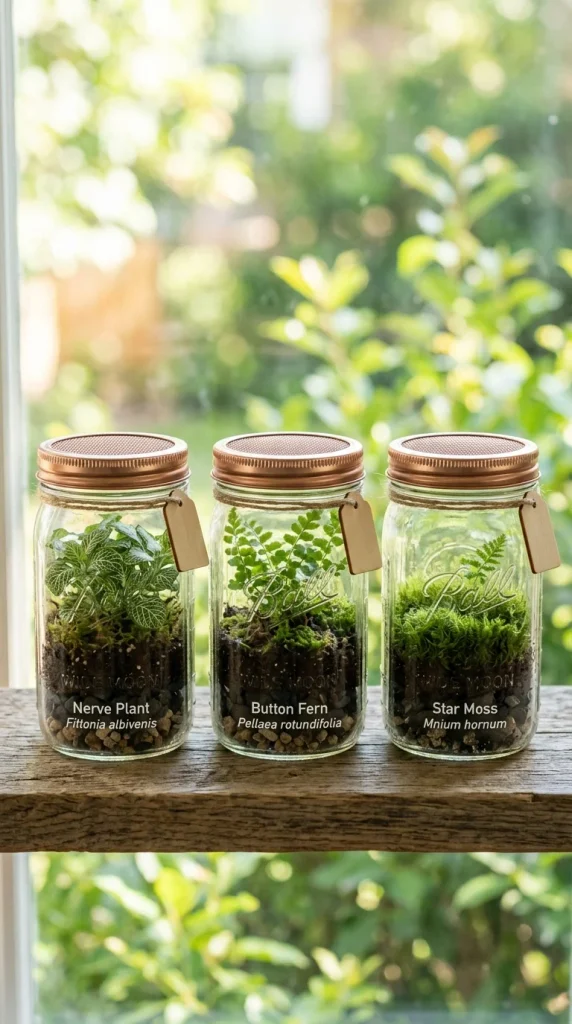
Mason jars are the most accessible vessel for a DIY terrarium. They are inexpensive and sturdy. You can create a “family” of jars with different themes—one for succulents, one for moss, and one for ferns. They are the perfect size for kids to experiment with gardening.
11. Geometric Prism
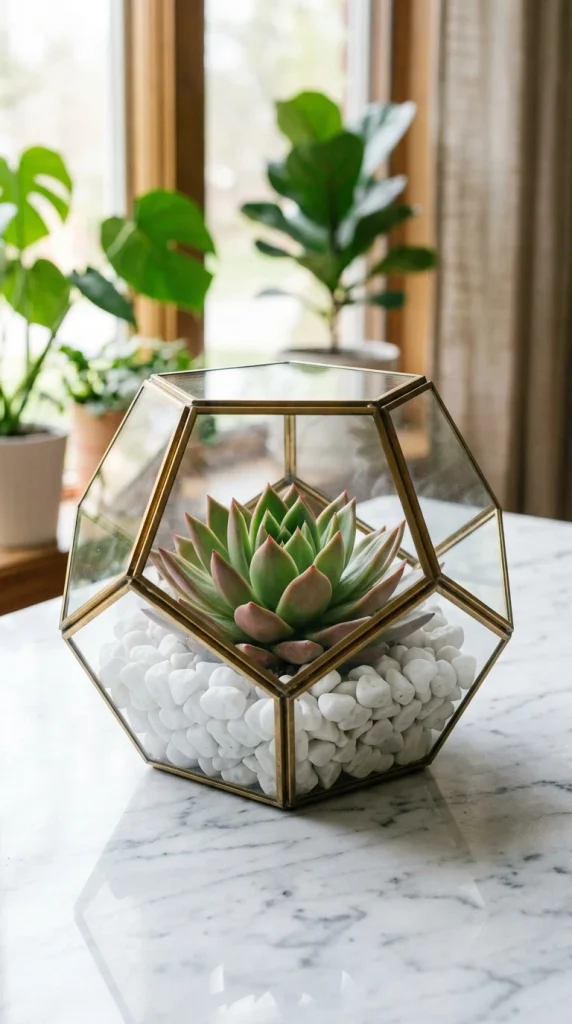
Geometric terrariums are a staple of modern interior design. Usually made of glass panels joined by copper or brass solder, these prisms look stunning on coffee tables. Because they have large openings, they are best suited for succulents and air plants that enjoy air circulation.
12. Fairy Tale
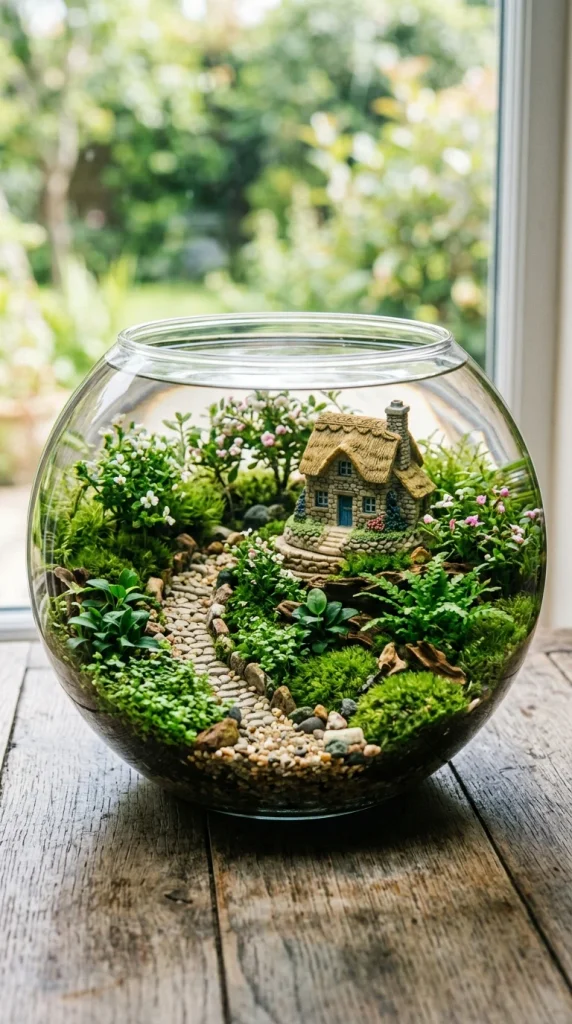
Bring some magic into your home by creating a miniature fairy garden. Use “creeping” plants to act as grass and small woody plants to act as trees. Adding tiny accessories like benches, gates, or figurines transforms the terrarium from a plant container into a storytelling piece.
13. Aquatic Undersea
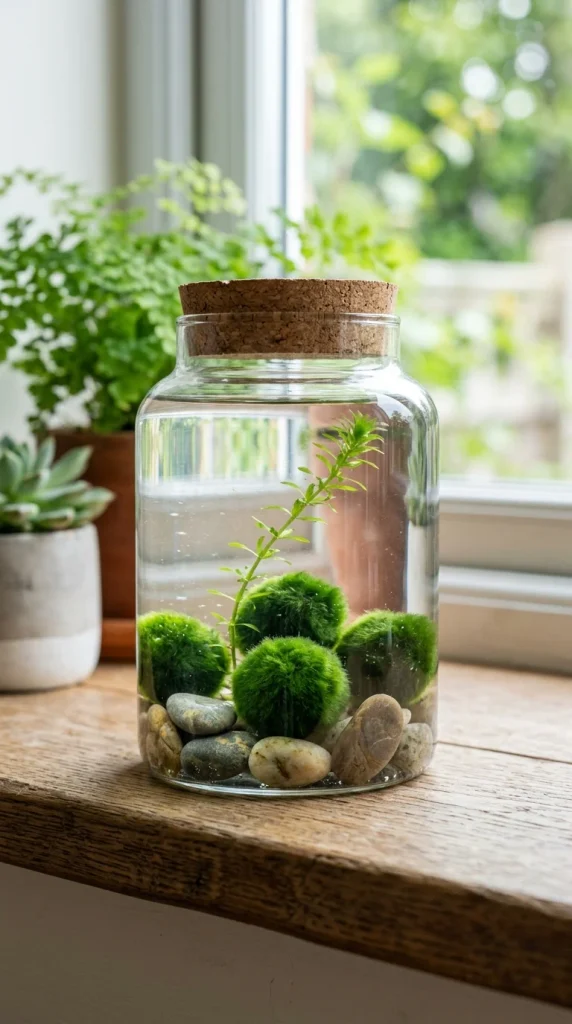
Not all terrariums need soil. An aquatic terrarium, or “jarrarium,” uses water as the medium. Marimo moss balls are the stars here—they are fluffy, round algae balls from Japan that are incredibly easy to care for. Add some aquarium gravel and maybe a few aquatic plants for a serene underwater look.
14. Wine Bottles
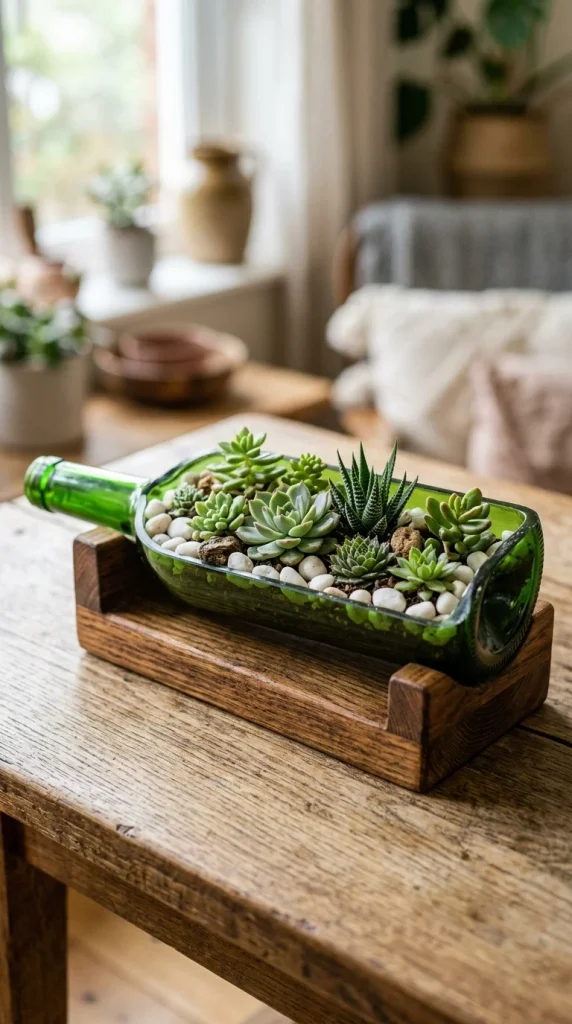
For the craftier DIYer, a glass-cutting tool can turn an old wine bottle into a sleek, horizontal planter. These look particularly good on mantels or long dining tables. The narrow neck of the bottle adds an interesting architectural element to the display.
15. Teacup Oasis

Teacup terrariums are adorable and make perfect party favors or small gifts. Since they are small, choose the tiniest succulent varieties (like “baby toes” or small sedums). Because there is no drainage, be sure to use a layer of charcoal and pebbles at the bottom to prevent root rot.
16. Zen Rock

Inspired by Japanese Zen gardens, this terrarium focuses on minimalism and tranquility. Use sand and large, smooth river stones as the primary elements, with just one or two air plants to provide a pop of life. It’s a perfect addition to a home office or a meditation space.
17. Wall Globes
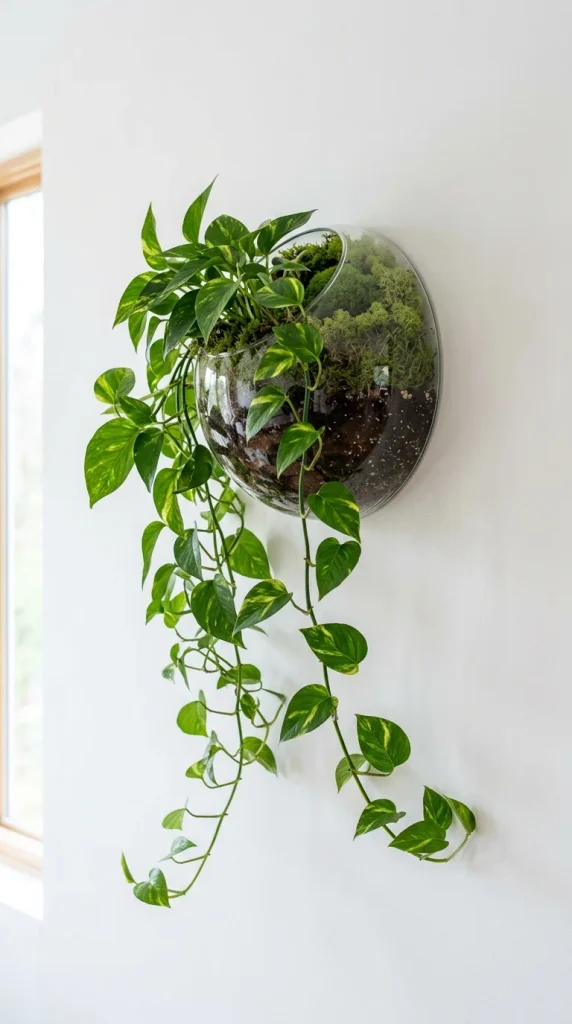
Wall-mounted terrariums are like living wallpaper. They are flat on one side and bulbous on the other, allowing them to hang flush against the wall. These are excellent for “vining” plants like Pothos or Philodendron that will eventually spill out of the opening and grow down the wall.
18. Lantern Greenery
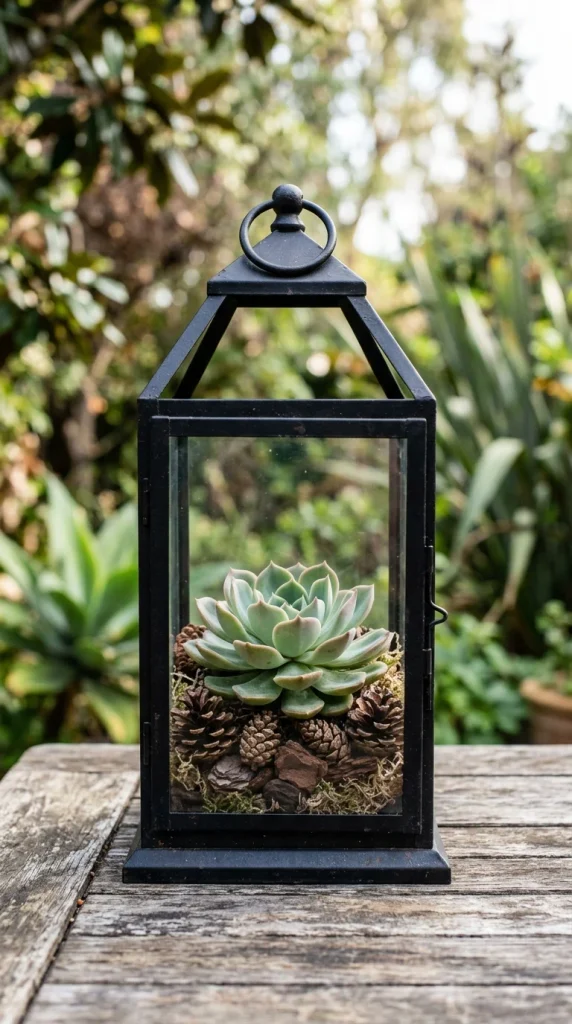
Repurpose a rustic candle lantern by replacing the candle with a miniature garden. The metal frame provides a sturdy, industrial look that contrasts beautifully with soft green foliage. Lanterns often have doors, making it easy to reach inside for pruning and maintenance.
19. Fishbowl Jungle
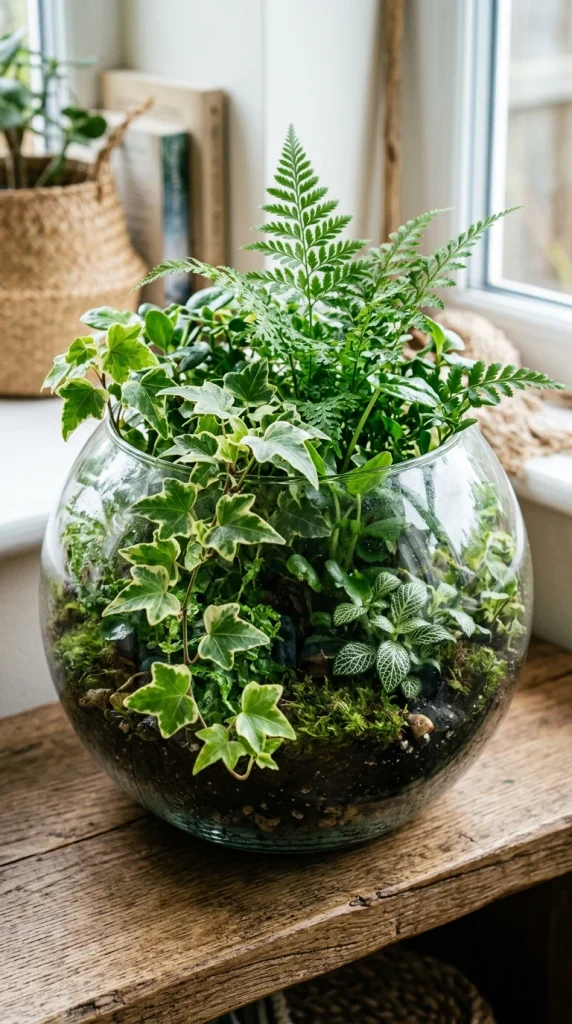
A large fishbowl provides a massive amount of space for a diverse ecosystem. You can create different elevations within the bowl by mounding soil in the back and keeping it low in the front. This depth allows you to plant a variety of species together, creating a truly lush jungle effect.
20. Crystal Cave
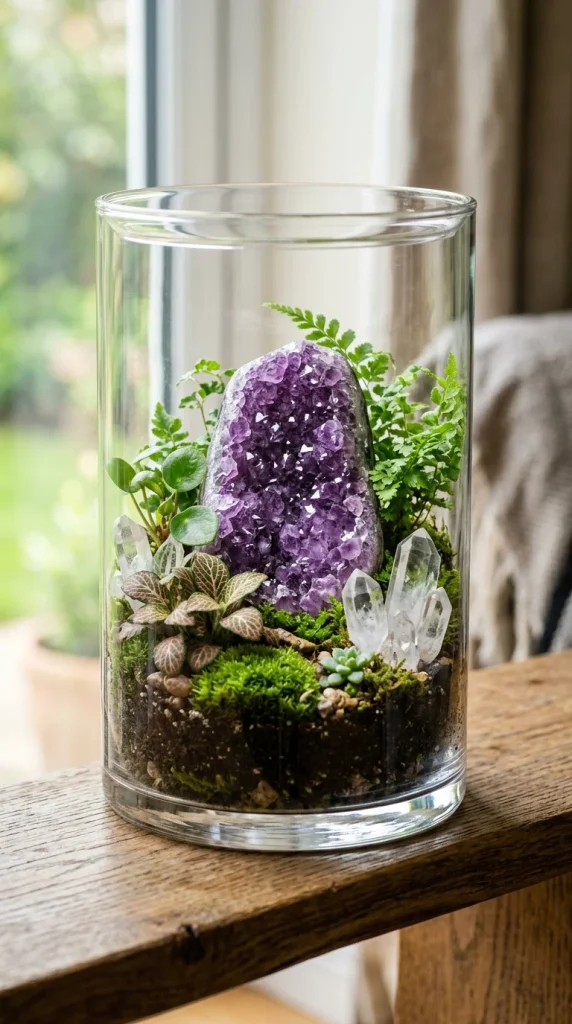
Incorporate the healing vibes of crystals into your terrarium. Use large geodes or clusters of quartz as the centerpieces, planting around them. The way the light hits the crystals through the glass adds an ethereal, magical quality to the garden.
21. Spice Jars
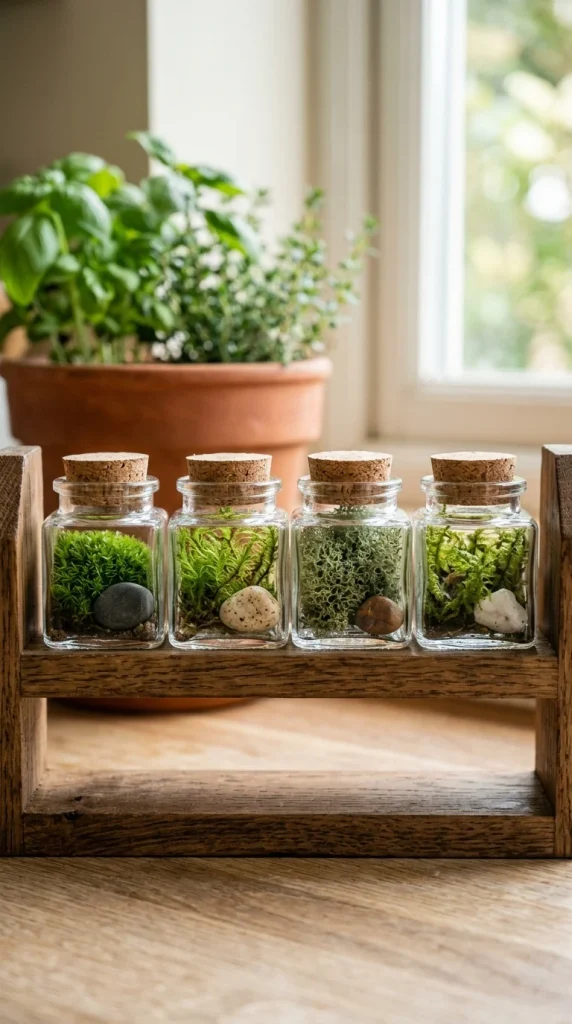
If you have a very small workspace, spice jar terrariums are the answer. These “micro-gardens” are fascinating because they require you to work with tweezers and tiny clippings. They look great lined up on a windowsill where the sunlight can illuminate the tiny details.
22. Driftwood Ecosystem
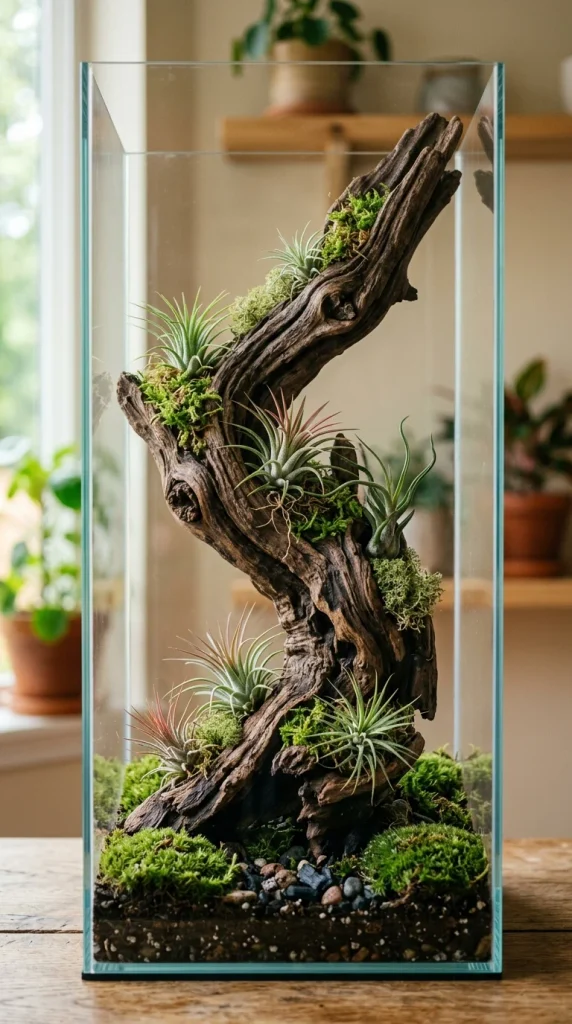
Instead of focusing on the soil, make wood the star. Find a beautiful piece of driftwood and secure air plants or mosses into its natural crevices. Place the entire piece of wood inside a glass case to maintain humidity and protect the delicate arrangement.
23. Bookends
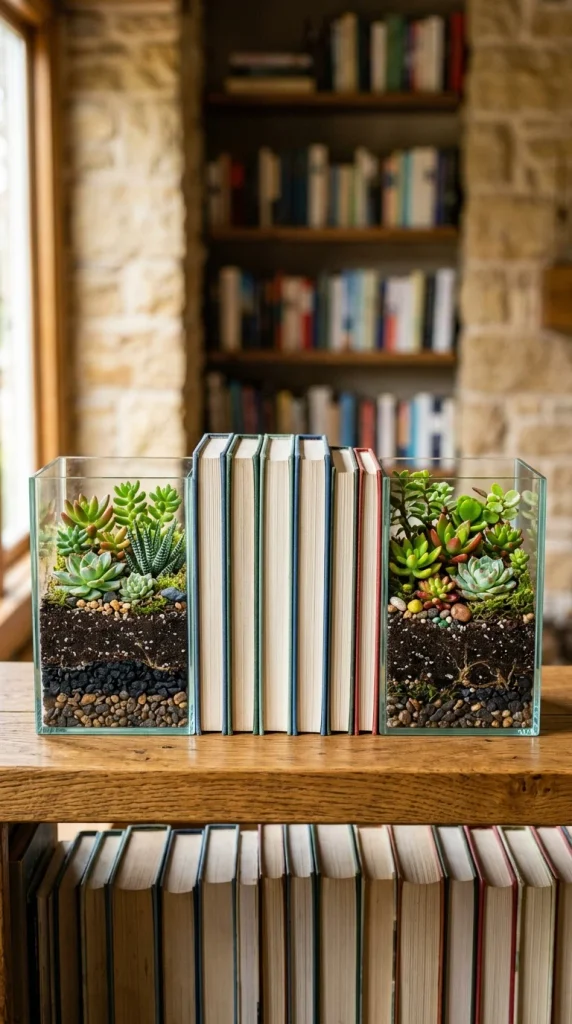
Combine your love of reading with your love of plants. Functional terrarium bookends are available as kits or can be DIYed with the right glass containers. They add life to a bookshelf and keep your favorite novels upright at the same time.
24. Gumball Machine
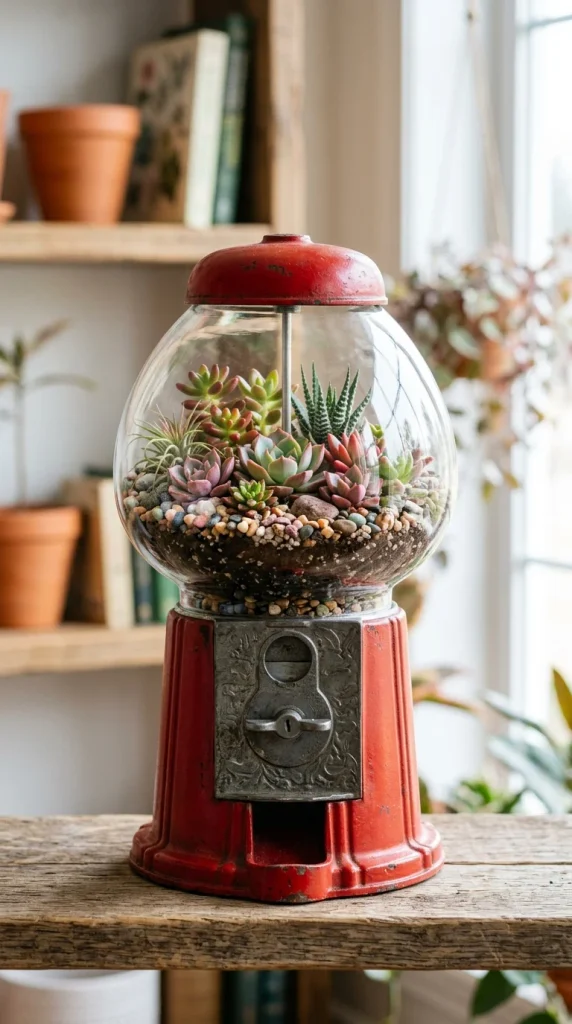
For a retro, kitschy vibe, turn a vintage gumball machine into a terrarium. The round glass globe is a perfect shape for viewing plants from all angles. It adds a playful, nostalgic element to your decor that is sure to be a conversation starter.
25. Wardian Case
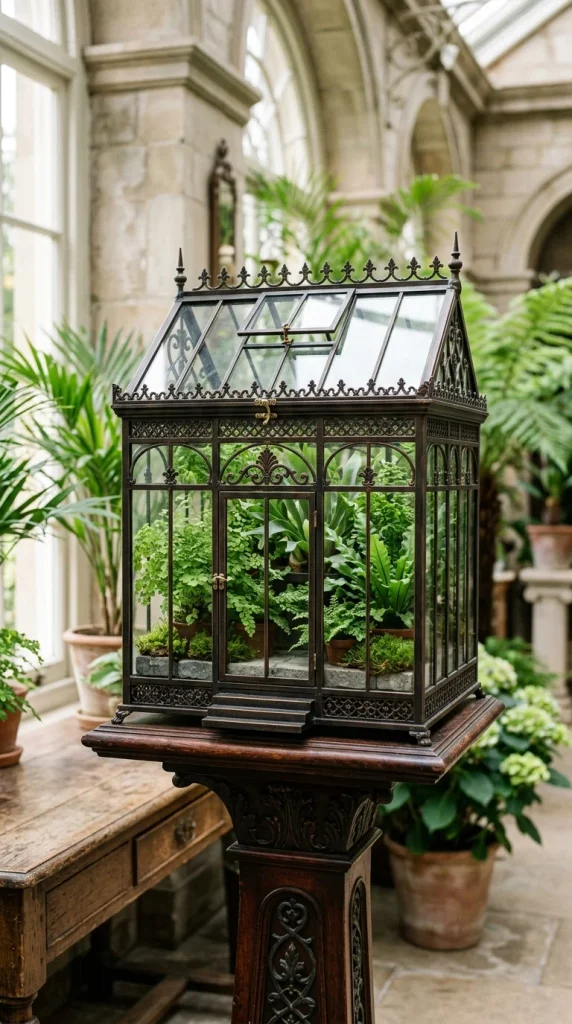
The Wardian case is the ancestor of the modern terrarium. These are typically larger and more ornate, resembling miniature Victorian greenhouses. They are perfect for serious indoor gardeners who want to grow more sensitive or rare tropical plants that need a strictly controlled environment.
26. Jewelry
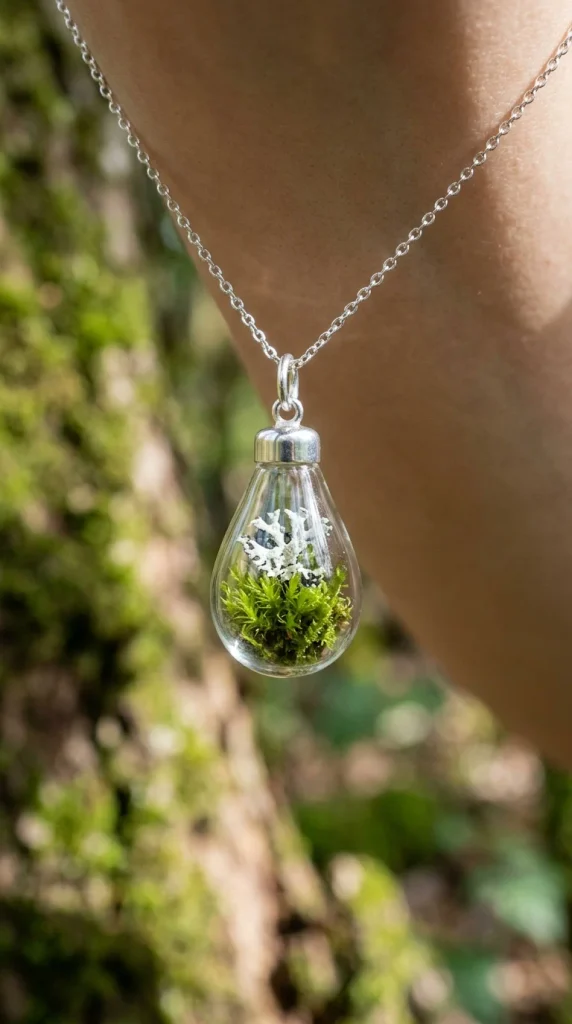
Wear your garden with you! Miniature glass vials can be turned into living necklaces. These usually contain a tiny bit of moss or a small air plant. While they require a bit more care (like a drop of water every week), they are a stunning way to showcase your love for nature.
Quick Tips for Terrarium Success:
- Drainage is Key: Always start with a layer of pebbles or gravel at the bottom to prevent water from sitting in the soil and rotting the roots.
- Use Charcoal: A thin layer of activated charcoal above the pebbles helps filter the water and keep the terrarium smelling fresh.
- Light Matters: Most terrarium plants prefer bright, indirect light. Direct sunlight can act like a magnifying glass through the vessel and scorch your plants.
- Don’t Overwater: In a closed terrarium, you may only need to water once every few months. If there’s too much condensation on the glass, leave the lid off for a day to let it dry out.