

Transforming a steep hillside from a daunting, erosion-prone slope into a functional and beautiful landscape is one of the greatest challenges a homeowner can face. Most people look at a vertical incline and see a maintenance nightmare, but professional landscapers see an opportunity for drama, depth, and unique architectural interest.
When dealing with gravity, the primary goals are stabilization, water management, and accessibility. Without a proper plan, soil washes away, and plants struggle to take root. However, with the right strategies, you can turn a “useless” hill into the crown jewel of your property. Here are 14 proven landscaping ideas for steep hillsides that combine engineering with aesthetics.
1. Retaining Walls
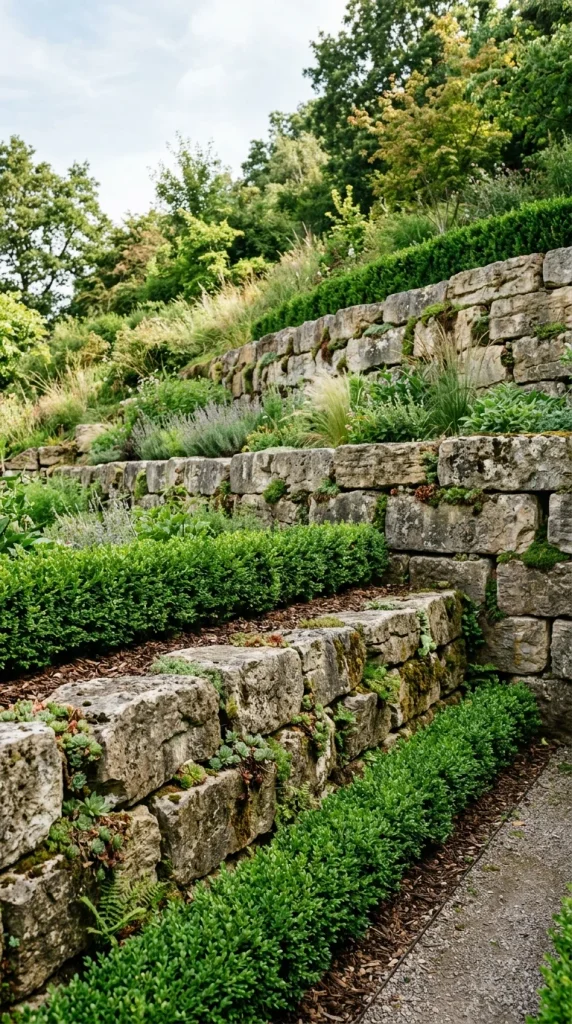
Retaining walls are the backbone of hillside landscaping. They act as a structural “brake” for sliding soil, holding back the weight of the earth to create flat, usable surfaces. While a single, massive wall can look imposing and industrial, “stacking” shorter walls in a terraced fashion is often more visually appealing and structurally sound.
When building retaining walls, drainage is the most critical factor. Hydrostatic pressure—the weight of water-saturated soil—is the leading cause of wall failure. Always ensure your design includes a gravel backfill and “weep holes” to allow water to escape. Materials like natural fieldstone, interlocking concrete blocks, or heavy timber can be used to match the architectural style of your home.
2. Terraced Gardens
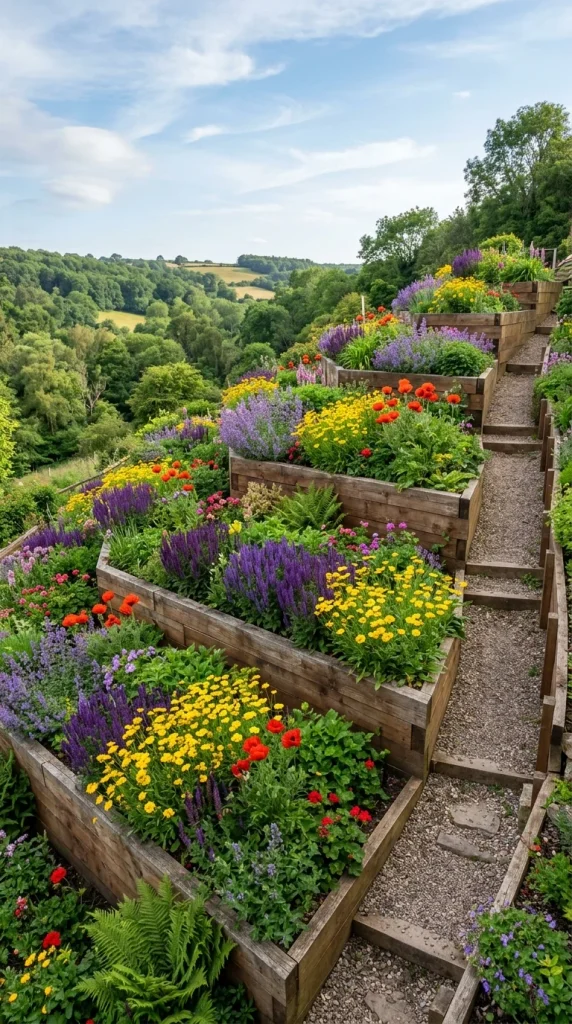
Terracing is the process of turning a slope into a giant staircase. This technique is thousands of years old, famously used in rice paddies and ancient vineyards. By breaking a steep grade into a series of flat “shelves,” you stop the downward rush of rainwater, allowing it to soak into the soil instead of stripping away nutrients.
Terraced gardens allow you to curate different “zones.” You might have one level dedicated to a cutting garden, another for aromatic herbs, and a third for evergreen shrubs that provide year-round structure. The flat surfaces also make weeding and pruning significantly safer and easier than trying to balance on a 45-degree angle.
3. Stone Paths
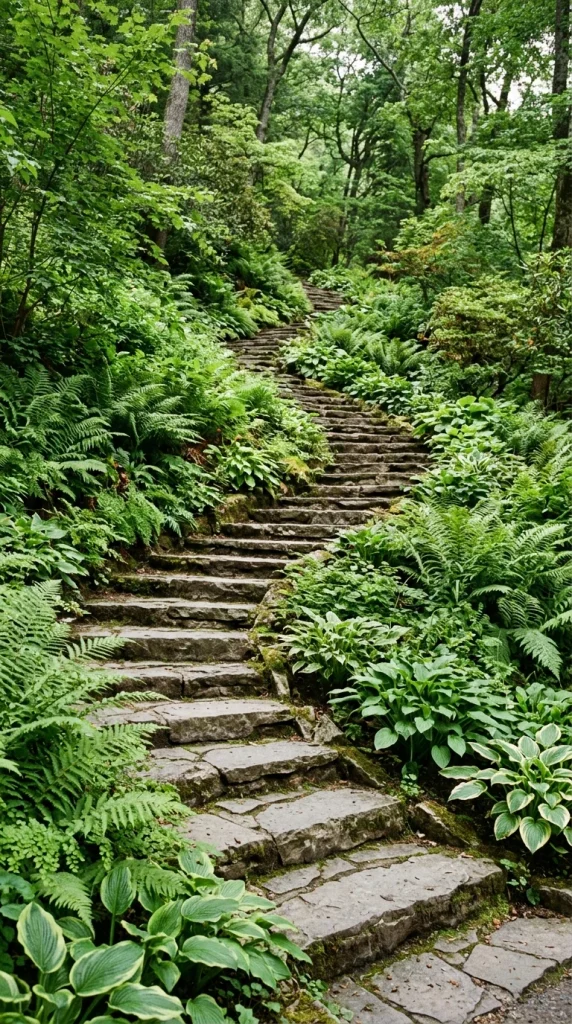
Accessibility is the biggest hurdle on a steep hill. If you can’t get to your plants, you won’t maintain them. A straight staircase going up a hill is exhausting and often requires expensive railing and foundation work. Instead, consider a winding stone path that utilizes “switchbacks”—the zig-zag pattern used in mountain trail building.
By traversing the slope at an angle rather than heading straight up, you reduce the perceived steepness. Natural flagstone or crushed gravel held in place by timber “checks” provides a stable surface. This turns a climb into a leisurely stroll, allowing you to experience the garden from different elevations and perspectives.
4. Ground Covers
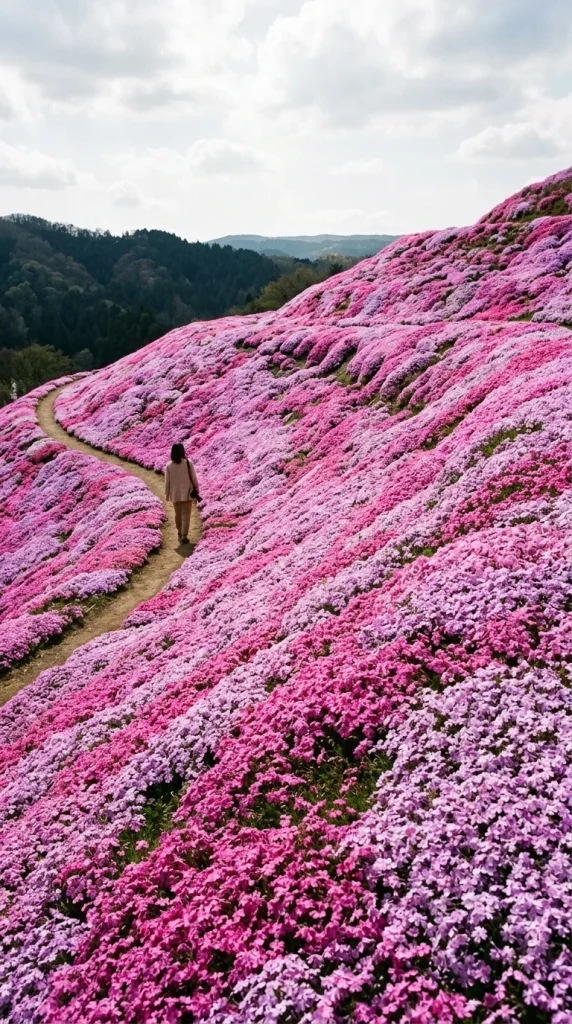
If you have a slope that is too steep to walk on safely, mowing lawn grass is out of the question—and incredibly dangerous. The solution is to replace grass with “living mulch” or ground covers. These are low-growing plants that spread rapidly to form a dense mat, shielding the soil from the impact of raindrops and choking out weeds.
Plants like Creeping Thyme, Pachysandra, or Vinca Minor are excellent choices. For sunnier, arid slopes, Sedum varieties offer a succulent-like texture that requires almost zero water. These plants anchor the top layer of soil with their fibrous root systems, preventing the “surface creep” that often occurs during heavy storms.
5. Native Grasses
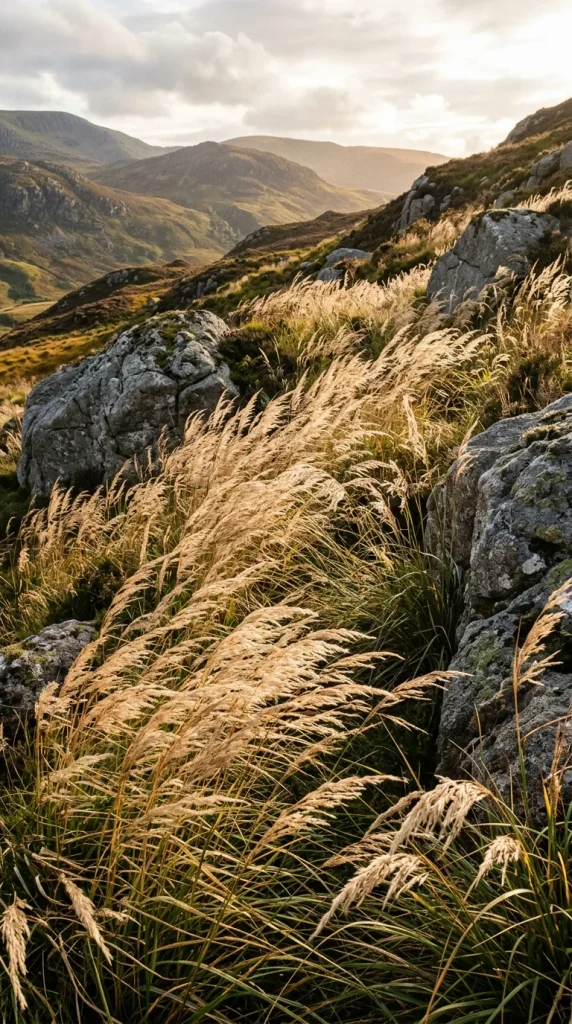
Native grasses are the unsung heroes of hillside stabilization. Unlike turf grass, which has shallow roots, many native prairie or ornamental grasses have root systems that can reach five to ten feet deep. These roots act like biological rebar, knitting the hillside together from the inside out.
Beyond the structural benefits, grasses provide movement and sound. On a windy day, a hillside covered in Little Bluestem or Fountain Grass creates a rhythmic swaying motion that softens the harsh lines of a steep grade. They are also incredibly low-maintenance, typically requiring only one “haircut” per year in late winter.
6. Waterfalls
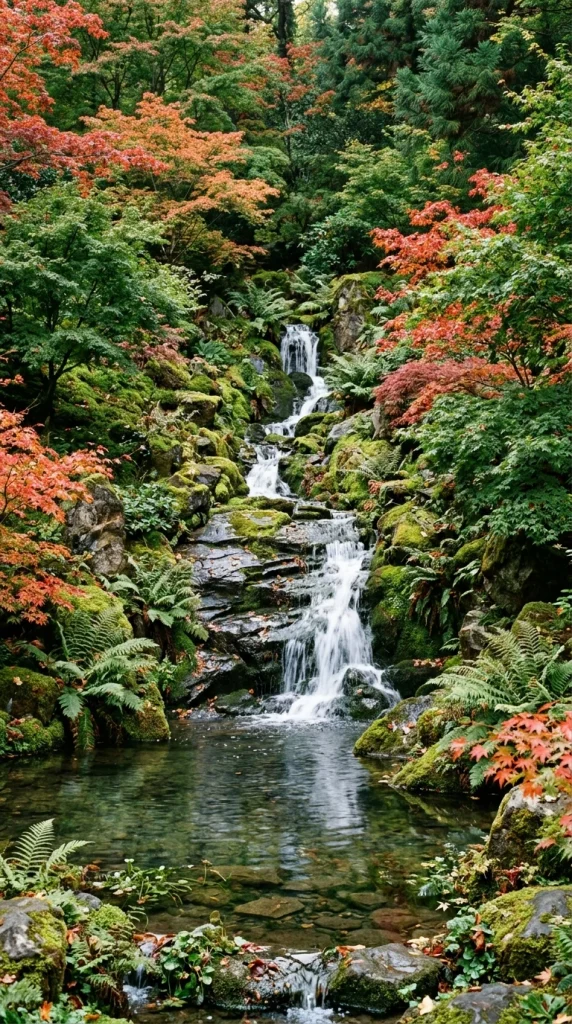
A steep slope is a natural gift if you want a water feature. On flat land, contractors have to build artificial mounds of dirt to create a waterfall, which often looks out of place. On a hill, you already have the elevation change required for a dramatic, gravity-fed cascade.
A hillside waterfall can be designed to look like a natural mountain stream. By using large boulders to create “plunge pools,” you can slow the water down as it travels, creating a series of soothing sounds. This not only adds immense aesthetic value but also helps mask neighborhood noise, turning your backyard into a private sanctuary.
7. Timber Steps
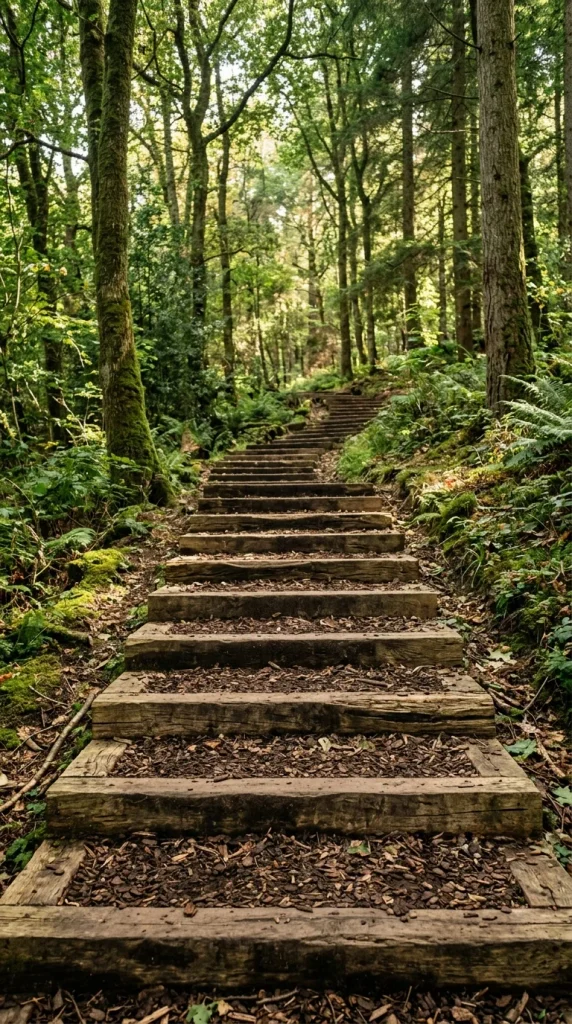
For a more organic or “woodsy” feel, timber steps are a cost-effective and DIY-friendly alternative to stone masonry. Using pressure-treated 6×6 beams or reclaimed railroad ties, you can create wide, comfortable stairs that feel integrated into the forest floor.
The “tread” of the step (the part you walk on) can be filled with gravel, mulch, or even walkable ground covers like Irish Moss. This allows the stairs to be permeable, meaning water can soak through them rather than rushing over the top and causing erosion at the base of the staircase.
8. Rock Gardens
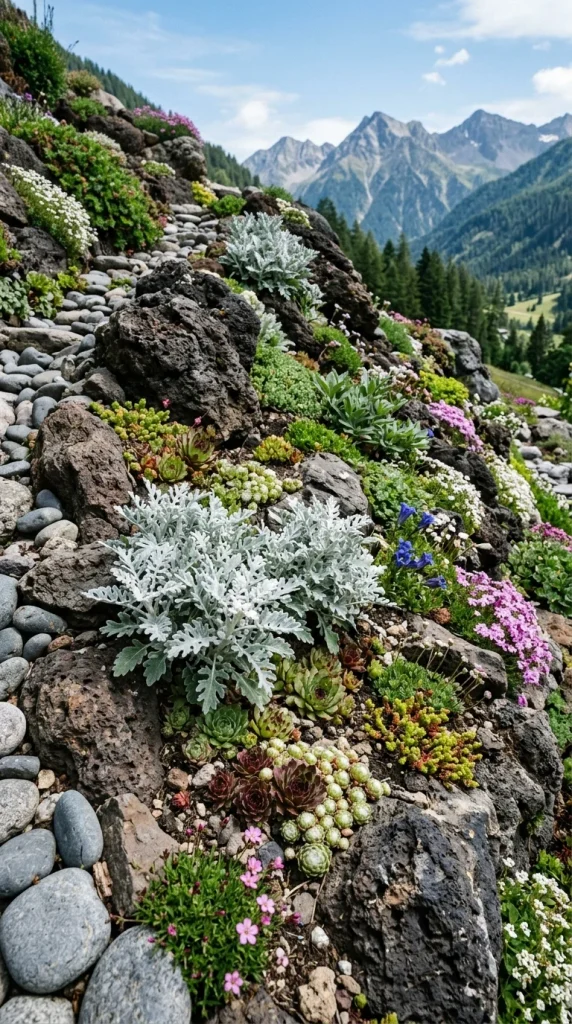
Sometimes, the best way to deal with a steep hill is to lean into its ruggedness. A rock garden uses boulders of varying sizes to mimic a natural mountain outcropping. The rocks themselves act as mini-retaining walls, holding back pockets of soil where specialized “alpine” plants can thrive.
Rock gardens are ideal for hillsides with poor, rocky soil where traditional garden plants struggle. By tucking plants into the “pockets” between stones, you create a microclimate that protects their roots from temperature extremes. This approach is highly textural and looks beautiful even in the dead of winter when other plants have gone dormant.
9. Deck Platforms
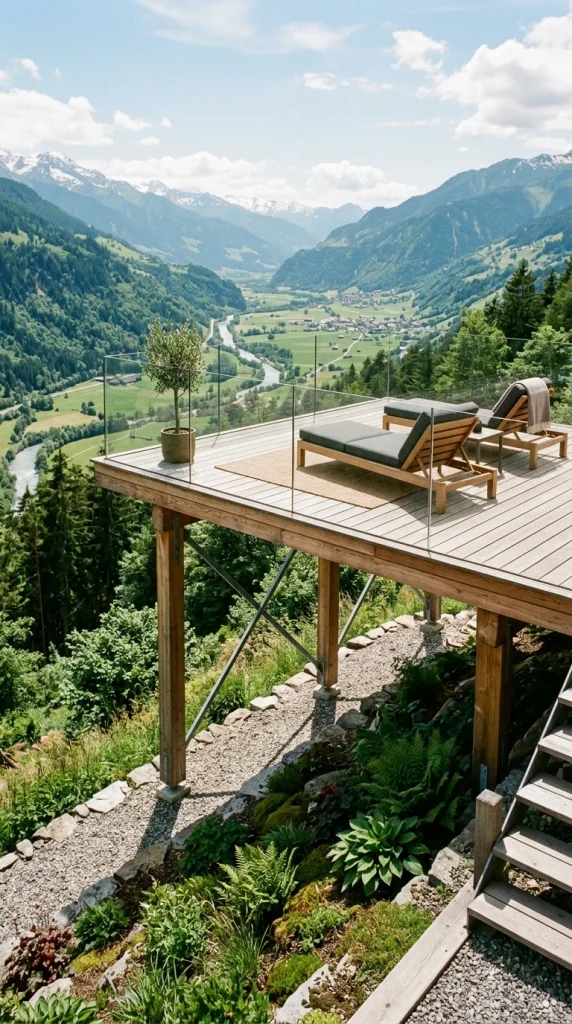
When the slope is so steep that gardening is impossible, “building out” is the answer. A multi-level deck platform creates flat, functional living space where there was once only unusable vertical air. By using a post-and-pier foundation, you can suspend a seating area directly over the slope.
This creates a “treehouse” effect, giving you a vantage point that feels immersed in the canopy. It also solves the problem of what to do with the space directly behind or in front of the house. The area under the deck can be treated with heavy-duty landscape fabric and decorative gravel to prevent erosion while remaining maintenance-free.
10. Drought-Tolerant Plants
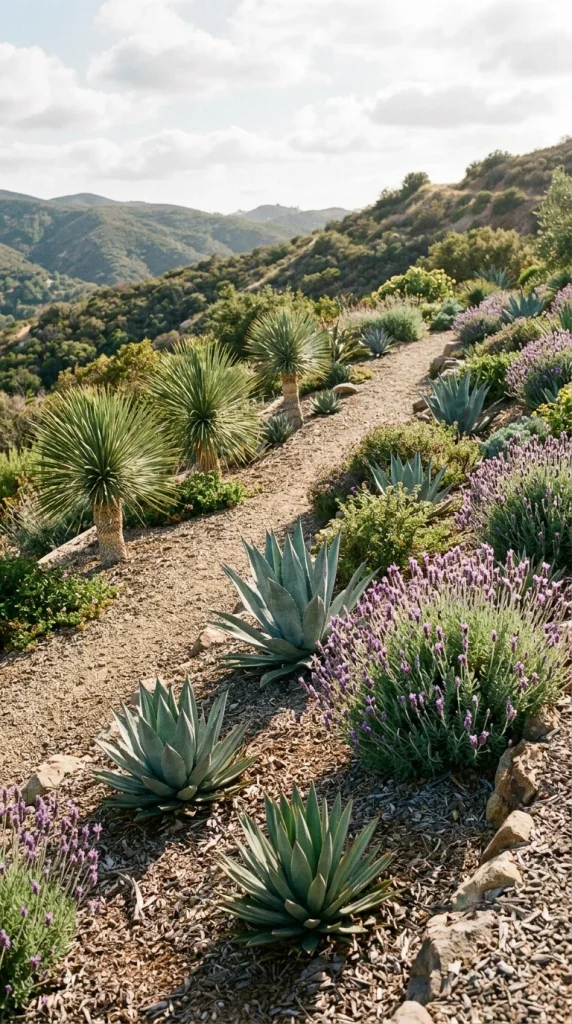
Hillsides are notoriously dry. Gravity pulls water down the slope before it has a chance to soak in, and slopes facing south or west are hit with intense, baking sunlight. This makes hillsides the perfect candidate for xeriscaping—landscaping with drought-tolerant plants.
By choosing species like Russian Sage, Rosemary, or various Cacti, you ensure that your landscape can survive the “feast or famine” water cycle of a steep hill. These plants often have thick, waxy leaves or deep taproots designed to find and store moisture, reducing the need for expensive and difficult-to-install irrigation systems.
11. Gabion Baskets

Gabion baskets are wire cages filled with rock or stone. Historically used for military fortifications and civil engineering, they have become a favorite in modern residential landscape design. They are incredibly effective for steep slopes because they are “flexible”—if the earth shifts slightly, the basket moves with it rather than cracking like a concrete wall.
They are also 100% permeable, allowing water to flow freely through the stones, which eliminates the risk of water pressure buildup. From a design perspective, you can fill them with different types of stones to create color patterns, or even use recycled glass rocks for a unique, glowing effect when lit from within.
12. Wildflower Meadows
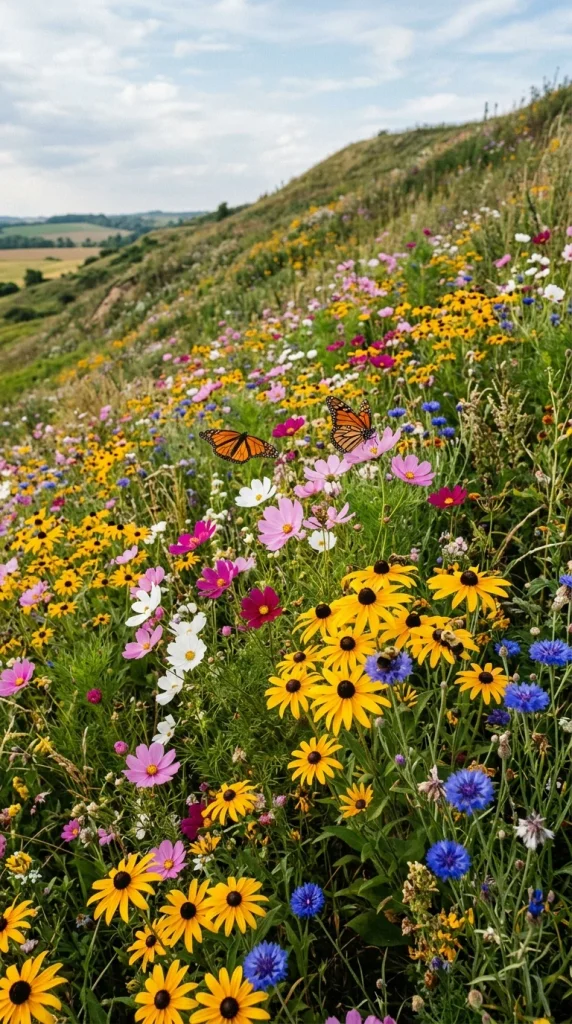
If you have a large hillside and a limited budget, a wildflower meadow is a spectacular solution. Rather than trying to control the slope with structures, you turn it into a self-sustaining ecosystem. Wildflowers have diverse root structures that help bind the soil, and they provide essential habitat for pollinators.
The key to a successful hillside meadow is proper site preparation—removing existing weeds and grasses before seeding. Once established, a meadow only needs to be mowed once a year in the late fall. This “managed wildness” hides the imperfections of the slope and creates a seasonal display that changes from month to month.
13. Strategic Lighting
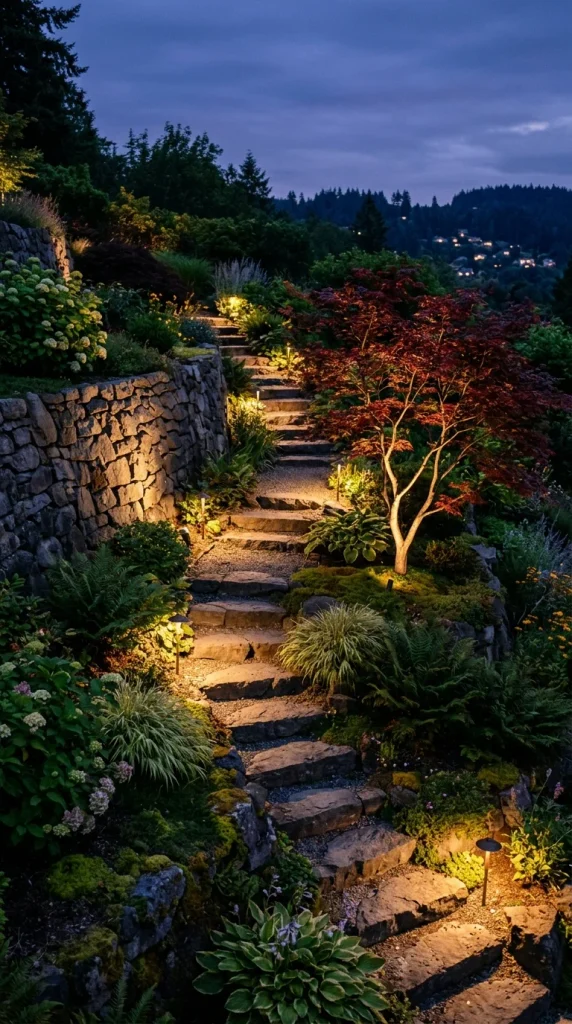
A steep hillside can be dangerous at night. Without proper lighting, steps and elevation changes become tripping hazards. However, lighting also offers a chance to turn your hillside into a dramatic visual feature after the sun goes down.
Use “downlighting” (lights mounted in trees or on high poles) to mimic moonlight washing down the slope. Use “path lights” to clearly define the edges of walkways and stairs. Finally, use “uplighting” on specimen trees or large boulders to create shadows and highlights that give the hillside a sense of three-dimensional depth that isn’t as apparent during the day.
14. Vegetable Terraces
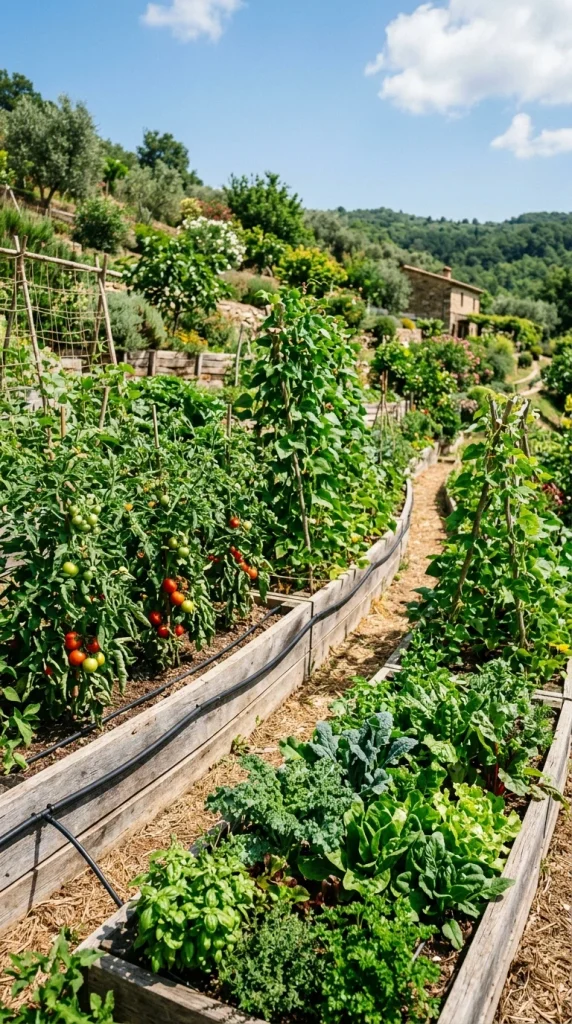
For the gardener who wants to maximize every square inch of their property, a steep hill can be a productive vegetable garden. The “tiered” nature of the beds provides excellent drainage (which most vegetables love) and ensures that taller plants in the back don’t shade out smaller plants in the front.
By building raised beds into the terraces, you can control the soil quality perfectly, bypassing the rocky or clay-heavy soil often found on slopes. Access is key here—ensure your paths are wide enough for a harvest basket or a small wheelbarrow. With the right orientation to the sun, a hillside “food forest” can be even more productive than a flat garden plot.