

Snake plants, known scientifically as Dracaena trifasciata (formerly Sansevieria trifasciata), are the undisputed champions of the houseplant world. Often called “Mother-in-Law’s Tongue” or “Viper’s Bowstring Hemp,” these architectural marvels are prized for their verticality, striking patterns, and near-indestructible nature. Whether you are a seasoned “plant parent” or a beginner who struggles to keep a cactus alive, the snake plant is your best friend.
However, “low maintenance” does not mean “no maintenance.” To transition your plant from merely surviving to truly thriving with vibrant, stiff, and towering leaves, you need a specific strategy. Here are 16 essential tips to master snake plant care.
1. Lighting
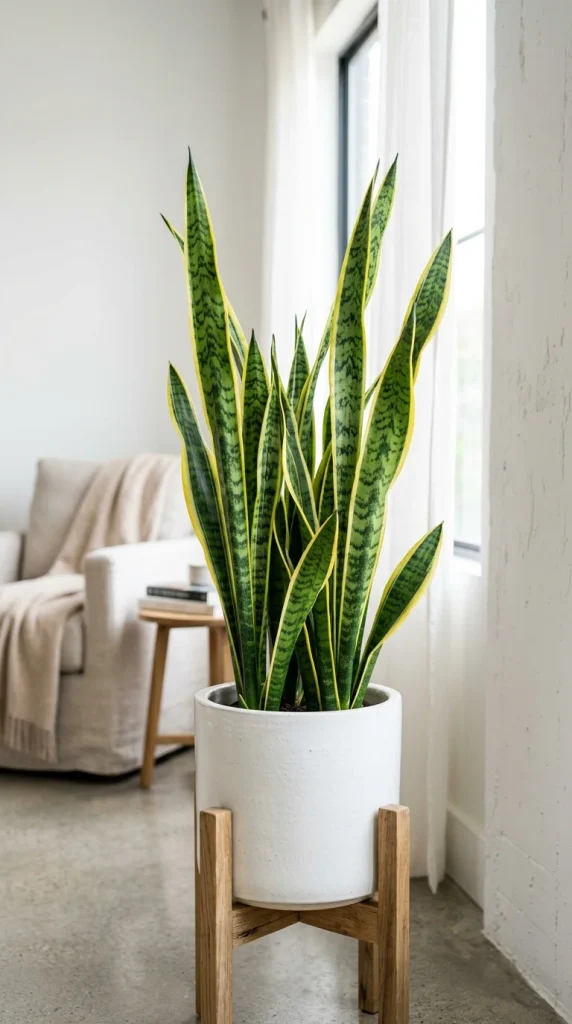
While snake plants are famous for surviving in dark corners, they actually prefer bright, indirect light. In low-light conditions, the plant’s growth slows significantly, and the vibrant variegation—those beautiful yellows and whites—may fade into a dull green as the plant produces more chlorophyll to compensate for the lack of sun. Place your plant near a north or east-facing window for the best results. If you notice the leaves becoming thin or stretched, it is a sign they are reaching for more light.
2. Watering
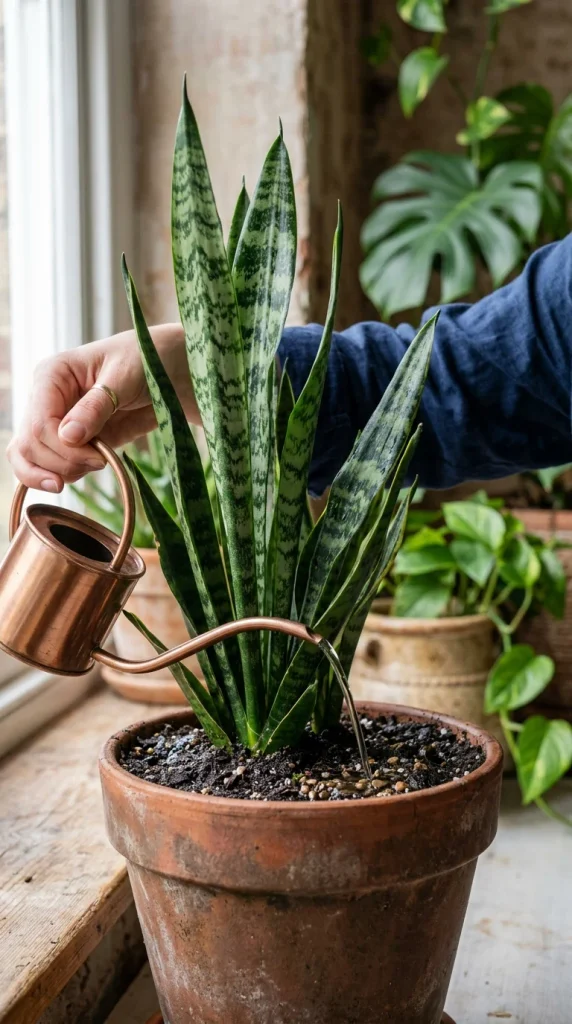
The fastest way to kill a snake plant is overwatering. These plants are succulents; they store water in their thick, fleshy leaves. You should only water when the soil is completely dry from top to bottom. During the growing season (spring and summer), this might mean every 2–3 weeks. In the winter, you may only need to water once every 6–8 weeks. Always check the soil moisture with your finger or a moisture meter before adding a single drop.
3. Soil
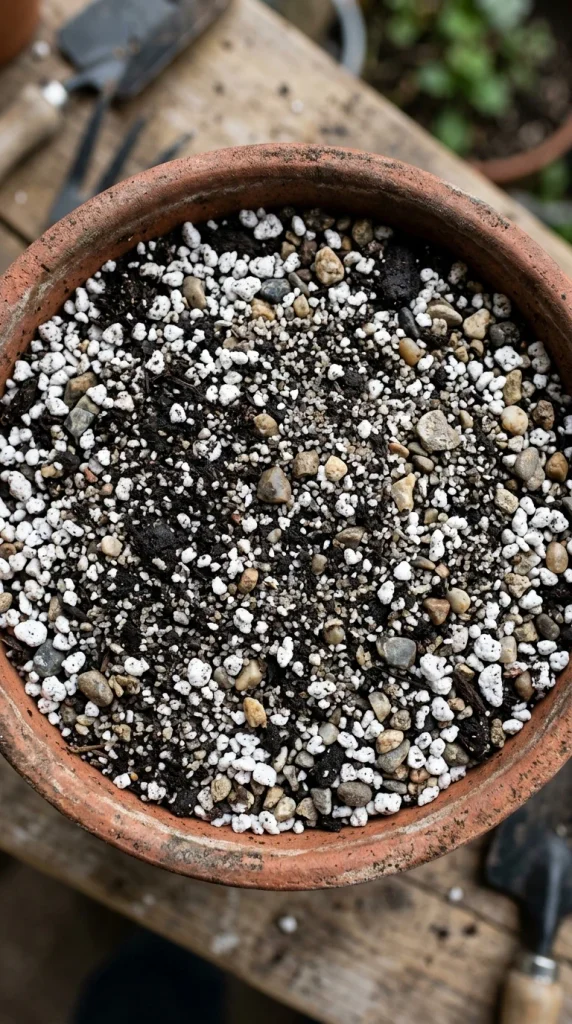
Standard potting soil holds too much moisture for a snake plant’s sensitive rhizomes. Instead, use a well-draining succulent or cactus mix. If you want to make your own, mix two parts regular potting soil with one part perlite and one part coarse sand. This ensures that water moves through the pot quickly, preventing the roots from sitting in a “mud bath” that leads to rot.
4. Potting
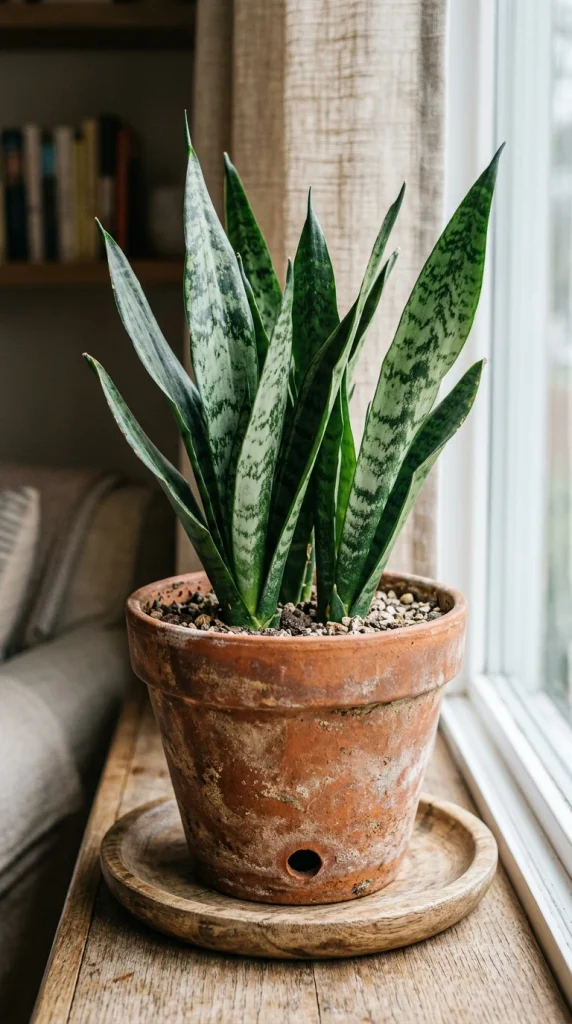
When choosing a container, drainage is non-negotiable. Ensure your pot has at least one large drainage hole at the bottom. Snake plants also prefer to be slightly root-bound, so do not rush to put a small plant in a massive pot. Too much extra soil holds onto excess water, increasing the risk of root rot. Terracotta is an excellent material choice as it is porous and helps the soil dry out faster.
5. Temperature

Snake plants are tropical natives and thrive in temperatures between 65°F and 85°F (18°C–29°C). They are quite resilient but do not handle frost well. Keep them away from drafty windows during the winter and ensure they aren’t positioned directly in front of air conditioning vents or heaters, as extreme temperature fluctuations can stress the plant and cause leaf scarring.
6. Humidity
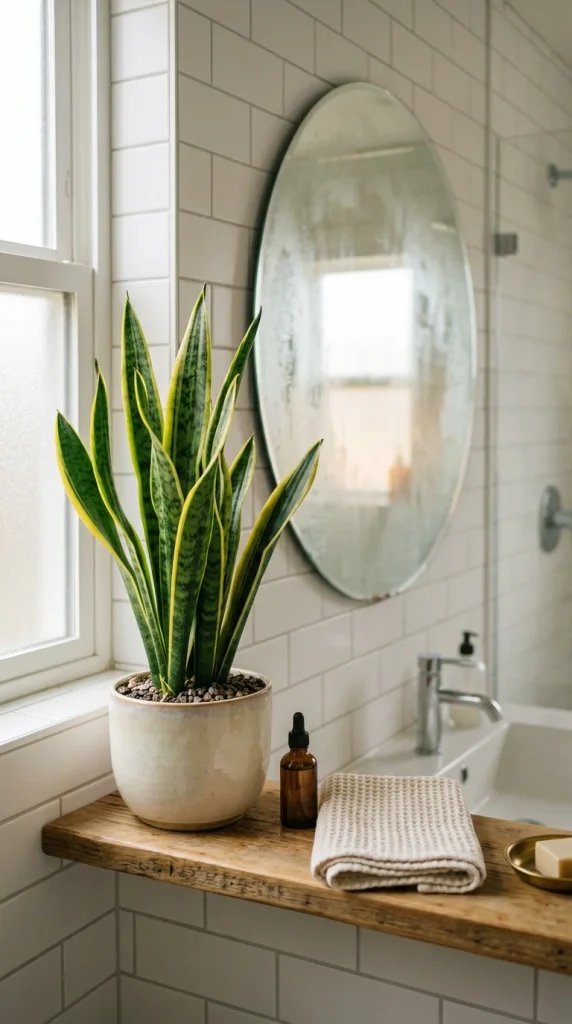
One of the reasons snake plants are so easy to care for is that they tolerate the dry air found in most homes. Unlike ferns or calatheas, they do not require a humidifier. However, they aren’t opposed to a bit of humidity. They can live happily in a bathroom as long as there is adequate light. Just ensure the soil still has the chance to dry out completely in a more humid environment.
7. Fertilizer
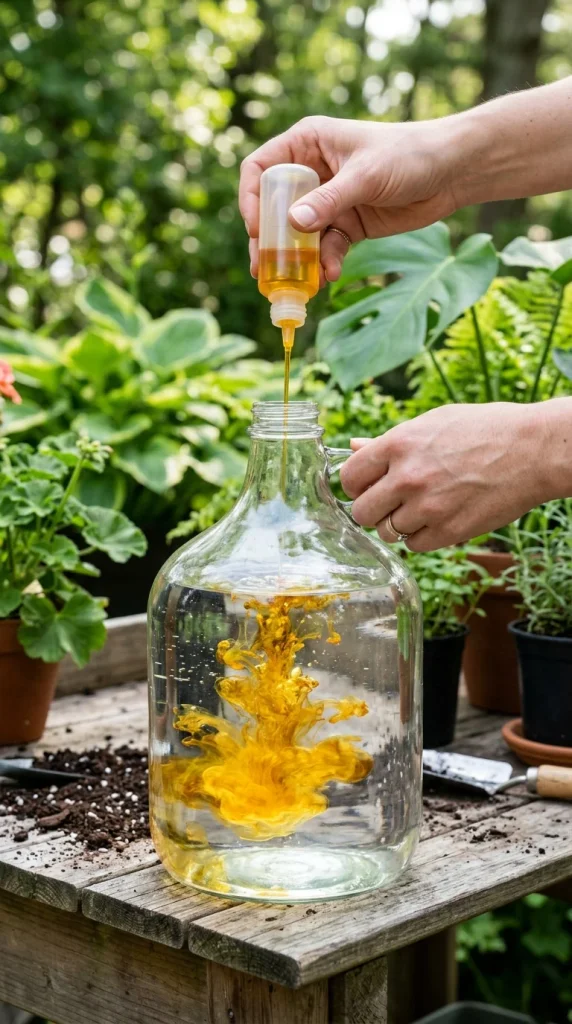
Snake plants are not heavy feeders. You only need to fertilize them once or twice during the growing season (spring and summer). Use a balanced, all-purpose liquid fertilizer diluted to half-strength. Avoid fertilizing in the winter when the plant is dormant, as the excess nutrients can build up in the soil and burn the roots.
8. Cleaning
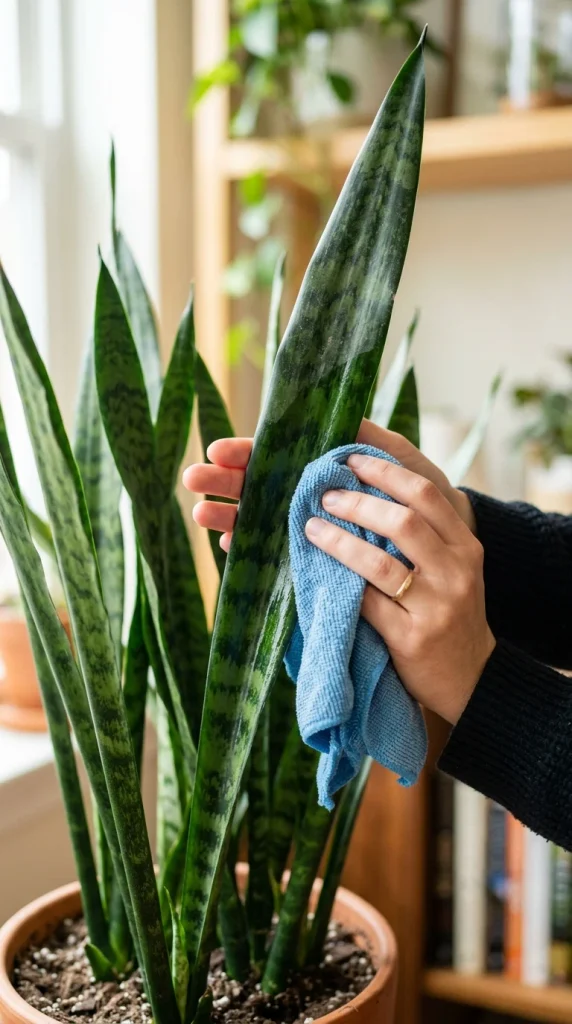
Because snake plant leaves are wide and vertical, they act as dust magnets. A thick layer of dust can block sunlight and inhibit photosynthesis. Every month or two, take a damp cloth and gently wipe down each leaf. This not only keeps the plant looking aesthetically pleasing and “shiny” but also allows it to breathe and process light more efficiently.
9. Pruning
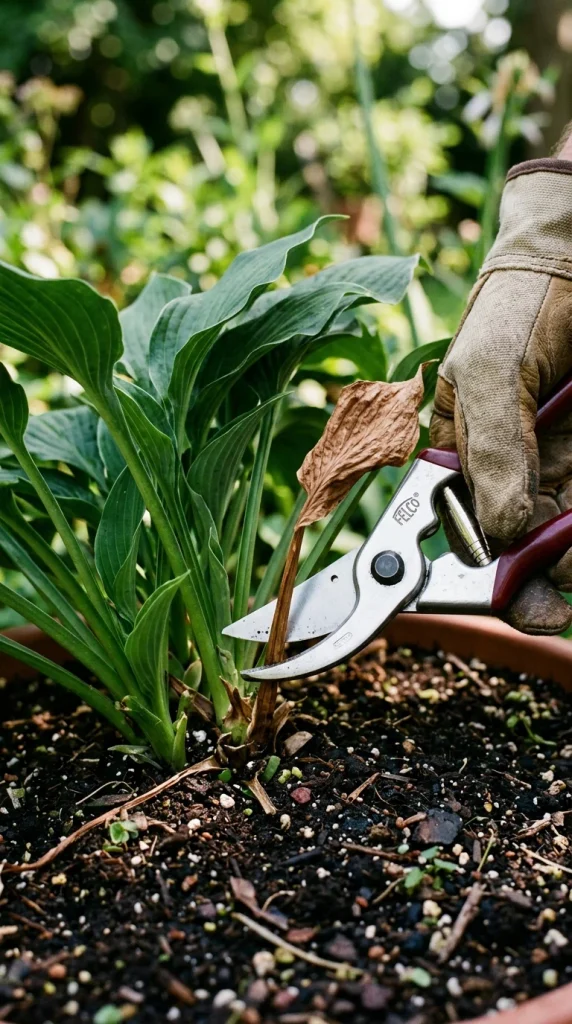
You don’t need to prune a snake plant to encourage growth, but you should remove any damaged or yellowing leaves to maintain the plant’s health. If a leaf has become mushy at the base (a sign of overwatering) or excessively scarred, use a sterilized blade to cut it off at the soil line. This prevents any potential rot or fungus from spreading to the healthy rhizomes.
10. Propagation
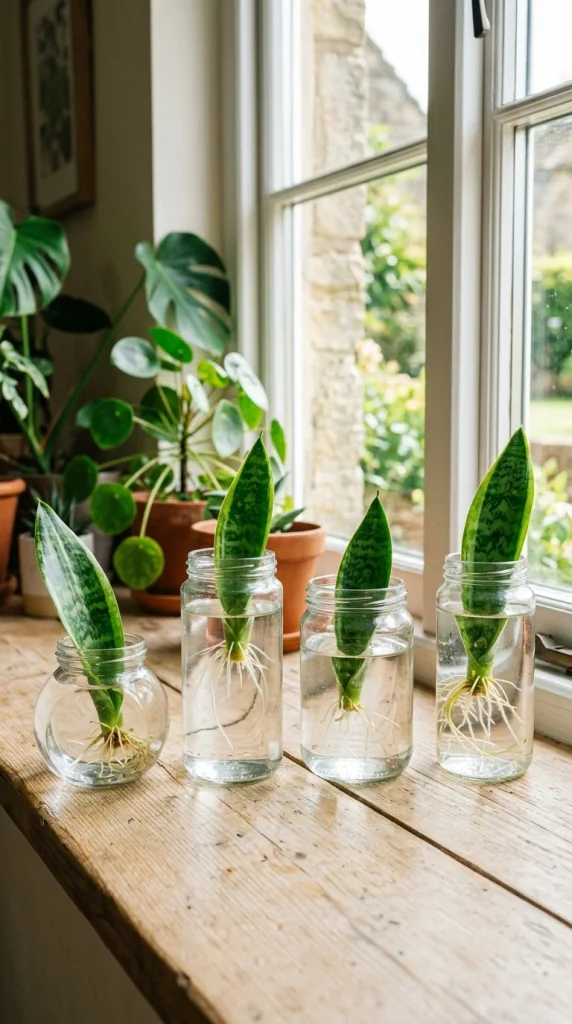
Snake plants are incredibly easy to propagate. You can divide the plant at the root during repotting by cutting the rhizome with a clean knife, or you can take leaf cuttings. To propagate in water, cut a leaf into 3-inch sections and place them upright in water (ensure you keep the “up” side facing up). Within a few weeks, you will see roots and eventually a “pup” (a baby plant) forming at the base.
11. Pests
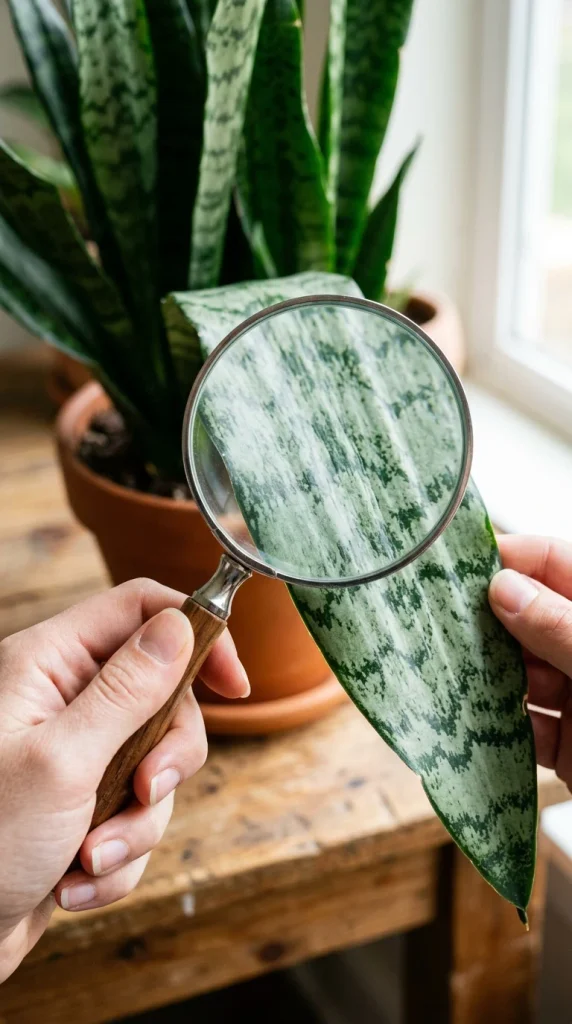
Snake plants are remarkably pest-resistant, but they aren’t invincible. Mealybugs and spider mites are the most common culprits. If you see white, cottony tufts or fine webbing, treat the plant immediately with neem oil or insecticidal soap. Because the leaves are tough, you can also manually remove pests using a cotton swab dipped in rubbing alcohol.
12. Pot Material
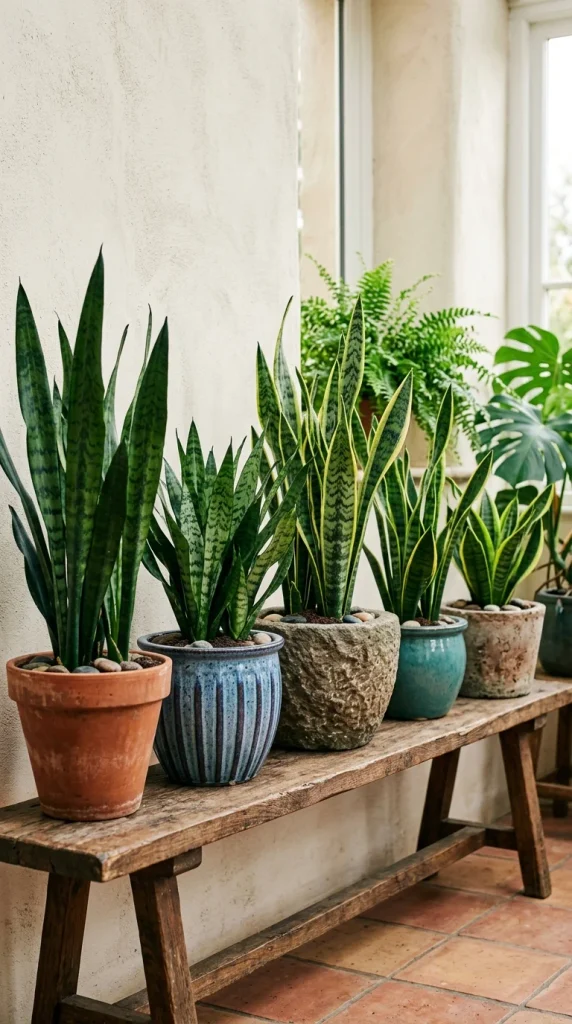
The material of your pot matters more than you think. Terracotta is ideal because it “breathes,” allowing moisture to evaporate through the walls of the pot. Plastic pots hold moisture much longer, which means you have to be even more careful with your watering schedule. If you use a decorative “cachepot” (a pot without holes) to hide a plastic nursery pot, always take the inner pot to the sink to water it and let it drain completely before putting it back.
13. Rotation
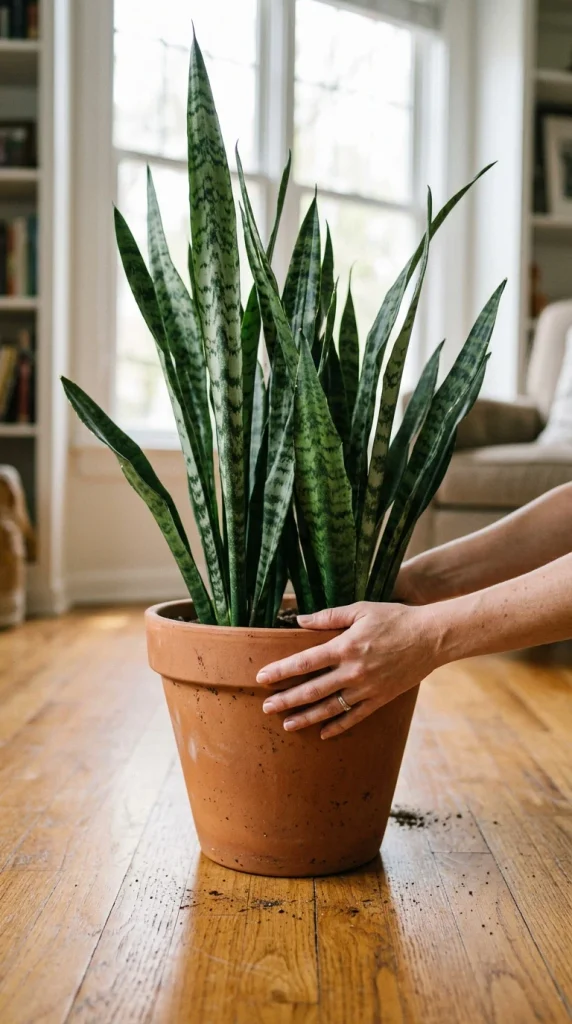
Snake plants tend to grow toward their light source. If you never move the pot, you may find your plant leaning heavily in one direction. To keep your plant growing straight and symmetrical, give the pot a quarter-turn every time you water it. This ensures that all sides of the plant receive equal light exposure over time.
14. Seasonal Care
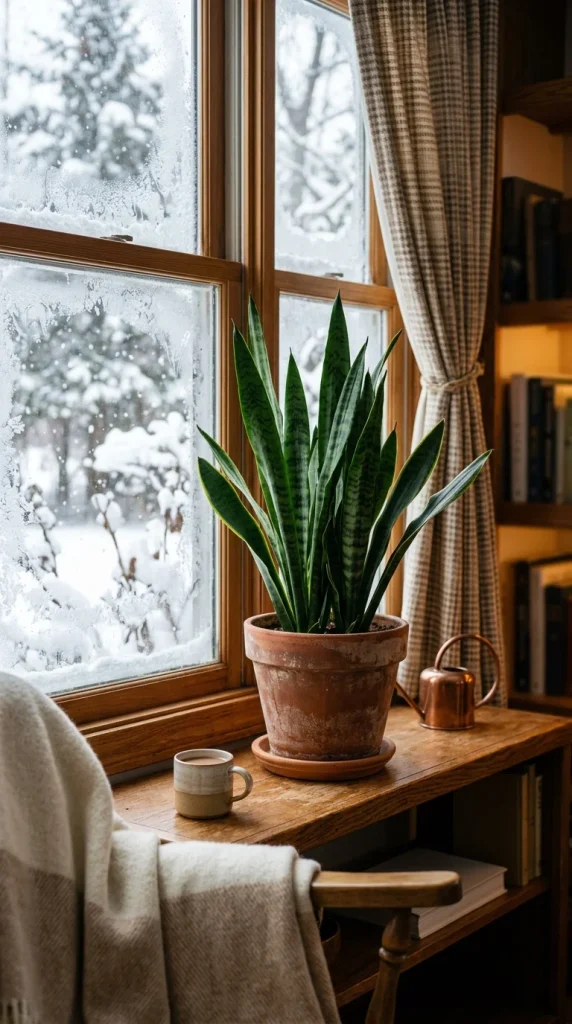
Your care routine must change with the seasons. In the winter, snake plants enter a period of semi-dormancy. Their metabolic processes slow down, meaning they need significantly less water and zero fertilizer. The biggest winter threat is “cold feet”—if the soil stays wet and cold for too long, the roots will rot almost instantly. Err on the side of neglect during the colder months.
15. Repotting
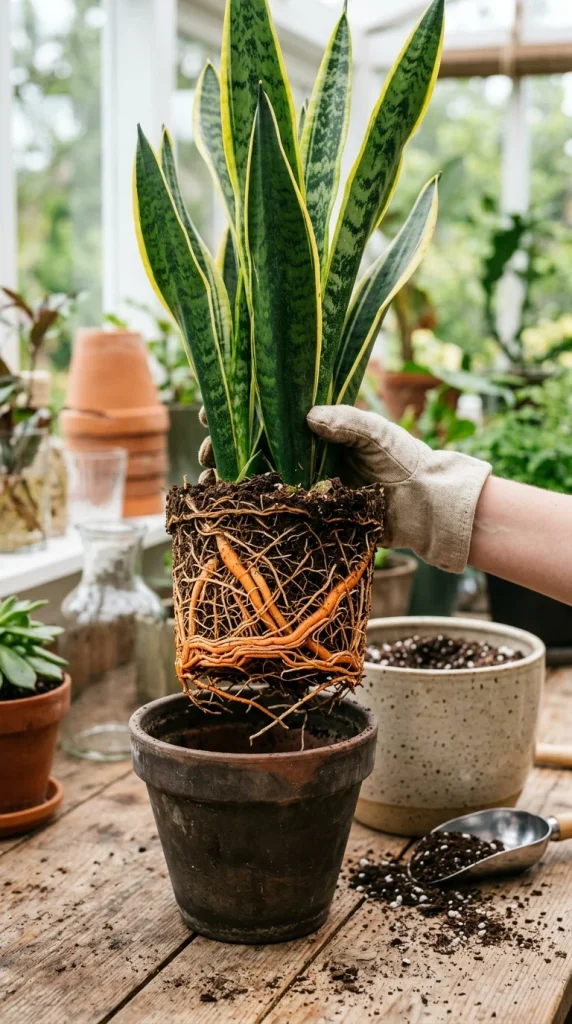
Snake plants don’t mind being a little crowded, but eventually, they will outgrow their space. You might even see the roots starting to crack a plastic pot! Every 2 to 3 years, check if the plant is root-bound. If it is, move it to a pot that is only one size (about 1–2 inches) larger. Spring is the best time for repotting as the plant has the energy to recover and establish itself in its new home.
16. Varieties
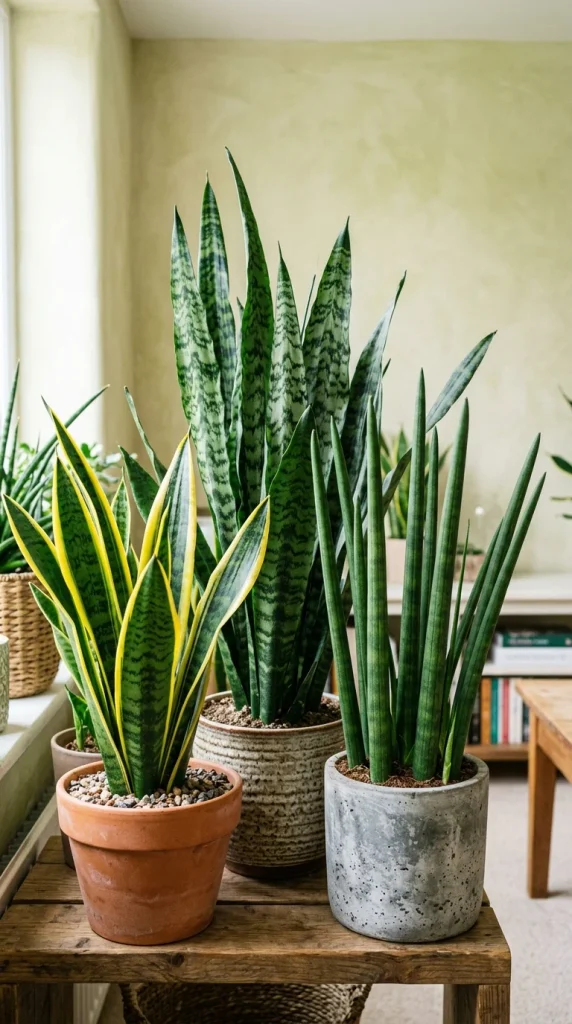
Don’t stop at just one! There are dozens of snake plant varieties, each with unique shapes and colors. Sansevieria cylindrica has round, spear-like leaves; Sansevieria moonshine features a haunting silvery-green hue; and “Whale Fin” (Sansevieria masoniana) consists of a single, massive, wide leaf. Collecting different varieties allows you to play with textures and heights while enjoying the same easy-care benefits across your entire collection.

