
Transforming your home into a lush sanctuary doesn’t require a massive backyard or a sprawling sunroom. In fact, when floor space is at a premium, the only way to go is up. Vertical gardening is a transformative interior design trend that breathes life into forgotten corners, softens harsh architectural lines, and purifies the air you breathe. Whether you are a minimalist lover of clean lines or a maximalist dreaming of an indoor jungle, hanging plants offer a versatile solution to elevate your decor—literally.
From rustic wooden ladders to industrial chic pipe fixtures, the methods for displaying your greenery are as varied as the plants themselves. Here are 16 creative and stylish ways to hang plants indoors to create your own vibrant, green oasis.
1. Macramé Hangers
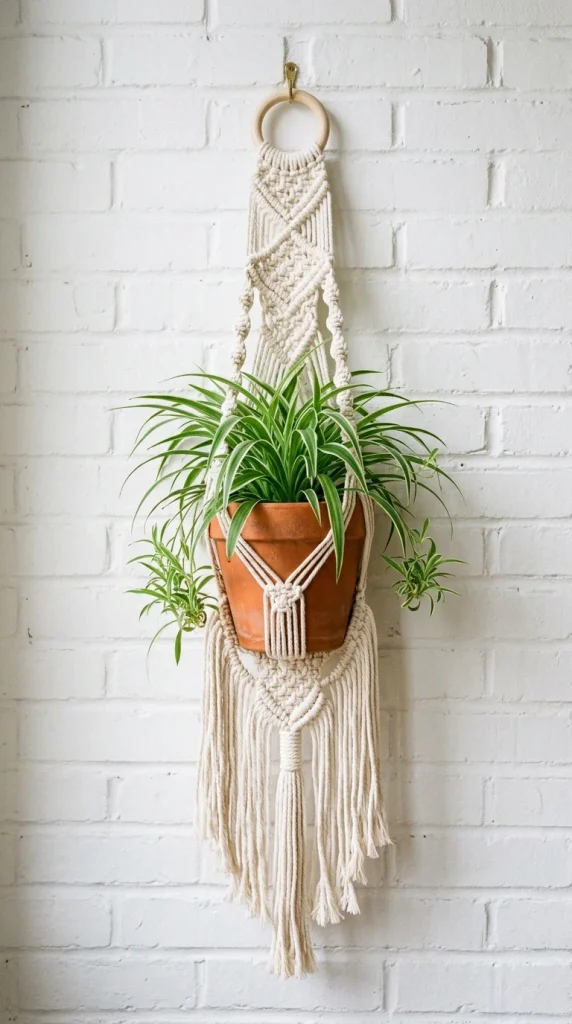
The quintessential choice for any plant lover, macramé hangers bring a touch of 1970s bohemian charm to modern interiors. These hand-knotted rope structures are incredibly sturdy and can accommodate various pot sizes. The beauty of macramé lies in its texture; the intricate knots and flowing tassels add a soft, organic element to a room. You can find them in classic off-white cotton, or opt for dyed jute and nylon in bold colors to match your palette. They work best when clustered at varying heights in a corner or in front of a window, creating a layered, textured look that feels both nostalgic and fresh.
2. Tension Rods
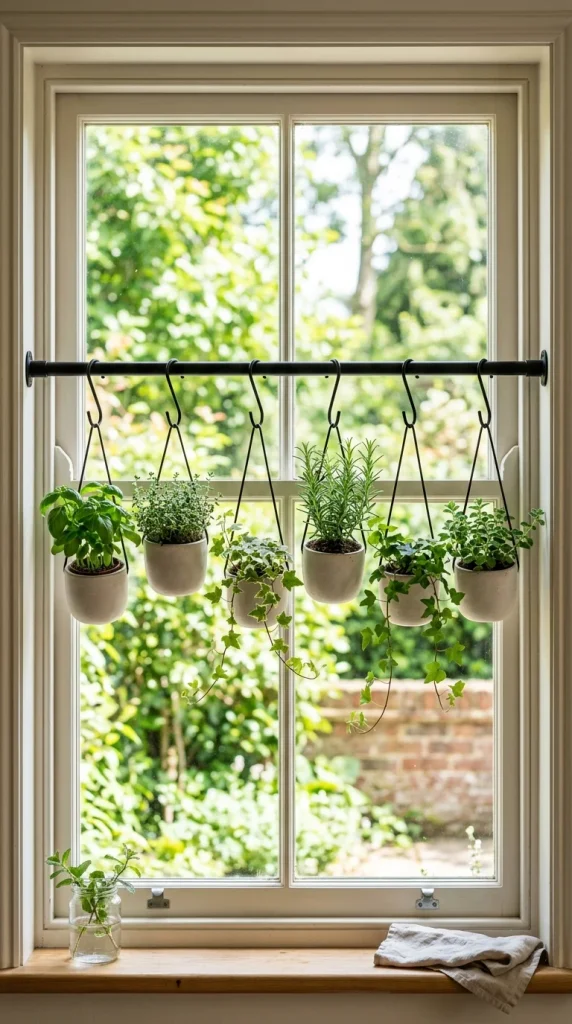
If you are a renter or someone who shies away from drilling holes in the ceiling, tension rods are your best friend. Typically used for shower curtains or window treatments, a sturdy tension rod can be wedged between two walls or inside a deep window frame to create an instant hanging gallery. This method is particularly effective in kitchens for growing a suspended herb garden. By using ‘S’ hooks, you can easily slide plants back and forth to adjust their light exposure or to make room for new additions. It’s a clean, linear approach that maximizes light for the plants and maintains a tidy aesthetic.
3. Wall Sconces
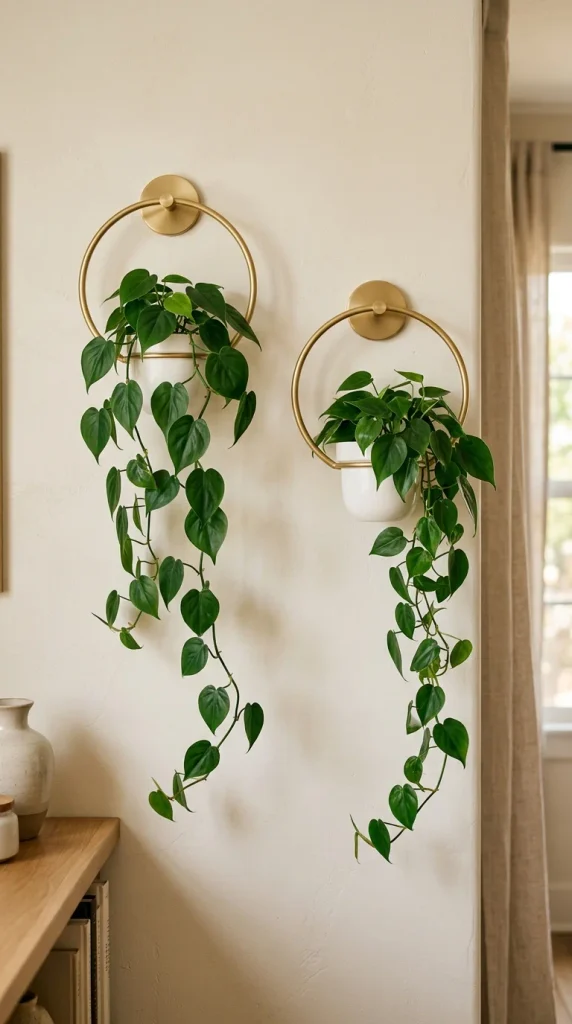
Wall sconces aren’t just for lighting anymore. Specialized wall-mounted plant holders act as living pieces of art, framing your greenery against the wall. These are perfect for hallways or entryways where floor space is limited but you want to make a bold visual statement. Choosing a sconce with a metallic finish—like brass, copper, or matte black—adds a sophisticated, high-end feel to the display. Because they are fixed to the wall, they provide a more structured and permanent look than free-swinging hangers, making them ideal for modern and mid-century minimalist homes.
4. Ceiling Hooks
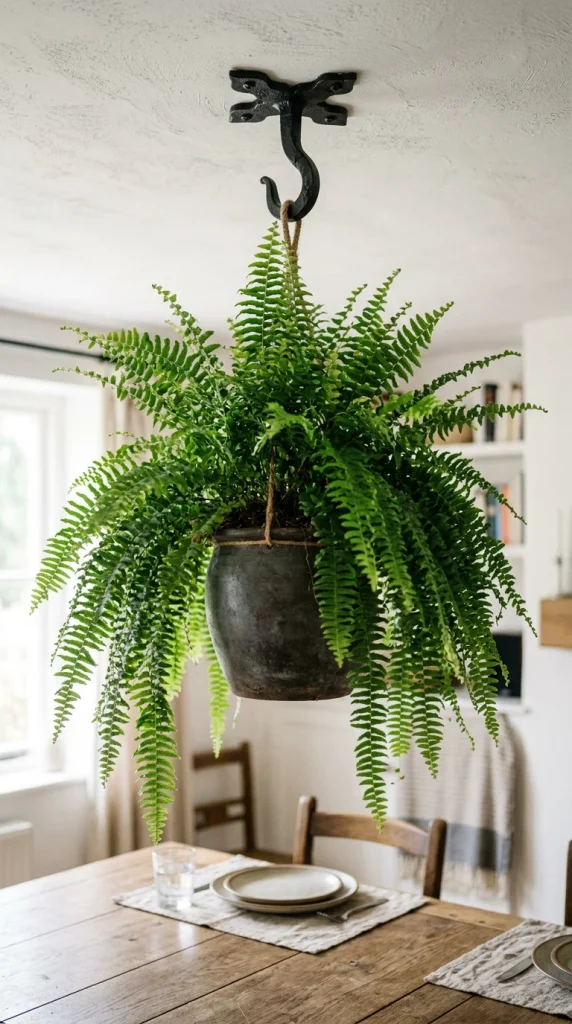
For the most dramatic effect, nothing beats the classic ceiling hook. This method allows you to hang large, heavy plants that might be too cumbersome for wall mounts. Swag hooks or heavy-duty toggle bolts allow you to place plants exactly where you want them, even in the middle of a room. This is the best way to utilize high ceilings and fill empty vertical space. For a professional look, ensure the hardware matches your room’s fixtures. Hanging a large, voluminous plant like a Boston Fern or a Monstera Adansonii from the ceiling creates a focal point that draws the eye upward, making the room feel taller and more spacious.
5. Floating Shelves
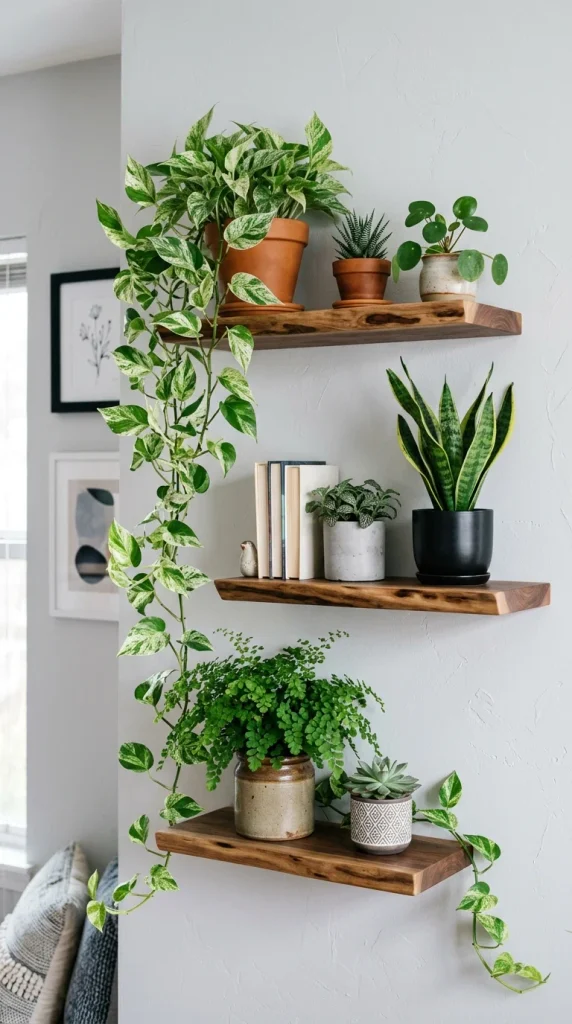
Floating shelves provide a stable platform for plants while still allowing their foliage to drape and “hang” over the edges. By staggering shelves at different heights, you create a waterfall effect of greenery. This method is excellent for those who want to mix plants with other decorative items like books, candles, or small sculptures. Trailing varieties like Pothos, String of Hearts, or English Ivy are the stars here, as their long vines will naturally seek the floor, softening the sharp edges of the shelving and creating a lush, integrated look.
6. Wooden Ladders
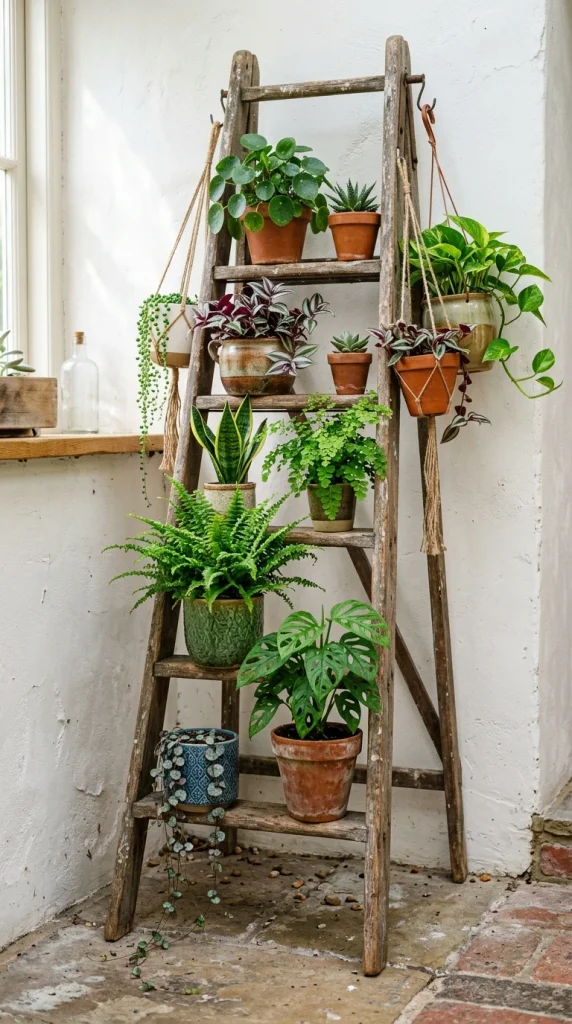
Repurposing a vintage wooden ladder is a fantastic way to add rustic, farmhouse-style charm to your space. You can lean a ladder against any wall or even suspend one horizontally from the ceiling for a truly unique overhead display. The rungs provide multiple levels for placing pots or hooking hangers, allowing for a dense concentration of greenery in a small footprint. This approach works beautifully in dining rooms or over kitchen islands, where the ladder can also be used to hang dried flowers or kitchen utensils alongside living plants.
7. Garment Racks
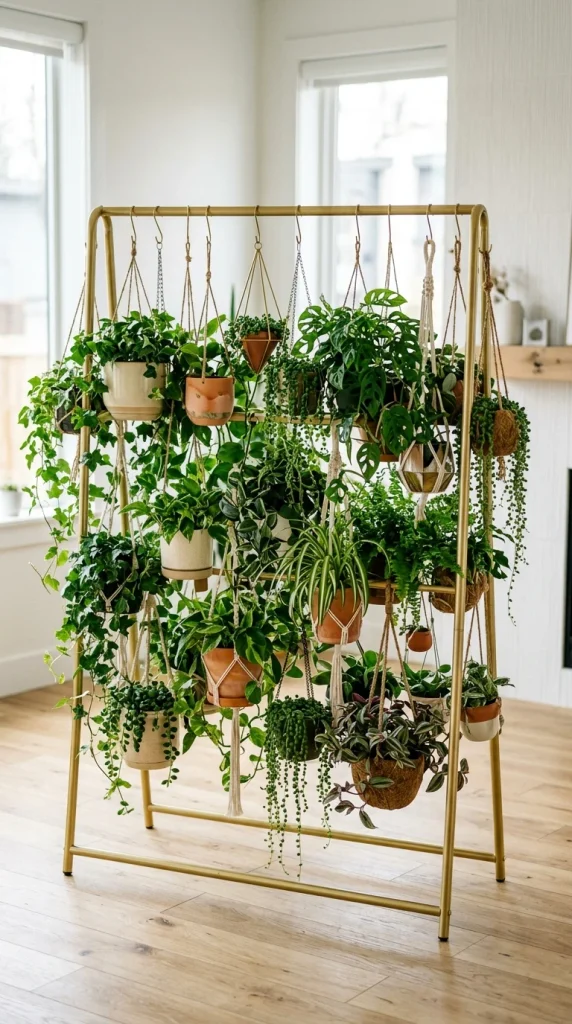
If you have a collection of plants that need to be moved seasonally to follow the sun, a garment rack is a genius solution. These portable racks provide a sturdy bar for hanging multiple plants and often feature a bottom shelf for larger floor pots. It essentially creates a mobile “plant wall” that can act as a room divider in open-concept spaces. Choose a rack with a sleek finish that complements your furniture, and use a variety of hanger lengths to create depth and visual interest within the frame of the rack.
8. Magnetic Planters
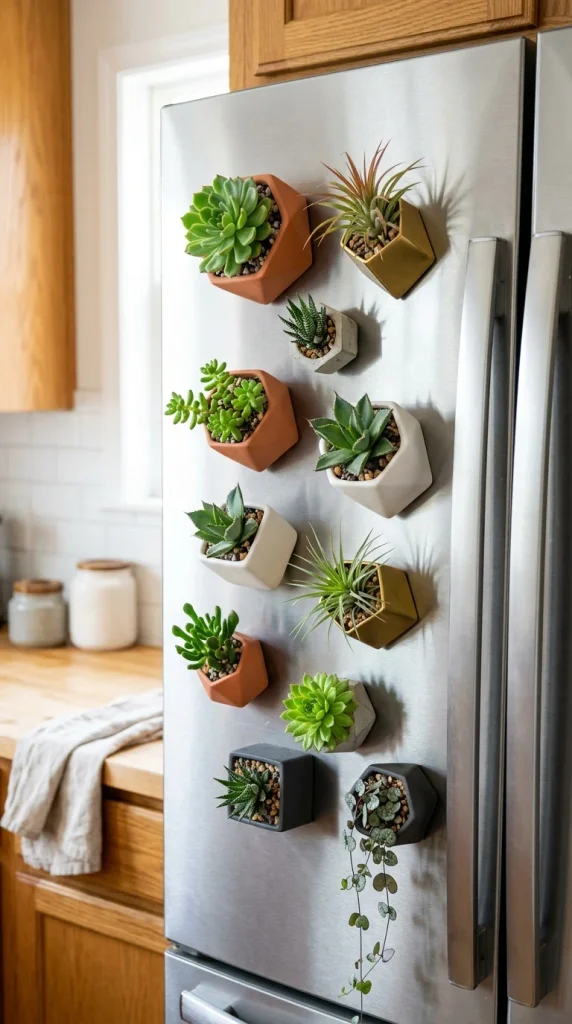
For a modern and slightly whimsical touch, magnetic planters allow you to turn any metallic surface into a vertical garden. These are typically small and lightweight, making them perfect for succulents, air plants, or small cacti. While the refrigerator is the most common spot, you can also use magnetic boards or even metal doors. This is a great way to introduce greenery into small apartments or office cubicles where traditional hanging methods might not be permitted. The modular nature of these planters means you can rearrange your “green wall” whenever the mood strikes.
9. Pegboard Systems
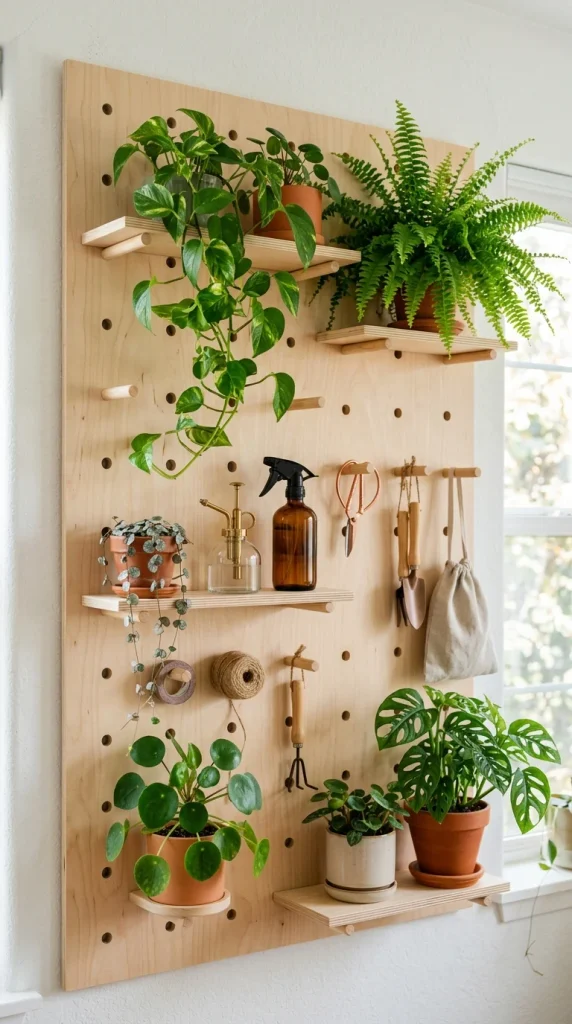
Pegboards are the ultimate customizable storage solution, and they work brilliantly for plants. By using a mix of hooks, shelves, and baskets, you can create an ever-evolving display. Wooden pegboards offer a warm, Scandinavian aesthetic, while metal versions provide an industrial edge. The ability to move components around makes it easy to accommodate plants as they grow. This is a particularly popular choice for a home office or a “plant propagation station,” where you can hang glass vials of cuttings alongside your established hanging plants.
10. Window Bars
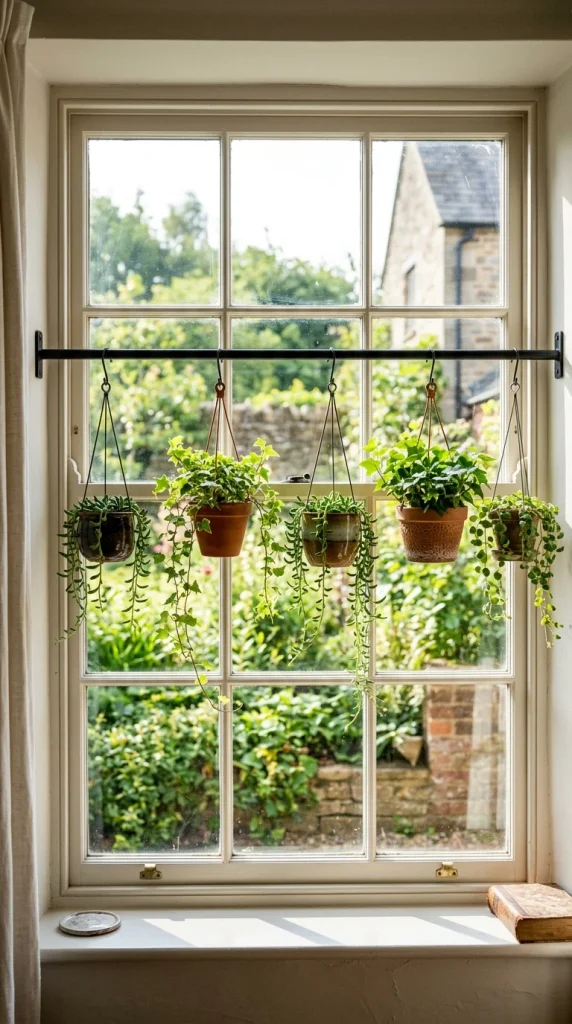
A window bar is specifically designed to maximize light exposure for your plants without cluttering your windowsill. These bars are usually mounted across the top or middle of a window frame, allowing trailing plants to bask in the sun. This is an ideal setup for light-hungry species like Burro’s Tail or various types of succulents. By hanging the plants, you keep the windowsill clear for other items, or simply maintain a cleaner, more unobstructed view of the outside world while still enjoying your indoor greenery.
11. Hanging Branches
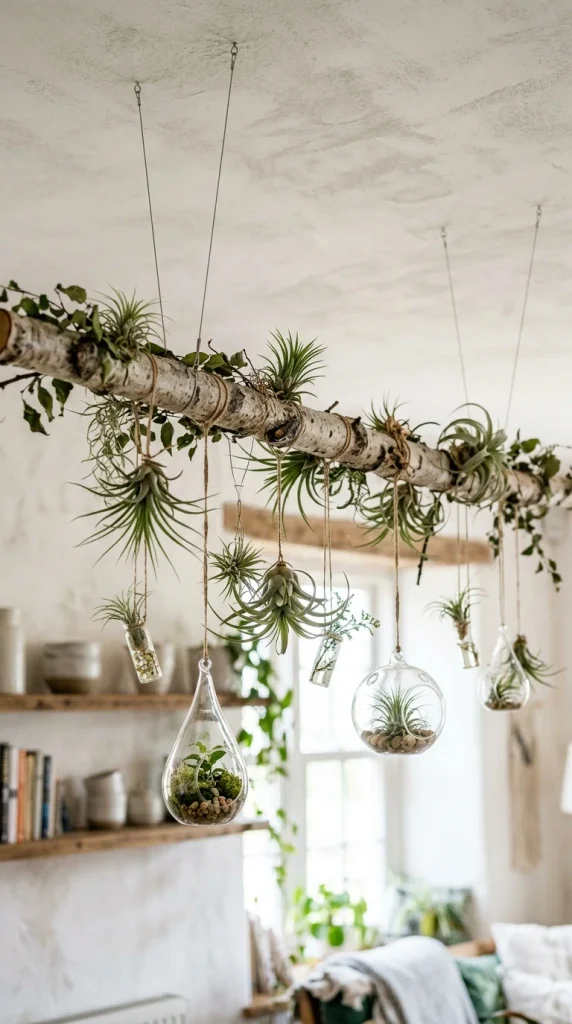
For those who want to bring a piece of the forest indoors, a suspended natural branch is a stunning organic alternative to a metal rod. A sturdy piece of driftwood or a fallen birch branch can be hung from the ceiling with transparent fishing line or rustic twine. This method creates a highly artistic and unique focal point. It’s particularly well-suited for air plants (Tillandsia) which don’t require soil; you can simply nestle them into the crevices of the wood or tie them on with a bit of wire. The result is a floating piece of nature that looks like a living sculpture.
12. Railing Planters

Often overlooked, the railings of staircases or indoor balconies are prime real estate for hanging plants. Using over-the-rail planters or simply hooking traditional hangers over the banister can transform a functional architectural feature into a lush green transit zone. As you walk up or down the stairs, you are surrounded by foliage, creating a multi-sensory experience. This is a clever way to utilize “dead space” and can help to visually soften the structure of a staircase.
13. Terrarium Globes
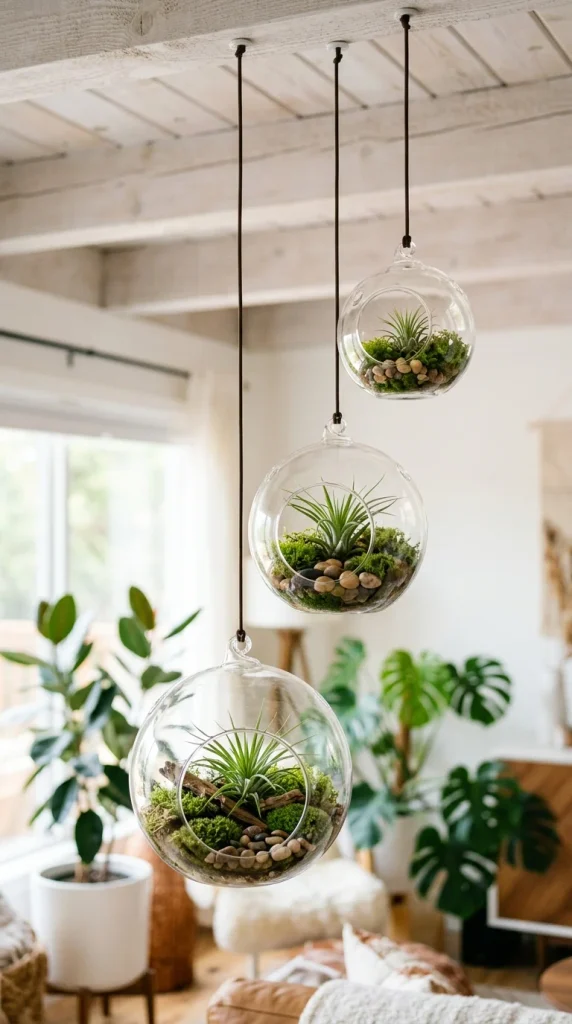
Glass terrarium globes add a touch of elegance and whimsy to any room. These transparent spheres are designed to be suspended, usually by thin wire or thread, making them appear as if they are floating in mid-air. Because they are often small and lightweight, they are perfect for air plants or small succulents that require minimal water. The glass helps to retain a bit of humidity, which can be beneficial for certain species. Hanging several globes near a window allows the light to catch the glass and the greenery inside, creating a shimmering, ethereal effect.
14. Pipe Fixtures
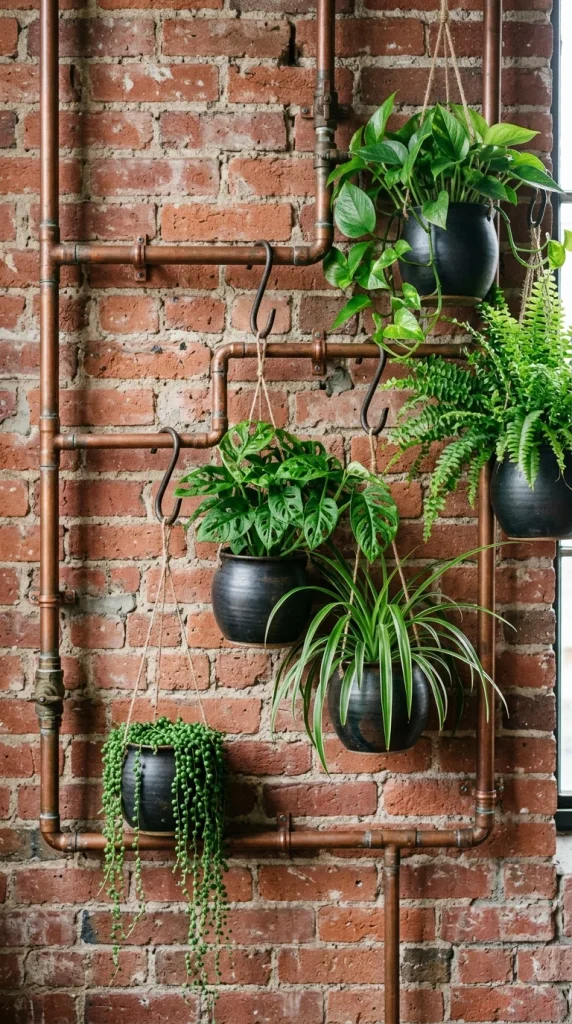
For an industrial or “urban loft” aesthetic, using plumbing pipes as a hanging apparatus is both stylish and incredibly durable. You can use copper, black iron, or galvanized steel pipes to create a custom hanging rack. This look pairs exceptionally well with exposed brick, concrete, or dark-toned walls. The rigidity of the pipes allows for hanging multiple heavy plants in a row. It’s a rugged, masculine way to display greenery that balances the softness of the plants with the hardness of the metal.
15. Shower Rods
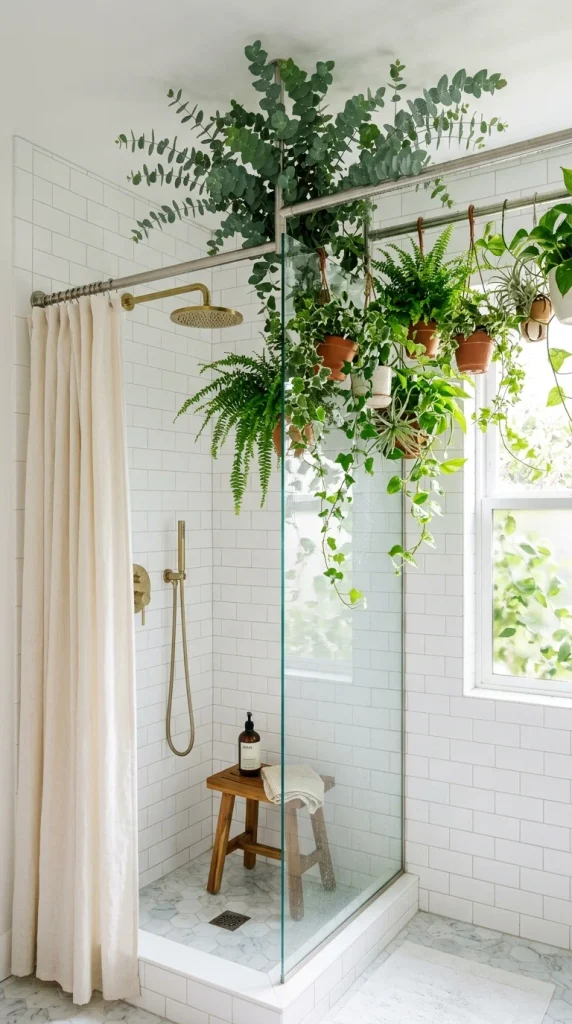
Bathrooms are often the most humid rooms in the house, making them a paradise for tropical plants. By installing a dedicated rod in the shower area—or even just using the existing curtain rod—you can create a “shower jungle.” Plants like Eucalyptus, Boston Ferns, and Peace Lilies will thrive on the steam from your daily shower. This not only looks beautiful but also turns your bathroom into a spa-like retreat. Just ensure the rod is securely fastened, as wet soil can make pots surprisingly heavy.
16. Leather Slings
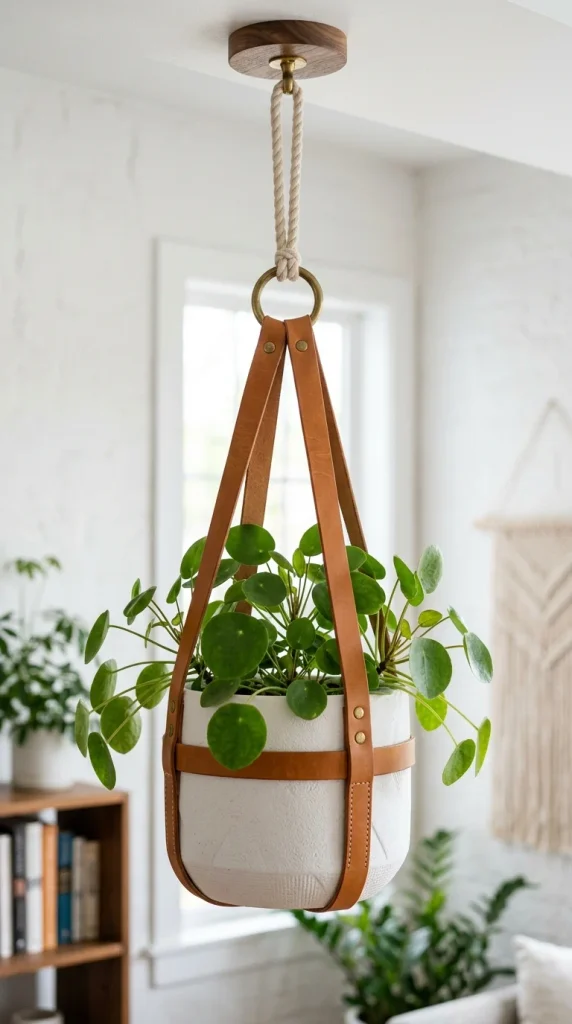
If you are looking for a more high-end, sophisticated alternative to macramé, leather plant slings are the answer. Made from durable strips of leather, these hangers offer a minimalist and structured look that fits perfectly in contemporary or mid-century modern homes. The warmth of the leather tones—ranging from deep mahogany to light tan—complements the green of the plants and the earthy tones of ceramic pots. They are sleek, stylish, and provide a secure, fashionable cradle for your favorite indoor trees or trailing vines.
Creating Your Vertical Garden
Hanging plants is about more than just finding a spot for your greenery; it’s about layering textures, colors, and heights to create a cohesive design. When choosing your method, consider the light requirements of your plants, the weight of the pots, and the overall style of your home. By utilizing the vertical space in your rooms, you can enjoy the calming presence of nature no matter how small your living area might be. Whether you start with a single macramé hanger or build a full-scale pipe fixture gallery, adding hanging plants is the quickest way to breathe new life into your interior space.