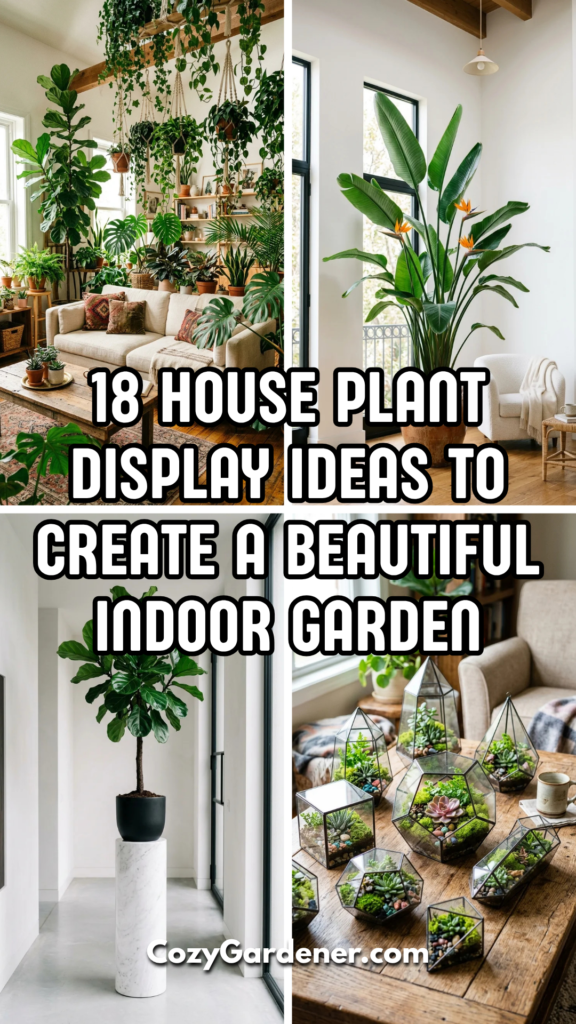
Transforming your living space into a verdant sanctuary is more than just a home decor trend; it is a lifestyle choice that brings nature’s tranquility indoors. Whether you live in a sprawling suburban home or a compact city apartment, there are endless ways to showcase your botanical collection. From vertical gardens to minimalist pedestals, the way you display your plants can completely alter the energy and aesthetic of a room.
Creating a successful indoor garden requires a balance between design and biology. You must consider the light requirements of your green companions while ensuring they complement your existing furniture and color palette. Here are 18 creative and inspiring house plant display ideas to help you build the indoor jungle of your dreams.
1. Floating Shelves
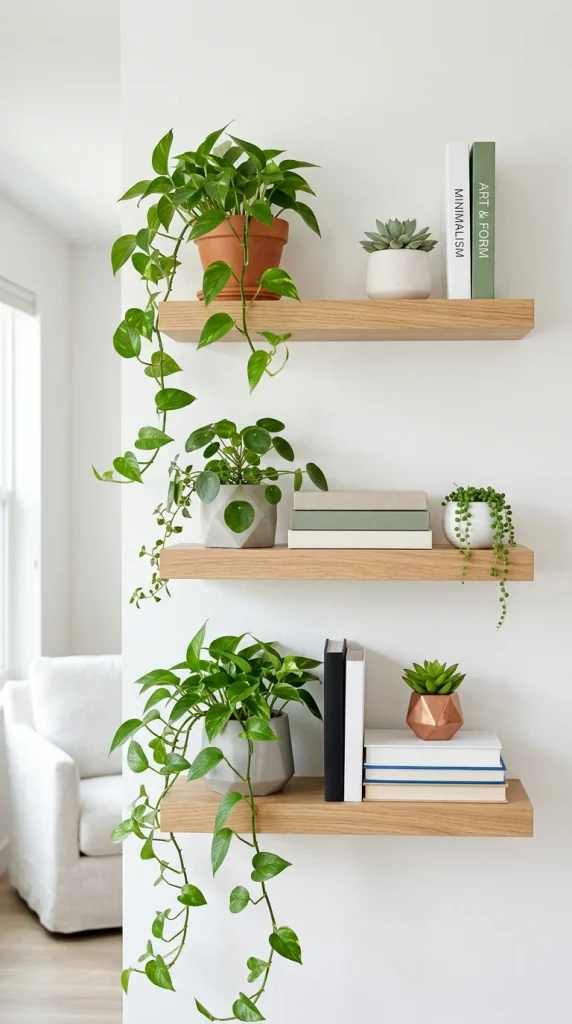
Floating shelves are a classic for a reason. They utilize vertical space, making them perfect for small rooms where floor real estate is at a premium. By staggering shelves at different heights, you create a dynamic visual rhythm. This setup is particularly effective for “trailers”—plants like String of Pearls, Heartleaf Philodendron, or Pothos—which can spill over the edges, softening the sharp lines of the shelving. To keep the look cohesive, choose pots in a similar color family but varying shapes.
2. Macramé Hangers
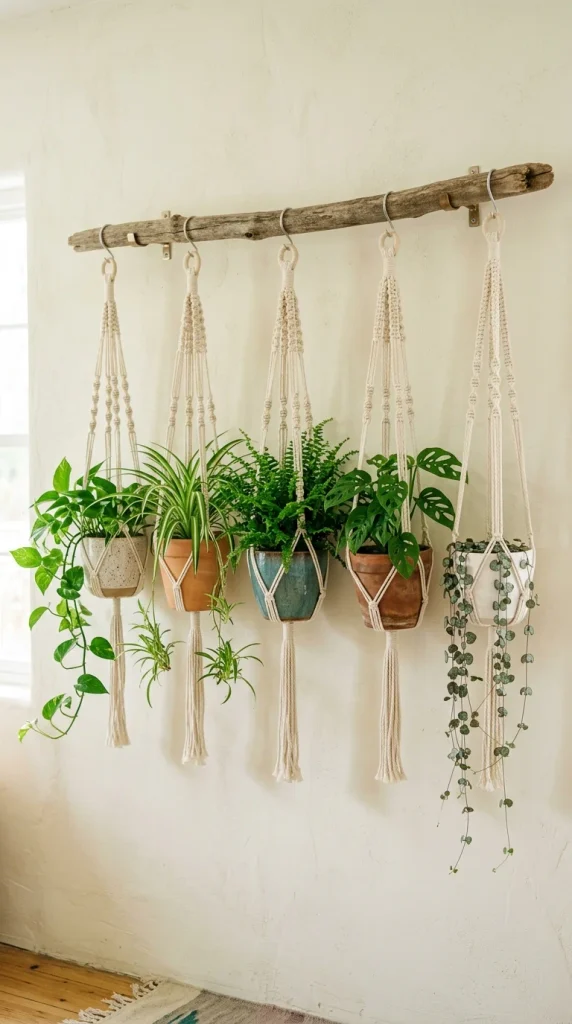
Embrace the retro-bohemian vibe with macramé plant hangers. These woven masterpieces allow you to suspend your plants from the ceiling or curtain rods, drawing the eye upward and making a room feel taller. They are excellent for keeping delicate plants away from curious pets or toddlers. Use them in clusters of three at varying lengths to create a “floating garden” effect near a bright window.
3. Tiered Stands
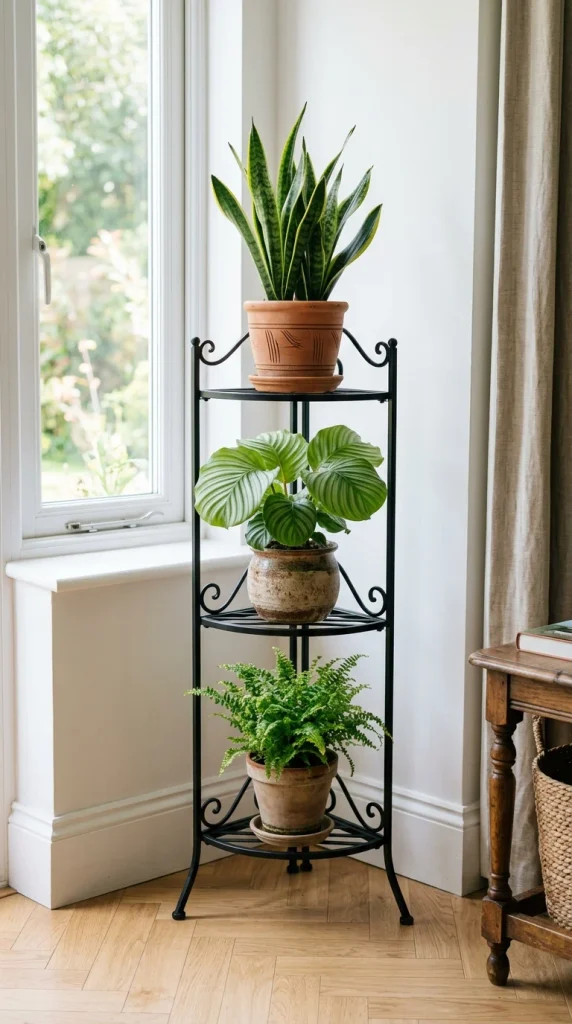
When you have a growing collection and limited surface area, a tiered plant stand is your best friend. These structures provide multiple levels for display, allowing you to group plants with similar light needs together. Use the top tier for sun-loving succulents and the lower, more shaded tiers for ferns or ZZ plants. It’s an instant focal point that organizes your greenery into a curated gallery.
4. Window Sills
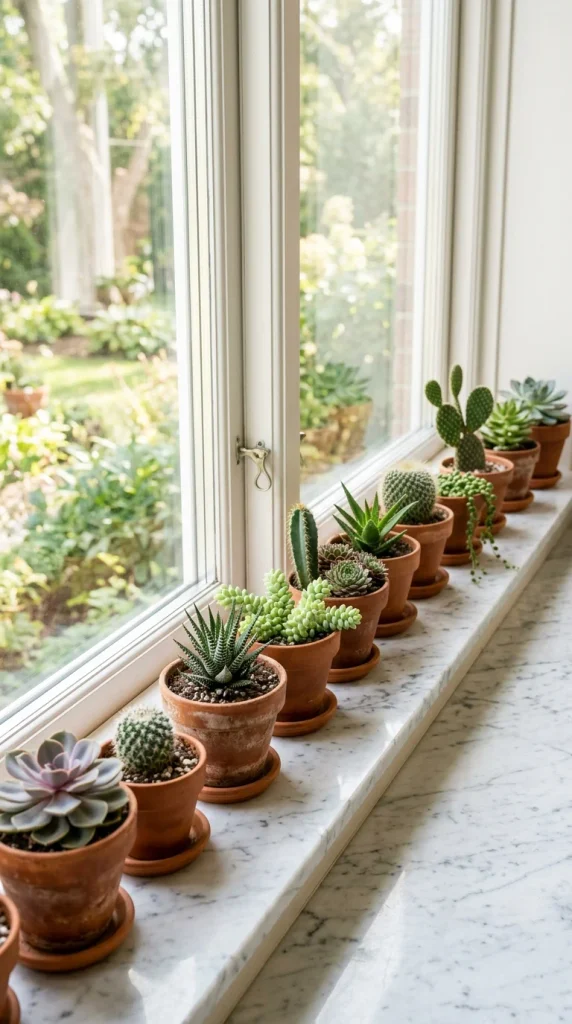
The window sill is the most natural place for a plant, but it doesn’t have to look cluttered. For a clean, intentional look, use a uniform set of pots—perhaps all terra cotta or all white ceramic—and line them up neatly. This is the ideal spot for a “kitchen garden” featuring herbs like basil, mint, and rosemary, or a collection of sun-worshipping cacti that thrive in direct light.
5. Bar Carts
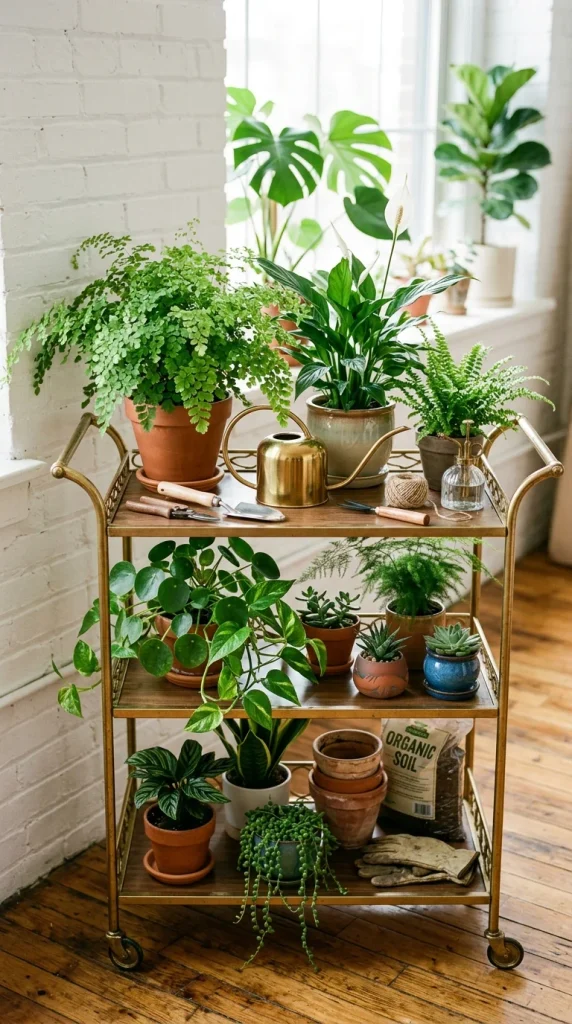
Give a vintage bar cart a new lease on life by turning it into a mobile plant station. The beauty of this display is its portability; you can wheel your plants closer to the window during the day and back to a preferred aesthetic spot in the evening. The multiple levels offer plenty of room for both plants and decorative accessories, like vintage mister bottles or botanical books.
6. Living Walls
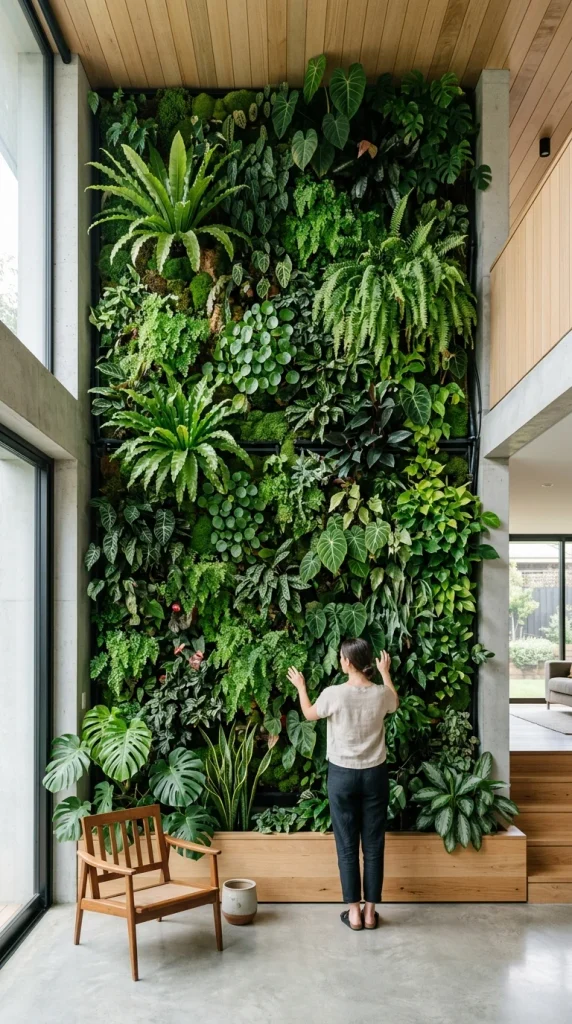
For those who want to make a bold statement, a living wall (or vertical garden) is the ultimate choice. These installations use specialized pockets or hydroponic systems to grow plants directly on the wall surface. While they require a bit more maintenance and a proper irrigation setup, the result is a breathtaking, immersive piece of living art that purifies the air and acts as a natural sound insulator.
7. Bench Styling

Using a low bench as a plant stand provides a grounded, architectural feel to your display. It’s a great way to elevate medium-sized plants that might feel too small for the floor but too large for a tabletop. Placing a bench under a window creates a “green border” for your room. You can mix in non-plant elements like candles or woven baskets to add texture and warmth.
8. Ladder Shelves
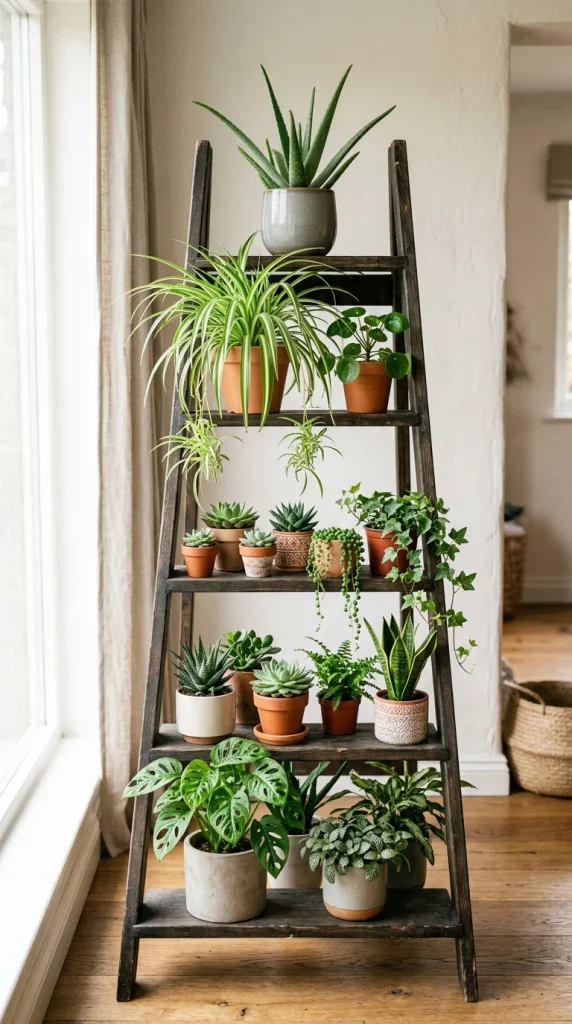
Ladder shelves offer a relaxed, farmhouse-inspired way to display a large volume of plants. The leaning design creates a sense of depth and allows light to reach even the plants on the lower rungs. It’s a versatile piece that works well in living rooms, bathrooms, or even on a covered balcony. Grouping plants by color or leaf shape on different rungs can create a very organized, pleasing look.
9. Glass Terrariums
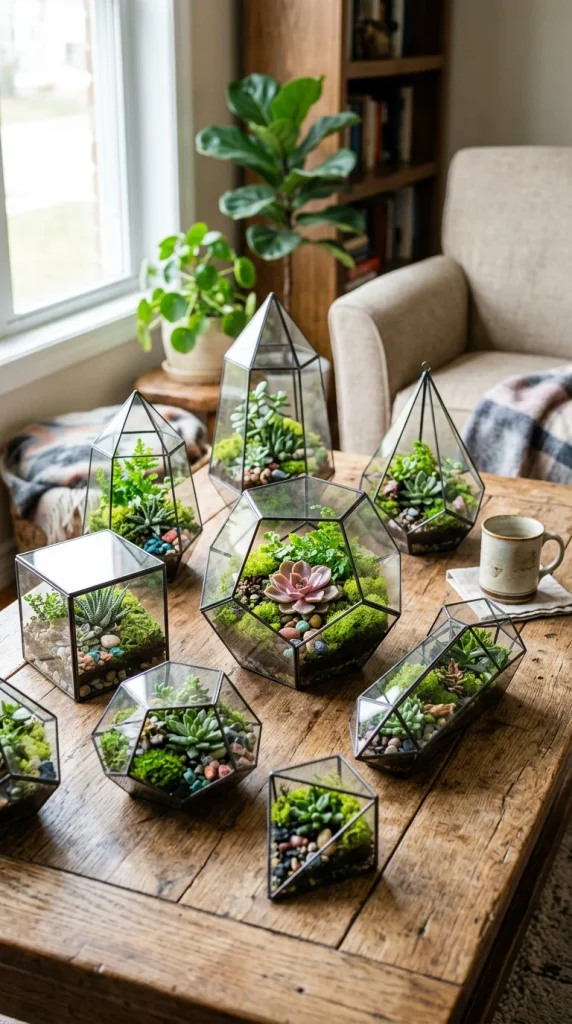
Terrariums are like miniature worlds under glass. They are perfect for displaying humidity-loving plants like nerve plants, mosses, and ferns that might struggle in the dry air of a typical home. Beyond their practical benefits, they serve as intricate decorative objects. Place them on coffee tables or desks where their fine details can be appreciated up close.
10. Pedestal Stands
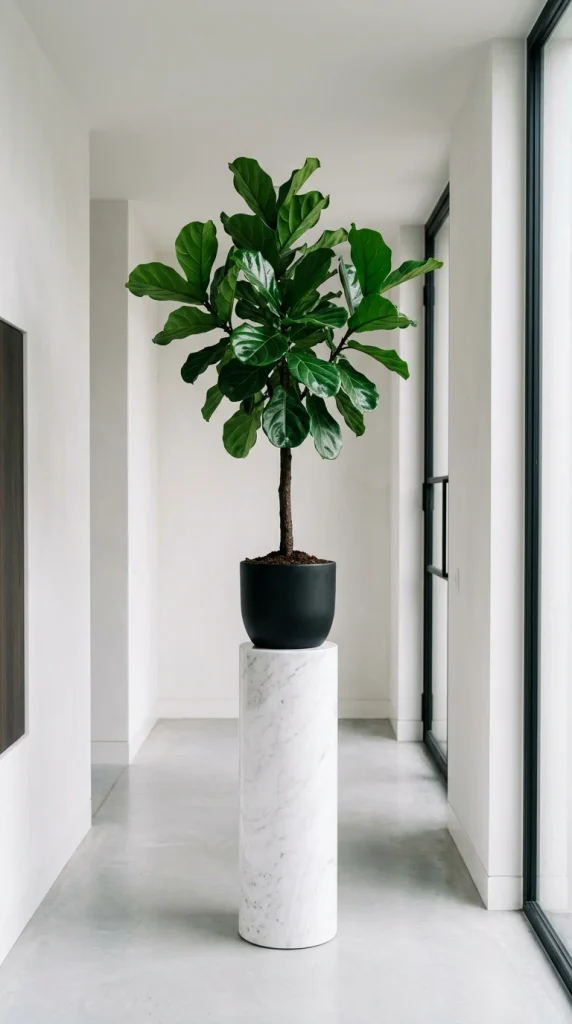
Sometimes, one plant is all you need to define a space. A pedestal stand elevates a “specimen plant” to the status of a sculpture. This works best with plants that have a strong architectural shape, such as a large Monstera, a Bird of Paradise, or a tall Sansevieria. A single pedestal in a corner or at the end of a hallway creates a sophisticated and high-end feel.
11. Corner Clusters
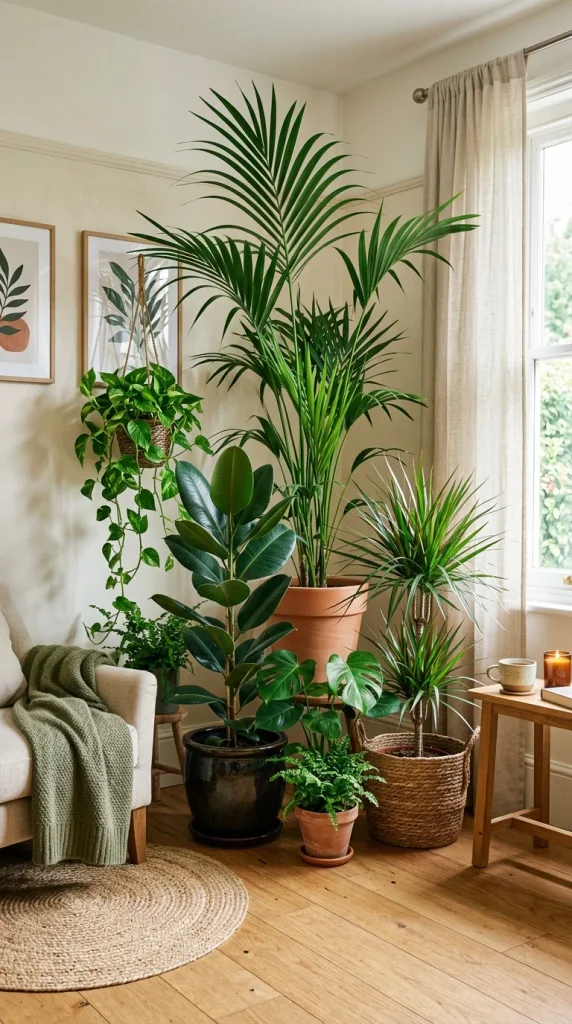
Instead of spreading plants out, try clustering them in a single corner to create a “green nook.” By grouping plants of various heights and textures, you mimic how they grow in nature. This technique also creates a micro-climate where the plants benefit from the collective humidity they release. Use a mix of floor pots and small stands to vary the heights within the cluster.
12. Cabinet Greenhouse
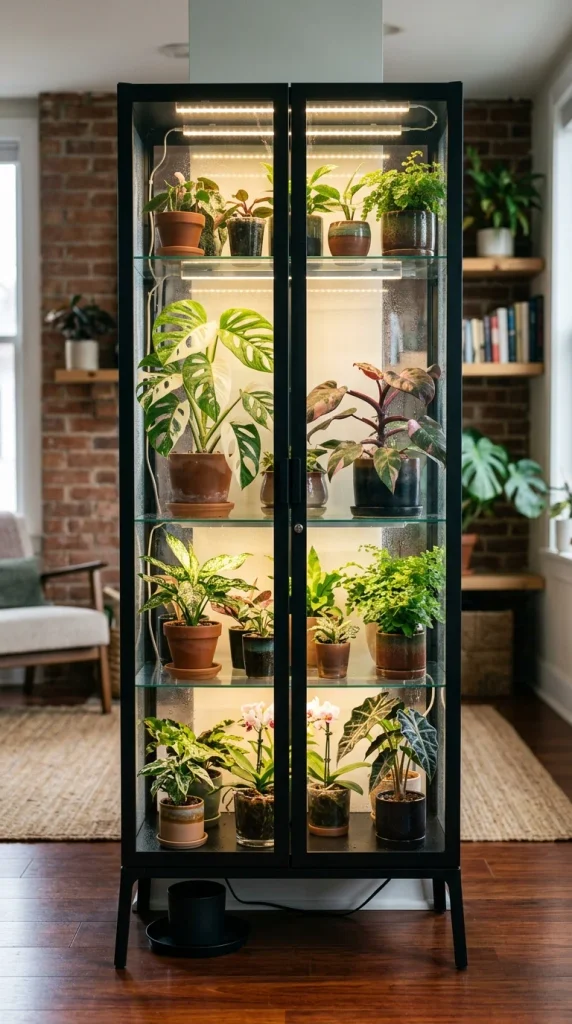
The “IKEA greenhouse cabinet” trend has taken the plant world by storm, and for good reason. Converting a glass cabinet into a greenhouse allows you to control humidity and light perfectly, making it the ideal home for rare or sensitive tropical plants. With added grow lights and fans, it becomes a high-tech display case that looks stunning even in the darkest corners of your home.
13. Ceiling Hooks
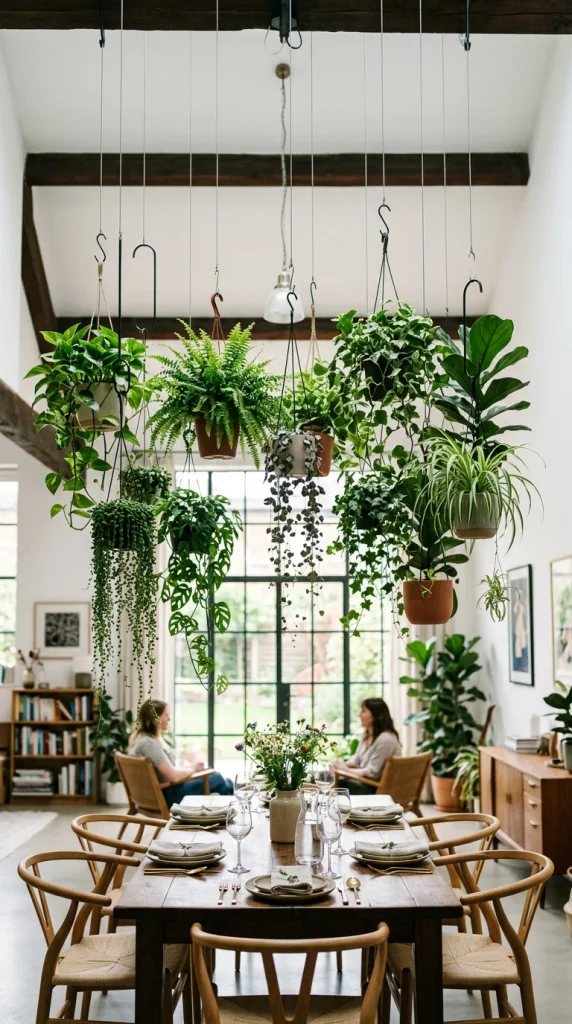
If you have high ceilings, take advantage of them! Screwing hooks directly into the ceiling allows you to hang heavy pots that might be too much for a curtain rod. This creates a “canopy” effect that feels incredibly immersive. Try hanging a large Fern or a lush Spider Plant over a reading nook or dining table to create a sense of enclosure and intimacy.
14. Wall Pockets

Wall pockets are a modern, sculptural way to add greenery to your walls without the bulk of a shelf. They work beautifully in hallways or bathrooms where space is tight. You can create a “living pattern” by arranging several pockets in a geometric grid or a random organic cluster. They are best suited for small, lightweight plants like air plants or small ivy.
15. Bathroom Oasis
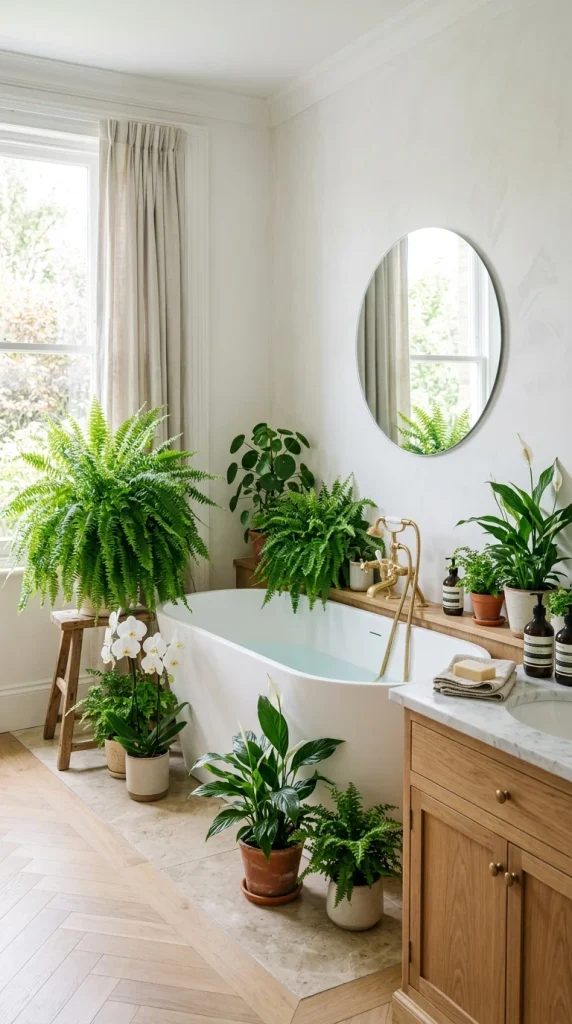
The bathroom is often the most humid room in the house, making it a natural paradise for tropical plants. Place a fern on the edge of the tub, hang a philodendron from the shower rod, or sit an orchid on the vanity. The contrast between the hard surfaces of the tile and the soft, organic shapes of the plants creates a spa-like atmosphere that makes your morning routine feel like a getaway.
16. Mantelpiece Accents
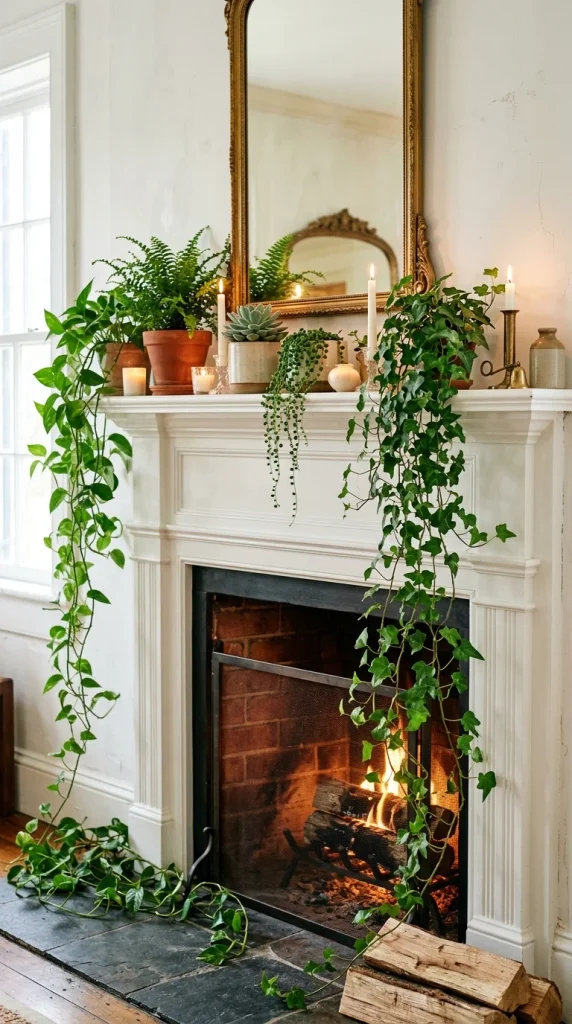
The mantel is the heart of many living rooms. Instead of just photos and clocks, use it to showcase your trailing plants. A “String of Hearts” or “String of Nickels” looks exquisite when its delicate vines drape down the front of a fireplace. Mix in different pot textures—like woven seagrass and polished ceramic—to add visual interest to the display.
17. Office Desks
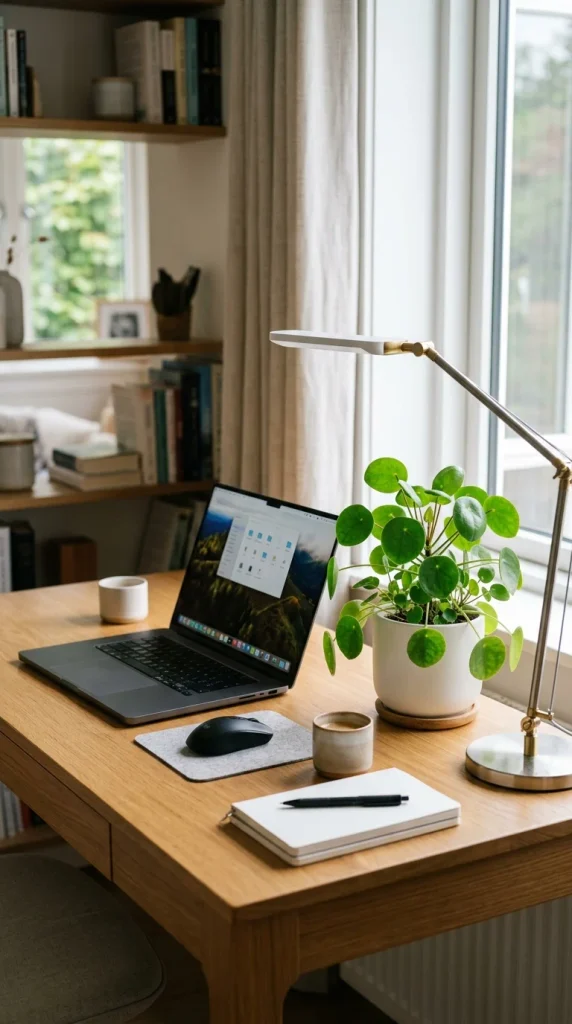
Bringing plants into your workspace can boost productivity and reduce stress. Since desk space is often limited, choose “compact” plants like a Pilea, a small Sansevieria, or a Haworthia. If you have a larger desk, a medium-sized ZZ plant can sit on the floor nearby. The presence of greenery helps soften the look of electronic equipment and creates a more inviting work environment.
18. Statement Trees
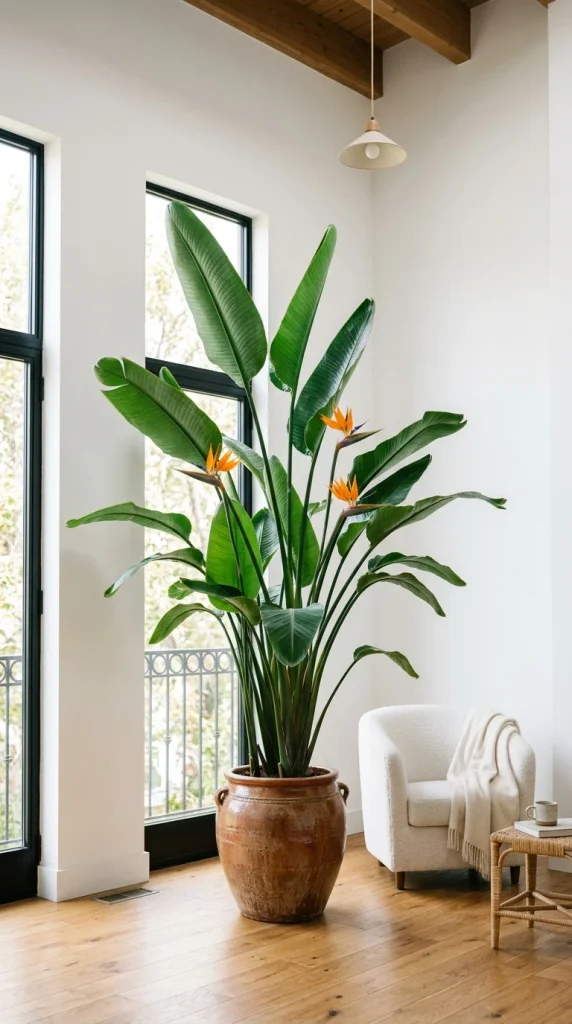
Sometimes, bigger is better. A single, large statement tree can transform a room more effectively than a dozen small plants. Trees like the Fiddle Leaf Fig, Olive Tree, or Bird of Paradise add height and a sense of grandeur. Choose a high-quality, beautiful pot that matches your decor, as the container is just as much a part of the statement as the tree itself. Place it in a spot where it has plenty of room to grow and breathe.