

Culverts are essential infrastructure for managing water runoff and preventing erosion around your driveway. However, these galvanized steel or concrete pipes are rarely “pretty.” Often sticking out like a sore thumb at the edge of a property, they can detract from an otherwise beautiful landscape.
The good news? A culvert doesn’t have to be an eyesore. With the right landscaping strategy, you can turn this drainage necessity into a stunning focal point that boosts your home’s value and curb appeal. Here are 12 creative ideas to transform your culvert from a utility into a work of art.
1. River Rocks
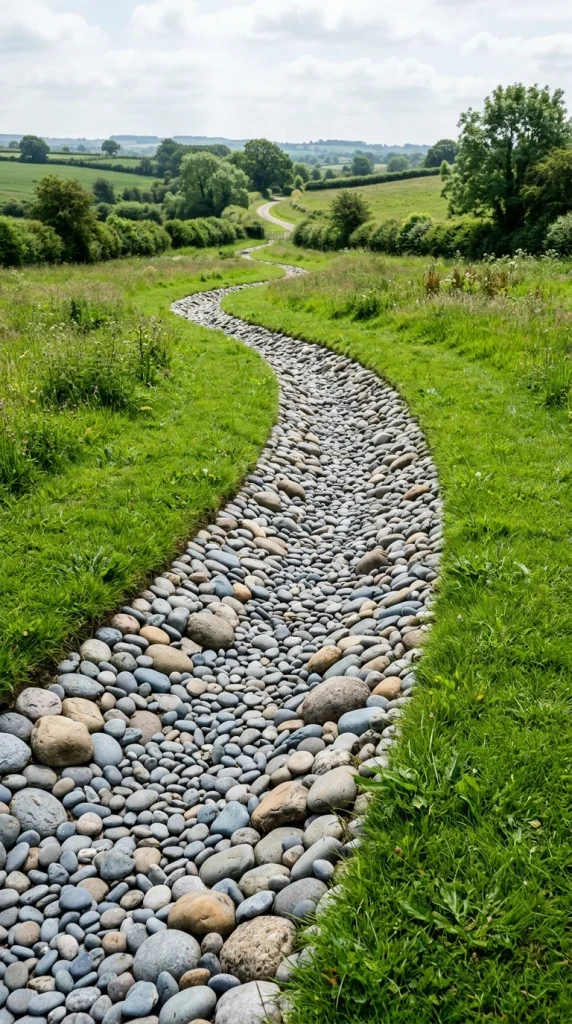
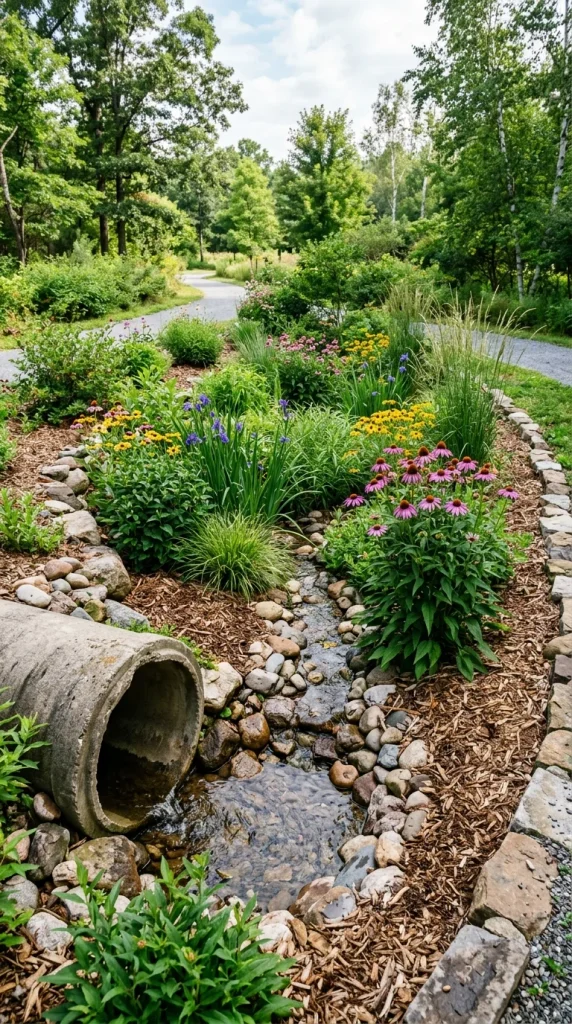
One of the most popular and effective ways to hide a culvert is by using river rocks. Unlike mulch, which can wash away during heavy rains, heavy stones stay in place. By lining the area around the pipe and the ditch itself with smooth, multi-colored river rocks, you create a look that mimics a natural streambed. This approach is not only aesthetically pleasing but also highly functional, as it slows down water flow and prevents soil erosion around the pipe’s mouth.
2. Native Grasses
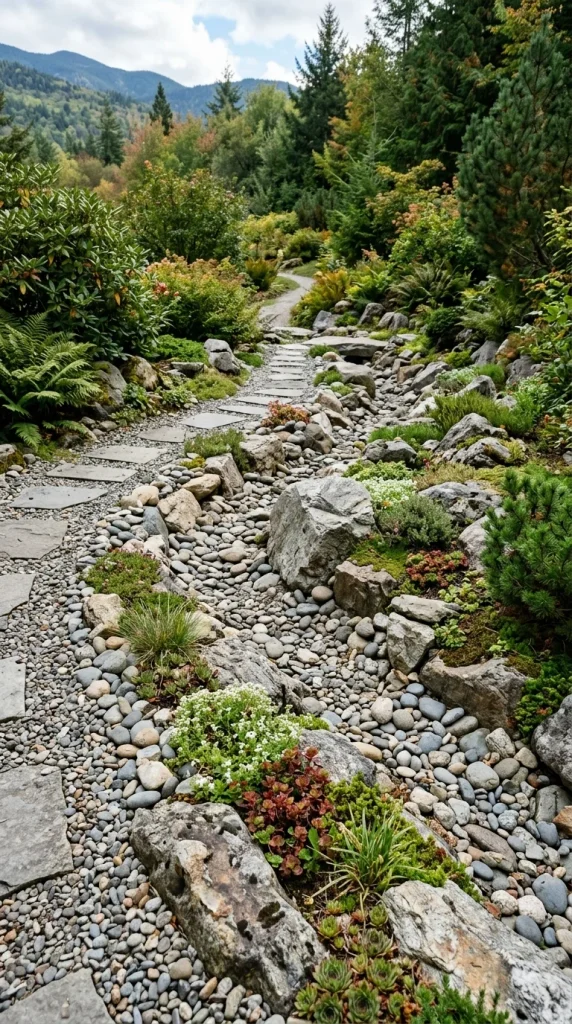
Native grasses are the unsung heroes of culvert landscaping. Plants like Little Bluestem, Switchgrass, or Muhly Grass have incredibly deep root systems that help stabilize the soil near the culvert. Because they are native to the region, they require minimal maintenance and can handle the fluctuating moisture levels found in a drainage ditch. Their height and density provide an excellent natural screen that softens the harsh lines of a metal or concrete pipe.
3. Dry Creeks
If your culvert only carries water during heavy storms, a dry creek bed is a brilliant design choice. Instead of trying to hide the ditch, lean into its shape. Use a combination of pea gravel, river stones, and large boulders to create a meandering “river” that leads to the culvert. This creates visual interest even when the weather is dry, turning a functional trench into a sculpted landscape feature.
4. Retaining Walls
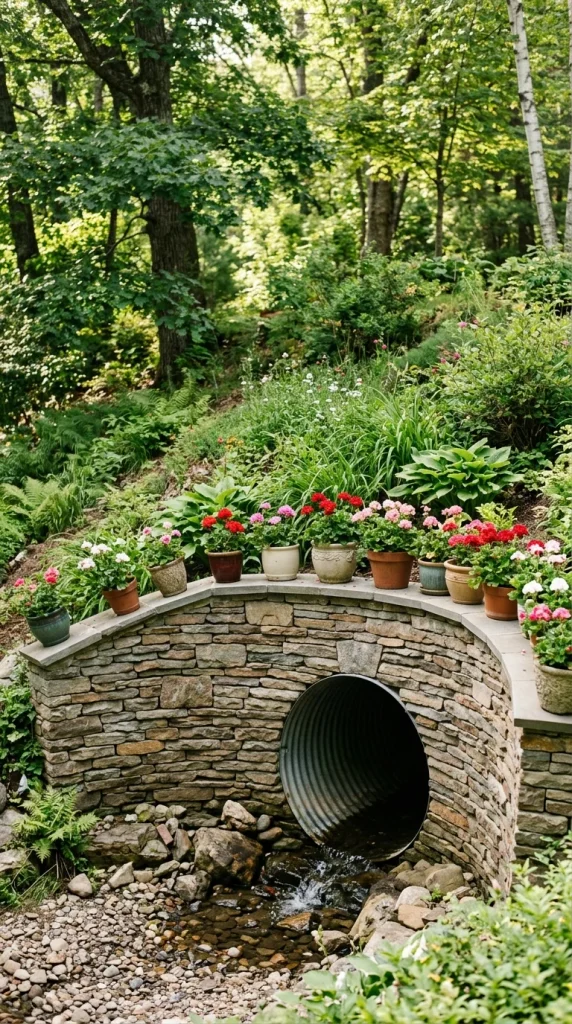
For culverts located on steep slopes or near driveway entrances, a small retaining wall can provide both structural integrity and a polished look. You can use stacked fieldstone, timber, or decorative concrete blocks to frame the culvert opening. A well-built wall prevents the bank from collapsing into the pipe and offers a clean, architectural finish that makes the culvert look like an intentional part of the home’s design.
5. Flowering Perennials
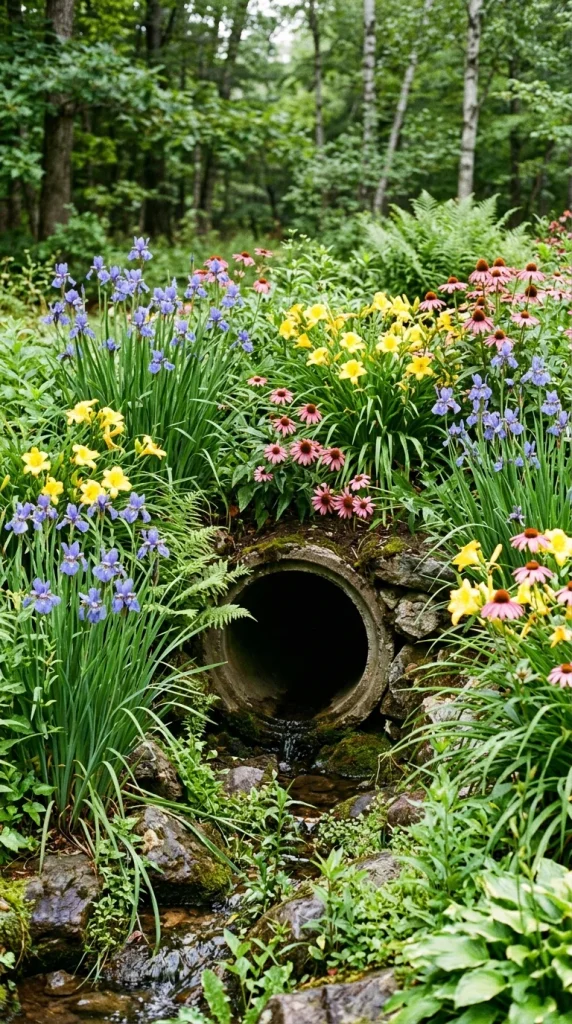
Adding a pop of color is the fastest way to improve curb appeal. When choosing flowers for a culvert area, opt for “moisture-tolerant” perennials. Species like Daylilies, Siberian Iris, and Canna Lilies thrive in the damp soil often found near drainage areas. These plants return year after year, providing a changing palette of colors that distracts from the industrial look of the culvert while absorbing excess nutrients from runoff.
6. Decorative Bridges
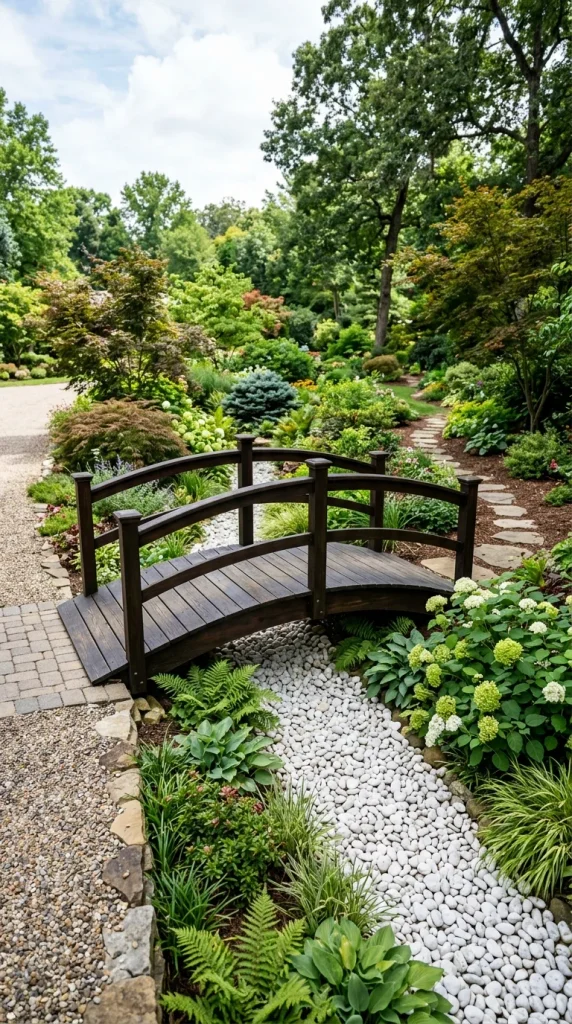
If your culvert crosses a pedestrian path or a prominent area near your front lawn, why not add a bridge? A small, decorative wooden or wrought iron bridge placed over the culvert area adds a touch of whimsy and “curb charm.” It creates a sense of transition and makes the drainage area feel like a deliberate water feature or a secret garden entrance.
7. Flagstone Edging
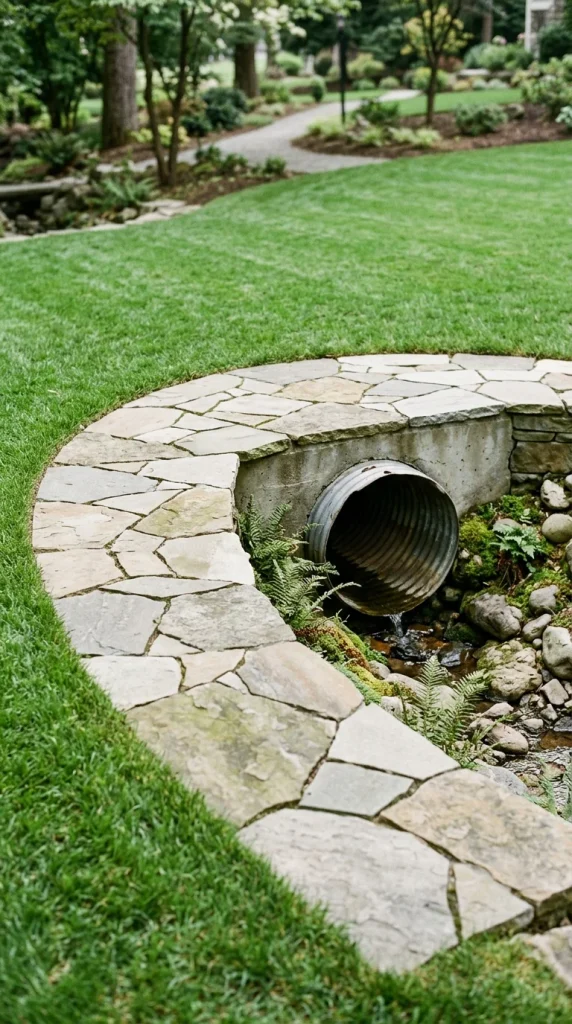
Flagstone offers a more formal and “manicured” appearance than loose river rock. By laying flat flagstones around the culvert opening, you create a sturdy apron that resists erosion and looks incredibly high-end. This is an excellent choice for homeowners who prefer a clean, modern aesthetic. The flat surface also makes it easier to trim weeds and grass around the edges without damaging the pipe.
8. Creeping Groundcover
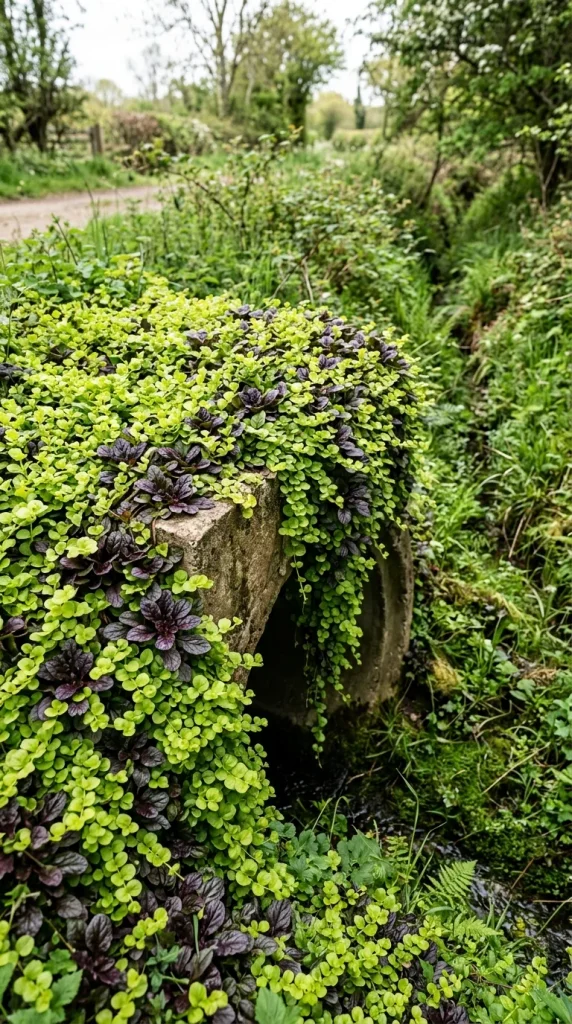
Groundcovers are perfect for those who want a “set it and forget it” solution. Low-growing plants like Creeping Jenny, Vinca Minor, or Phlox can be planted along the banks of the culvert. Over time, these plants will spread to create a lush, green carpet that smothers weeds and hides the culvert pipe. They provide a soft, organic look that blends the drainage area seamlessly into the rest of your lawn.
9. Willow Shrubs
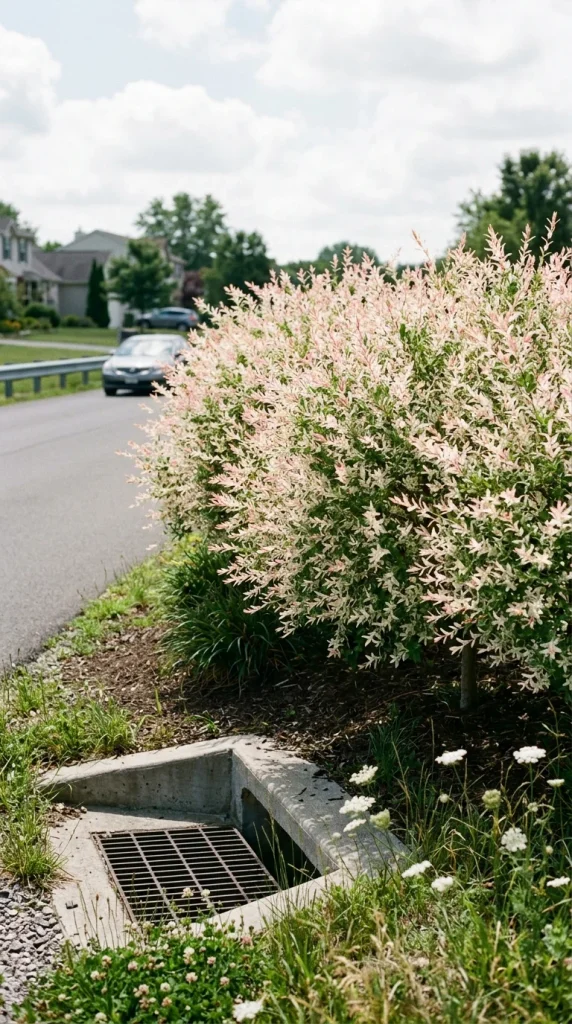
Willows are famous for their love of water, making them the perfect candidates for culvert landscaping. Specifically, shrub varieties like the Dappled Willow (Hakuro Nishiki) offer stunning foliage colors and stay at a manageable height. Planting these on the “upstream” side of the culvert helps soak up excess water and provides a beautiful, swaying screen that adds movement and texture to your yard.
10. Lighting Accents
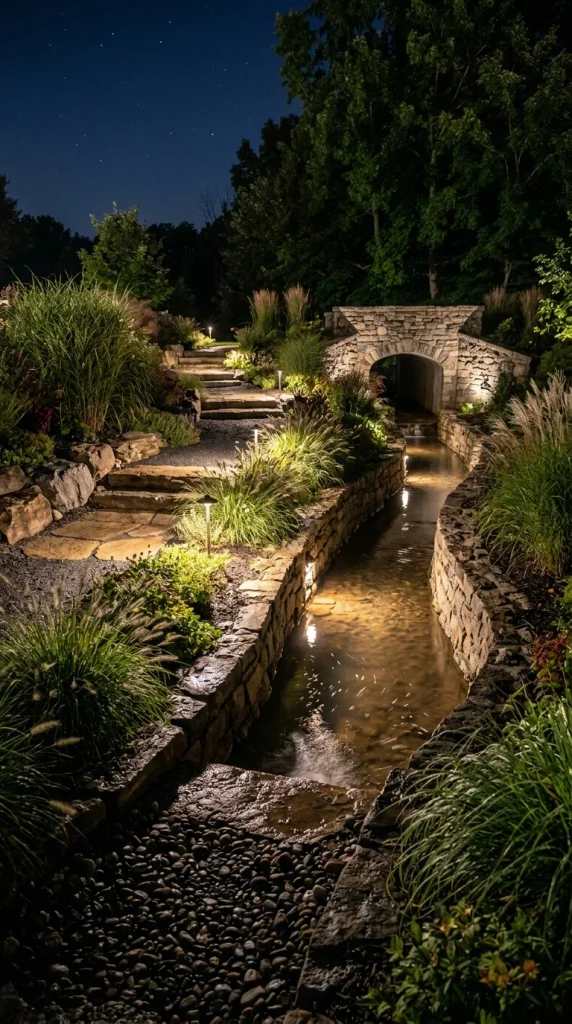
Landscape lighting can turn a culvert area into a nighttime masterpiece. Use low-voltage LED spotlights to highlight a large boulder or a beautiful patch of ornamental grass near the culvert. You can also place solar-powered path lights along the edge of the ditch for safety and visibility. Proper lighting ensures that your hard work is visible 24/7 and adds an extra layer of luxury to your property’s exterior.
11. Rain Gardens
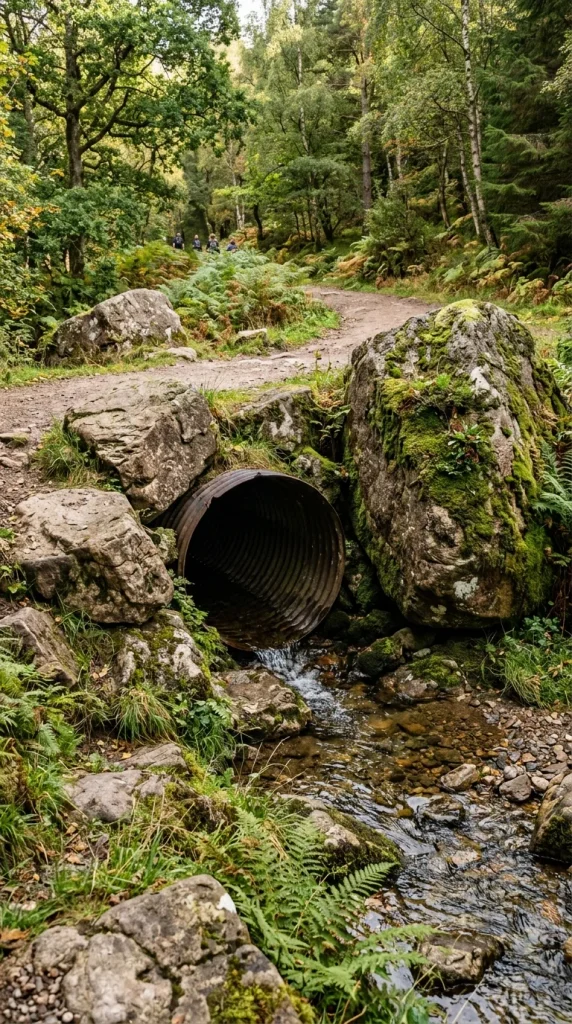
Transform your culvert exit into a functional rain garden. A rain garden is a depressed area that collects water runoff and allows it to soak into the ground slowly. By planting water-loving species like Ferns, Joe-Pye Weed, and Cardinal Flower, you create a mini-ecosystem that filters pollutants from the water. It’s an eco-friendly way to manage drainage while creating a lush, wild-garden aesthetic.
Key Tips for Culvert Landscaping Success:
- Prioritize Drainage: Never block the flow of water. Ensure that your rocks, plants, or structures do not obstruct the pipe’s opening or reduce its capacity to handle heavy rain.
- Check Local Regulations: Some municipalities have strict rules about what can be placed near road-side culverts. Always check with your HOA or local public works department before starting a project.
- Avoid Invasive Species: Since water flows through culverts, seeds from the plants you choose can easily travel downstream to other areas. Stick to native or non-invasive plants.
- Maintenance Matters: Even the best landscape needs upkeep. Regularly clear out debris, leaves, and silt that may accumulate in the culvert to prevent clogs and flooding.