
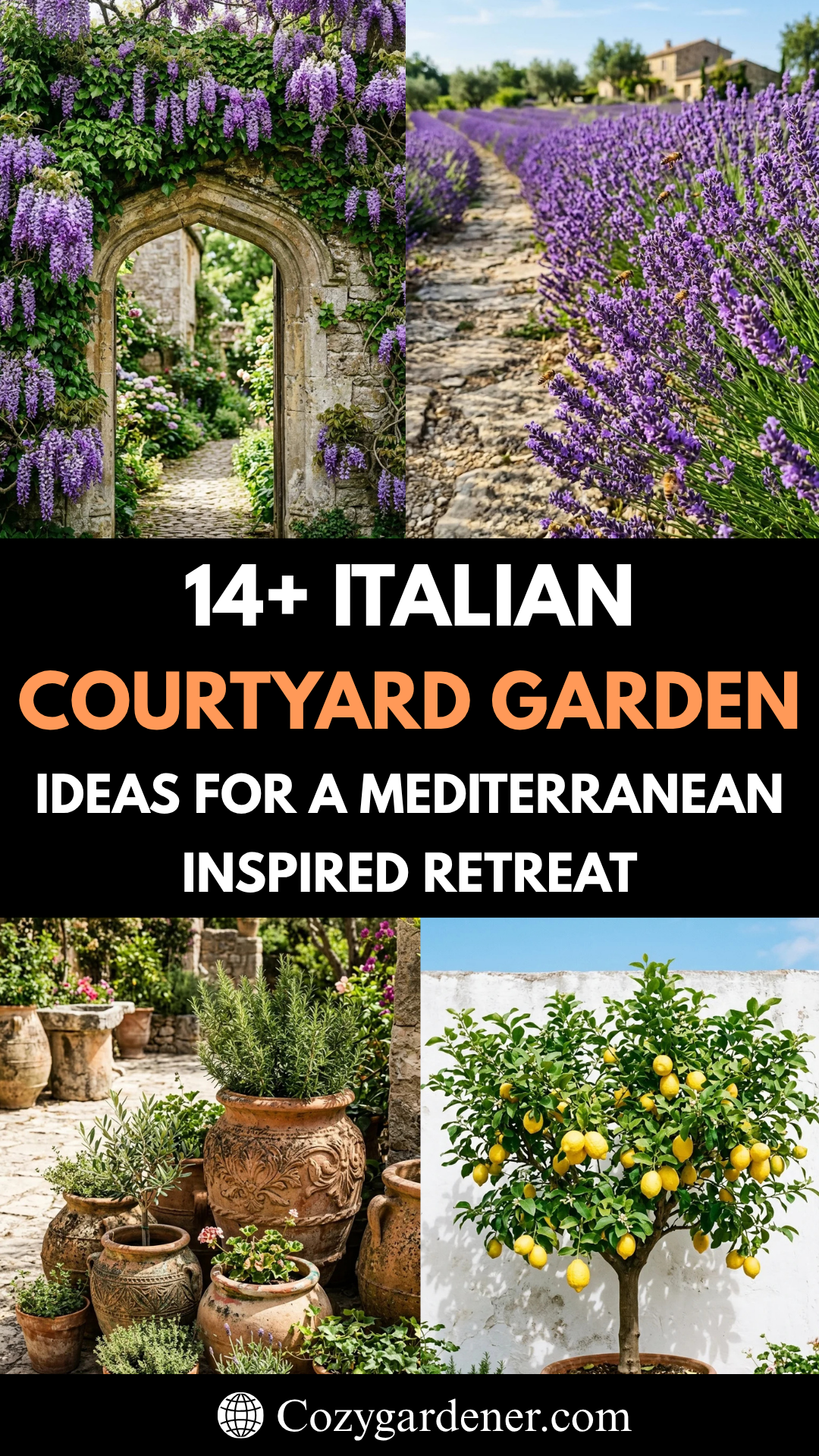
The allure of an Italian courtyard lies in its ability to blend rustic simplicity with timeless elegance. Known as a “cortile,” these spaces are designed to be an extension of the home—a private sanctuary where the air smells of rosemary and the sound of trickling water lulls you into a state of “dolce far niente” (the sweetness of doing nothing). Whether you have a sprawling backyard or a compact urban patio, you can channel the spirit of Tuscany or the Amalfi Coast by incorporating specific architectural and botanical elements.
1. Terracotta Pots
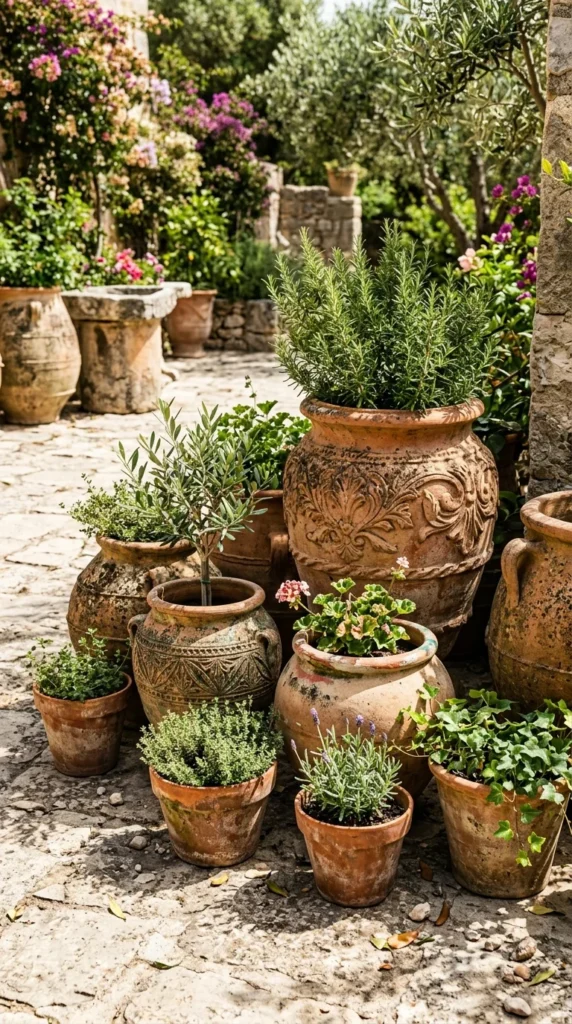
Terracotta is the heartbeat of Italian garden design. These “baked earth” vessels provide a warm, organic color palette that complements almost any plant. To achieve an authentic look, avoid matching sets. Instead, opt for a variety of shapes—from tall, slender amphorae to wide, shallow bowls. Over time, these pots develop a beautiful patina of moss and mineral deposits, which only adds to their charm. Use them to frame doorways, line staircases, or create a focal point in a corner of the courtyard.
2. Citrus Trees
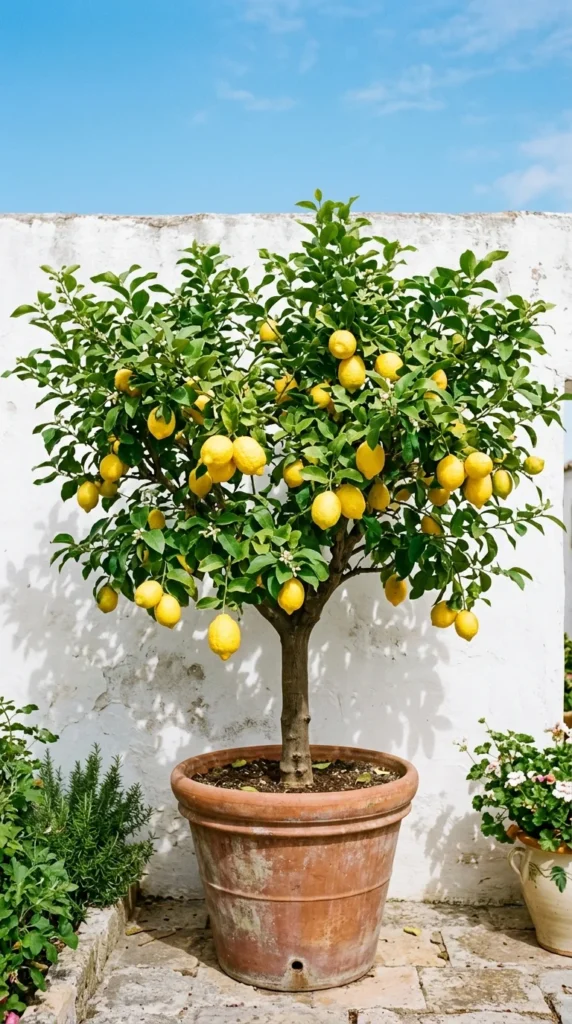
Nothing says Mediterranean luxury like the scent of lemon and orange blossoms. In Italy, citrus trees are often grown in large pots so they can be moved indoors or into a “limonaia” (lemon house) during colder months. Potted lemons, limes, or calamondins add height, structure, and a splash of vibrant color to your garden. The glossy green leaves and bright fruit create a stunning contrast against stone walls, making your courtyard feel like a hidden grove in Sorrento.
3. Gravel Paths
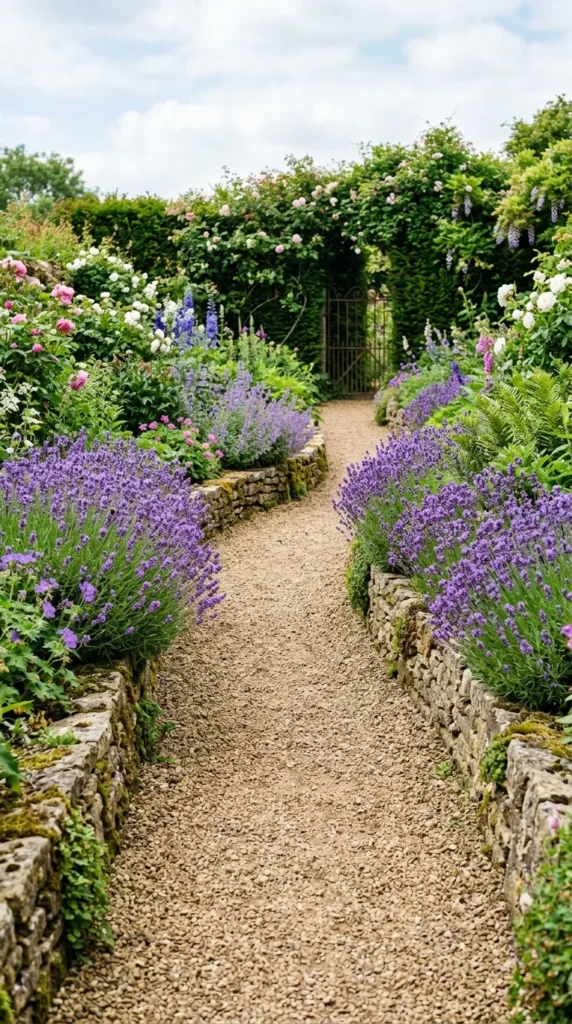
In an Italian courtyard, the ground underfoot is just as important as the plants above. Gravel is a staple of Mediterranean landscaping because it is permeable, low-maintenance, and provides a satisfying “crunch” when walked upon. Use pea gravel in shades of buff, tan, or grey to create informal paths or to fill the spaces between larger flagstones. This texture softens the transition between built structures and the natural world, fostering a relaxed, rustic atmosphere.
4. Stone Fountains
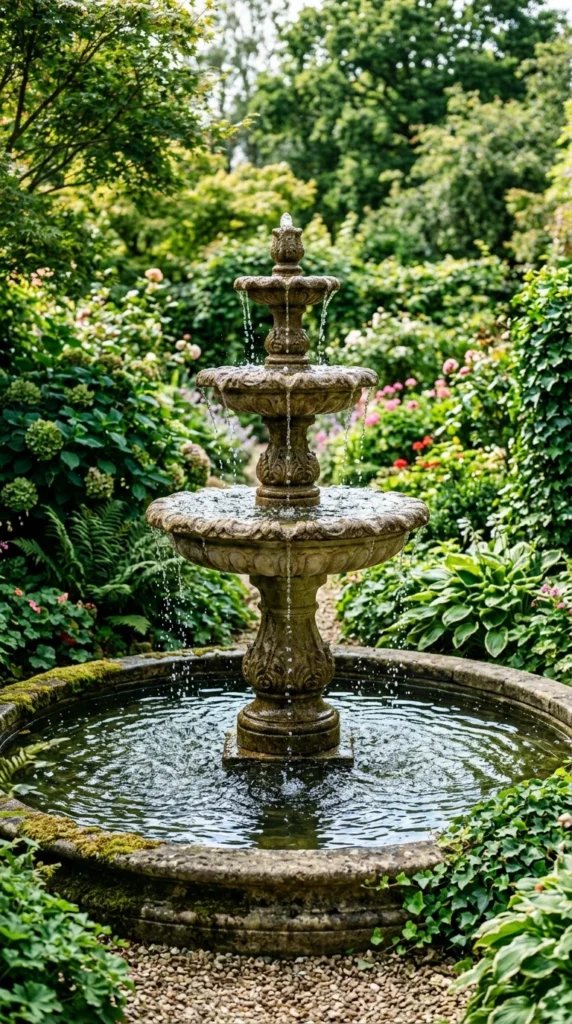
The sound of running water is essential for creating a cooling effect in a sun-baked courtyard. A central stone fountain acts as a natural masterpiece, drawing the eye and providing a sense of tranquility. You don’t need a massive installation; even a simple wall-mounted lion’s head spout dripping into a small basin can transform the auditory landscape of your garden. Water also attracts local birds, adding a layer of life and movement to your retreat.
5. Climbing Vines
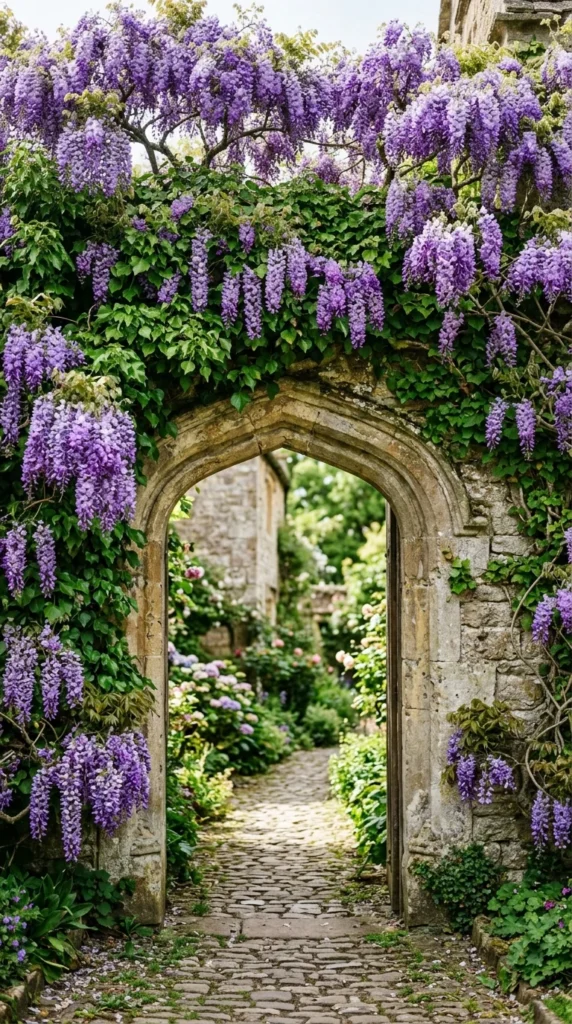
Vertical interest is key to the “secret garden” feel of an Italian retreat. Fast-growing climbers like wisteria, jasmine, and bougainvillea provide shade, fragrance, and privacy. Wisteria offers spectacular lavender blooms in the spring, while star jasmine provides a heady, sweet scent throughout the summer. Training these vines to grow up stone walls or over doorways blurs the lines between the architecture and the garden, making the space feel established and ancient.
6. Wrought Iron
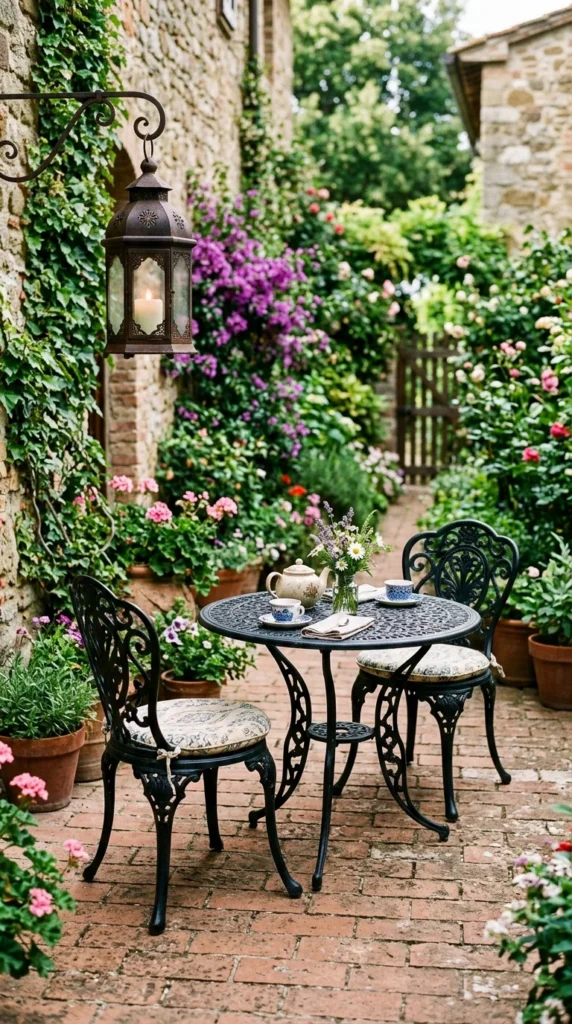
Metalwork provides a delicate, structural contrast to the heavy stone and soft foliage of a courtyard. Wrought iron furniture, gates, and wall art are quintessential Italian elements. Look for pieces with scrolling details or classic silhouettes. A simple wrought iron bistro set offers the perfect spot for a morning espresso, while an iron wall trellis can support your climbing roses or ivy, adding a touch of old-world craftsmanship to the space.
7. Cypress Trees
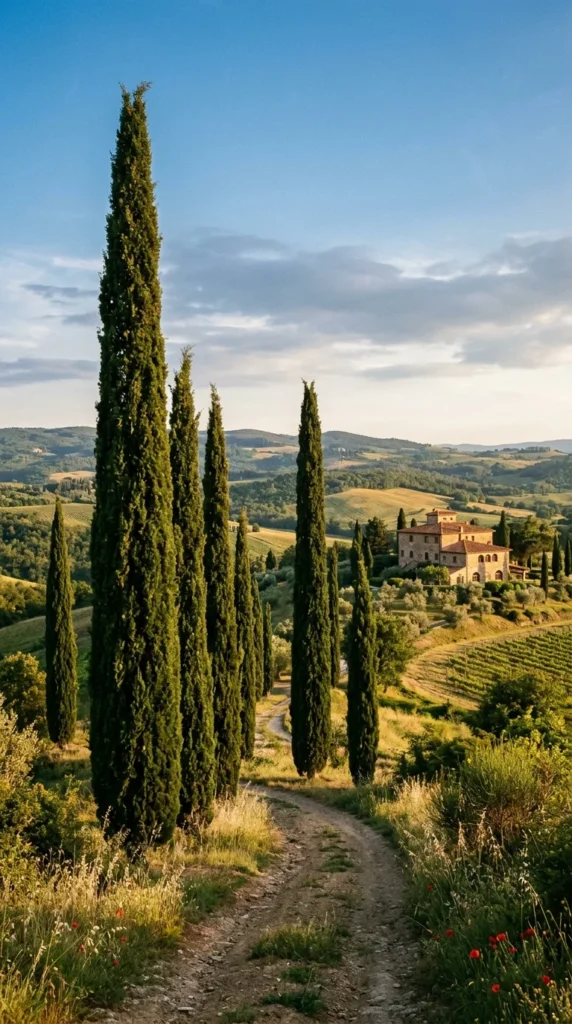
The Italian Cypress (Cupressus sempervirens) is the most iconic silhouette in the Mediterranean landscape. These tall, slender evergreens are used to create vertical accents and formal structure. In a courtyard, they can be used to frame a specific view, mark an entrance, or provide height in a space with limited ground room. Their dark, dense foliage remains green year-round, ensuring your garden has architectural interest even in the middle of winter.
8. Herb Borders
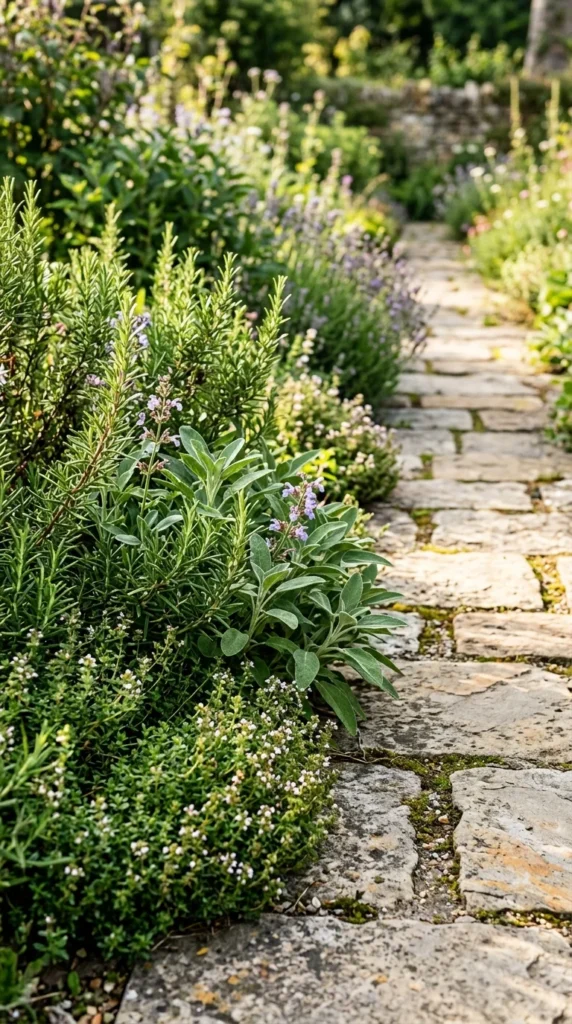
An Italian garden is meant to engage all the senses, including taste and smell. Instead of traditional flower beds, consider planting “edible borders” filled with Mediterranean herbs. Rosemary, thyme, sage, and oregano are hardy, drought-tolerant, and incredibly fragrant. Planting them along the edges of paths allows their scent to be released whenever someone brushes past. These herbs also provide beautiful, understated textures that look right at home among stones and terracotta.
9. Pergola Structures
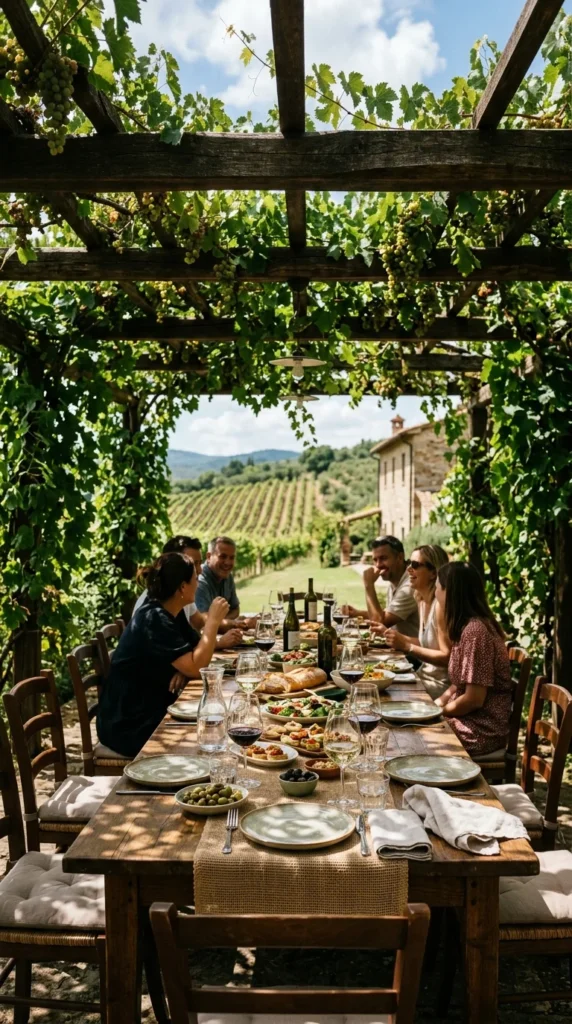
A pergola is the ultimate architectural feature for a Mediterranean courtyard, providing much-needed shade from the midday sun. Traditionally constructed from heavy timber or stone pillars, pergolas are often topped with crossbeams that support climbing plants like grapevines or roses. This creates a “living ceiling” that cools the area naturally. It serves as the perfect outdoor room, defining a space for lounging or dining while maintaining an open, airy connection to the sky.
10. Mosaic Tiles
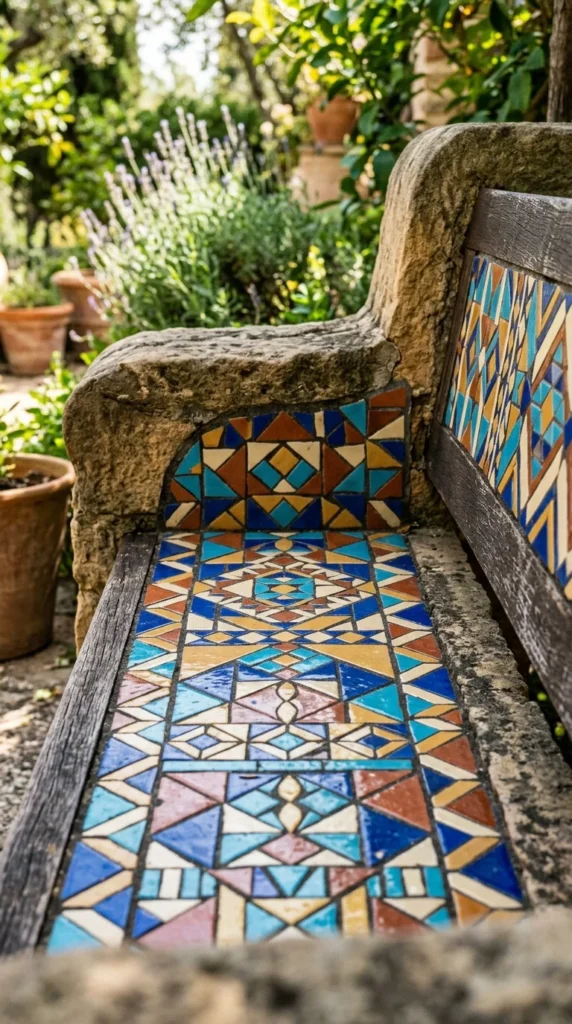
To add a pop of artistry and color, look to the Roman tradition of mosaics. Intricate tile work can be used to decorate a garden bench, a fountain backsplash, or even a section of the floor. Opt for patterns in Mediterranean blues, sunny yellows, and earthy reds. These decorative touches break up the monotony of stone and gravel, providing a focal point that feels both historical and sophisticated.
11. Al Fresco Dining
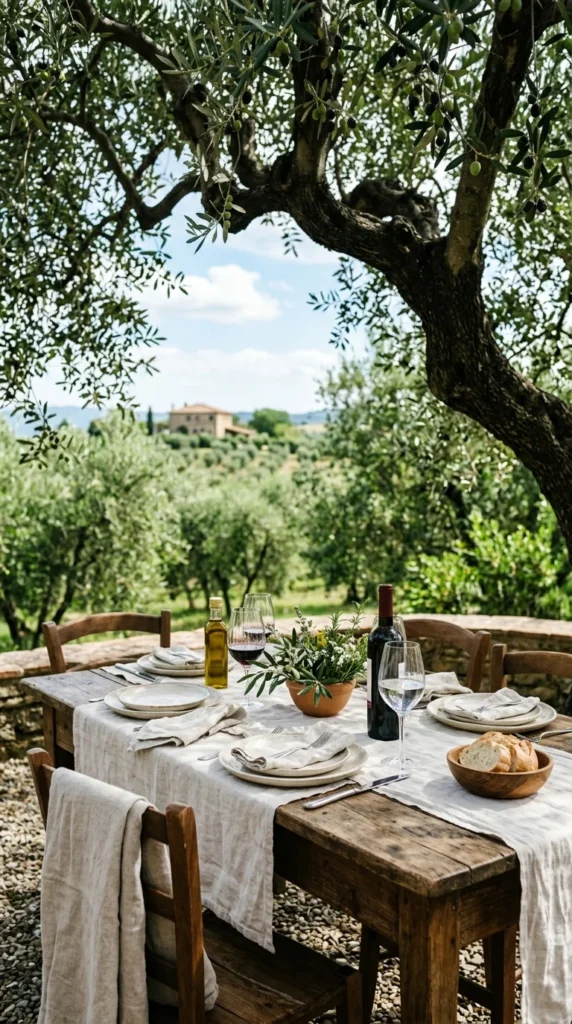
The Italian lifestyle revolves around the table, and the courtyard is the premier location for long, leisurely meals. To create an authentic dining area, choose a rustic table made of reclaimed wood or wrought iron. Surround it with comfortable seating and place it in the coolest part of the garden, perhaps under a pergola or a large tree. String lights or candles in hurricane lamps can be added to ensure the space remains inviting long after the sun goes down.
12. Lavender Hedges
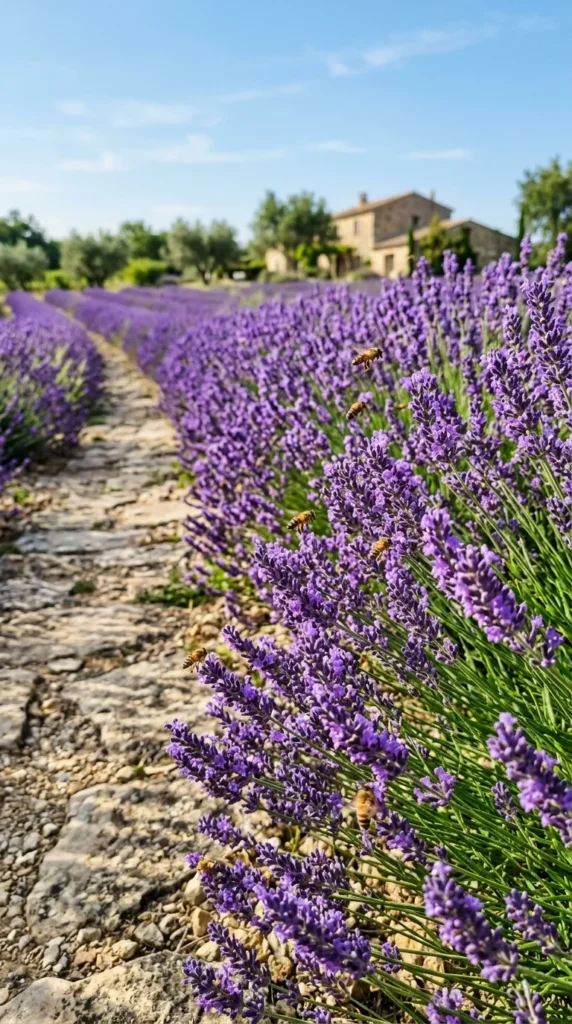
Lavender is prized in Mediterranean gardens for its silver-grey foliage, striking purple spikes, and calming fragrance. Planting lavender in low hedges along paths or around the base of larger trees adds a soft, romantic texture to the courtyard. It is also exceptionally hardy and thrives in the well-drained soil and sunny conditions typically found in courtyard environments. The presence of lavender also brings a sense of soft movement as the stems sway in the breeze.
13. Statuary Accents

Classical sculpture adds a sense of history and gravitas to an Italian-inspired retreat. You don’t need a museum-quality piece; a simple weathered bust, a stone pinecone (a symbol of hospitality), or a classic urn can do the trick. The key is to tuck these pieces into the greenery so they feel like a discovered treasure rather than a showroom display. Position them at the end of a path or within a wall niche to create a “destination” within your garden.
14. Shutters & Arches
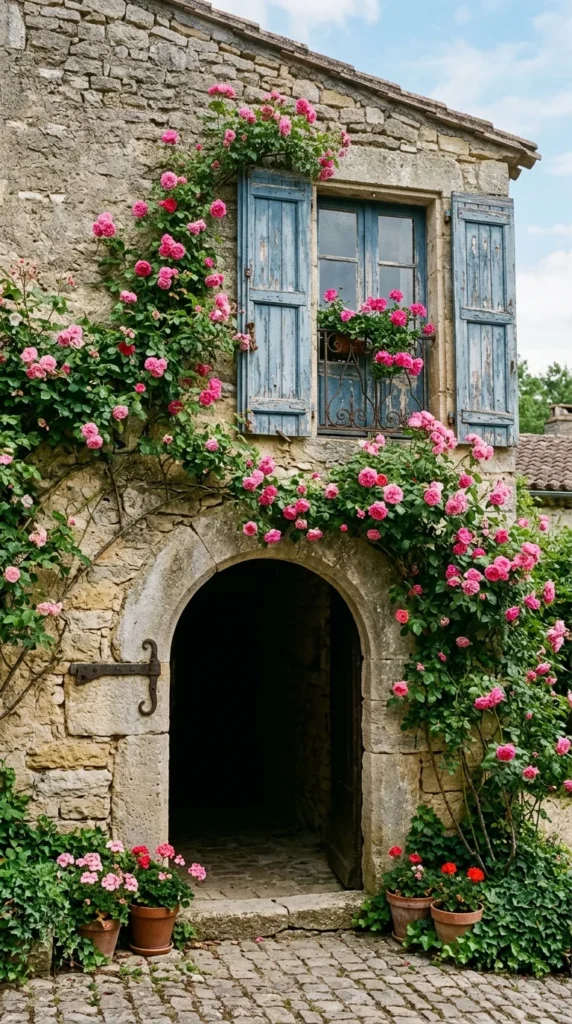
The architecture surrounding the garden is just as important as the garden itself. To truly capture the Italian aesthetic, incorporate arched elements—whether through real stone archways, arched trellises, or even mirrors shaped like windows. Adding wooden shutters to the exterior walls of your home in shades of sage green, dusty blue, or ochre provides an instant Mediterranean facelift. These architectural details provide the “bones” of the courtyard, ensuring it feels like a cohesive, lived-in retreat.