
The front of your home is the first thing guests and neighbors see, making it the primary canvas for your personal style. A well-designed flower bed does more than just add a splash of color; it frames your architecture, increases property value, and creates a welcoming atmosphere that begins long before anyone steps through the front door. Whether you have a sprawling estate or a compact urban lot, the right combination of plants, textures, and structures can transform a plain lawn into a breathtaking landscape.
From the structured elegance of symmetrical borders to the wild, whimsical charm of a cottage garden, there are endless ways to express your creativity. In this guide, we explore 16 diverse flower bed ideas designed to boost your curb appeal and turn your front yard into the envy of the neighborhood.
1. Layered Heights
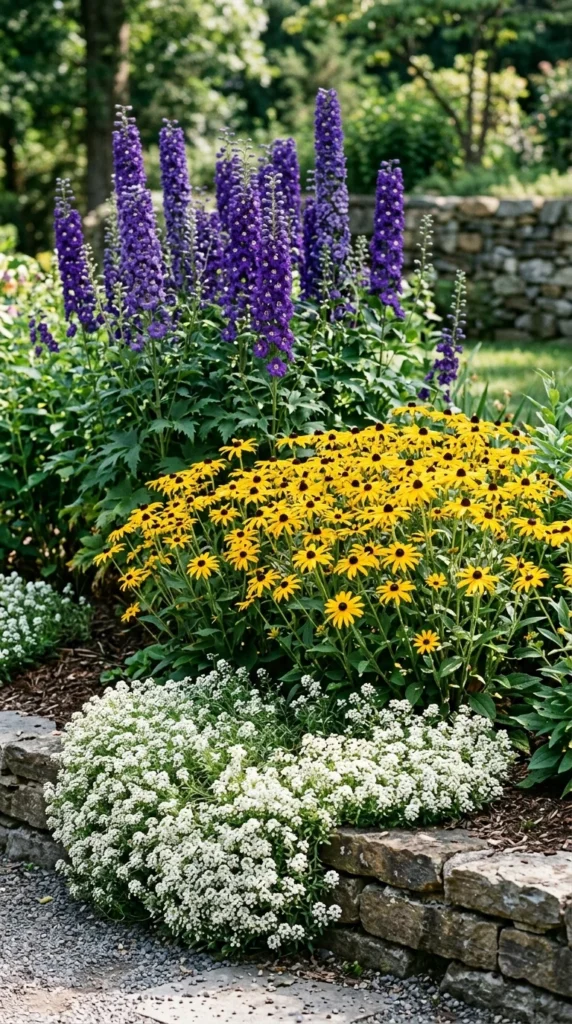
One of the most effective ways to create depth and visual interest is through layering. Instead of planting everything at the same height, think in “stadium seating” terms. Place your tallest specimens, such as ornamental grasses, hollyhocks, or sunflowers, toward the back against the house wall. In the middle, use medium-sized perennials like coneflowers or salvias. Finish the look with low-growing groundcovers or annuals like petunias and lobelia along the front edge. This technique ensures that every plant is visible and creates a lush, full appearance that draws the eye inward.
2. Window Boxes
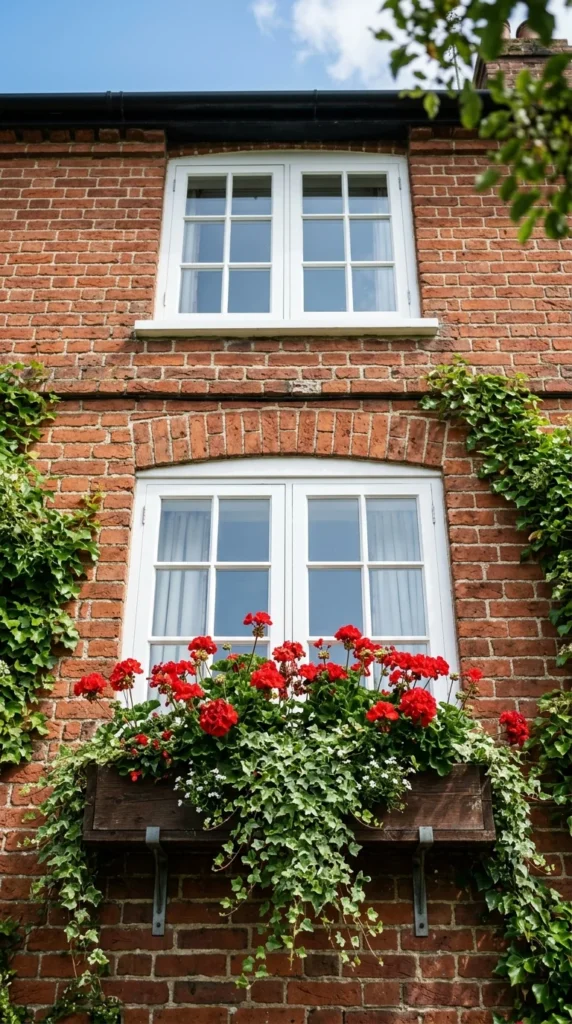
If you have limited ground space or want to bring the garden closer to your eye level, window boxes are the perfect solution. These elevated planters add vertical interest and break up the flat surface of your home’s exterior. For a professional look, follow the “thriller, filler, spiller” rule: a tall focal plant in the center (thriller), mounding flowers to fill the space (filler), and cascading vines or flowers to drape over the edges (spiller). Matching the color of the boxes to your shutters or front door can create a cohesive, polished look.
3. Curved Edges
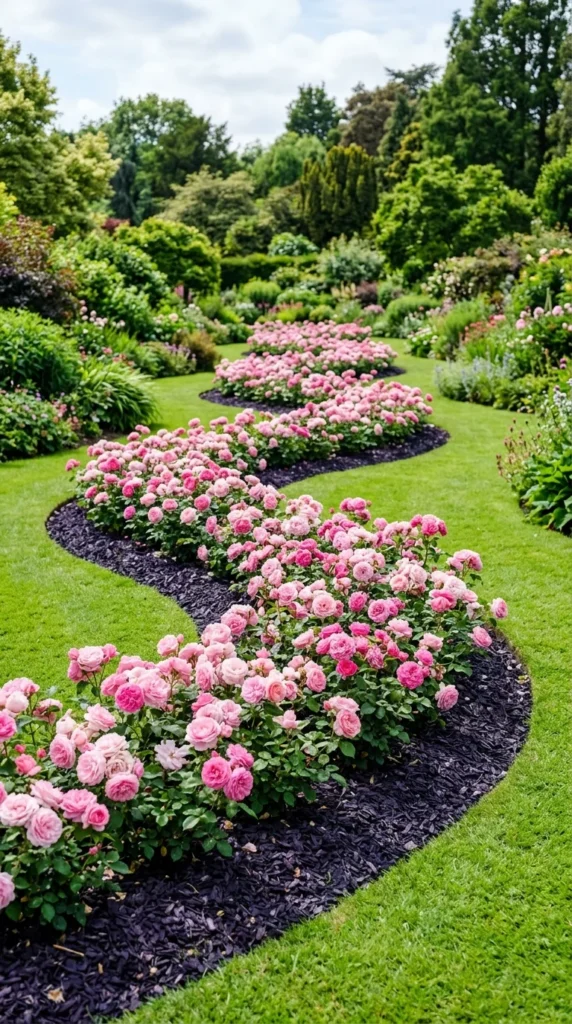
Standard rectangular flower beds can sometimes look stiff and artificial. By introducing soft, serpentine curves to your garden borders, you mimic the natural flow of the landscape. Curved edges create a sense of movement and can make a small yard feel larger by leading the eye on a journey. Use a garden hose to map out a flowing shape before digging, and finish the edge with a clean cut or flexible metal edging to keep the grass from encroaching on your blooms.
4. Stone Borders
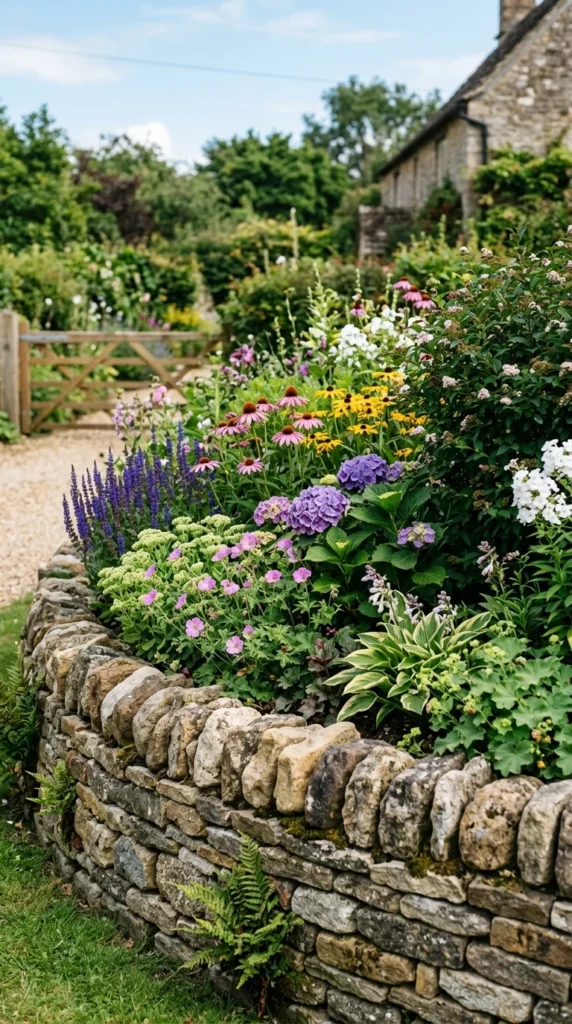
The material you use to define your flower bed is just as important as the plants inside. Natural stone borders provide a timeless, organic feel that complements almost any architectural style. Whether you use stacked flagstone, smooth river rocks, or heavy granite boulders, stone adds a “permanent” feel to the garden. It also serves a functional purpose by preventing soil erosion and keeping mulch in place during heavy rains.
5. Cottage Garden
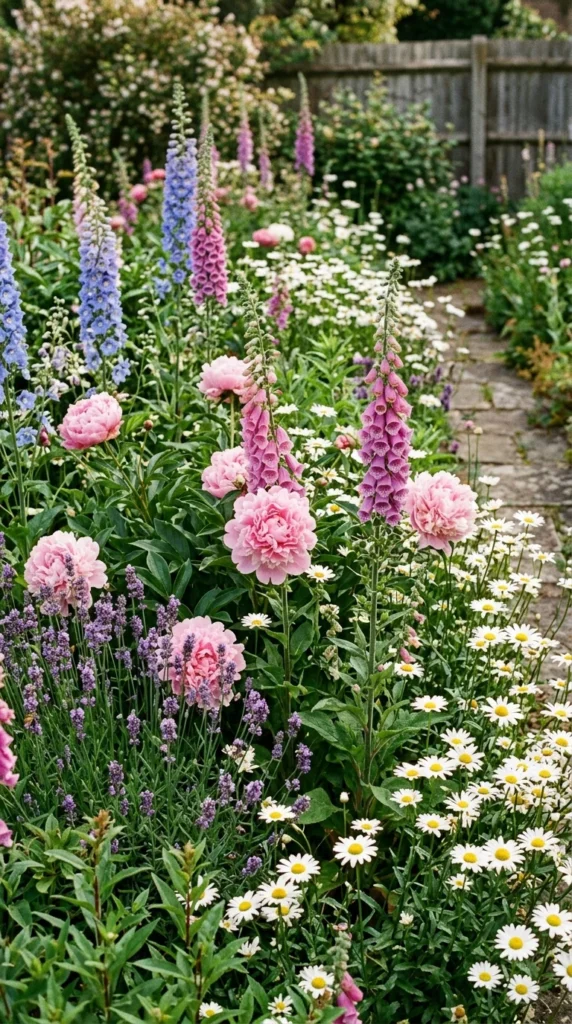
For those who prefer a more relaxed and romantic aesthetic, the cottage garden is a classic choice. This style is characterized by a “controlled chaos” of densely packed flowers, often including fragrant varieties like roses, lavender, and peonies. The goal is to leave very little visible soil, creating a sea of color and texture. Cottage gardens are excellent for pollinators and provide a whimsical, lived-in feel that softens the lines of a modern or traditional home.
6. Modern Minimalism
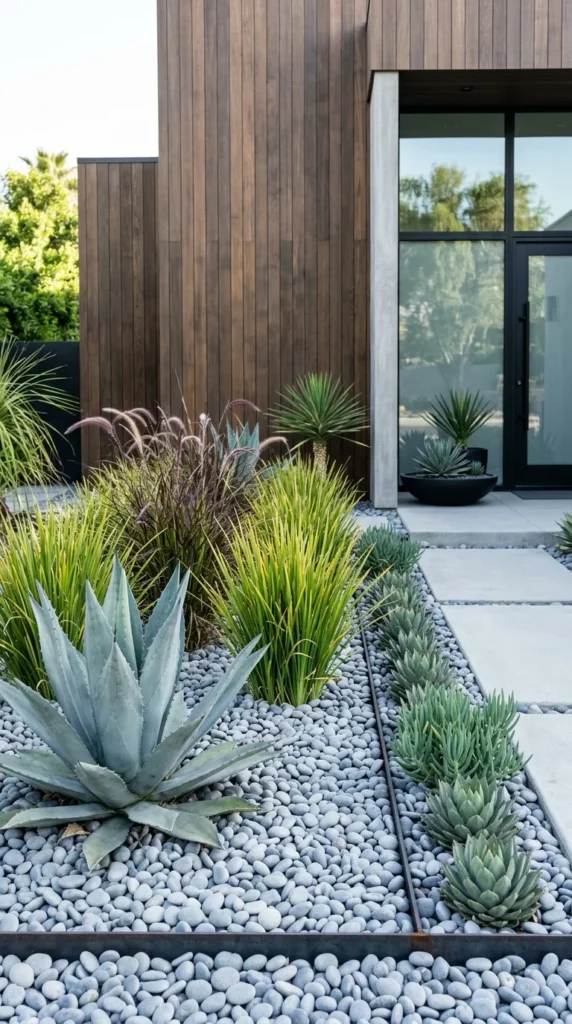
If your home features clean lines and contemporary architecture, a minimalist flower bed is the way to go. Focus on a limited color palette—perhaps just shades of green, white, and silver—and use plants with strong architectural shapes. Think structural grasses, boxwood spheres, or agave plants. Instead of traditional wood mulch, use decorative gravel or river stones to maintain a clean, high-contrast look that requires minimal maintenance.
7. Native Plants
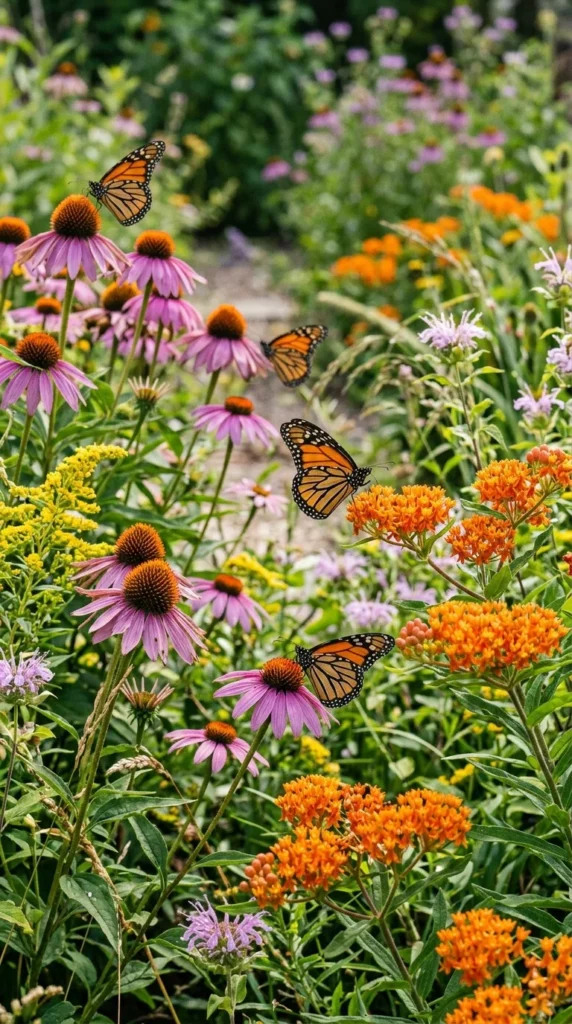
Designing with native plants is a sustainable choice that benefits the local ecosystem while ensuring your garden thrives with less effort. Native species are already adapted to your local soil and climate, meaning they typically require less water and fewer fertilizers once established. Beyond their hardiness, native gardens are a magnet for local birds, butterflies, and bees, turning your front yard into a mini-sanctuary for wildlife.
8. Vertical Trellises
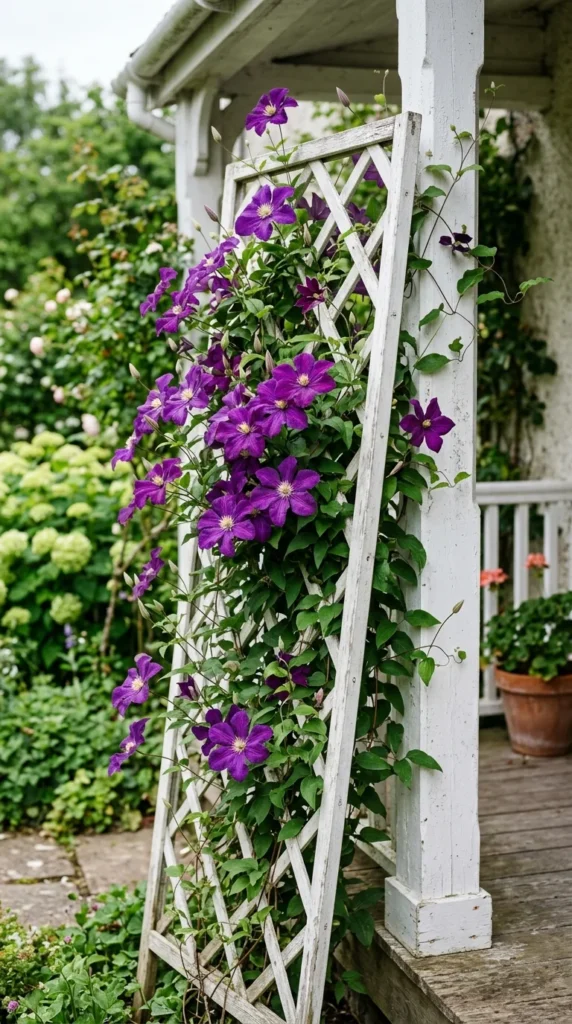
When horizontal space is at a premium, go vertical. Adding trellises, obelisks, or arbors to your flower beds allows you to grow climbing plants like clematis, honeysuckle, or climbing roses. These vertical elements provide height and can help hide unsightly features like utility meters or blank walls. A trellis positioned next to the front door creates a stunning entryway feature that welcomes guests with fragrance and color.
9. Evergreen Foundation
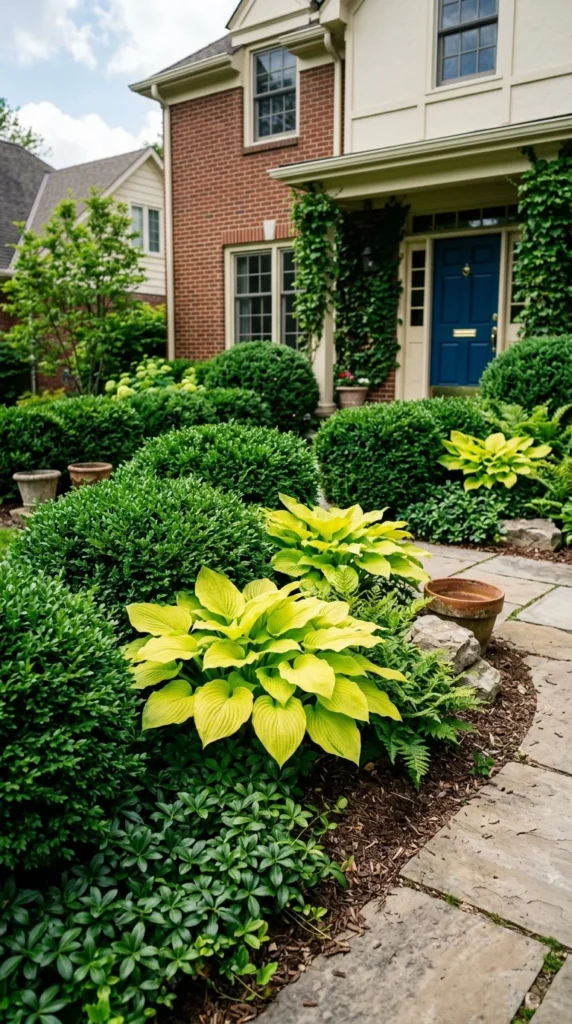
While flowers provide the “wow” factor in summer, you need a solid foundation to keep the yard looking good in winter. Incorporating evergreens like boxwoods, yews, or dwarf conifers ensures that your flower bed has structure and color year-round. These plants act as the “bones” of the garden, providing a green backdrop that makes the colors of your seasonal perennials and annuals pop even more.
10. Color Blocking
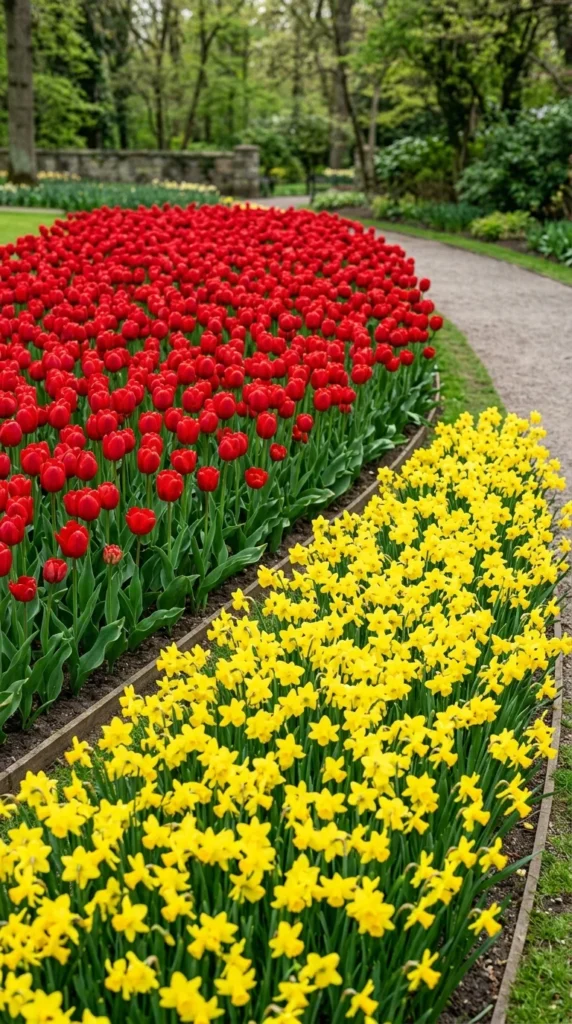
For a high-impact, designer look, try color blocking. Instead of mixing different colors together, plant large groups of the same flower in a single shade. This creates bold “blocks” of color that can be seen from the street. You might choose a monochromatic theme, using different shades of the same color, or a complementary scheme like purple and yellow. This technique is particularly effective in larger yards where small, scattered flowers might get lost.
11. Raised Beds
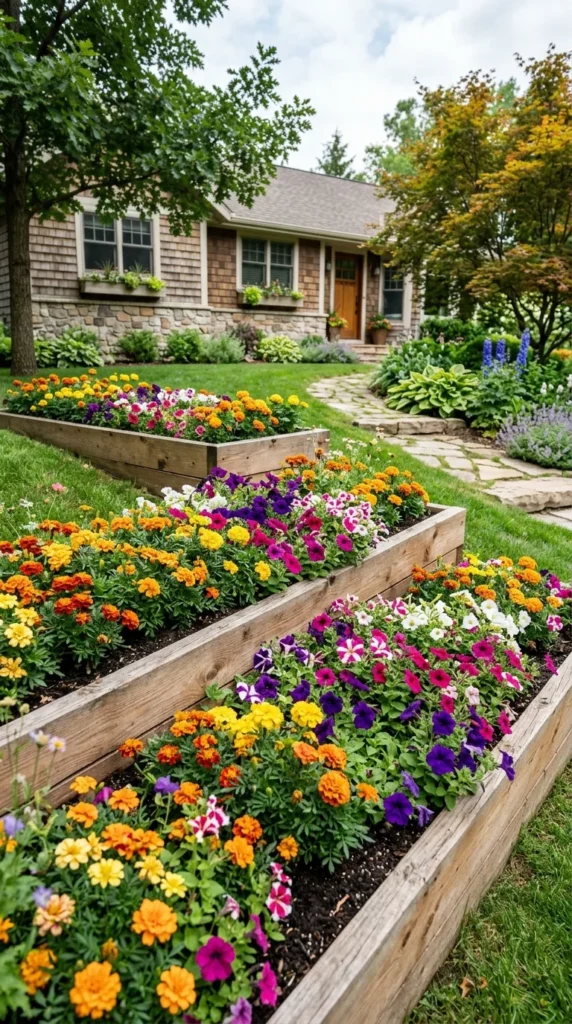
Raised beds are an excellent solution for homes with poor soil quality or sloped yards. Built from cedar, stone, or composite materials, these beds elevate your plants, making them easier to maintain and providing better drainage. Tiered raised beds can turn a boring hill into a sculptural masterpiece, allowing you to create different “levels” of garden interest right in front of your house.
12. Walkway Lining
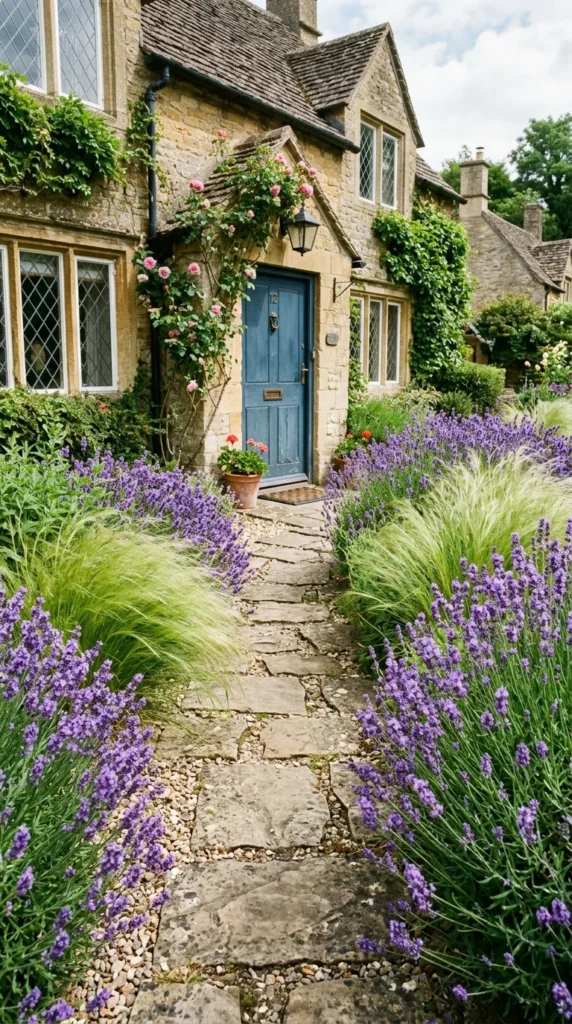
Lead your guests to the door with style by lining your walkway with flowers. This type of flower bed is usually long and narrow, following the path of the sidewalk. Choose plants that stay relatively low and don’t spill over too far onto the walking surface. Fragrant plants like lavender or creeping thyme are excellent choices here, as guests will catch a pleasant scent as they brush past them on their way to the entrance.
13. Shady Retreat
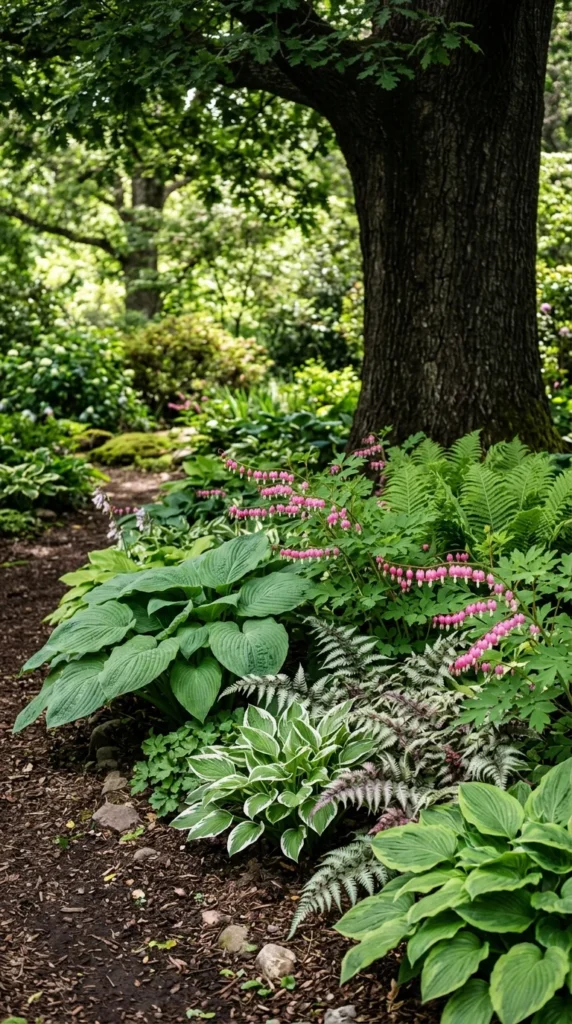
Many front yards are shaded by large trees or the house itself. Don’t let a lack of sun stop you from having a beautiful garden. Shade-loving plants like hostas, ferns, coral bells (Heuchera), and bleeding hearts offer incredible textures and varied foliage colors. In a shady bed, focus on the “green on green” aesthetic, playing with different leaf shapes and variegated patterns to create a cool, serene atmosphere.
14. Drought Tolerant
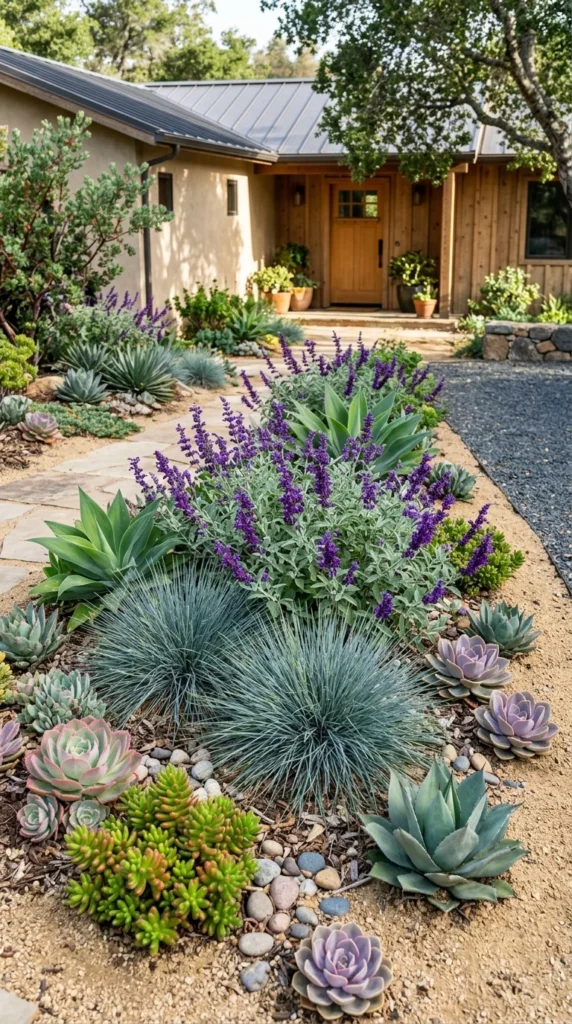
In arid climates or for the busy homeowner, a drought-tolerant flower bed (or xeriscaping) is a smart and stylish option. By using plants like succulents, sedum, Russian sage, and yarrow, you can create a vibrant garden that requires very little supplemental watering. Use a mix of textures—from the fleshy leaves of agave to the airy spikes of ornamental grasses—to keep the bed visually interesting without the need for a high-water bill.
15. Symmetrical Design
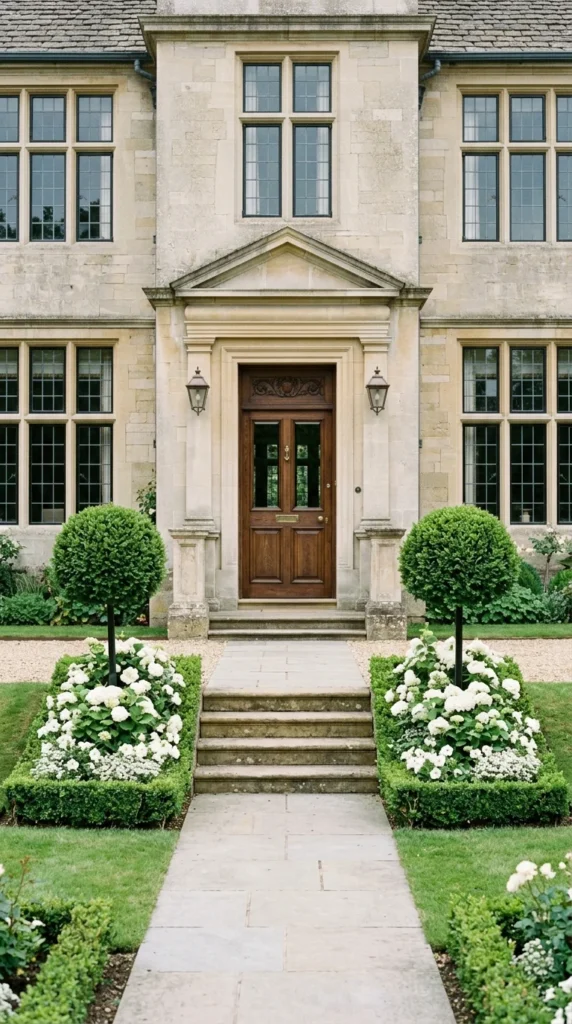
Symmetry creates a sense of order, balance, and formality. If you have a traditional or colonial-style home, symmetrical flower beds on either side of the front door or walkway can enhance the architectural balance. To achieve this, mirror the plant choices and placement exactly on both sides. Using identical planters or matching focal points, like two identical weeping Japanese maples, reinforces the clean, organized look.
16. Seasonal Rotations
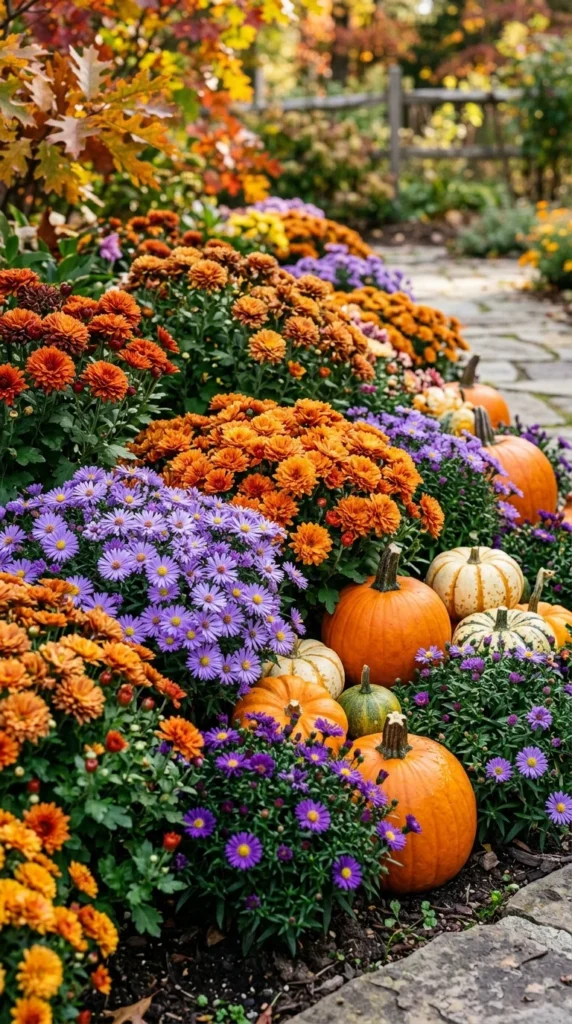
The best flower beds change with the seasons. To keep your curb appeal fresh throughout the year, leave space in your beds for seasonal rotations. In the spring, plant bulbs like tulips and daffodils; in the summer, fill the gaps with heat-loving annuals like zinnias; and in the fall, swap them out for mums and ornamental kale. This approach ensures that your home always looks decorated and “in season,” reflecting the natural rhythms of the year.