
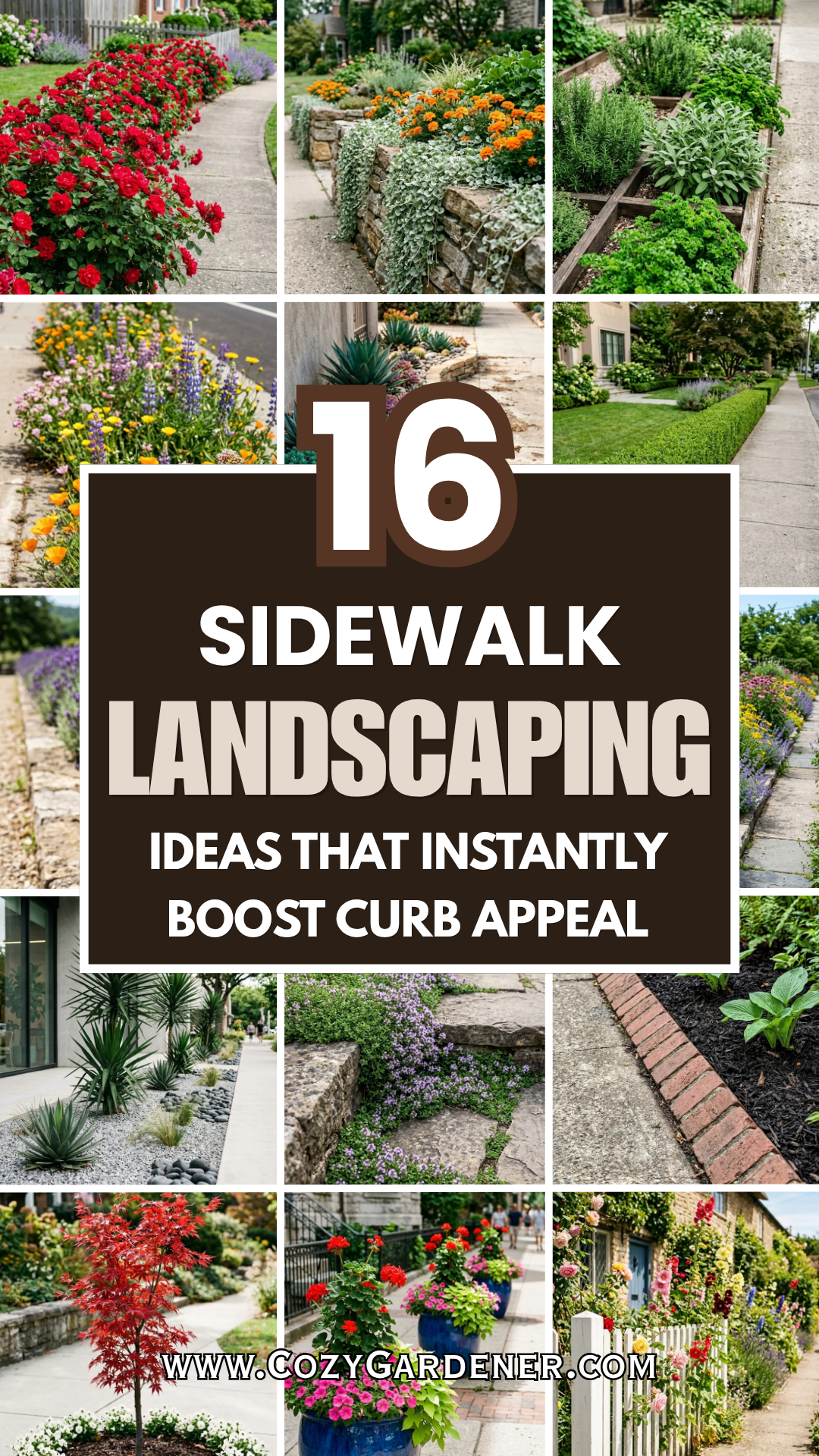
The narrow strip of land between your sidewalk and the street—often referred to as the “hellstrip”—is one of the most overlooked areas of a property. Despite its nickname, this small patch of earth is the first thing guests and passersby notice. Transforming this space from a patch of patchy grass into a lush, inviting landscape can dramatically increase your home’s curb appeal and even its property value.
Whether you are dealing with scorching heat, salt from winter roads, or heavy foot traffic, there is a landscaping solution that fits your aesthetic. From low-maintenance succulents to fragrant lavender rows, here are 16 sidewalk landscaping ideas to elevate your home’s exterior.
1. Flowering Perennials
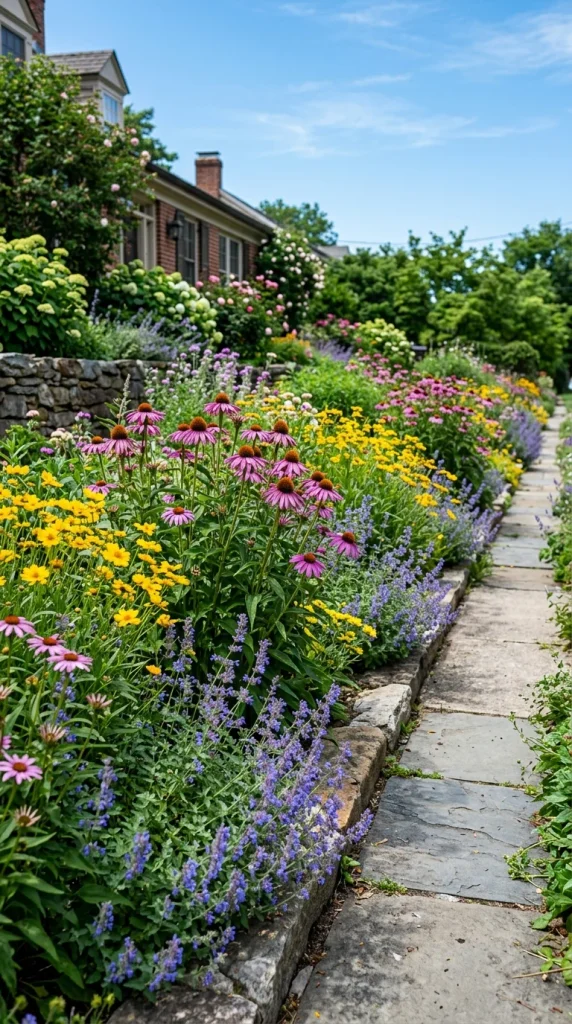
Perennials are the backbone of any great garden because they return year after year. For a sidewalk garden, choosing hardy varieties like Echinacea (coneflowers), Black-eyed Susans, and Daylilies is a smart move. These plants are resilient enough to withstand the heat radiating from the concrete and the occasional stray dog. By mixing different heights and colors, you create a dynamic, layered look that feels intentional and vibrant throughout the growing season.
2. Ornamental Grasses
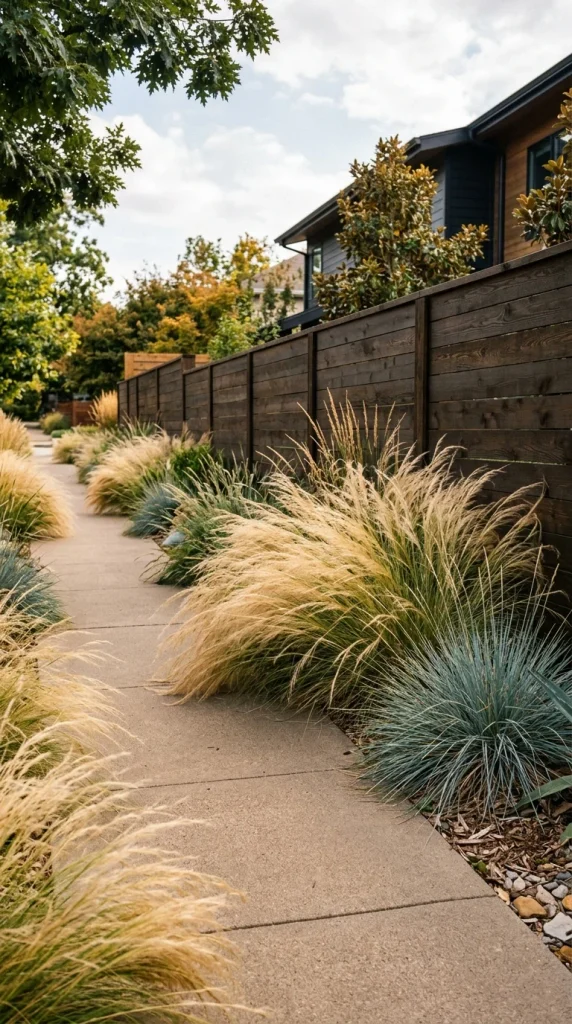
If you prefer a modern, minimalist aesthetic, ornamental grasses are your best friend. Varieties like Blue Fescue, Fountain Grass, or Karl Foerster grass add vertical interest and movement. They are exceptionally low-maintenance and drought-tolerant once established. During the fall and winter, many grasses retain their structure and turn a beautiful golden hue, providing visual interest even when other plants have gone dormant.
3. Lavender Borders
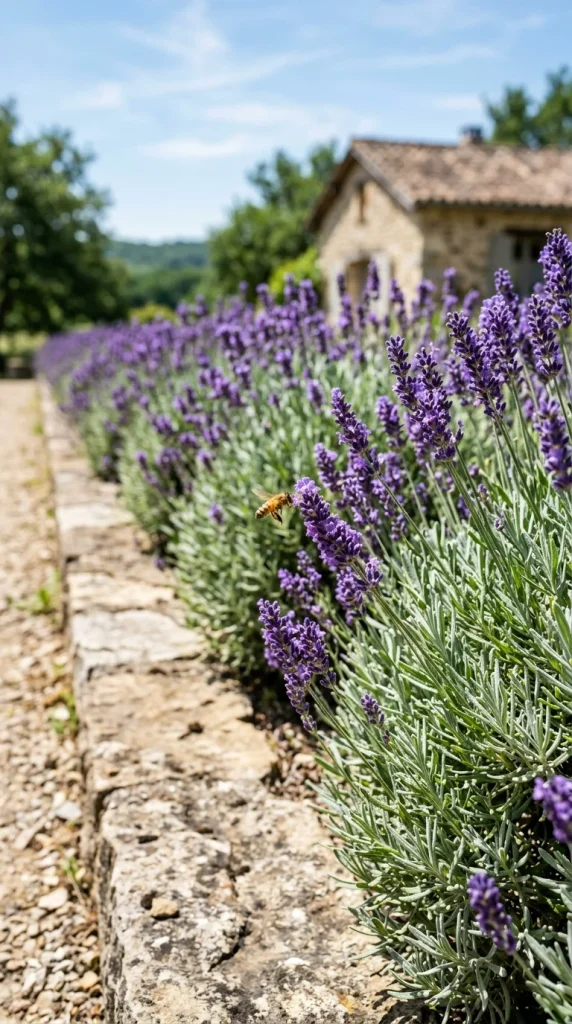
Nothing says “welcome home” like the scent of fresh lavender. Planting a dense row of lavender along your sidewalk creates a sensory experience for anyone walking by. Lavender thrives in the well-drained, often sandy soil found near sidewalks and loves the full sun. It also acts as a natural deterrent for certain pests while attracting beneficial pollinators like butterflies and bees.
4. Low Hedges
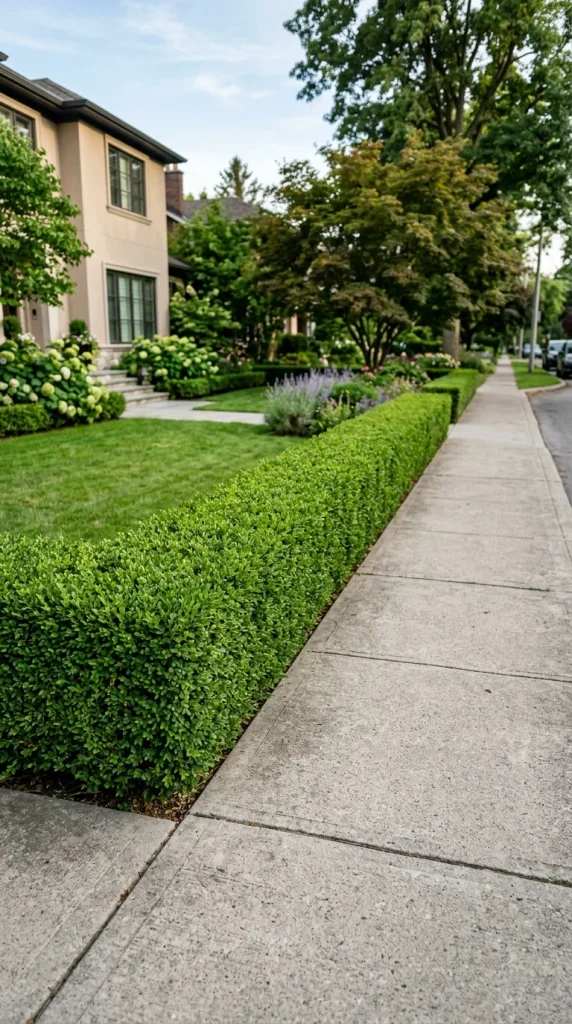
For a classic, formal look, consider a low-growing hedge. Boxwoods or Privets can be sheared into clean, geometric shapes to provide a sense of order and structure. This is an excellent choice for traditional or colonial-style homes. A hedge creates a clear boundary between the public sidewalk and your private lawn without blocking the view of your home’s architecture.
5. Succulent Gardens
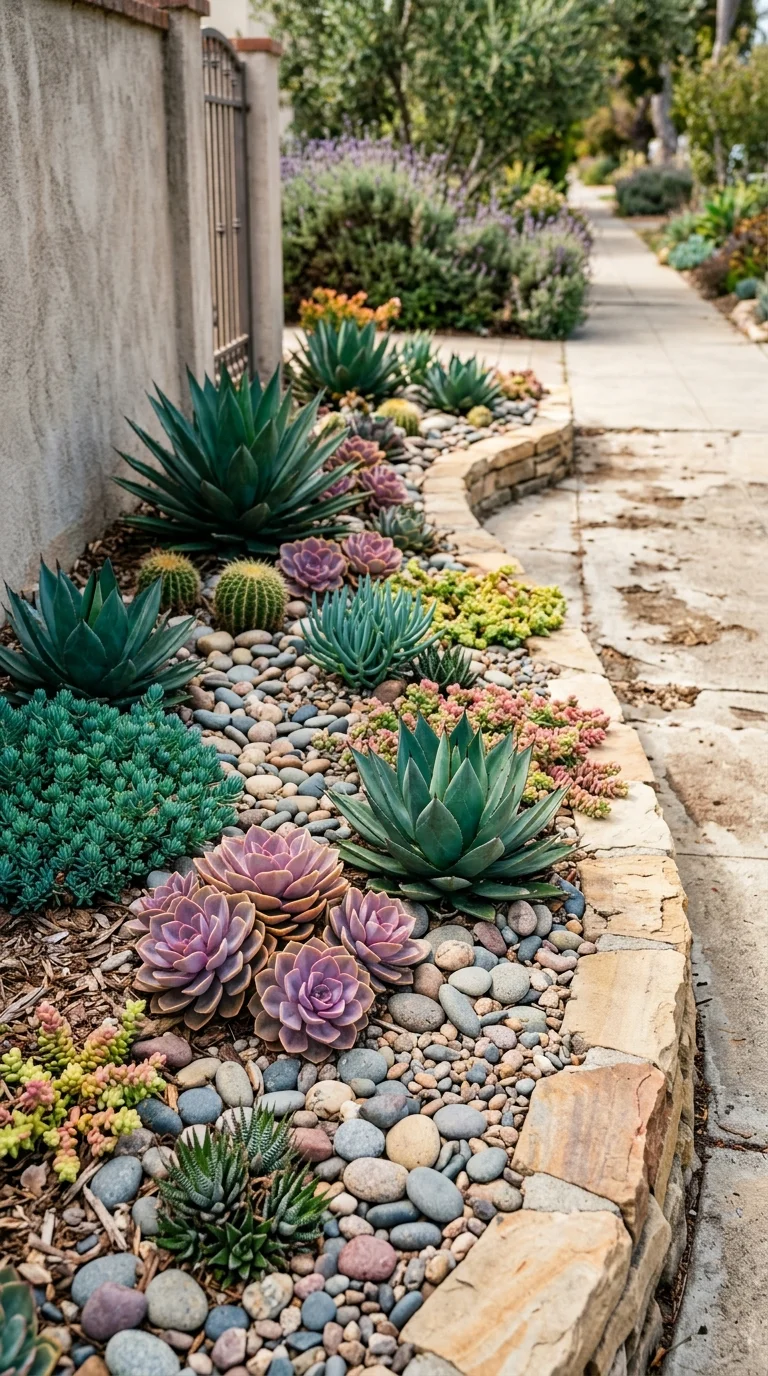
In warmer, arid climates, a succulent garden is a sustainable and stunning choice. Succulents come in an incredible array of shapes, colors, and textures. By mixing large focal plants like Agave with smaller groundcovers like Sedum, you can create a water-wise “tapestry” garden. They require almost no watering once established and can handle the intense heat reflected off the pavement.
6. Native Wildflowers
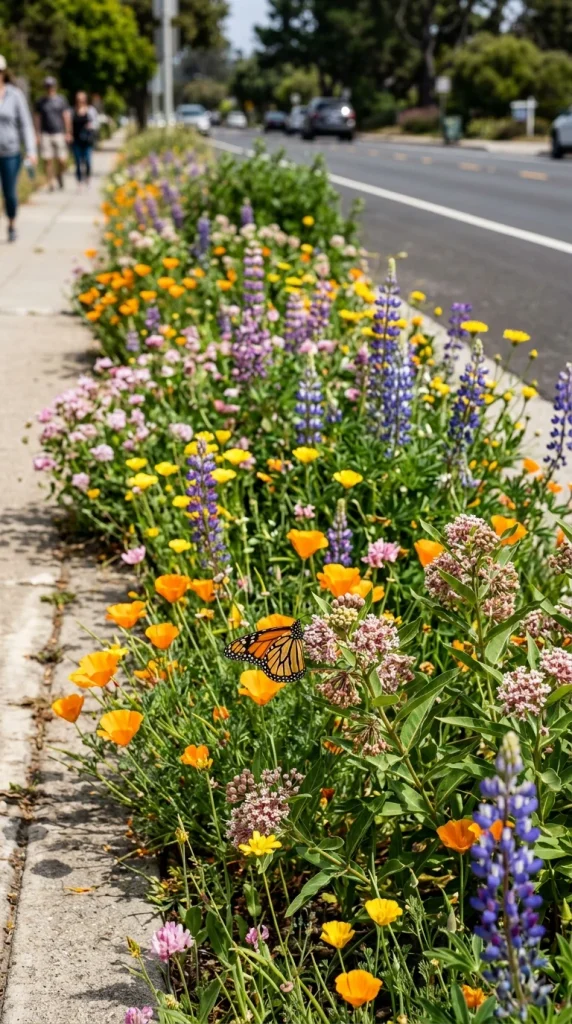
Native plants are specifically adapted to your local climate and soil conditions, making them the most eco-friendly choice. A “pollinator path” of native wildflowers not only looks beautiful but also provides a vital habitat for local wildlife. Because these plants evolved to grow in your area, they generally require less fertilizer and water than non-native species.
7. Paver Edging
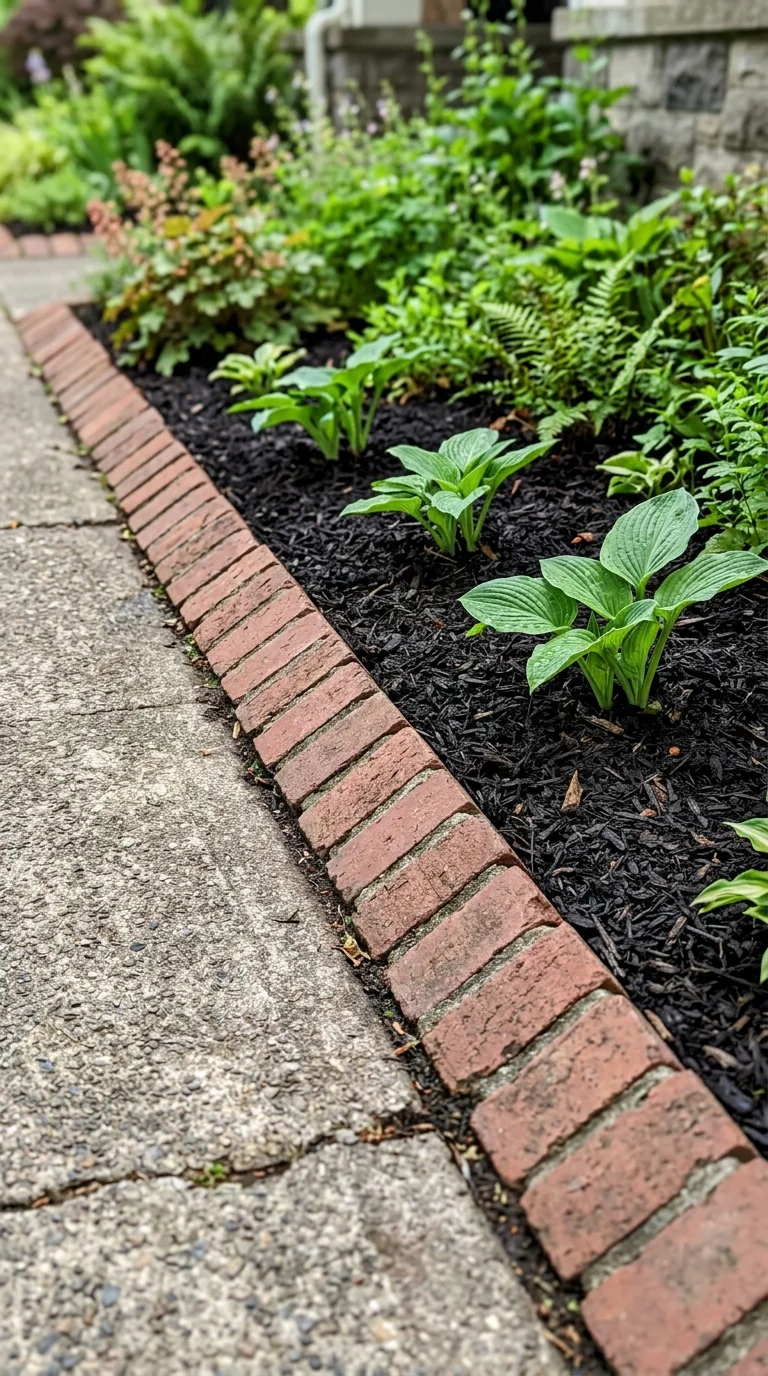
Sometimes the secret to a great sidewalk garden isn’t just the plants, but how they are framed. Adding a decorative edge using bricks, cobblestones, or concrete pavers gives the area a “finished” look. It prevents mulch from washing onto the sidewalk during rain and keeps grass from creeping into your flower beds. This simple hardscaping detail adds an immediate touch of elegance.
8. Creeping Groundcovers
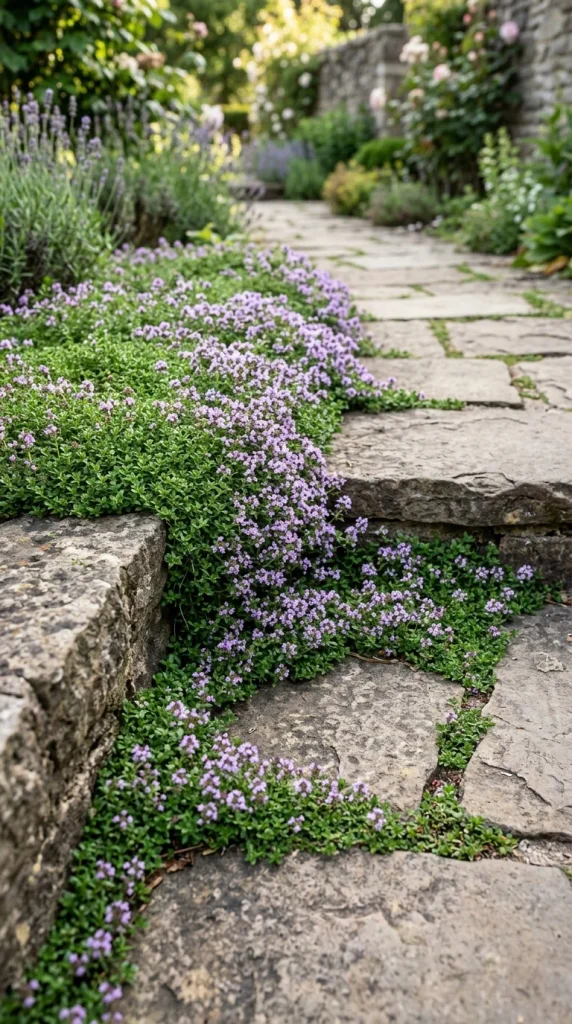
If you want to ditch the lawn mower entirely for the sidewalk strip, creeping groundcovers are the answer. Plants like Creeping Thyme, Stonecrop, or Mondo Grass create a lush, carpet-like effect. Creeping Thyme is particularly popular because it releases a pleasant herbal scent when stepped on and produces tiny, beautiful flowers in the summer.
9. Gravel and Stones
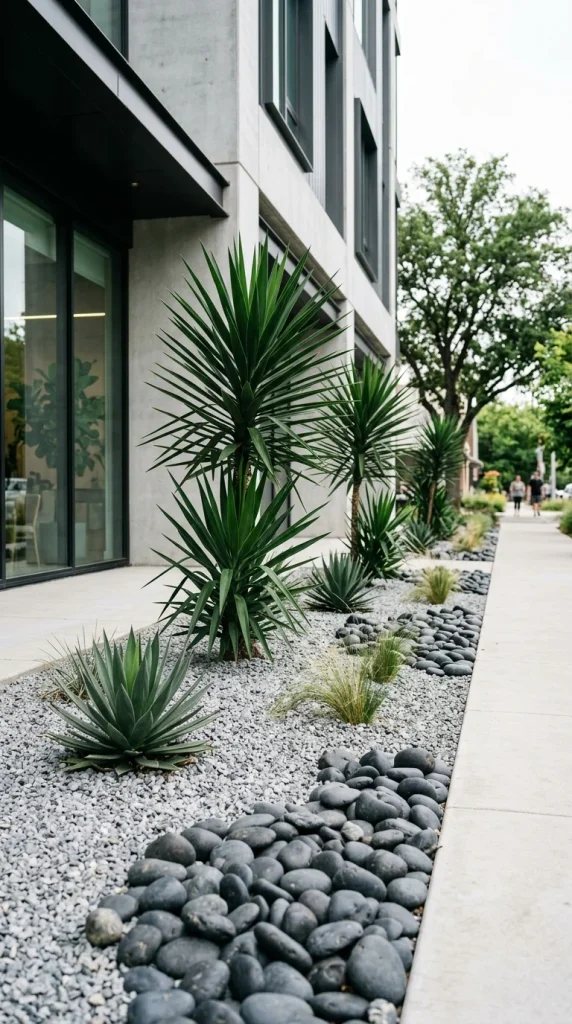
For the ultimate low-maintenance solution, consider a combination of gravel, river rocks, and boulders. This “dry creek bed” look is incredibly stylish and requires zero mowing. To keep it from looking barren, tuck in a few hardy shrubs or ornamental grasses. This approach is excellent for areas with drainage issues, as the stones allow water to permeate easily into the ground.
10. Picket Fencing
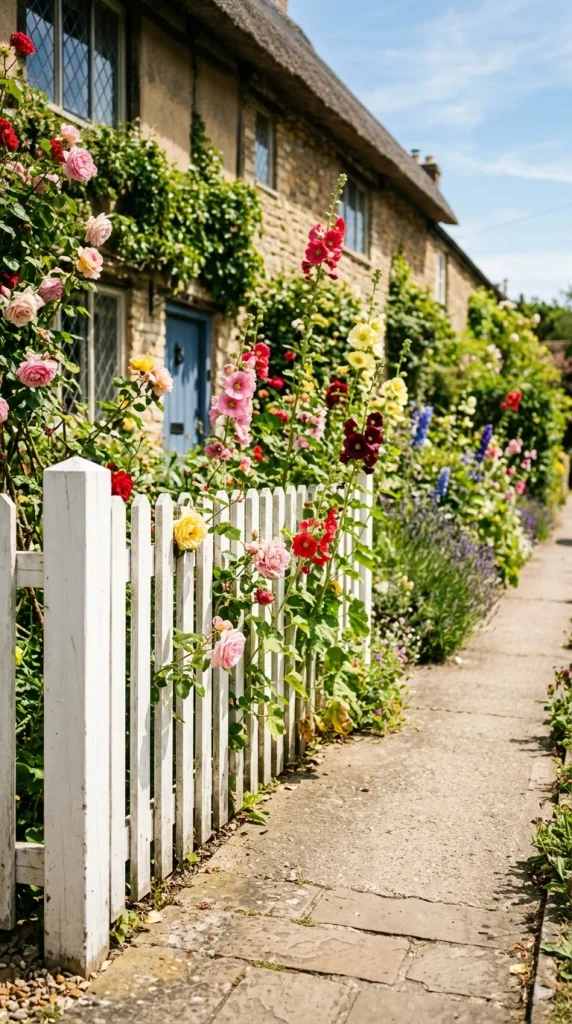
A low picket fence is the epitome of classic curb appeal. It adds a layer of charm and “curb” definition. When paired with climbing roses or tall perennials, it creates a cozy, cottage-garden feel. Even a fence that is only 18 to 24 inches tall can make a massive impact on the perceived boundaries and coziness of your front yard.
11. Small Flowering Trees
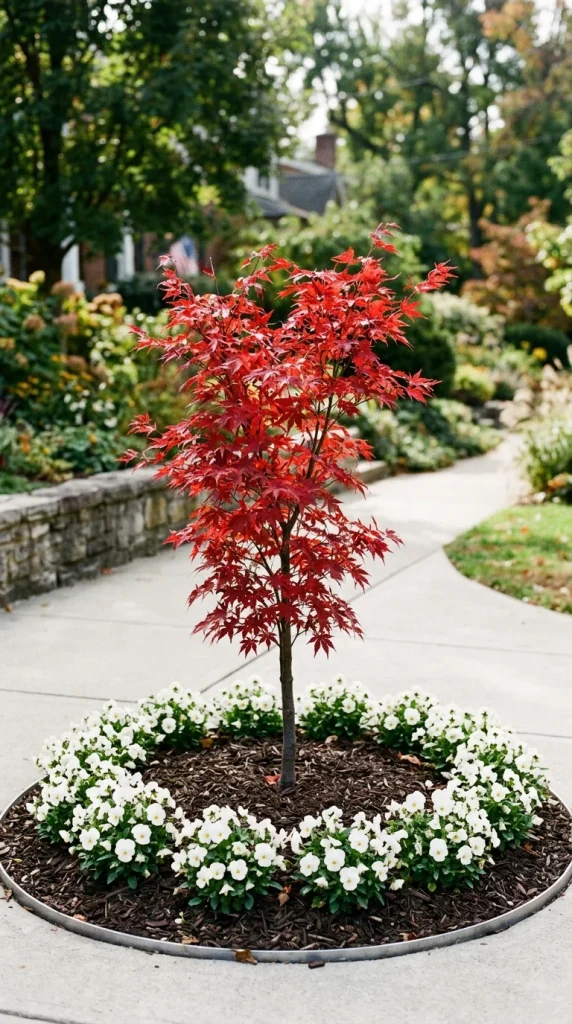
If your sidewalk strip is wide enough, a small ornamental tree can serve as a stunning focal point. Trees like Japanese Maples, Dogwoods, or Serviceberries provide vertical height and seasonal color. They also offer a bit of shade for the sidewalk, making the walk more pleasant for neighbors. Just be sure to choose a variety that won’t interfere with power lines or heave the sidewalk with its roots.
12. Seasonal Containers
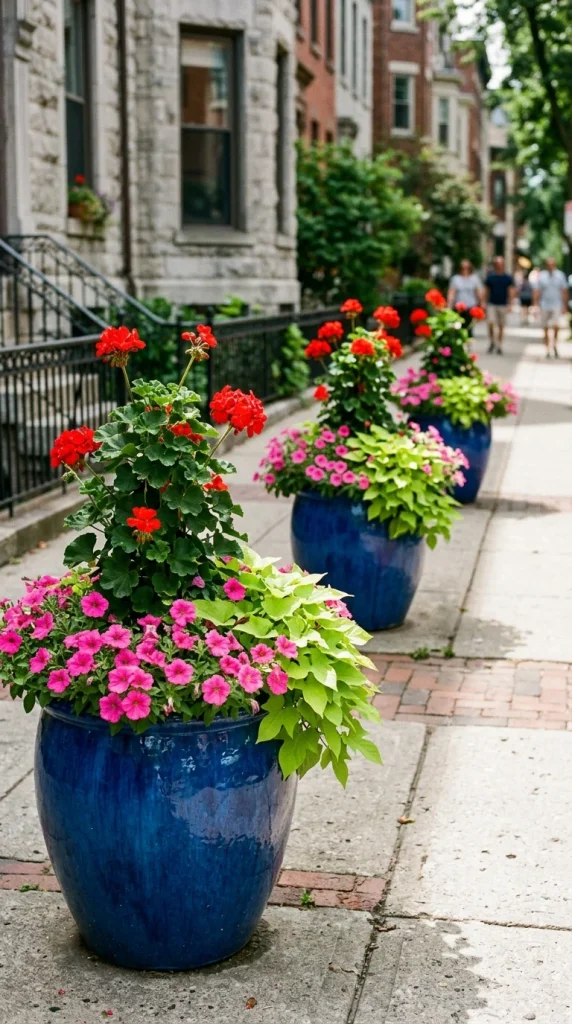
If you aren’t ready to dig up the soil, or if the soil quality is poor, use containers! Large, heavy pots or troughs placed strategically along the sidewalk allow you to change your landscaping with the seasons. You can have tulips in the spring, petunias in the summer, and mums with pumpkins in the fall. This is a great way to add height and pops of color to a flat landscape.
13. Solar Lighting
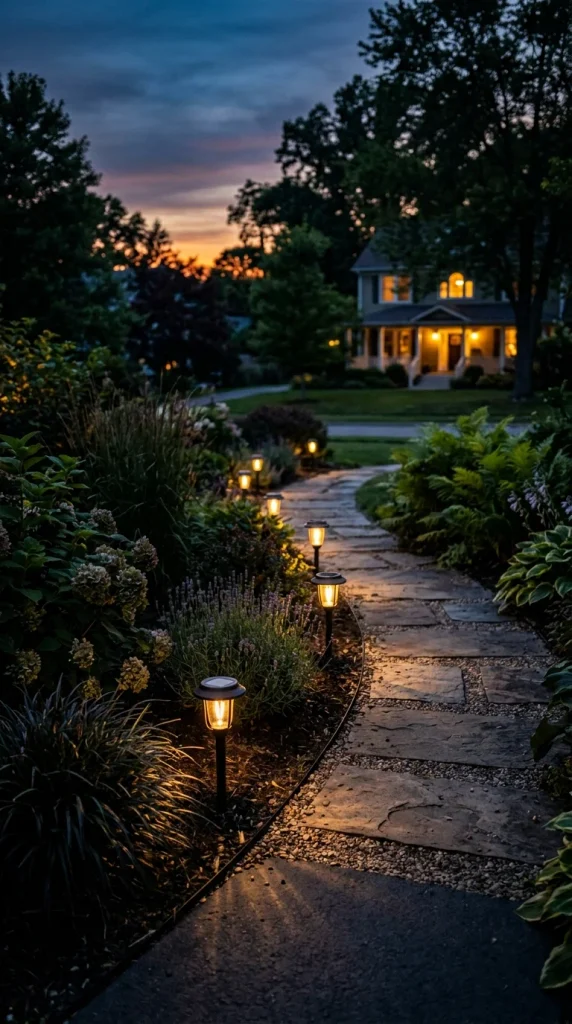
Landscaping shouldn’t just look good during the day. Solar-powered path lights are an easy and inexpensive way to boost curb appeal at night. They define the edge of the sidewalk, providing safety for walkers, and highlight your beautiful plants after the sun goes down. Choose fixtures that match your home’s hardware (like matte black or brushed nickel) for a cohesive look.
14. Edible Herb Garden
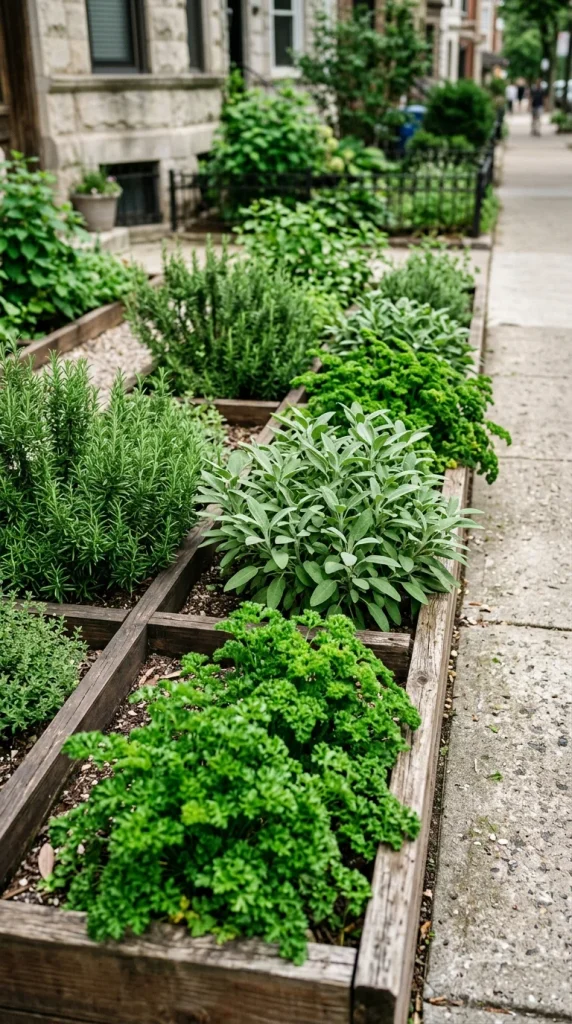
Why not make your landscaping functional? Many herbs are rugged enough to survive near a sidewalk and look beautiful to boot. Rosemary can be pruned into a hedge, while Oregano and Thyme make excellent groundcovers. Not only does this look great, but it also provides a wonderful aroma and fresh ingredients for your kitchen.
15. Low Retaining Walls
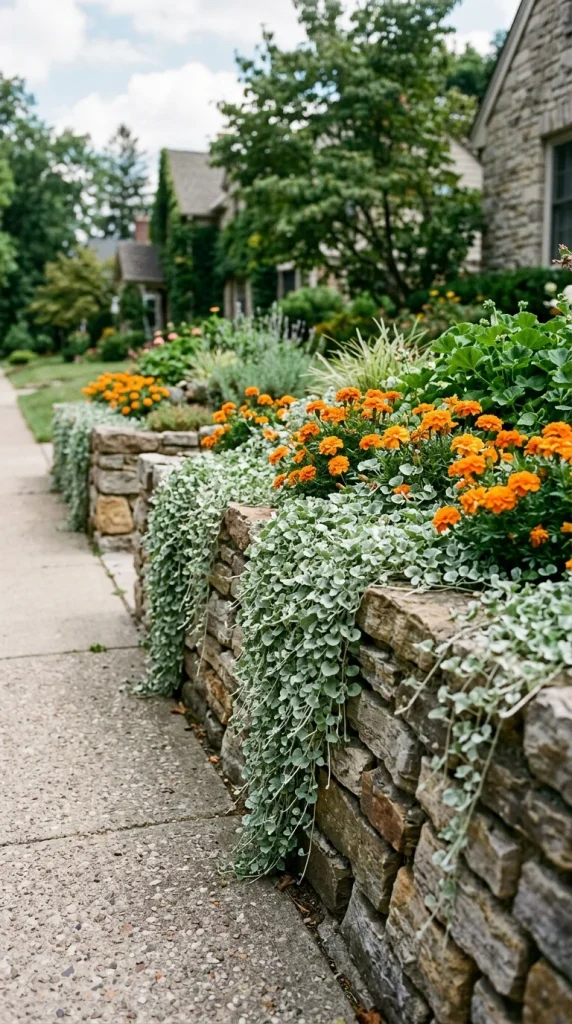
If your yard slopes down toward the sidewalk, a low retaining wall can help level the area and prevent erosion. Using natural stone or decorative concrete blocks adds texture and a sense of permanence to your landscape. Raised beds also make it easier to maintain your plants without having to bend over as far.
16. Rose Bushes
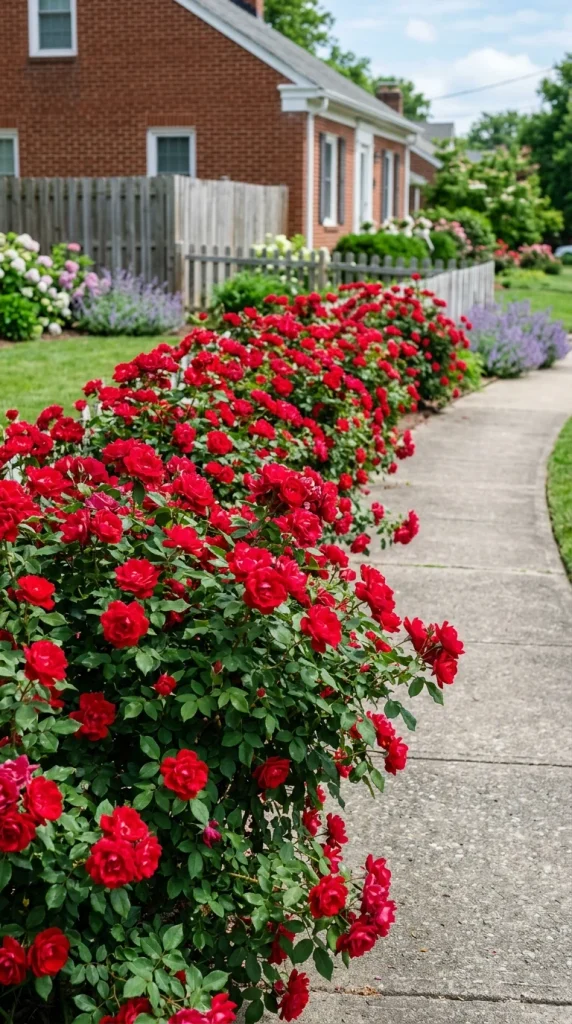
For a timeless look, you can’t go wrong with roses. Modern “shrub roses” or “carpet roses” are specifically bred to be disease-resistant and low-maintenance. They provide a massive flush of color from late spring until the first frost. Planting them along a sidewalk creates a beautiful, romantic barrier that smells as good as it looks.