
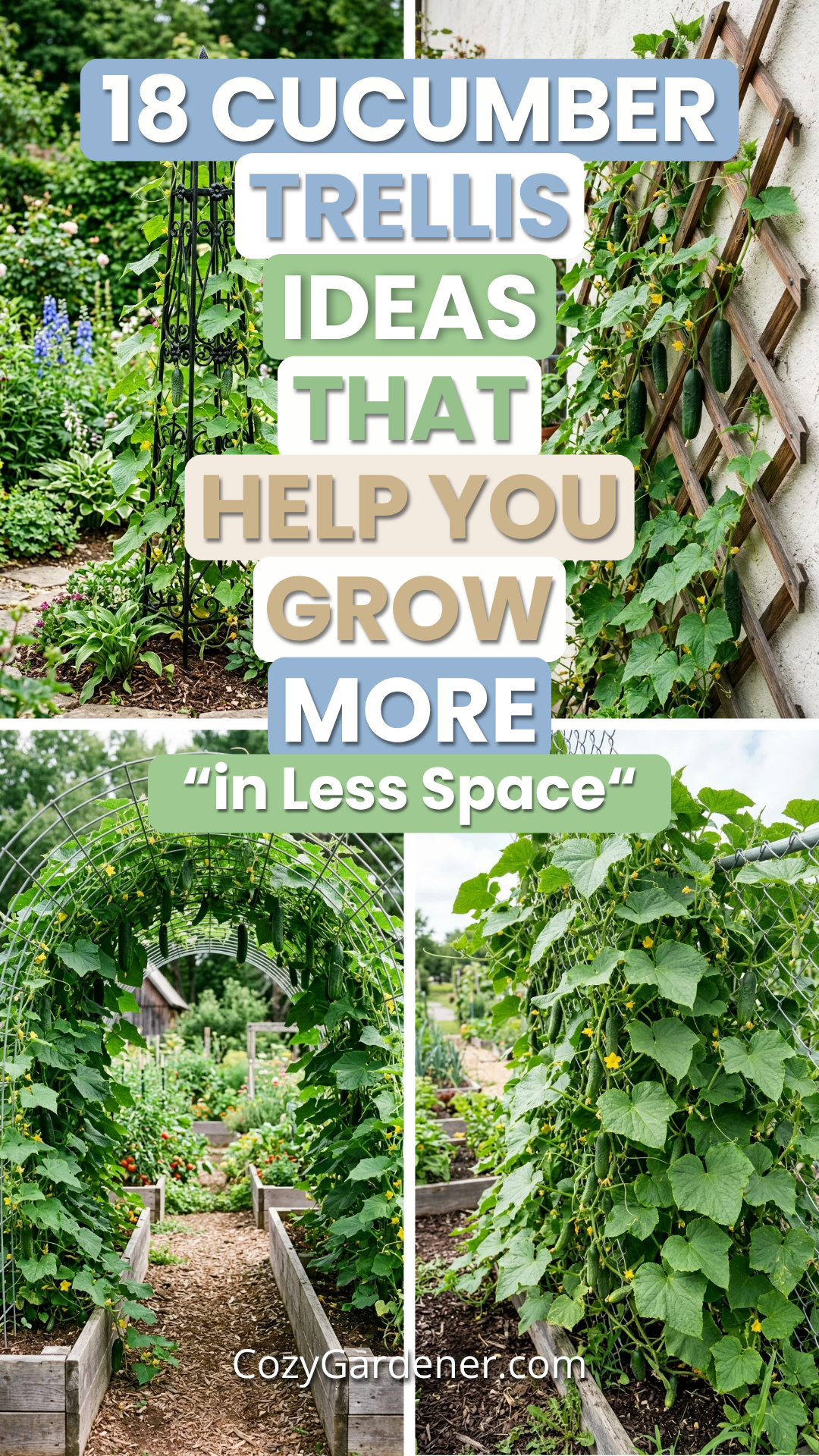
Cucumbers are notorious space-hogs. Left to their own devices, these vigorous vines will sprawl across your garden beds, smothering smaller plants and leaving their fruit vulnerable to soil-borne pests and rot. However, by taking your garden vertical, you can transform your harvest. Trellising not only saves precious square footage but also improves airflow, reduces disease, and makes harvesting a breeze. Here are 18 creative and effective cucumber trellis ideas to help you maximize your garden’s potential.
1. A-Frame Trellis
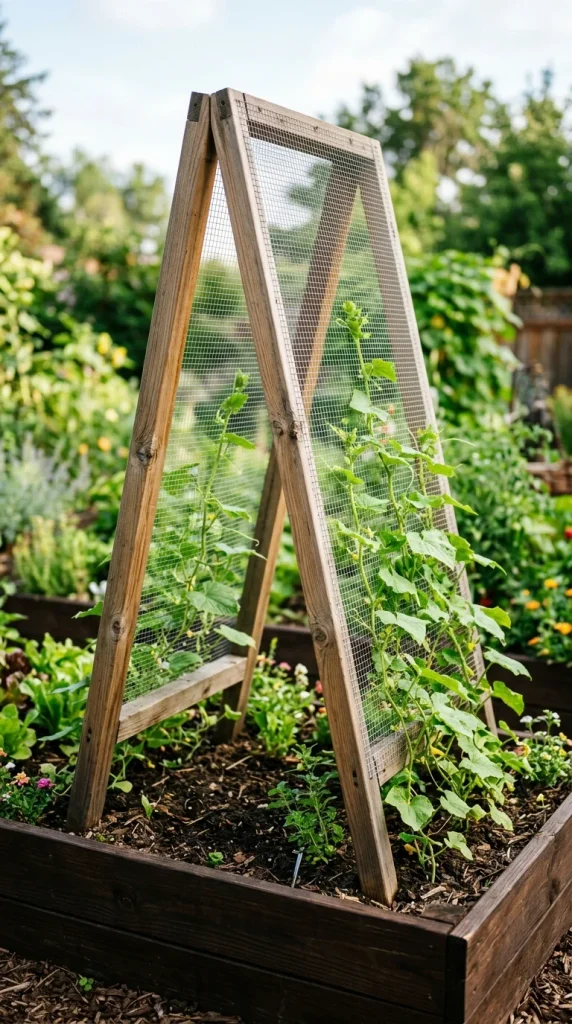
The A-frame is a classic for a reason. It is incredibly stable and provides two sides of growing space. By planting cucumbers at the base of both “legs,” you double your production in the same footprint. An added bonus of the A-frame is the shaded tunnel it creates underneath; this is the perfect microclimate for growing heat-sensitive greens like spinach or lettuce during the height of summer.
2. Cattle Panel Arch
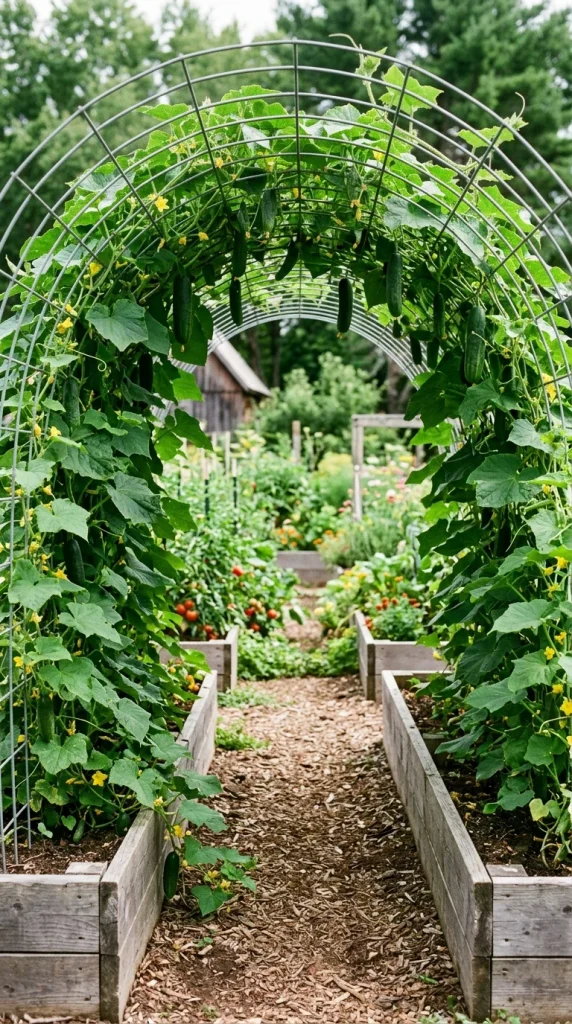
Cattle panels are made of heavy-gauge wire and are virtually indestructible. By bending a 16-foot panel into an arch and securing the ends to the inside of two raised beds, you create a stunning “living tunnel.” As the cucumbers grow up and over the arch, the fruit hangs down through the wire, making them perfectly straight and incredibly easy to pick.
3. Bamboo Teepee
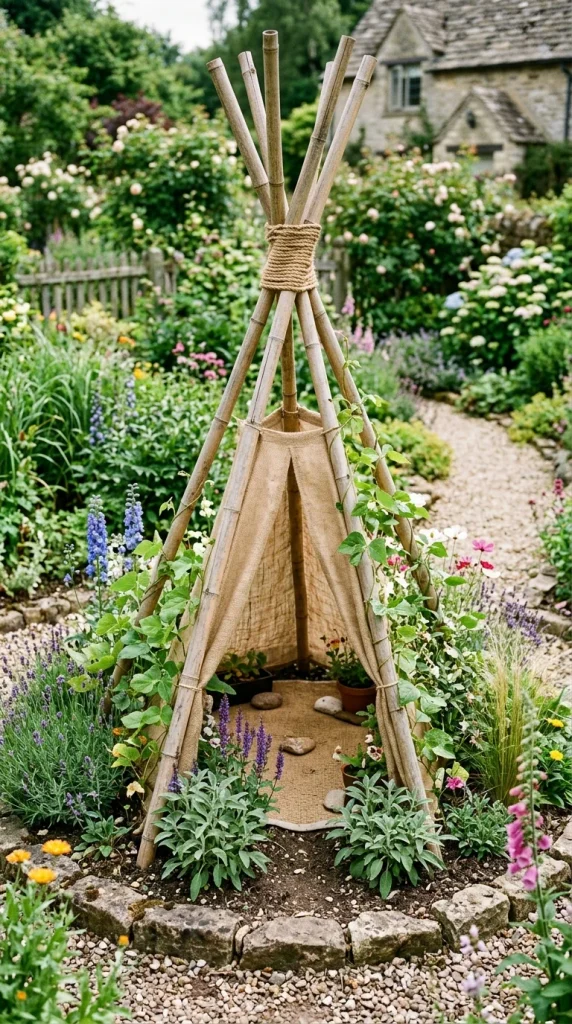
For those who prefer a natural or rustic aesthetic, the bamboo teepee is a winner. It’s inexpensive, biodegradable, and quick to assemble. Simply lash 5 to 7 poles together at the top and spread the bases out in a circle. This design is particularly effective for “bush” varieties that still have a bit of a climbing habit, as it concentrates growth in a small vertical cone.
4. Nylon Netting

If you are looking for a lightweight and temporary solution, nylon trellis netting is the way to go. It’s soft on the plant’s delicate tendrils and can be easily taken down and folded away at the end of the season. Ensure you pull the netting taut across a sturdy frame; if it’s too loose, the weight of heavy cucumbers can cause the mesh to sag and pull the vines down.
5. String Trellis
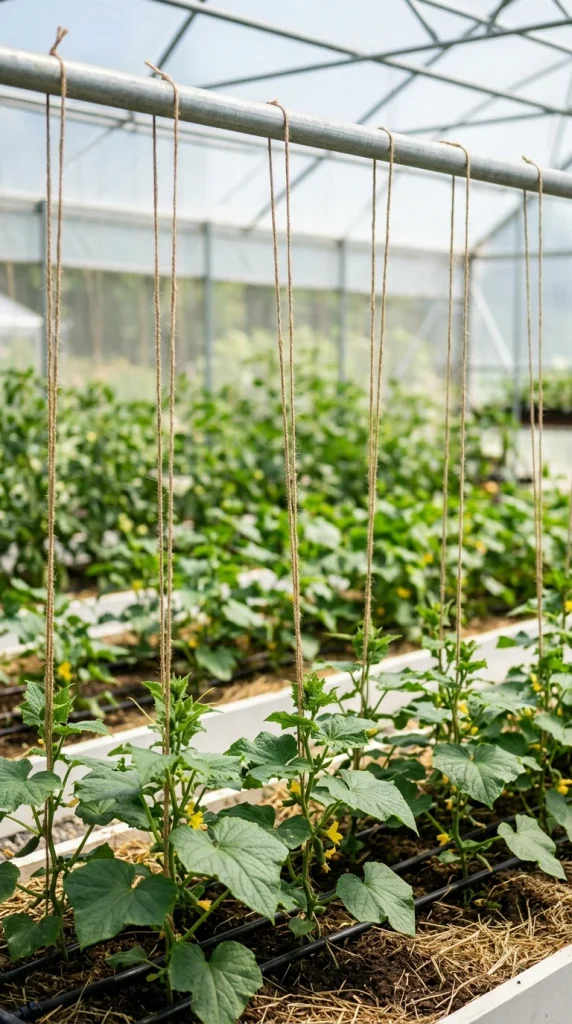
Often seen in commercial greenhouses, the string trellis (or “lean and lower” system) is the ultimate space-saver. You anchor a string at the base of the plant and tie it to an overhead support. As the cucumber grows, you gently wrap the main stem around the string. This allows for extremely high-density planting and provides maximum sun exposure to every leaf.
6. Lean-to Lattice
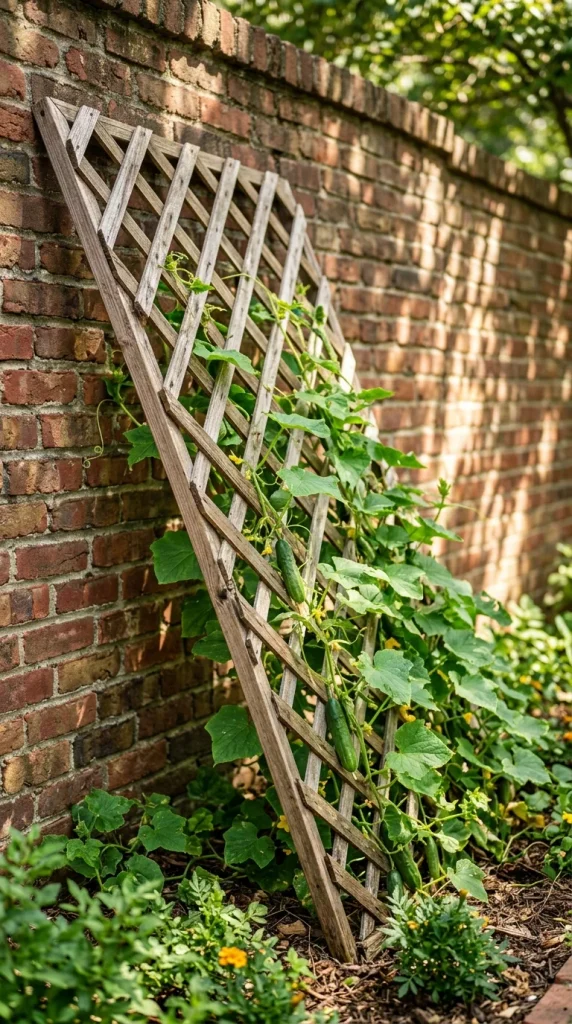
The lean-to trellis is perfect for gardeners working with narrow side yards or balconies. By leaning a lattice or wire panel against a wall or fence, you create a slanted growing surface. This angle makes it easier for the cucumber tendrils to “grab” the support as they grow upward, and it provides a convenient space underneath for storing watering cans or small garden tools.
7. Repurposed Pallet
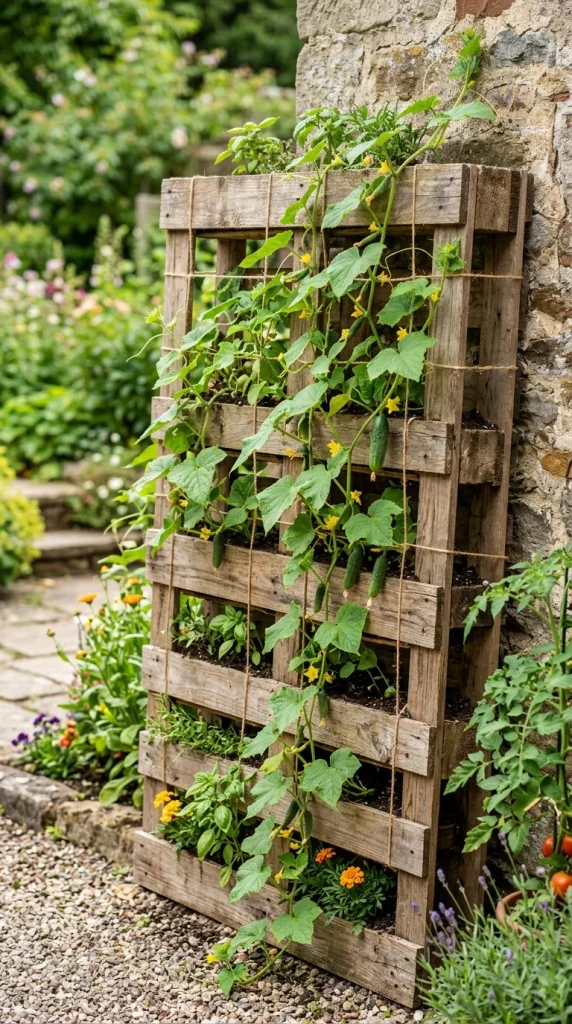
Upcycling a wooden pallet is a budget-friendly way to build a sturdy vertical garden. You can stand the pallet upright and secure it to t-posts, or lean two pallets against each other to form a “tent.” Just ensure the pallet is heat-treated (marked with an “HT”) rather than chemically treated to ensure your vegetables remain organic and safe for consumption.
8. Metal Obelisk
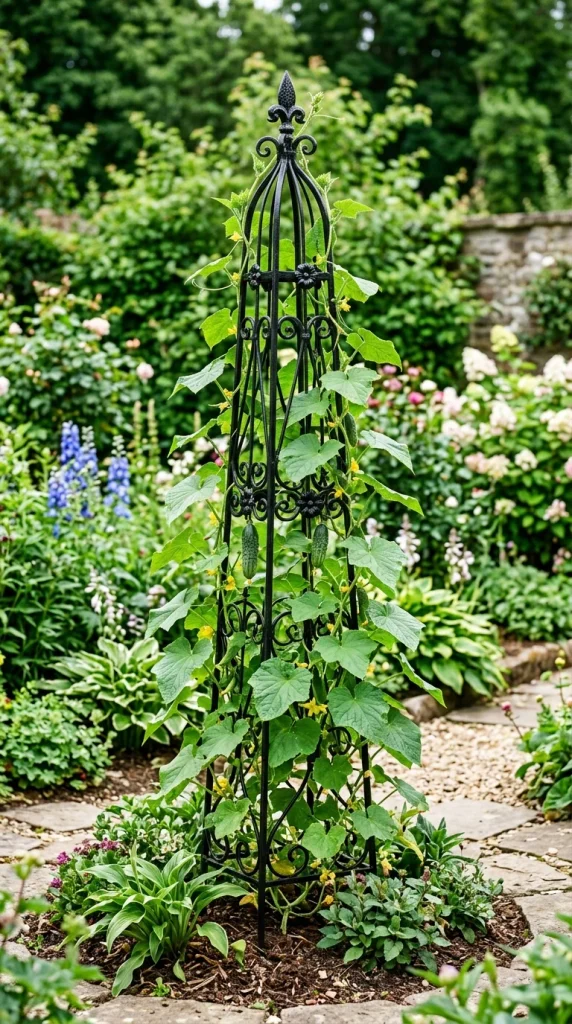
If your vegetable garden is integrated into your front yard or a highly visible area, a metal obelisk adds a touch of architectural elegance. These structures are traditionally used for flowering vines like clematis, but they work wonderfully for cucumbers. The circular or square footprint is very small, making it ideal for container gardening on a patio.
9. PVC Frame
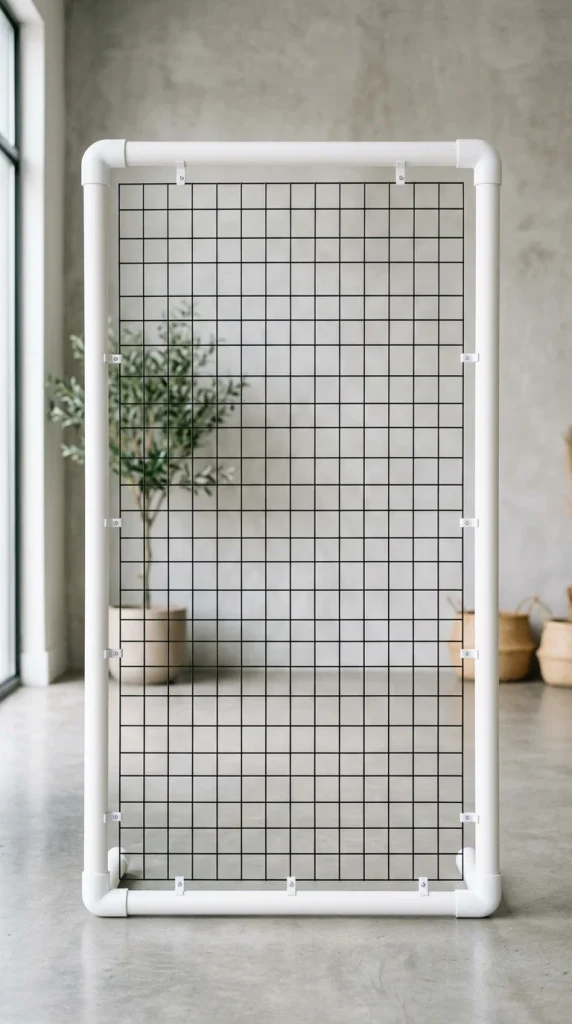
For the DIY enthusiast, PVC pipe offers endless customization. You can build a custom-sized frame to fit any space in your garden. PVC is rot-proof, lightweight, and very easy to sanitize at the end of the year to prevent the carry-over of cucumber mosaic virus or powdery mildew spores.
10. Crib Rail
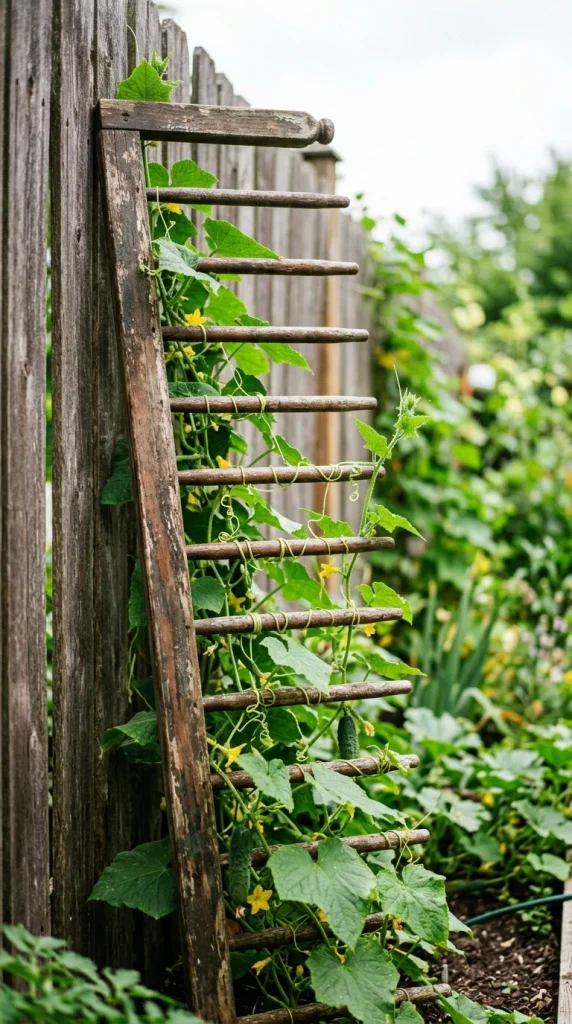
Old baby cribs are often made of sturdy, untreated hardwood. The side rails, with their evenly spaced rungs, make an almost perfect ready-made trellis. Simply sand off any old paint and lean it against a support. It’s a wonderful way to keep bulky items out of the landfill while giving your garden a vintage, repurposed charm.
11. Tomato Cages
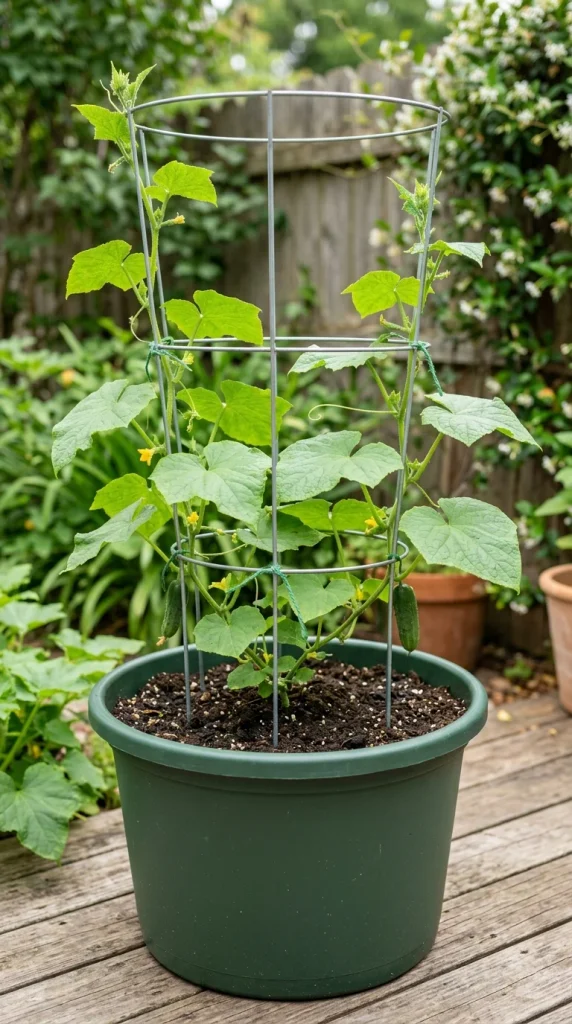
While standard “flimsy” tomato cages often fail to support heavy indeterminate tomatoes, they are actually perfect for cucumbers. For container-grown cucumbers, a tomato cage provides a 360-degree climbing surface. To make it even more effective, wrap some extra twine around the rungs to give the vines more “grip” points as they reach for the sun.
12. Chain Link Fence
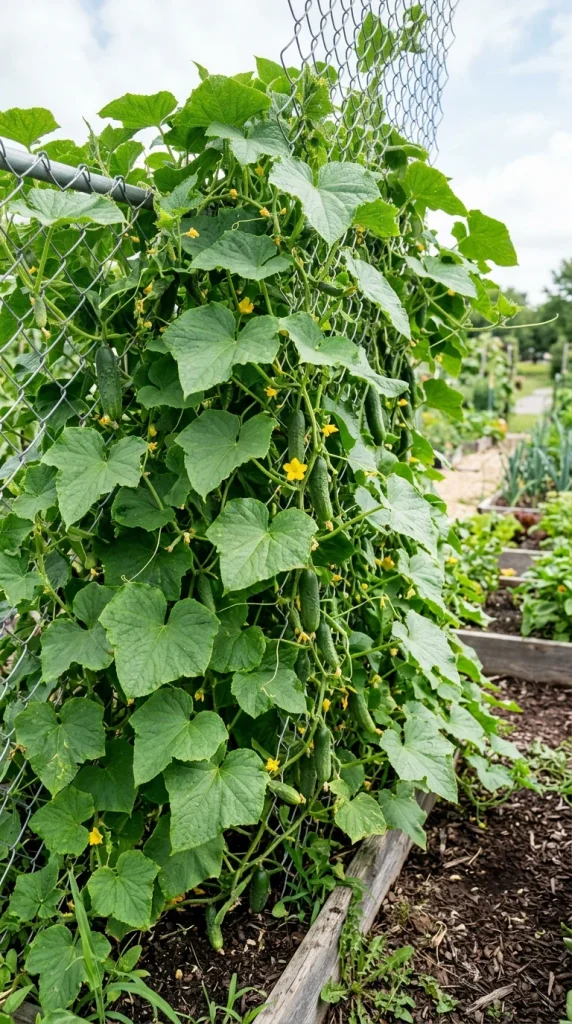
If you already have a chain link fence bordering your property, you have a built-in trellis. Cucumbers will naturally find the wire links and hoist themselves up. This is a great way to “hide” an unsightly fence while producing a massive amount of food. Just be sure you have access to both sides of the fence, as cucumbers have a habit of poking through to the neighbor’s side!
13. Cedar Pergola
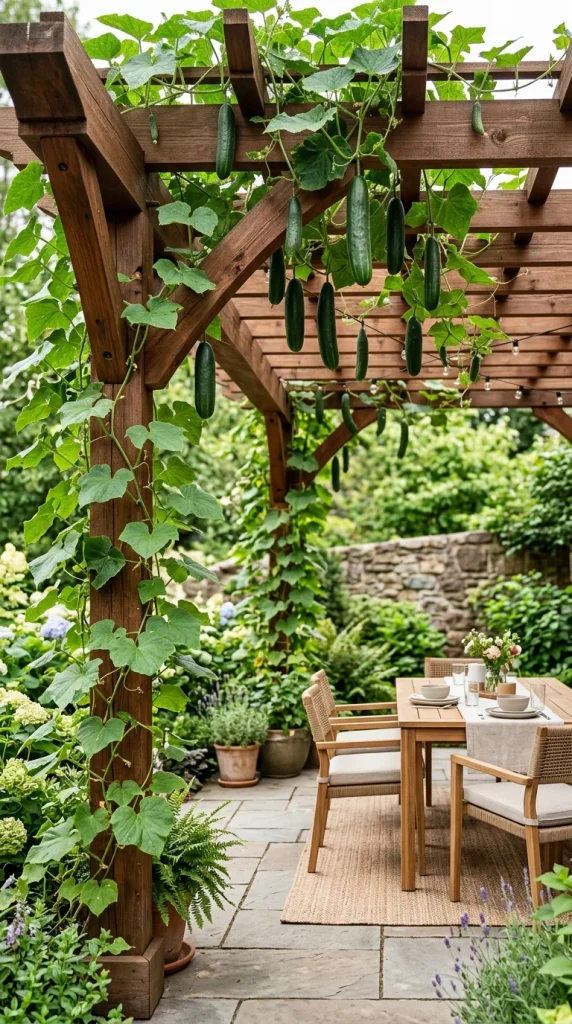
For a permanent and luxurious garden feature, a cedar pergola is the gold standard. While it requires a larger initial investment, it provides a massive vertical and horizontal surface area. Growing cucumbers over a pergola allows the fruit to hang freely in the air, preventing the “yellow belly” that occurs when cucumbers rest on the ground or against a solid surface.
14. Wire Mesh
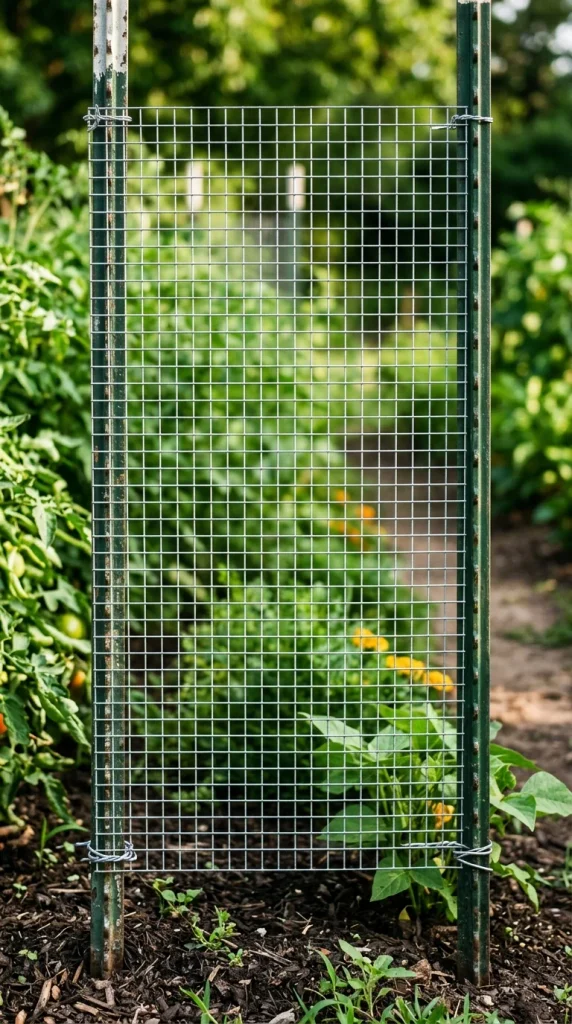
Rigid wire mesh, such as “hog wire” or “remesh,” provides a very strong support for heavy “slicer” cucumber varieties. Unlike flexible netting, rigid mesh won’t bow or bend under the weight of a heavy harvest. You can cut the mesh to size using wire snips, making it a highly adaptable solution for gardens of any shape.
15. Branch Trellis
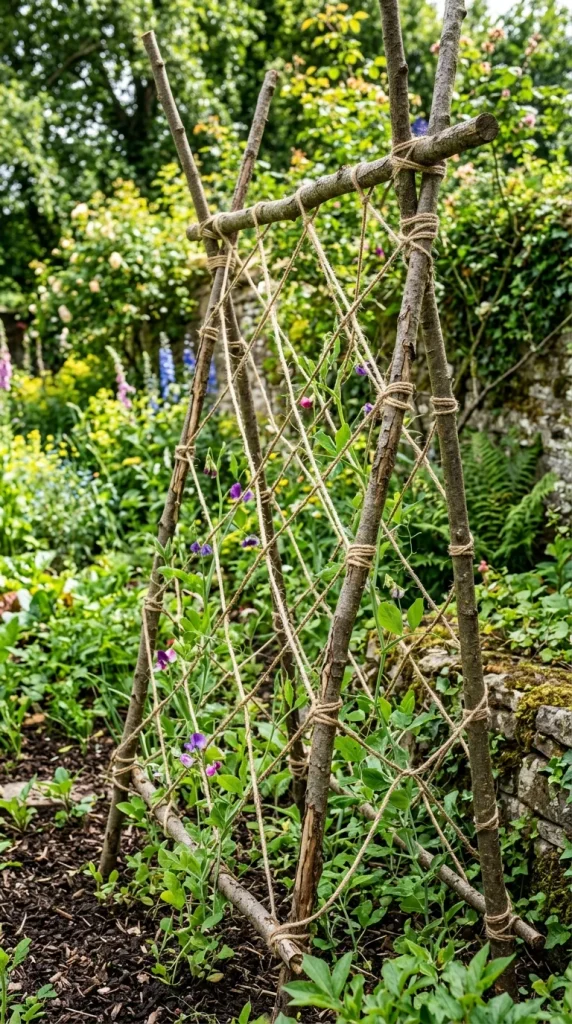
The most eco-friendly trellis is the one you find in your backyard. Using fallen branches or pruned limbs from fruit trees, you can lash together a “wattle” style trellis. The rough bark of natural branches provides an excellent surface for cucumber tendrils to grip, and the organic look blends seamlessly into a cottage-style garden.
16. Bike Wheel
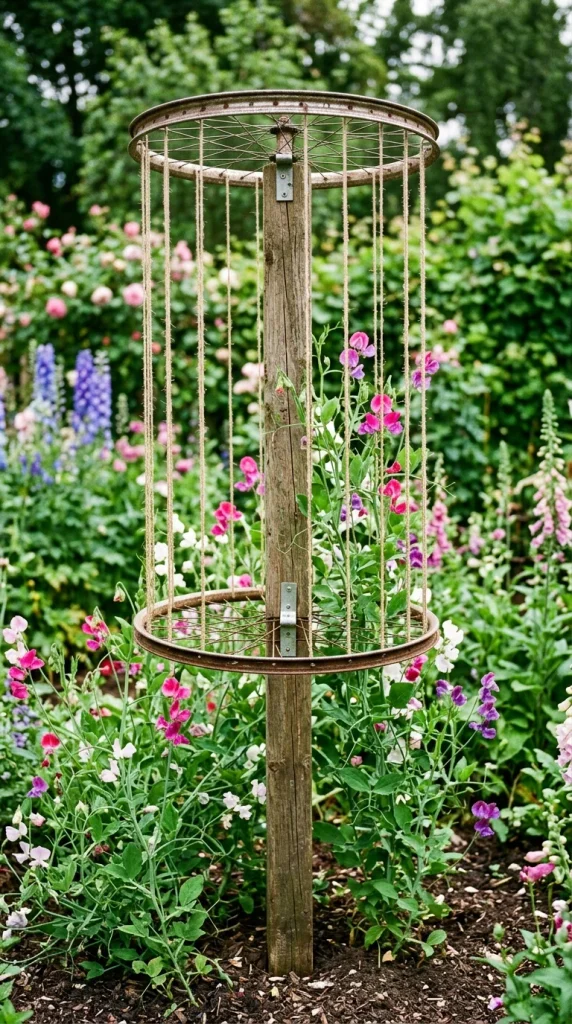
A “bicycle wheel trellis” is a fantastic conversation piece and a highly functional vertical support. By mounting one rim at the top of a post and another at the bottom, you can run strings between the two to create a cylindrical climbing cage. The circular design allows for excellent light penetration and airflow to the center of the plant.
17. Wall Trellis
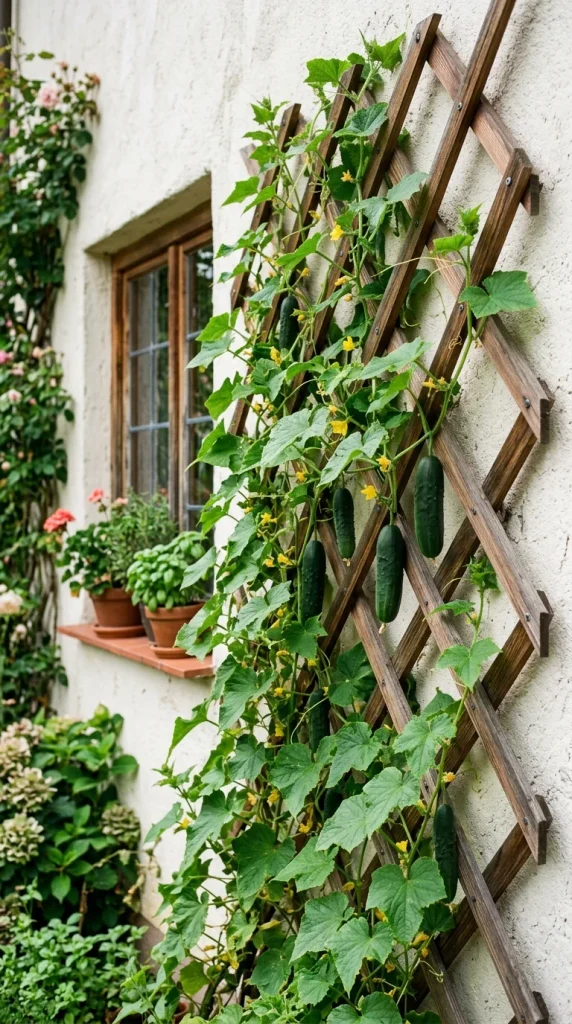
When ground space is non-existent, the walls of your home or garage become prime real estate. By mounting a lattice or wire grid directly to a vertical surface with spacers (to allow for airflow between the plant and the wall), you can grow a “green wall” of cucumbers. This is especially effective on south-facing walls, which absorb and radiate heat to help the cucumbers thrive.
18. Zig-Zag Wire
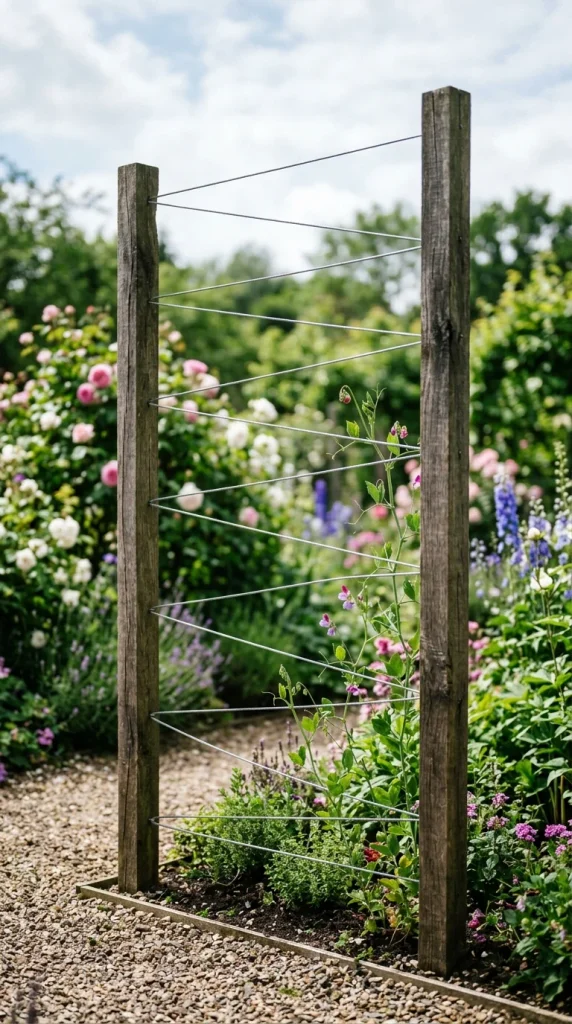
For the minimalist gardener, a zig-zag wire trellis offers a clean and modern look. By stringing a heavy-gauge wire in a horizontal zig-zag pattern between two sturdy posts, you provide just enough support for the vines to lean on as they grow. This method is incredibly easy to clean up at the end of the season and doesn’t block the view of the rest of your beautiful garden.