
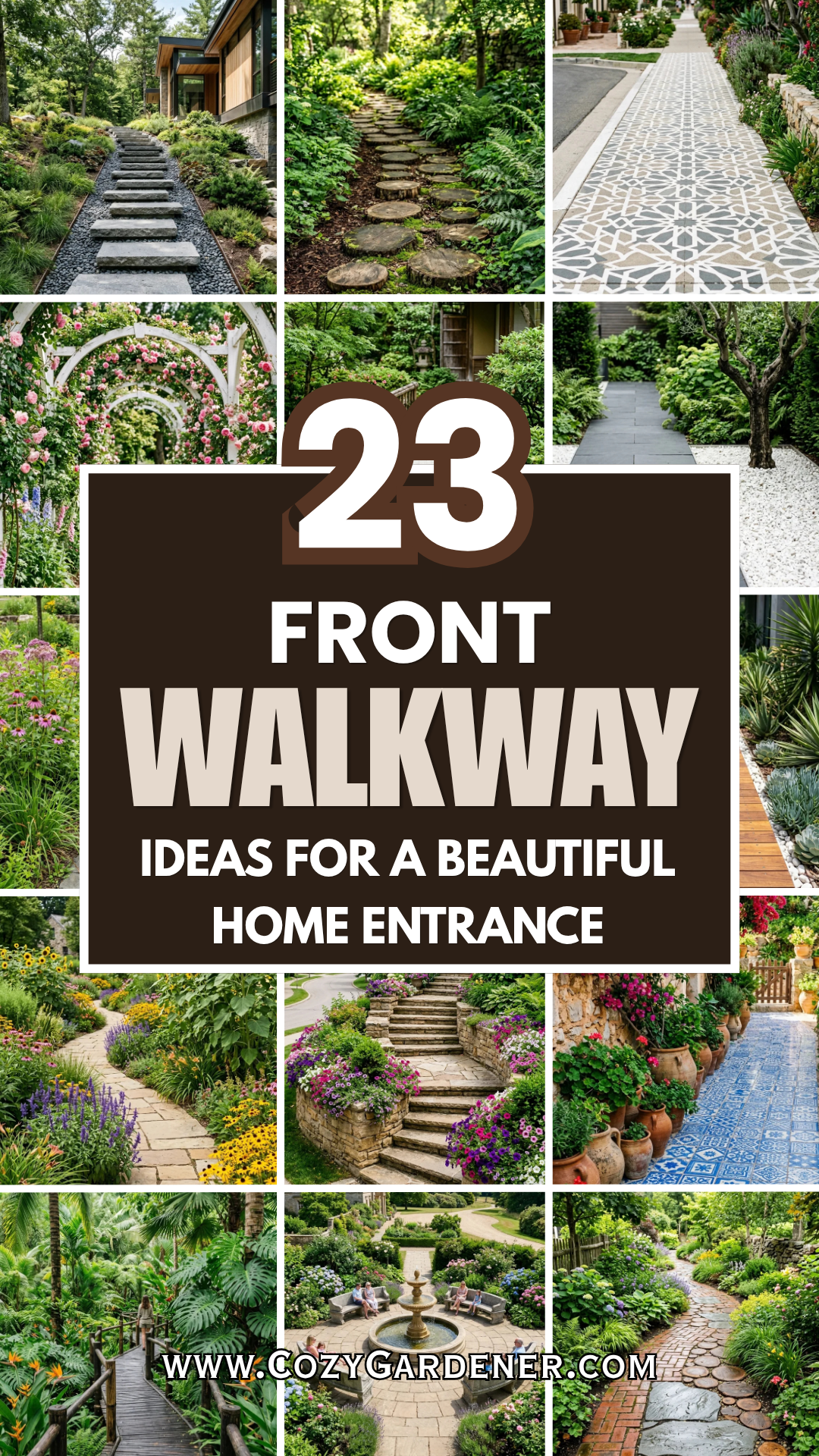
Your front walkway is more than just a path from the sidewalk to your door; it is the red carpet of your home. It sets the tone for your entire property, guiding guests through your landscape and providing the first glimpse of your personal style. Whether you prefer the crisp lines of modern minimalism or the soft, romantic curves of a cottage garden, the right walkway can dramatically enhance your home’s curb appeal and even increase its value.
In this comprehensive guide, we explore 23 stunning front walkway ideas that range from budget-friendly DIY projects to high-end architectural statements.
1. Flagstone Path
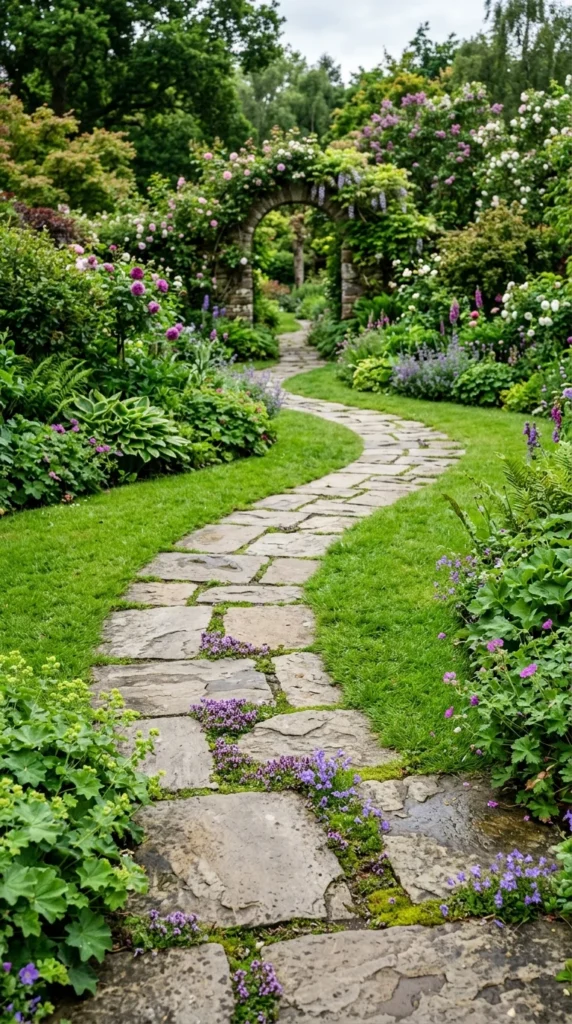
Flagstone is a perennial favorite for homeowners seeking a natural, organic look. Because the stones come in irregular shapes and sizes, no two flagstone paths are exactly alike. You can set them in mortar for a solid, permanent feel or “dry-lay” them with ground cover like creeping thyme or moss growing in between the joints. This creates a soft, weathered appearance that feels like it has been part of the landscape for decades.
2. Modern Concrete
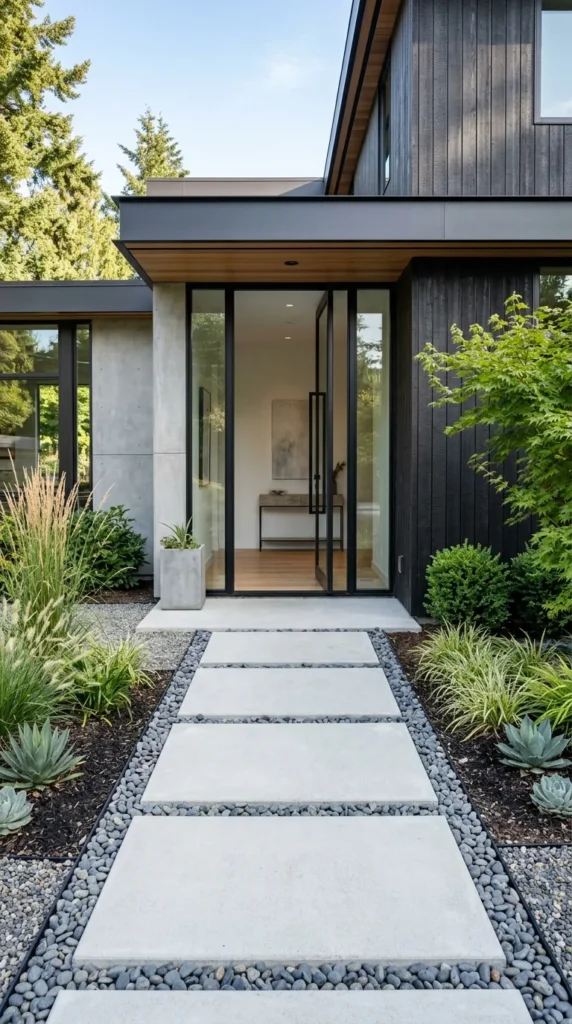
For a sleek, contemporary aesthetic, oversized concrete pavers are the gold standard. Instead of a continuous poured slab, consider using large, geometric sections separated by decorative pebbles or synthetic turf. This “floating” effect breaks up the visual mass of the concrete and adds a sophisticated, architectural rhythm to your home’s entrance.
3. Brick Herringbone
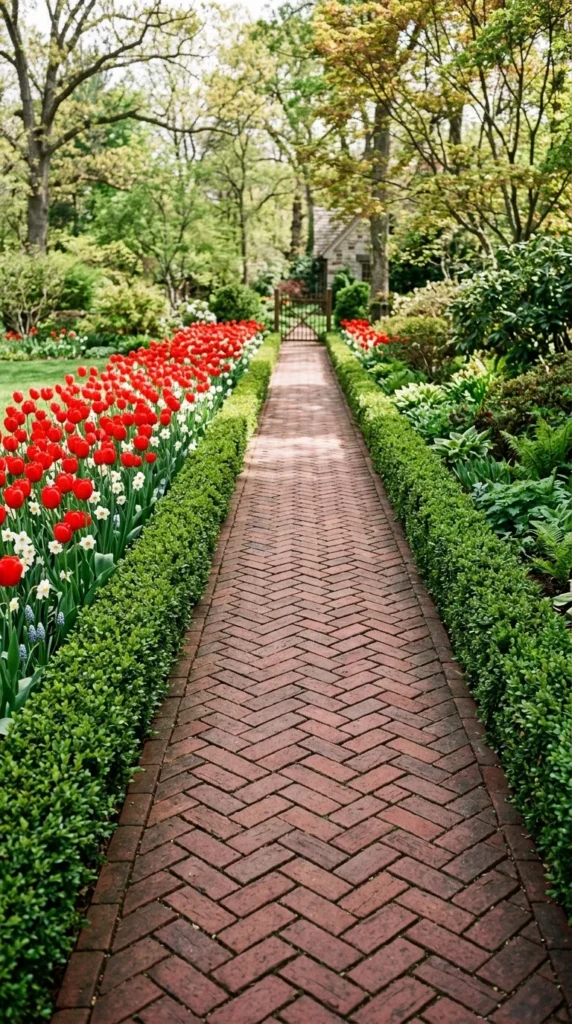
Nothing says “classic elegance” quite like a brick walkway. While there are many patterns to choose from—such as running bond or basketweave—the herringbone pattern is particularly prized for its strength and visual interest. It provides a timeless, Americana feel that pairs beautifully with colonial, craftsman, or ranch-style homes.
4. Gravel & Steppers
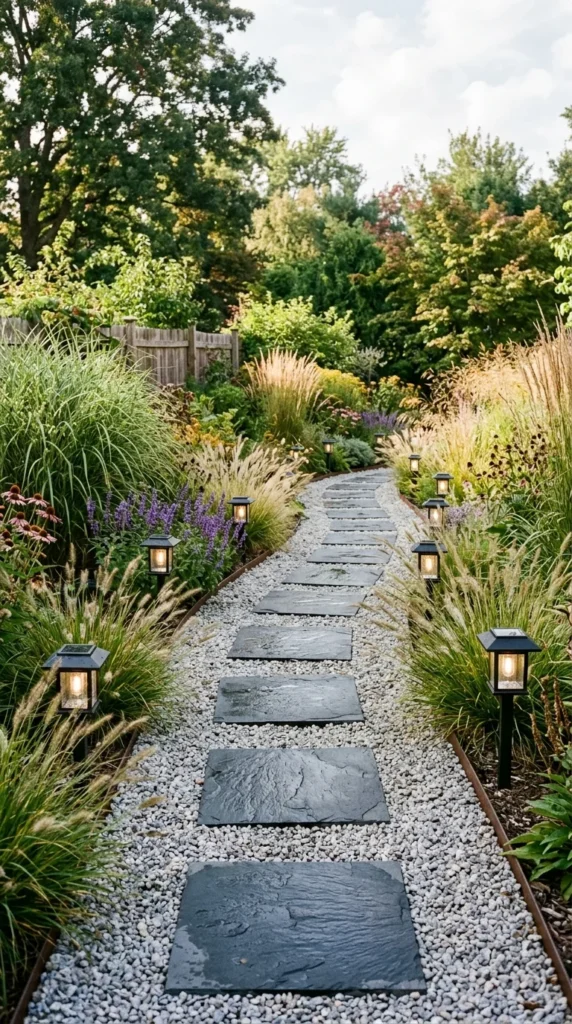
If you are looking for an affordable yet stylish option, a gravel path with integrated stepping stones is an excellent choice. The gravel provides a satisfying “crunch” underfoot, which acts as a natural security system, while the stepping stones provide a stable surface for walking. This style works exceptionally well in Mediterranean or coastal-themed landscapes.
5. Natural Stone
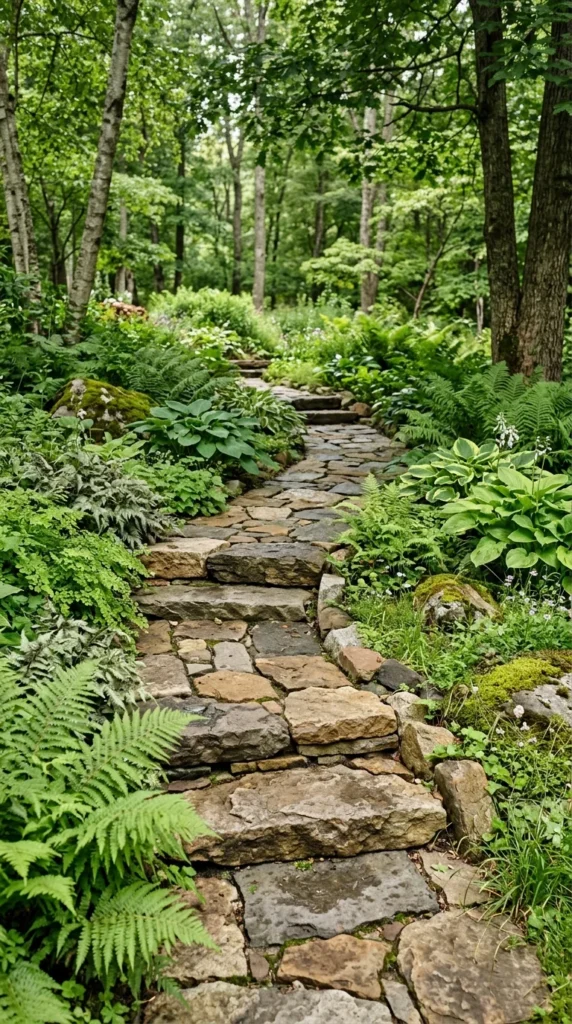
Natural stone paths celebrate the raw beauty of the earth. By using stones sourced locally, you ensure that your walkway harmonizes perfectly with the surrounding environment. This approach is ideal for rustic homes, mountain retreats, or any property where a “man-made” look would feel out of place.
6. Wood Plank
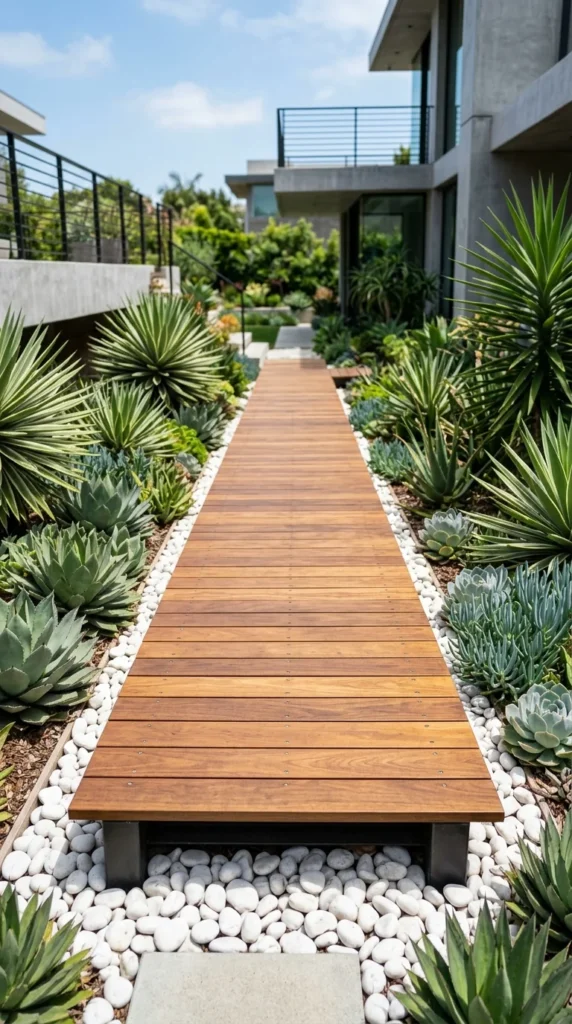
Who says wood is only for decks? A wood plank walkway, often referred to as a boardwalk, can bring a warm, organic texture to your front yard. Using durable hardwoods like ipe, cedar, or pressure-treated timber ensures longevity. This style is particularly effective for navigating uneven terrain or bridging a small drainage swale.
7. Cobblestone
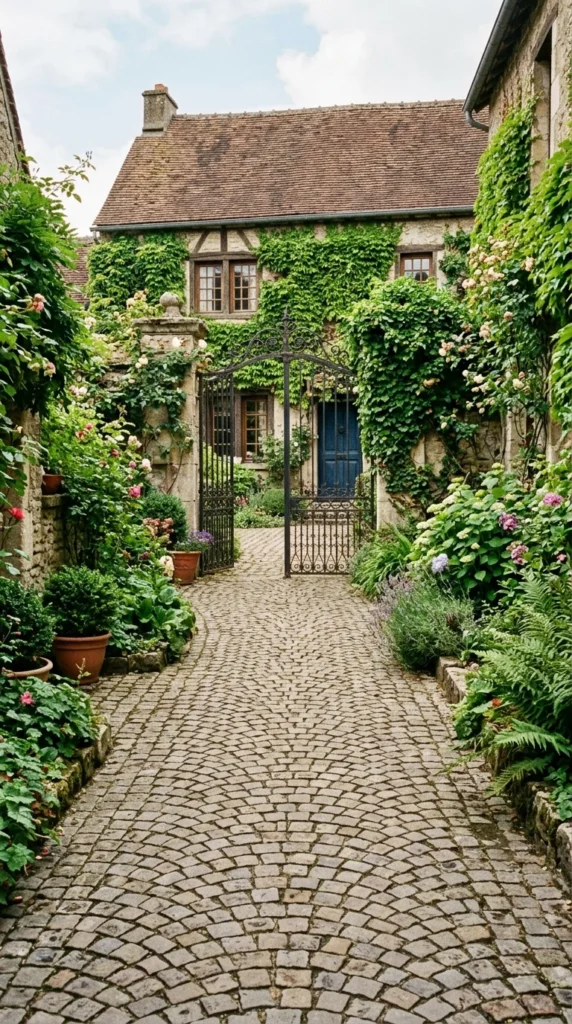
Evoke the charm of an ancient European village with a cobblestone path. These small, rounded stones are incredibly durable and develop a beautiful patina over time. While they can be a bit uneven for high heels, their historical character and visual texture are unmatched for traditional or Tudor-style homes.
8. Permeable Pavers
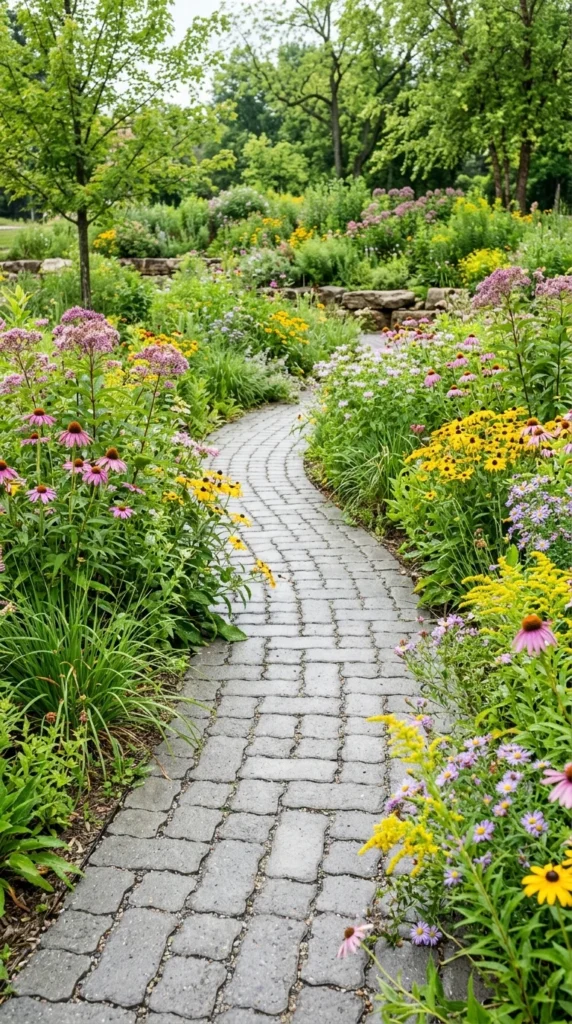
Environmentally conscious homeowners are increasingly turning to permeable pavers. These systems allow rainwater to filter through the joints and back into the ground, reducing runoff and erosion. Modern designs offer a wide variety of colors and shapes, proving that sustainability can be incredibly stylish.
9. Mediterranean Tile
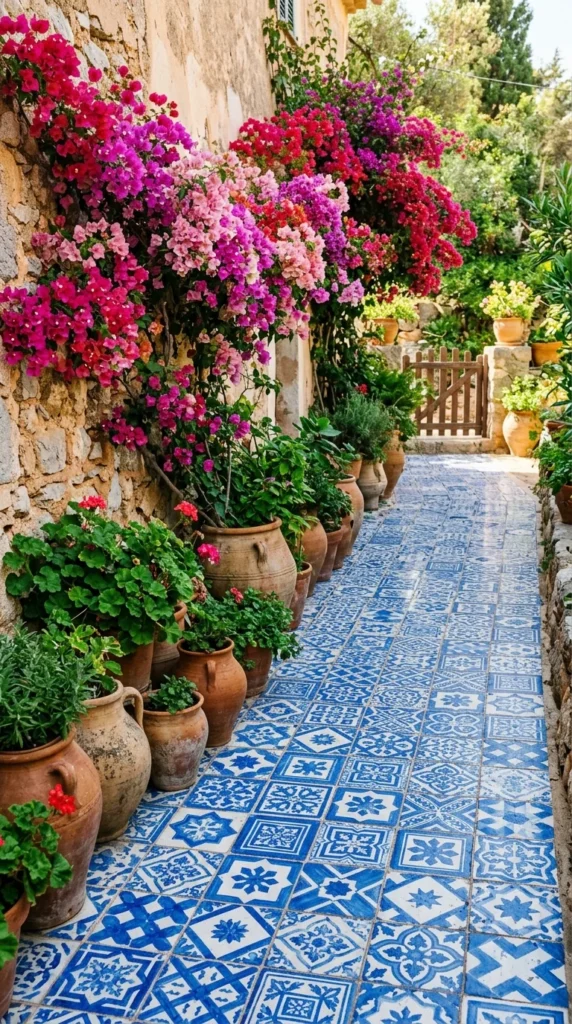
To make a bold, artistic statement, consider using outdoor-rated tiles. Mediterranean or Spanish-style tiles with intricate patterns and bright colors can transform a standard walkway into a work of art. This is a fantastic way to inject personality and a “vacation vibe” into your home’s exterior.
10. Grass Jointed
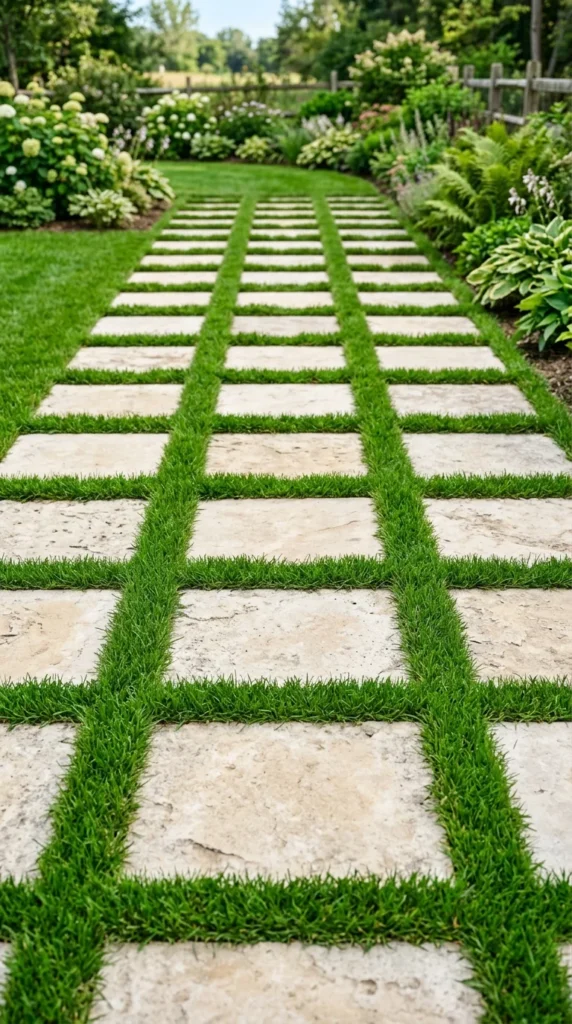
This “living” walkway blurs the line between hardscape and landscape. By spacing large pavers far enough apart to allow grass or ground cover to grow between them, you soften the transition from the driveway to the door. It’s a breathable design that feels cool underfoot and looks incredibly lush.
11. Terraced Stairs
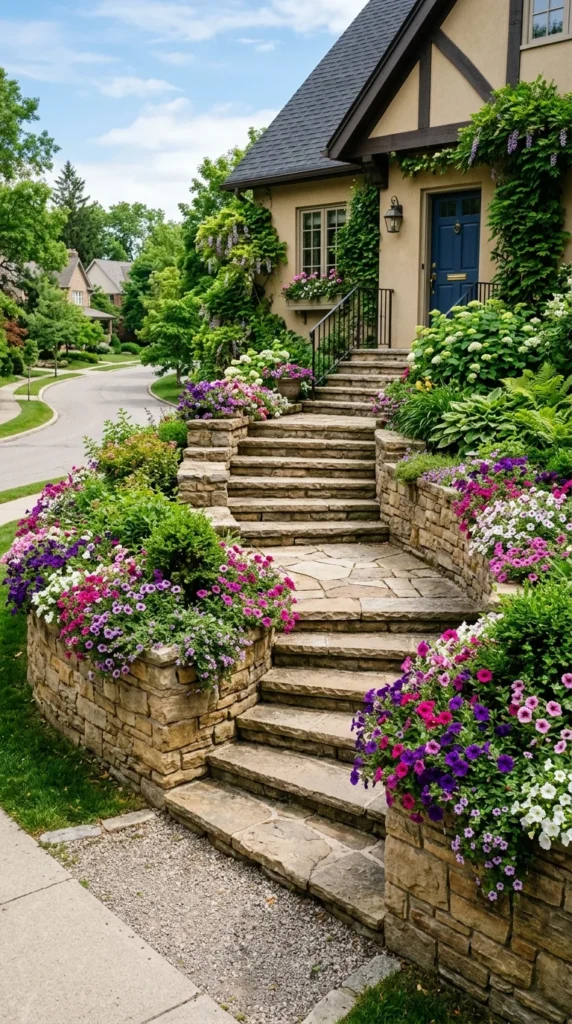
If your home sits on a hill, a flat walkway isn’t an option. Terraced stairs turn a functional necessity into a landscape feature. By using wide treads and low risers, you create a grand, easy-to-climb staircase that offers multiple levels for decorative planting and lighting.
12. Curved Garden
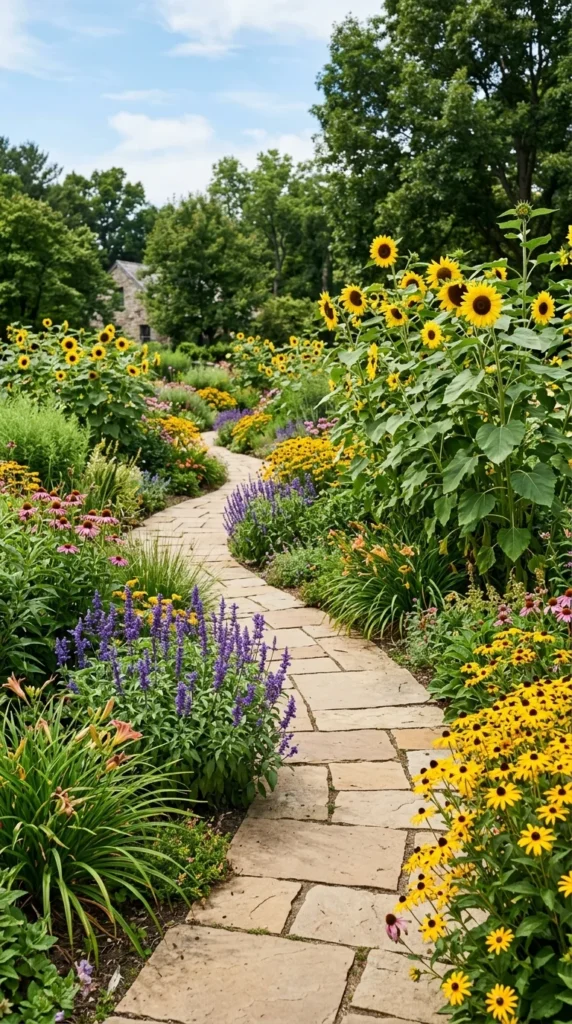
A straight line is the shortest distance between two points, but a curve is far more inviting. A curved walkway slows the pace and encourages guests to enjoy your garden. This design is perfect for creating a sense of mystery and depth in smaller front yards.
13. Minimalist Slate
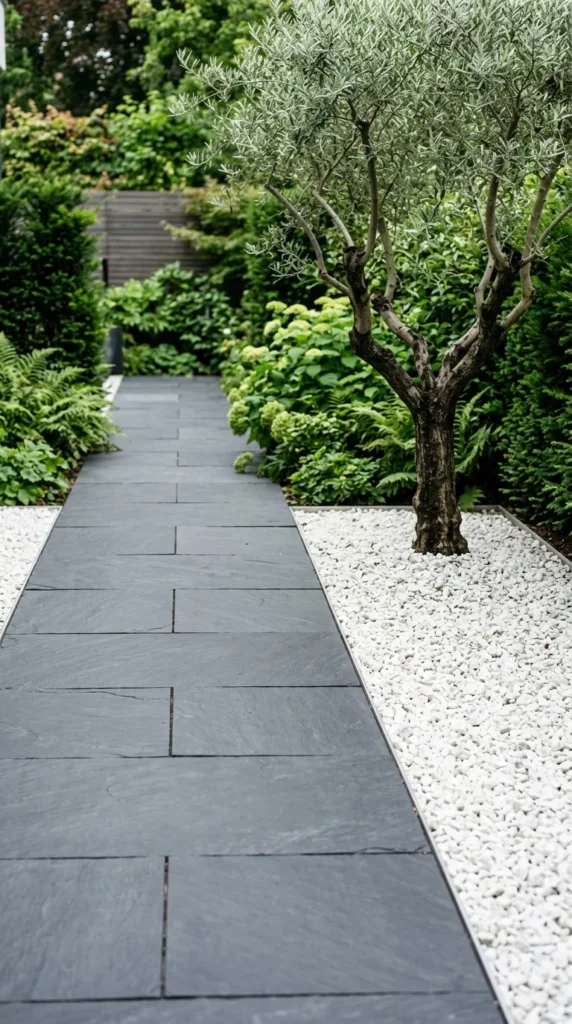
Slate offers a sophisticated, moody palette that ranges from deep blues to charcoal greys. Its naturally cleft surface provides excellent slip resistance while maintaining a high-end, contemporary feel. It looks particularly stunning when wet, as the colors become deep and saturated.
14. Zen Rock
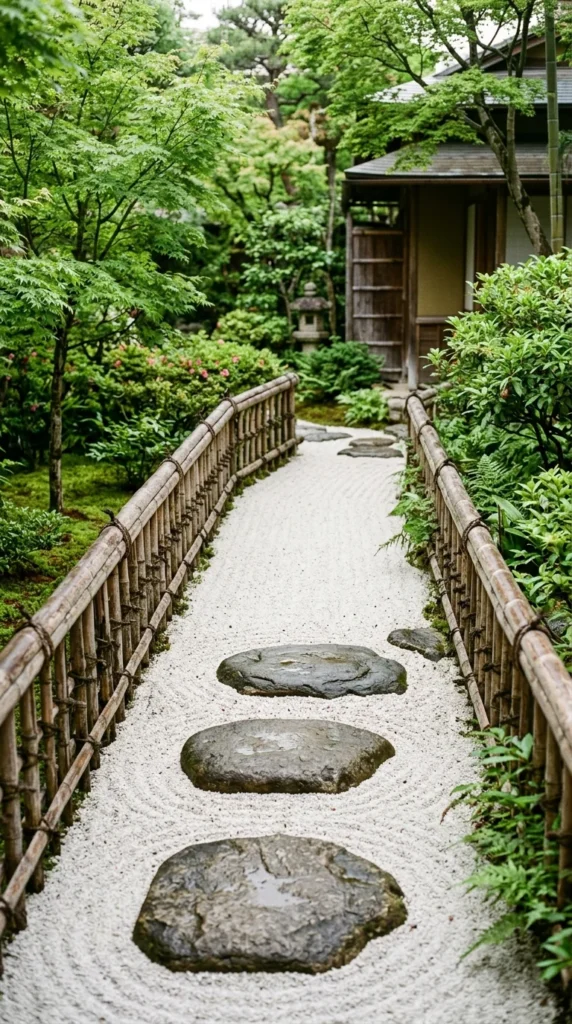
Create a sense of tranquility before you even reach the front door. A Zen-inspired walkway uses minimalism and natural materials to foster a calm atmosphere. Incorporating elements like raked sand, smooth river rocks, and perhaps a small stone water basin can turn your entrance into a meditative retreat.
15. Lighted Path
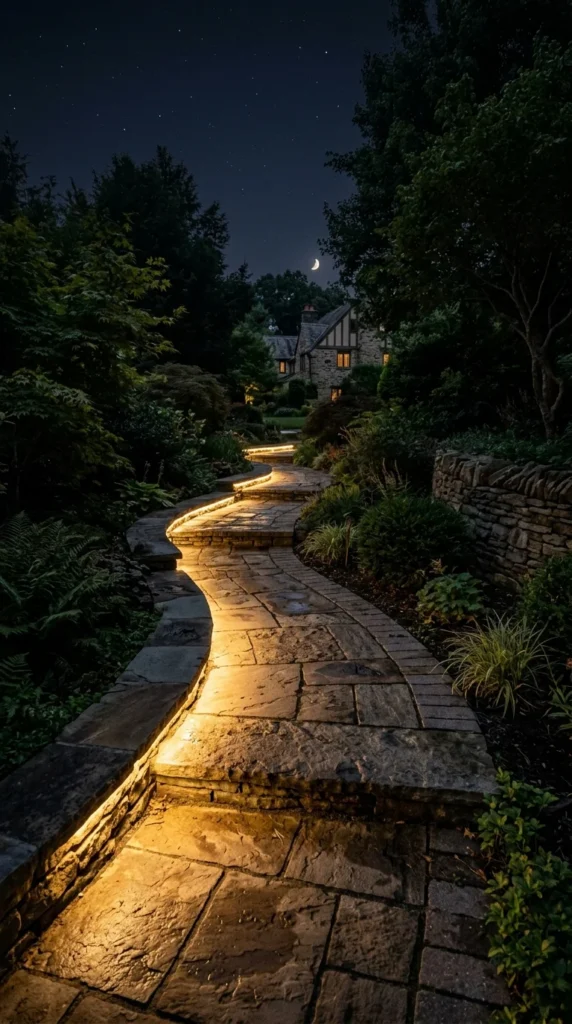
Lighting is the secret ingredient to a beautiful walkway. Beyond safety, well-placed lights can highlight the textures of your path and create a magical evening ambiance. Consider “moonlighting” from trees above or “path lights” that direct a soft glow downward to guide the way without glare.
16. Arched Trellis
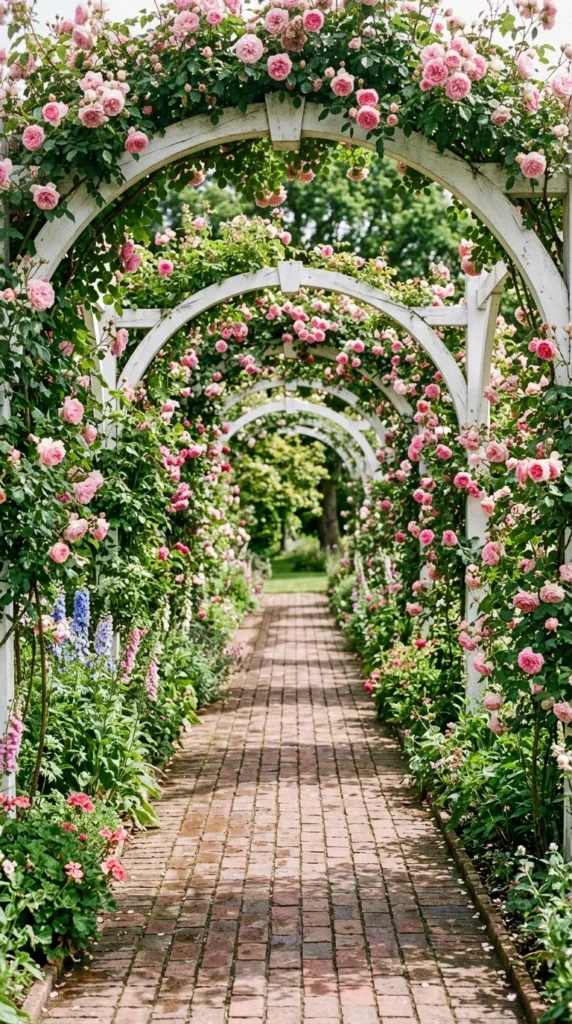
Vertical interest can take your walkway to the next level. Installing an arch or a series of trellises over your path creates a “hallway” effect in the outdoors. This is a classic technique for romantic cottage gardens, providing a fragrant and colorful experience for anyone walking to the door.
17. Mixed Media
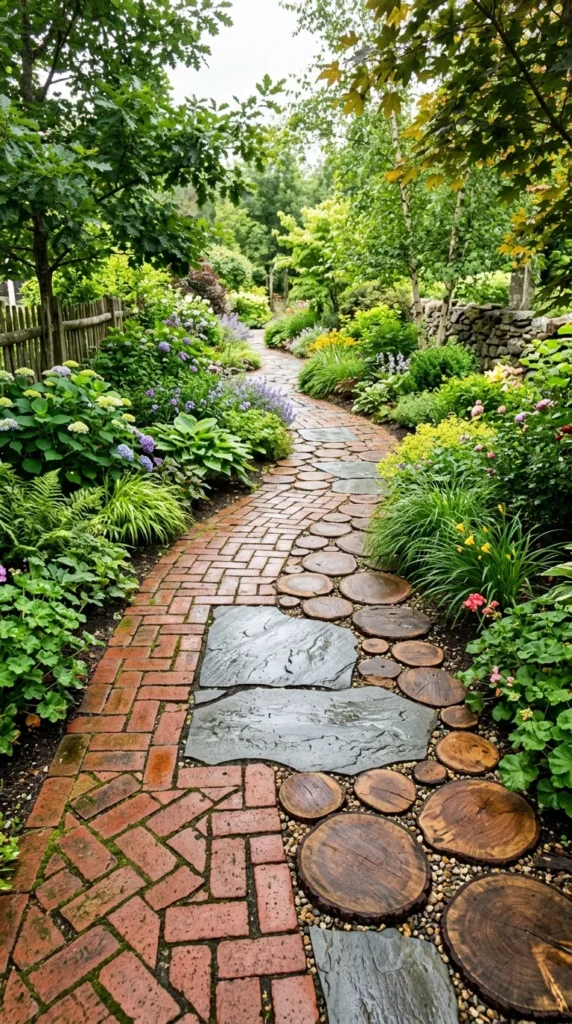
Why choose just one material? A mixed-media walkway uses a combination of stone, brick, wood, or metal to create visual contrast. This approach is perfect for eclectic homes or for defining different “zones” within a longer path.
18. Circular Landing
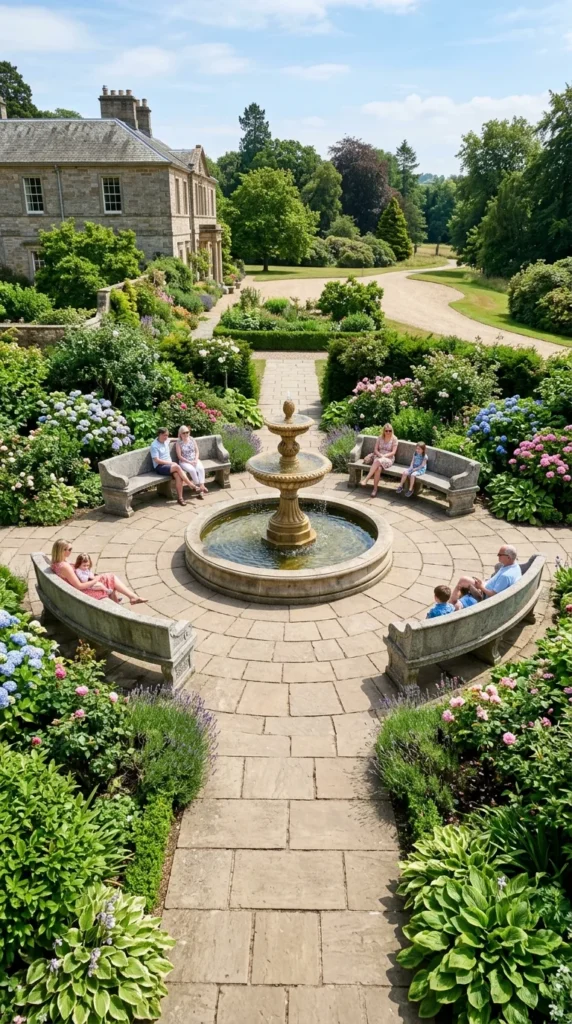
A circular landing or “noddle” provides a place for guests to pause. It breaks up a long, linear path and provides a natural spot for a focal point, such as a fountain, a piece of sculpture, or a specimen tree. It adds a sense of grandeur and purpose to the entrance.
19. Tropical Boardwalk

If you live in a warm climate, a tropical boardwalk can make your home feel like a high-end resort. Using materials like bamboo or teak and surrounding the path with oversized, leafy greenery creates an immersive, jungle-like experience.
20. Victorian Mosaic
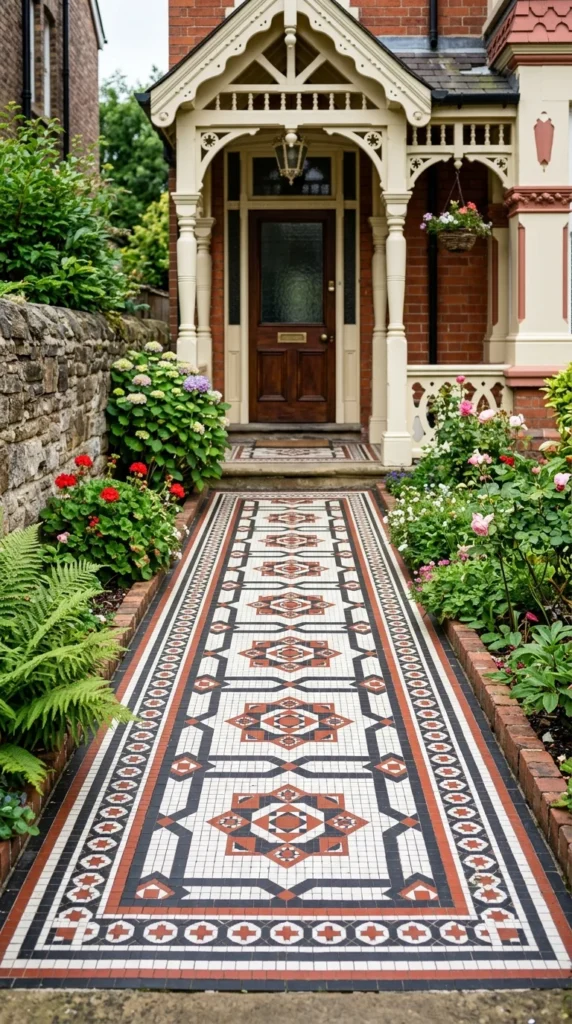
For historic Victorian or Edwardian homes, a tile mosaic walkway is the ultimate period-appropriate choice. These intricate designs are incredibly durable and provide a level of craftsmanship that immediately signals the home’s heritage and character.
21. Rustic Log
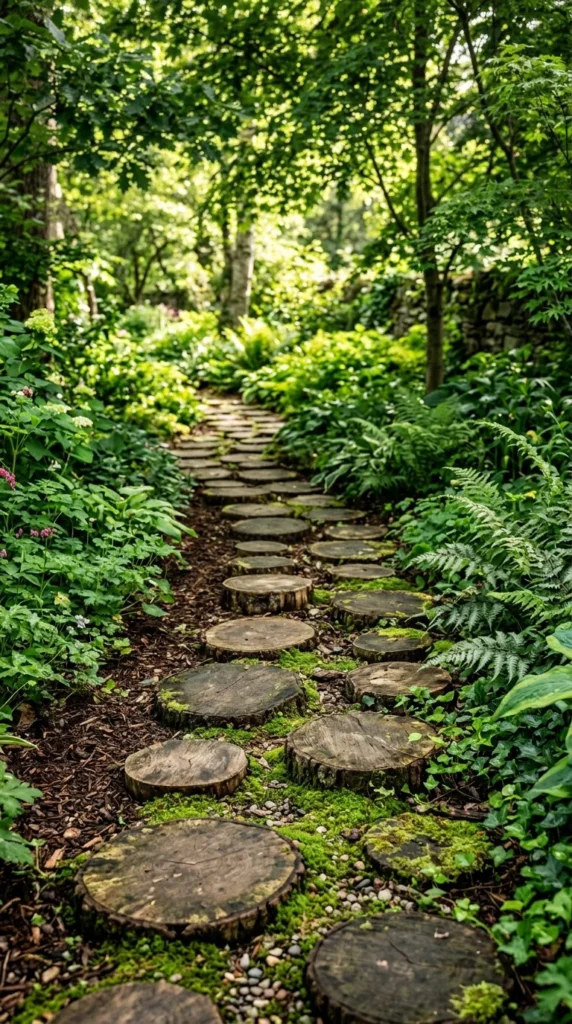
For a woodland or “fairytale” aesthetic, log rounds (also known as “tree cookies”) make for a charming walkway. When treated properly and set into a bed of mulch, they offer a soft, rustic feel that is perfect for informal gardens and shade-heavy yards.
22. Painted Stencil
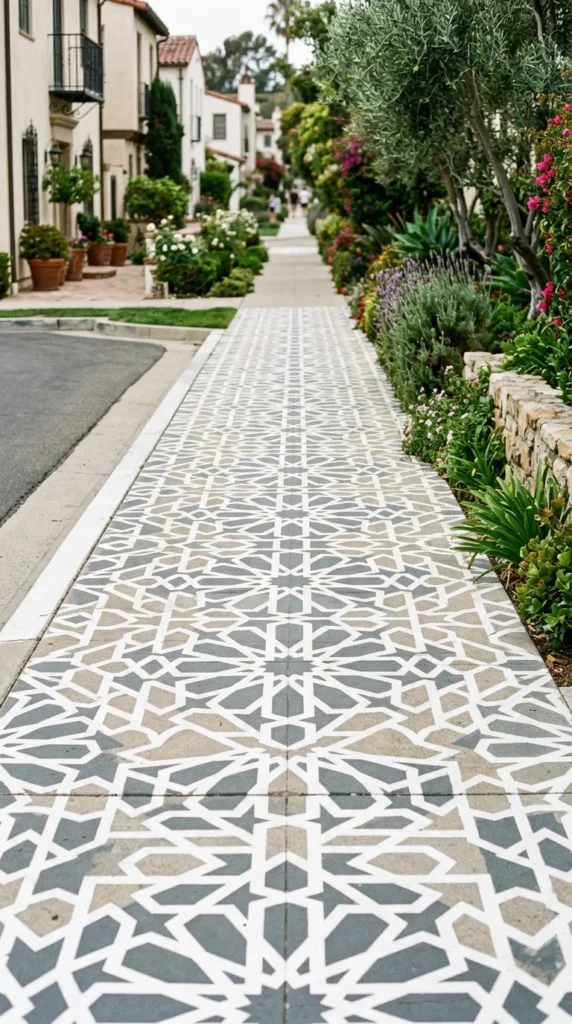
You don’t always need to tear up your existing walkway to change its look. A painted stencil project can turn a boring concrete slab into a patterned masterpiece. Using high-quality masonry paint and a large-scale stencil, you can mimic the look of expensive tile or stone for a fraction of the cost.
23. Floating Steps
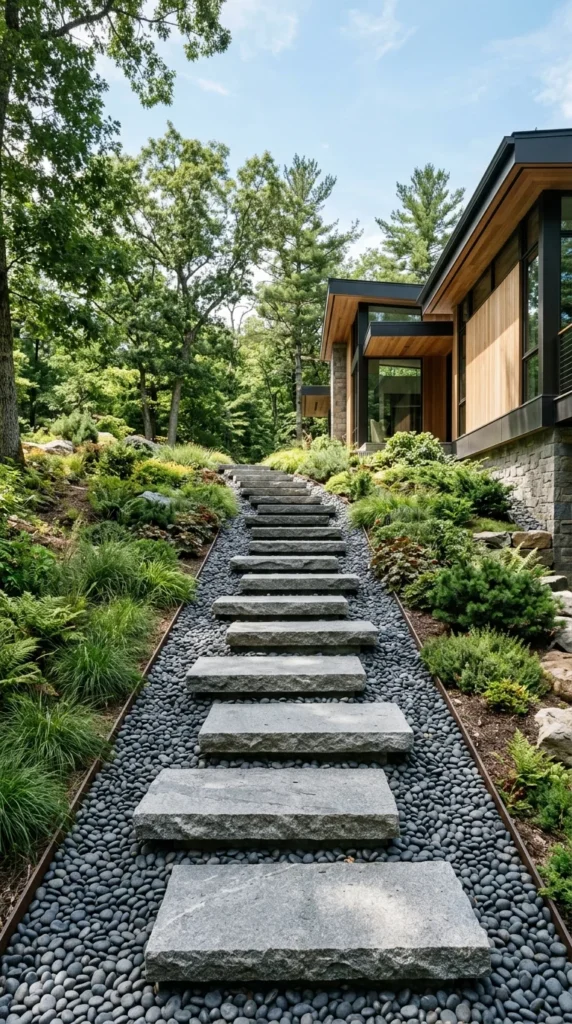
Floating steps are a hallmark of modern landscape design. By cantilevering thick stone or concrete slabs over a recessed base, you create the illusion that the steps are hovering. This look is clean, dramatic, and provides a powerful sense of movement toward the entrance of the home.