
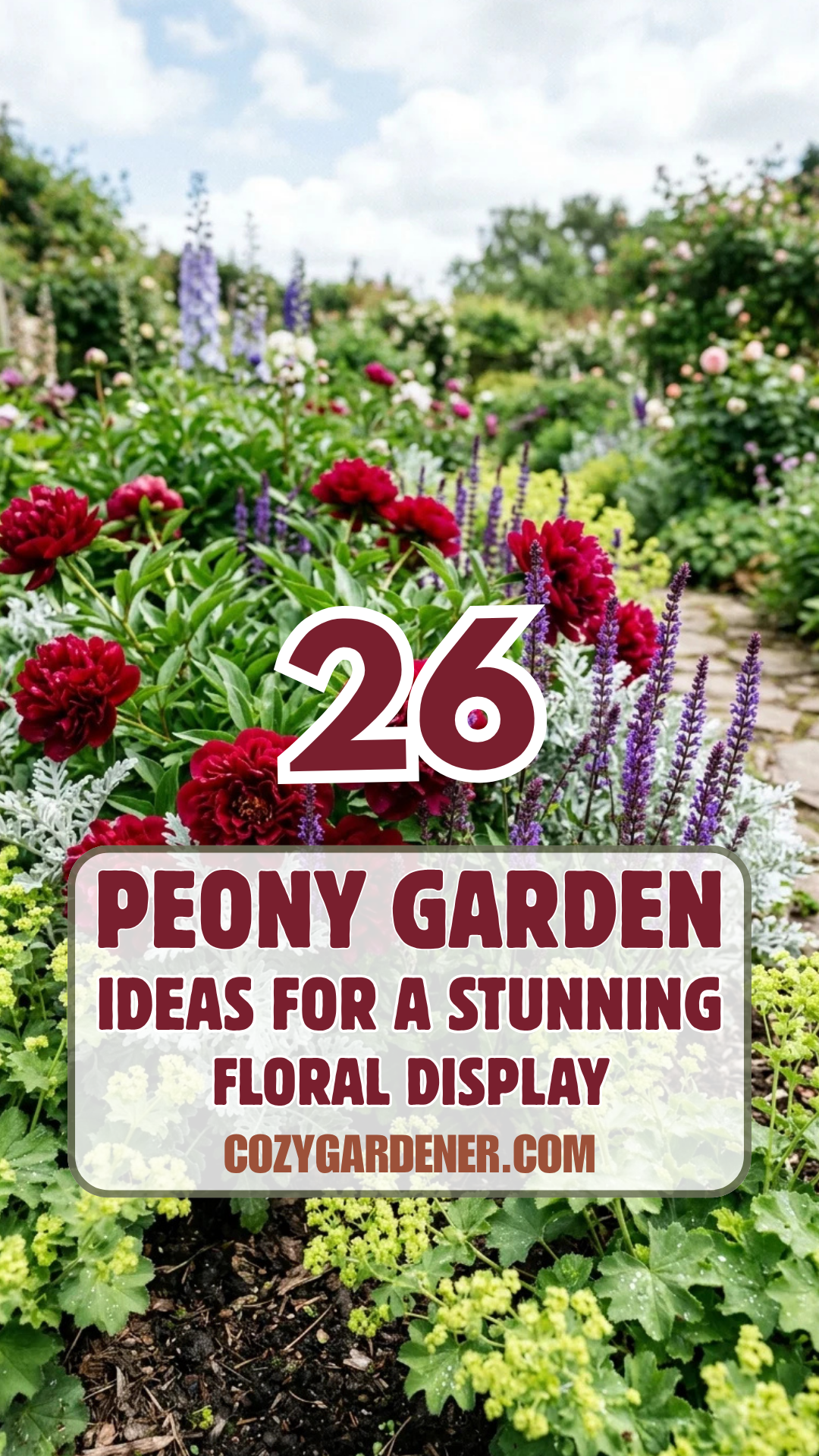
Peonies are often referred to as the “Queen of the Garden,” and for good reason. With their massive, pillowy blooms, intoxicating scents, and lush green foliage, they provide a sense of luxury and timelessness that few other perennials can match. Whether you are a fan of the classic herbaceous types, the woody tree peonies, or the sturdy intersectional Itohs, there is a way to incorporate these beauties into any landscape. Here are 26 creative and stunning ways to showcase peonies in your garden.
1. Monochromatic Borders
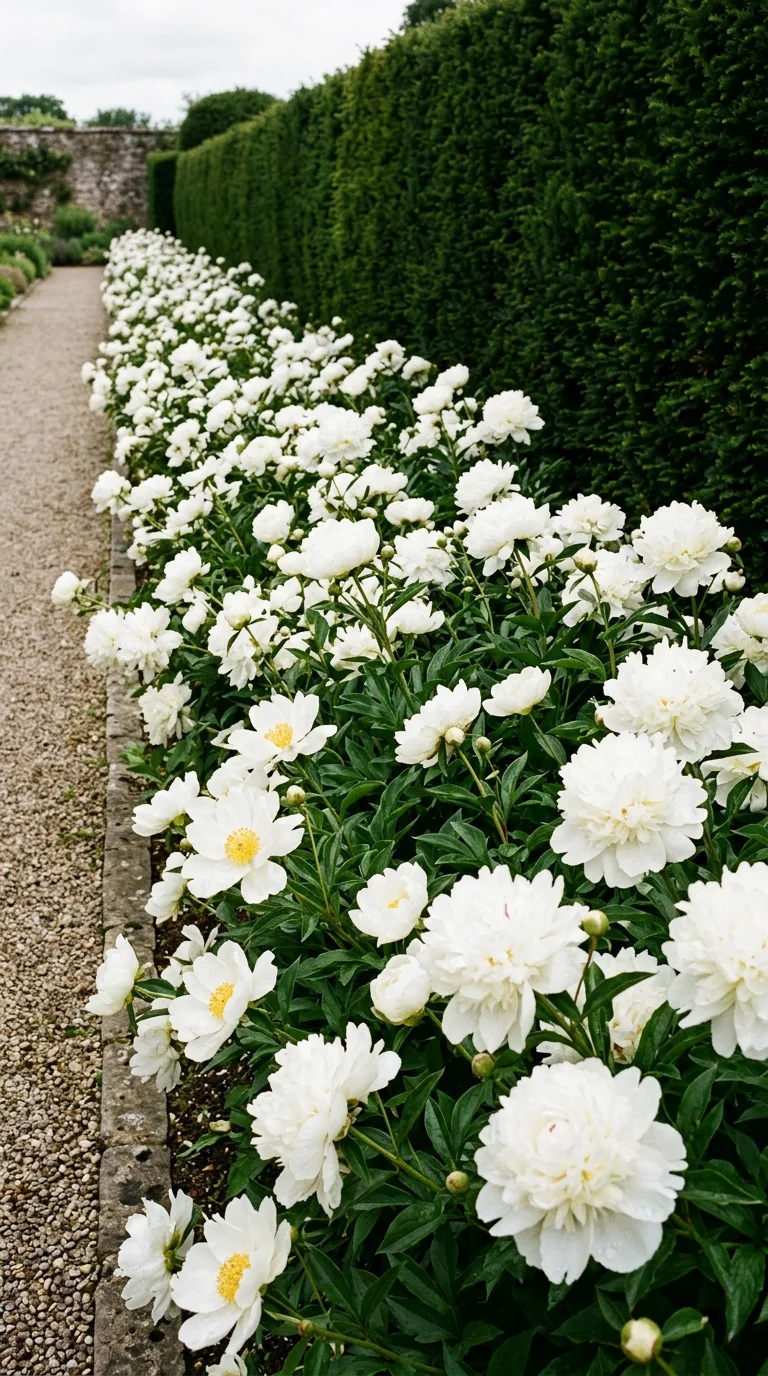
Creating a monochromatic border is a sophisticated way to make a bold statement. By choosing one color—such as pure white, soft blush, or deep crimson—you allow the unique textures and shapes of the different peony varieties to take center stage. For a white garden, mix ‘Festiva Maxima’ with ‘Shirley Temple.’ The uniformity of color creates a serene, high-end look that glows particularly beautifully during the “blue hour” of dusk.
2. Cottage Chaos
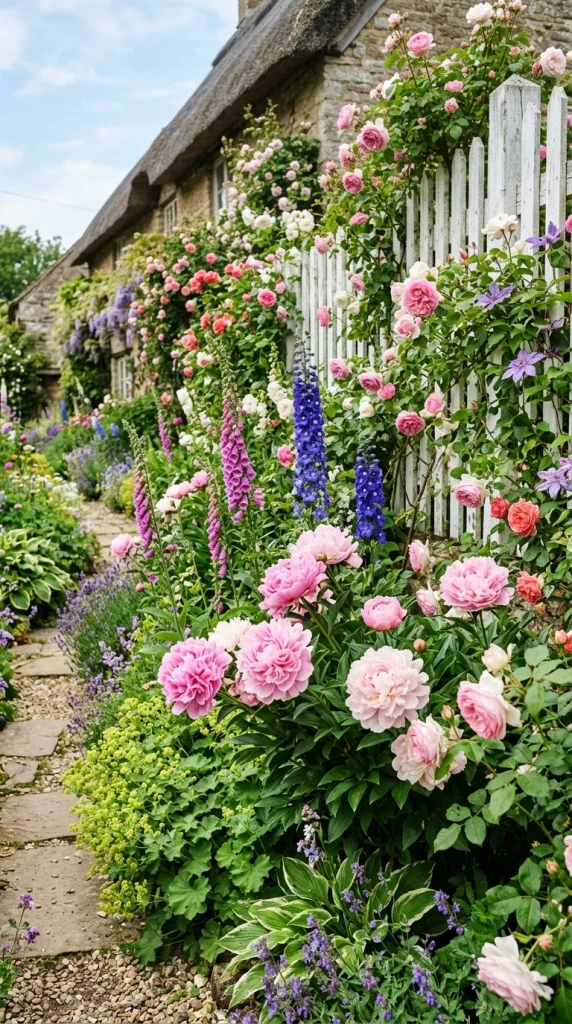
Peonies are a staple of the classic English cottage garden. In this style, the goal is “planned chaos.” Plant your peonies alongside other traditional favorites like delphiniums, lupines, and foxgloves. The heavy heads of the peonies provide a soft, rounded contrast to the tall, spiky silhouettes of their companions. This layered look ensures that even when the peonies finish blooming, the garden remains full and vibrant.
3. Tree Peonies
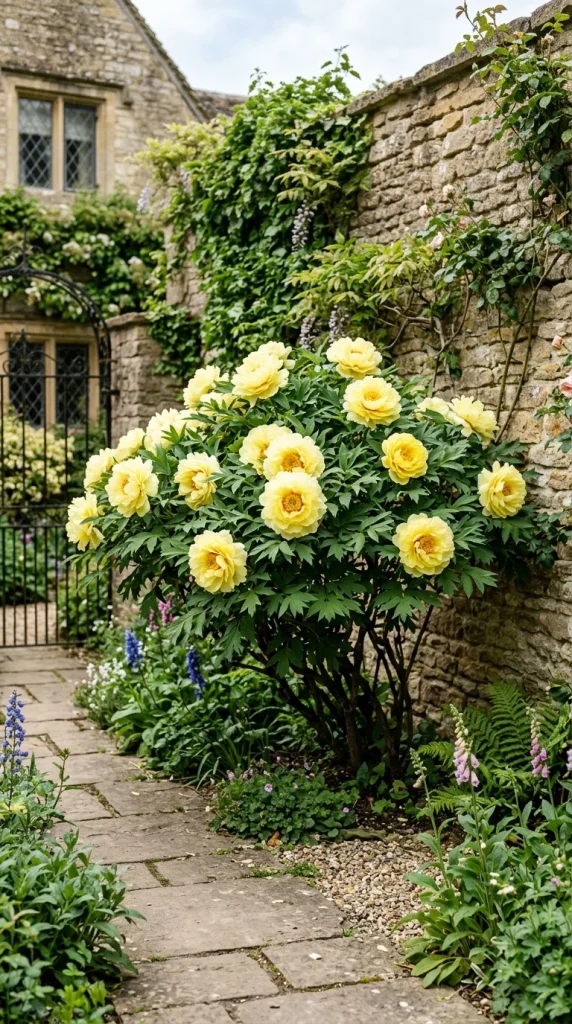
Unlike herbaceous peonies that die back to the ground in winter, tree peonies possess woody stems that remain year-round. They produce some of the largest flowers in the plant kingdom, often reaching ten inches in diameter. Use them as structural anchors in your garden. Because they grow slowly and can live for decades, they serve as excellent specimen plants that provide a sense of permanence and grandeur.
4. Intersectional Hybrids
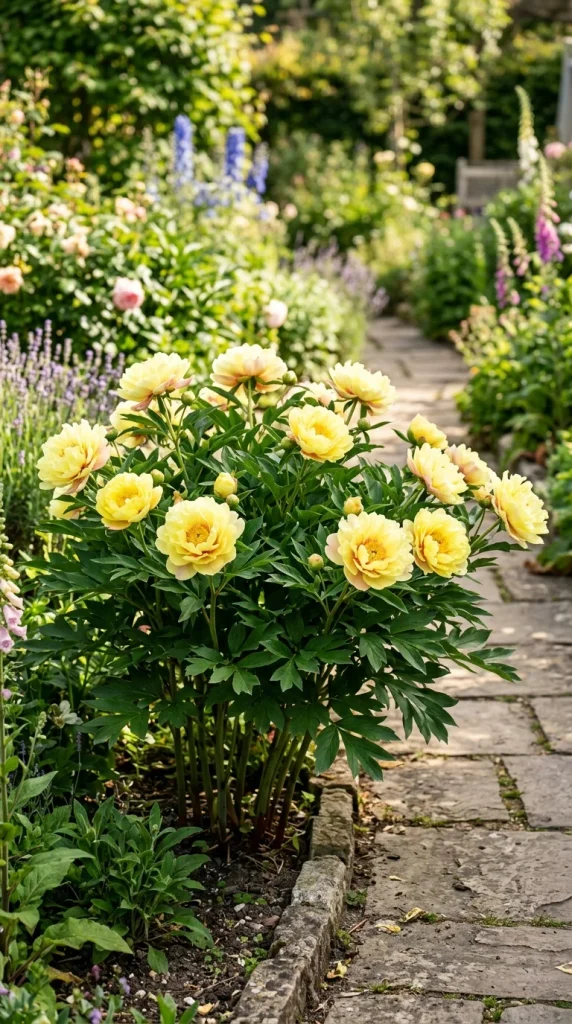
Also known as Itoh peonies, these are a cross between tree and herbaceous types. They offer the best of both worlds: the massive, exotic flowers of a tree peony and the lush, easy-to-manage foliage of the herbaceous type. Crucially, Itohs have incredibly strong stems that don’t flop under the weight of their blooms. Plant them in areas where you want the “wow” factor without the need for heavy staking.
5. Pathway Liners
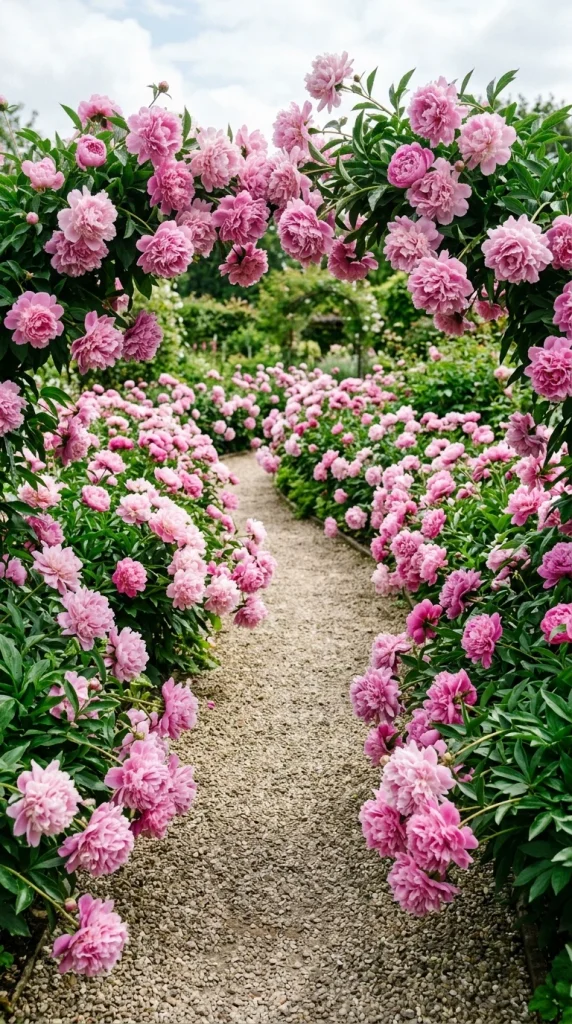
There is nothing more inviting than walking down a path flanked by blooming peonies. As you brush past them, their fragrance is released, creating a multi-sensory experience. To achieve this, plant mid-height varieties that won’t spill over too far and obstruct the walking space. The foliage remains an attractive green border long after the flowers have faded.
6. Mixed Perennials
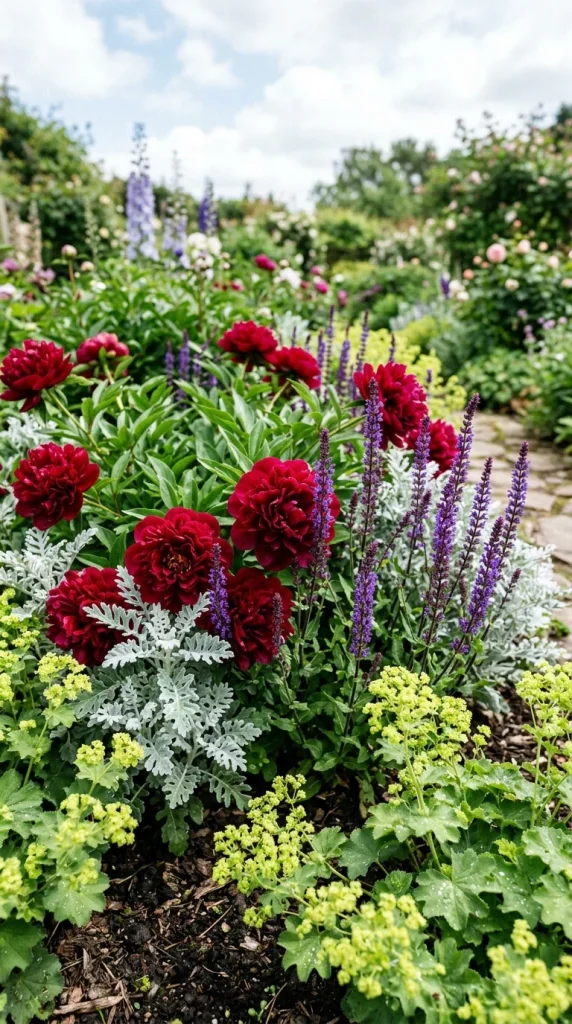
Peonies play well with others. To extend the season of interest, mix your peonies with perennials that bloom at different times or offer contrasting leaf textures. The silvery foliage of Artemisia or the chartreuse flowers of Alchemilla mollis (Lady’s Mantle) provide a stunning backdrop that makes the saturated colors of peonies pop.
7. Container Peonies
While many think peonies need to be in the ground, certain compact varieties thrive in large containers. This is perfect for patio gardening or for those with limited space. Ensure the pots are deep enough to accommodate the large root systems and provide excellent drainage. Moving these pots to a prominent spot when they are in bloom allows you to enjoy the fragrance up close.
8. Cutting Gardens
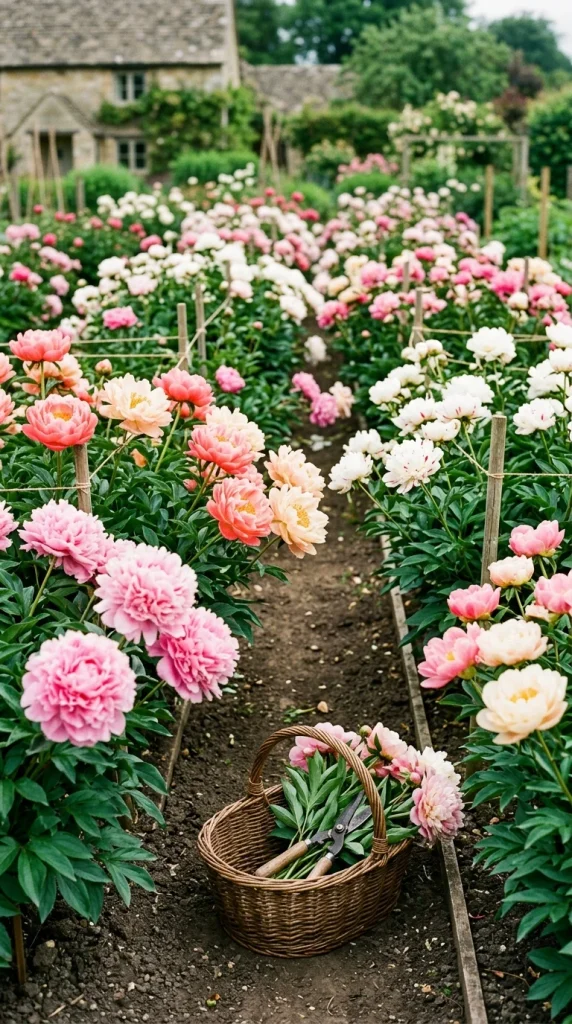
If you love bringing the outdoors in, a dedicated cutting garden is a must. Plant rows of your favorite varieties specifically for harvesting. ‘Sarah Bernhardt’ is a florist favorite for its high petal count and long vase life. By having a separate area for cutting, you don’t have to feel guilty about “stripping” your ornamental landscape of its color.
9. Rock Gardens
For a more naturalistic or wild look, certain species peonies and lower-growing hybrids are perfect for rock gardens. Their delicate foliage and simpler, single-layered flowers look at home among stone and gravel. These varieties often bloom earlier than the heavy-headed doubles, kicking off the peony season with a touch of elegance.
10. Rose Companions
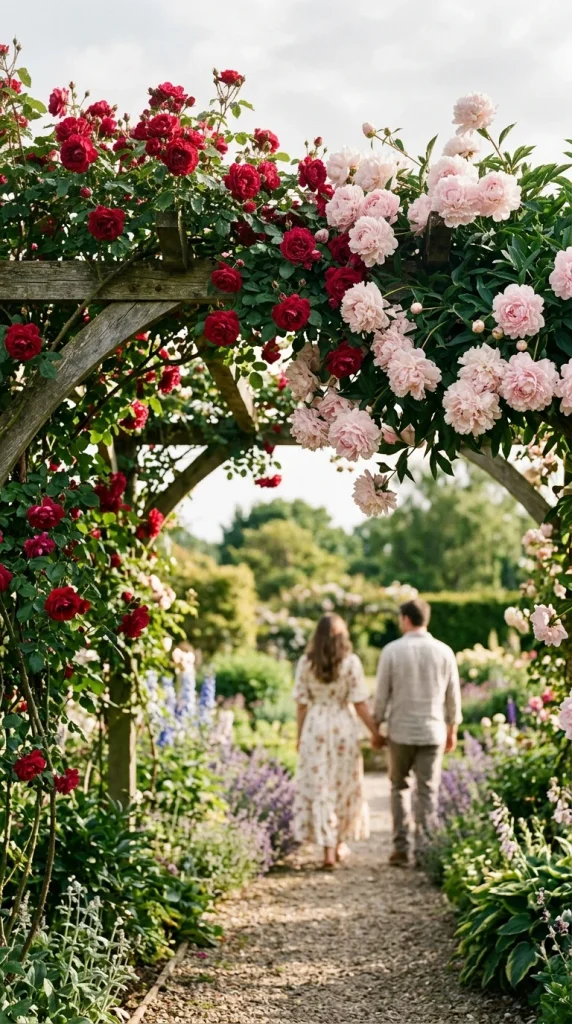
Peonies and roses are a match made in garden heaven. They share similar aesthetic qualities—romantic, fragrant, and lush. Often, peonies will begin their show just as the first flush of roses begins. By planting them together, you create a seamless transition of spectacular blooms. Choose rose varieties that complement the peony colors for a harmonious look.
11. Woodland Settings
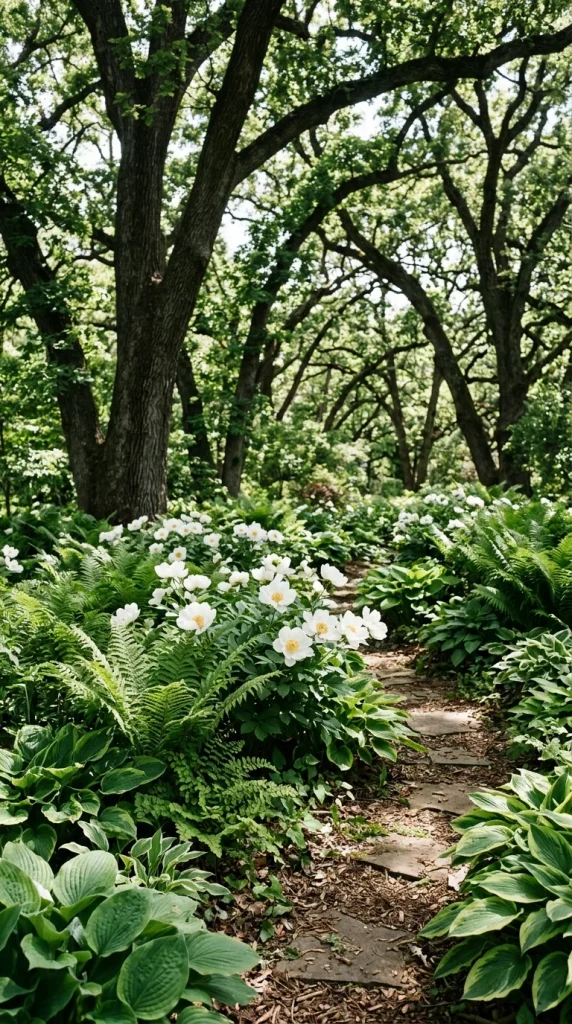
While most peonies love full sun, certain species like Paeonia obovata or Paeonia japonica thrive in the dappled shade of a woodland garden. These varieties have a more understated beauty, often featuring single white or soft pink flowers and attractive seed pods. They provide a bright spot of color in the cooler, shaded parts of your property.
12. Formal Hedges
Because peony foliage is so dense and attractive, they can be planted in a tight row to create a temporary low hedge. During late spring, this “hedge” explodes into a wall of color. After blooming, the glossy green leaves provide a structured boundary that lasts until the first frost. This is a great way to define garden rooms or line a driveway.
13. Pastel Palettes
For a garden that feels like a watercolor painting, stick to a pastel palette. Mixing ‘Coral Sunset,’ ‘Mother’s Choice,’ and ‘Lavender Whispers’ creates a soft, romantic atmosphere. These light colors are particularly effective at reflecting light, making a small garden feel larger and more airy.
14. Double Blooms
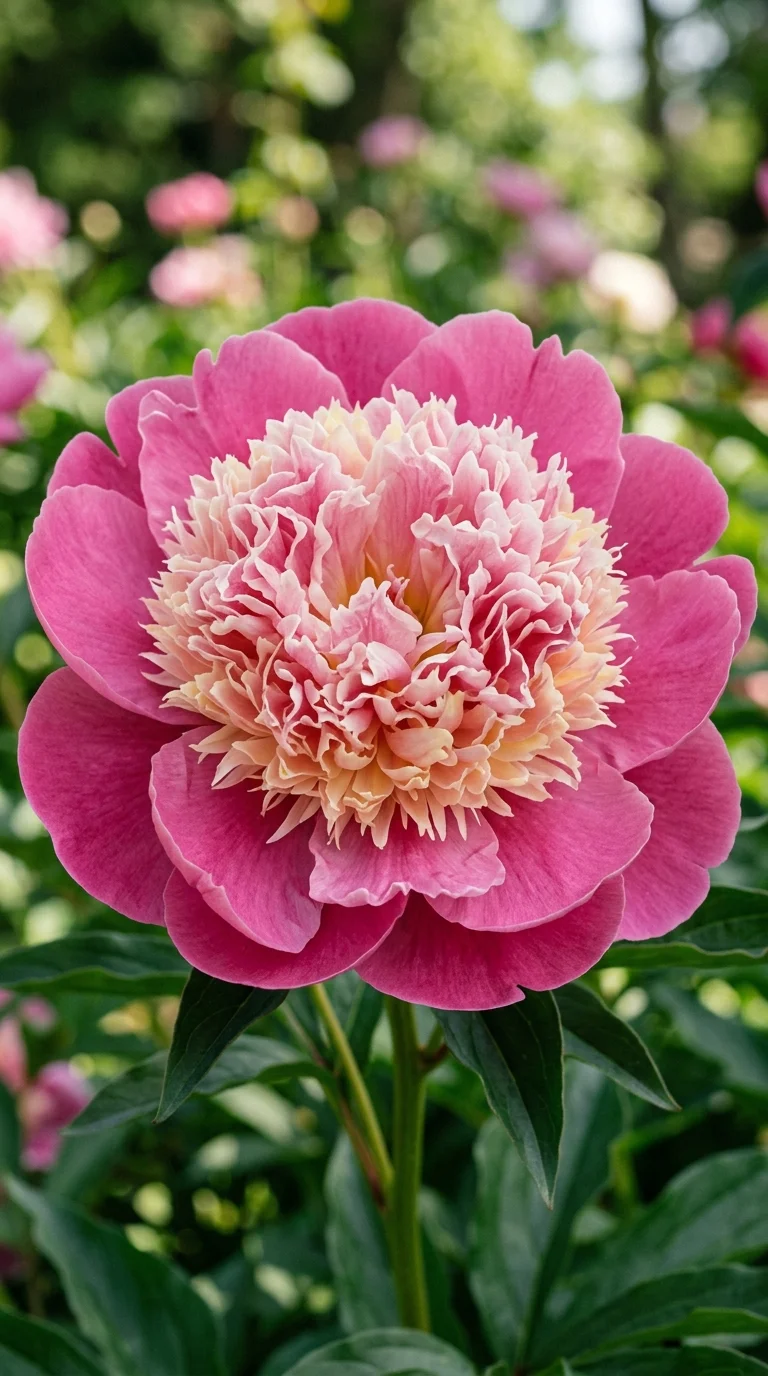
If you want drama, “Double” or “Bomb” type peonies are the way to go. These varieties are packed with hundreds of petals, creating a spherical, heavy bloom that looks almost like a carnation on steroids. They are the epitome of peony luxury. Just be sure to provide sturdy support, as the heads can become very heavy, especially after rain.
15. Single Petal Simplicity
There is a unique, airy elegance to single-petal peonies. They have a more modern, clean look compared to their ruffled cousins. An added benefit is that because they are lighter, they rarely require staking. They also tend to be more attractive to pollinators, as the pollen-rich centers are easily accessible.
16. Fragrance Focused
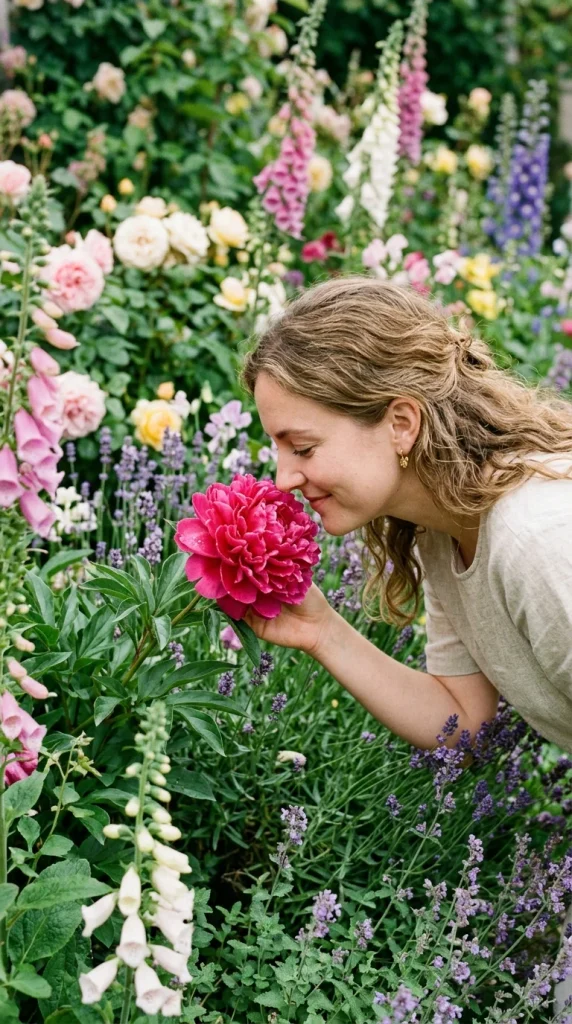
Not all peonies are created equal when it comes to scent. If fragrance is your priority, design a “scent station” garden. Varieties like ‘Edulis Superba’ and ‘Duchesse de Nemours’ are famous for their powerful, sweet perfumes. Planting these near a window or an outdoor seating area allows the wind to carry the scent into your home or relaxation space.
17. Early Bloomers
Extend your peony season by choosing “extra early” varieties. The Fernleaf peony (Paeonia tenuifolia) is one of the first to arrive, featuring unique, needle-like foliage and deep red flowers. By selecting a mix of early, mid, and late-season varieties, you can enjoy a peony display that lasts for six weeks or more rather than just two.
18. Late Bloomers
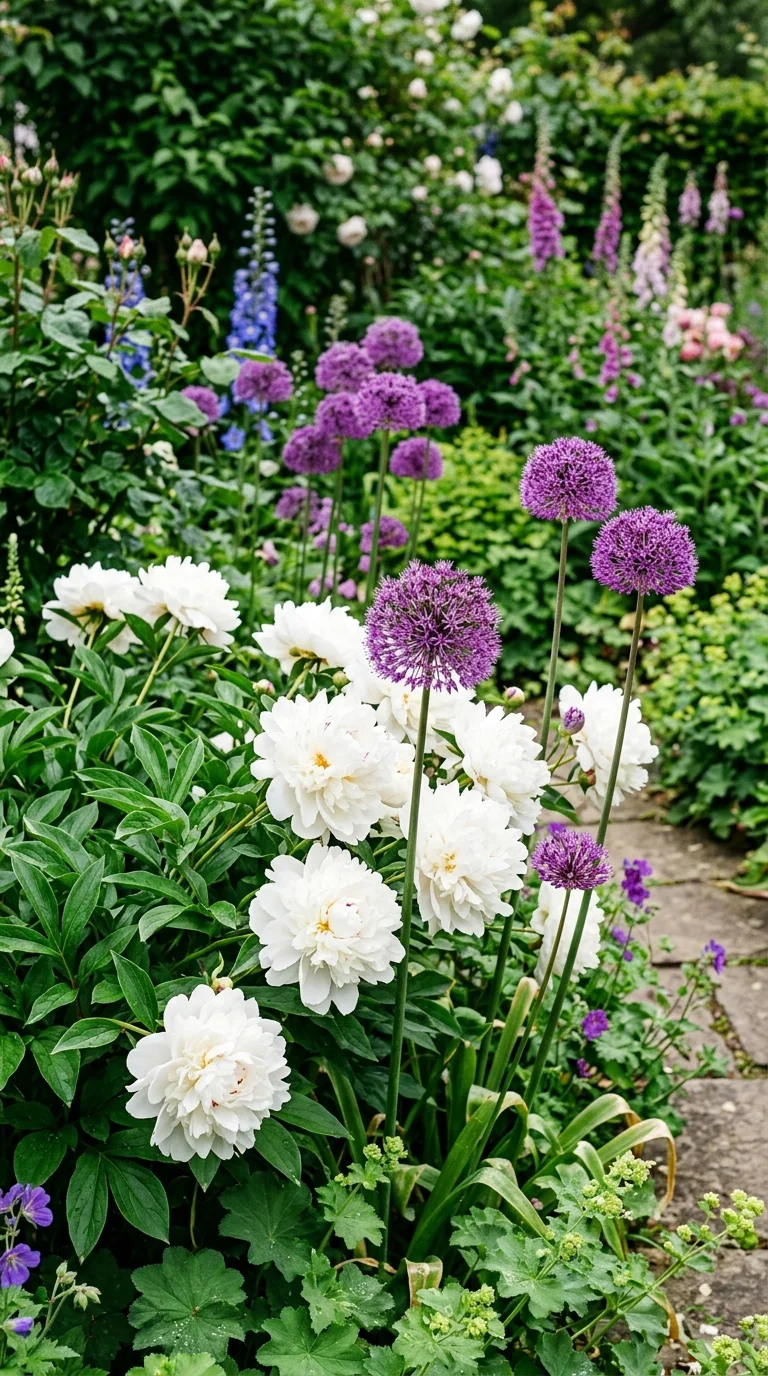
Don’t let the party end too soon. Incorporate late-season bloomers like ‘Elsa Sass’ to keep the floral display going well into the start of summer. These varieties are excellent for bridging the gap between the spring bulb show and the arrival of mid-summer perennials like daylilies and coneflowers.
19. Supporting Hoops
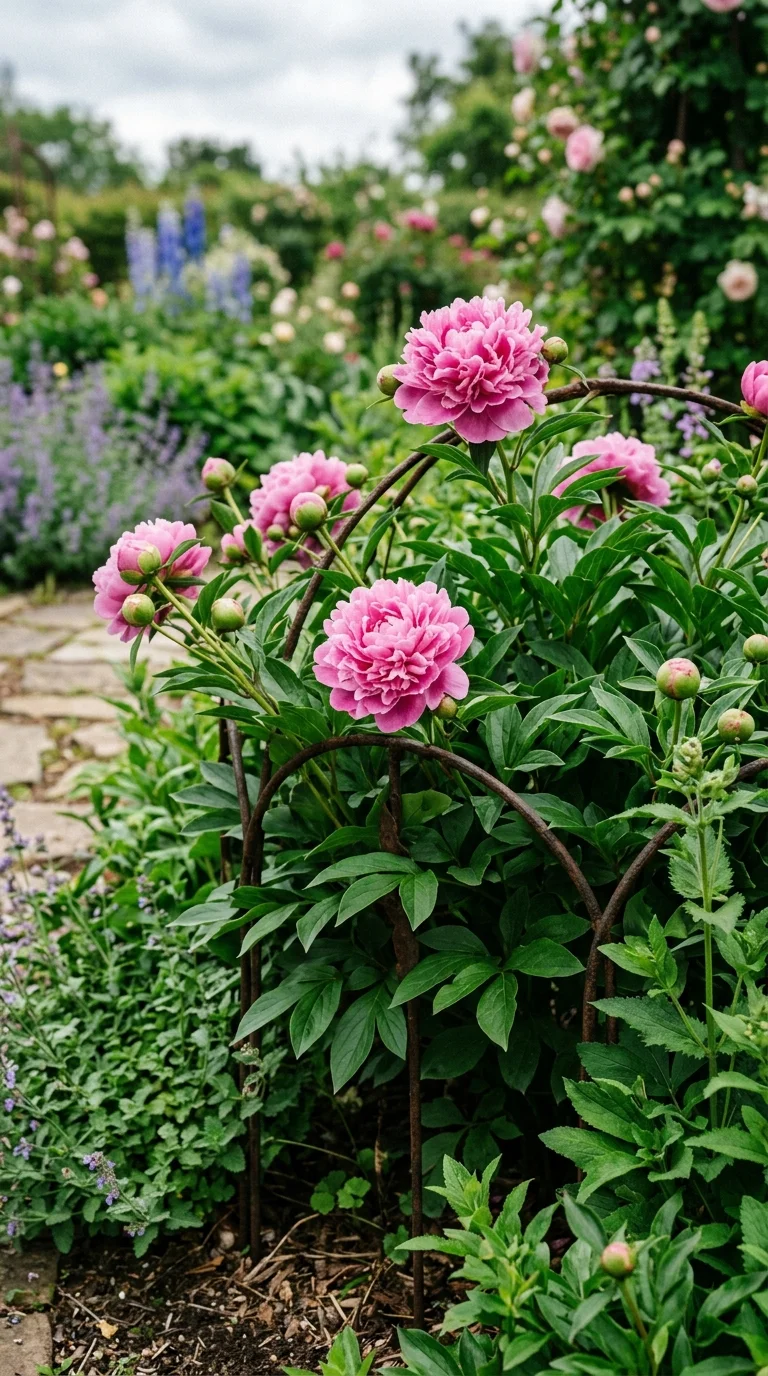
Large peonies are notorious for “flopping” over, especially after a heavy rain. Incorporating decorative supports into your garden design can be both functional and aesthetic. Using high-quality metal hoops or Victorian-style cages adds a touch of architectural interest to the garden even before the plants reach full height.
20. Statuesque Accents
Use peonies to frame garden art or statuary. The soft, billowy nature of the flowers provides a perfect contrast to the hard, cold surface of stone or bronze. A cluster of white peonies at the base of a dark statue creates a focal point that draws the eye and adds a layer of classical sophistication to the landscape.
21. Raised Beds
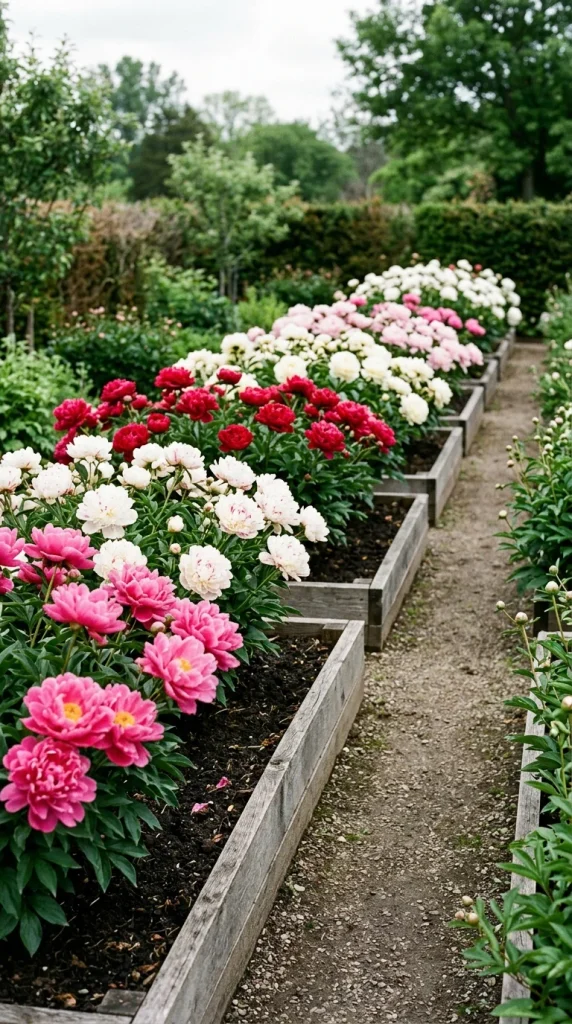
Raised beds offer several advantages for peony growers: better drainage, controlled soil quality, and easier access for maintenance. They also elevate the flowers closer to eye (and nose) level. Design your raised beds in a geometric pattern for a formal look, or use weathered timber for a more rustic, farm-style aesthetic.
22. Mass Plantings
If you have the space, nothing beats the impact of a mass planting. Seeing dozens of peony plants blooming simultaneously is a breathtaking sight. This technique works well on slopes or along the edges of large properties. It creates a high-impact seasonal event that neighbors and passersby will look forward to every year.
23. Entrance Statements
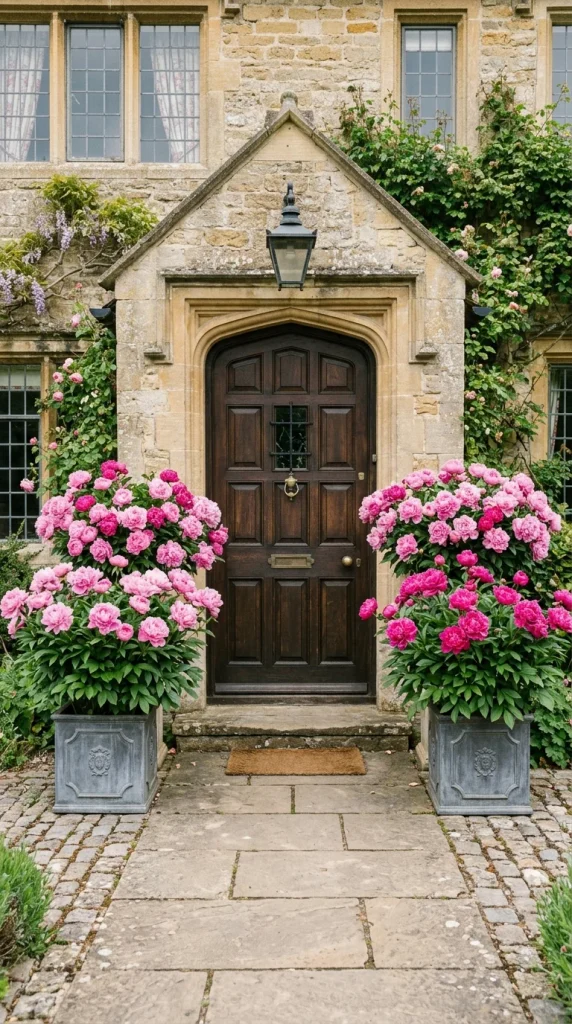
Make a great first impression by planting peonies near your home’s entrance. Whether in the ground or in large pots on the porch, they signal a sense of welcome and luxury. Choose a high-fragrance variety so that every time you enter or leave your home, you are greeted by their signature scent.
24. Bird and Bee Haven
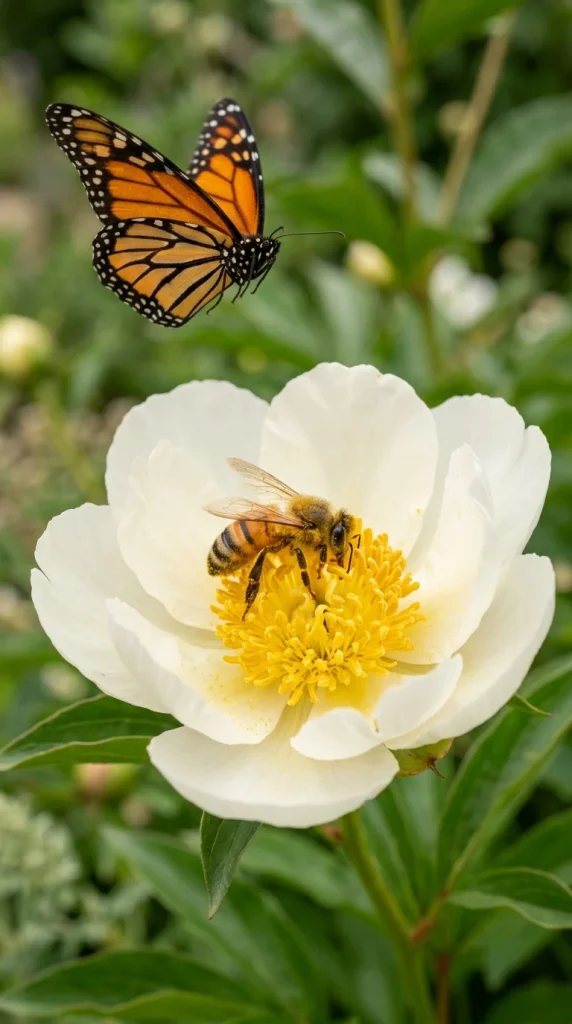
Peonies can be a vital part of a pollinator-friendly garden. Single and semi-double varieties are particularly good for bees and butterflies. By planting these, you turn your peony garden into a buzzing hub of activity. The thick foliage also provides excellent cover for small birds and beneficial insects throughout the growing season.
25. Water Feature Surroundings
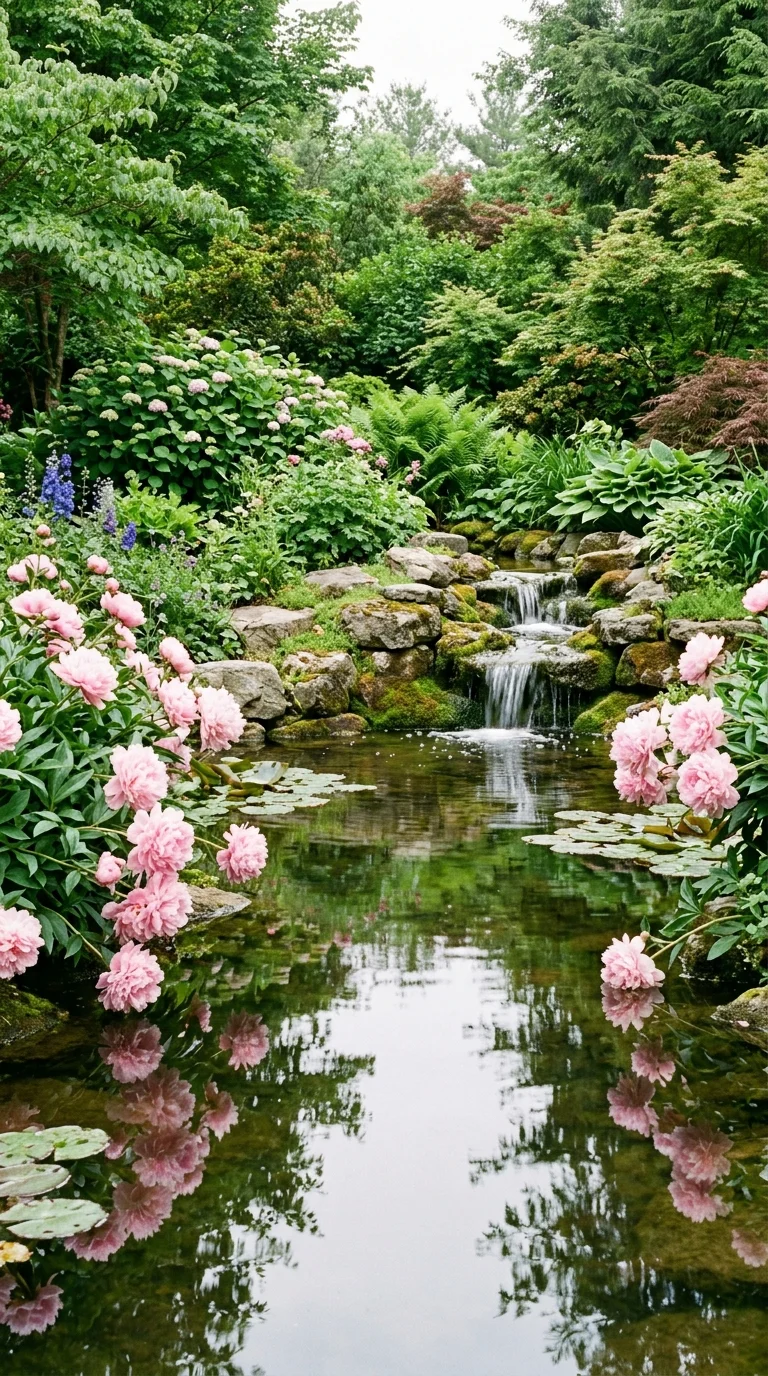
The reflection of peonies in a still pond or the sound of water near a flower bed creates a deeply relaxing environment. Peonies love the moisture-retentive (but well-drained) soil often found near water features. The combination of the soft floral textures and the movement of water creates a true garden sanctuary.
26. Secluded Seating
Create a “secret garden” feel by planting peonies around a secluded seating area. Because peonies grow to a significant height and width, they can provide a sense of enclosure and privacy. Sitting on a bench surrounded by the sights and smells of a dozen blooming peonies is the ultimate way to experience the beauty of your garden.