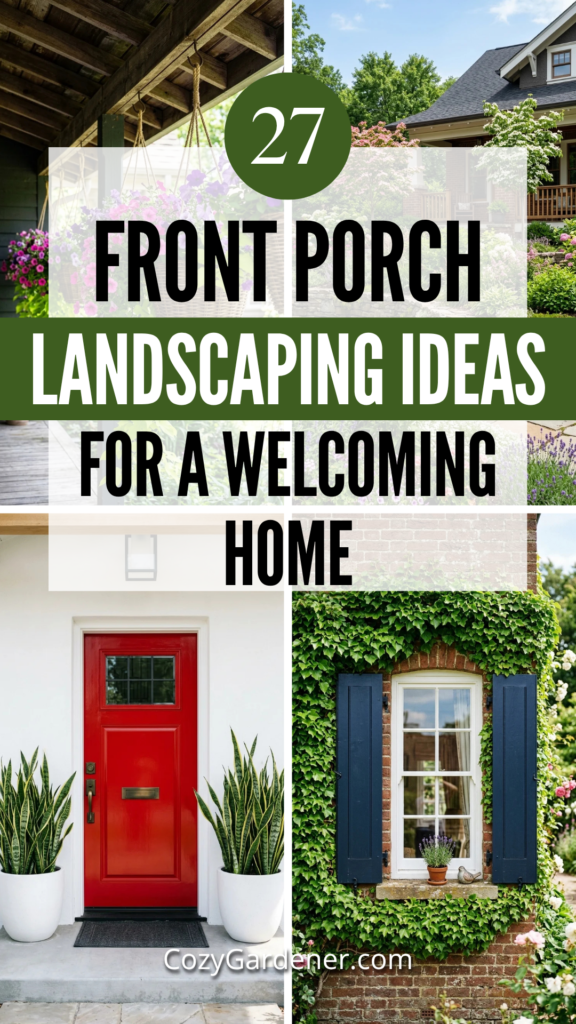
Your front porch is the handshake of your home. It is the first thing guests see and the first place that welcomes you back after a long day. Landscaping around this pivotal area does more than just boost curb appeal; it sets a mood, reflects your personality, and integrates your architecture with the natural world. Whether you have a tiny stoop or a sprawling veranda, these 27 landscaping ideas will help you transform your entrance into a breathtaking sanctuary.
1. Layered Foundation
Creating depth is the secret to a professional-looking landscape. By planting in layers, you ensure that your porch looks lush and full rather than flat. Start with taller evergreens against the house to provide a year-round green backdrop. In front of those, place mid-sized flowering perennials like coneflowers or black-eyed Susans. Finally, finish the edge with low-growing groundcovers or annuals that spill over onto the walkway.
2. Window Boxes
Window boxes bring the garden up to eye level and soften the transition between your home’s siding and the porch. They are perfect for adding a pop of seasonal color. To keep them looking full, follow the “thriller, filler, spiller” rule: a tall focal plant in the center, mounding plants to fill the space, and trailing vines to hang over the edges.
3. Potted Topiaries
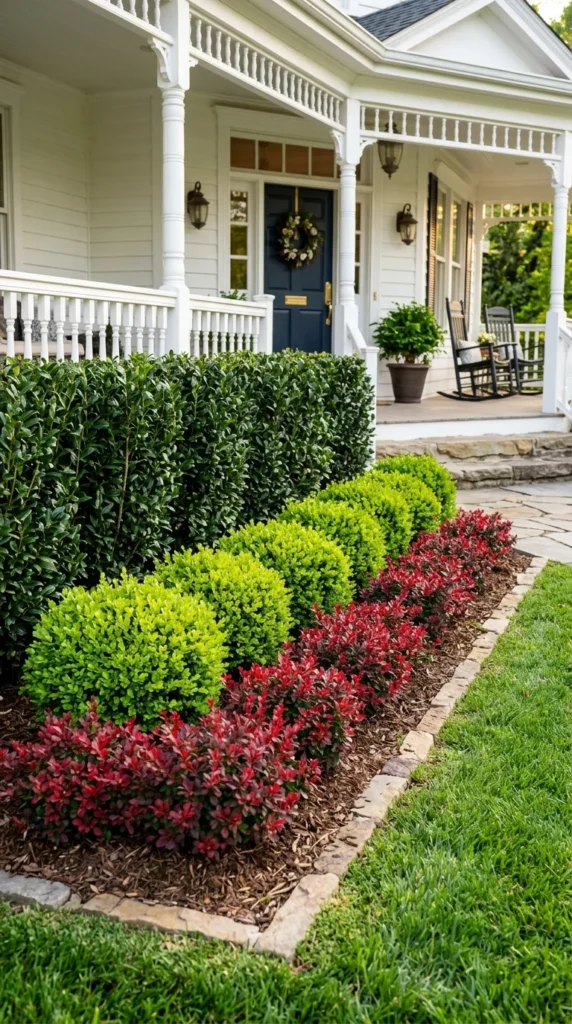
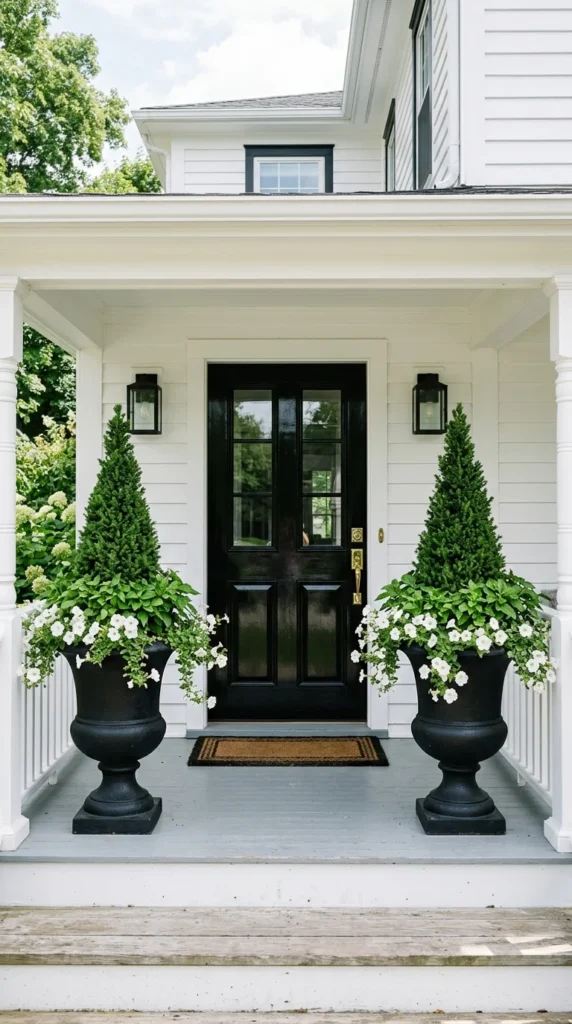
For a touch of formal elegance, nothing beats a symmetrical pair of topiaries. Boxwoods, hollies, or even rosemary can be clipped into spheres, cones, or spirals. They provide structural interest throughout the winter and frame your entryway with a sense of sophisticated permanence.
4. Climbing Roses
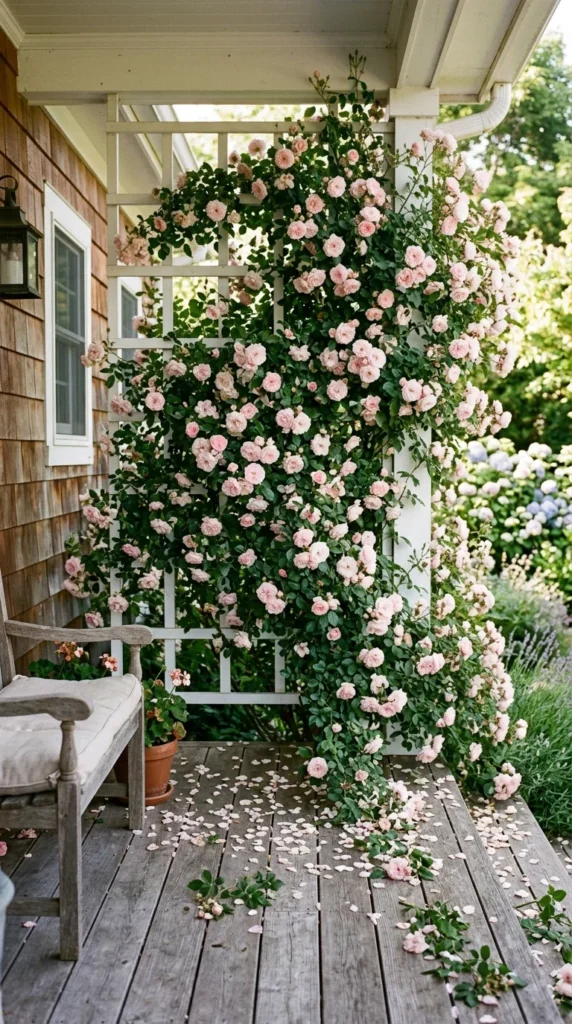
Climbing roses add a romantic, “English cottage” feel to any front porch. As they grow upward, they provide vertical interest and a wonderful fragrance that greets anyone who walks through the door. Train them along pillars, railings, or dedicated trellises to create a living wall of blooms.
5. Lavender Border
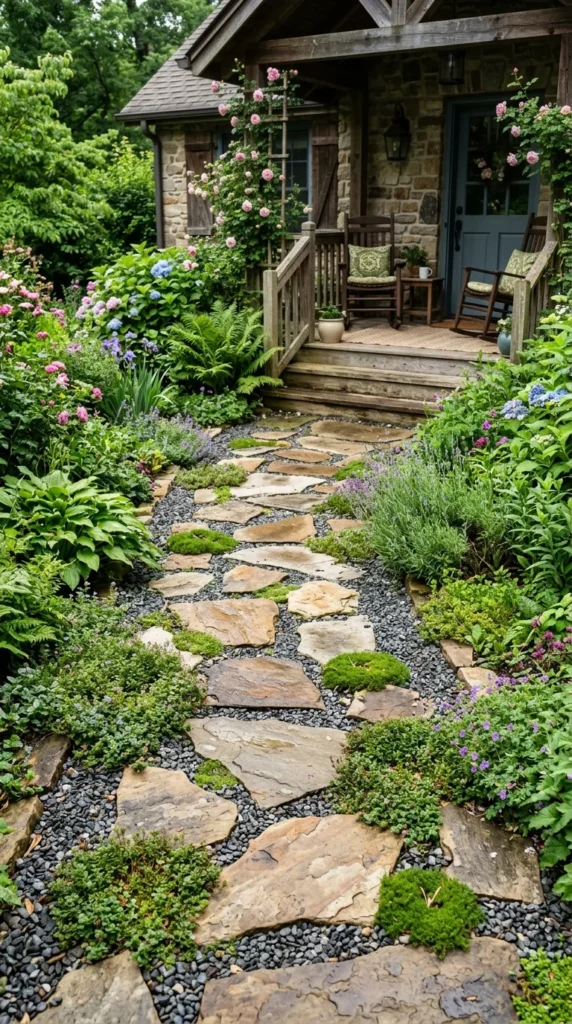
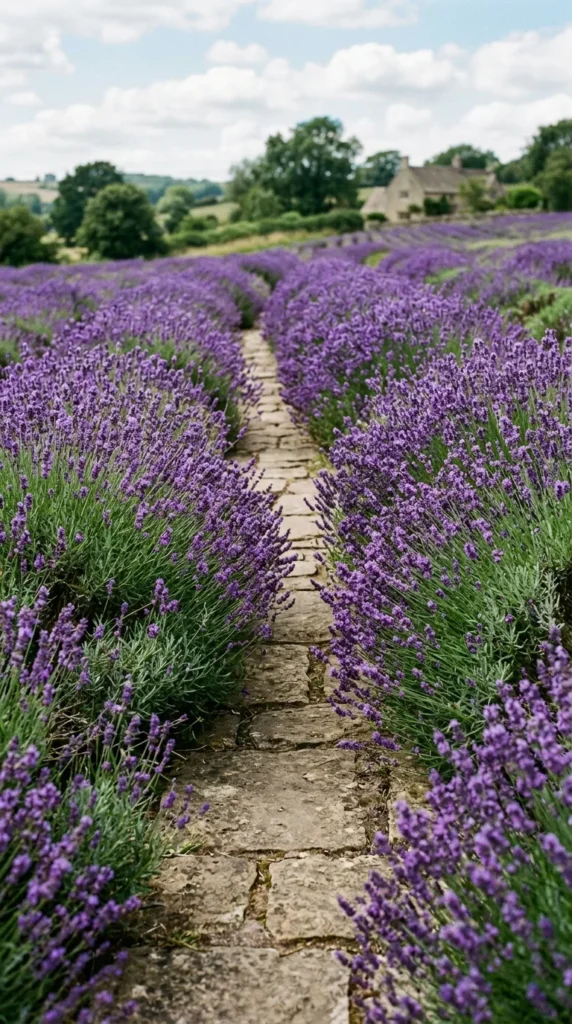
Planting lavender along the path to your porch provides a sensory experience. As guests brush against the plants, the calming scent is released. Lavender is also drought-tolerant and maintains a beautiful silvery-green foliage even when it isn’t in full bloom.
6. Modern Planters
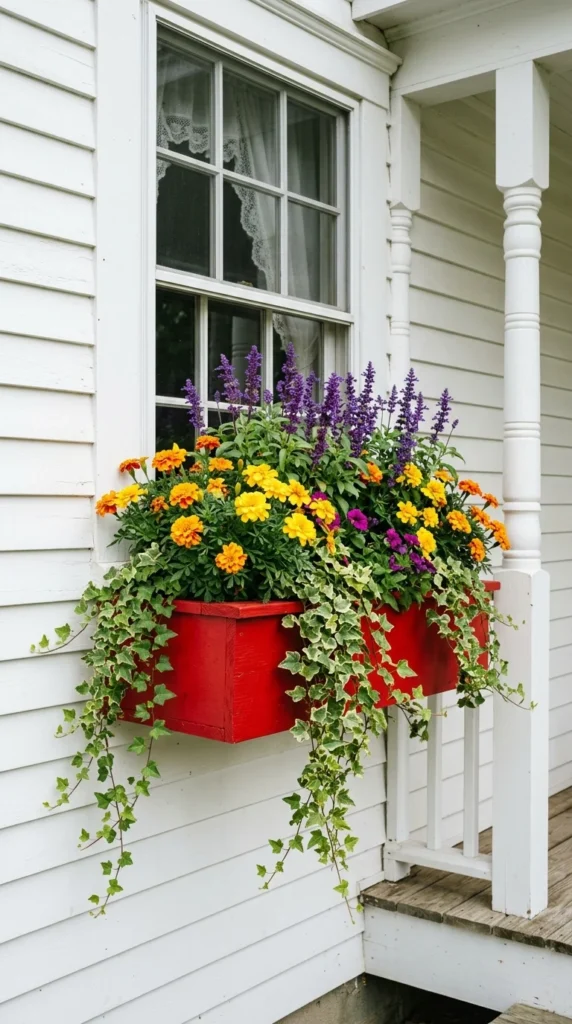
If your home leans toward modern or contemporary architecture, skip the ornate urns and opt for sleek, geometric planters. Using varying heights creates visual rhythm, while the clean lines emphasize the “less is more” aesthetic. Stick to structural plants with interesting shapes rather than messy, sprawling flowers.
7. Native Plants
Using native plants is an eco-friendly way to ensure your landscaping thrives with minimal effort. Because they are adapted to your local climate and soil, they require less water and fewer fertilizers. Plus, they provide essential habitats for local pollinators like bees and butterflies, turning your front porch into a mini nature preserve.
8. Hanging Baskets
Hanging baskets are essential for porches with high ceilings. They draw the eye upward and make the space feel cozy and enclosed. For shady porches, use begonias or fuchsias; for sunny spots, petunias and million bells are excellent choices that will bloom profusely all summer long.
9. Symmetrical Urns
Symmetry creates a sense of balance and order. Placing identical urns on either side of the steps or the door signals a formal and intentional design. It guides the visitor’s eye directly to the entrance, making the home feel grounded and welcoming.
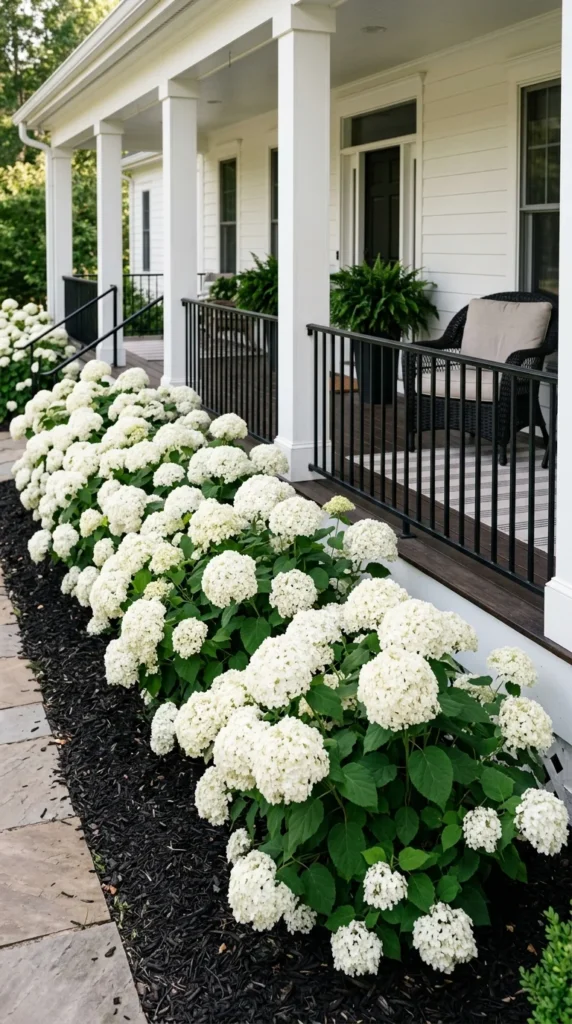
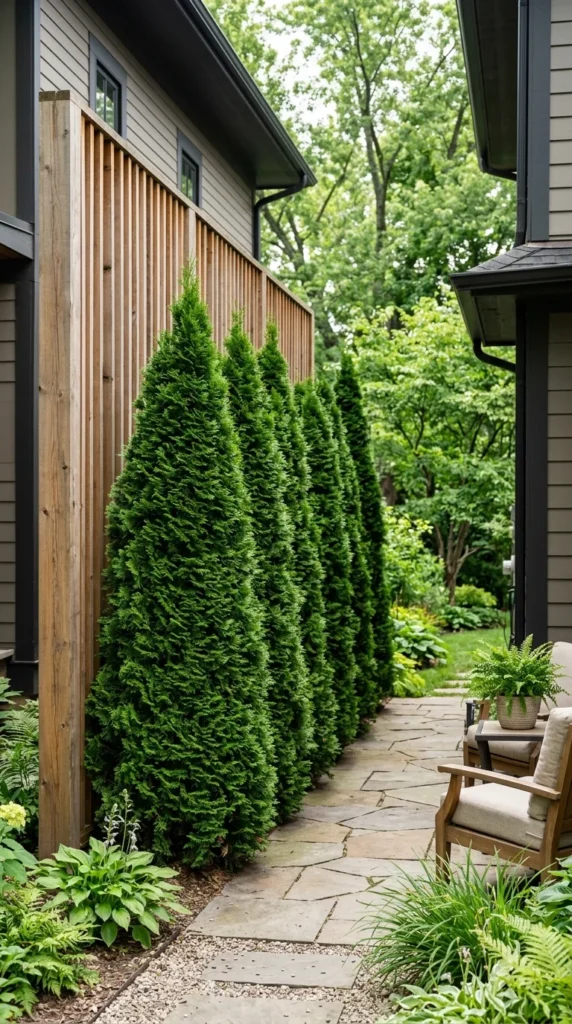
10. Hydrangea Hedge

Hydrangeas are the kings of the front porch garden. Their massive, globe-like blooms provide an incredible amount of color for months. A hedge of hydrangeas can also act as a low-level privacy screen, shielding your porch seating area from the street while still looking incredibly inviting.
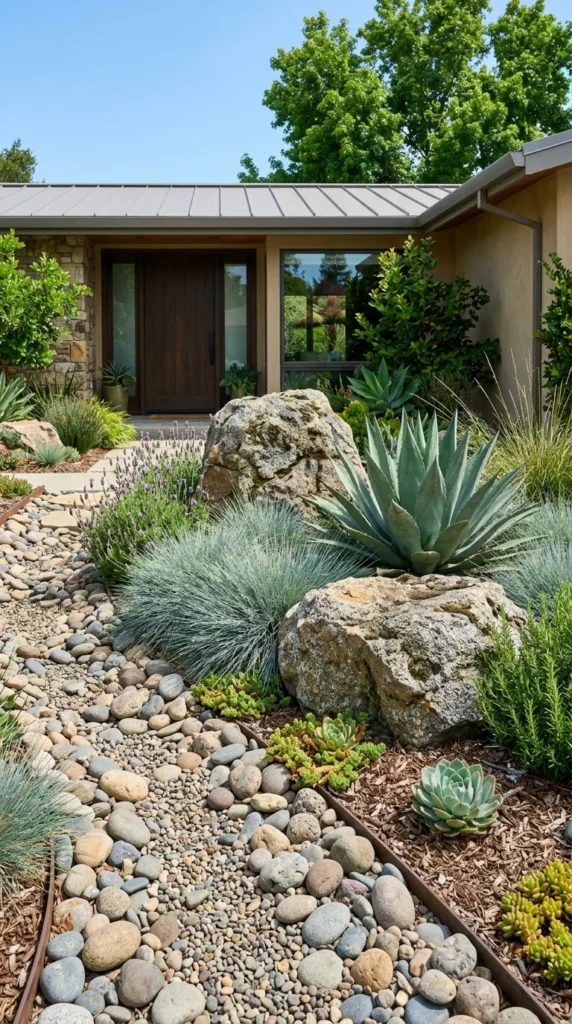
11. Rock Garden Edging
Incorporate hardscaping by using decorative stones as an edging material. Rocks provide a clean transition between the lawn and the garden bed and help with drainage. Combining stones with drought-resistant plants creates a textured, low-maintenance look that stays tidy year-round.
12. Vertical Trellis
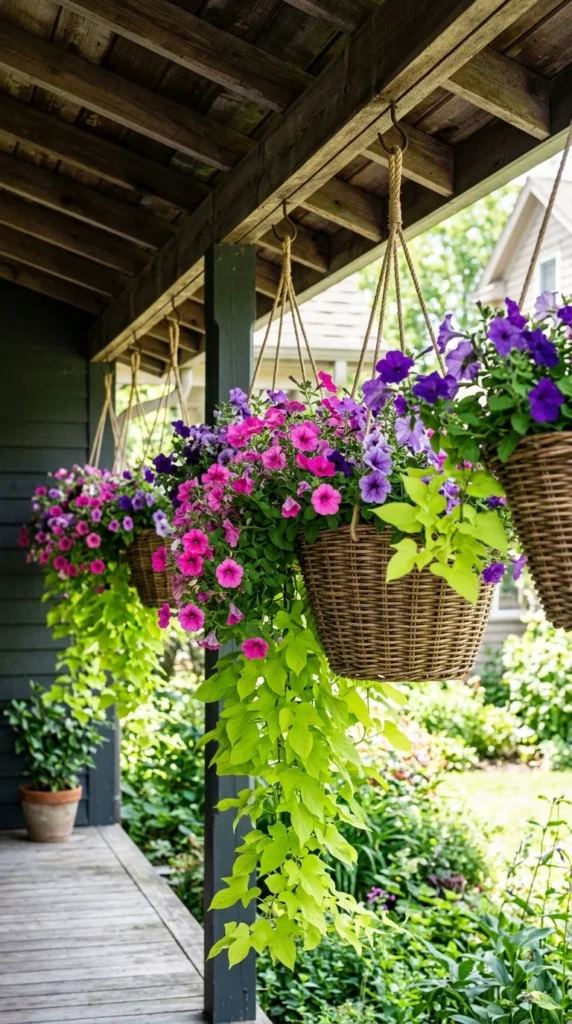
When floor space is limited, go vertical. A trellis allows you to grow vines like clematis, honeysuckle, or jasmine in a very small footprint. This adds a lush, green feel to even the smallest urban stoop without cluttering the walking path.
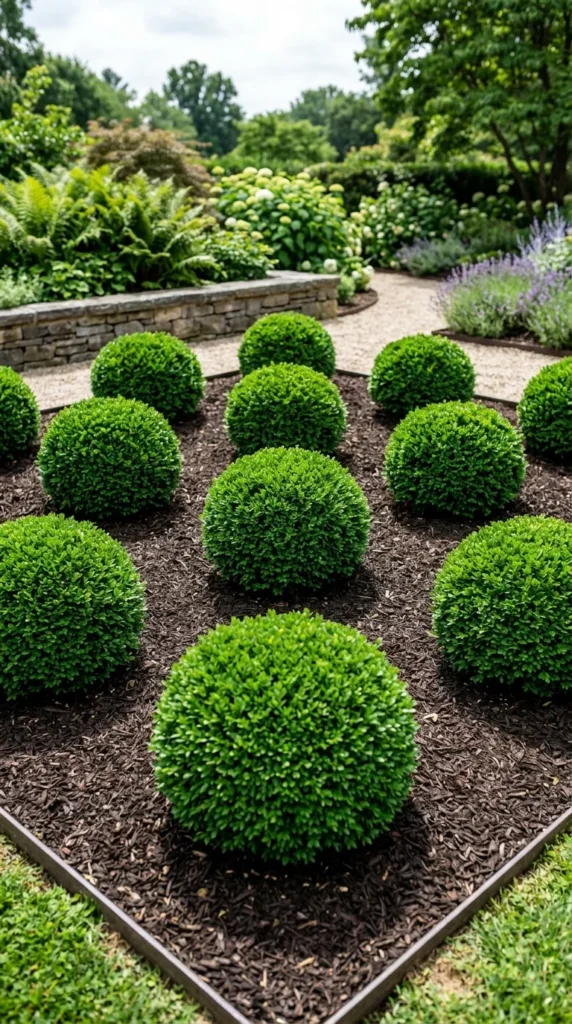
13. Boxwood Hedges
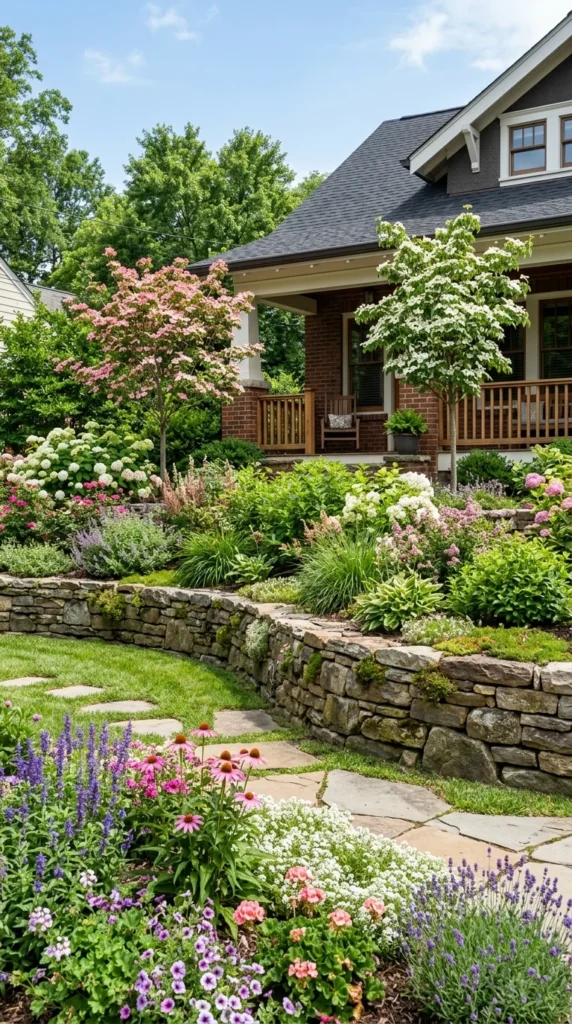
For a timeless look, a low boxwood hedge is hard to beat. It provides a crisp “frame” for your porch and stays green all winter. You can plant colorful annuals behind the hedge for a seasonal pop, knowing the structure of the boxwood will keep the garden looking organized.
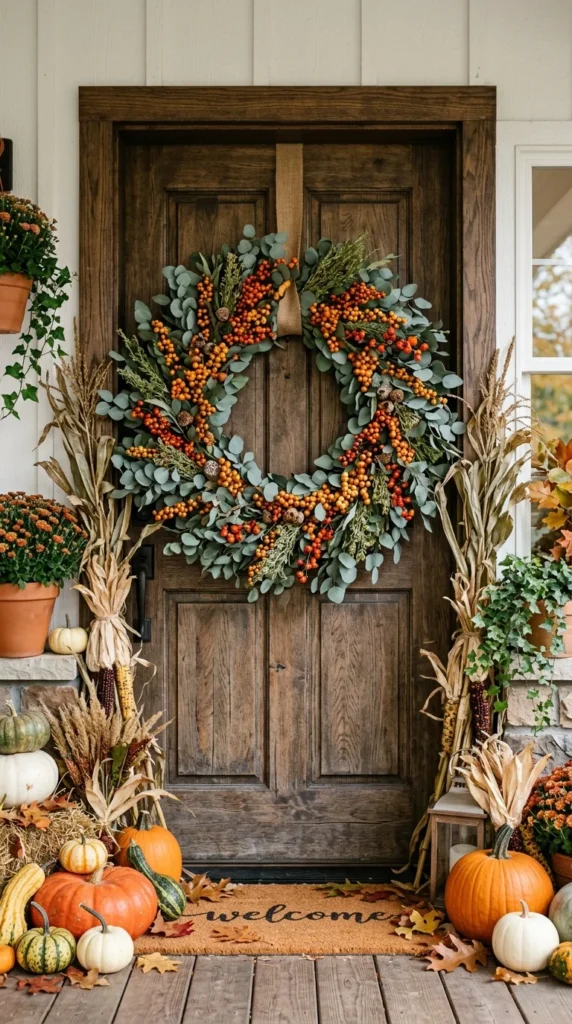
14. Seasonal Containers
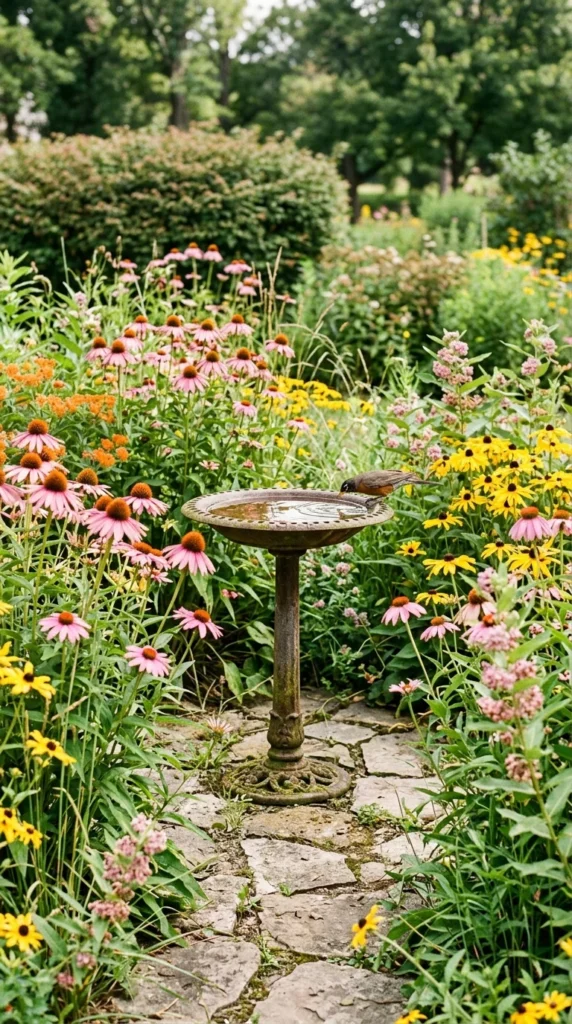
Your landscaping shouldn’t be static. Using containers allows you to swap out plants as the seasons change. Think pansies in spring, hibiscus in summer, mums and pumpkins in autumn, and evergreen boughs with red berries in the winter. This keeps your home’s entrance fresh and exciting throughout the year.
15. Path Lighting
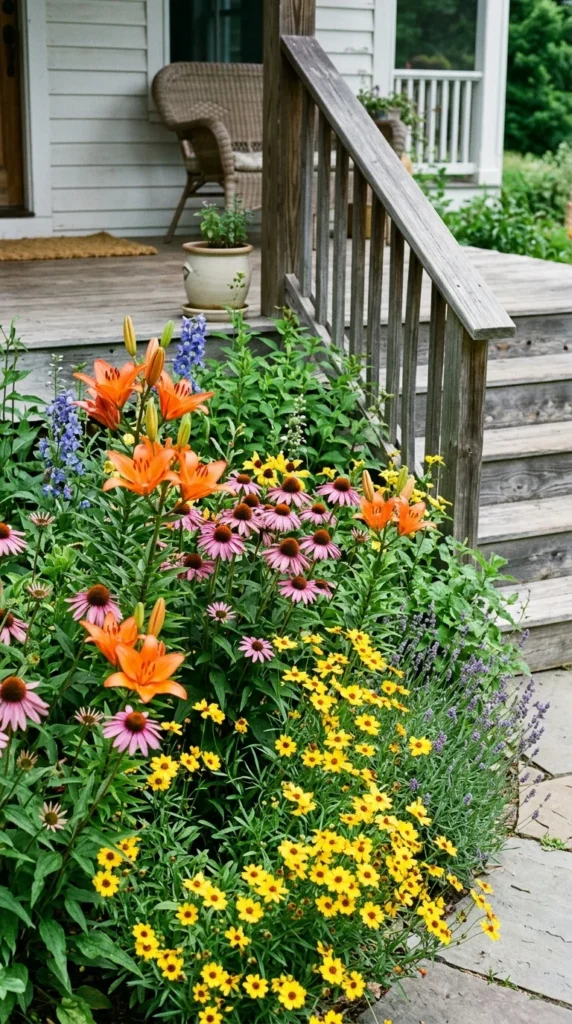
Landscape lighting is as much about safety as it is about beauty. Soft path lights lead the way to the porch, while uplights on trees or large shrubs create a dramatic, high-end look after the sun goes down. It makes the porch feel warm and inhabited even at night.
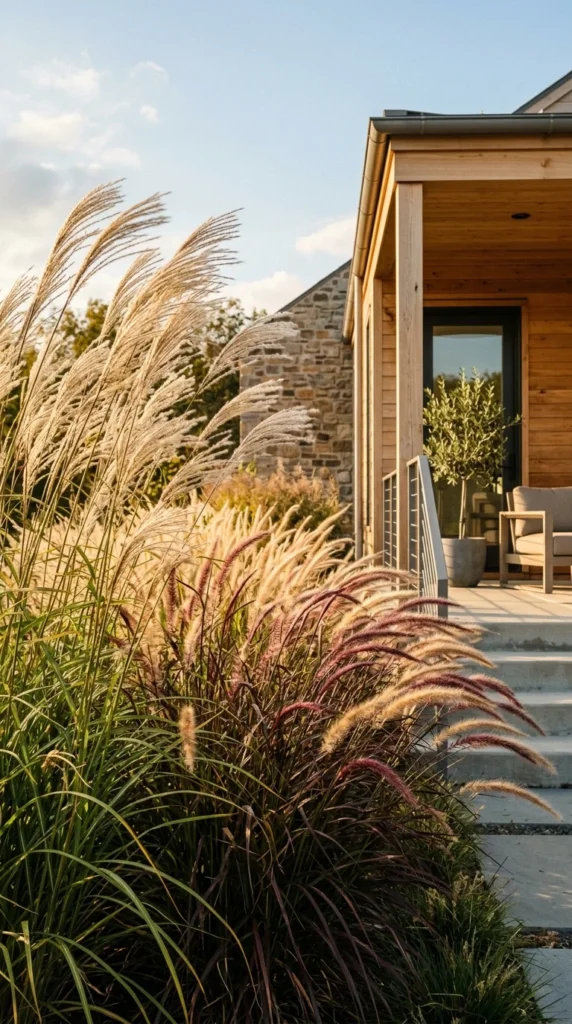
16. Ornamental Grasses
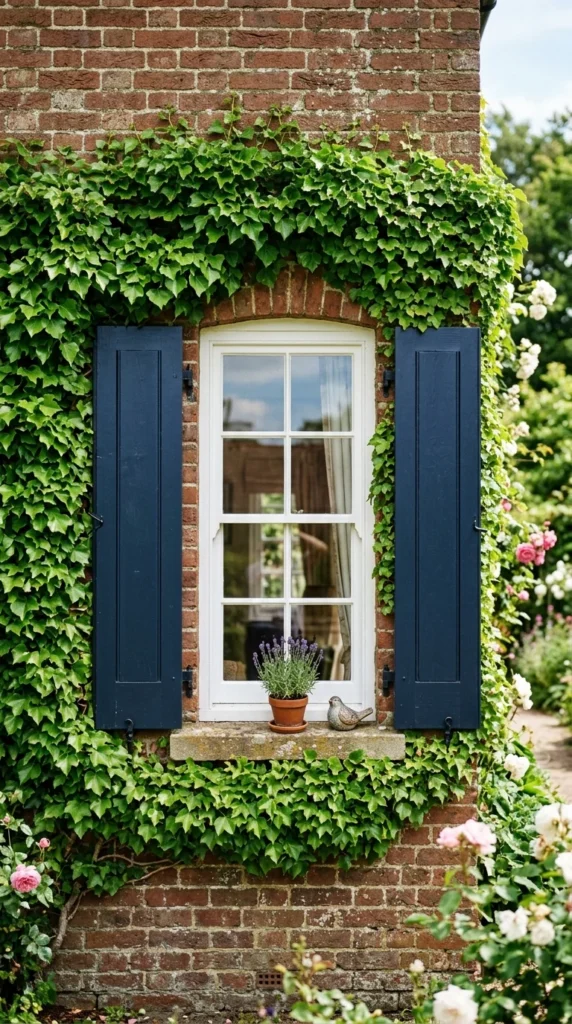
Ornamental grasses add movement and texture that traditional flowers cannot. They rustle in the wind, providing a soothing sound, and many varieties stay standing through the winter, offering visual interest when other plants have gone dormant.
17. Dwarf Trees
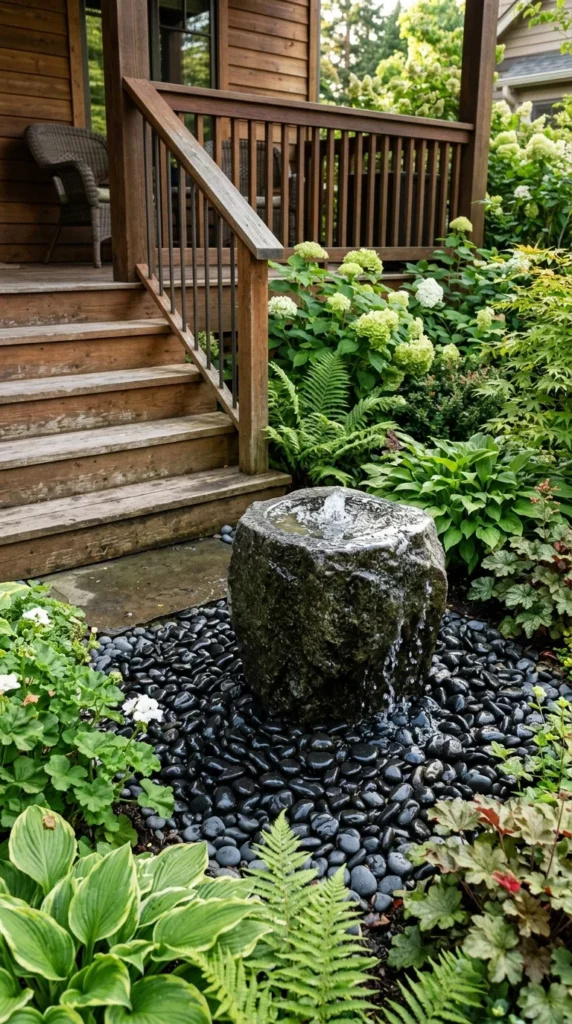
You don’t need a massive yard to have trees. Dwarf varieties of citrus, maples, or weeping cherries can be planted in large containers or small beds near the porch. They provide a structural focal point and can offer shade or privacy without overwhelming the space.
18. Window Shutters & Vines
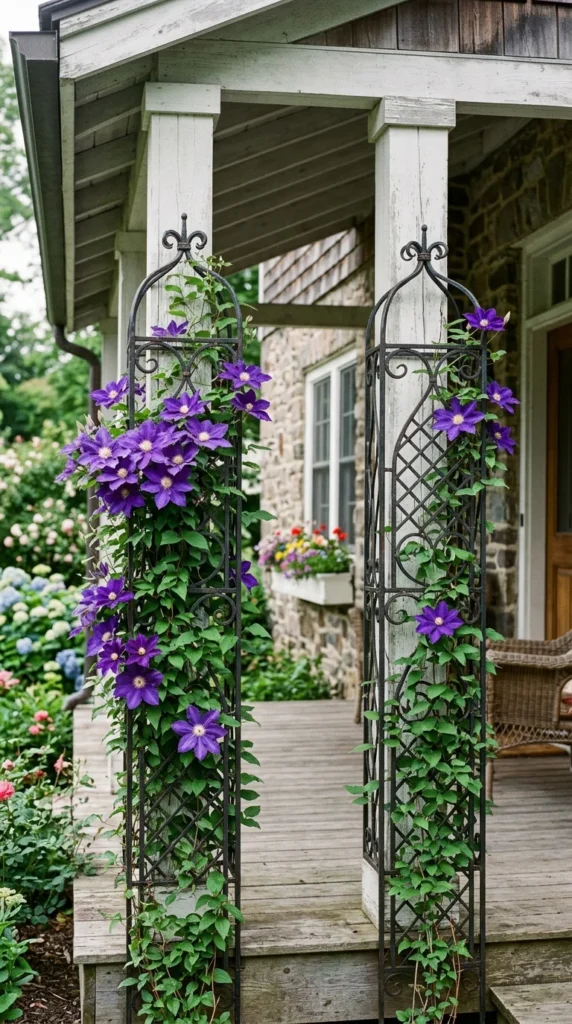
Vines like creeping fig or ivy can be encouraged to grow directly onto the walls surrounding your porch windows. When paired with colorful shutters, this creates a storied, “lived-in” feel that suggests the home has been there for generations.
19. Tropical Palms
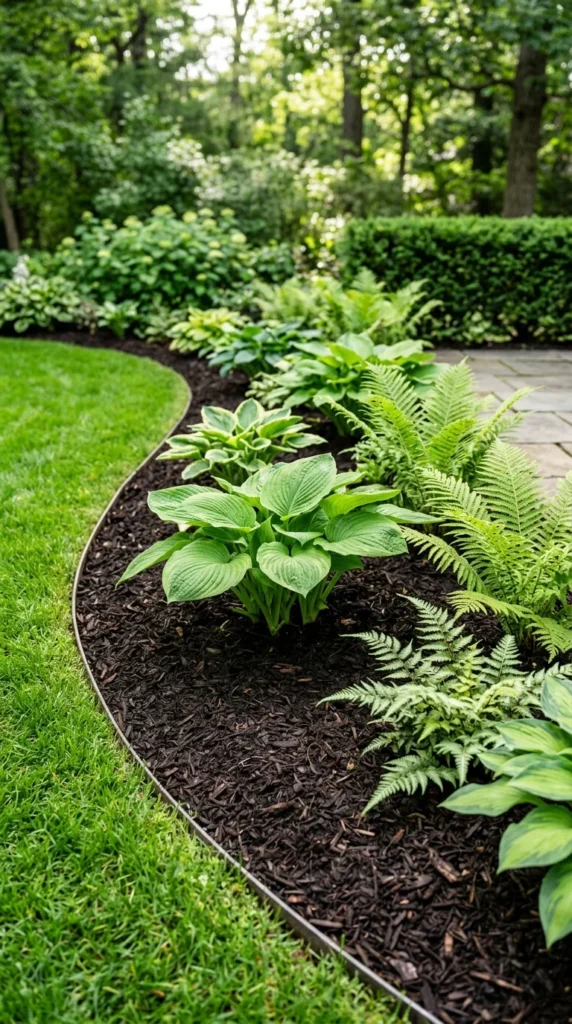
If you live in a warmer climate or just want a summer “staycation” vibe, use tropical palms. Their large, architectural leaves add an instant exotic flair. They are excellent for filling empty corners and providing a lush, green screen for privacy.
20. Herb Garden Pots
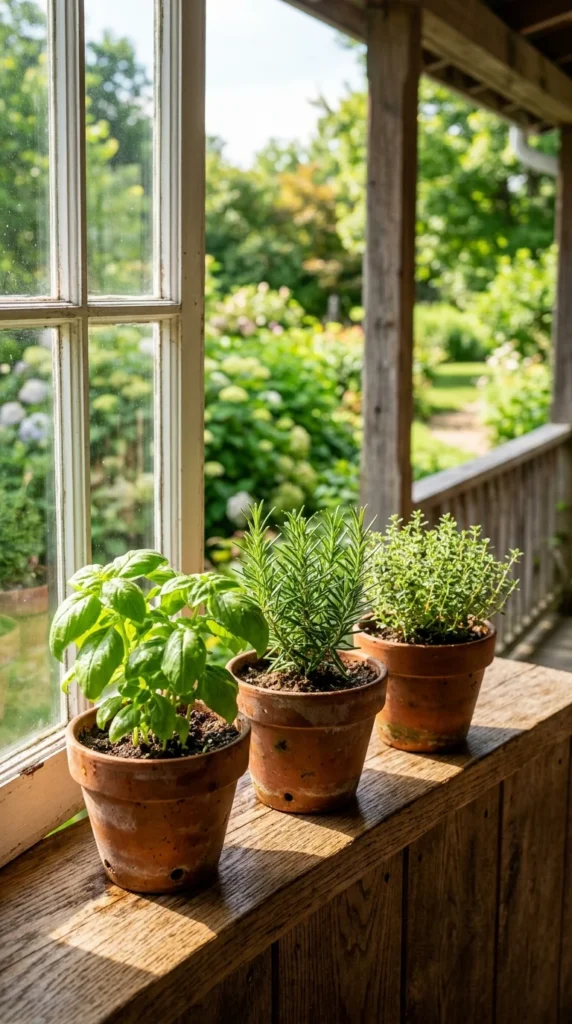
Landscaping can be functional as well as beautiful. Placing an herb garden on your front porch ensures that fresh scents are always in the air, and it’s incredibly convenient for a quick harvest. Plus, the varied textures of herbs like curly parsley and woody rosemary are visually appealing.
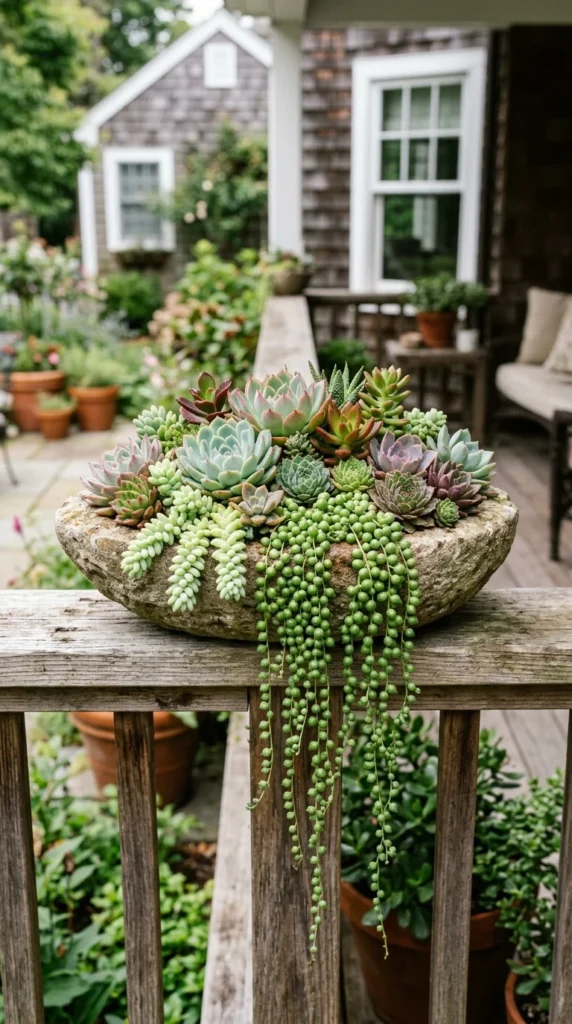
21. Succulent Arrangements
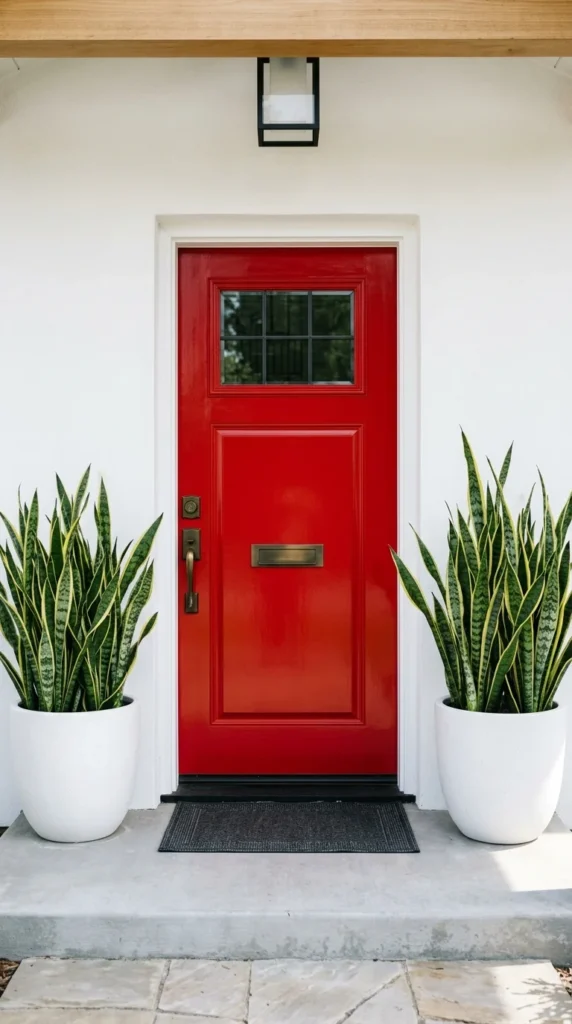
For those who prefer a low-maintenance lifestyle, succulents are a perfect choice. They require very little water and come in an incredible array of colors and shapes. A well-arranged succulent container acts like a piece of living jewelry for your porch.
22. Wildflower Meadow
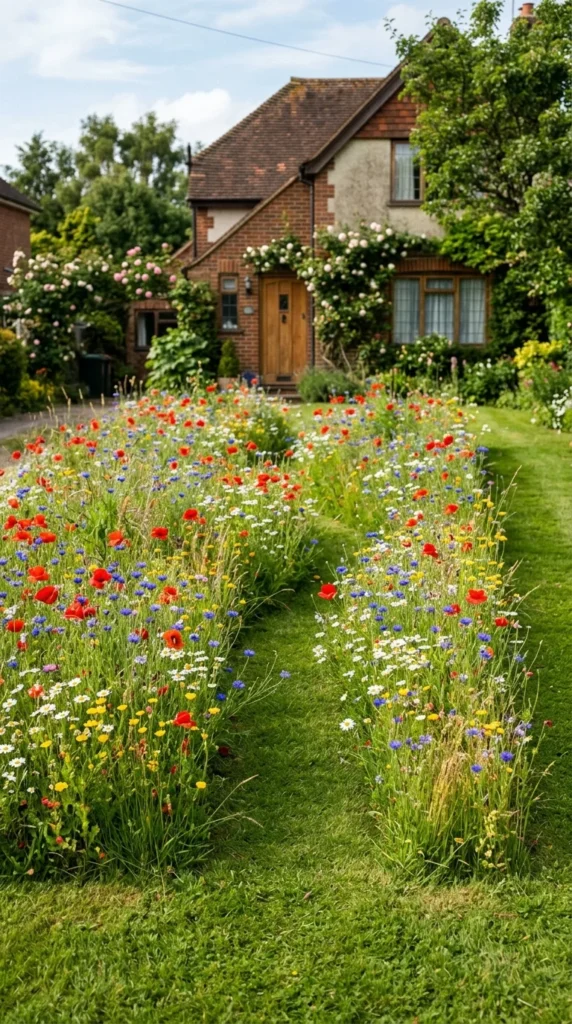
Replacing a portion of your front lawn with a wildflower mix creates a whimsical, “cottagecore” aesthetic. It’s a great way to reduce mowing time and invite bees and birds to your front door. The ever-changing colors provide a dynamic view from the porch swing.
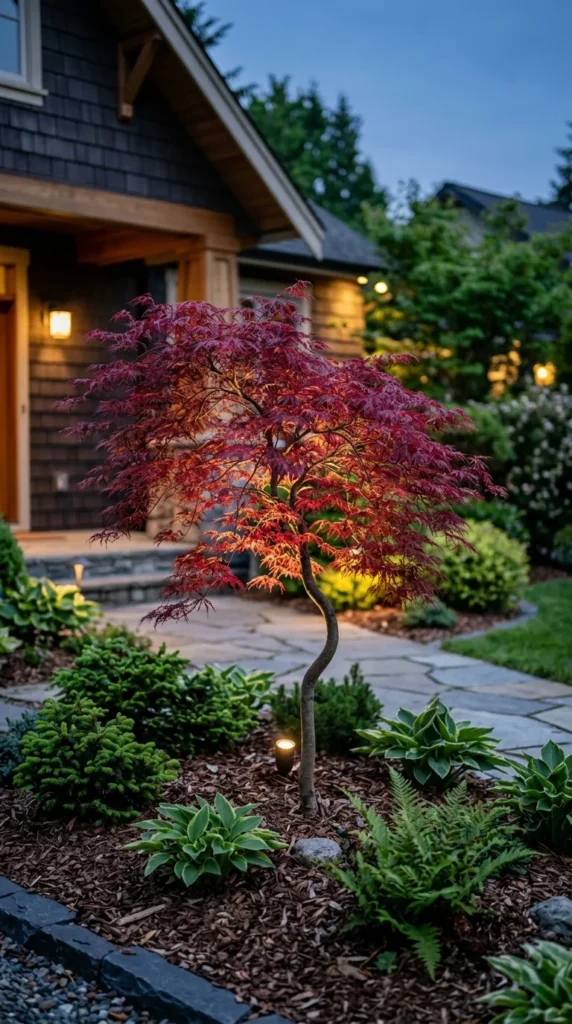
23. Japanese Maples
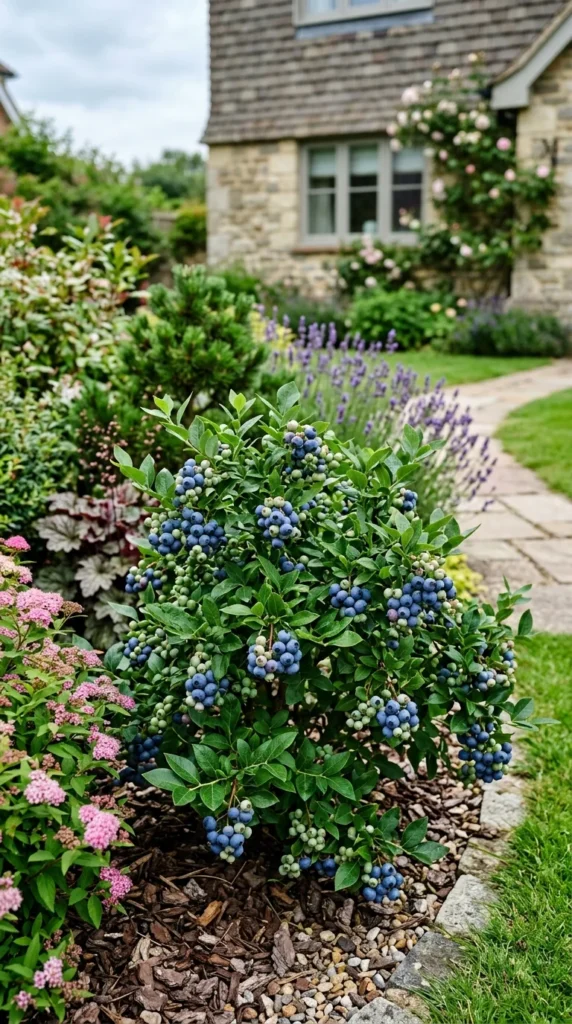
A Japanese Maple is often considered a “specimen” plant because of its unique form and spectacular color. Placing one near the front porch creates a high-end, curated look. They grow slowly and maintain a manageable size, making them perfect for close-to-home planting.
24. White Picket Fence
A fence provides a boundary that makes your porch feel like a private courtyard. A classic white picket fence paired with traditional flowers like hollyhocks or foxgloves creates an iconic, welcoming look that never goes out of style.
25. River Rock Accents
Use river rocks to create a “dry creek bed” effect. This is a brilliant landscaping trick to handle drainage issues while adding a naturalistic, rugged beauty to your front yard. It breaks up the monotony of mulch and adds a cool, earthy element to the design.
26. Tiered Plant Stands
If you have a small porch with no room for garden beds, use vertical shelving. Tiered stands allow you to display a large collection of plants in a small footprint. This creates a “jungle” feel that makes the porch feel lush and secluded from the street.
27. Cottage Garden Mix
The cottage garden style is all about abundance. Instead of strict rows, plants are allowed to mingle and overlap. This style is perfect for the front porch because it feels soft, unpretentious, and deeply personal. It invites guests to slow down and look at all the different varieties of blooms.
Pro-Tips for Front Porch Success
- Consider the Light: Before buying plants, observe your porch at different times of the day. A north-facing porch will need shade-loving plants like Hostas and Ferns, while a south-facing porch will require sun-worshippers like Petunias and Geraniums.
- Coordinate with House Colors: Choose flower colors that complement your home’s exterior. If your house is a neutral gray, vibrant yellows and purples will pop. If your house is red brick, whites and soft blues can provide a cooling contrast.
- Don’t Forget Winter: Include evergreens (like Boxwood or Juniper) so that your porch doesn’t look barren once the flowers die back in the autumn.
- Maintain the Path: Ensure that no plants are overgrowing the actual walkway. A welcoming home should always have a clear, easy-to-navigate path to the door.