
Transforming your living space into a verdant sanctuary doesn’t require a massive backyard or even much floor space. Vertical gardening through hanging plants is the ultimate interior design “hack” that breathes life into empty corners, softens harsh architectural lines, and purifies the air you breathe. Whether you are a seasoned “plant parent” or a beginner looking for low-maintenance greenery, cascading foliage adds a layer of texture and movement that stationary pots simply cannot match.
From the delicate, bead-like strands of succulents to the dramatic, sweeping fronds of tropical ferns, here are 27 hanging plant ideas to elevate your home’s aesthetic.
1. String of Pearls
The String of Pearls (Curio rowleyanus) is perhaps the most iconic hanging succulent. Its unique, pea-shaped leaves store water, making it a drought-tolerant choice for bright, sunny spots. It looks best when placed on a high shelf or in a minimalist hanger where its “pearls” can trail freely like a living beaded curtain.
2. Golden Pothos
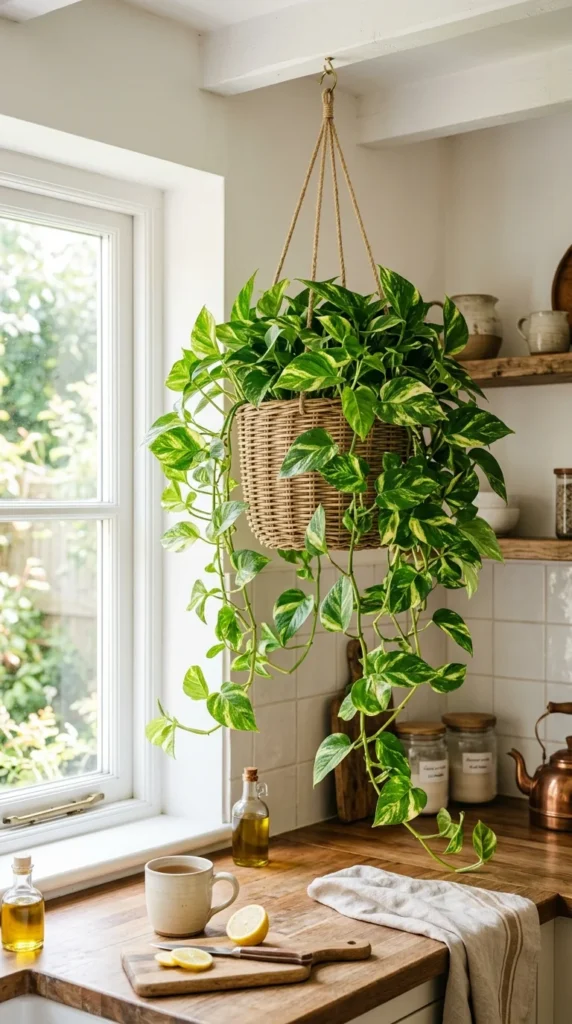
Often called the “gateway plant,” the Golden Pothos is nearly indestructible. It thrives in low to bright indirect light and grows incredibly fast. Its vines can reach lengths of over 10 feet, making it perfect for draping across curtain rods or wrapping around indoor pillars.
3. Spider Plant
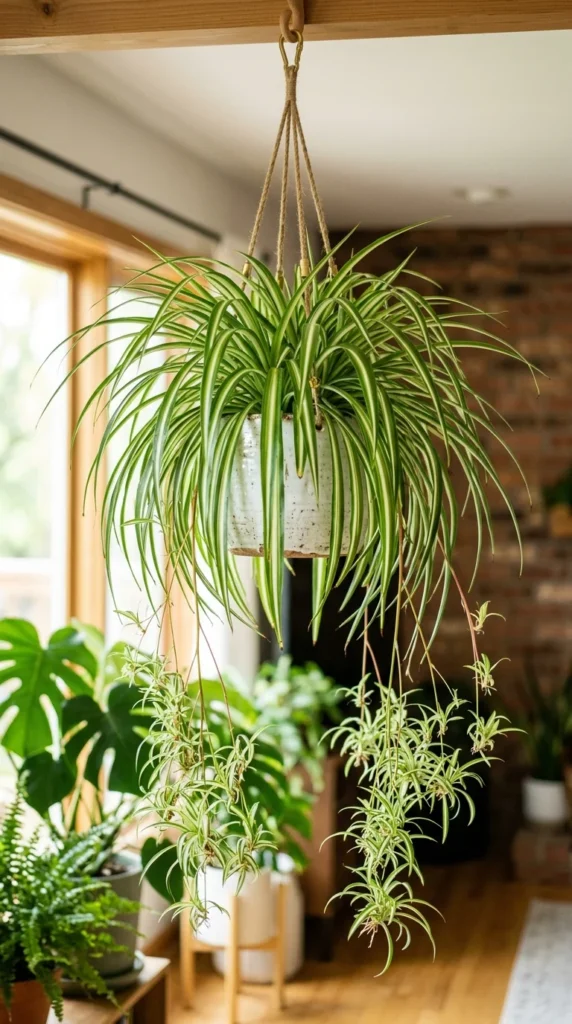
The Spider Plant is a classic for a reason. Not only is it one of the best air-purifying plants according to NASA, but it also produces “pups”—miniature versions of itself—that hang down from the mother plant. This creates a multi-tiered visual effect that adds volume to any room.
4. Boston Fern
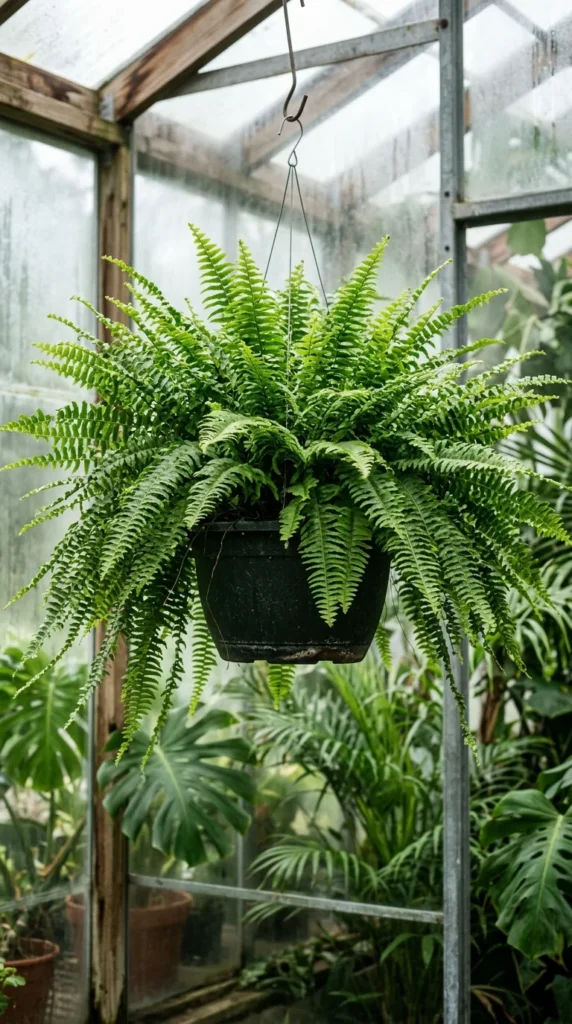
For a touch of Victorian elegance, the Boston Fern is unmatched. It loves humidity and indirect light, making it the perfect inhabitant for a stylish bathroom. Its dense, feathery foliage creates a soft, cloud-like appearance that can fill up large empty spaces near windows.
5. Heartleaf Philodendron
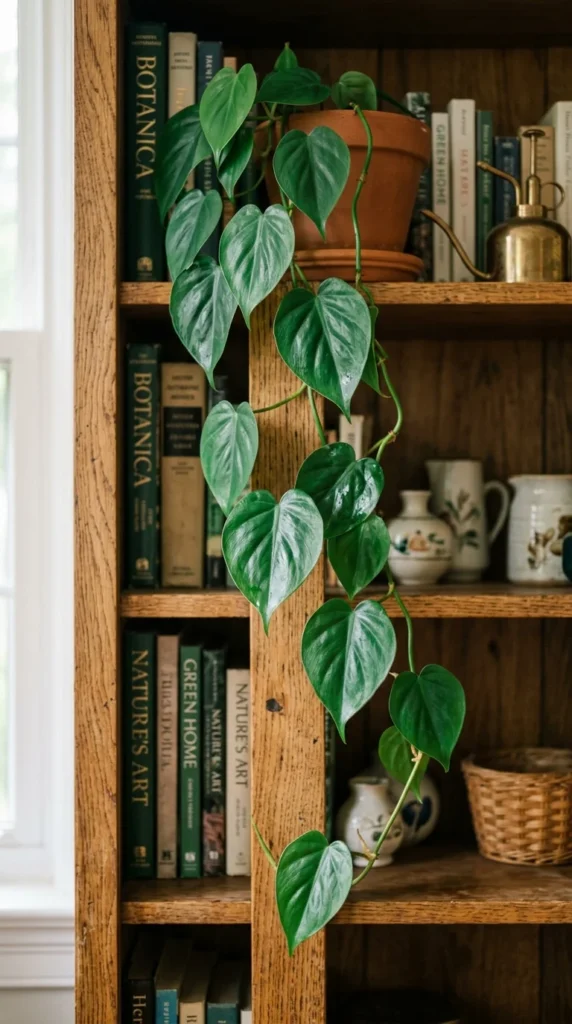
Similar in appearance to the Pothos, the Heartleaf Philodendron offers a more romantic, deep-green aesthetic. It is incredibly forgiving and can handle darker corners of the home where other plants might struggle. Its graceful, tapering leaves create a sophisticated silhouette.
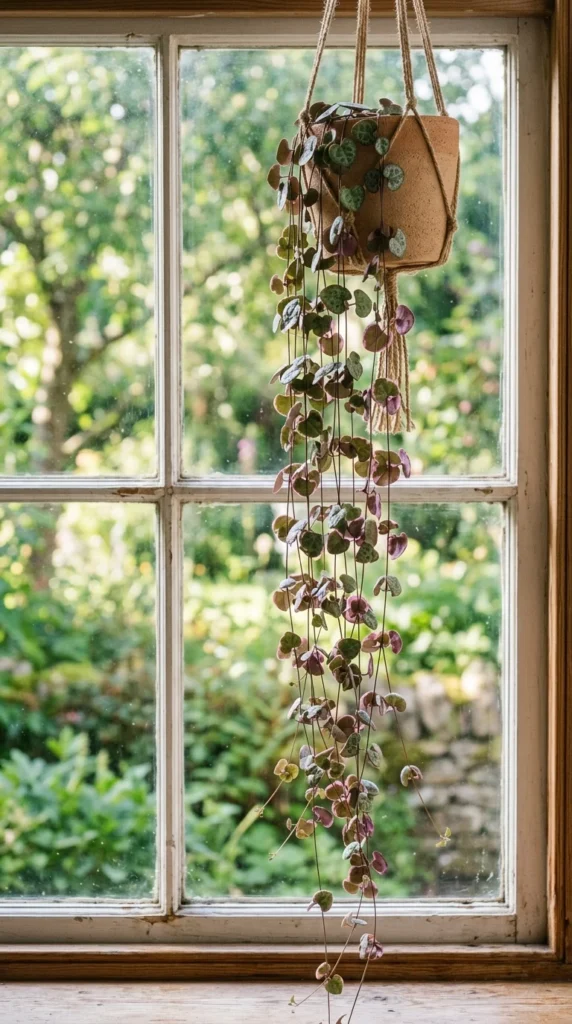
6. String of Hearts
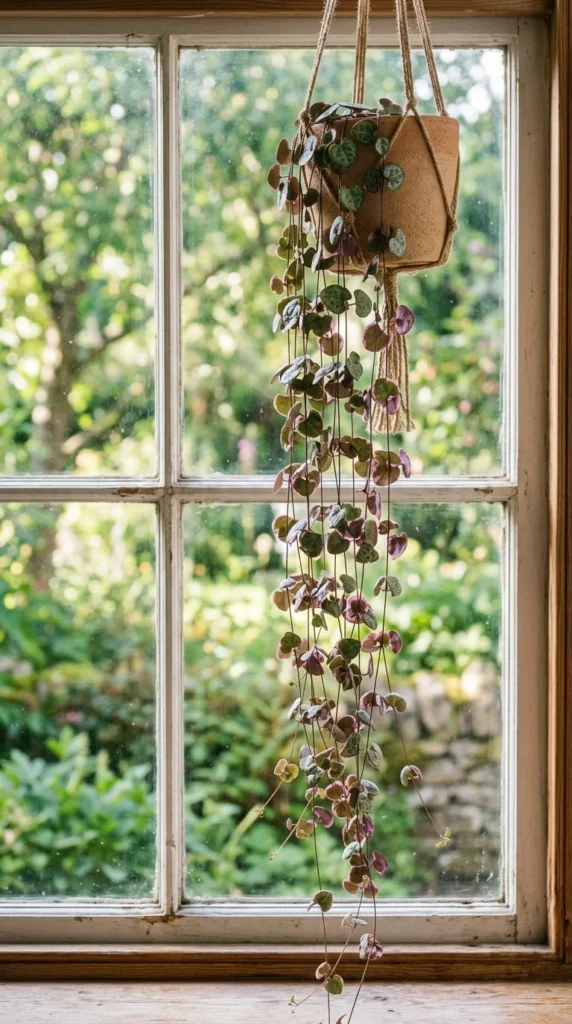
This plant is the epitome of “cottagecore” charm. The Ceropegia woodii features tiny, marbled leaves that look like miniature hearts. It is a semi-succulent, meaning it requires less water than typical vines, and its dainty appearance is perfect for smaller apartments or bedside corners.
7. English Ivy
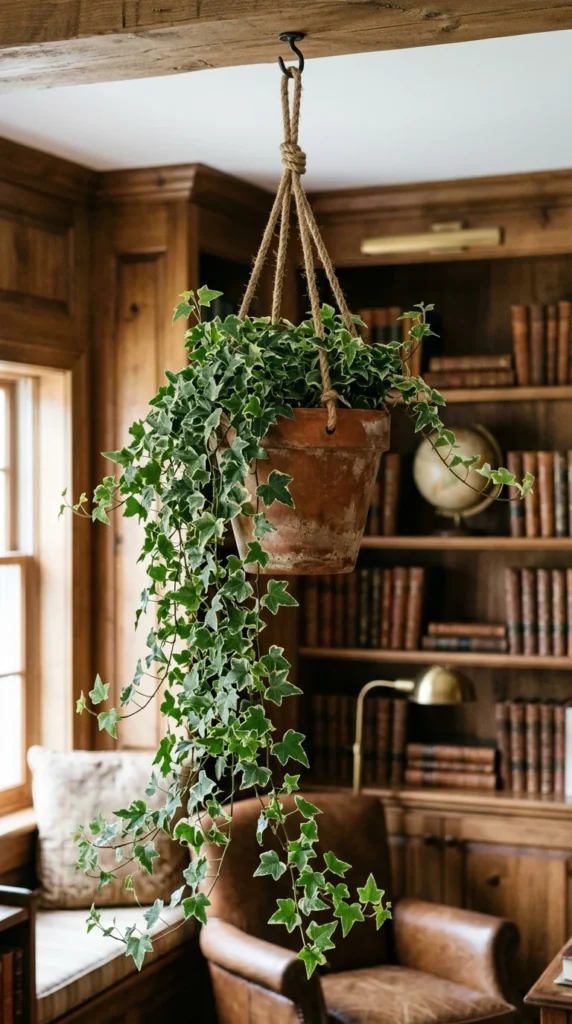
English Ivy brings a timeless, European garden feel indoors. It is a vigorous climber and trailer that can be trained to grow along walls or allowed to spill over the sides of a tall cabinet. It prefers cooler temperatures and consistent moisture.
8. Burro’s Tail
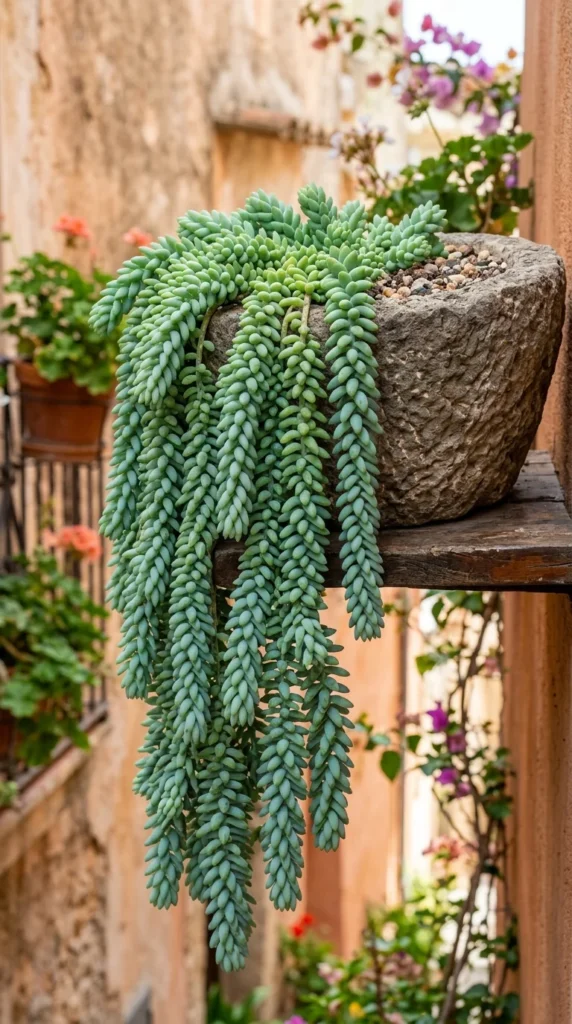
The Burro’s Tail is a showstopper. Each “tail” consists of densely packed, fleshy leaves that create a heavy, architectural look. Because it is a succulent, it needs plenty of sunlight. Be careful when moving it, as the leaves are delicate and can pop off easily!
9. Staghorn Fern
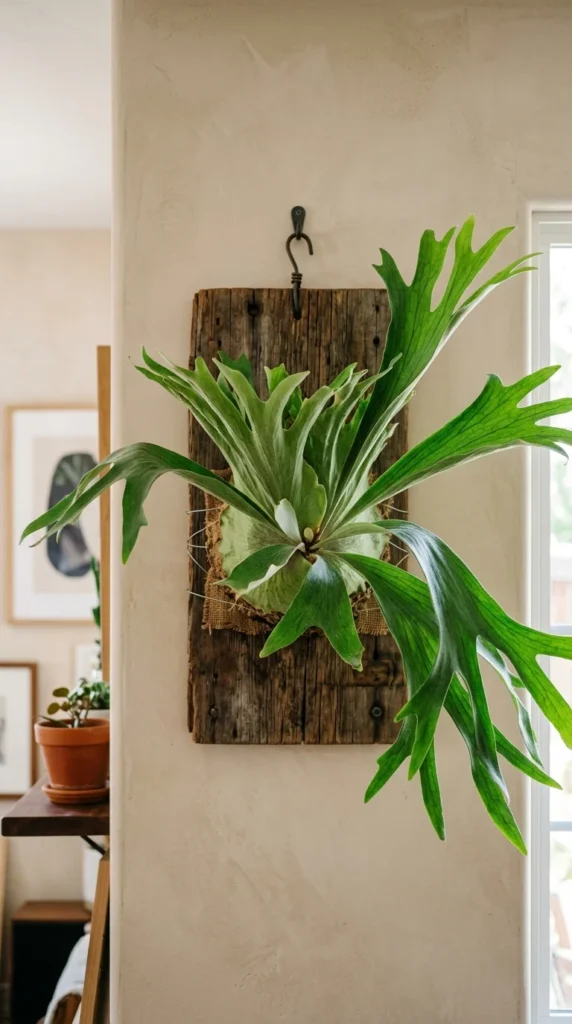
If you want a plant that doubles as living art, the Staghorn Fern is it. While often mounted on boards, they can also be grown in hanging baskets lined with moss. Their distinctive, antler-like fronds provide a bold, prehistoric look that works well in modern or industrial interiors.
10. Pitcher Plant
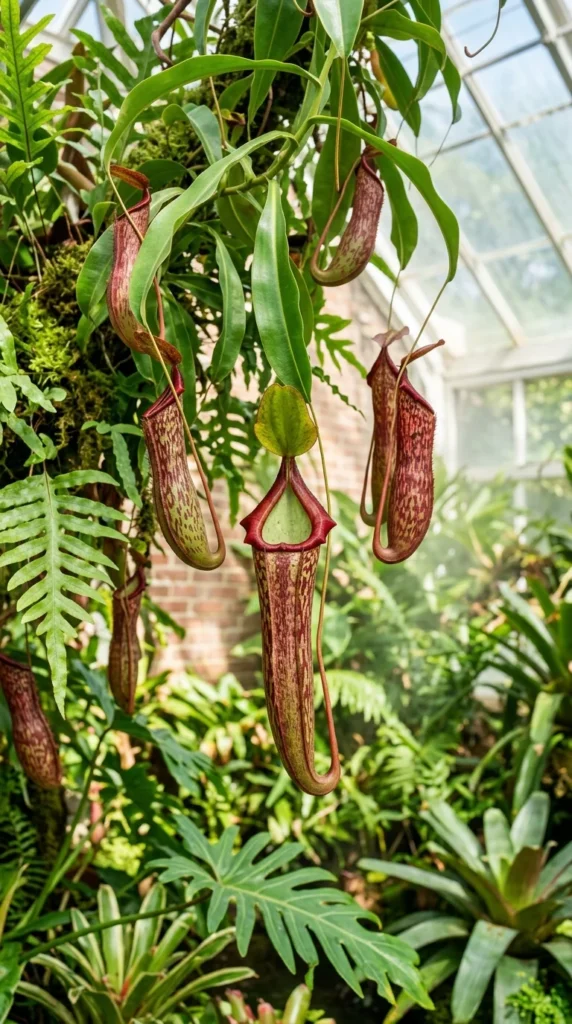
For the adventurous gardener, the Pitcher Plant (Nepenthes) adds an exotic, slightly mysterious vibe. These are carnivorous plants that grow “pitchers” at the end of their leaves to catch insects. They require high humidity and distilled water, making them a great project for plant enthusiasts.
11. Bird’s Nest Fern
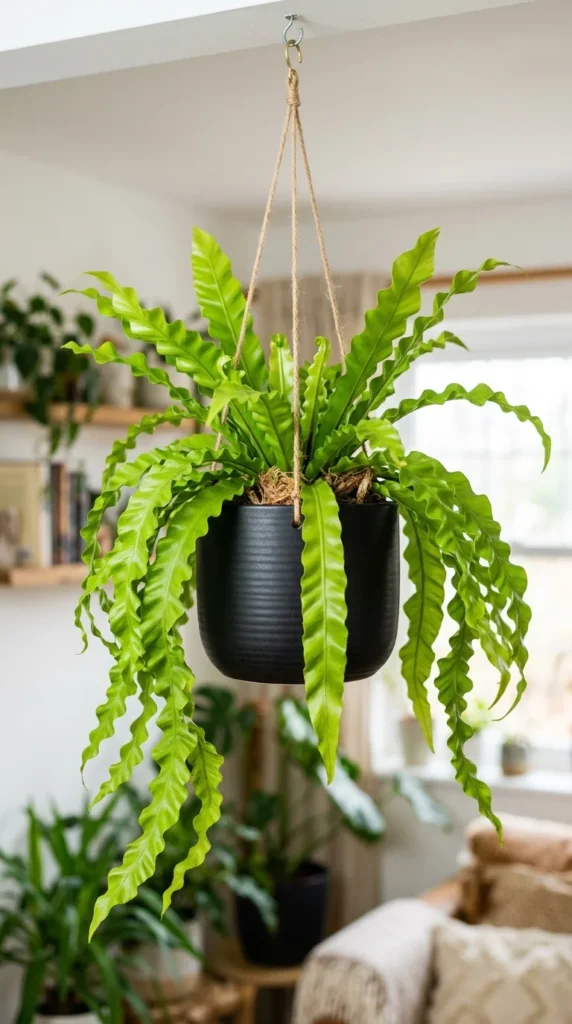
Unlike typical ferns with many small leaflets, the Bird’s Nest Fern has wide, undulating fronds that look like seaweed. When hung, its architectural shape and vibrant chartreuse color provide a pop of brightness to any shaded area.
12. Marble Queen Pothos
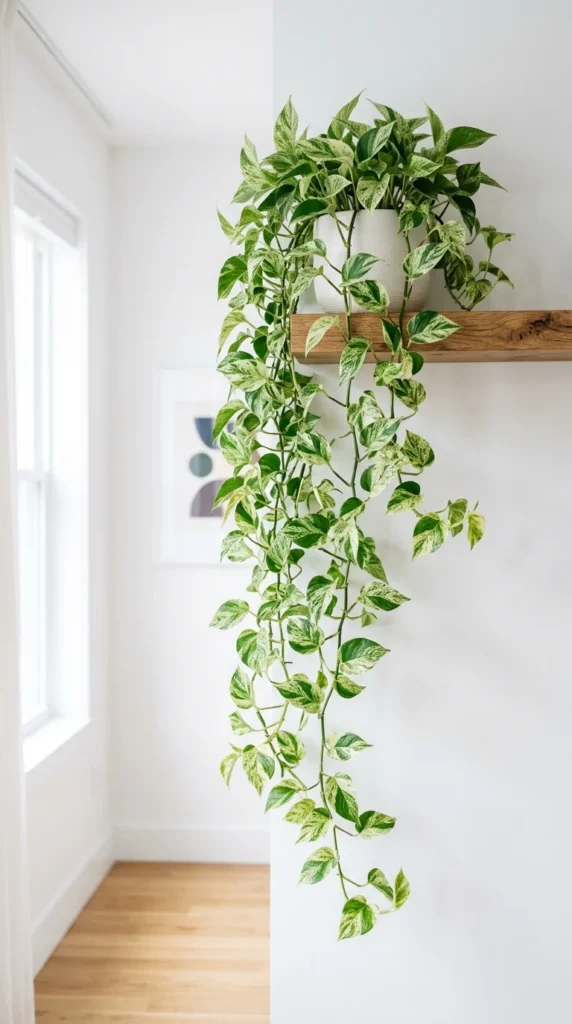
The Marble Queen is the high-fashion cousin of the Golden Pothos. Its leaves are heavily splashed with white and cream, giving it a bright, “frosted” appearance. It grows a bit slower than the standard Pothos but offers a much more striking visual contrast against dark walls.
13. Trailing Jade
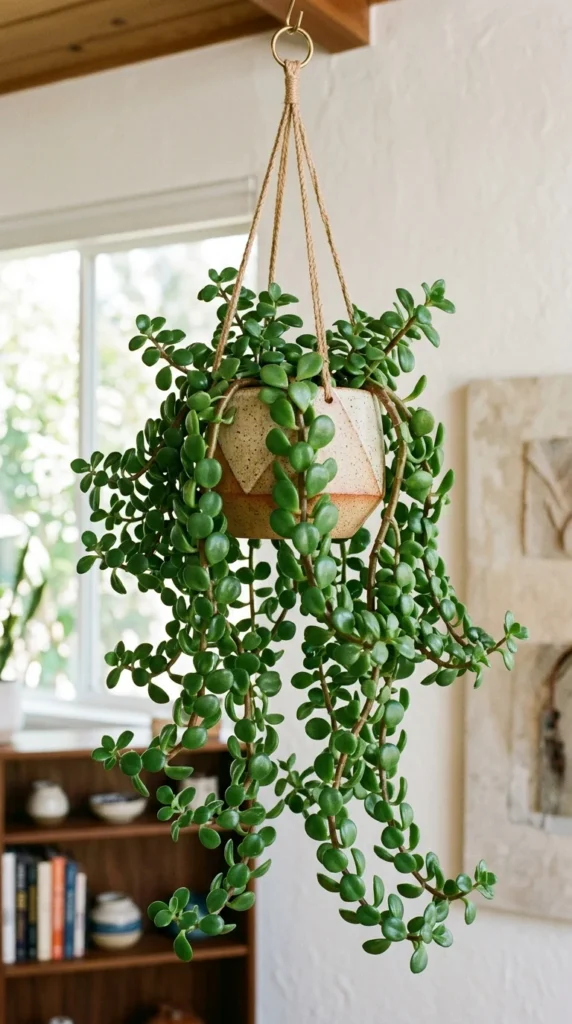
Senecio jacobsenii, or Trailing Jade, offers a sturdier look than the String of Pearls. Its leaves are flat, oval, and overlap like shingles on a roof. In the sun, the edges can turn a beautiful purple hue, adding a layer of color to your hanging garden.
14. Wax Plant (Hoya)
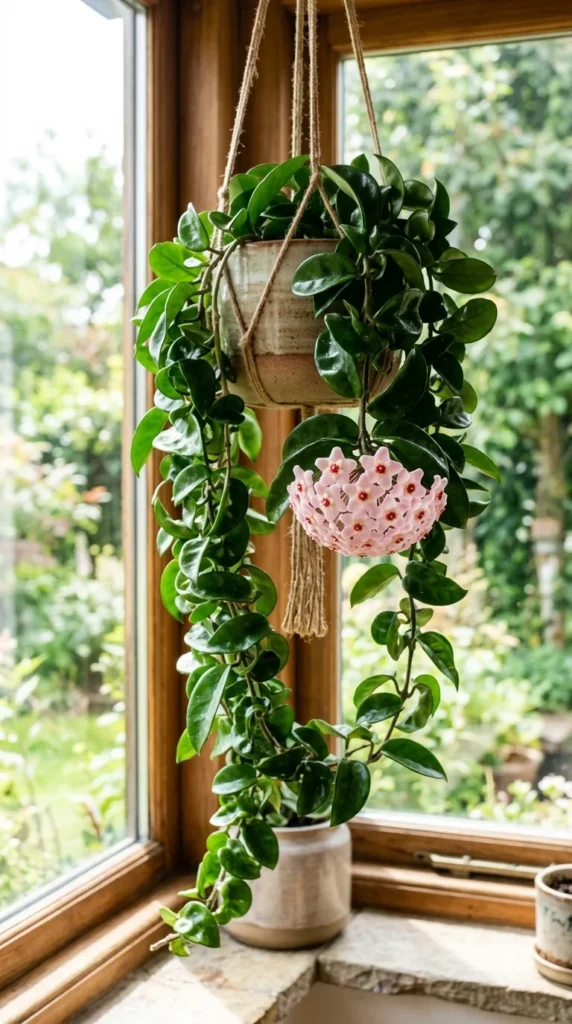
Hoyas are beloved for their thick, waxy foliage and their ability to produce stunning, fragrant flower clusters. They are long-lived and relatively easy to care for, preferring to dry out between waterings. As they age, they become impressive, sprawling specimens.
15. Lipstick Plant
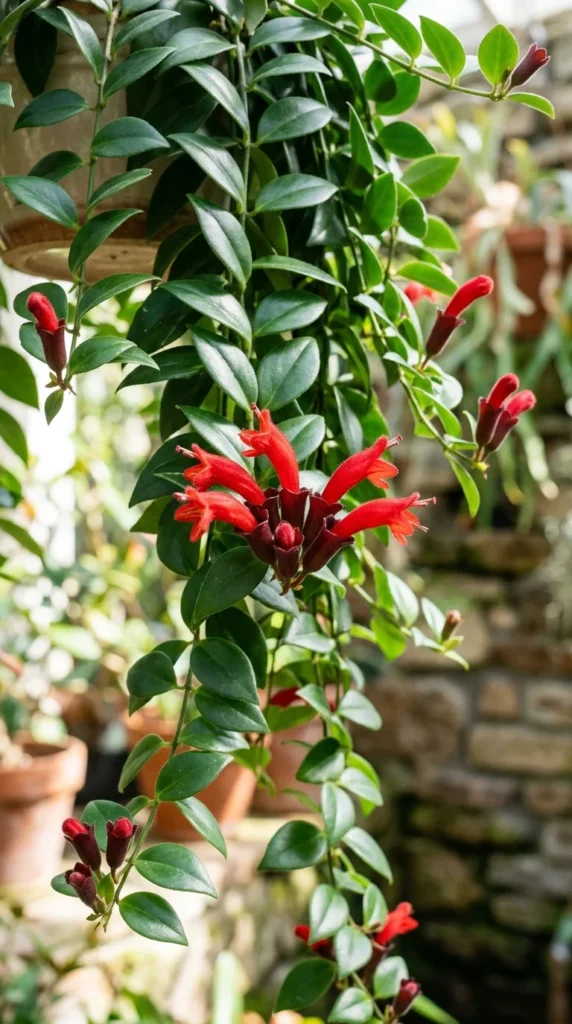
The Lipstick Plant earns its name from its brilliant red blooms that emerge from dark purple sheaths. This plant is perfect for those who want a hanging plant that actually flowers reliably indoors. It enjoys bright light and high humidity.
16. Chenille Plant
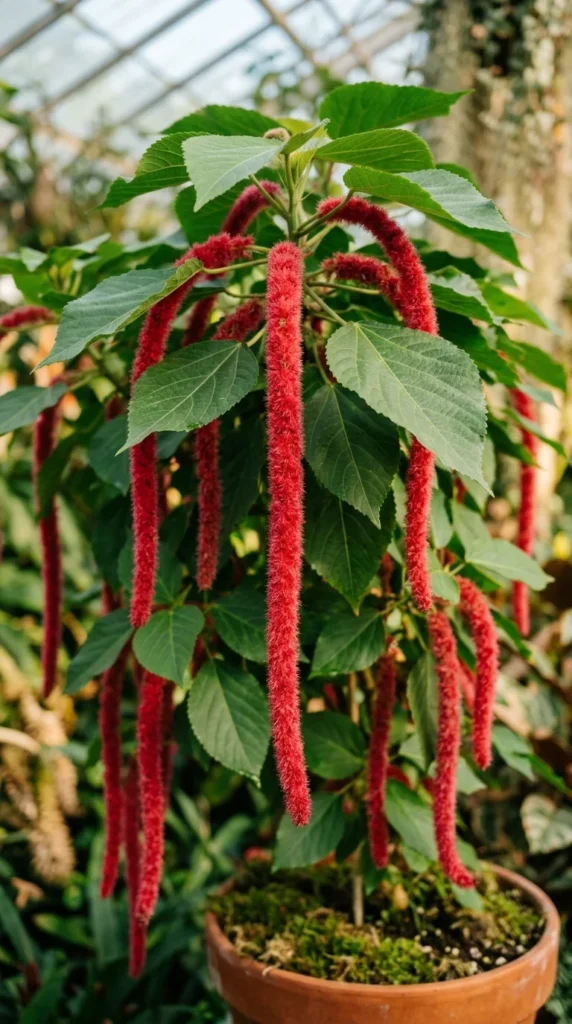
If you want texture, the Chenille Plant is unbeatable. It produces long, fuzzy, red catkins that look like hanging caterpillars or tassels. It’s a playful, tactile addition to a room that definitely sparks conversation.
17. Air Plants (Tillandsia)
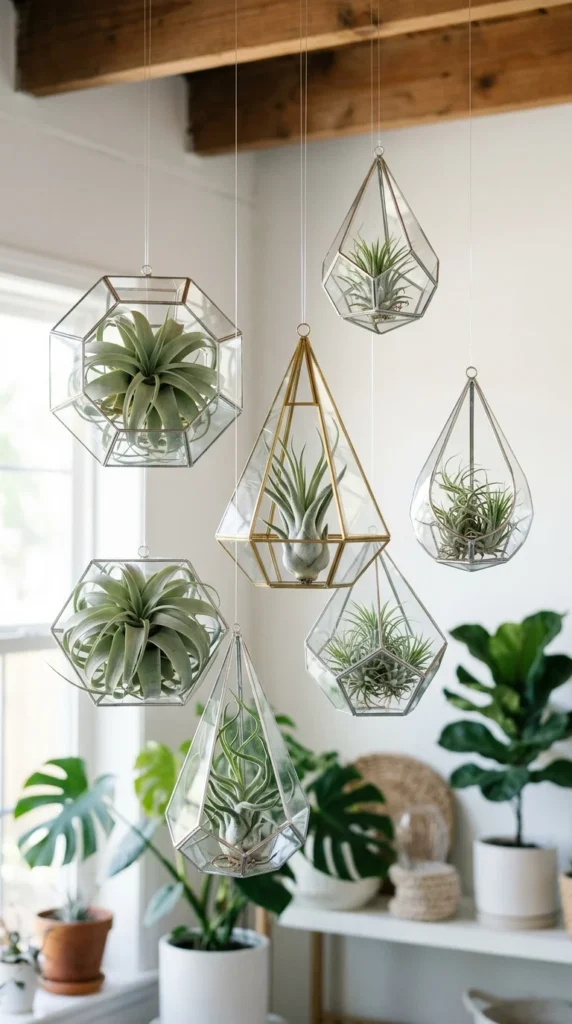
Air plants don’t need soil at all! This allows for incredible creativity. You can hang them in glass globes, geometric wire frames, or even drift wood. They absorb water through their leaves, requiring a weekly soak or regular misting.
18. Creeping Fig
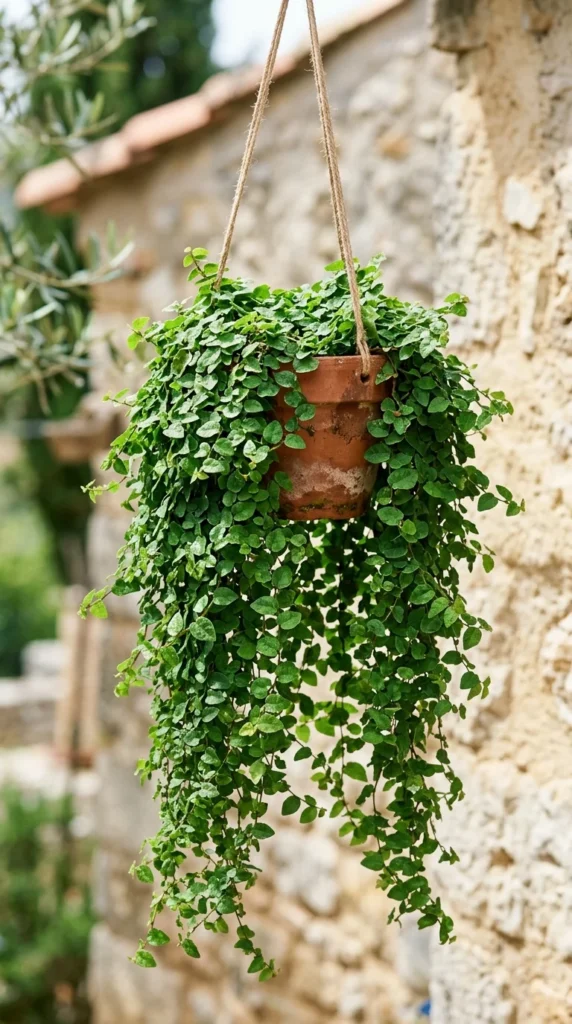
The Creeping Fig (Ficus pumila) features tiny, heart-shaped leaves on woody stems. It creates a very dense, carpet-like effect as it trails. It’s perfect for a “secret garden” look and loves a consistently moist environment.
19. Swiss Cheese Plant (Adansonii)
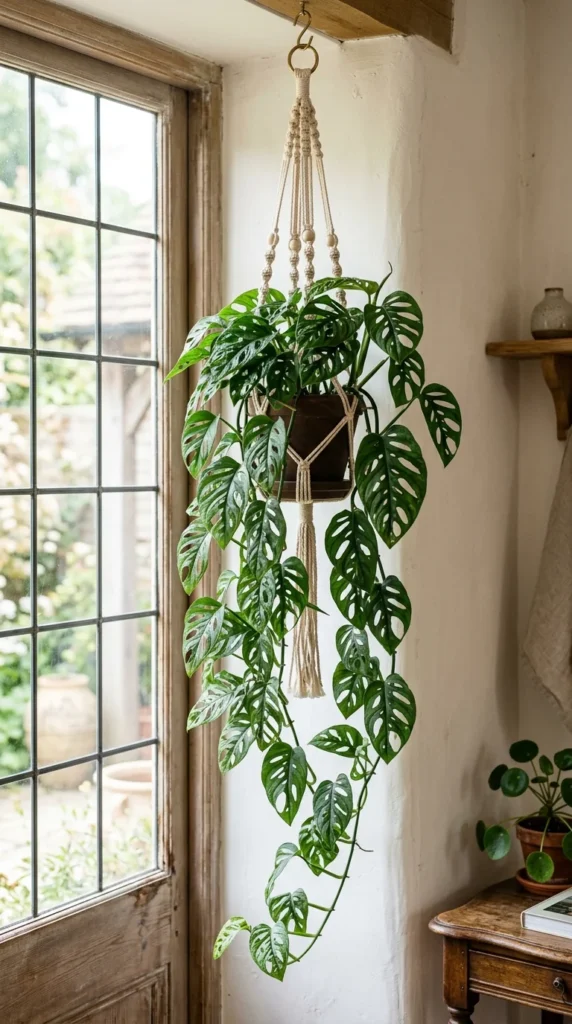
The Monstera adansonii is the trailing version of the famous Swiss Cheese Plant. Its leaves are full of natural “fenestrations” (holes), giving it an intricate, lacy look. It is a fast grower and adds an instant tropical jungle vibe to your home.
20. Prayer Plant
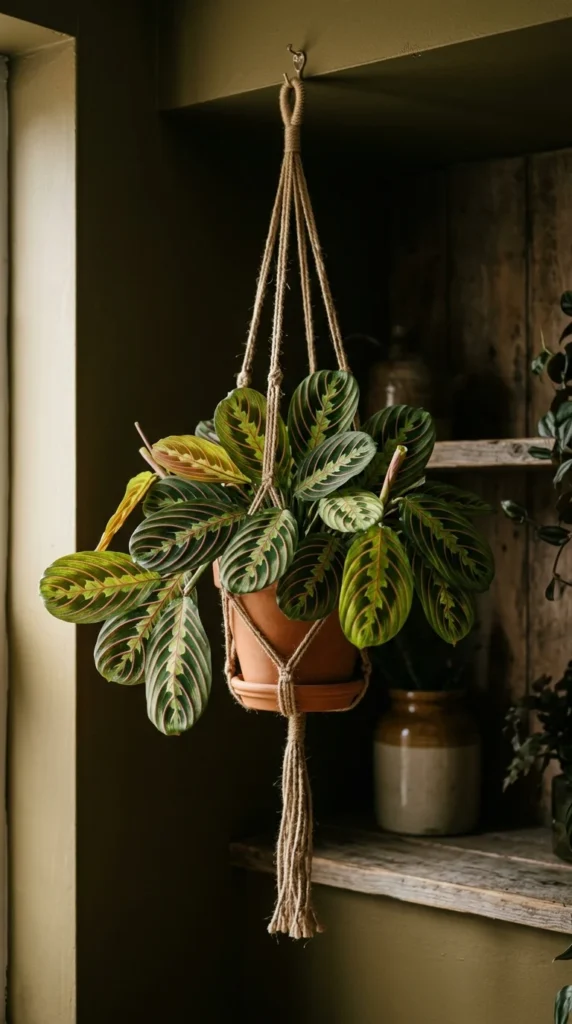
While often grown on tables, the Prayer Plant (Maranta) looks stunning in a low-hanging basket. Its leaves feature bold, colorful patterns and have the unique habit of folding up at night like hands in prayer.
21. Mistletoe Cactus
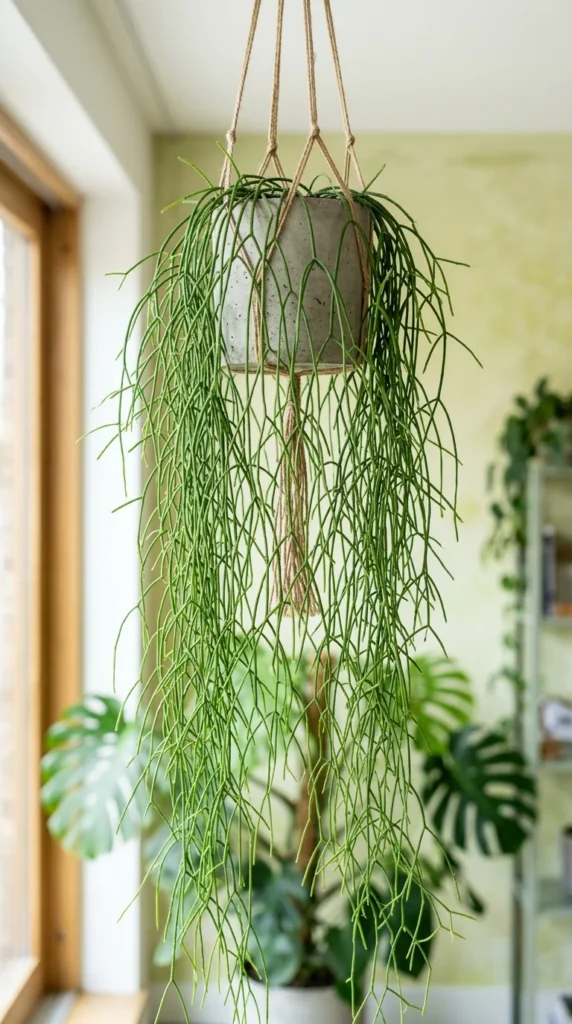
The Mistletoe Cactus (Rhipsalis) is a unique, spineless cactus that naturally grows in the crooks of trees in the rainforest. Its thin, cascading stems create a shaggy, “bad hair day” look that is incredibly trendy in modern interior design.
22. Baby’s Tears
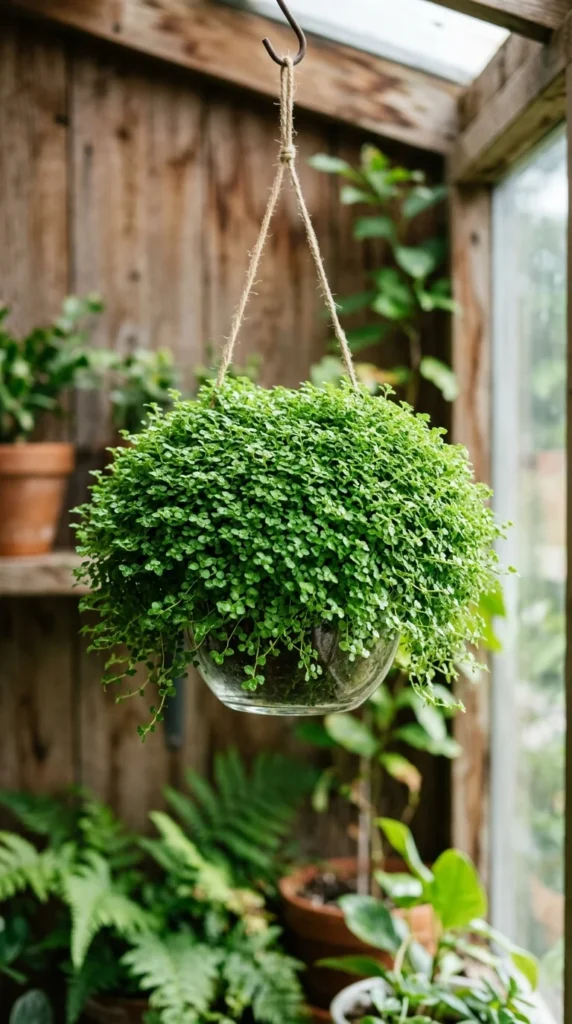
Baby’s Tears (Soleirolia soleirolii) consists of thousands of tiny, lime-green leaves on short stems. It creates a soft, pillowy mound that eventually spills over the edges of its container like a waterfall of green foam.
23. Swedish Ivy
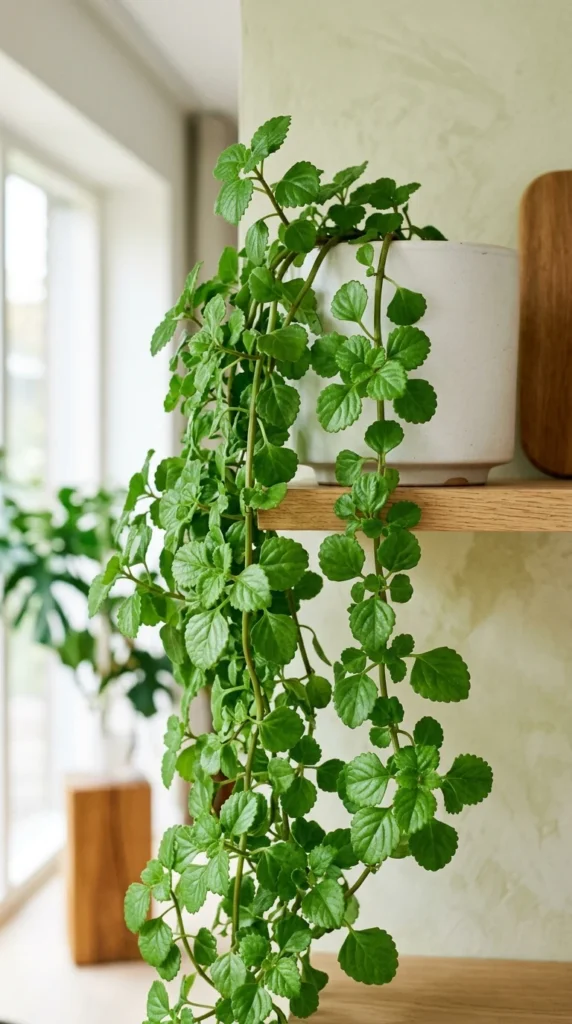
Despite its name, Swedish Ivy is actually native to Africa. It has beautiful scalloped leaves and occasionally produces small white or purple flowers. It is an extremely easy-to-grow plant that rewards the owner with thick, lush growth very quickly.
24. Grape Ivy
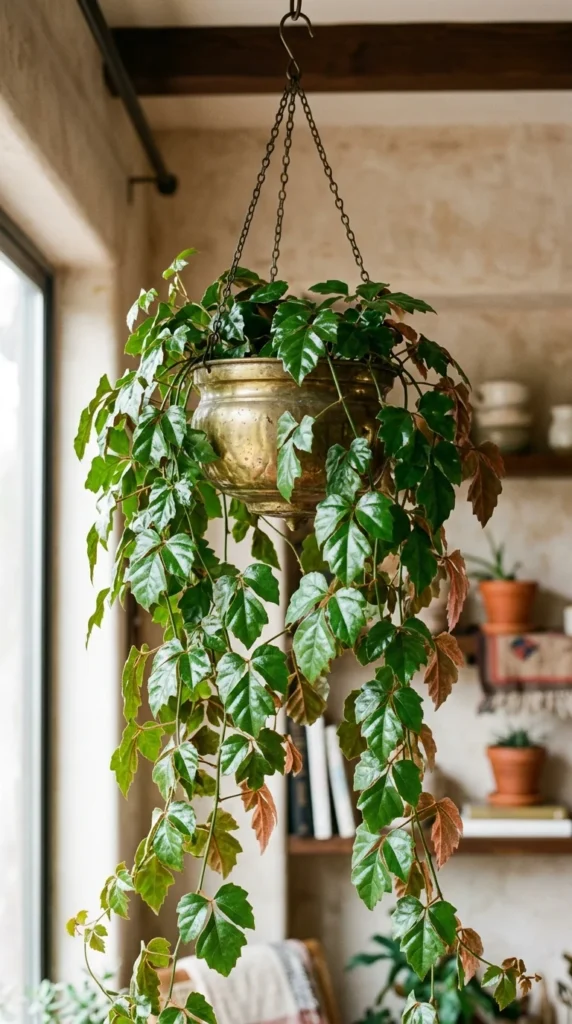
Grape Ivy is a tough-as-nails plant that is perfect for those “difficult” spots in the house. It can tolerate lower light and fluctuating temperatures while maintaining its glossy, deep-green appearance. Its leaves look remarkably like those of a grapevine.
25. Silver Satin Pothos
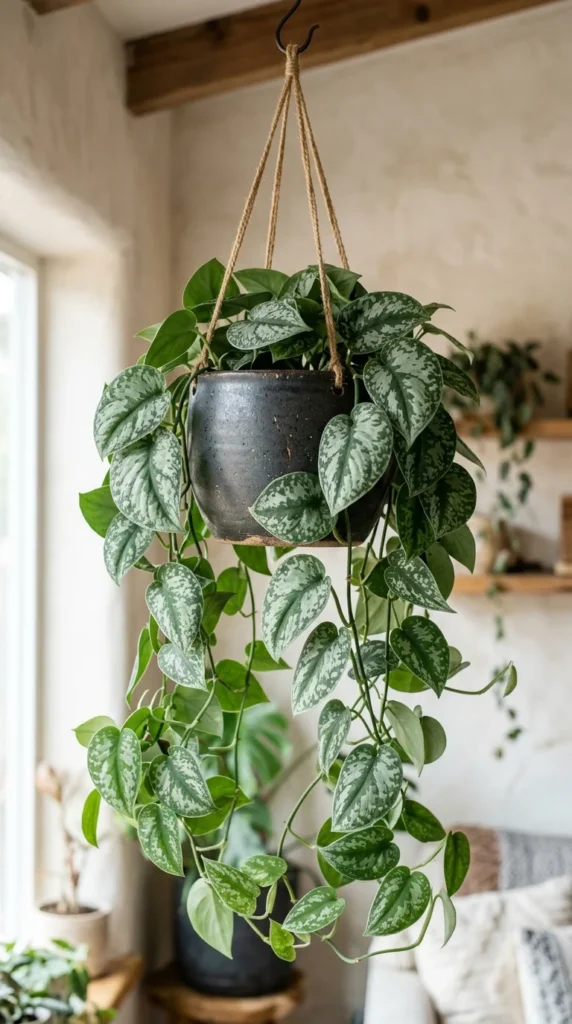
Not a true Pothos, the Scindapsus pictus is nonetheless a favorite for its “satin” feel and silver variegation. The leaves shimmer when they catch the light, making it a sophisticated choice for a bedroom or a cozy reading nook.
26. Fishbone Cactus
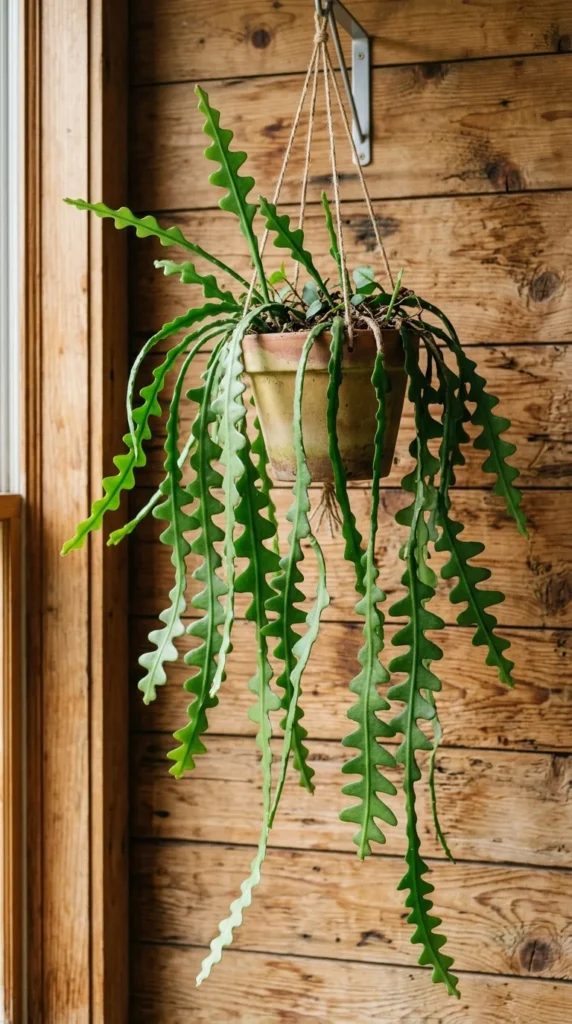
The Fishbone Cactus (or Ric Rac Cactus) is a conversation starter. Its stems grow in a dramatic zig-zag pattern that mimics a fish skeleton. It is an epiphytic cactus, meaning it loves humidity and bright, filtered light.
27. String of Dolphins
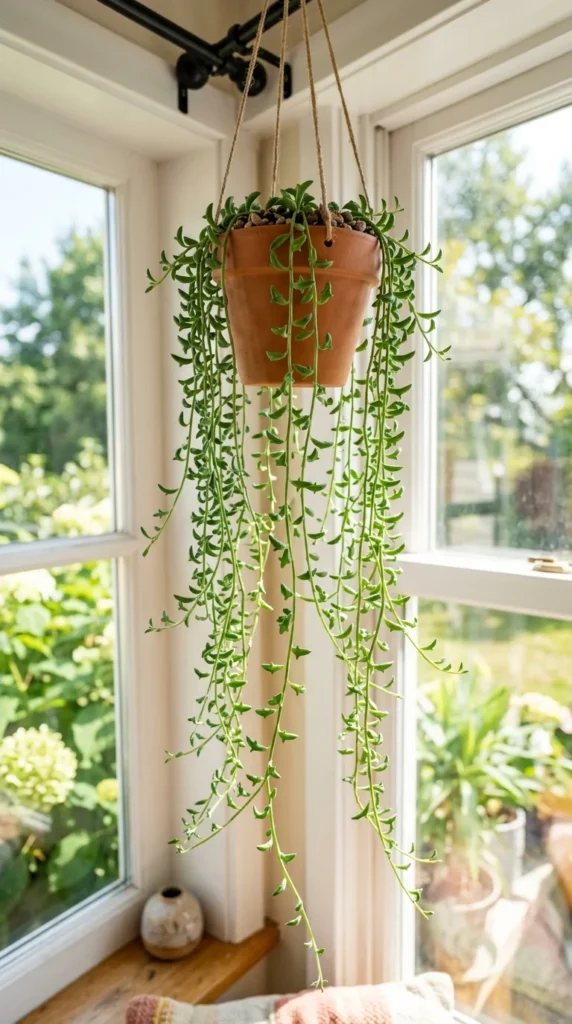
Closing out our list is the whimsical String of Dolphins. Each succulent leaf is shaped exactly like a tiny, jumping dolphin. It’s a playful and charming plant that thrives in bright light and adds a sense of joy and movement to your indoor garden.
Tips for Success with Hanging Plants
- Weight Matters: Ensure your ceiling hooks are screwed into a joist or use heavy-duty anchors. A watered plant can be surprisingly heavy!
- The Drainage Dilemma: Use an inner plastic pot with drainage holes inside a decorative “cachepot” without holes. This prevents water from dripping on your floors while allowing you to take the plant to the sink for watering.
- Light Levels: Remember that hot air rises. The air near your ceiling is often warmer and drier than the air at floor level, so check your hanging plants for water more frequently than your floor plants.
- Pruning: Don’t be afraid to trim your vines! Pruning encourages the plant to grow fuller at the top, preventing that “sparse” look that can happen as vines get exceptionally long.