
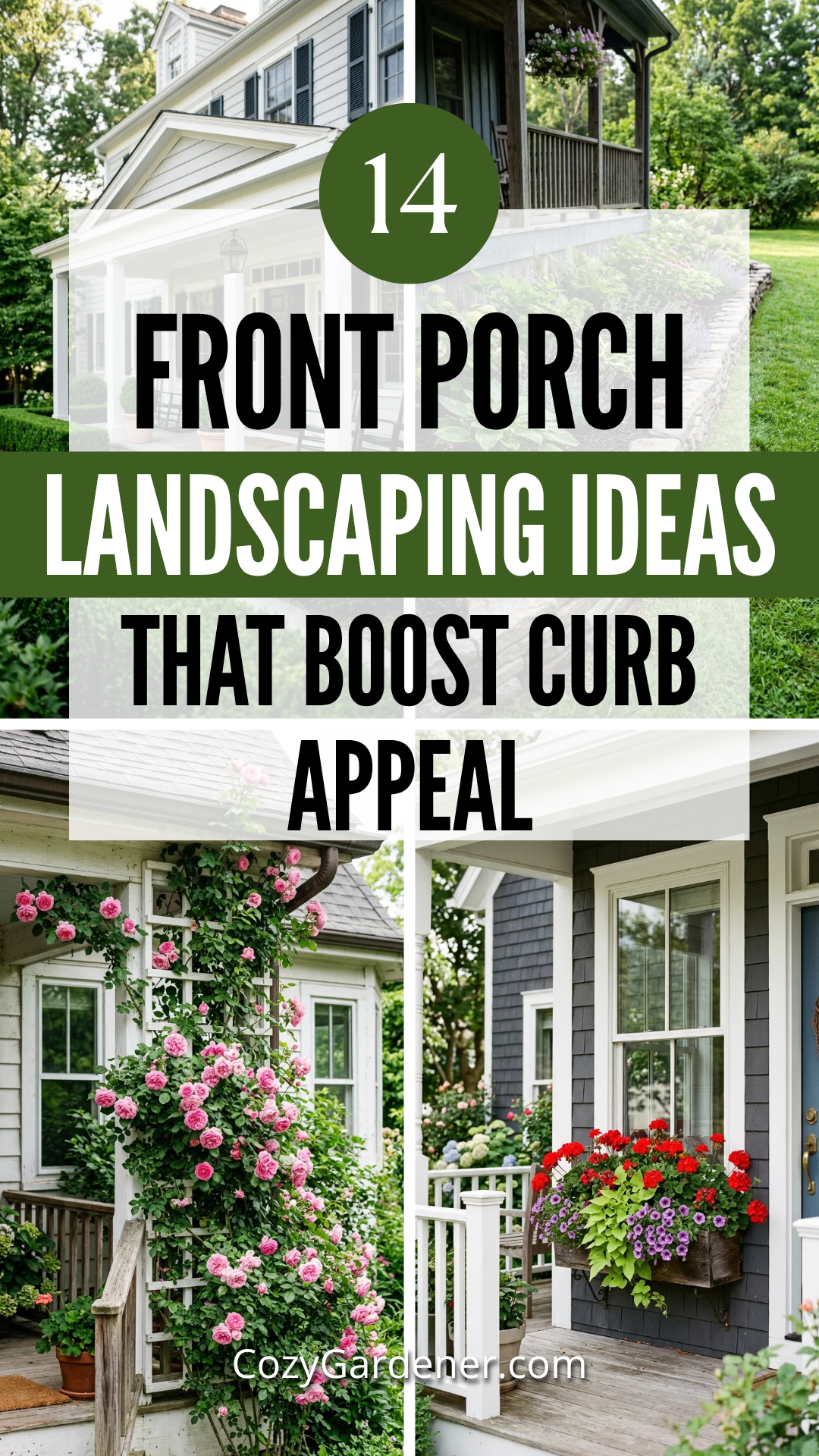
Your front porch is more than just an entryway; it is the handshake of your home. It’s the first thing guests see and the primary factor in determining your home’s “curb appeal.” Whether you have a sprawling wrap-around veranda or a modest concrete stoop, the right landscaping can transform a plain exterior into an inviting sanctuary. By blending textures, colors, and structural elements, you can create a front yard that looks professional and welcoming.
Here are 14 front porch landscaping ideas designed to elevate your home’s aesthetic and make your property the envy of the neighborhood.
1. Symmetric Planters
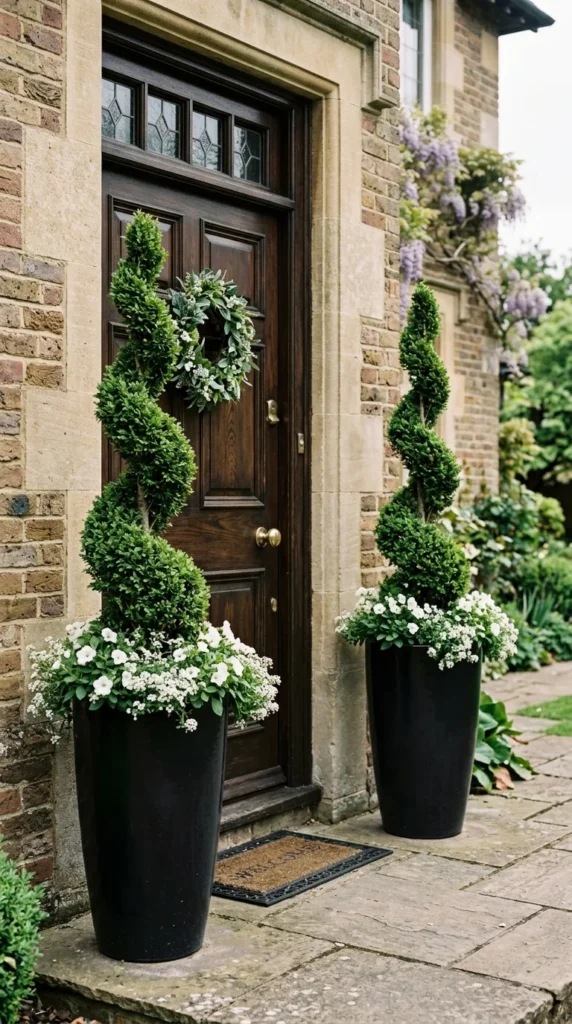
Symmetry is one of the oldest tricks in the design book for a reason—it creates an immediate sense of order and elegance. Placing identical planters on either side of your front door or at the base of your porch steps frames the entrance beautifully. This setup draws the eye directly to the focal point of the home. To achieve this look, choose containers that complement your home’s architectural style, whether that’s sleek modern metal or classic terracotta. Fill them with “thrillers” (tall focal plants), “fillers” (bushy mid-height plants), and “spillers” (vines that hang over the edge) for a professional finish.
2. Climbing Roses
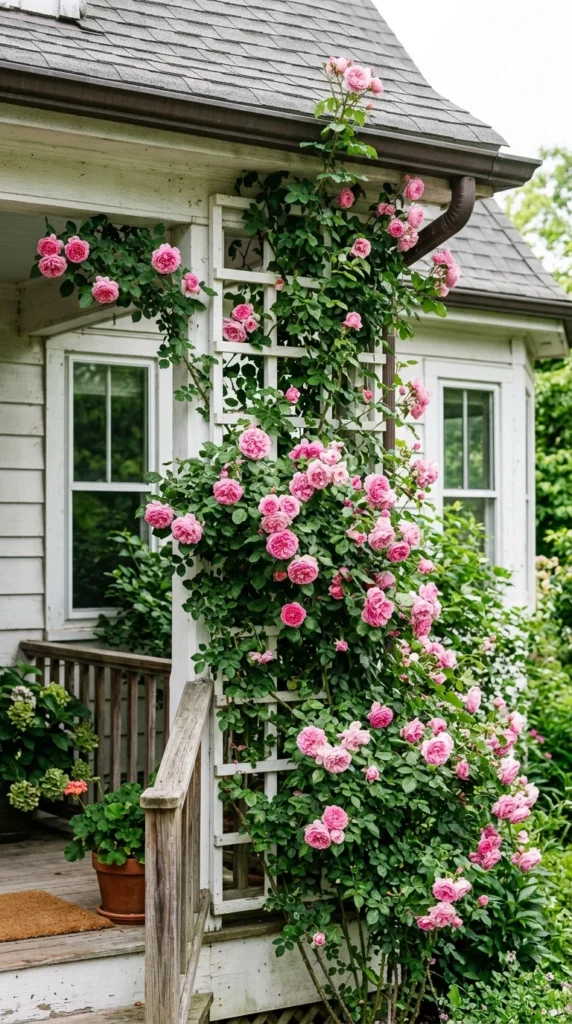
For a romantic, cottage-style aesthetic, nothing beats the timeless beauty of climbing roses. By training these flowers to grow up porch pillars or along a trellis, you add vertical interest that softens the hard lines of your home’s structure. Climbing roses provide both height and a delightful fragrance that greets guests as they approach. Choose repeat-blooming varieties to ensure your porch stays colorful from late spring through the first frost.
3. Window Boxes
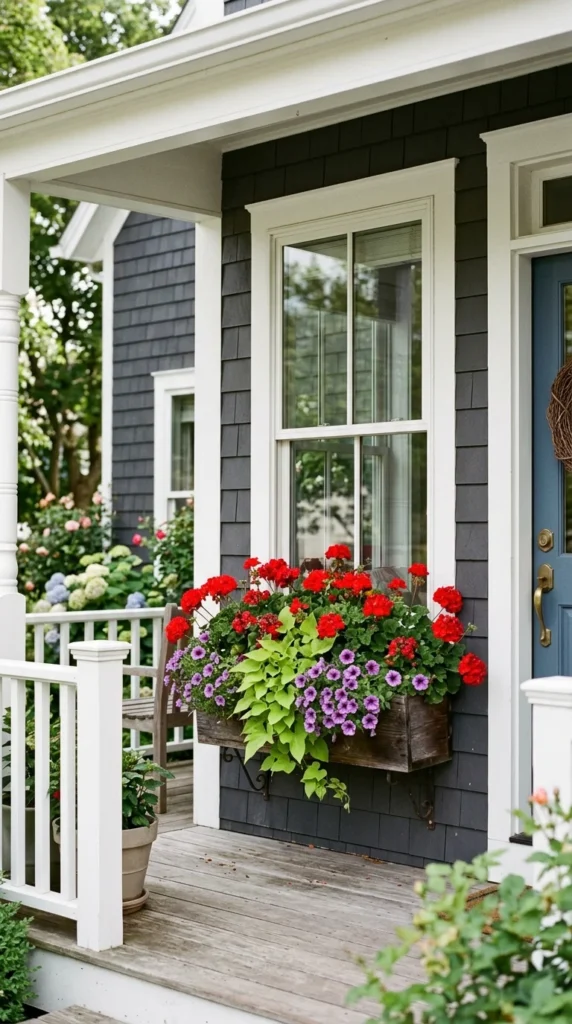
If your porch is small and lacks ground space for large garden beds, window boxes are the perfect solution. They bring life and color directly onto the house itself. You can swap out the plants seasonally—pansies in the spring, petunias in the summer, and kale or ornamental peppers in the autumn. This keeps your curb appeal fresh throughout the year without requiring a massive overhaul of your yard.
4. Layered Garden
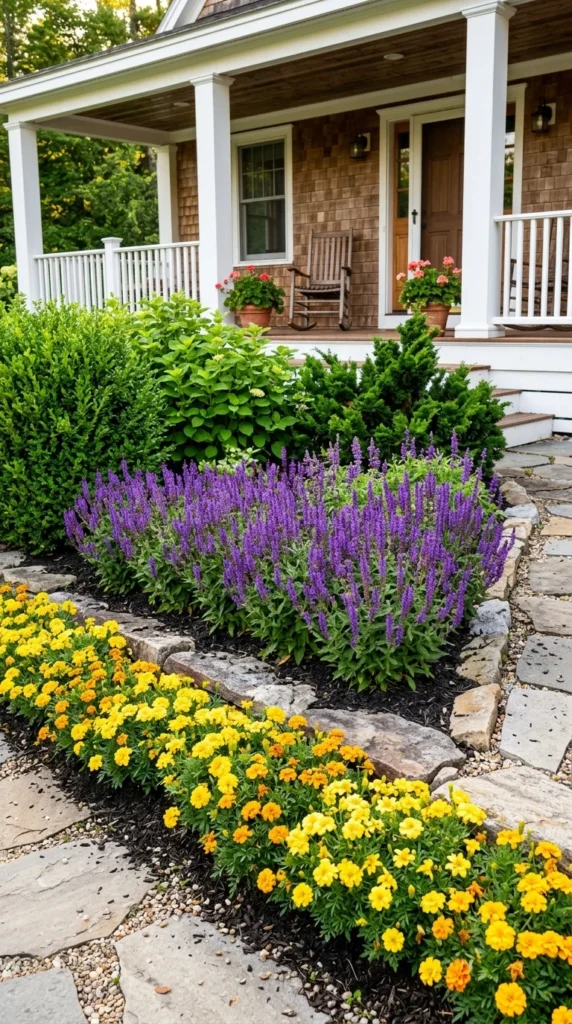
A flat garden can look uninspired. To create depth and visual intrigue, use the “layering” technique. Place your tallest plants—like ornamental grasses or large shrubs—closest to the porch foundation. In front of those, plant mid-sized perennials, and finish with low-growing groundcovers or annuals along the edge. This staggered height ensures that every plant is visible and creates a lush, full look that mimics the complexity of nature.
5. Pathway Borders
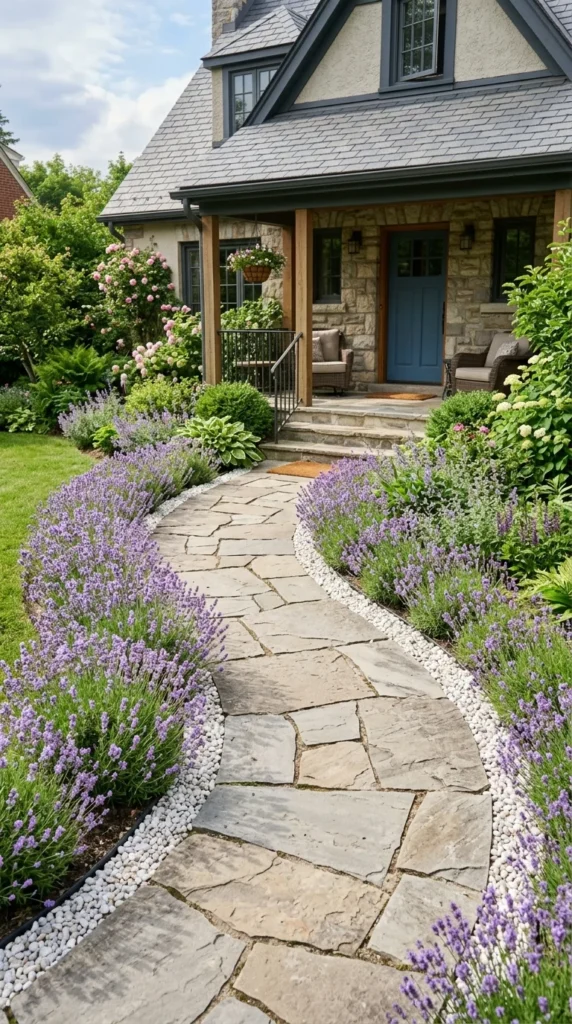
Landscaping shouldn’t stop at the porch steps; it should guide the visitor toward them. Creating a defined border along your front walkway makes the transition from the street to the porch feel intentional. Low-maintenance plants like lavender, hostas, or boxwoods are excellent choices for borders. They provide a structural edge that keeps the path looking neat while adding a layer of greenery that bridges the gap between the lawn and the porch.
6. Native Grasses
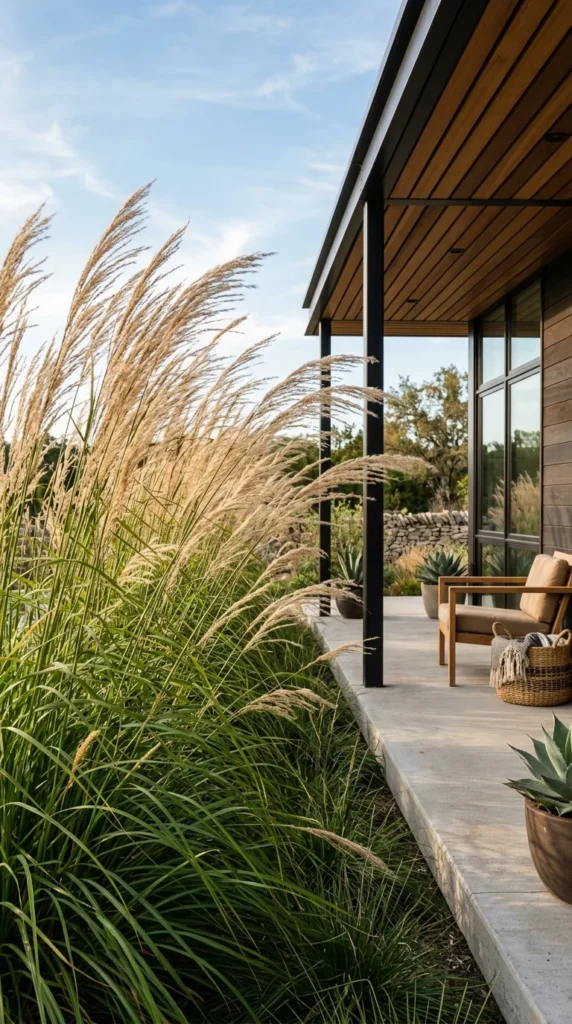
For a modern or prairie-style look, incorporate native ornamental grasses. These plants are incredibly hardy and provide movement that static shrubs cannot. When the wind blows, the gentle rustle and swaying of the grass create a sensory experience. Additionally, many grasses change color in the fall, offering beautiful shades of bronze, gold, and red that keep your porch looking interesting during the colder months.
7. Hanging Baskets
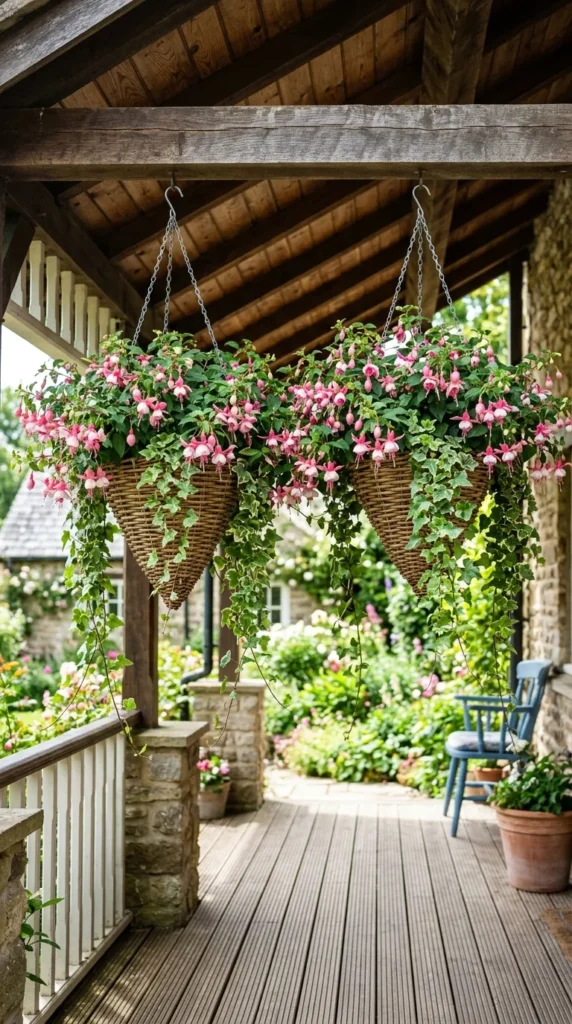
Hanging baskets utilize the “ceiling” of your porch to add a pop of color at eye level. This is especially effective for homes with high porch roofs that might otherwise feel empty. To keep them looking their best, ensure they are watered frequently, as hanging containers tend to dry out faster than ground plants. Mixing different colors of the same species, such as various shades of petunias or begonias, creates a high-impact, monochromatic look that feels sophisticated.
8. Stone Edging
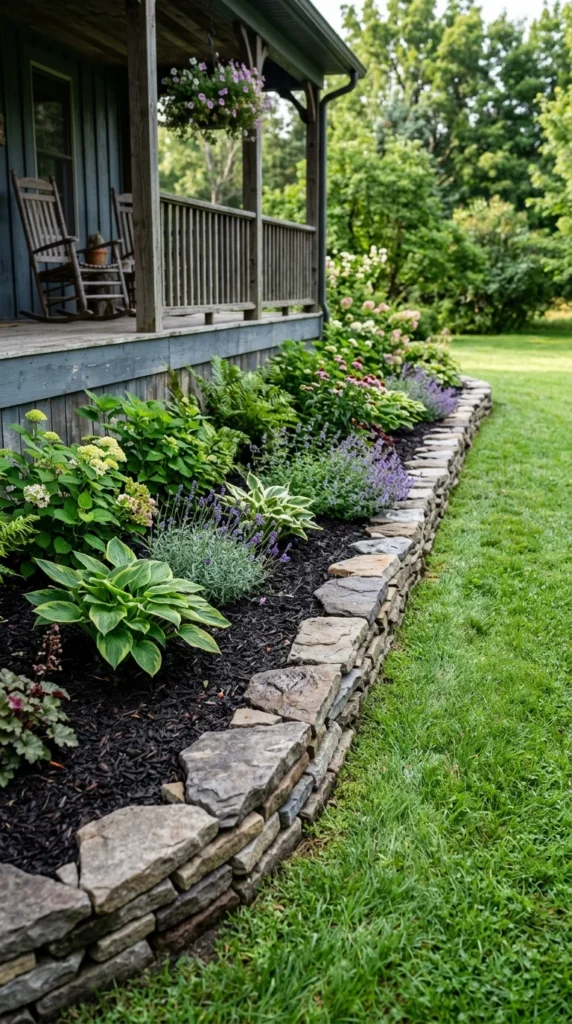
Hardscaping is just as important as the plants themselves. Using natural stone or brick to edge your garden beds provides a “finished” look that screams high-end curb appeal. It prevents grass from creeping into your flowers and keeps mulch from washing away during heavy rain. Stone edging also adds a permanent structural element that remains attractive even in the winter when your perennials have gone dormant.
9. Low-Maintenance Shrubs
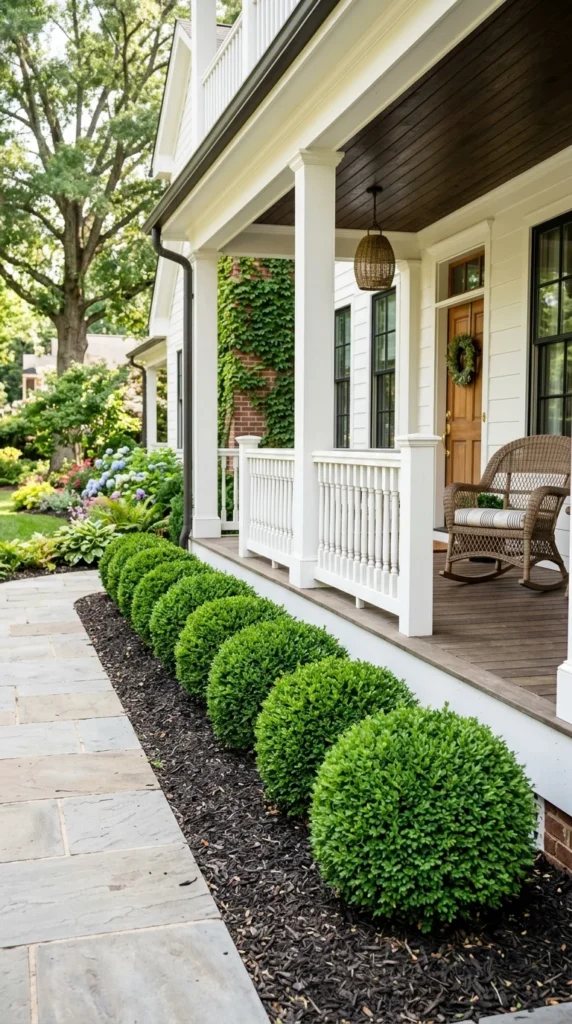
If you don’t have a green thumb, stick to low-maintenance evergreen shrubs like boxwoods, hollies, or junipers. These “anchor plants” provide a consistent green backdrop that looks good 365 days a year. Because they require minimal pruning and stay green through the winter, they are the backbone of any successful front porch landscape. You can tuck a few seasonal flowers around them, but the shrubs do the heavy lifting of maintaining the home’s structure.
10. Vertical Trellis
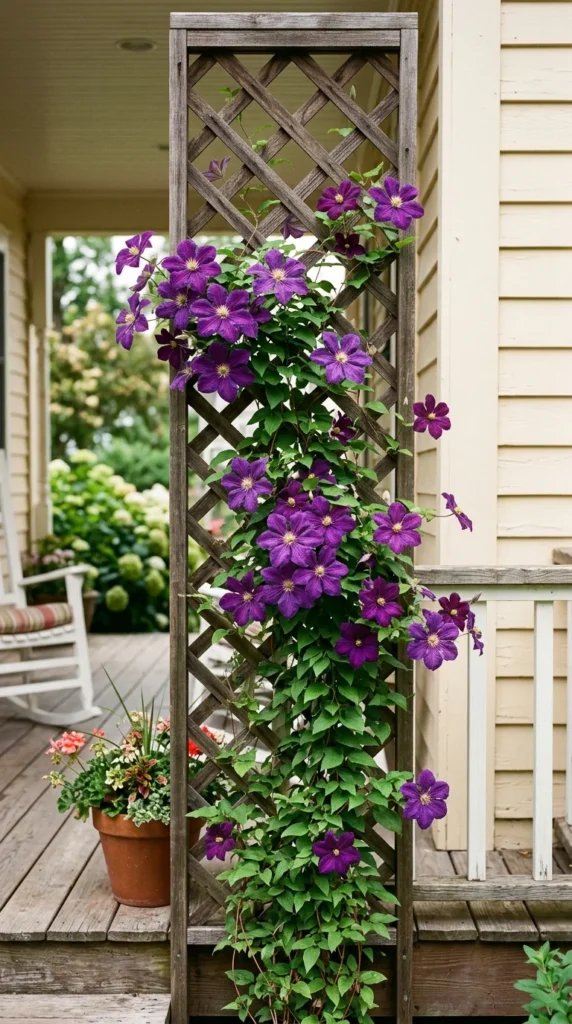
A trellis is a fantastic tool for adding privacy and greenery simultaneously. If your porch is close to a neighbor’s house, a vertical trellis covered in vines can act as a living screen. Plants like Clematis, Honeysuckle, or even Star Jasmine offer beautiful blooms and dense foliage. It transforms a functional architectural element into a piece of living art.
11. Colorful Perennials
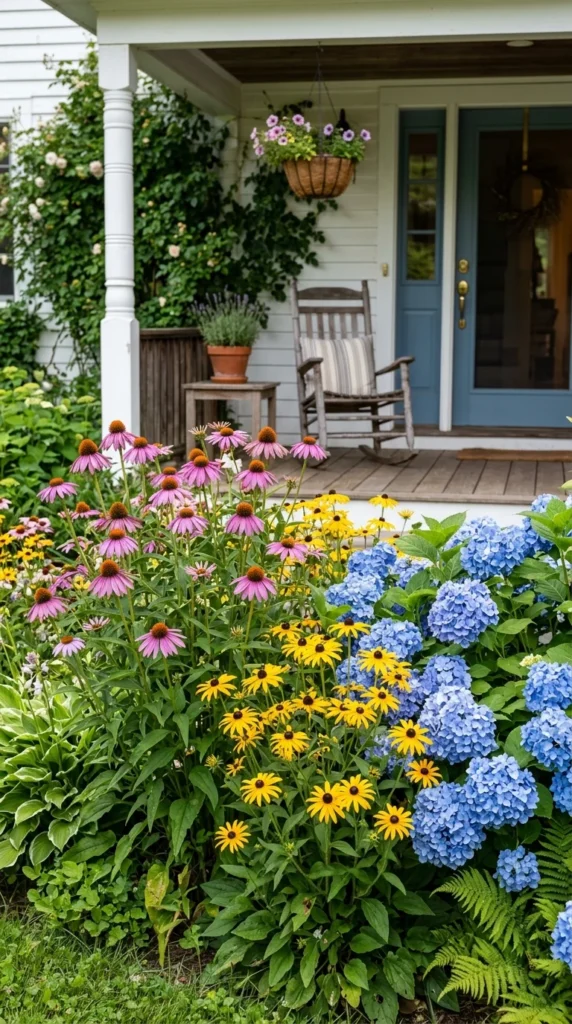
While annuals are great for a quick fix, perennials are an investment that pays off year after year. By choosing a variety of perennials that bloom at different times, you can ensure a rotating palette of color. Hydrangeas are a classic porch favorite for their massive, show-stopping blooms, while Daylilies and Coneflowers offer rugged durability and bright, cheerful faces.
12. Boxwood Hedges
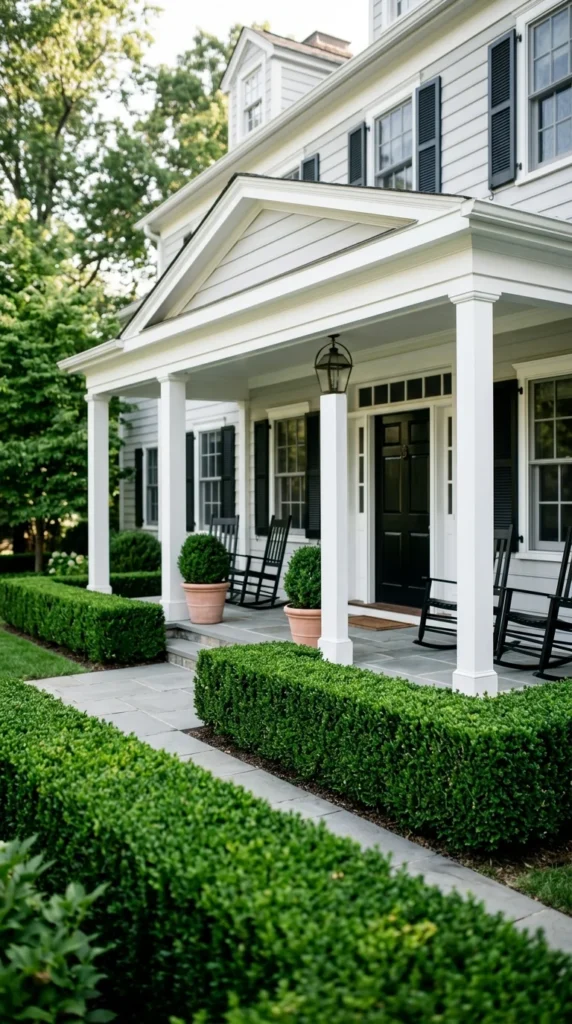
For a formal, traditional, or “stately” appearance, nothing beats a well-manicured boxwood hedge. These can be used to “wall in” a porch area, creating a sense of a private outdoor room. Their dense foliage and ability to be sheared into sharp, geometric shapes provide a sense of luxury and precision. They work particularly well with colonial or federal-style homes.
13. Accent Lighting
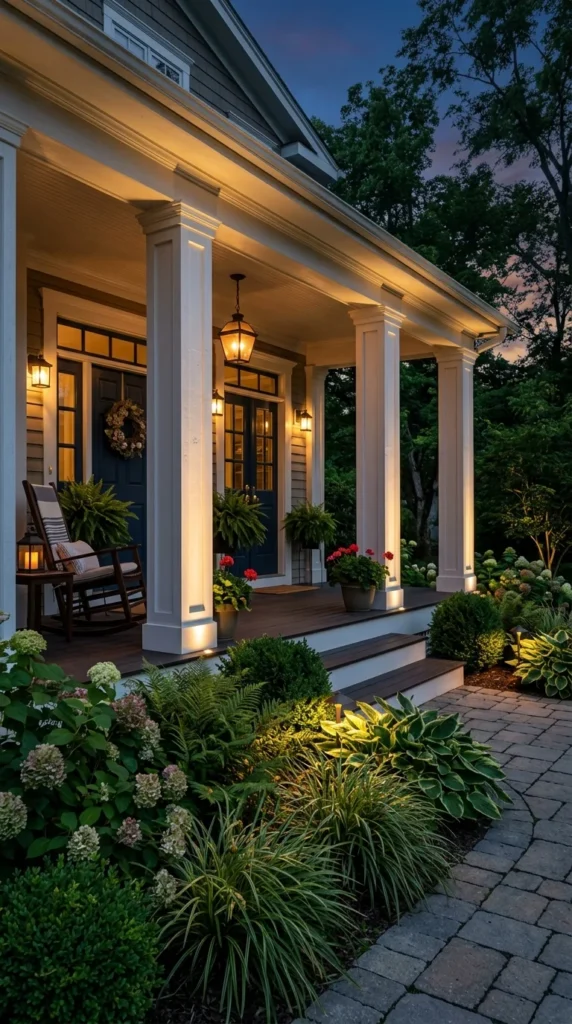
The beauty of your landscaping shouldn’t disappear when the sun goes down. Landscape lighting is a game-changer for curb appeal. By using “uplighting” on trees or “pathway lights” along the walk, you create a warm, inviting glow. Soft lighting makes the porch feel safe and highlights the textures of your plants, casting beautiful shadows that add drama to your home’s exterior at night.
14. Rock Gardens
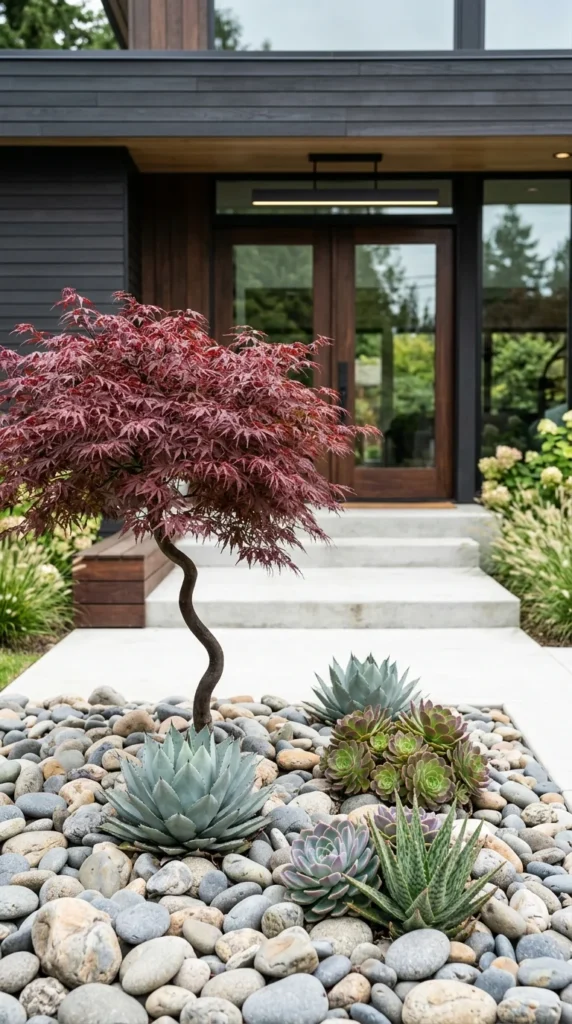
If you live in an arid climate or simply prefer a minimalist aesthetic, a rock garden is an excellent choice. Instead of traditional mulch, use river rocks, lava rocks, or gravel to cover the ground. This creates a clean, textured look that requires almost zero maintenance. Pair the stones with architectural plants like yuccas, agaves, or ornamental Japanese Maples to create a sophisticated, high-contrast look that stands out from the traditional grassy lawn.