
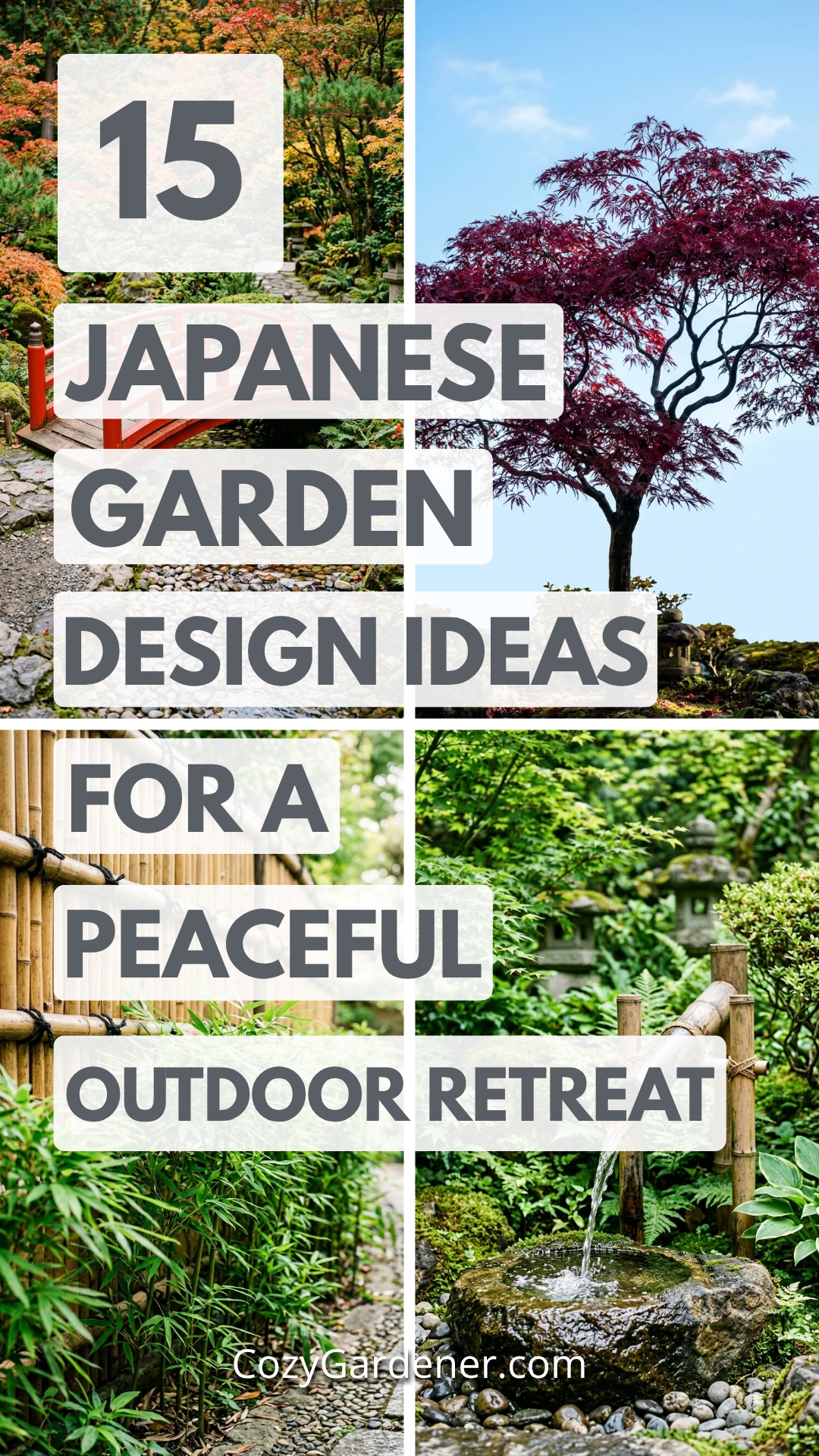
The Japanese garden is more than just a collection of plants; it is a profound philosophical statement, a living piece of art designed to evoke a sense of peace, contemplation, and harmony with nature. Rooted in ancient Shinto and Buddhist traditions, these gardens prioritize the concepts of Ma (negative space), Wabi-sabi (finding beauty in imperfection), and the mimicry of natural landscapes on a miniature scale. Whether you have a sprawling backyard or a tiny urban courtyard, incorporating Japanese design principles can transform your outdoor space into a sanctuary of stillness.
1. Rock Gardens
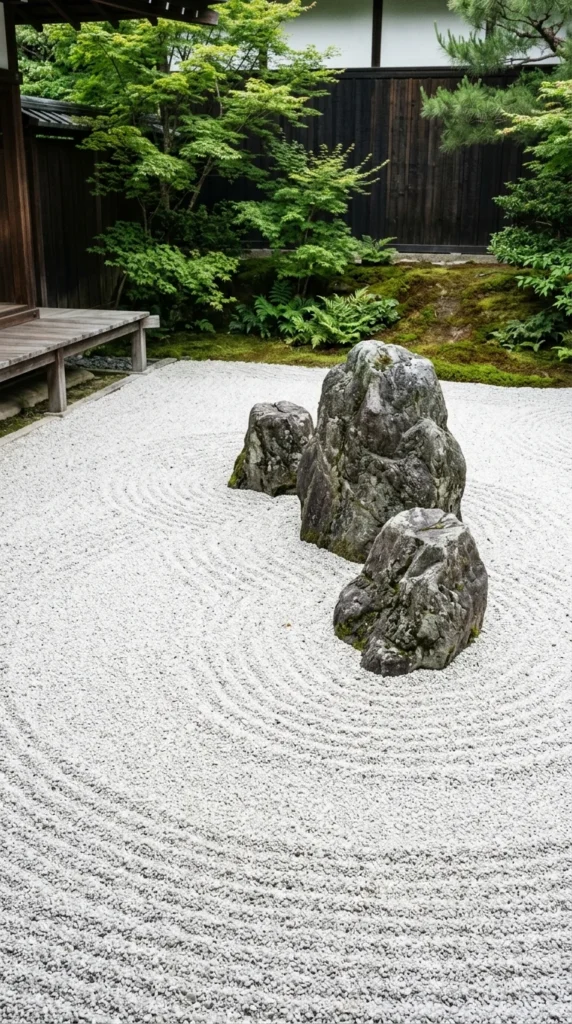
Commonly known as Karesansui or “dry-landscape” gardens, the Zen rock garden is the epitome of minimalism. Instead of water, these gardens use sand or fine gravel raked into ripples to represent the flow of a river or the waves of the sea. The large stones symbolize islands or mountains. This design is perfect for those seeking a low-maintenance, meditative space. To implement this, choose a flat area, install a weed barrier, and use a wooden rake to create daily patterns—a practice that is as much about mental clarity as it is about aesthetics.
2. Water Basins
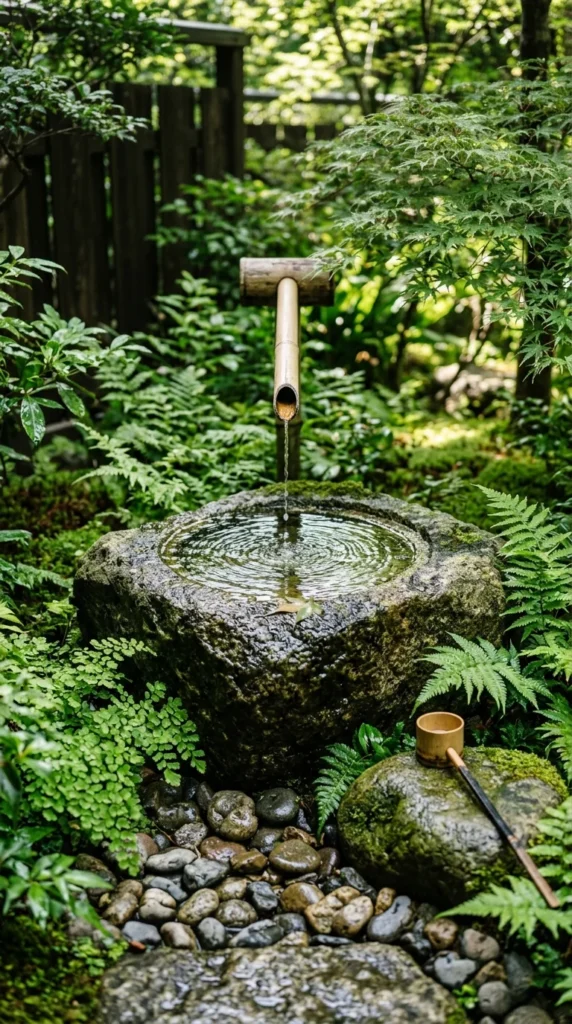
The Tsukubai is a functional and symbolic element traditionally used for ritual purification before a tea ceremony. In a modern garden, it serves as a stunning focal point and a source of soothing sound. The basin is typically low to the ground, requiring the user to bow in a gesture of humility. Surround your basin with river stones and shade-loving plants like hostas or ferns to create a cool, damp micro-environment that feels like a hidden forest spring.
3. Stone Lanterns
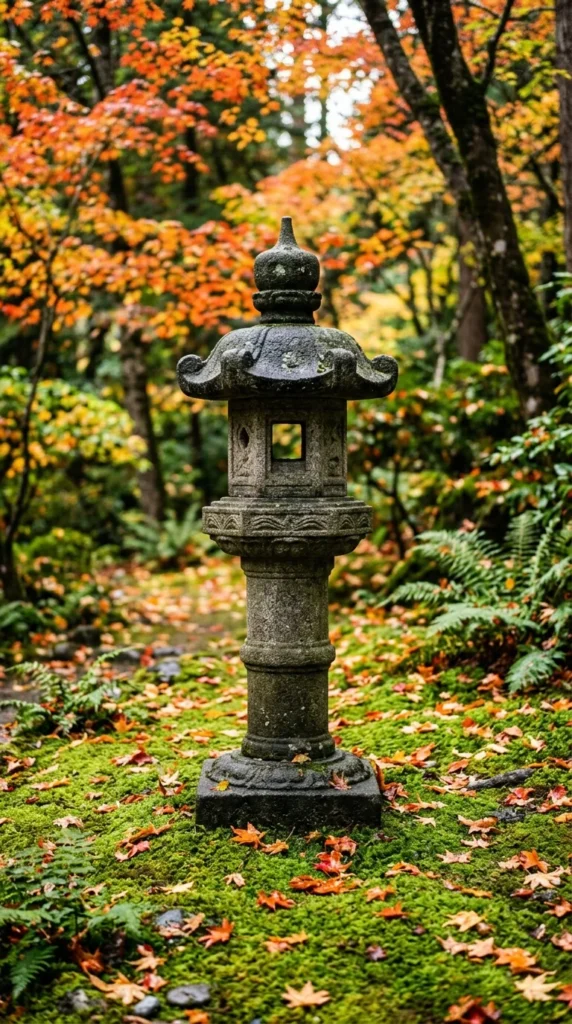
Known as Toro, stone lanterns were originally used to light the paths to Buddhist temples. In your garden, they provide a sense of architectural permanence and history. There are various styles, from the “snow-viewing” lantern (Yukimi-doro) with its wide roof to the “pedestal” lantern (Kasuga-doro). Place them near a water feature or at the bend of a path to provide subtle illumination and a sense of “wayfinding” during twilight hours.
4. Bamboo Fencing
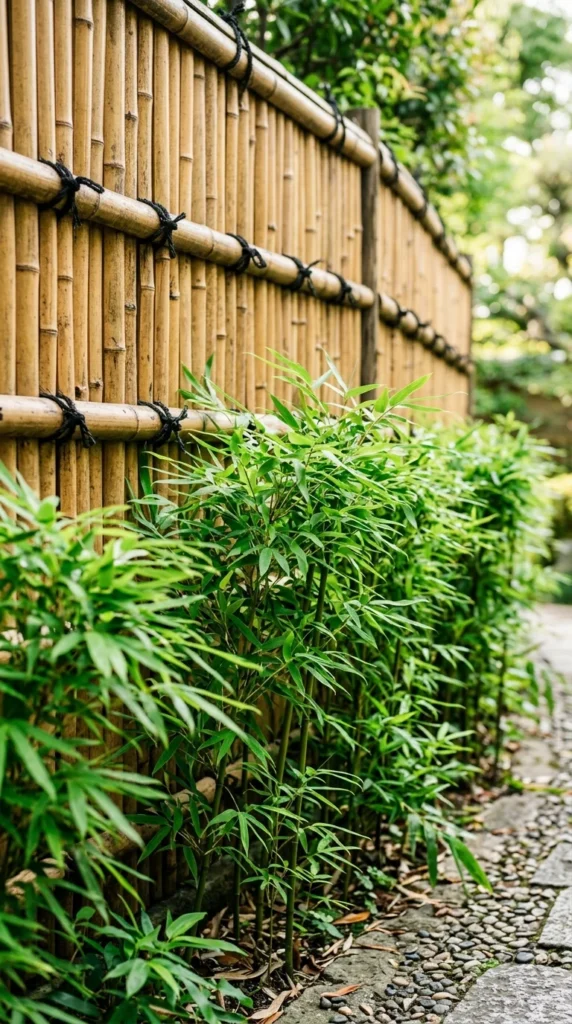
Privacy is essential for a peaceful retreat, and bamboo fencing (Shigaki) offers an organic, textured alternative to standard wooden slats. Bamboo is deeply rooted in Japanese culture, symbolizing strength and flexibility. You can use full-height bamboo screens to block out the noise of the outside world or shorter “sleeve” fences to hide unsightly utilities like air conditioning units. The vertical lines of the bamboo create a sense of height and order in the garden.
5. Red Bridges
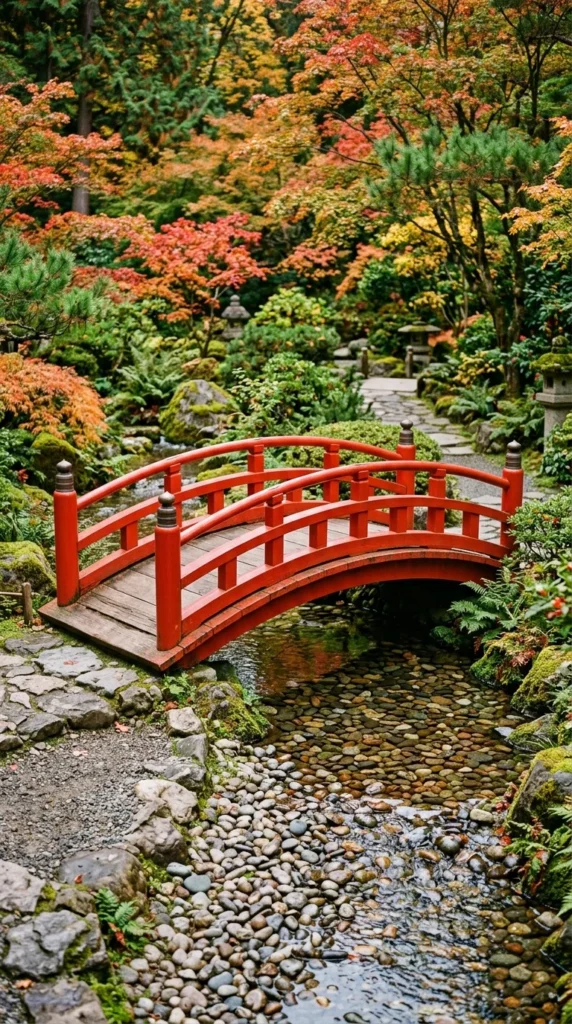
A bridge, or Guzei, symbolizes the transition from the mundane world to the sacred realm of nature. While large gardens might feature a dramatic “moon bridge” that forms a full circle with its reflection, smaller gardens can benefit from a simple, low-arched wooden walkway. The traditional red color provides a stunning contrast against the greens of the foliage and the greys of the stones, acting as a visual anchor that draws the eye across the landscape.
6. Shishi-odoshi
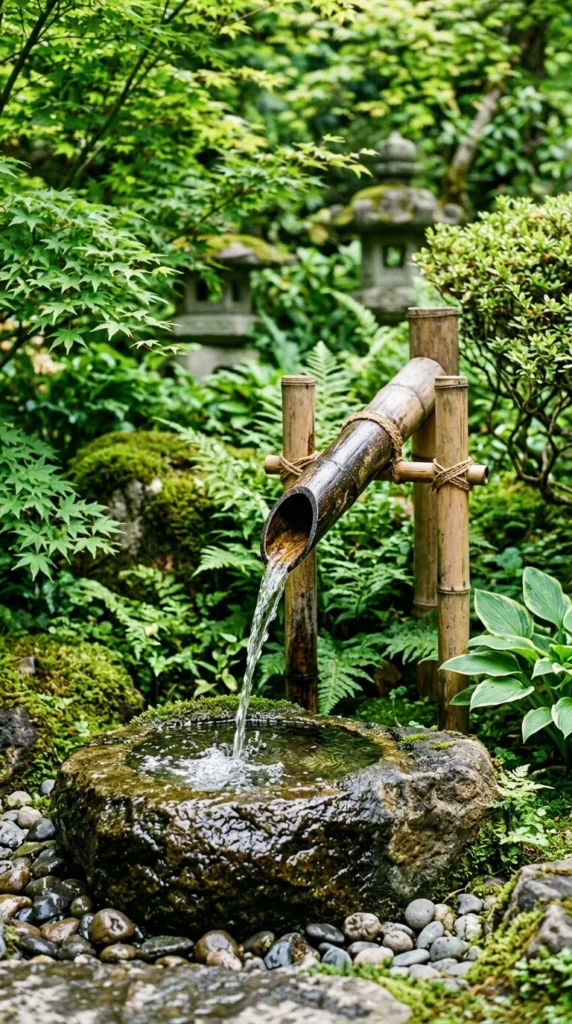
The Shishi-odoshi, or “deer scarer,” is a kinetic sculpture that combines motion and sound. Water flows into a hollow bamboo arm until it becomes heavy enough to tip, spilling the water and striking a stone on its way back up. The rhythmic “clack” was originally meant to startle animals away from crops, but today it serves as a “white noise” that helps drown out city traffic. It adds a dynamic, living element to any corner of the garden.
7. Moss Carpets
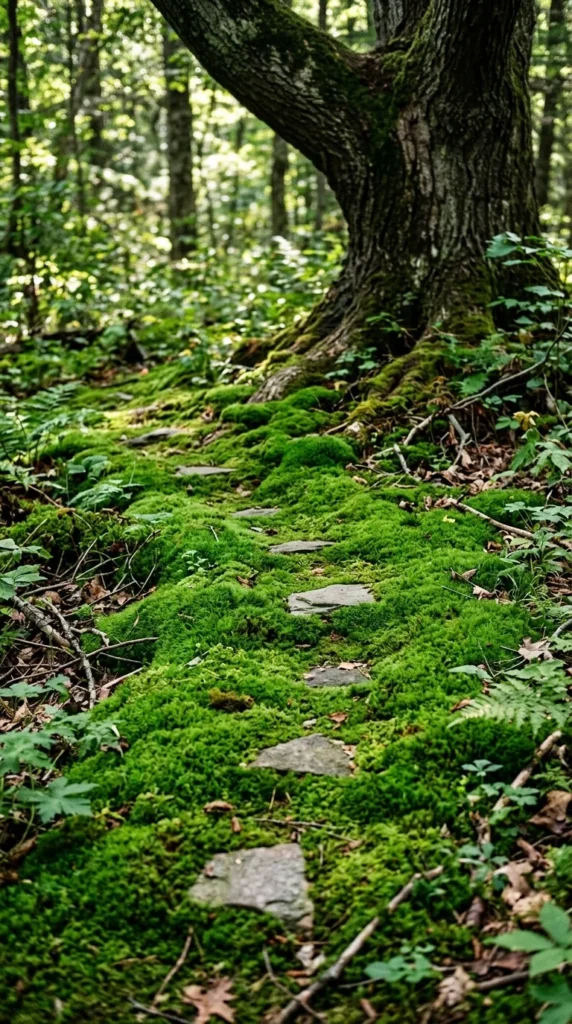
In Japanese gardening, moss is prized for its ability to make a garden look ancient and established. It represents the passage of time and the beauty of nature’s endurance. If your garden has a shaded, damp area, swap out thirsty grass for a carpet of moss. It requires no mowing and feels incredibly soft underfoot. Species like Sheet Moss or Mood Moss create a lush, undulating green sea that contrasts beautifully with hard stone elements.
8. Pagoda Sculptures
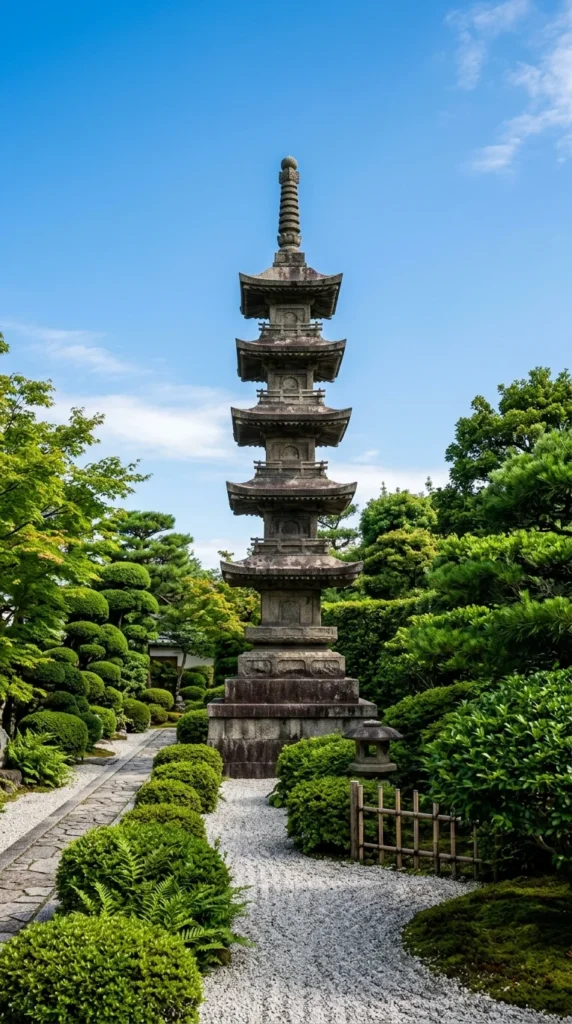
Adding a stone pagoda provides a sense of verticality and spiritual significance. These structures represent the five elements of Buddhist cosmology: earth, water, fire, wind, and space. A pagoda doesn’t need to be the centerpiece; it often works best when partially tucked behind a tree or nestled in a cluster of shrubs, creating a sense of discovery for someone walking through the garden.
9. Stepping Stones
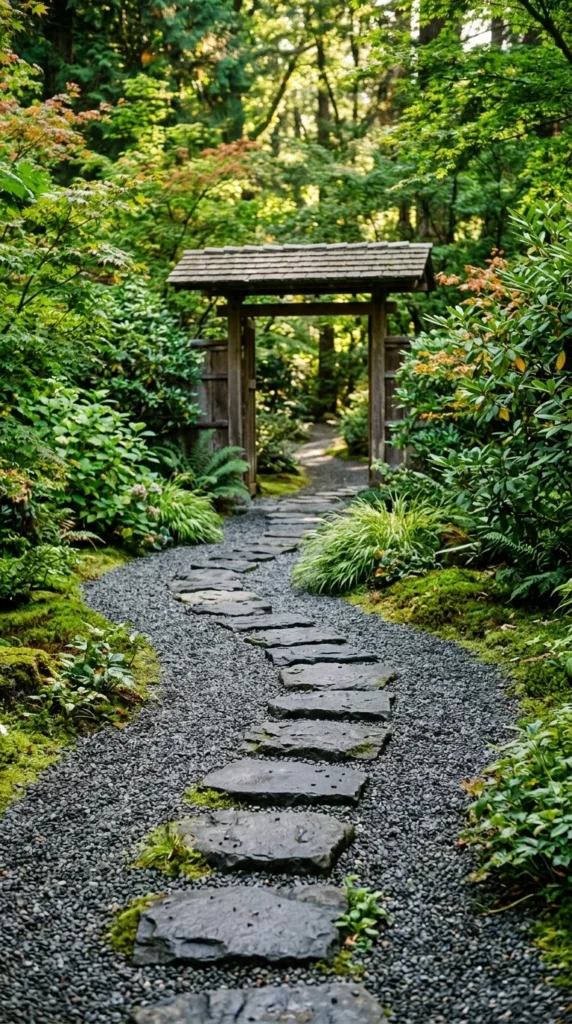
Known as Tobi-ishi, stepping stones are designed to control the pace of the viewer. In a Japanese garden, the path is never a straight line from point A to point B. The irregular spacing and sizing of the stones force you to look down and be mindful of your steps, grounding you in the present moment. This deliberate slowing down is key to the meditative experience of the garden.
10. Koi Ponds
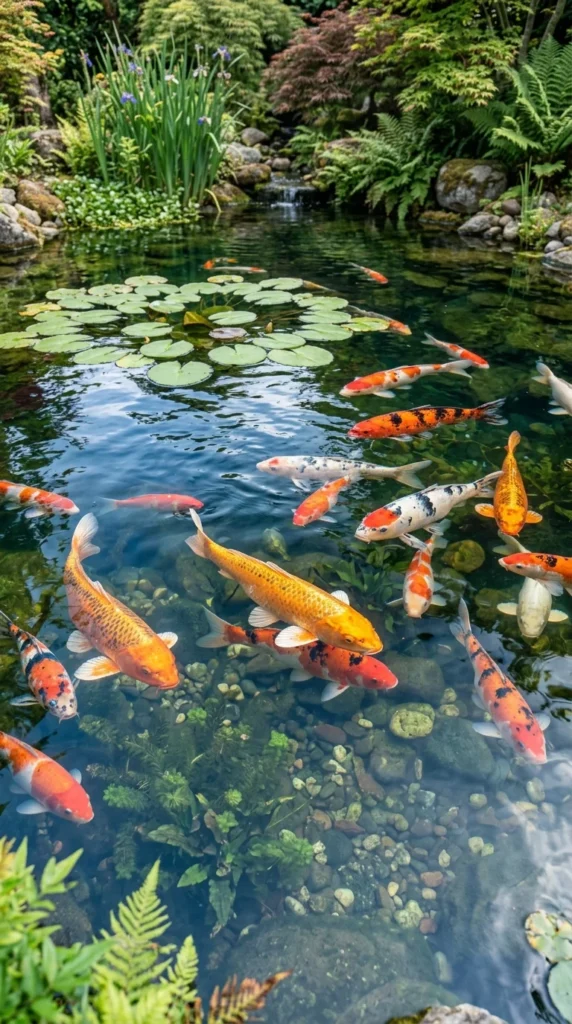
No large Japanese garden is complete without a Nishikigoi (Koi) pond. These “living jewels” bring movement, color, and life to the water. Designing a koi pond requires careful planning regarding depth (to protect fish from predators and temperature swings) and filtration. The interaction between the still water, the drifting fish, and the reflections of the sky creates a hypnotic effect that can reduce stress and lower blood pressure.
11. Japanese Maples
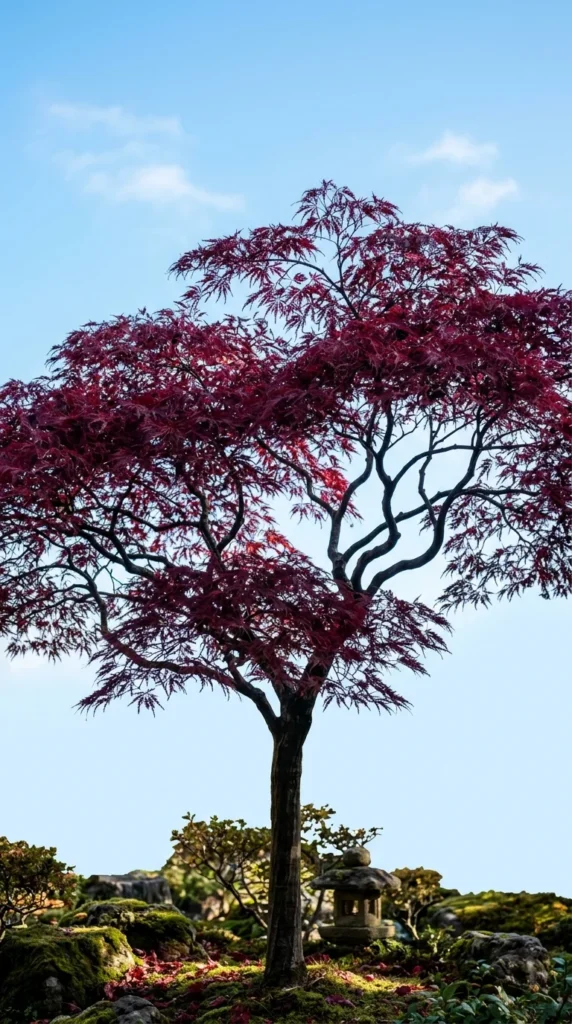
Acer palmatum, or the Japanese Maple, is perhaps the most iconic plant in these gardens. They are beloved for their delicate leaf structure and their spectacular color shifts throughout the seasons. From neon greens in spring to fiery reds and purples in autumn, these trees provide constant visual interest. Because they are slow-growing and come in many dwarf varieties, they are excellent for smaller urban gardens or even large containers.
12. Tea Houses
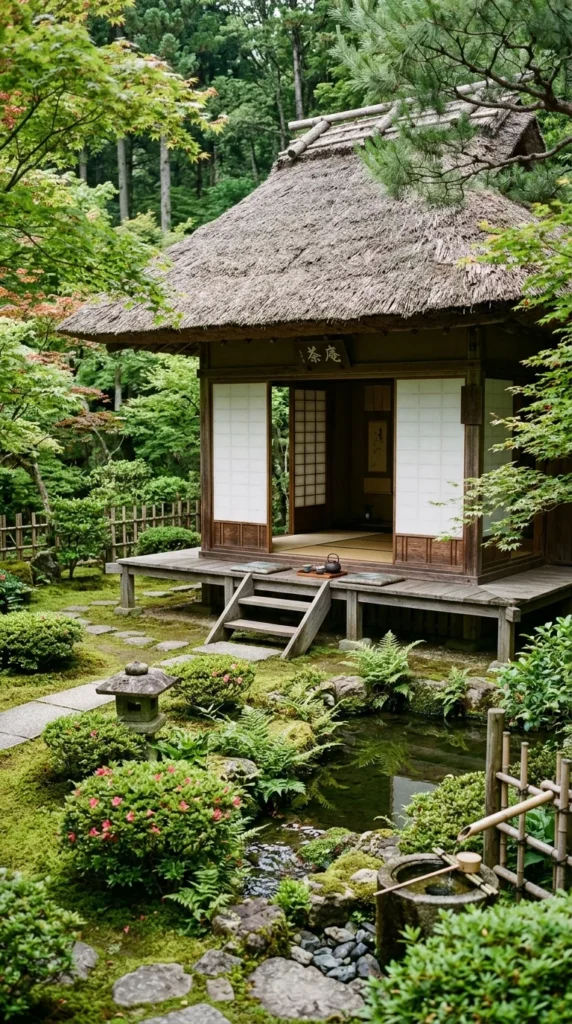
If space and budget allow, a Chashitsu (tea house) is the ultimate garden retreat. These small, simple structures are designed for the traditional tea ceremony, emphasizing rustic simplicity and intimacy. Even a simplified version—a small wooden pavilion with a bench—can serve as a dedicated space for reading, meditation, or enjoying a cup of matcha while looking out over your handiwork.
13. Pruned Pines
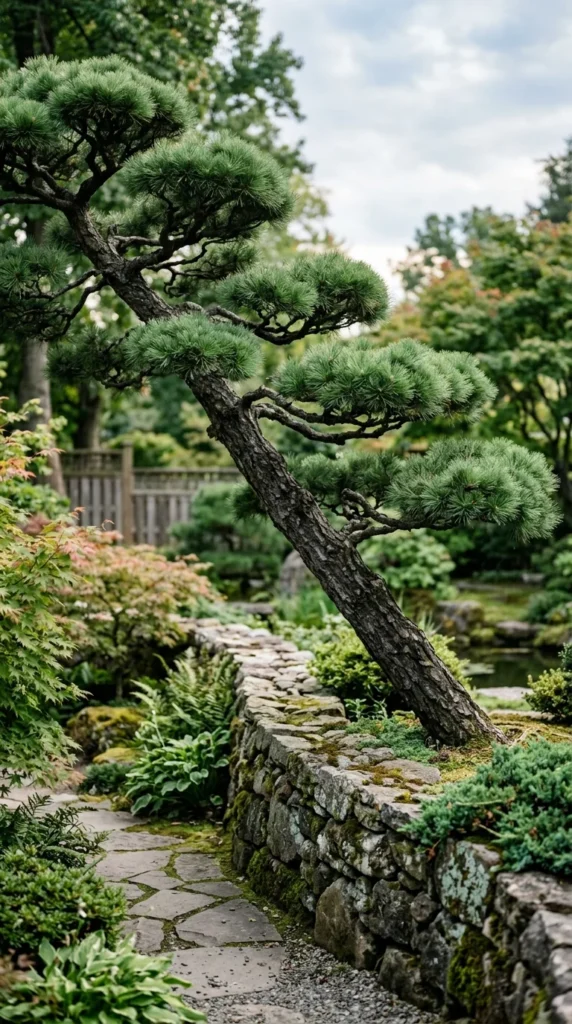
The art of Niwaki (sculpting trees) is a cornerstone of Japanese aesthetics. Pine trees are often pruned to look much older and more wind-swept than they actually are. By thinning out branches and training the remaining limbs into “clouds” or horizontal planes, you create a tree that looks like a miniature version of a mountain giant. This architectural pruning allows light to filter through the garden and highlights the rugged beauty of the tree’s bark.
14. Dry Streams
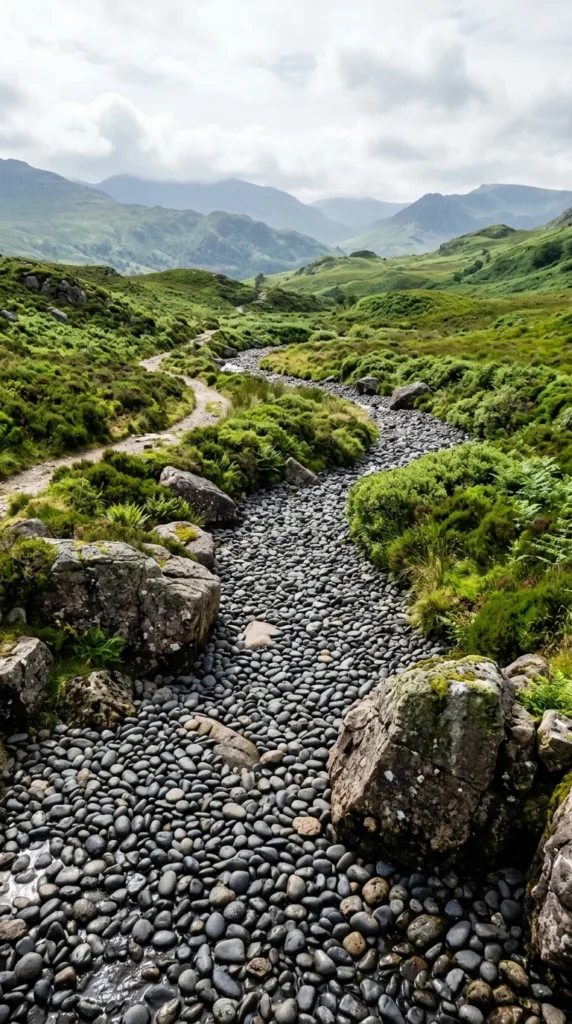
If a real water feature is too much maintenance, a dry stream bed is a clever alternative. By using different sizes of river rocks and pebbles, you can mimic the look of a dried-up creek. Plant moisture-loving plants along the “banks” to enhance the illusion. During heavy rain, these dry streams can also serve a functional purpose by directing drainage away from your home’s foundation.
15. Hidden Gateways
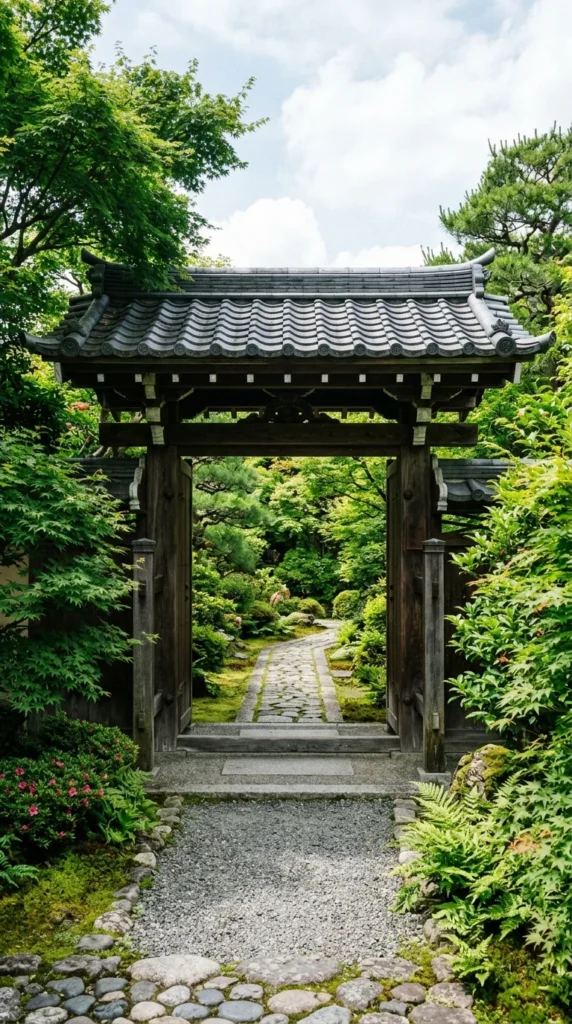
The entrance to a Japanese garden is often marked by a gate (Mon) or a simple bamboo portal. This physical structure acts as a psychological boundary, telling the brain to leave the stresses of work and life behind as you enter the “sacred” space of the garden. Even a simple wooden frame covered in climbing vines can create this transition, making your outdoor retreat feel like a world entirely of its own.