
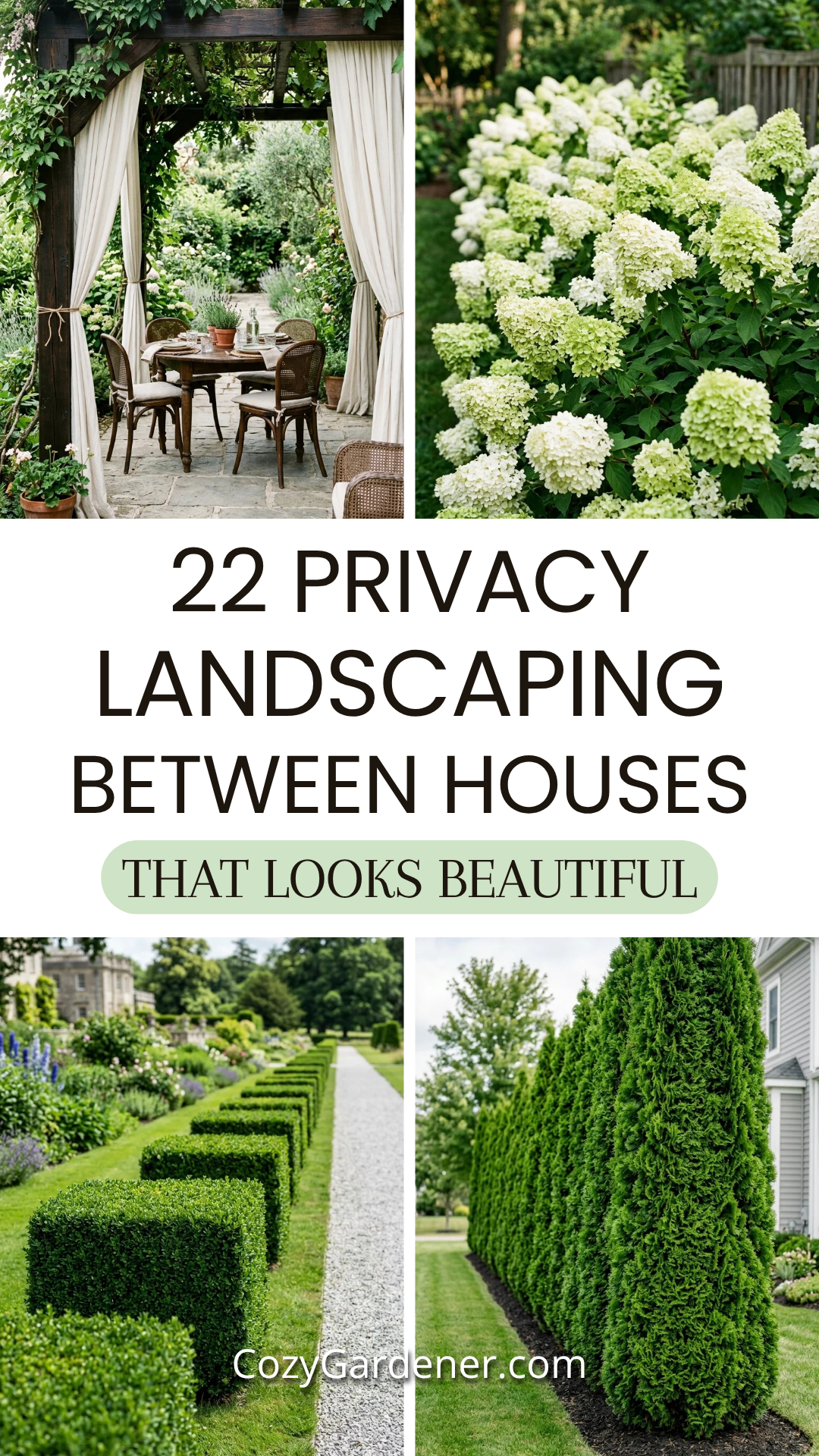
Living in a neighborhood often means dealing with the “fishbowl effect,” where your side yard or patio feels a bit too exposed to the house next door. Fortunately, you don’t need to build a fortress to reclaim your solitude. Privacy landscaping offers a way to define your boundaries while enhancing the aesthetic value of your property. By using a combination of fast-growing greenery, architectural structures, and creative hardscaping, you can turn a narrow side alley or a shared boundary into a stunning visual feature.
1. Arborvitae Trees
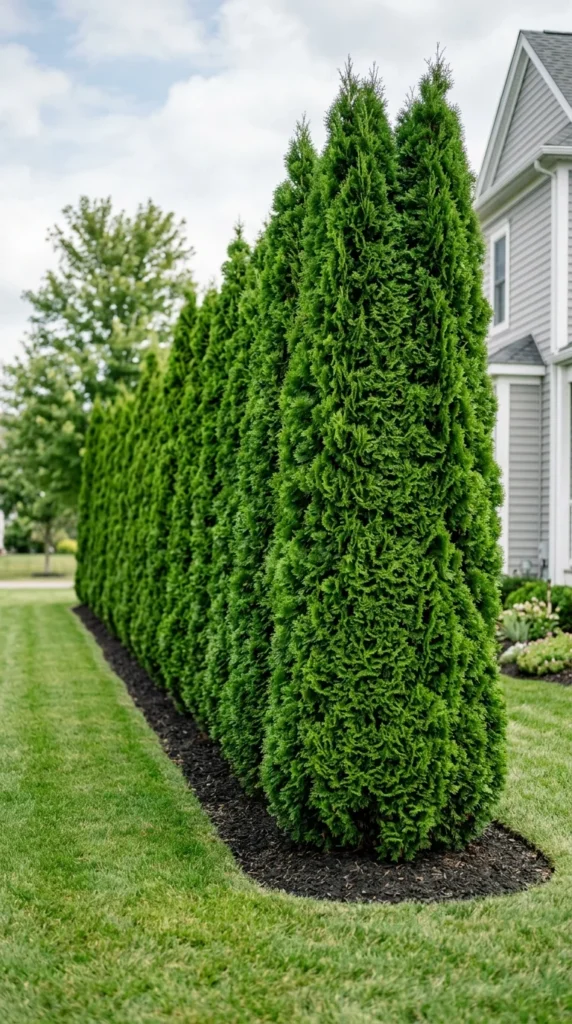
Arborvitae remains the gold standard for living privacy screens. These evergreens grow upright and narrow, making them perfect for the tight spaces often found between suburban homes. Varieties like ‘Emerald Green’ stay compact and maintain their deep green color year-round, providing a consistent barrier that requires minimal pruning.
2. Horizontal Fencing
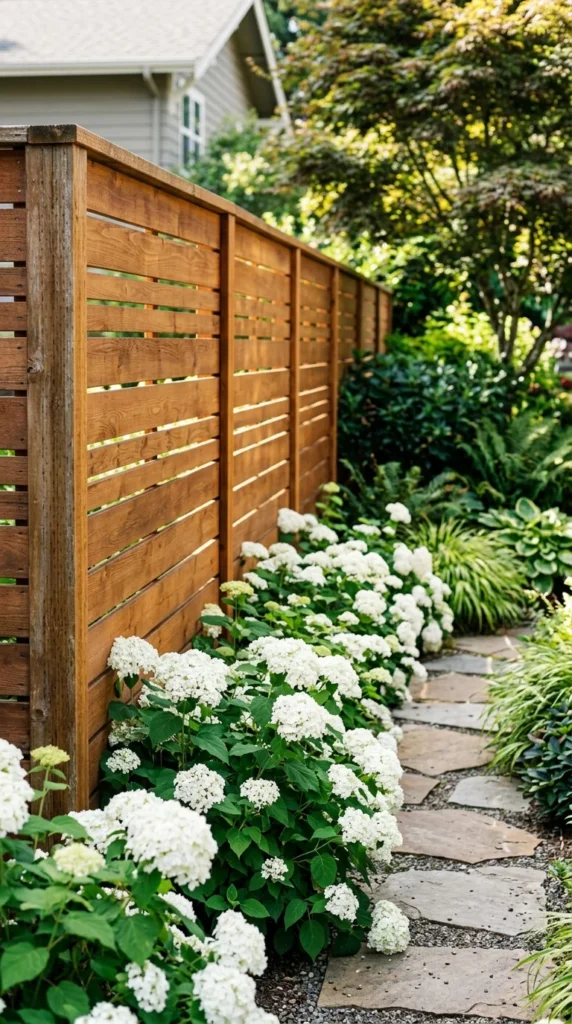
If you prefer a contemporary look, horizontal fencing is a game-changer. Unlike traditional vertical pickets, horizontal slats draw the eye along the length of the yard, making small spaces feel wider. Using high-quality wood like cedar or ipe adds a luxury feel that complements modern architecture while providing a sturdy physical barrier.
3. Bamboo Screens
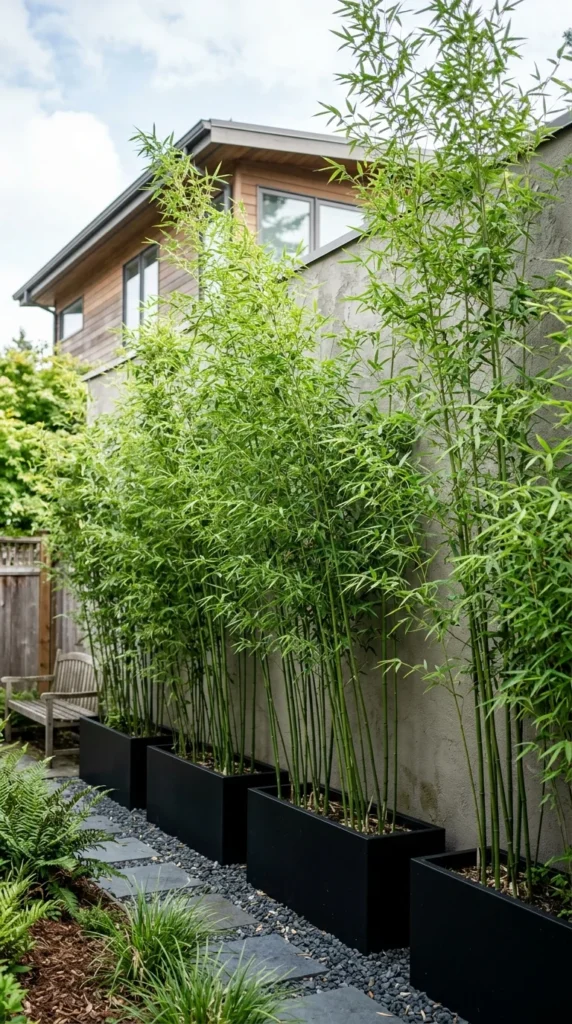
For a fast-growing solution, bamboo is unmatched. However, the key is to choose “clumping” varieties rather than “running” ones to prevent them from taking over the yard. When planted in long, narrow troughs or raised beds, bamboo creates a Zen-like atmosphere and provides excellent height to block second-story windows.
4. Boxwood Hedges
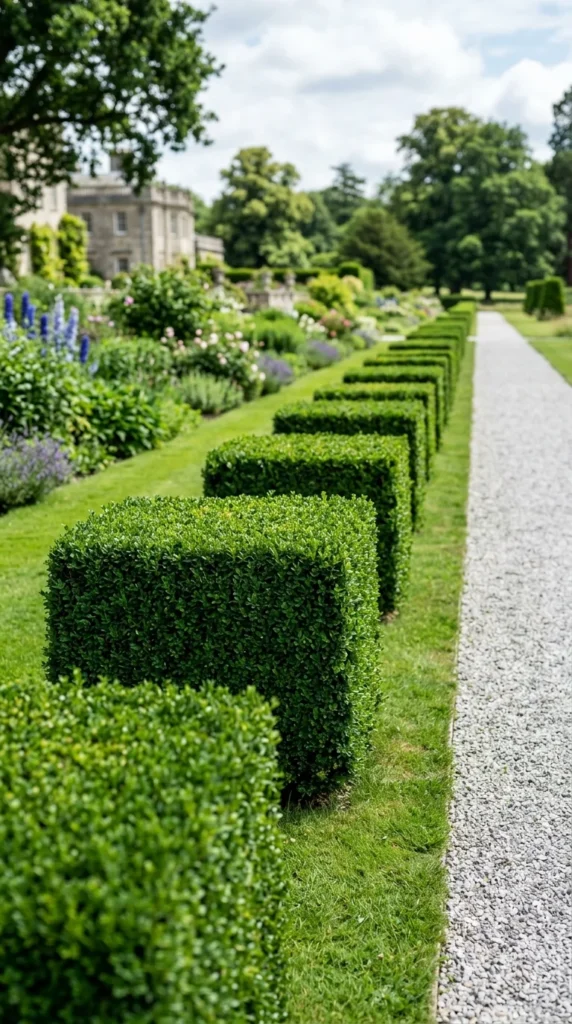
Boxwoods are the quintessential choice for a formal, structured garden. While they grow more slowly than some other shrubs, they can be sheared into precise geometric shapes. For privacy between houses, tall-growing varieties can be allowed to reach five or six feet, creating a “green wall” that feels classic and sophisticated.
5. Trellis Panels
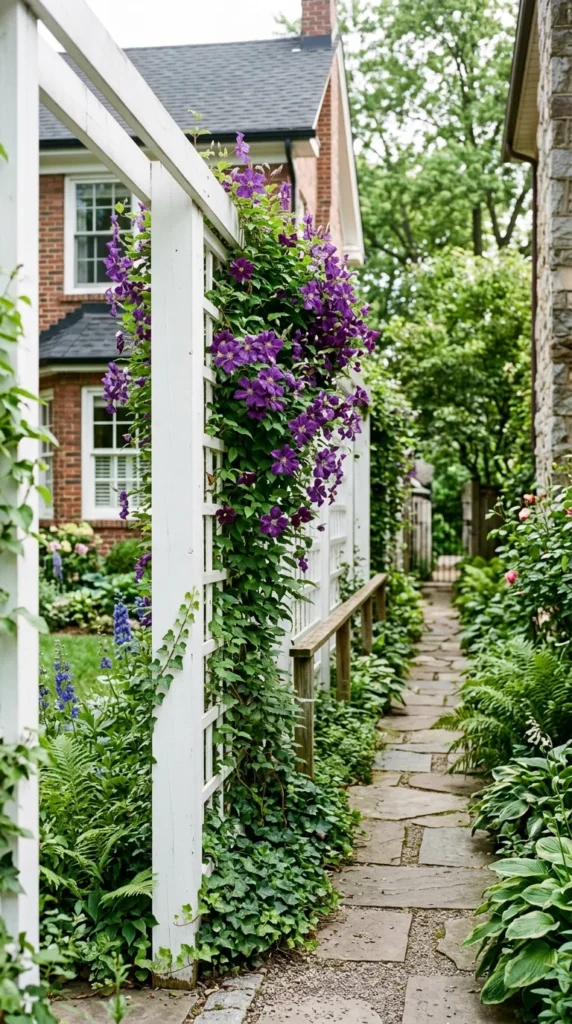
Trellises are versatile tools for narrow side yards. They take up very little ground space but provide a vertical surface for climbing plants. By choosing a mix of evergreen vines and flowering perennials like jasmine or honeysuckle, you create a fragrant and beautiful screen that changes with the seasons.
6. Layered Plantings
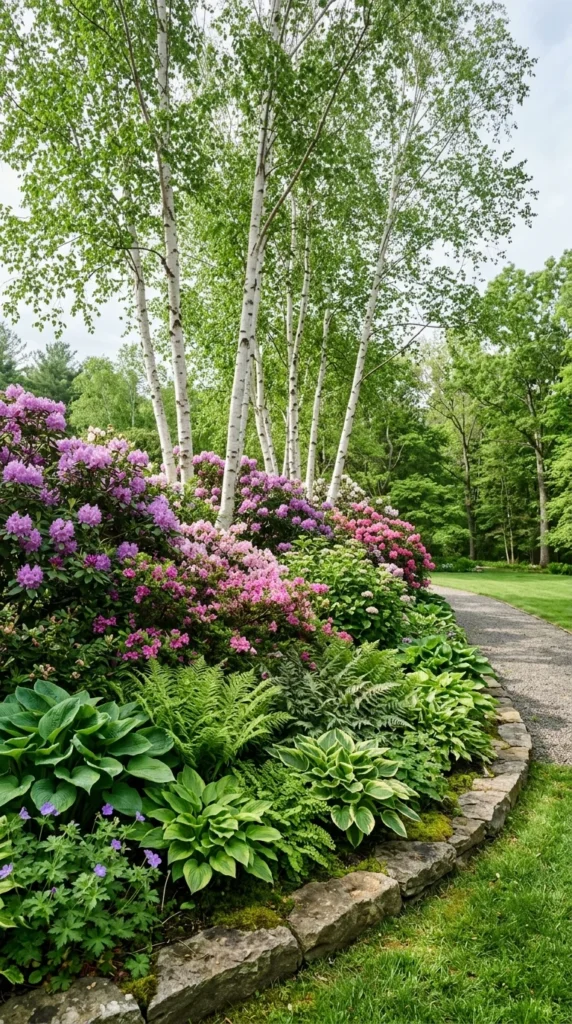
The most natural-looking privacy screens are often those that don’t look like screens at all. Layering plants of different heights creates depth and interest. By placing taller trees near the property line and stepping down to mid-sized shrubs and groundcovers, you create a lush woodland feel that naturally obscures the view of the neighboring house.
7. Potted Tall Grasses
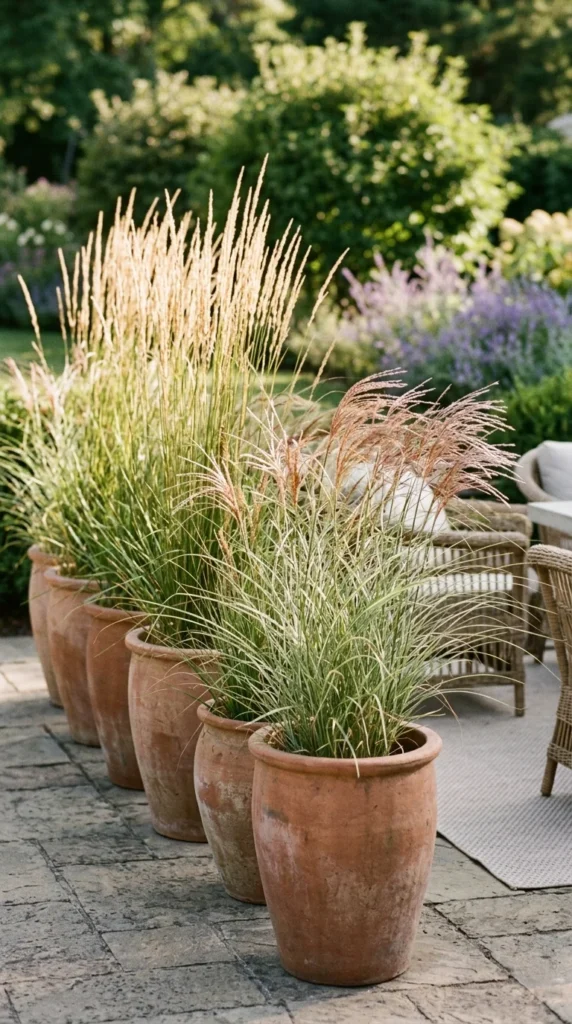
If you have a paved side yard or a patio that sits right against the property line, large planters are your best friend. Ornamental grasses like Miscanthus or Feather Reed Grass grow quickly each summer, reaching heights of five to seven feet. They provide a soft, swaying movement and a soothing sound in the wind.
8. Vertical Gardens
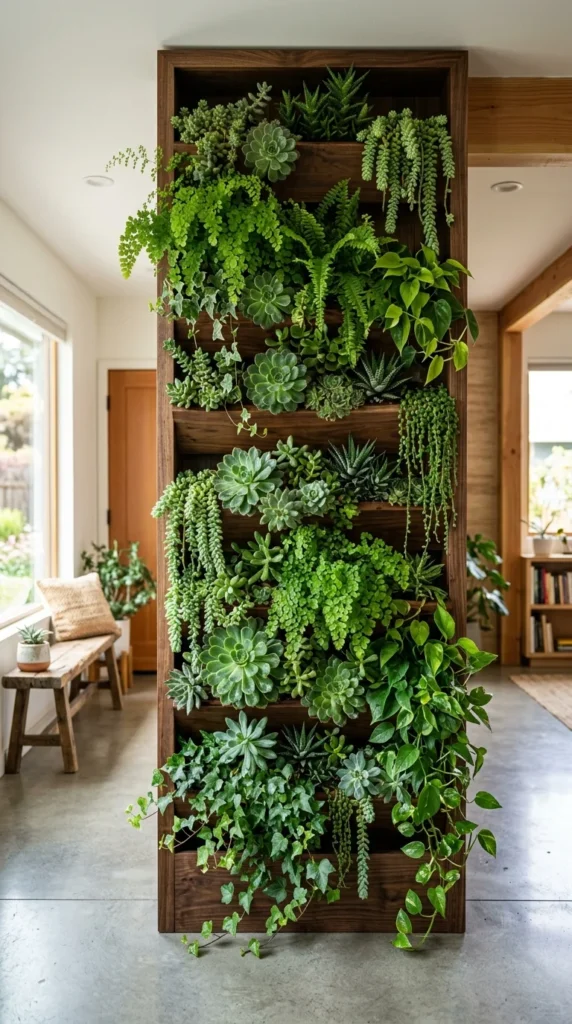
Vertical gardens, or “living walls,” are perfect for very tight spaces. Instead of planting in the ground, you grow upwards. These installations can be used to cover an unattractive chain-link fence or a blank wall, turning a boring boundary into a masterpiece of biodiversity and color.
9. Privacy Panels
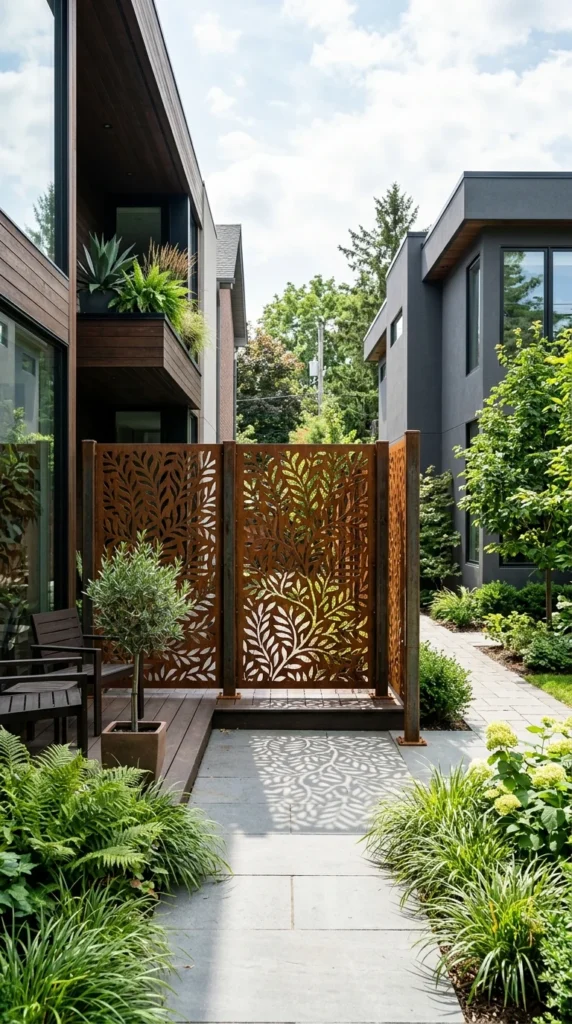
Sometimes the best solution is a mix of art and function. Laser-cut metal panels come in hundreds of designs, from geometric patterns to organic floral motifs. These panels provide immediate privacy and serve as a focal point in the landscape, especially when backlit with LED lighting at night.
10. Cherry Laurel
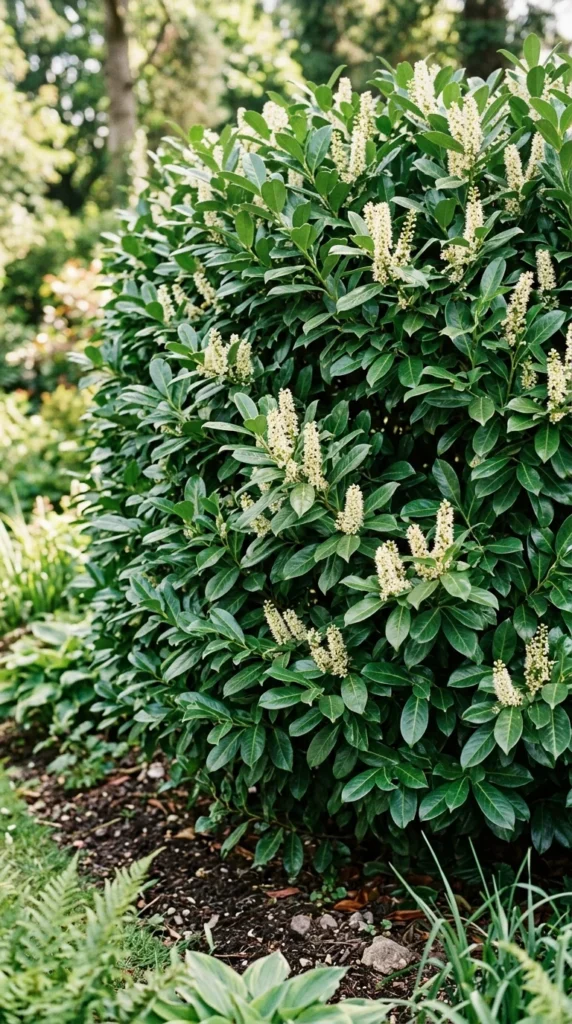
Cherry Laurel is a hardy evergreen shrub known for its large, shiny leaves. It grows rapidly and can handle both sun and significant shade, making it ideal for the often-shadowy areas between two tall houses. It creates a very dense, dark green backdrop that makes other plants in your garden pop.
11. Stone Walls
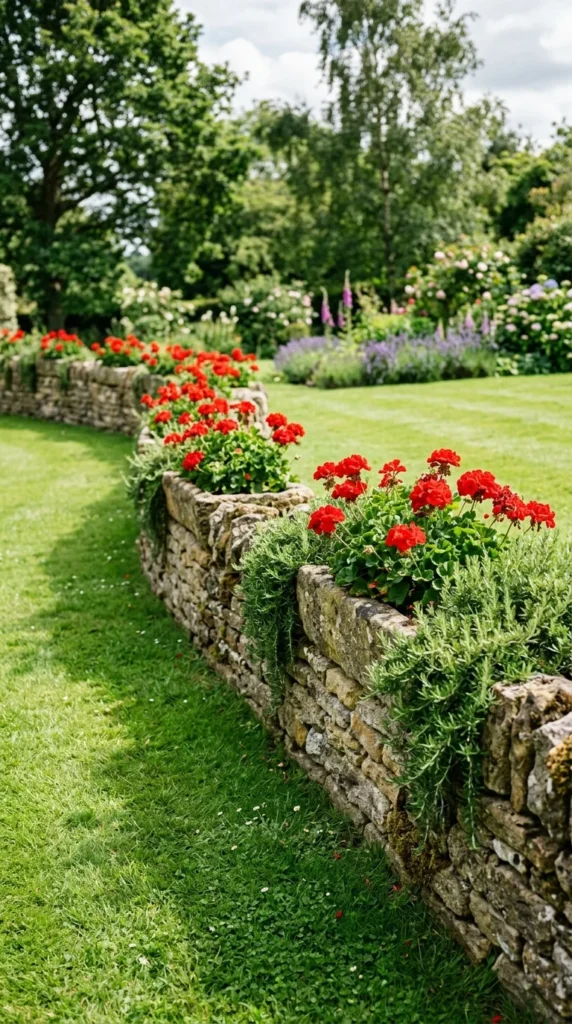
A stone wall provides a permanent, structural sense of boundary. To make it feel more integrated into the landscape, incorporate “living” elements by adding built-in planters along the top. This adds height and softens the hard edges of the stone, creating a tiered look that is both beautiful and functional.
12. Lattice Fencing
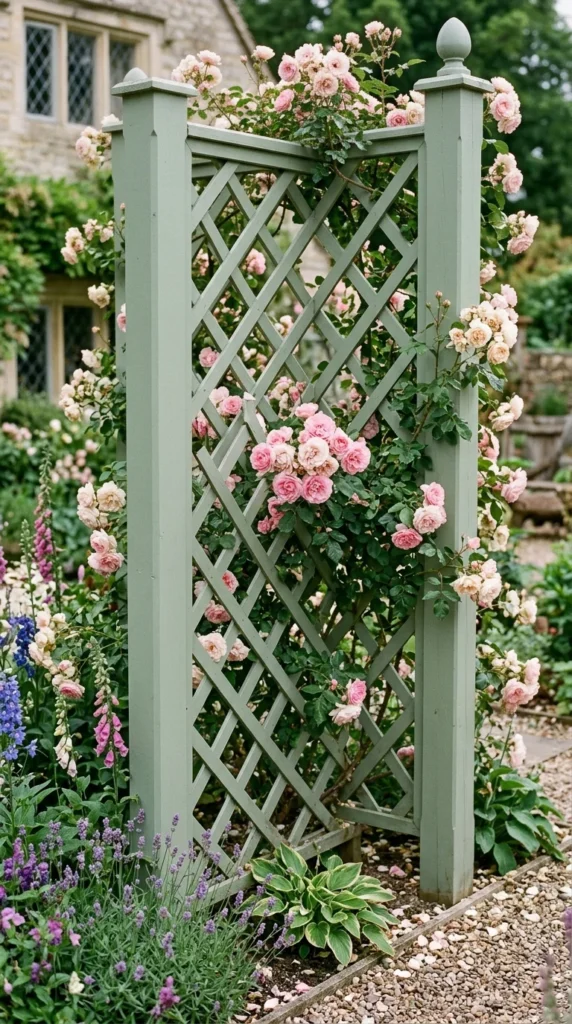
Lattice offers a softer alternative to solid fencing. It provides “partial” privacy, meaning it breaks up the view without completely blocking light or airflow. When paired with climbing roses or wisteria, it becomes a stunning vertical garden that smells as good as it looks.
13. Espalier Trees
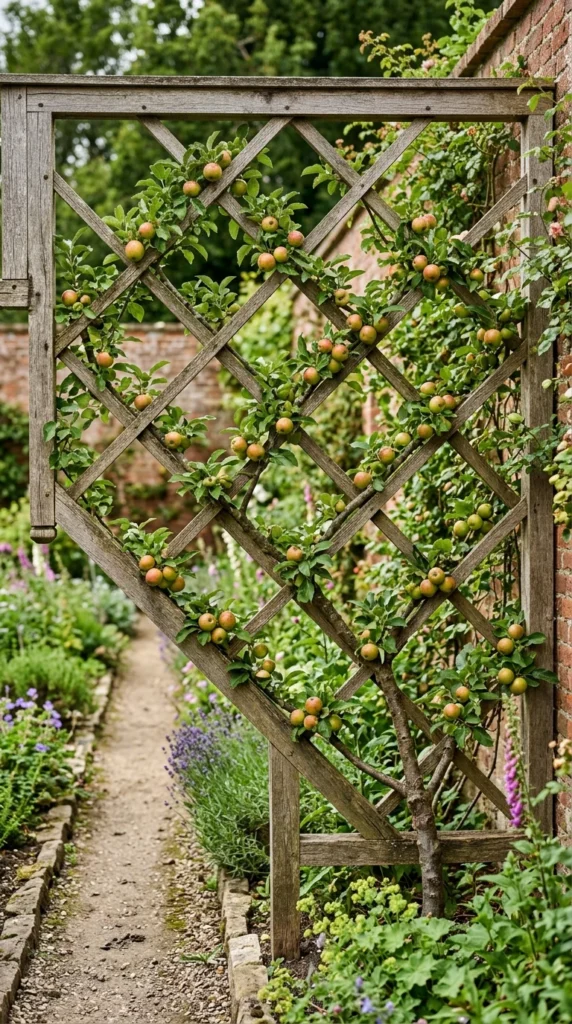
Espalier is the ancient practice of training trees to grow flat against a wall or fence. This is a brilliant solution for narrow passages where you want the beauty of a tree but don’t have the space for a wide canopy. Fruit trees like apples or pears are popular choices, offering privacy, blossoms, and food all in one.
14. Hydrangea Shrubs
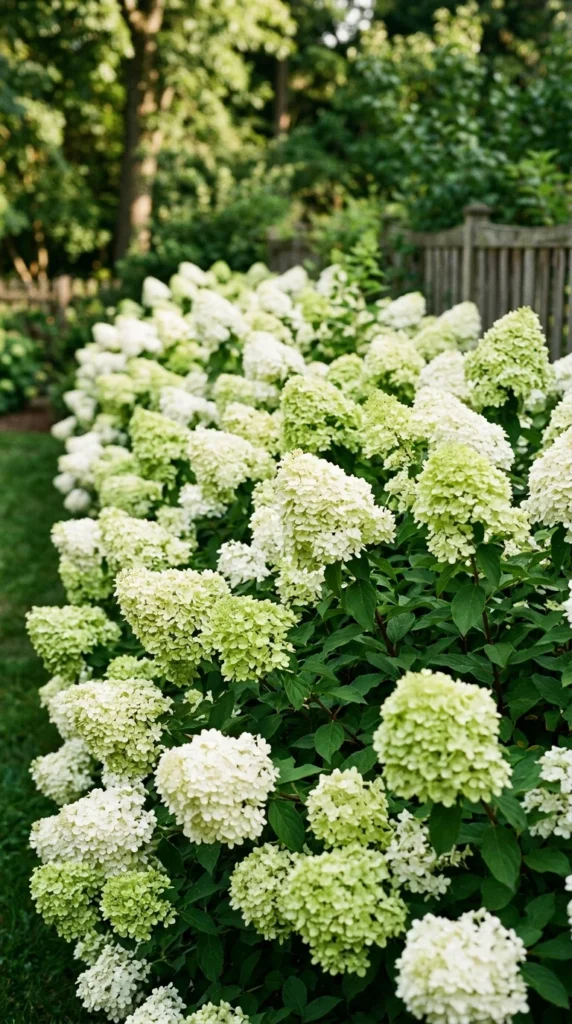
For a privacy screen that feels soft and romantic, nothing beats hydrangeas. Varieties like ‘Limelight’ or ‘Paniculata’ can grow quite tall and wide. During the summer months, their massive blooms create a thick wall of flowers that completely blocks the view while adding a touch of cottage-core charm.
15. Columnar Trees
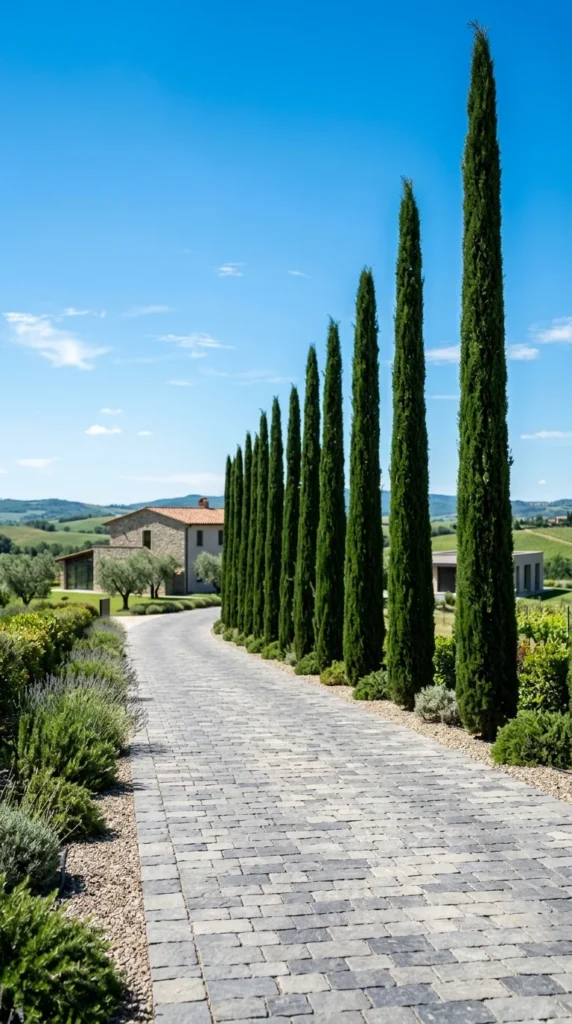
When horizontal space is at a premium, look for “columnar” or “fastigiate” cultivars. These trees are genetically programmed to grow tall and skinny. Examples include Columnar European Hornbeam or Columnar Blue Spruce, which provide architectural height without encroaching on your neighbor’s driveway.
16. Gabion Walls
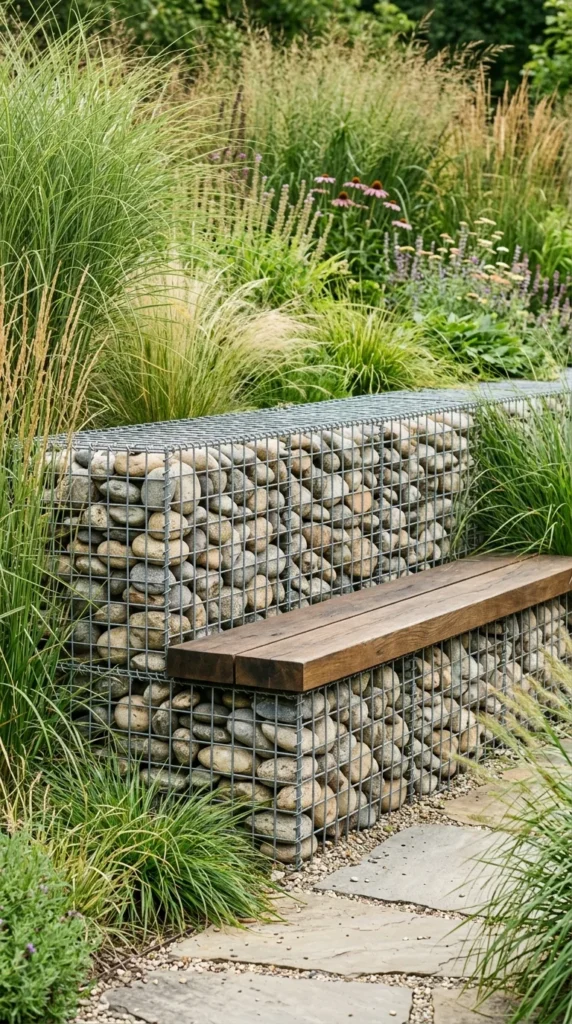
Gabion walls—wire cages filled with rocks—are a striking choice for industrial or modern landscapes. They are incredibly durable and provide a solid visual and sound barrier. To soften the look, you can plant succulents in the crevices or allow moss to grow over the stones.
17. Water Features
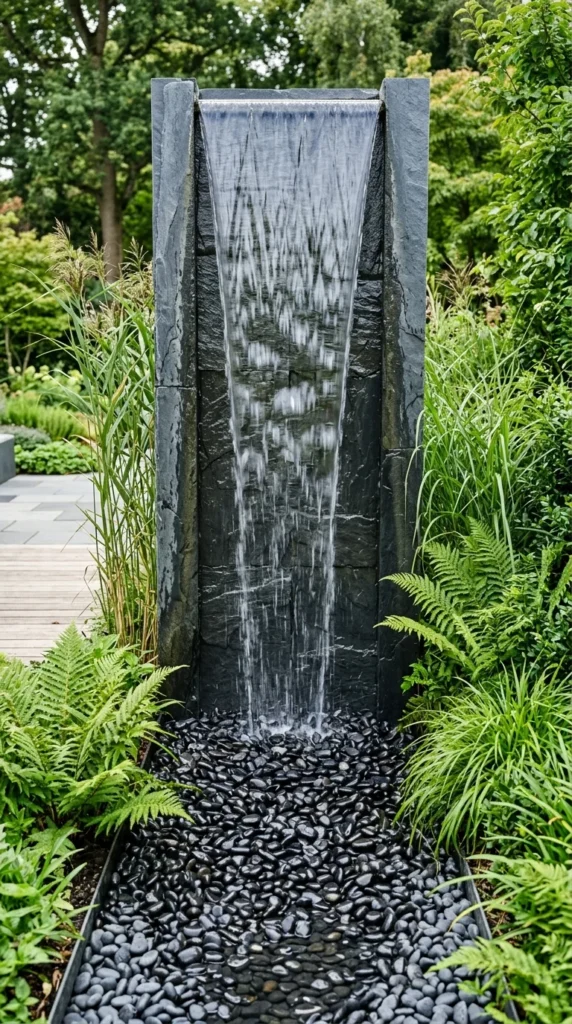
Privacy isn’t just about what you see; it’s also about what you hear. A well-placed water feature, like a bubbling rock or a cascading water wall, provides “acoustic privacy.” The white noise of falling water helps mask the sound of neighbors’ conversations or passing cars, making your outdoor space feel more secluded.
18. Retaining Walls
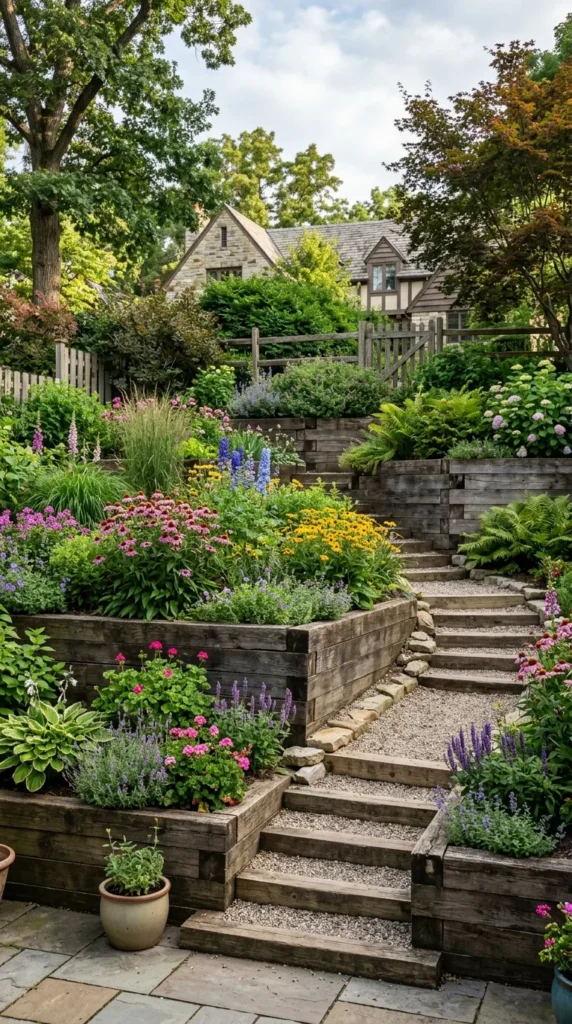
If your yard slopes toward your neighbor’s, a tiered retaining wall can solve both drainage and privacy issues. By creating levels, you can plant different heights of vegetation on each “step,” effectively building a wall of greenery that follows the natural grade of the land.
19. Pergolas
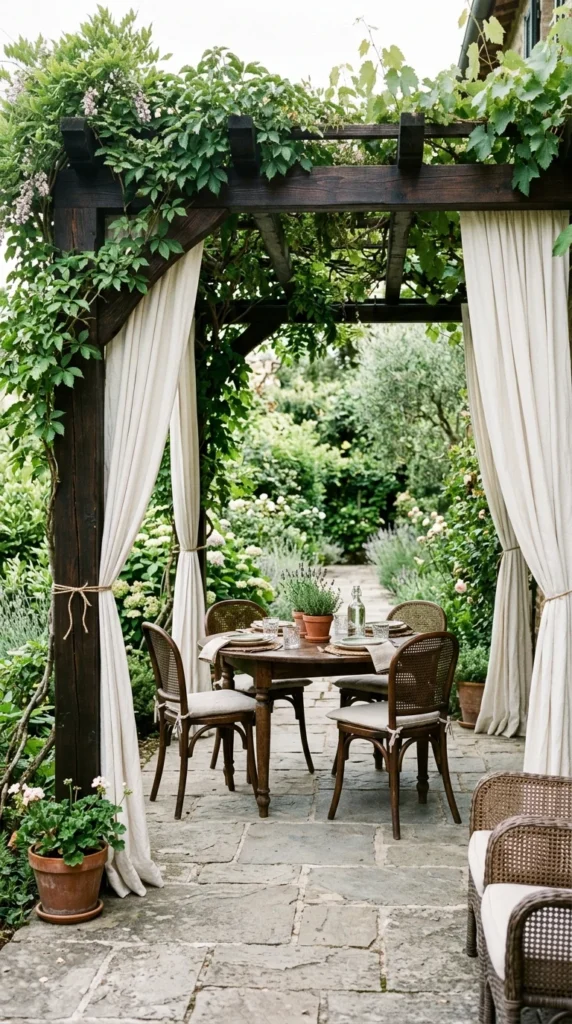
A pergola provides “overhead” privacy, which is crucial if your neighbor has a second-story deck looking down into your yard. By adding outdoor curtains or climbing plants to the sides of the pergola, you can create a private room-like feel right in the middle of your garden.
20. Privacy Berms
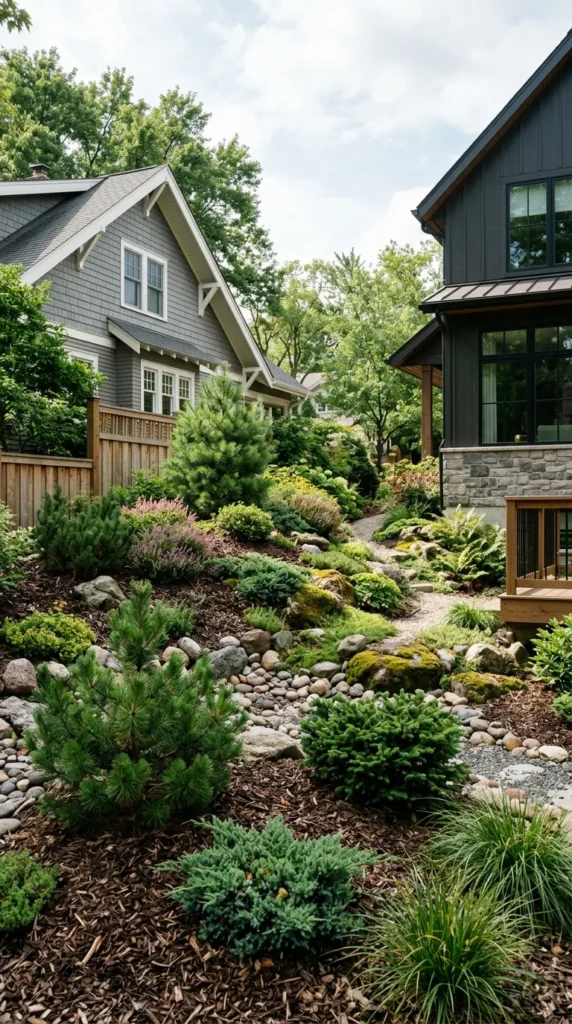
A berm is a man-made hill that adds immediate height to your landscaping. By mounding soil and then planting on top of it, a three-foot shrub suddenly becomes a six-foot screen. This is a great way to create a more organic, park-like boundary compared to a flat fence.
21. Ornamental Grasses
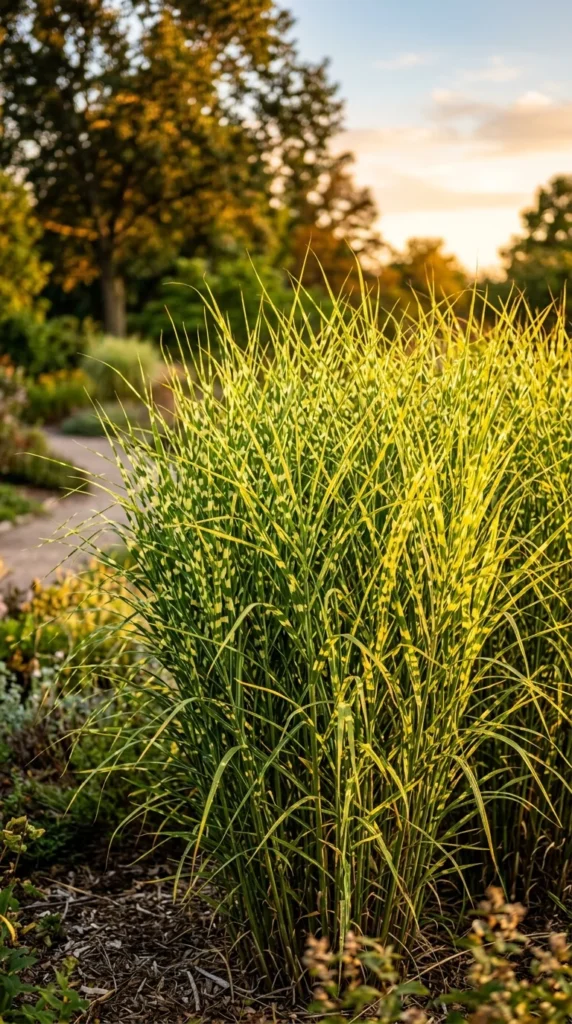
Ornamental grasses are excellent for seasonal privacy. They grow incredibly fast once the weather warms up and stay standing throughout the winter, providing a golden, textured screen even in the snow. They are low-maintenance and bring a sense of movement to the garden.
22. Mixed Borders
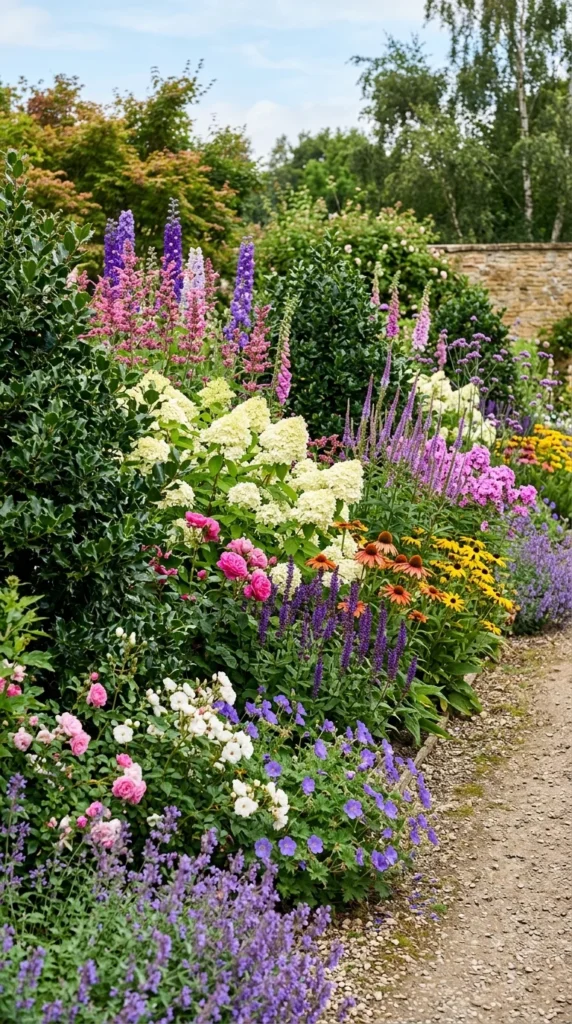
The mixed border is the ultimate “curated” privacy look. Rather than a single species of plant, you mix evergreens, deciduous shrubs, and perennials. This ensures that even if one plant is dormant or struggling, the others provide coverage. It creates a rich, biodiverse environment that looks like a natural extension of your garden.