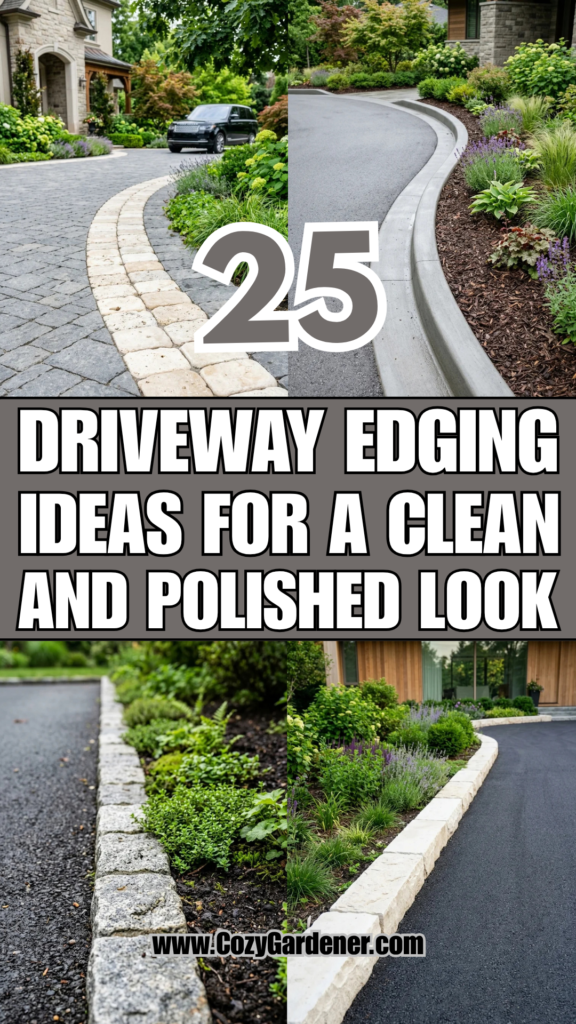
A driveway is more than just a place to park your car; it is the transition point between the public street and your private sanctuary. However, without proper definition, even the most expensive driveway can look unfinished. Driveway edging serves two critical purposes: it provides a structural barrier that prevents the driveway material from spreading or cracking at the edges, and it creates a visual “frame” that boosts curb appeal instantly.
Whether you are looking for a modern, minimalist vibe or a rustic, cottage-style finish, the right edging can transform your home’s exterior. Here are 25 creative and practical driveway edging ideas to help you achieve a clean, polished look.
1. Belgian Blocks
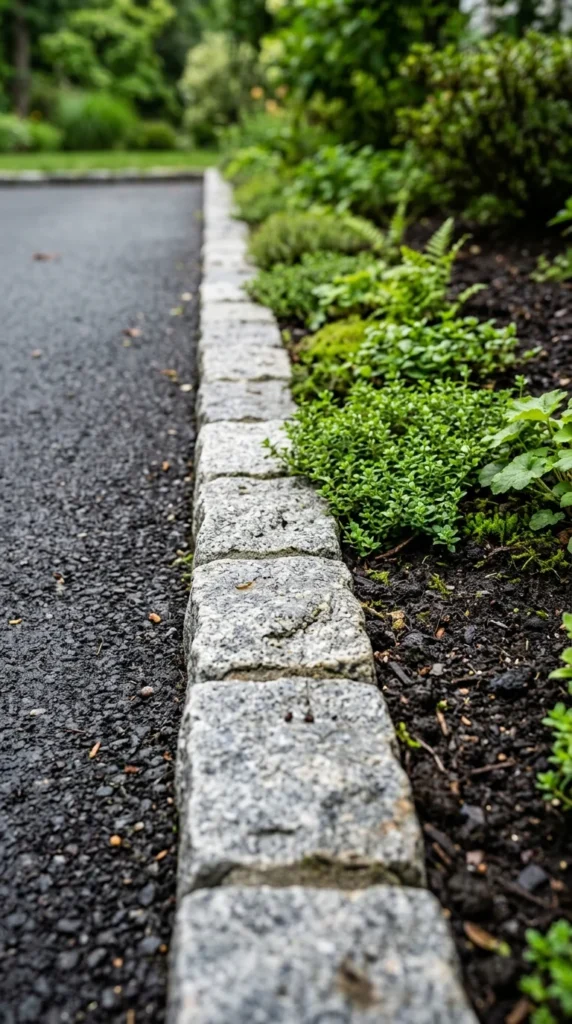
Belgian blocks are the gold standard for driveway edging. These hand-cut granite stones offer an old-world charm that works exceptionally well with traditional and colonial-style homes. They are incredibly durable, resistant to freeze-thaw cycles, and heavy enough to stay in place without shifting. You can install them vertically for a more pronounced border or lay them flat for a subtle transition.
2. Red Bricks
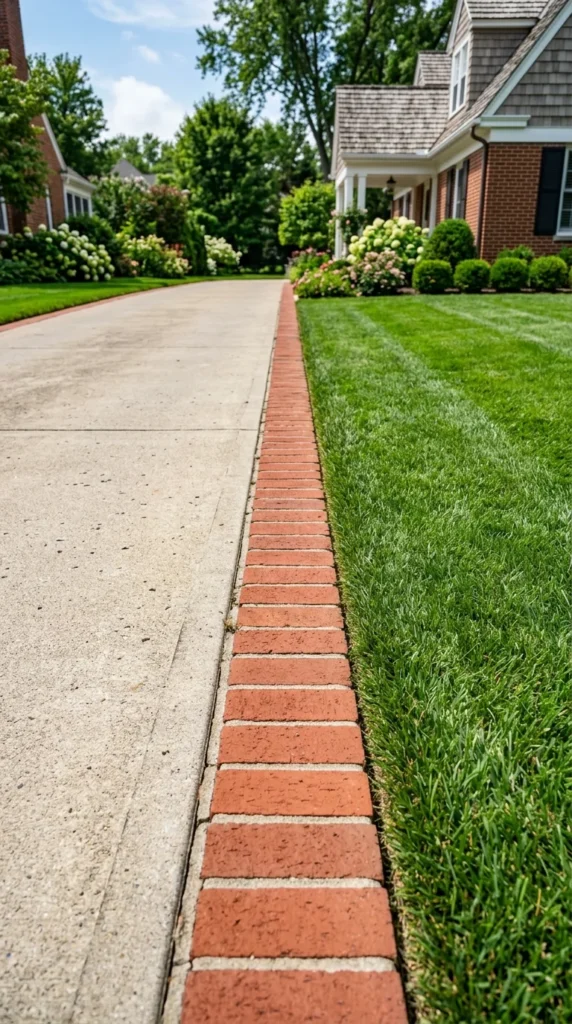
Bricks are a timeless choice that adds warmth and a sense of history to your landscape. Using a “soldier course” (bricks standing vertically) or a “sailor course” (bricks laid horizontally) allows you to customize the height and width of the border. Red bricks pair perfectly with gravel or asphalt driveways, providing a sharp contrast in color and texture.
3. River Rocks
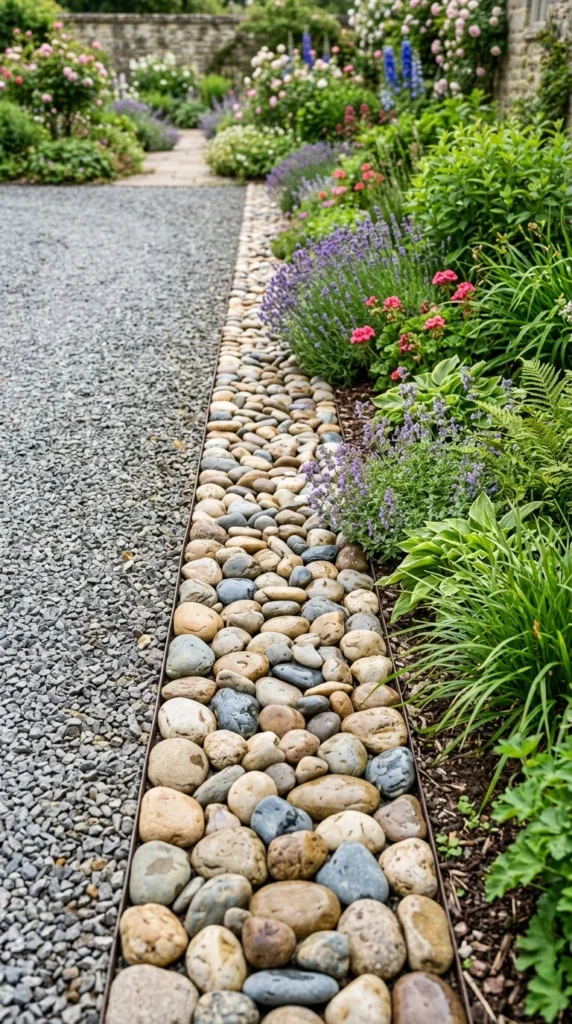
If you prefer a natural, organic aesthetic, river rocks are an excellent option. These smooth, rounded stones come in various sizes and earth tones. They are particularly effective for driveways with drainage issues, as they allow water to seep through easily. Pairing different sizes—placing larger stones at the back and smaller pebbles toward the front—adds depth and visual interest.
4. Plastic Edging
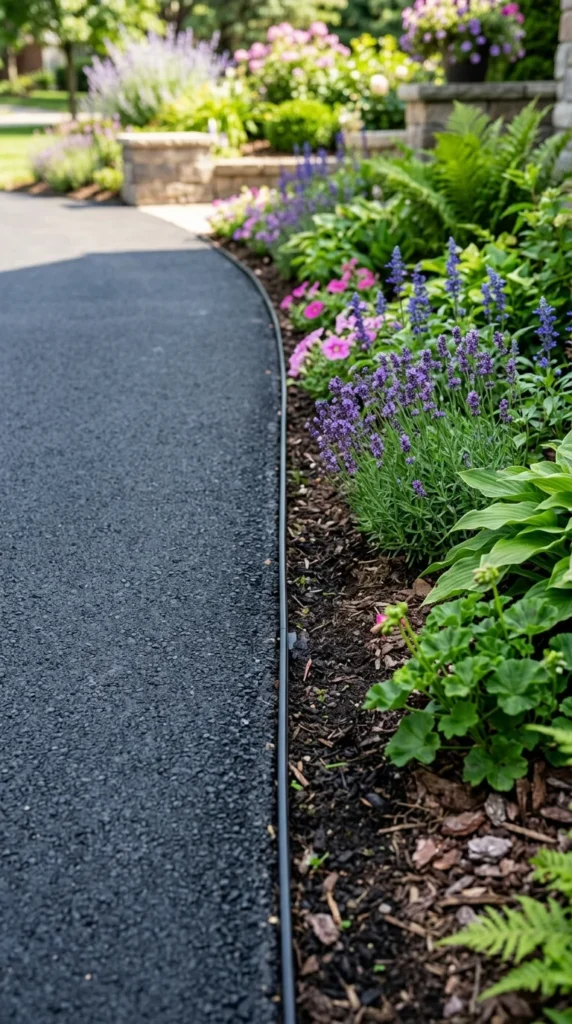
For homeowners who want the benefits of edging without the visual bulk, heavy-duty plastic edging is the way to go. It is cost-effective, easy to install, and nearly invisible once the surrounding soil or mulch is added. This material is excellent for keeping grass from creeping onto your driveway and maintaining a crisp, clean line.
5. Steel Strips

Steel edging provides a sleek, contemporary look that is favored by modern architects. Thin strips of steel or aluminum are flexible enough to handle curves but strong enough to hold back gravel or soil. Over time, materials like Corten steel develop a beautiful rust-colored patina that protects the metal from further corrosion while adding an industrial chic vibe.
6. Concrete Pavers
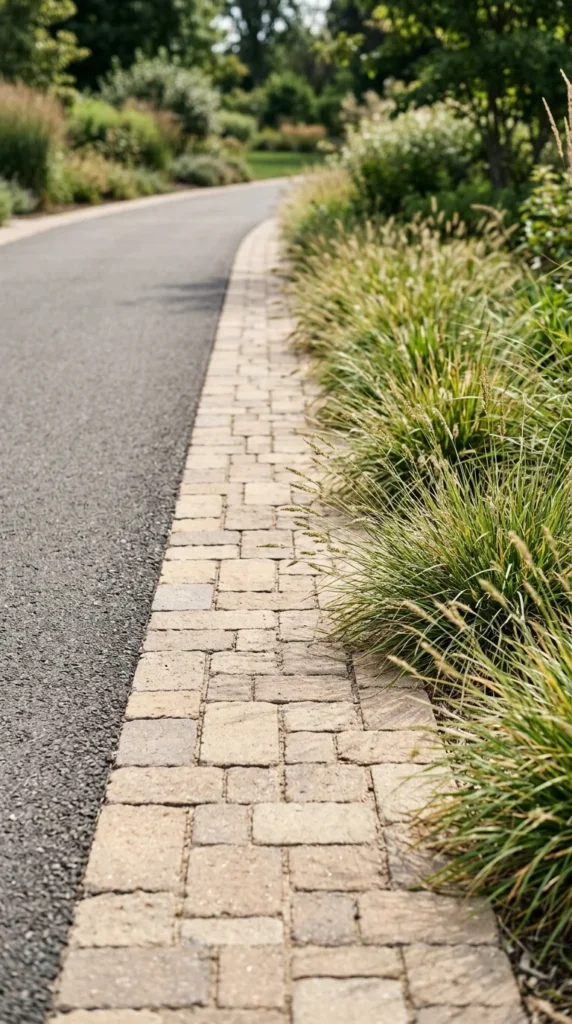
Concrete pavers are incredibly versatile. They come in hundreds of colors, shapes, and textures, allowing you to mimic the look of natural stone or brick at a lower cost. Using a contrasting color of paver—such as a charcoal paver against a light concrete driveway—creates a bold architectural statement that defines the space clearly.
7. Railway Sleepers
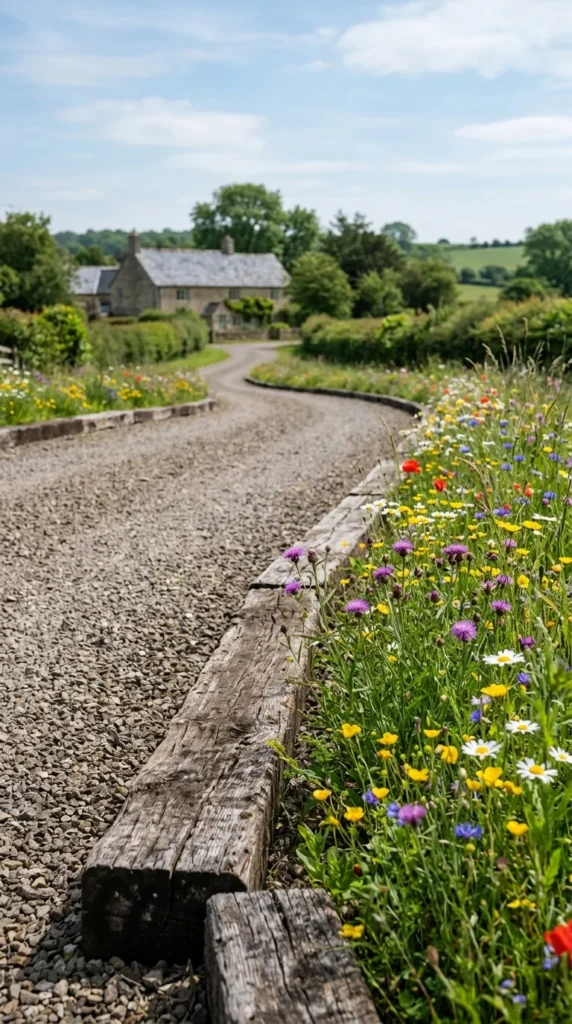
For a rugged, farmhouse, or rustic look, reclaimed railway sleepers or large timber beams are ideal. These heavy wooden elements provide a strong vertical presence and can even help level out a driveway on a slight slope. To ensure longevity, always use pressure-treated wood or naturally rot-resistant species like cedar or redwood.
8. Cobblestones
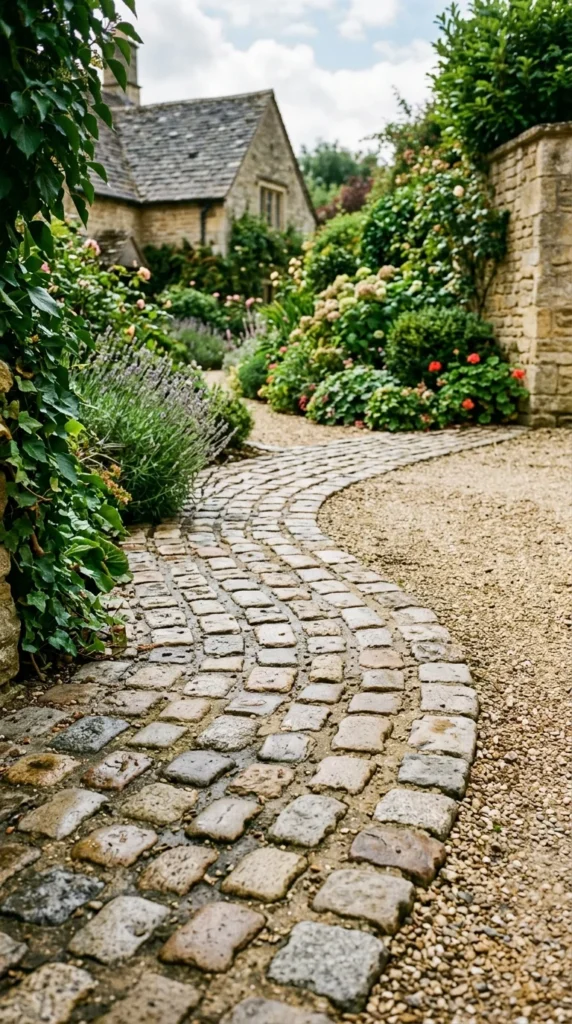
Cobblestones offer a quintessential “storybook” look. Their uneven surfaces and varying sizes create a textured, handcrafted feel. While they require a bit more effort to install (usually involving a mortar bed), they are virtually indestructible and only look better as they age and develop moss or lichen in the crevices.
9. Poured Concrete
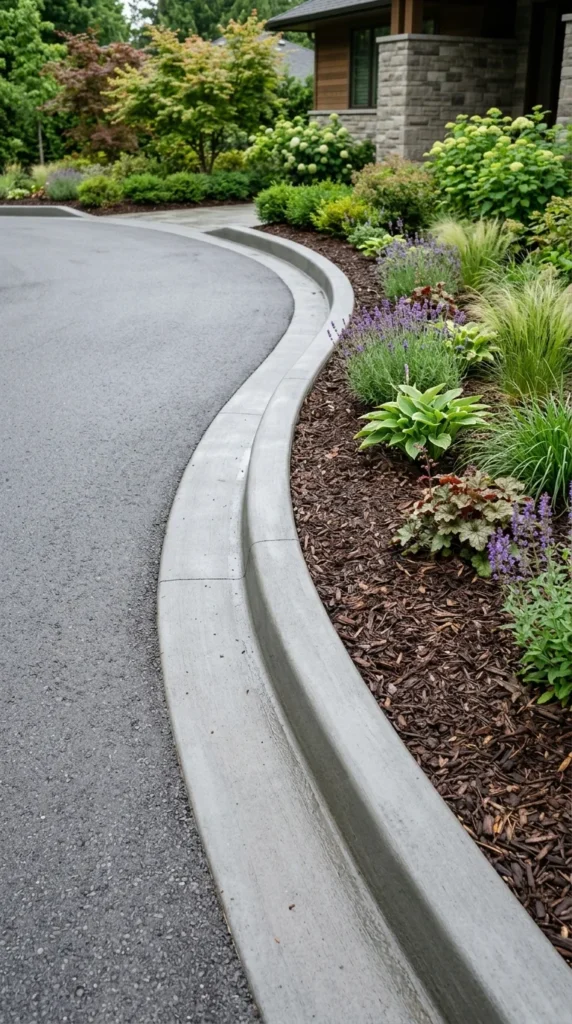
If you want a permanent, low-maintenance solution, a poured concrete curb is the best option. Professionals can use a “curbing machine” to extrude a continuous concrete border in various shapes and colors. This method is highly effective at preventing weeds and grass from encroaching on the driveway and provides a very high-end, finished look.
10. Granite Sets
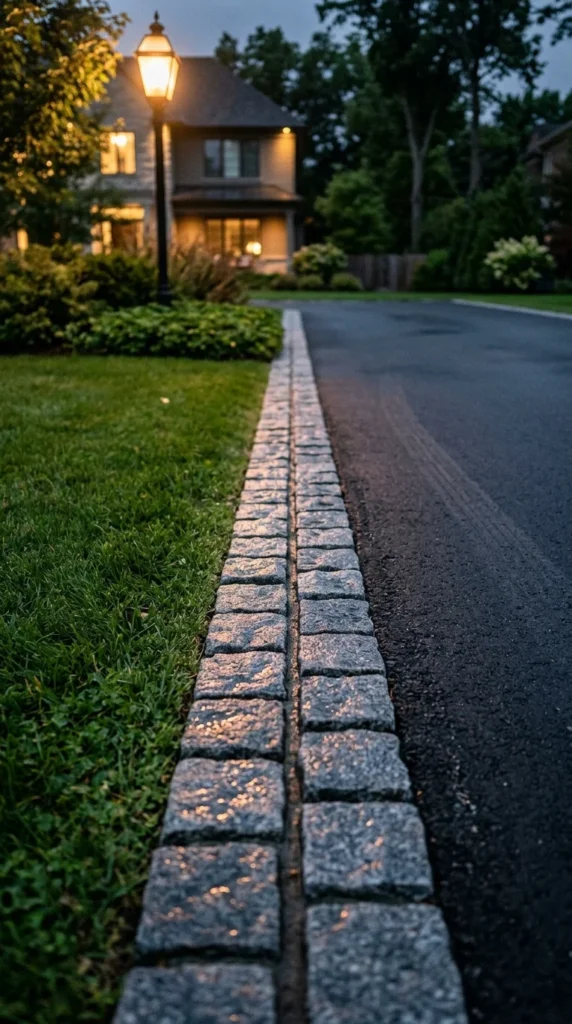
Granite sets are smaller than Belgian blocks, typically square in shape. They are often used to create intricate patterns or double-row borders. Because granite is non-porous and extremely hard, it won’t crack or discolor, making it a “forever” choice for driveway edging that adds significant value to a property.
11. Natural Flagstone
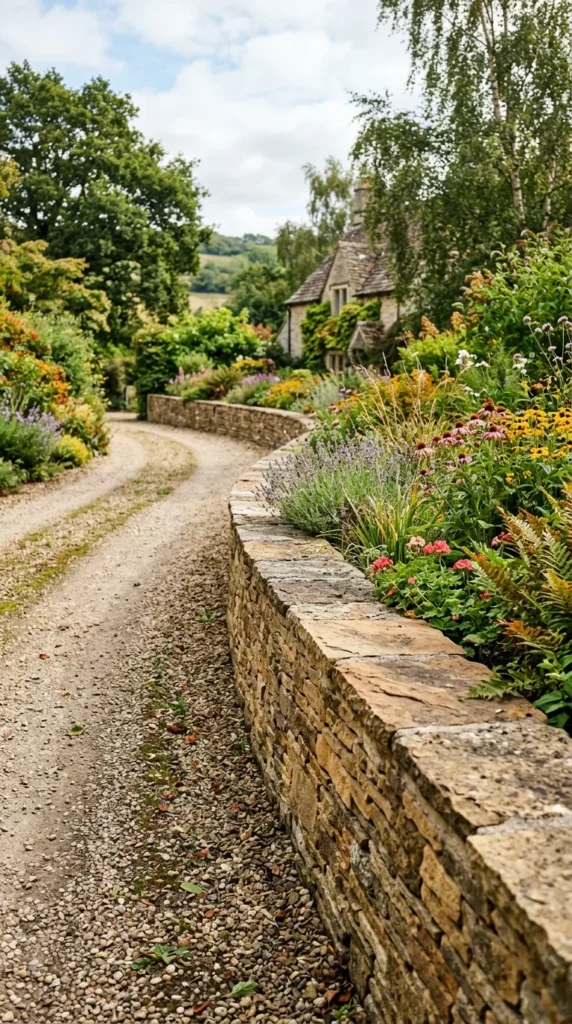
Flagstone edging is perfect for homes with a “craftsman” or “naturalist” style. The irregular shapes and varied colors (from blues and greys to tans and oranges) create a softer, more integrated look with the surrounding landscape. You can stack them like a mini-retaining wall or lay them flat for a more subtle transition.
12. Pressure-Treated Wood
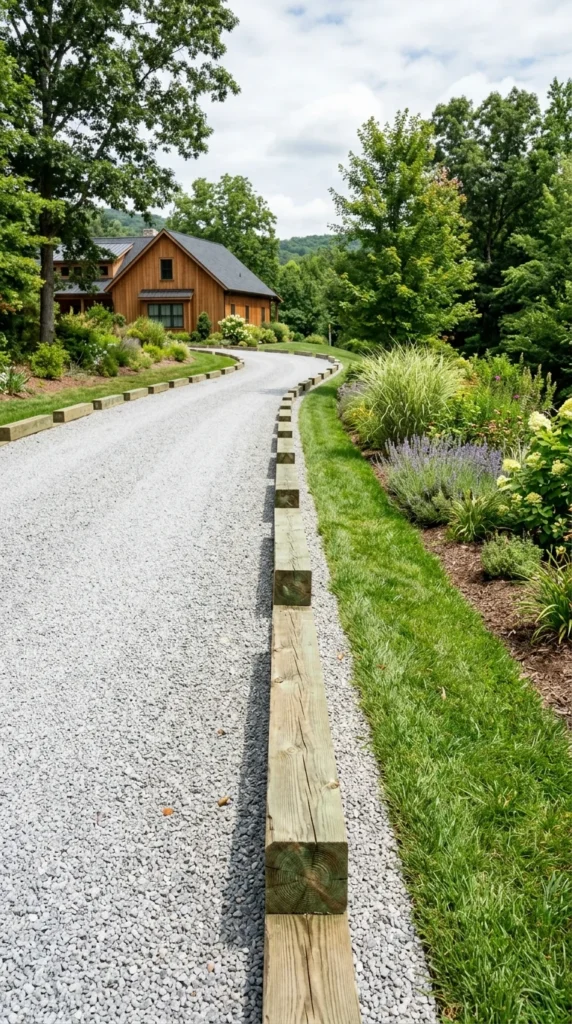
When budget is a primary concern, pressure-treated 4×4 or 6×6 timbers provide a clean, straight line for a fraction of the cost of stone. These are particularly useful for gravel driveways, as they act as a “container” to keep the stones from washing away during heavy rain.
13. Boxwood Hedges
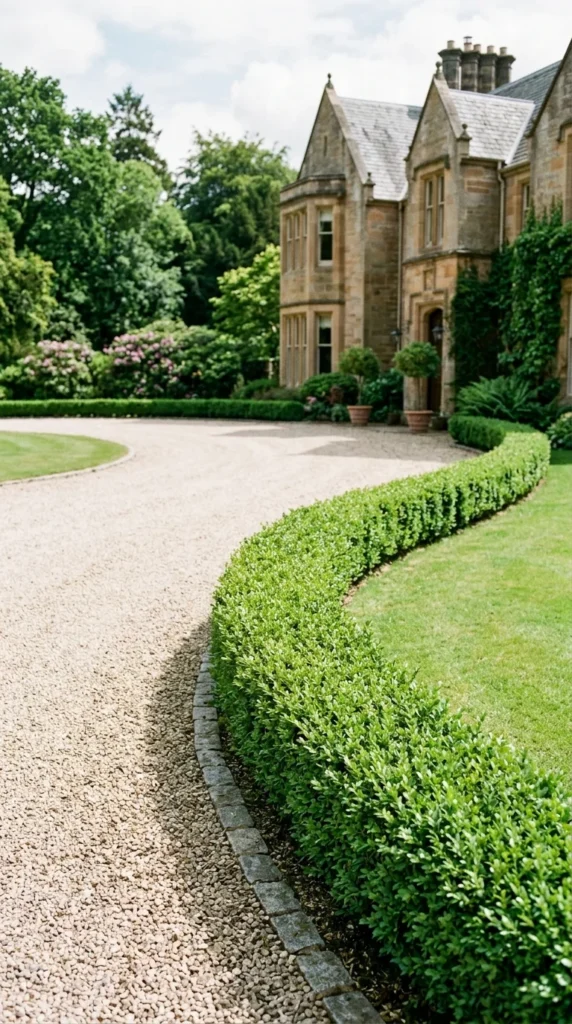
Who says edging has to be made of stone or wood? A living border of low-growing shrubs like boxwoods creates a lush, formal appearance. This “green wall” defines the driveway while adding oxygen and life to your front yard. It does require regular pruning to maintain a “polished” look, but the aesthetic payoff is massive.
14. Solar LED Lights
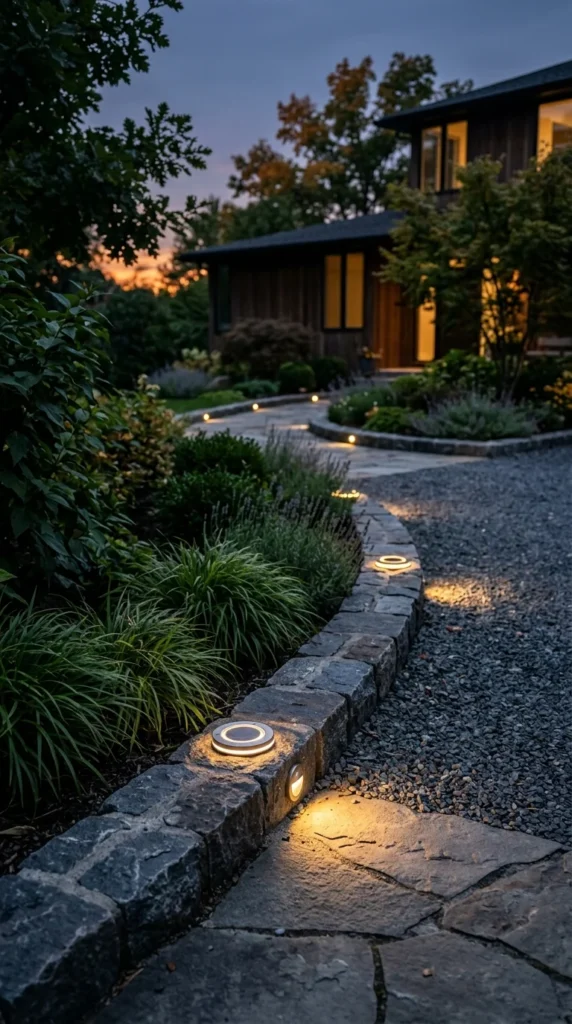
Lighting can serve as a functional and decorative edge. By installing solar-powered LED stakes or recessed “well lights” along your driveway border, you create a safe path for nighttime driving while highlighting the architecture of your home. Combining lighting with stone edging gives your driveway a luxury hotel feel.
15. Pea Gravel
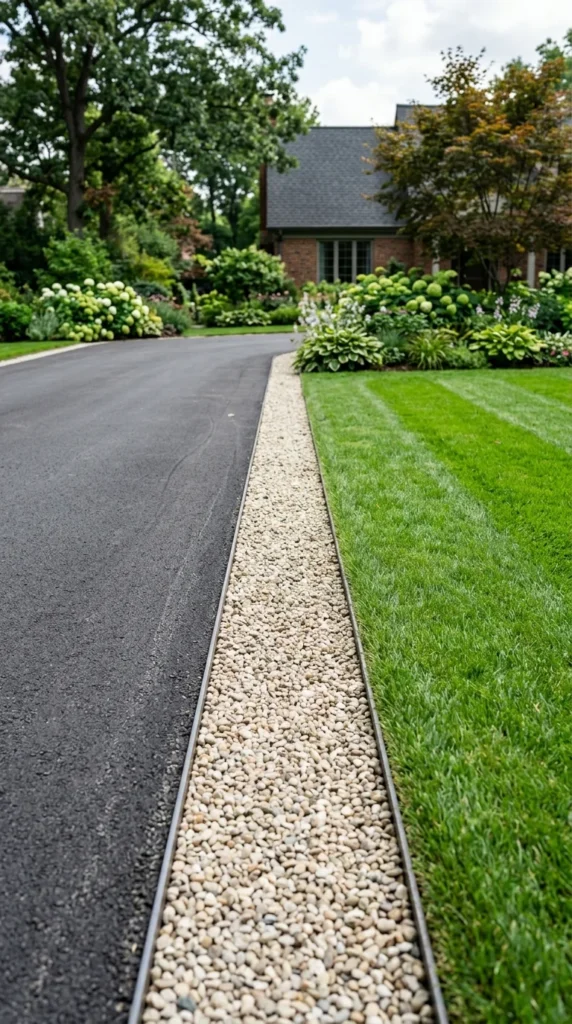
Sometimes, the best edging is a secondary material. A narrow strip of pea gravel between your driveway and your lawn provides a textural contrast and a satisfying “crunch” underfoot. It also serves as a mini-soakaway for rainwater, helping to reduce runoff.
16. Slate Tiles
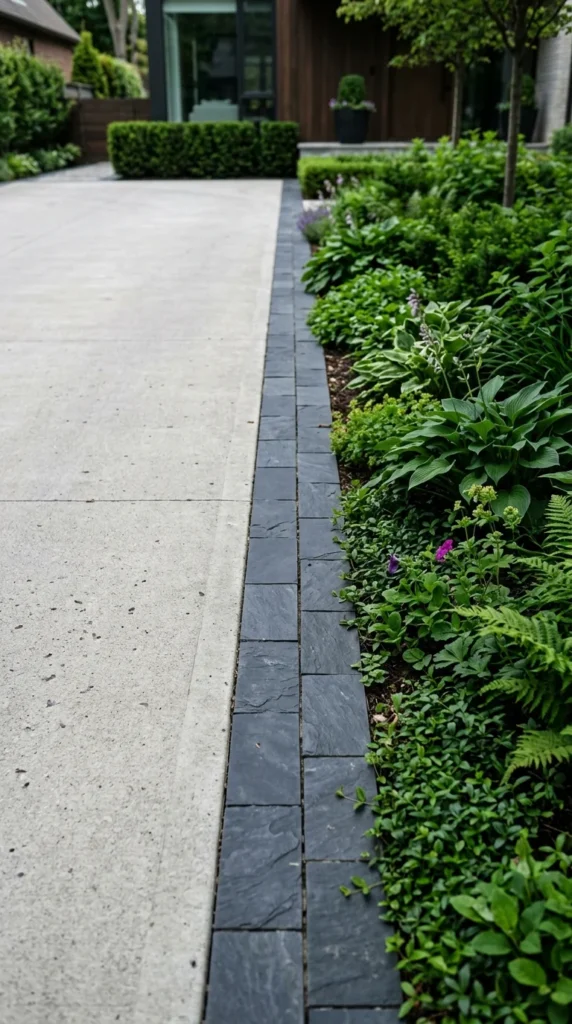
Slate offers a sophisticated, dark color palette that is hard to find in other natural stones. It can be installed as flat pavers or as vertical “shingles” for a unique, layered look. Slate is especially beautiful when wet, turning a deep, reflective black that looks stunning against green grass.
17. Gabion Walls
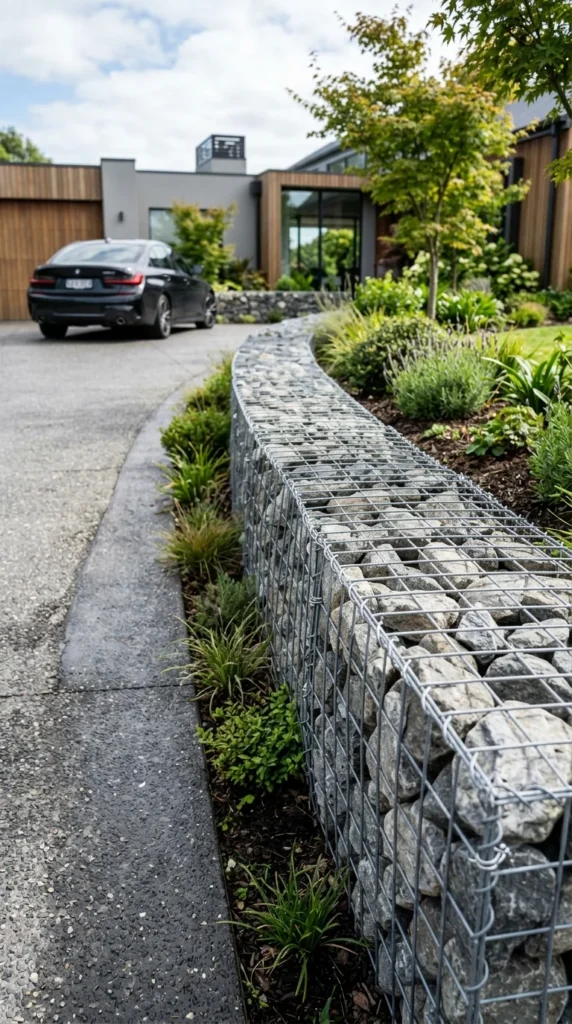
For a modern or industrial aesthetic, consider a low gabion wall. These are wire cages filled with rocks or recycled glass. They are incredibly sturdy, provide excellent drainage, and create a unique visual texture that stands out from more traditional masonry.
18. Terracotta Tiles
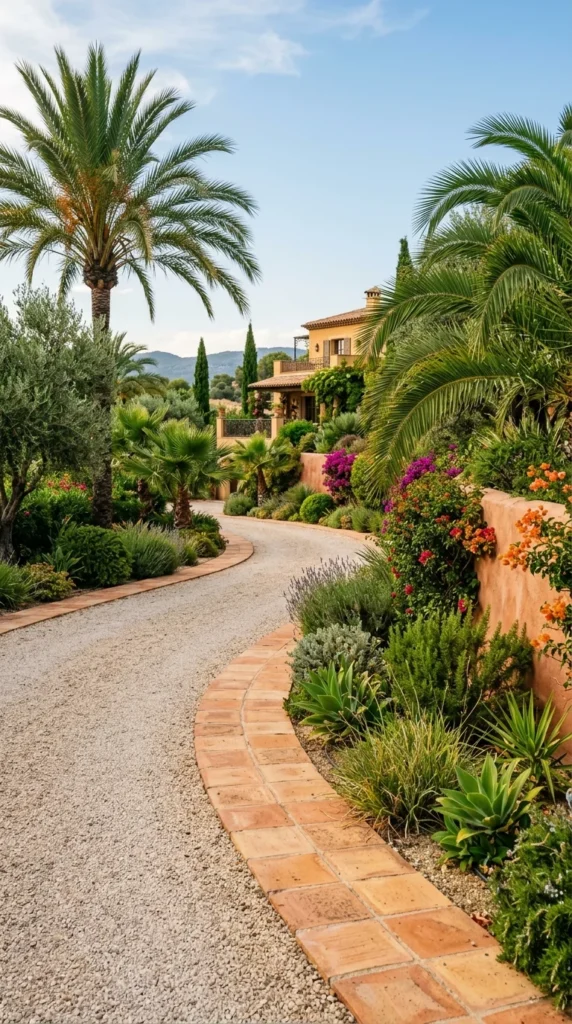
Common in Mediterranean and Southwestern architecture, terracotta tiles add a pop of warm color. While they are softer than granite or concrete, they offer a distinct, artisanal look. They pair beautifully with stucco homes and desert landscaping.
19. Travertine Edges
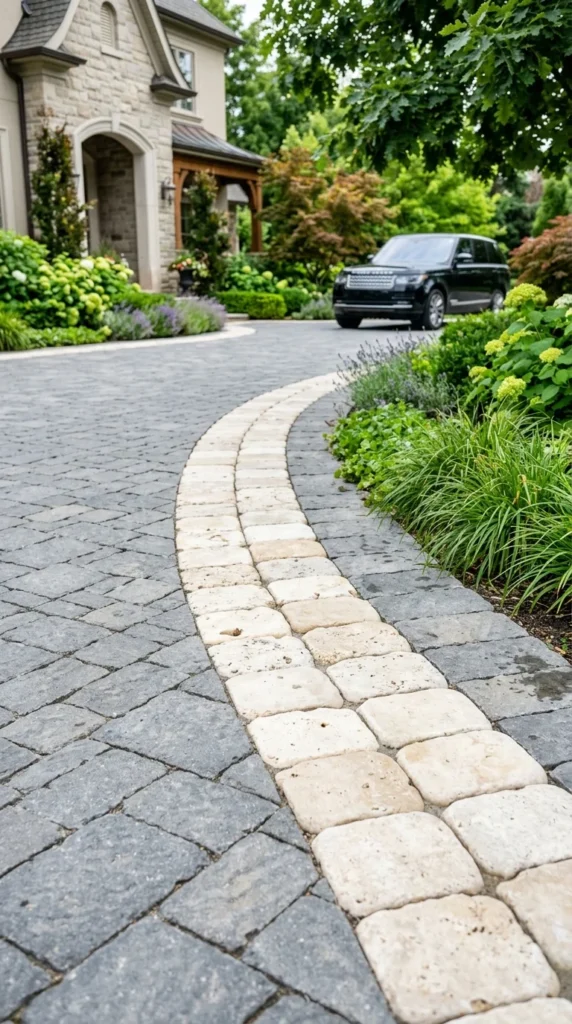
Travertine is a type of limestone that stays cool to the touch even in direct sunlight. Its porous, pitted surface provides a high-end, luxury look often seen around pool decks and high-value estates. Using travertine for your driveway edging suggests a level of refinement and elegance.
20. Limestone Blocks
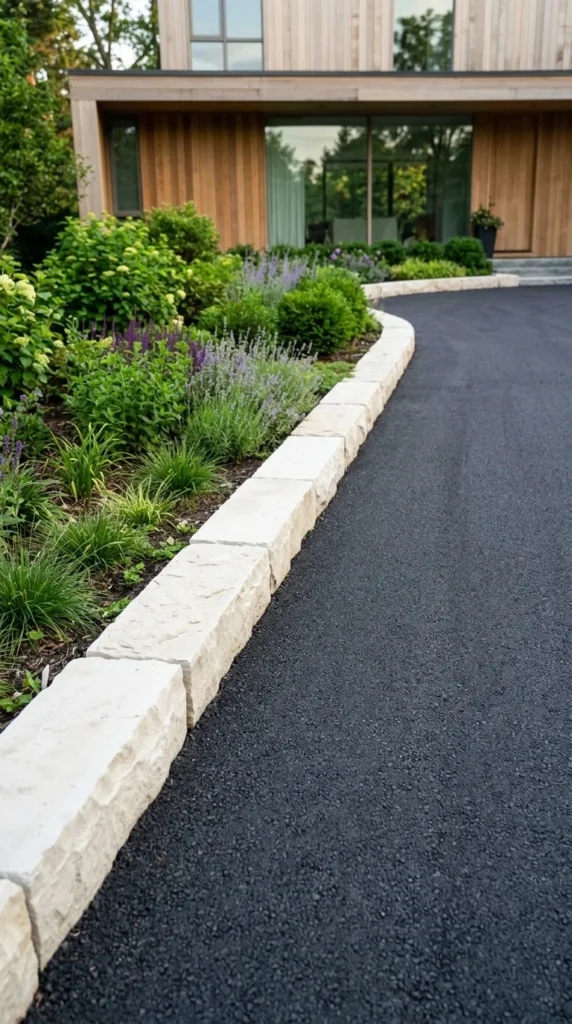
Limestone blocks offer a very clean, uniform appearance. Because limestone is naturally light in color (ranging from white to light grey), it creates a high-contrast border that makes the driveway look exceptionally sharp and well-defined.
21. Rubber Edging
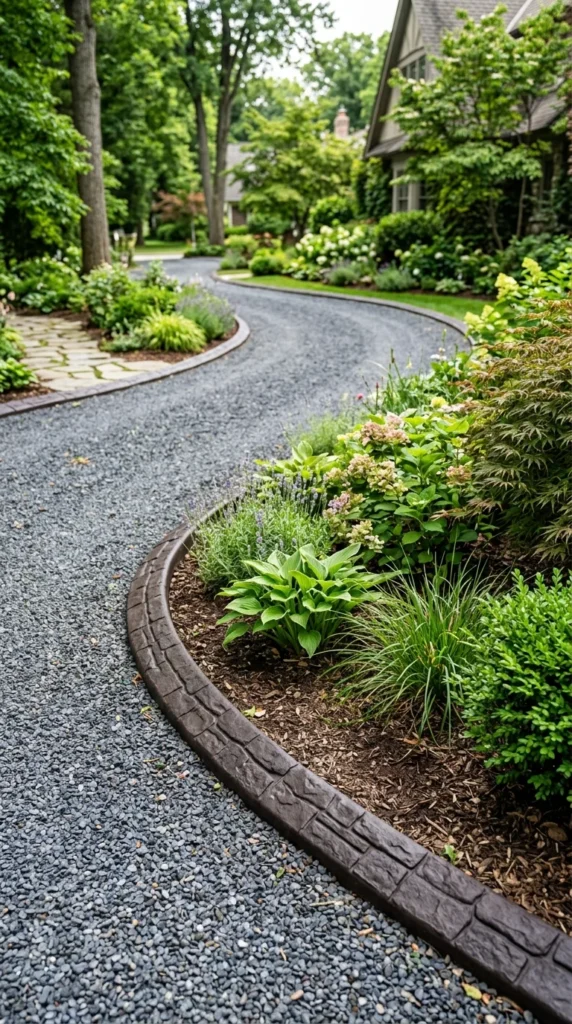
Environmentally conscious homeowners might opt for recycled rubber edging. This material is often made from old tires and is designed to look like stone or wood. It is extremely flexible, making it the perfect choice for driveways with complex curves or tight turns.
22. Decorative Logs
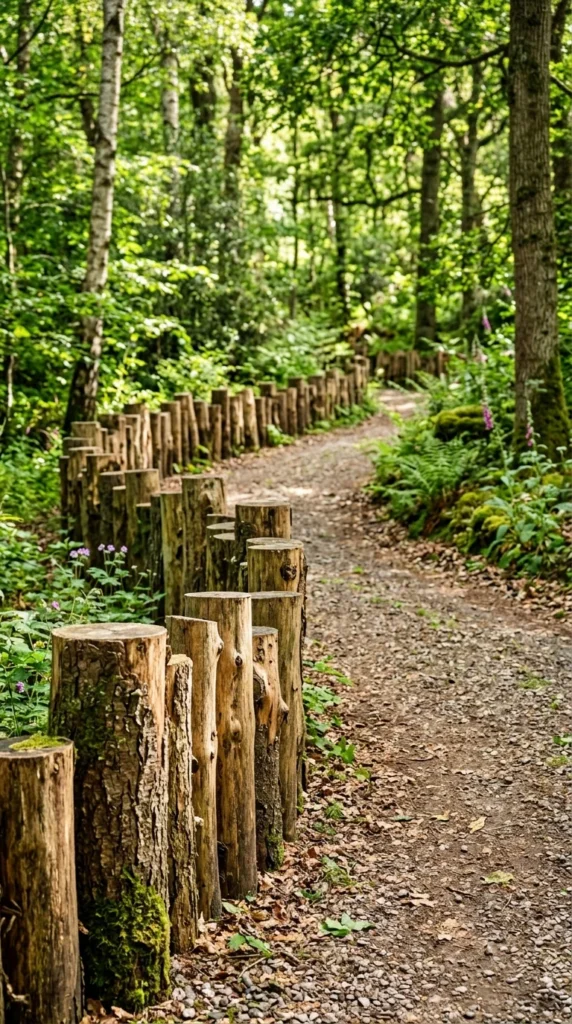
For a cottage or woodland home, using sections of natural logs can create a whimsical and organic edge. By Varying the heights of the logs, you can create a dynamic, textured border that feels like it grew naturally out of the forest floor.
23. Boulders
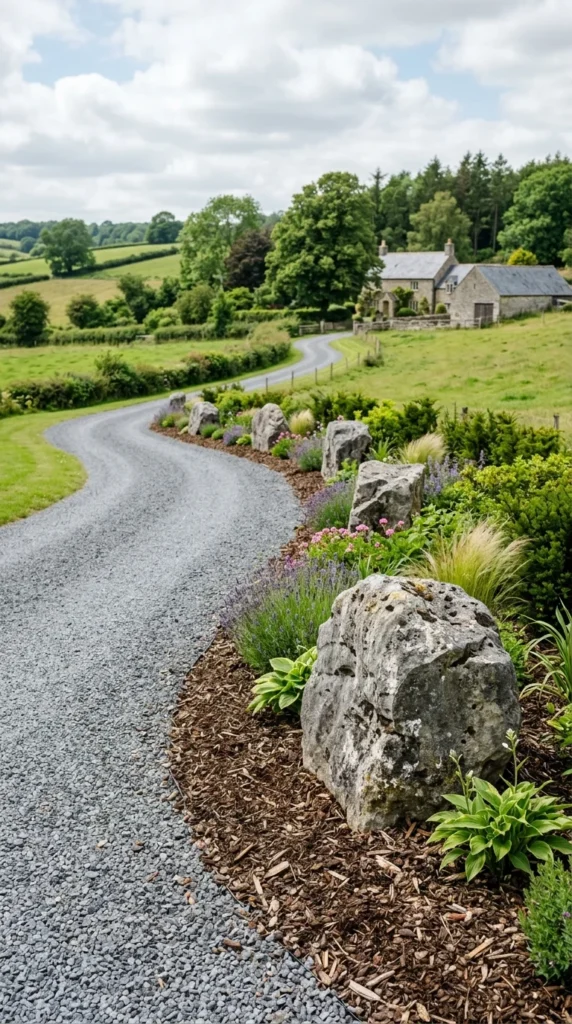
If your property is large, small stones might get lost in the scale of the landscape. Large boulders placed at intervals can define the driveway boundary with a sense of permanence and grandeur. This is a great choice for long, winding driveways in rural settings.
24. Perennial Borders
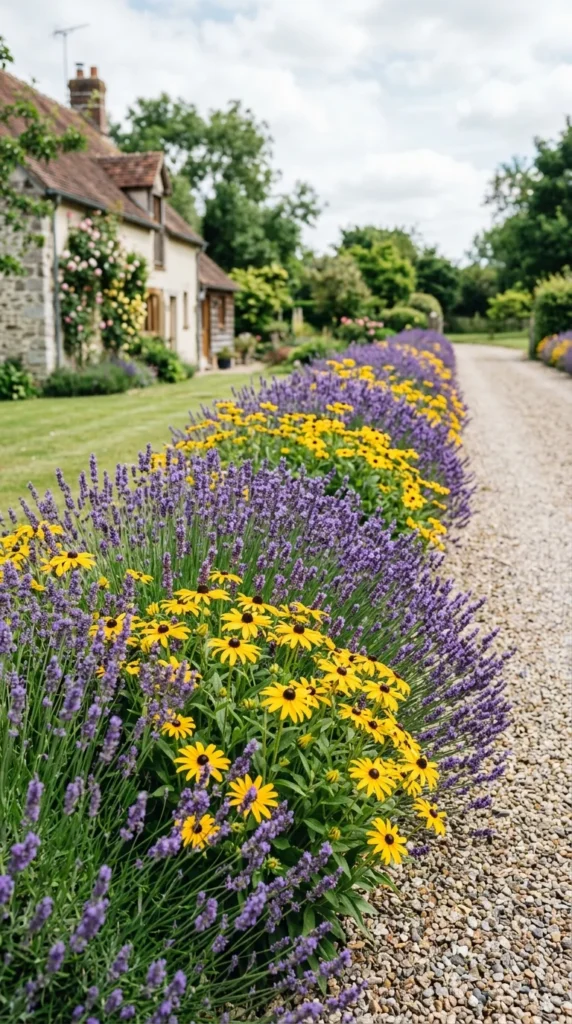
Similar to boxwood hedges, a perennial border uses flowering plants to define the space. Lavender, catmint, or daylilies are excellent choices as they are hardy and provide a soft, colorful transition from the hard driveway surface to the rest of the garden.
25. Scalloped Edging
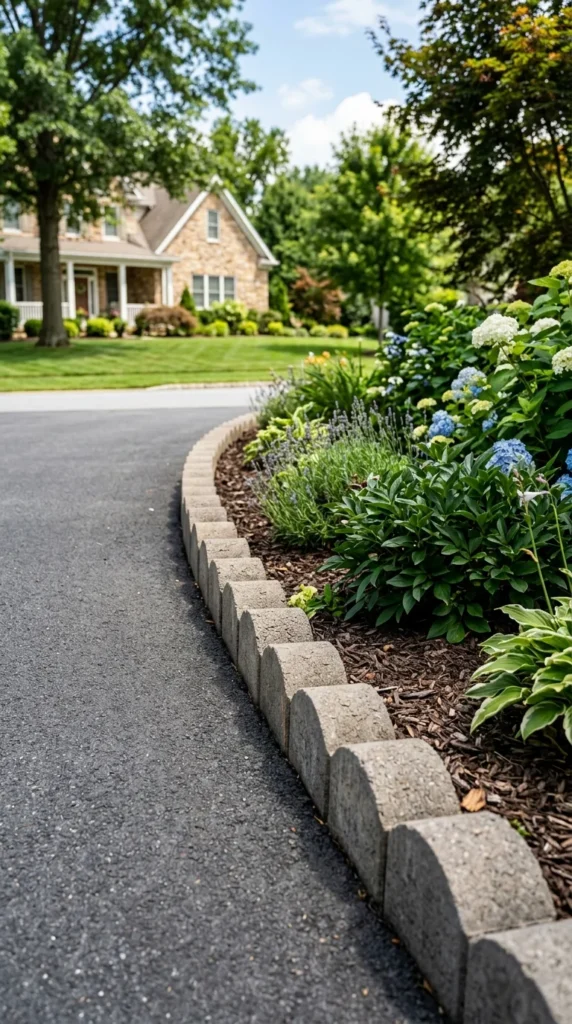
Scalloped edging is a classic choice for traditional suburban homes. Usually made from pre-cast concrete or clay, these blocks feature a rounded, decorative top that adds a touch of charm. They are easy to install and provide a very “finished” and orderly appearance to any driveway.