
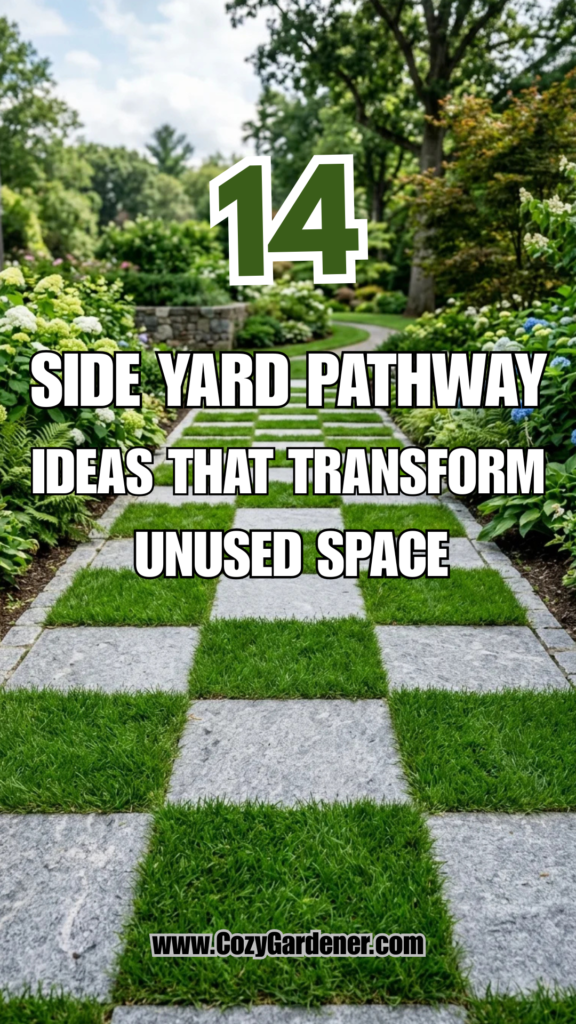
The side yard is often the “forgotten” zone of a landscape. Frequently relegated to housing trash cans or AC units, this narrow strip of land has massive potential to become a secret garden, a serene transition zone, or a functional architectural highlight. A well-designed pathway does more than just keep your shoes clean; it provides structure, defines the aesthetic of your home, and maximizes your property’s square footage. Whether your side yard is a sun-drenched corridor or a shady nook, these fourteen pathway ideas will help you turn that “dead space” into a stunning destination.
1. Flagstone
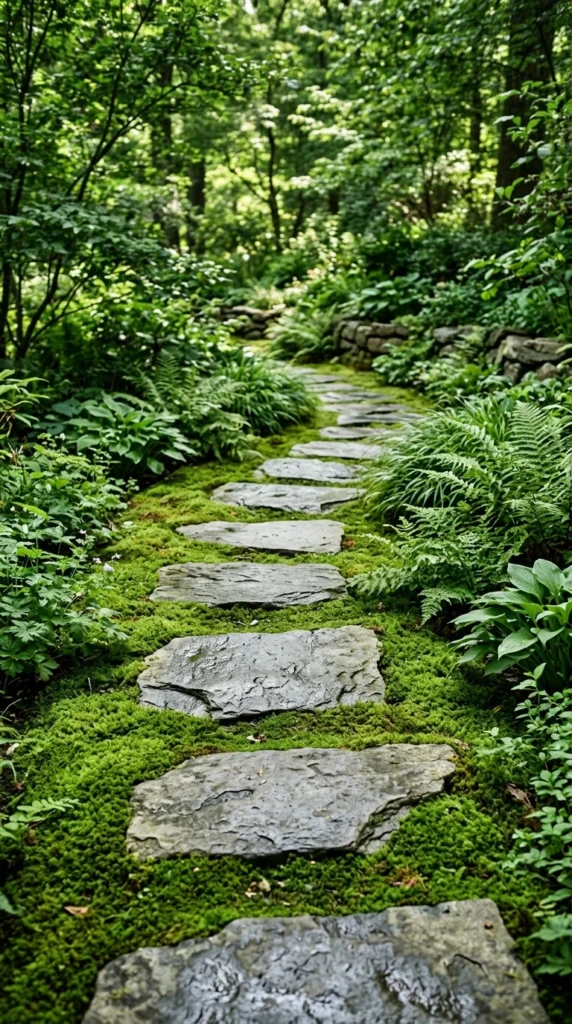
Flagstone is the gold standard for homeowners seeking a natural, organic look. Because the stones come in irregular shapes and sizes, no two pathways are ever identical. To create a professional look, “puzzle” the pieces together with 2-to-4-inch gaps. Filling these gaps with creeping thyme or moss creates a soft, fairytale aesthetic that feels like it has been there for decades. Flagstone is incredibly durable and heavy enough to stay in place without a complex subterranean foundation, making it a favorite for DIY enthusiasts and professional landscapers alike.
2. Pea Gravel
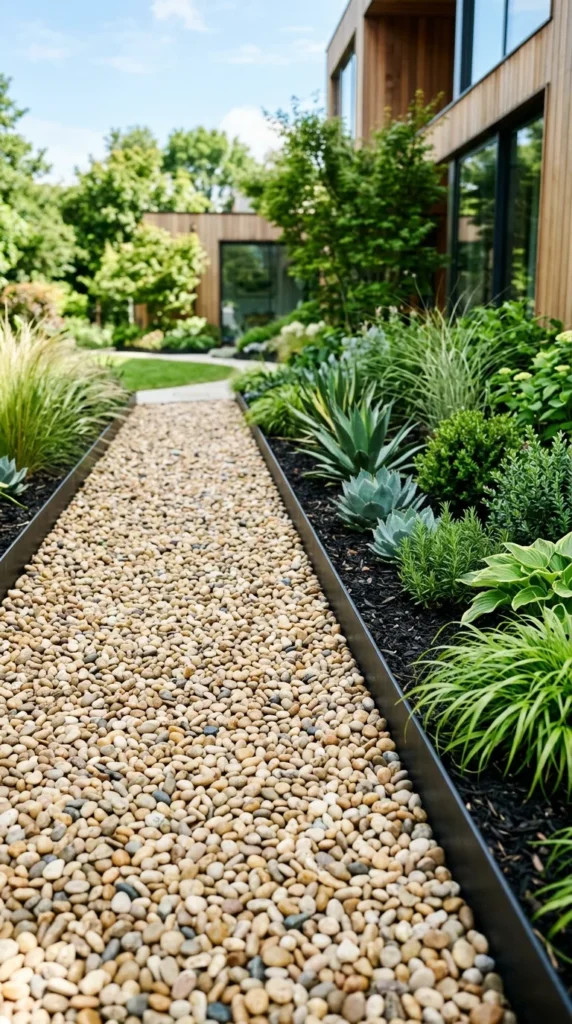
For those on a budget or looking for a project that can be completed in a weekend, pea gravel is an exceptional choice. The small, rounded stones provide a satisfying crunch underfoot and offer excellent drainage—a crucial factor for side yards that tend to collect water. To keep the gravel from migrating into your lawn or flower beds, use a sturdy edging material like steel, pressure-treated timber, or brick. Pea gravel works beautifully in both traditional cottage gardens and sleek, modern landscapes.
3. Modern Pavers
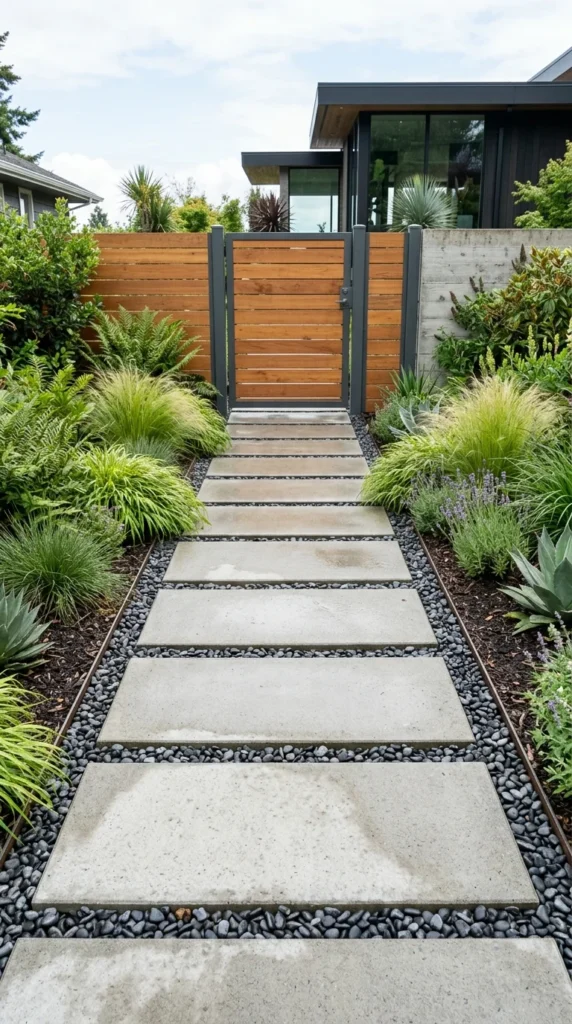
If your home features contemporary architecture, large-format concrete pavers are the way to go. Using oversized squares or rectangles creates a sense of rhythm and order. For a high-contrast, “architectural” look, space the pavers several inches apart and fill the voids with dark Mexican beach pebbles or white marble chips. This geometric approach makes narrow spaces feel wider and provides a very stable, flat walking surface that is easy to navigate.
4. Wood Slats
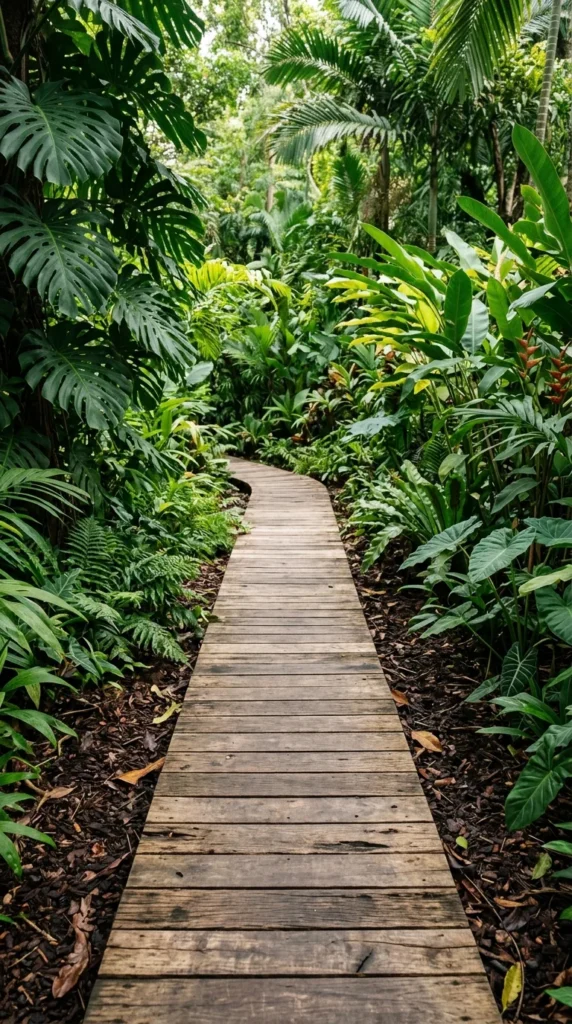
Embrace the feeling of a spa or a coastal resort by installing a wooden slat pathway. Often referred to as a “boardwalk” path, this style is perfect for side yards with uneven terrain or drainage issues, as the wood can be slightly elevated on a frame. Cedar and redwood are popular choices due to their natural resistance to rot and insects. The linear lines of the wood planks can lead the eye forward, making a short side yard feel significantly longer and more intentional.
5. Brick Herringbone
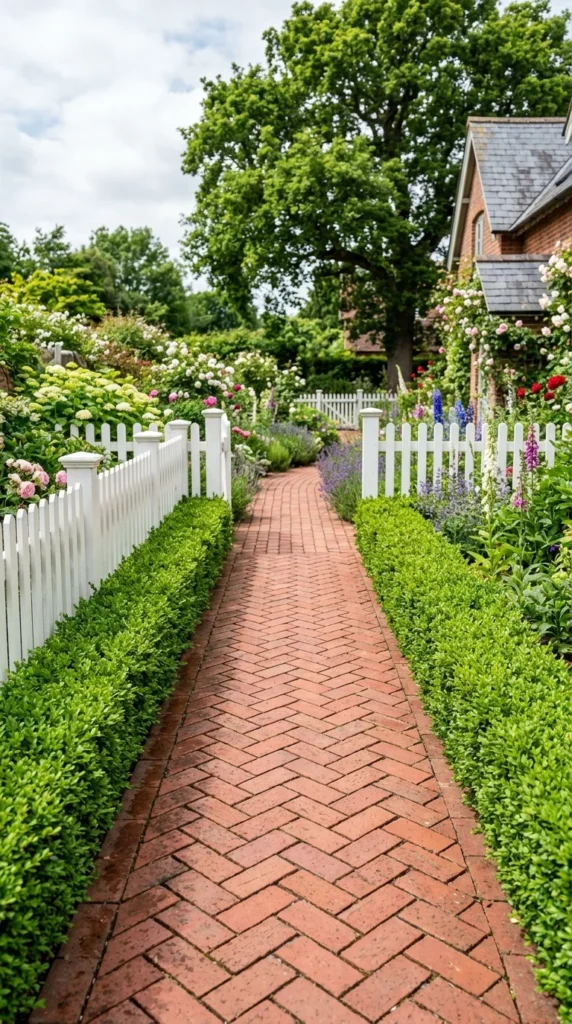
Nothing beats the timeless elegance of brick. While a simple running bond pattern is lovely, a herringbone pattern adds a level of craftsmanship and visual interest that elevates the entire side yard. Brick is a fantastic “warm” material that complements traditional, colonial, or craftsman-style homes. It provides a very smooth, solid surface that is ideal for high-traffic areas where you might be wheeling a mower or a bicycle.
6. Mulch and Log
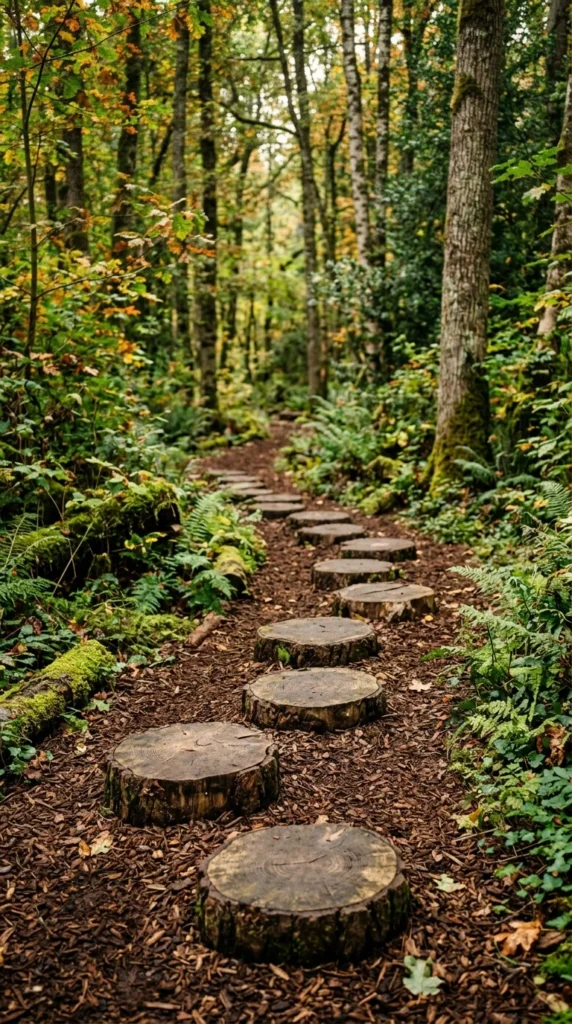
For a rustic or woodland-themed backyard, a mulch-and-log path is both eco-friendly and cost-effective. You can use wood “cookies” (thin cross-sections of logs) as stepping stones embedded directly into a thick layer of wood chips or bark mulch. This design blends seamlessly into the environment and is incredibly forgiving of roots from nearby trees. It’s an excellent choice for a low-maintenance side yard where you want to encourage a natural, unmanicured vibe.
7. River Rock
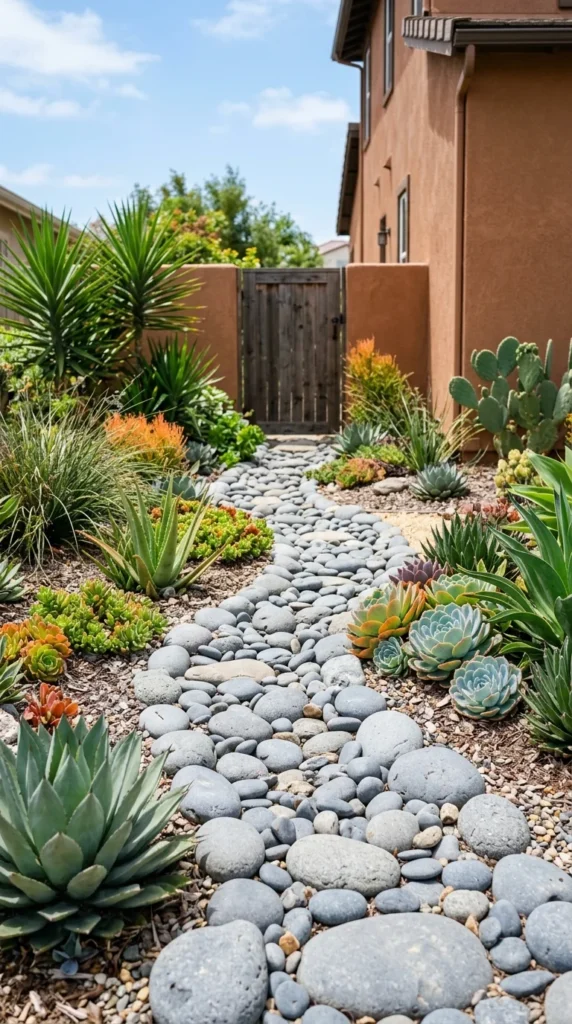
If your side yard doubles as a drainage route during heavy rain, turn a problem into a feature with a river rock “dry creek bed” path. Use a mix of medium and large smooth stones to create a textured, visual journey. While it may not be the flattest surface for high-heels, it is visually stunning and requires almost zero maintenance. Intersperse the rocks with larger boulders and tufts of ornamental grass to create a Zen-like retreat.
8. Grass and Stone
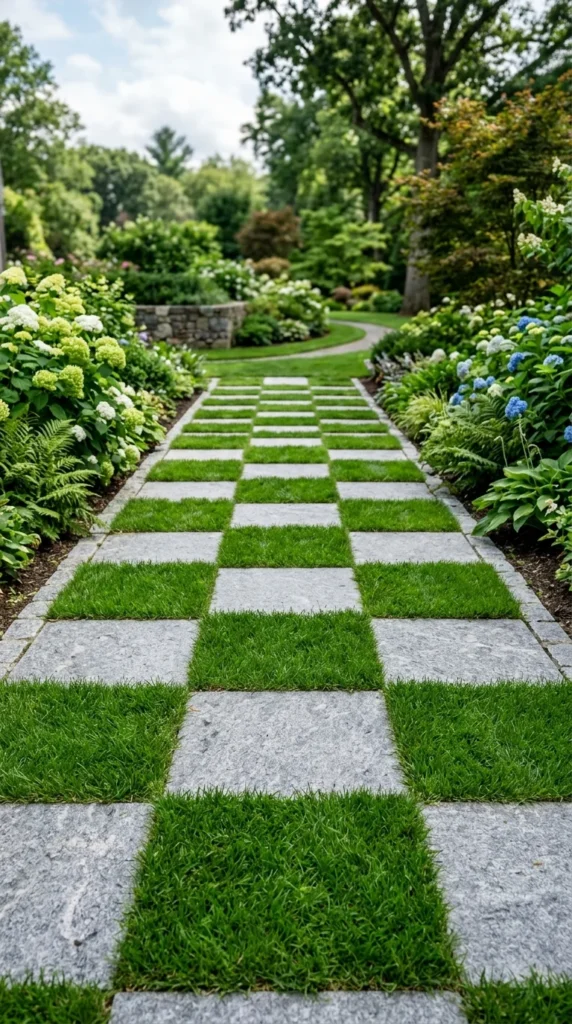
The checkerboard or “grid” look is a classic landscaping technique that merges hardscape with softscape. By placing square pavers with gaps of living grass in between, you soften the transition between the house and the fence. This approach is perfect for sunny side yards where the grass can thrive. It provides the stability of a stone path while maintaining the lush, cooling effect of a lawn.
9. Decomposed Granite
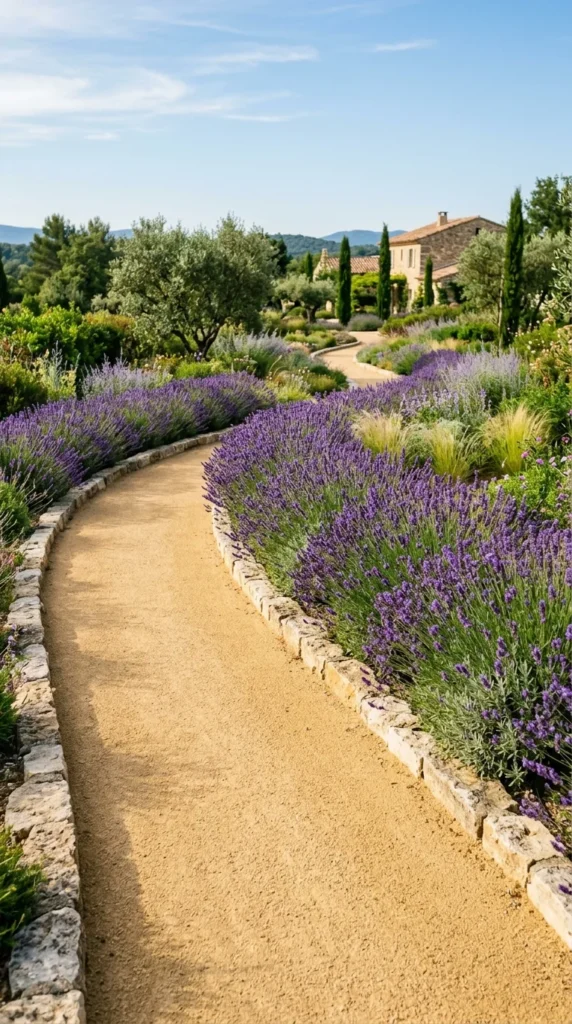
Decomposed granite (DG) is a favorite in Mediterranean and Southwestern landscaping. It offers a soft, crunchier texture than gravel but packs down into a much firmer, more stable surface. Available in colors ranging from gold and tan to grey and rose, DG provides a sophisticated, “old world” feel. It’s highly permeable, allowing water to soak through to the soil, and it looks beautiful when paired with drought-tolerant plants like lavender, agave, or rosemary.
10. Cobblestone
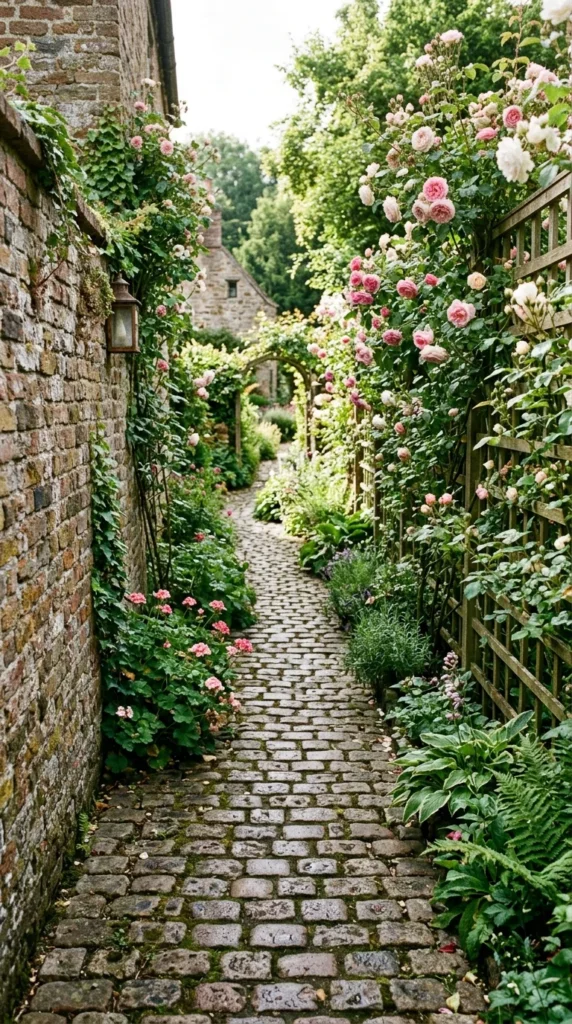
Give your home an instant dose of European charm with a cobblestone path. These small, rounded stones are incredibly durable—many cobblestone streets in Europe have lasted for centuries. Because of their small size, they are perfect for creating winding, curved paths that “disappear” around the corner of the house, adding an element of mystery and discovery to your landscape.
11. Pre-cast Stepping Stones
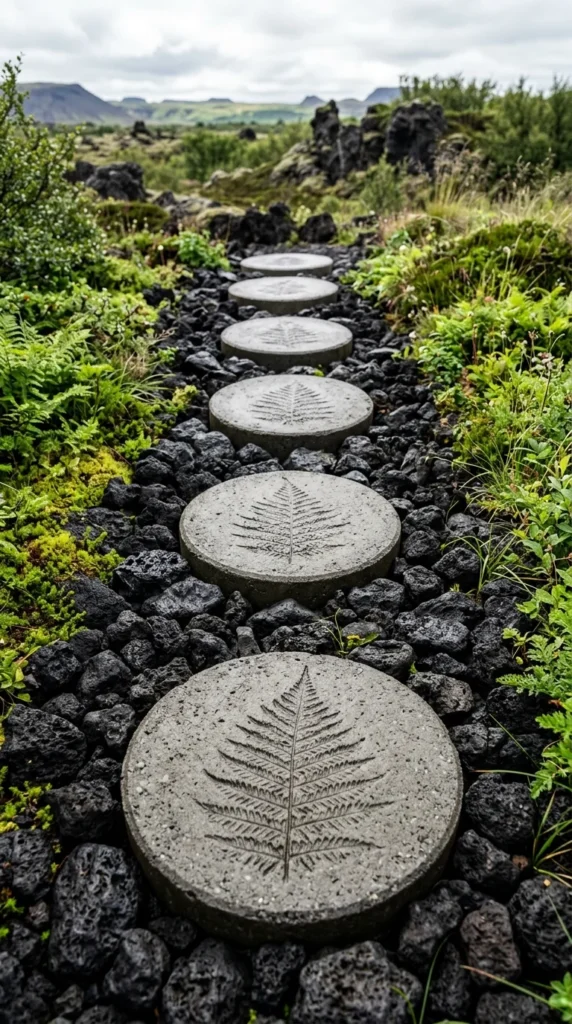
If you are looking for a playful or artistic touch, decorative pre-cast stepping stones are an easy win. These come in various shapes—circles, hearts, or even leaf patterns. They are “floating” stones, meaning they are usually surrounded by a secondary material like turf, gravel, or groundcover. This is one of the most versatile ideas, as you can easily adjust the spacing to match your natural walking gait.
12. Tiled Mosaic
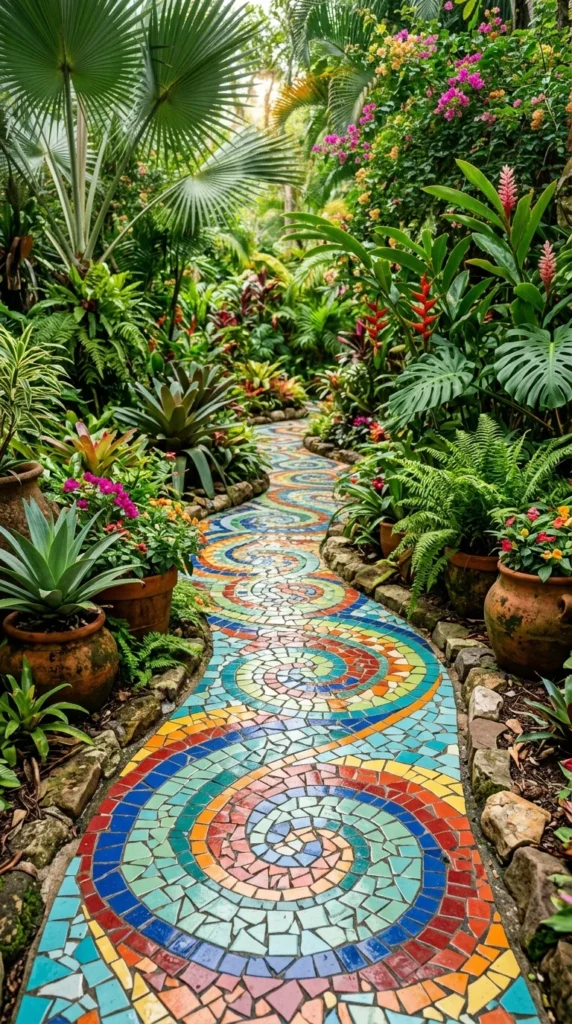
For the creative homeowner, a mosaic pathway turns the side yard into an outdoor art gallery. You can use broken ceramic tiles, glass beads, or polished pebbles set into a thin layer of concrete to create intricate patterns, mandalas, or flowing waves of color. This is a labor of love that results in a completely unique, high-impact feature that guests will go out of their way to see.
13. Slate Chippings
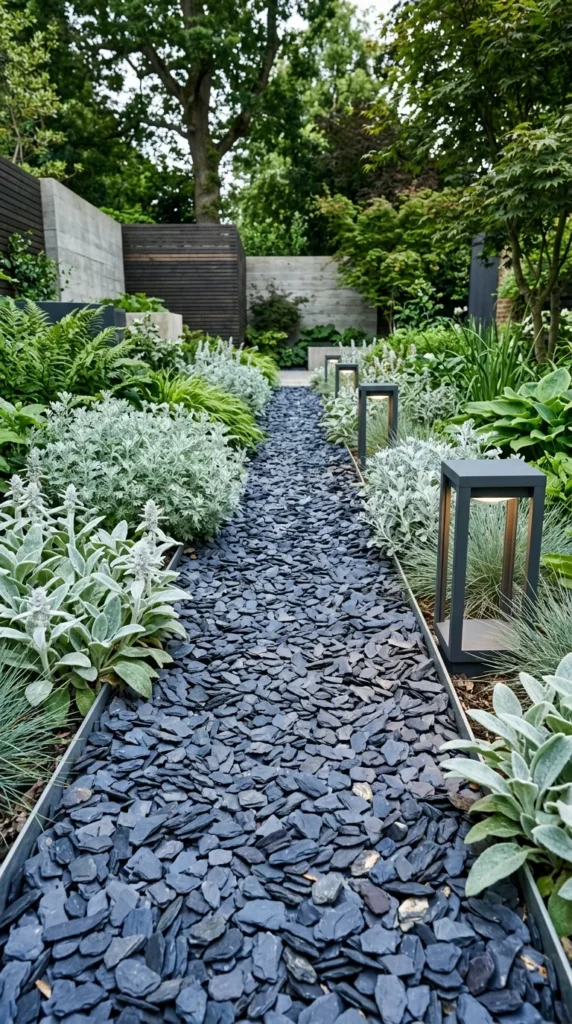
Slate chippings provide a unique, flat texture that is different from traditional rounded gravel. The way slate catches the light—especially when wet—gives the side yard a moody, sophisticated atmosphere. It is particularly striking when used in a “moon garden” (a garden designed to be enjoyed at night) because the flat surfaces reflect moonlight and garden lighting beautifully.
14. Mixed Media
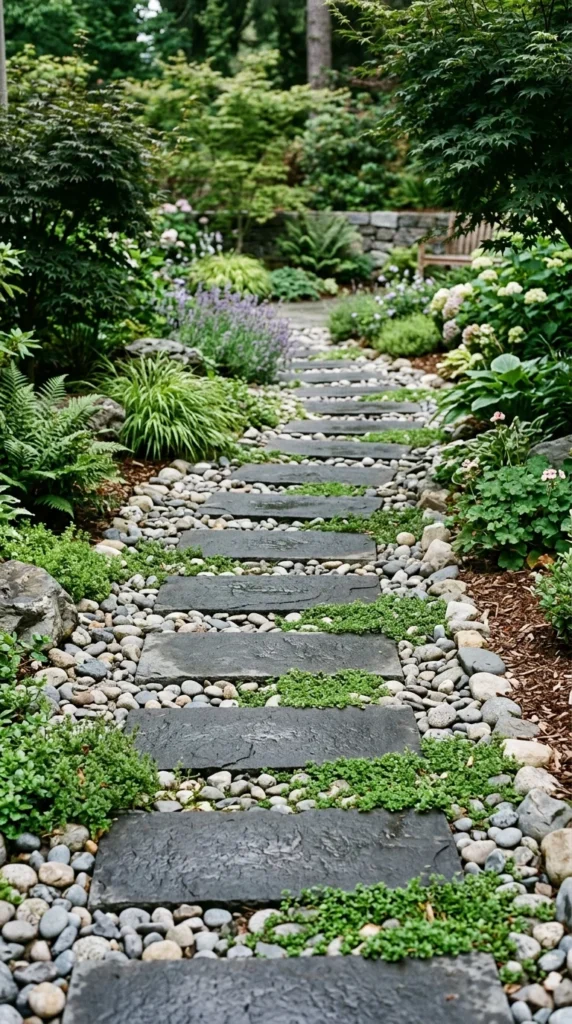
Can’t decide on just one material? Combine them! A mixed-media pathway uses two or more materials to create visual boundaries and texture. For example, you might use large concrete slabs for the main walking surface, but border them with Mexican beach pebbles or fill large gaps with recycled glass cullet. This approach allows you to tie together different elements of your front and backyard design into one cohesive, artistic transition.