
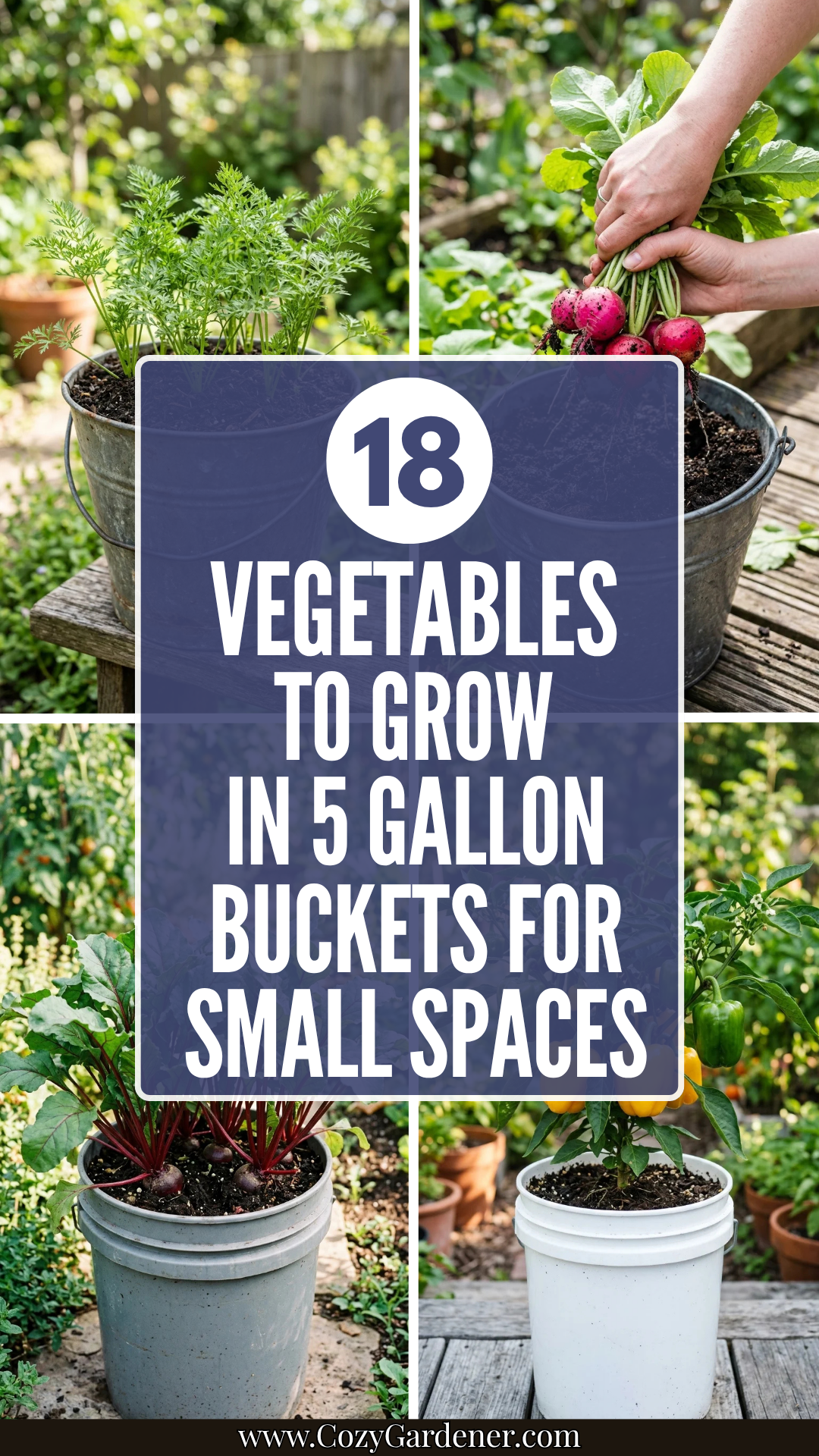
Living in an apartment or a house with a tiny backyard shouldn’t stop you from experiencing the joy of a homegrown harvest. The humble 5-gallon bucket is perhaps the most underrated tool in the gardener’s arsenal. It is portable, affordable, and provides the perfect volume of soil for a wide variety of high-yield vegetables.
Container gardening in buckets allows you to control the soil quality perfectly, avoid ground-borne pests, and chase the sun throughout the day. Whether you are a seasoned gardener or a beginner with a balcony, these 18 vegetables will thrive in a 5-gallon environment.
1. Tomatoes
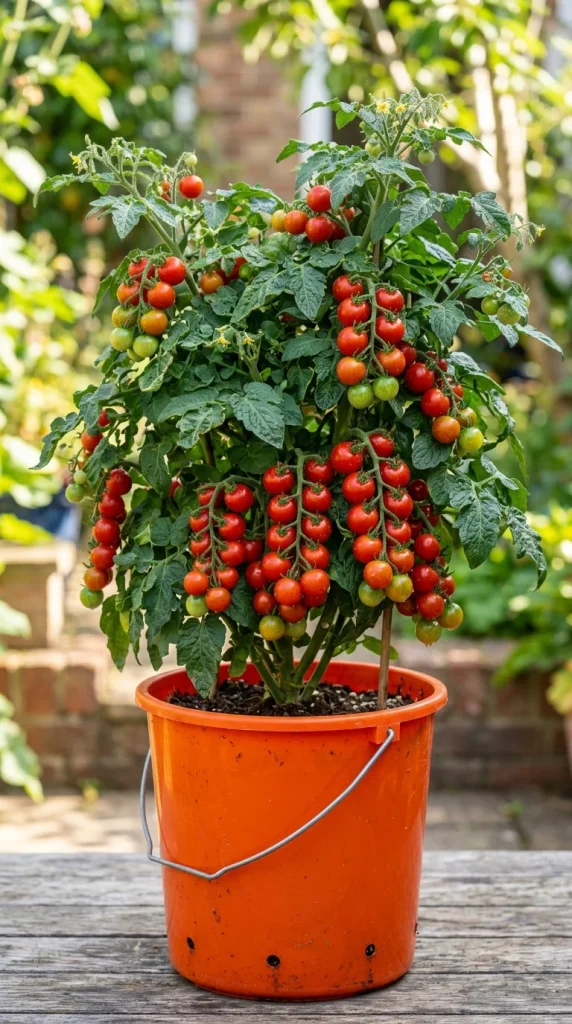
Tomatoes are the kings of container gardening. For a 5-gallon bucket, it is best to choose “determinate” or “bush” varieties, which grow to a certain height and then stop. This prevents the plant from becoming a sprawling mess. One tomato plant per bucket is the golden rule to ensure it has enough nutrients and root space.
- Tip: Provide a small cage or a sturdy stake even for bush varieties to support the weight of the fruit.
2. Peppers
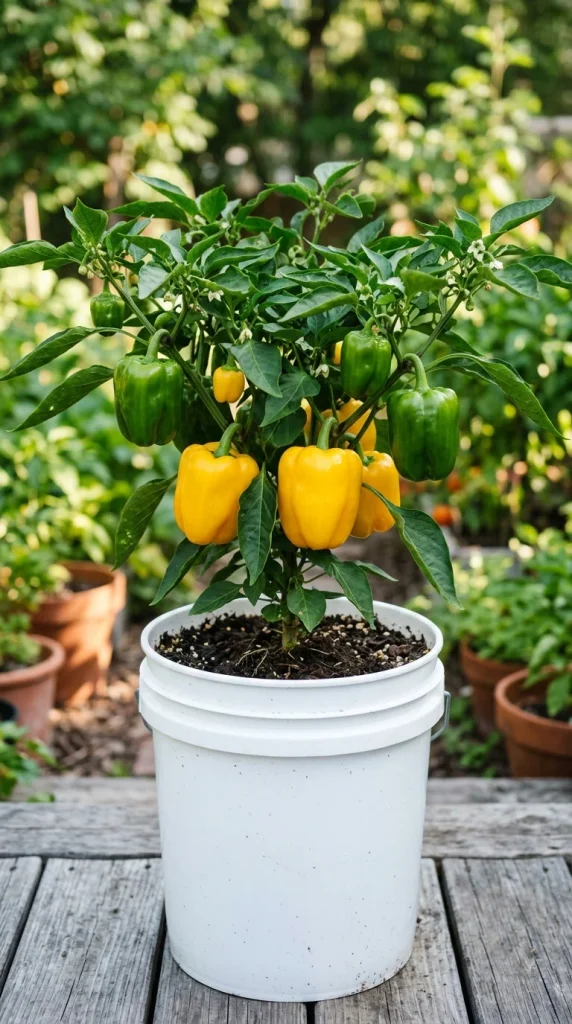
Both sweet bell peppers and spicy chili peppers love the warm soil that plastic buckets provide. Peppers have a relatively compact root system, making them ideal for 5-gallon containers. You can comfortably grow one large bell pepper plant or two smaller hot pepper plants (like jalapeños) in a single bucket.
- Tip: Peppers are heavy feeders; ensure you use a high-quality organic fertilizer every few weeks.
3. Eggplant
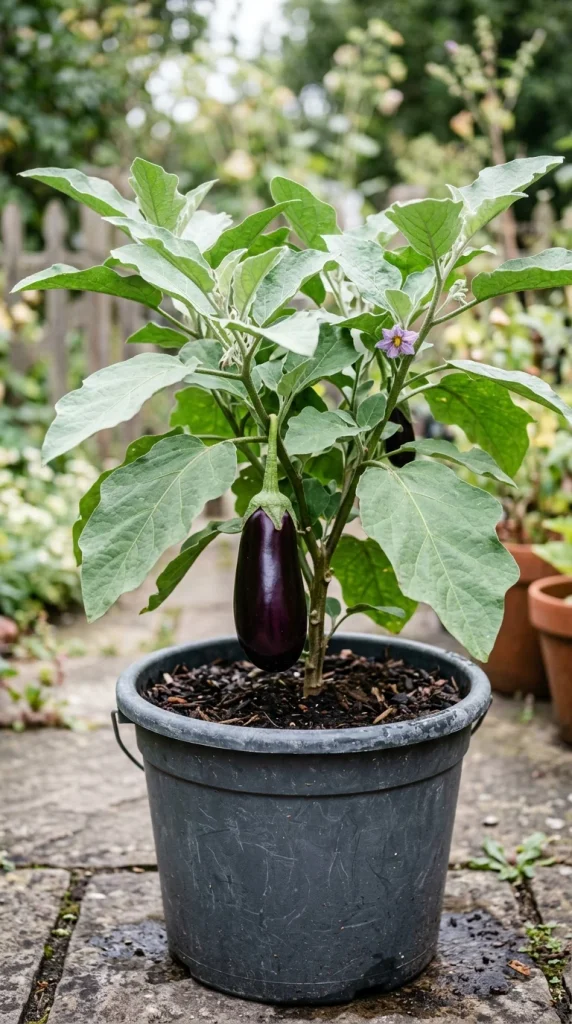
Eggplants are not only delicious but also highly ornamental with their purple flowers and glossy fruits. Like peppers, they enjoy the heat that builds up in a container. Varieties like ‘Hansel’ or ‘Fairytale’ are specifically bred for small spaces and will produce a prolific harvest in a bucket.
- Tip: Watch out for flea beetles, which love eggplant leaves; using a bucket makes it easier to inspect and treat the plant.
4. Cucumbers
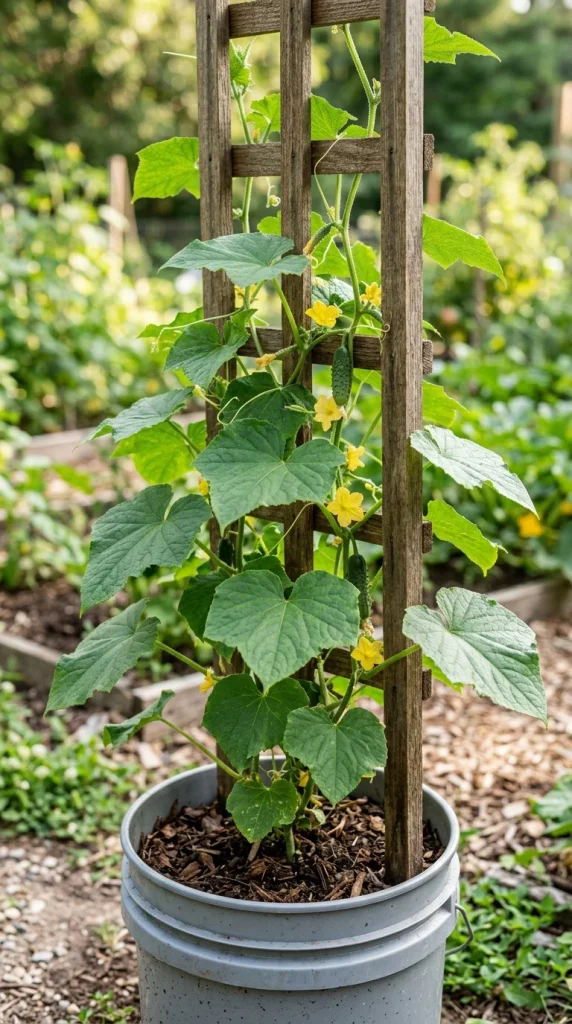
Cucumbers are vigorous growers, but “bush” or “patio” varieties are perfectly suited for 5-gallon buckets. If you choose a vining variety, simply insert a small trellis or tomato cage into the bucket to let the plant grow upward rather than outward. This saves immense amounts of floor space.
- Tip: Cucumbers are mostly water, so never let the soil in the bucket dry out completely.
5. Zucchini
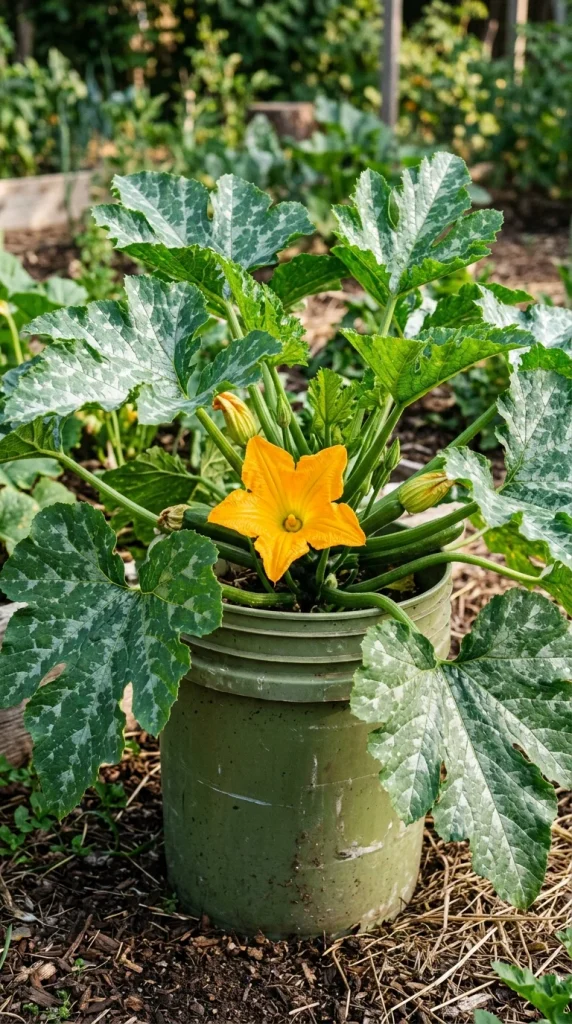
While many gardeners think zucchini needs a massive plot, many “bush” summer squash varieties do exceptionally well in buckets. Because a 5-gallon bucket limits the root zone, the plant remains a manageable size while still pumping out enough squash to keep your kitchen busy.
- Tip: Harvest zucchinis when they are small (6-8 inches) to encourage the plant to keep producing.
6. Lettuce
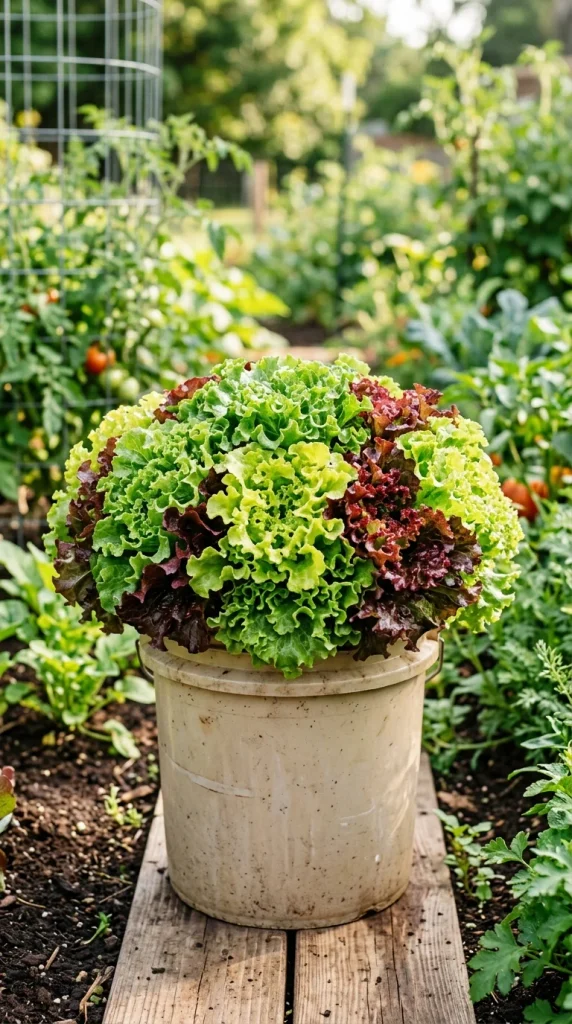
Lettuce is the ultimate “instant gratification” crop for bucket gardeners. Because lettuce has shallow roots, you don’t even need to fill the bucket to the brim with soil (though it helps with moisture retention). You can sow seeds densely for “cut and come again” salad greens or plant 3-4 heads of romaine.
- Tip: In the heat of summer, move your lettuce buckets into the shade to prevent them from bolting and turning bitter.
7. Spinach
Similar to lettuce, spinach thrives in the controlled environment of a bucket. It prefers the cooler temperatures of spring and fall. Growing spinach in buckets also keeps the leaves cleaner and away from the grit of the ground, making your pre-salad rinse much easier.
- Tip: Plant spinach in late summer for a fall harvest that can often withstand a light frost.
8. Kale
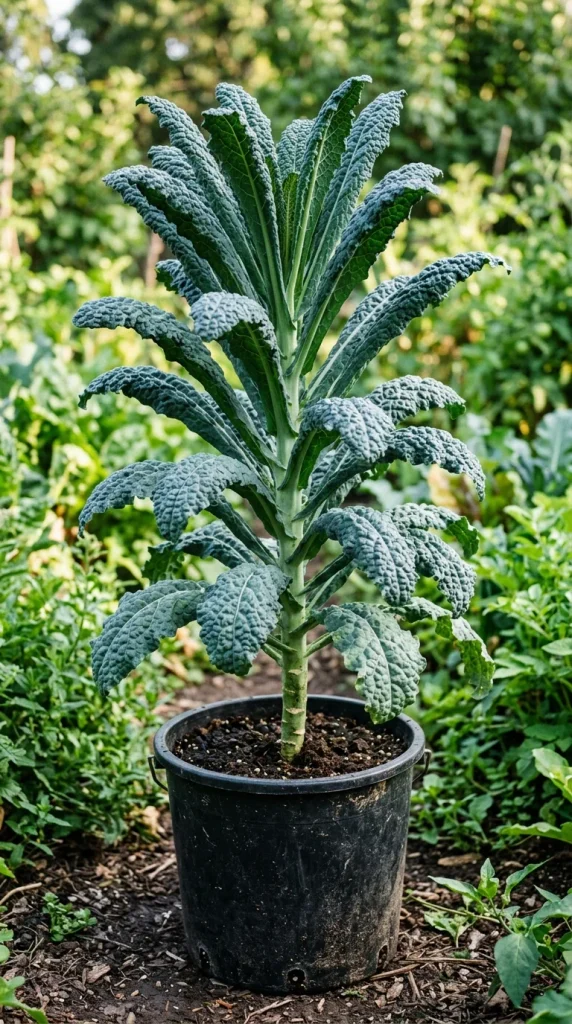
Kale is incredibly hardy and can grow quite large. A 5-gallon bucket is the perfect size for a single “Lacinato” (Dinosaur) kale plant or a “Curly” kale variety. It’s a beautiful plant that can even serve as an edible centerpiece for your patio.
- Tip: The flavor of kale actually improves after a frost, so don’t be in a rush to bring the bucket inside when the weather turns cold.
9. Carrots
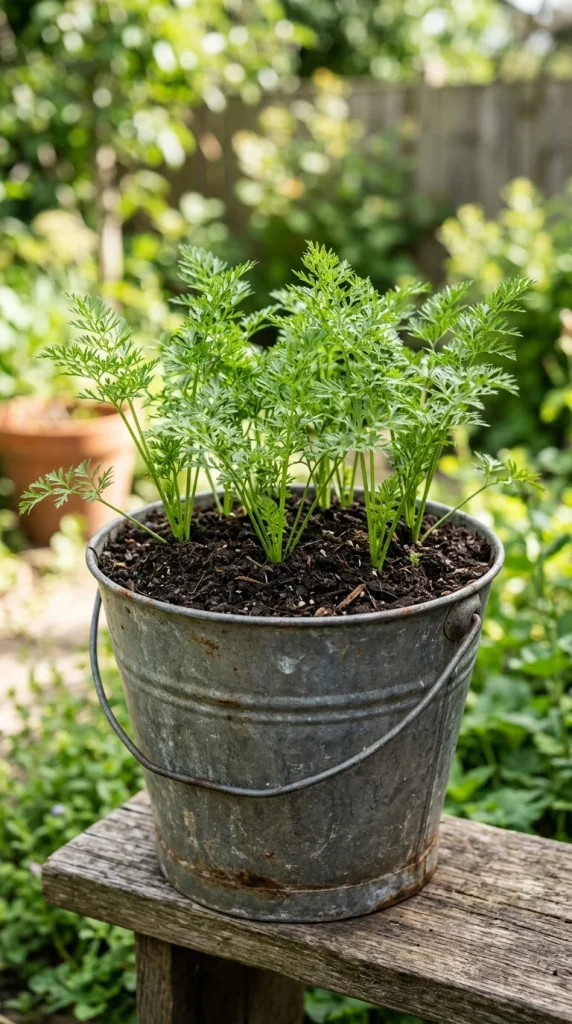
The key to straight, beautiful carrots is loose, rock-free soil—something that is hard to find in the ground but easy to achieve in a 5-gallon bucket. Choose “half-long” or “Chantenay” varieties that don’t require immense depth. You can grow about 15–20 carrots in a single bucket if you space them correctly.
- Tip: Use a potting mix that is light and sandy to allow the roots to push down without resistance.
10. Radishes
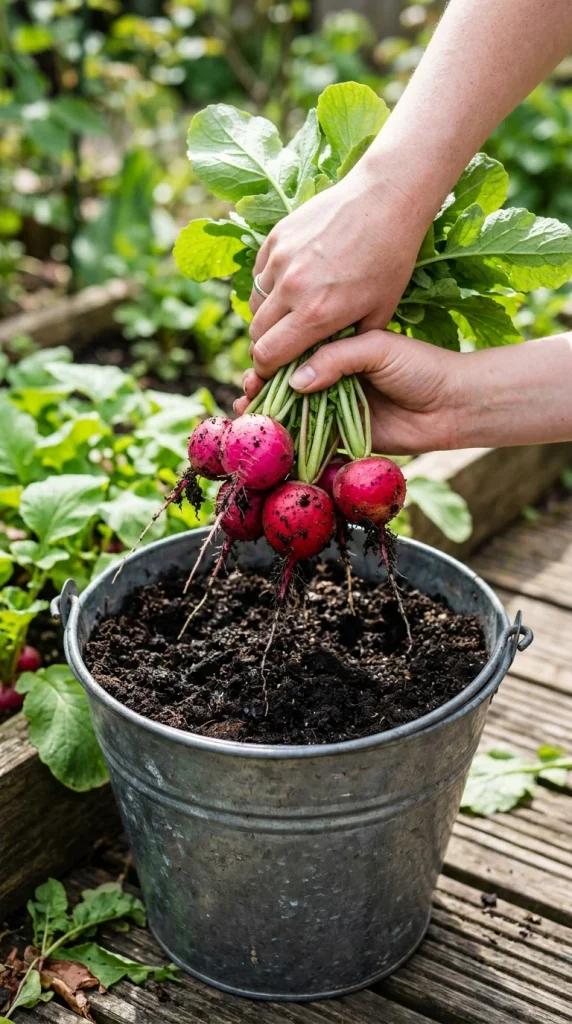
Radishes are the sprinters of the vegetable world, often going from seed to harvest in just 25 days. Because they are so small, you can grow dozens in a single bucket. They are perfect for kids or beginners because they offer such quick results.
- Tip: Sow a new batch of seeds every two weeks for a continuous supply of crunchy radishes.
11. Beets
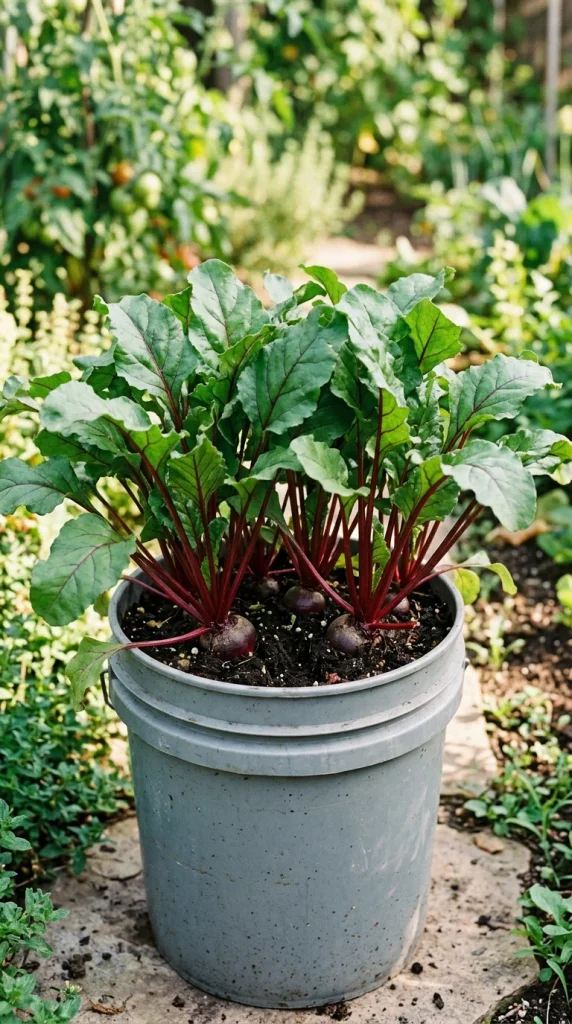
Beets provide a double harvest: the earthy roots and the nutritious greens. In a 5-gallon bucket, you can grow about 6–8 beets. The deep container allows the taproot to develop fully without hitting hard clay or rocks.
- Tip: Soak beet seeds in water for 24 hours before planting to speed up germination.
12. Potatoes
Believe it or not, you can grow a surprising amount of potatoes in a bucket. Start with 4 inches of soil, plant your seed potato, and as the plant grows, continue adding soil (hilling) until you reach the top of the bucket. This encourages the plant to grow more tubers along the buried stem.
- Tip: When the foliage turns yellow and dies back, simply tip the bucket over to “mine” for your potato gold.
13. Onions
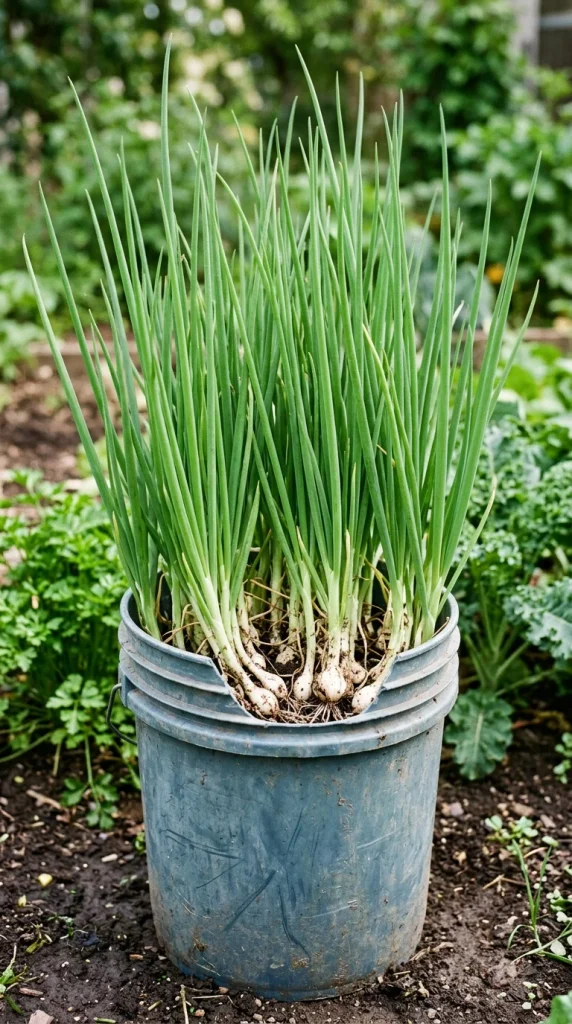
Onions, especially green onions (scallions), are perfect for bucket life. You can plant sets (small bulbs) quite close together. If you want large storage onions, give them more space, but for fresh green onions, you can pack them in for a high-density harvest.
- Tip: Onions need plenty of sunlight—at least 6 to 8 hours—to develop thick bulbs.
14. Garlic
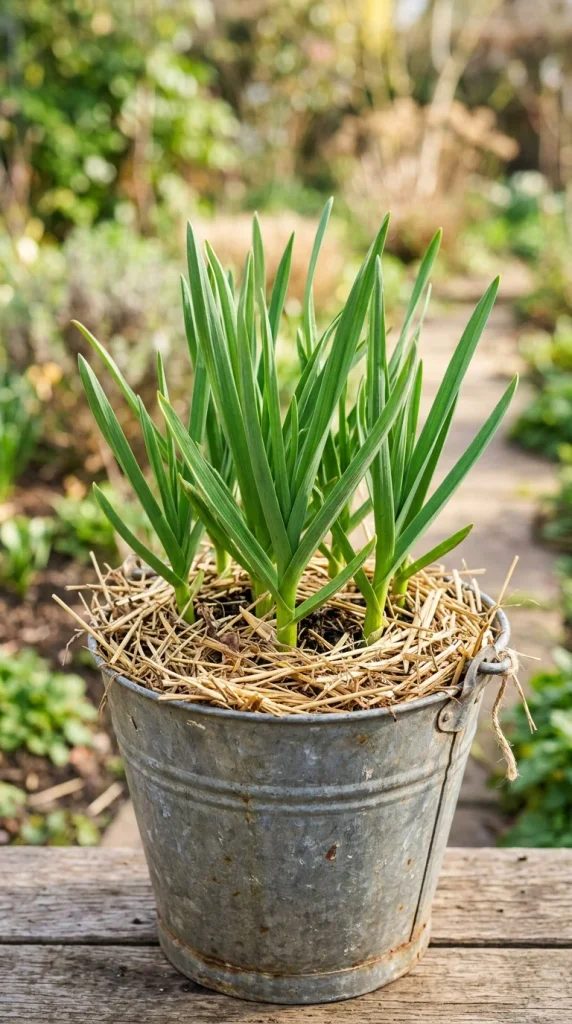
Garlic is a “set it and forget it” crop. Plant individual cloves in the fall, leave the bucket outside over winter (garlic needs the cold), and harvest the following summer. A 5-gallon bucket can easily house 6–8 cloves of garlic.
- Tip: Use a layer of straw or mulch on top of the soil to protect the cloves during deep winter freezes.
15. Peas
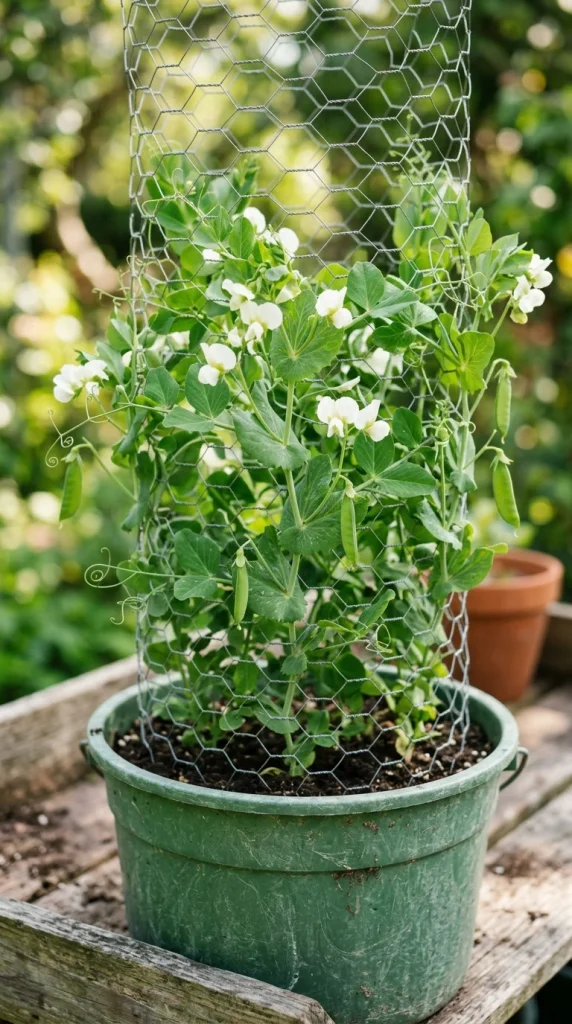
Peas love the cool weather of spring. Since they are climbers, a 5-gallon bucket fitted with a small trellis or even just some sticks allows them to grow vertically. Sugar snap peas or snow peas are particularly productive in small containers.
- Tip: Peas fix nitrogen in the soil, making the leftover soil in the bucket great for your next nitrogen-loving crop like lettuce.
16. Beans
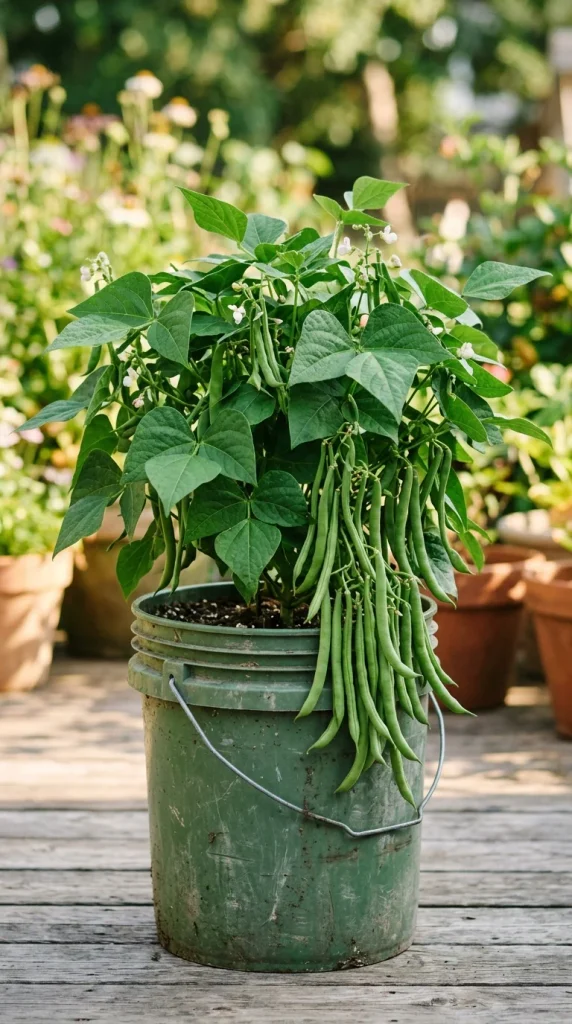
Choose “bush” bean varieties rather than “pole” beans for the easiest bucket experience. Bush beans grow into a tidy mound and produce all their fruit at once. You can plant 3–4 bush bean plants in one 5-gallon bucket for a significant harvest.
- Tip: Pick the beans frequently to encourage the plant to keep producing new blossoms.
17. Swiss Chard
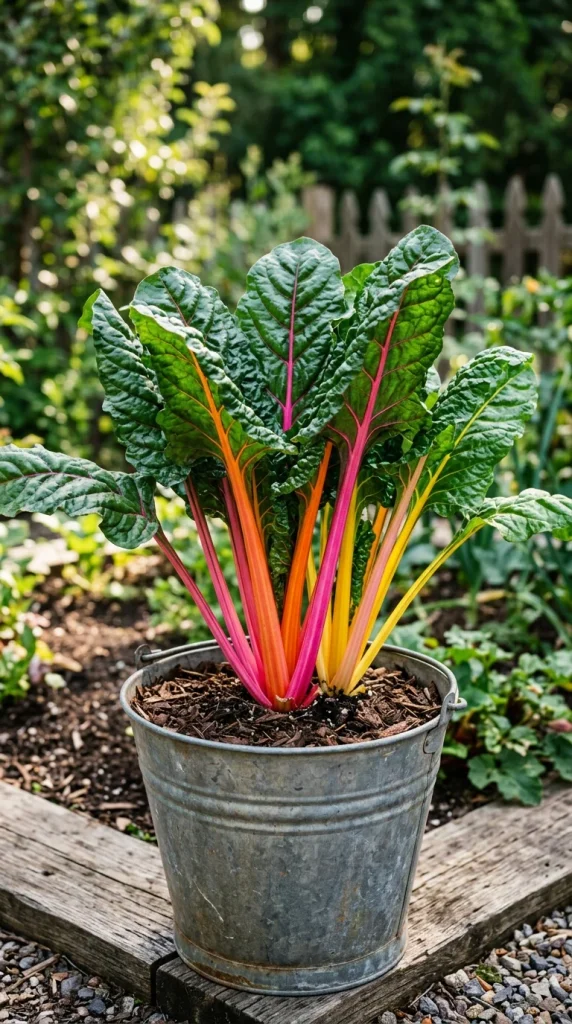
Swiss Chard is one of the hardiest greens you can grow. It handles heat better than spinach and cold better than most other greens. A single plant will fill a 5-gallon bucket and provide leaves for months, as you can harvest the outer leaves while the center keeps growing.
- Tip: The colorful stalks make Swiss Chard a beautiful addition to a front porch or balcony.
18. Cabbage
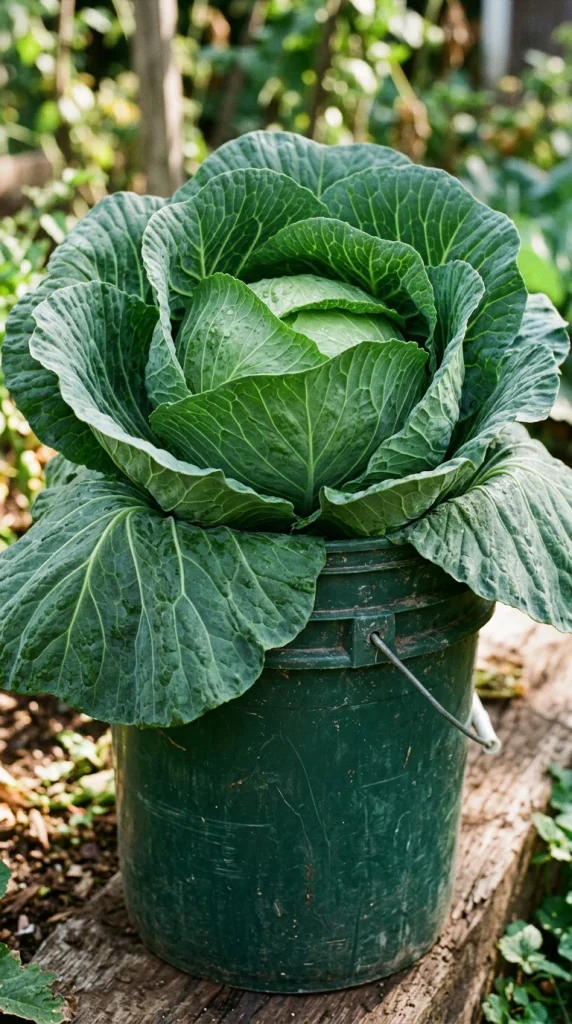
While cabbage takes up a lot of horizontal space in a traditional garden, a 5-gallon bucket is the perfect “assigned seat” for one head of cabbage. It allows the plant to spread its outer leaves without crowding out neighbors.
- Tip: Keep an eye out for the green cabbage looper caterpillar; being in a bucket makes it easy to rotate the plant and check under every leaf.
Essential Tips for Success with Bucket Gardening
To ensure your bucket garden is a resounding success, follow these four critical maintenance rules:
1. Drainage is Non-Negotiable
Most 5-gallon buckets do not come with holes. You must drill at least 5–10 holes in the bottom (each about half an inch in diameter) to allow excess water to escape. Without drainage, the roots will sit in stagnant water and rot.
2. Never Use Garden Soil
Soil from your yard is often too heavy and may contain pests or diseases. For buckets, always use a high-quality “Potting Mix.” Potting mix is designed to be light, airy, and to retain moisture without becoming compacted.
3. Water More Frequently
Plants in containers dry out much faster than those in the ground. In the heat of summer, your 5-gallon buckets may need watering every single day. Stick your finger an inch into the soil; if it feels dry, it’s time to water.
4. Feed Your Plants
Because you are watering frequently, nutrients leach out of the bottom of the bucket over time. To keep your vegetables productive, use a balanced liquid organic fertilizer every 2–3 weeks throughout the growing season.