

The farmhouse aesthetic is more than just a design trend; it is a celebration of simplicity, heritage, and the rugged beauty of the natural world. When it comes to landscaping, the goal is to create a space that feels both curated and effortless, blending functional agricultural roots with the soft, romantic textures of a country garden. Whether you live on a sprawling multi-acre plot or a modest suburban lot, you can evoke that timeless “lived-in” charm by incorporating specific elements that prioritize natural materials, native plantings, and inviting outdoor living spaces.
Here are 14 farmhouse landscaping ideas to transform your property into a classic country sanctuary.
1. Picket Fences
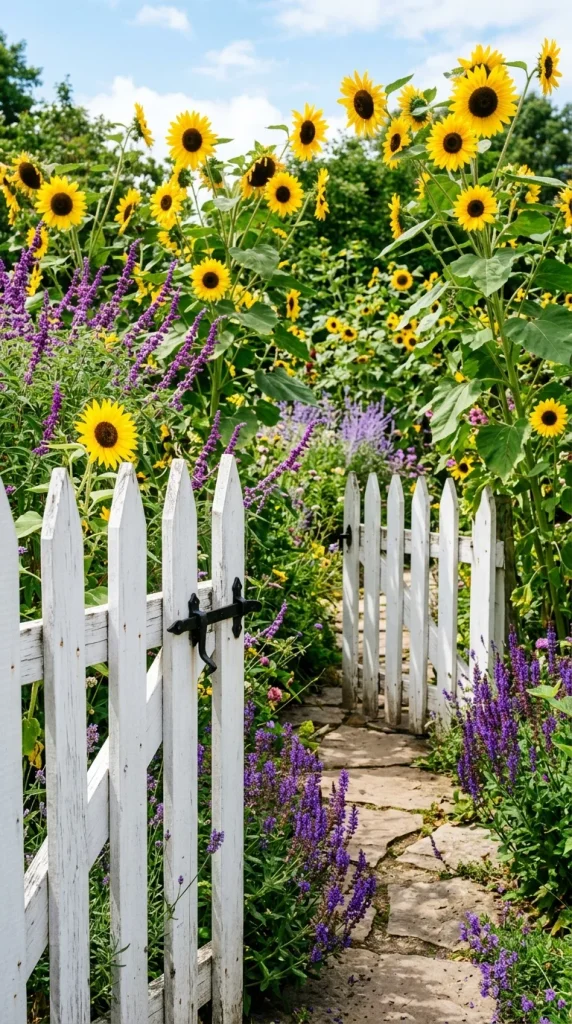
Nothing says “American farmhouse” quite like a crisp white picket fence. Beyond its obvious charm, a picket fence serves a functional purpose by defining the boundaries of your property without creating a visual barrier that feels closed off. It offers a sense of nostalgia and provides the perfect backdrop for colorful perennial borders. For a truly authentic look, choose a traditional wood fence, though high-quality vinyl options can offer the same aesthetic with significantly less maintenance. To enhance the look, allow some of your taller flowers to peek through the slats, softening the lines of the wood.
2. Gravel Paths
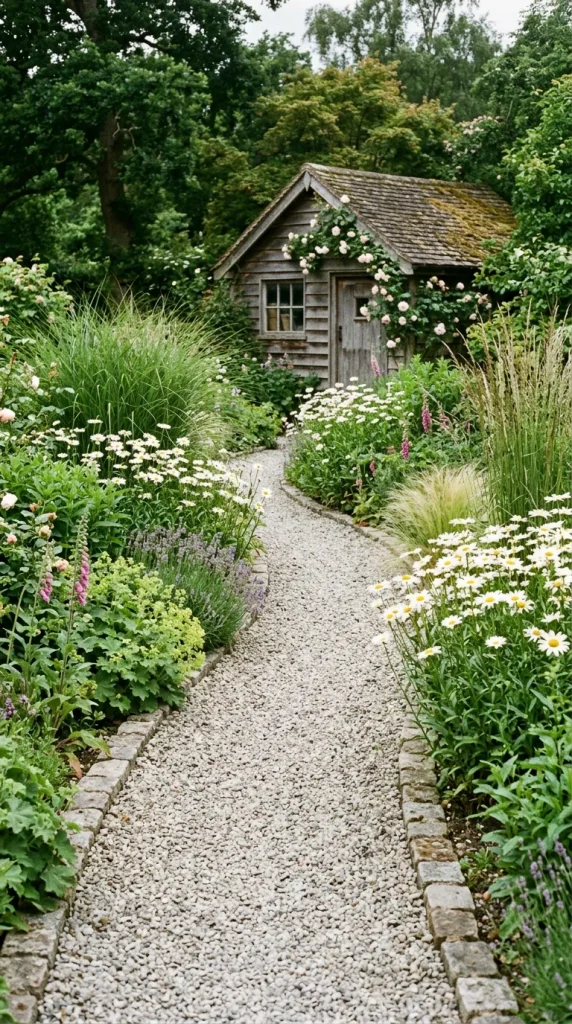
Gravel is the quintessential farmhouse hardscape material. It is inexpensive, easy to install, and provides a delightful “crunch” underfoot that instantly transports you to a slower pace of life. Unlike rigid concrete or asphalt, gravel is permeable, allowing rainwater to soak into the ground, which is better for the environment and your plants. Use pea gravel or decomposed granite for walkways that connect your porch to your garden beds, fire pit, or outbuildings. Edging the paths with reclaimed brick or large stones will keep the gravel in place while adding another layer of rustic texture.
3. Native Wildflowers
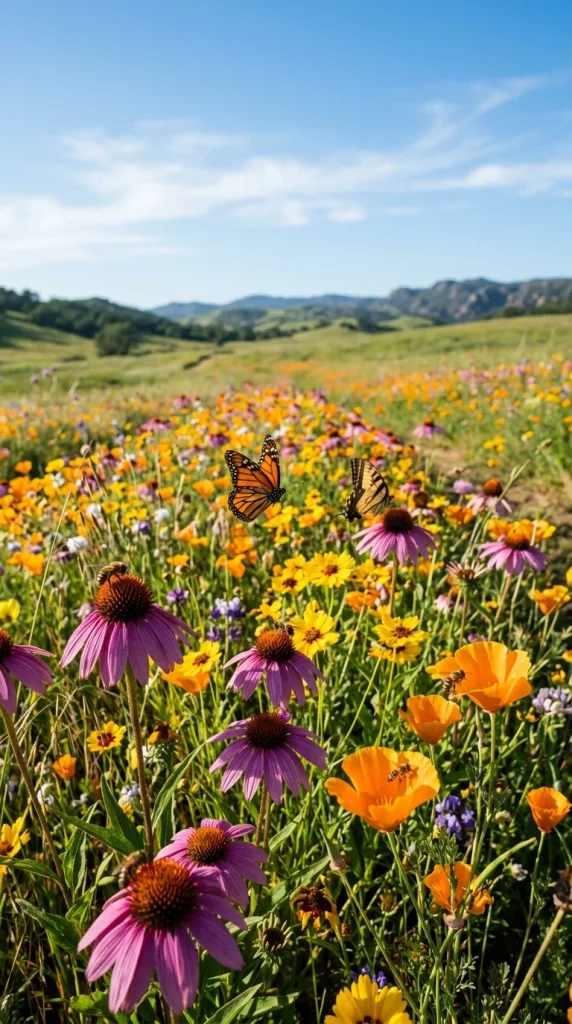
Farmhouse landscaping should never look too “manicured.” Embracing a wildflower meadow or incorporating native species into your garden beds is the best way to achieve that effortless, “grown-in” look. Native plants are adapted to your local climate and soil, meaning they require less water and fewer fertilizers than exotic species. They also provide essential habitats for pollinators like bees, butterflies, and birds. Instead of a perfectly flat lawn, consider turning a portion of your yard into a pollinator garden where textures and colors mingle freely.
4. Porch Swings
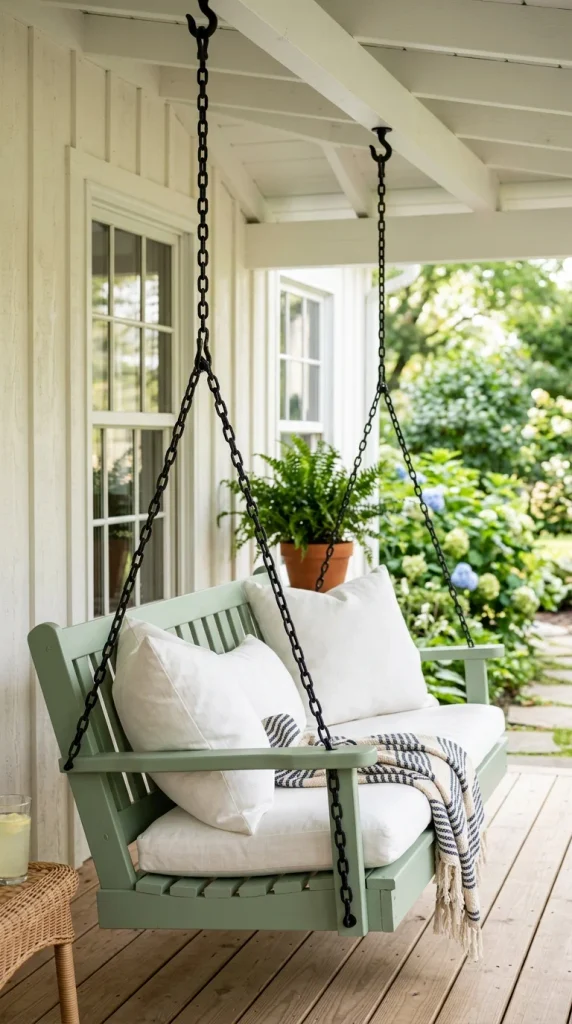
In the world of farmhouse design, the porch is the bridge between the indoors and the outdoors. A porch swing is the ultimate symbol of country hospitality and relaxation. It creates a focal point for your front or back porch, inviting you to sit back and watch the sunset or enjoy a morning coffee. Surround your seating area with large potted plants or hanging baskets to create a cozy, “outdoor room” feel. The gentle movement of the swing combined with the scent of nearby flowers creates a sensory experience that defines the farmhouse lifestyle.
5. Stone Walls
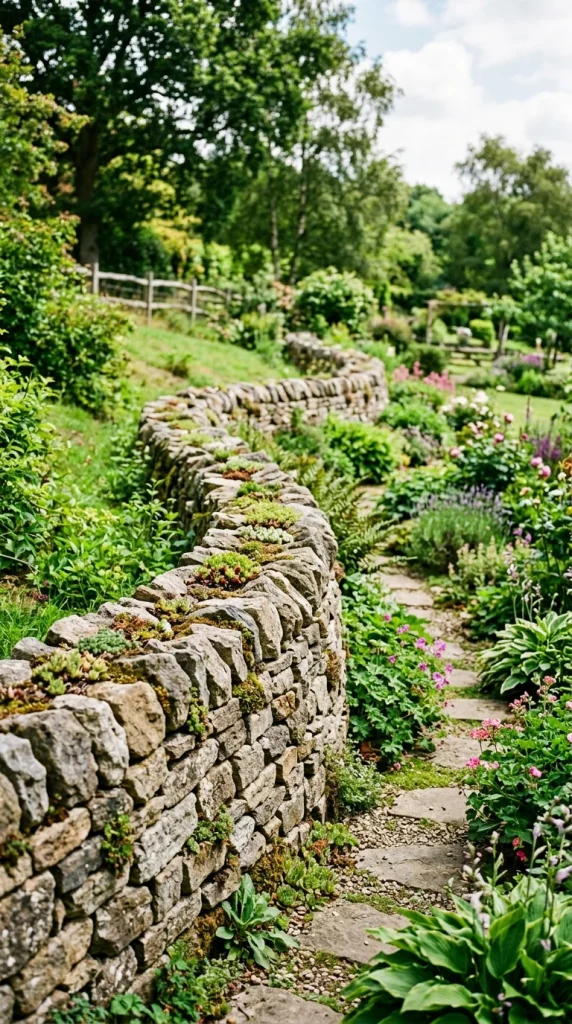
Dry-stack stone walls—built without mortar—have been a staple of rural landscapes for centuries. They were originally used by farmers to clear fields and mark property lines. Today, they add a sense of history and structural permanence to your landscaping. You can use low stone walls to terrace a sloped yard, create raised garden beds, or simply add a decorative border along a driveway. The natural variation in the stone colors provides a beautiful contrast to the green foliage of your garden.
6. Fruit Orchards
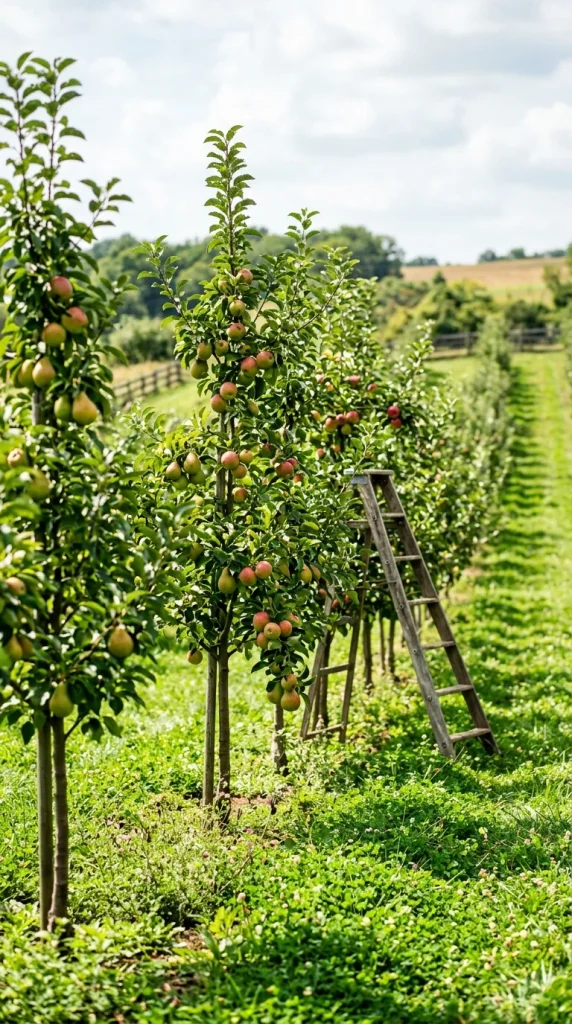
Functional beauty is at the heart of the farmhouse philosophy. Planting a small fruit orchard—even if it’s just two or three dwarf trees—adds a sense of abundance and purpose to your land. Apple, peach, cherry, and pear trees provide beautiful blossoms in the spring and delicious harvests in the late summer and autumn. If you have limited space, consider “espalier” fruit trees, which are trained to grow flat against a wall or fence, providing the same country charm in a fraction of the footprint.
7. Herb Gardens
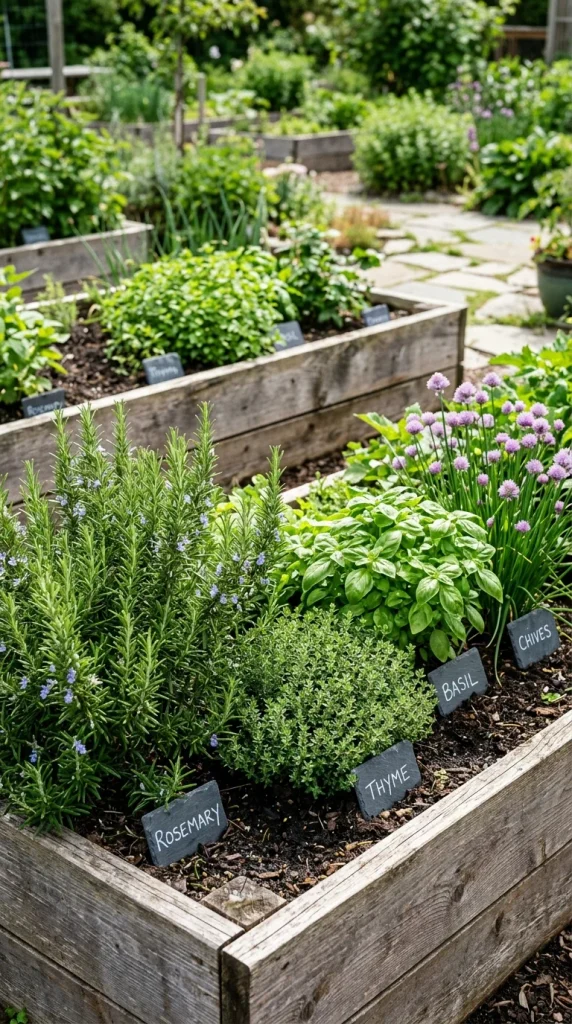
A kitchen herb garden is both practical and aesthetically pleasing. Placing your herb garden near the back door or in a sunny spot on the patio makes it easy to grab fresh ingredients while cooking. The various textures and shades of green—from the silvery needles of rosemary to the broad, bright leaves of basil—create a rich tapestry. Many herbs, such as lavender and sage, also produce beautiful flowers that attract beneficial insects. Using weathered wood or galvanized metal for your raised beds will keep the look consistent with the farmhouse theme.
8. Vintage Planters
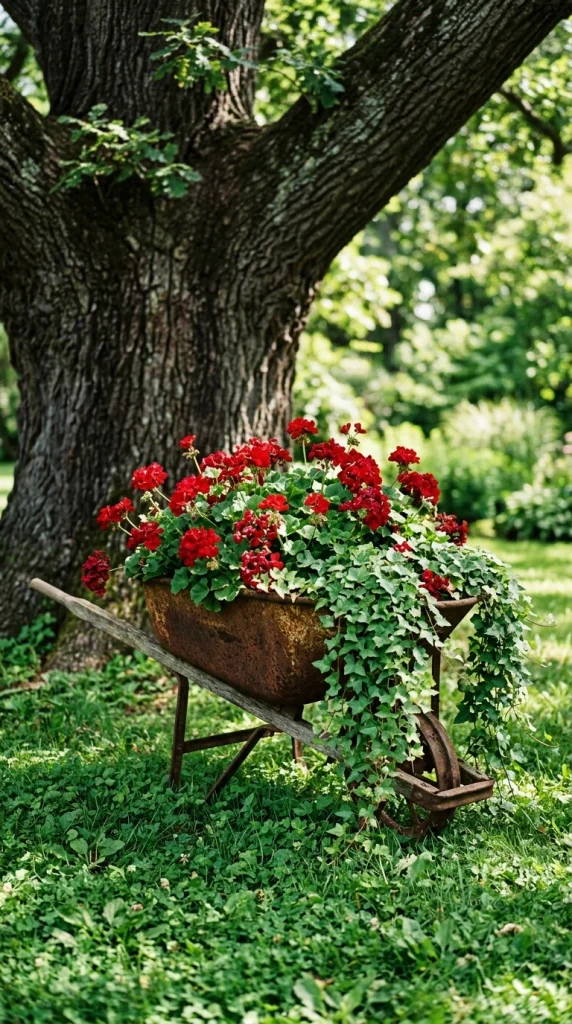
Adding character to your landscape often involves giving old items a second life. Vintage items like galvanized buckets, old whiskey barrels, weathered wooden crates, or even rusted antique farm equipment can be transformed into unique planters. These “found” objects add a layer of story and personality that you won’t find in a standard garden center. To ensure your plants thrive, be sure to drill drainage holes in the bottom of any metal or wooden containers before planting.
9. Hydrangea Hedges
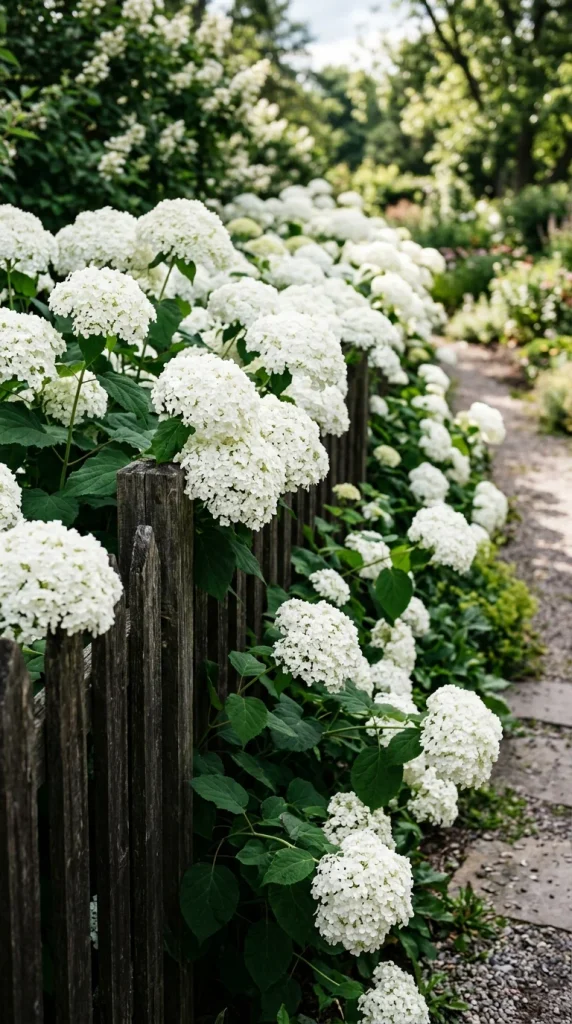
If there is one flower that defines the romantic side of country living, it is the hydrangea. These shrubs are beloved for their massive, long-lasting flower heads and their ability to fill large spaces with color. Planting a row of hydrangeas along the foundation of your house or using them as a living privacy hedge creates a soft, classic look. Whether you choose the traditional white “Annabelle” variety or the blue and purple tones of “mophead” hydrangeas, they provide a sense of timeless elegance that never goes out of style.
10. Barn Doors
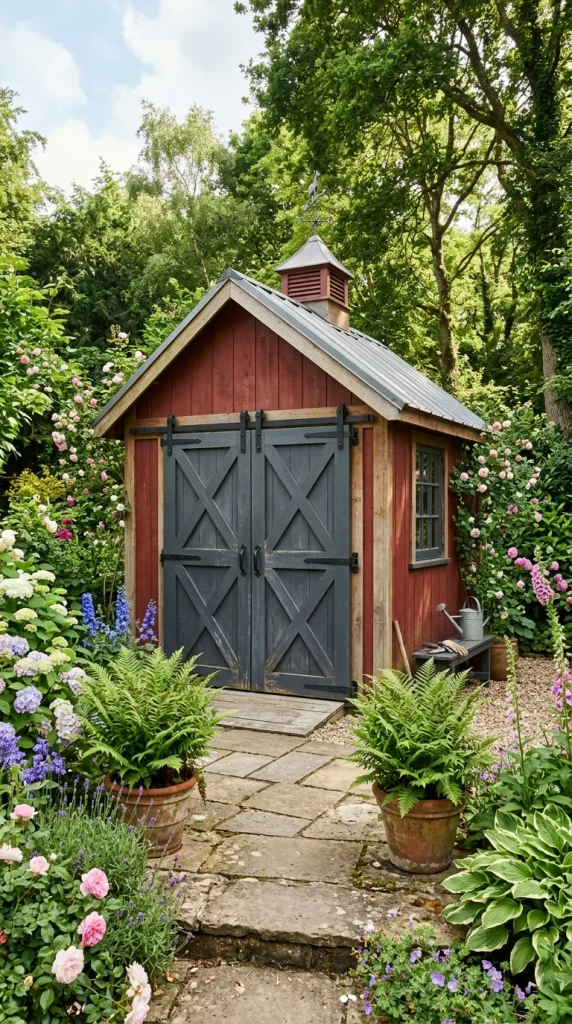
You don’t need a full-sized barn to incorporate this iconic architectural element. Using sliding barn doors on a garage, a garden shed, or even as a decorative gate in a fence can instantly elevate the farmhouse feel of your property. The “X” or “Z” brace design is a classic motif that adds visual interest and a sense of sturdy craftsmanship. Pair the doors with heavy-duty black iron hardware to complete the look.
11. Water Troughs
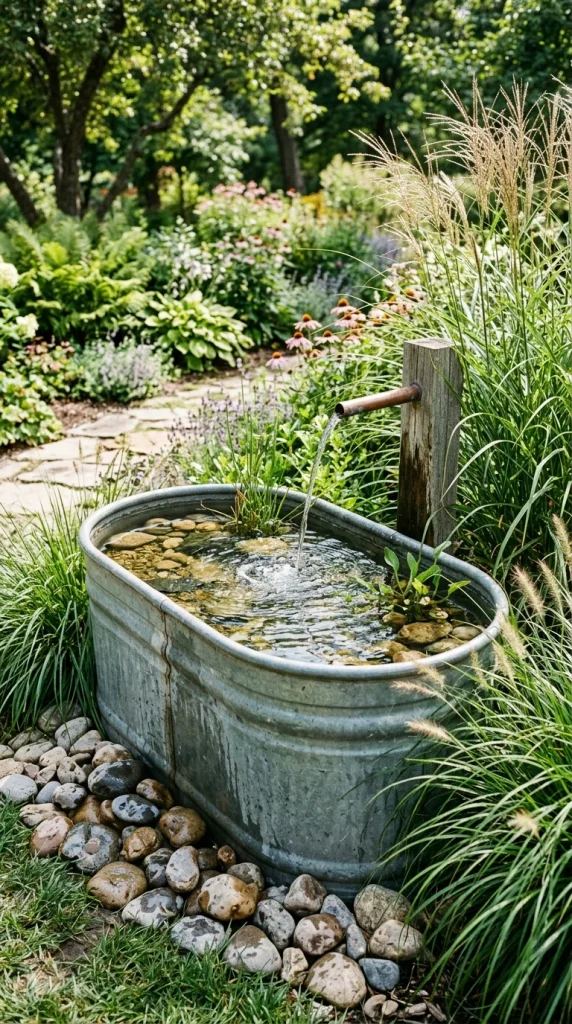
Farmhouse landscaping often utilizes materials typically found on a working farm. Galvanized steel livestock troughs are incredibly versatile; they can be used as large-scale planters for vegetables or turned into rustic water features. A water trough fountain adds a soothing sound to your garden, masking neighborhood noise and creating a tranquil atmosphere. The reflective surface of the water and the industrial look of the metal create a striking contrast against soft garden foliage.
12. Climbing Roses
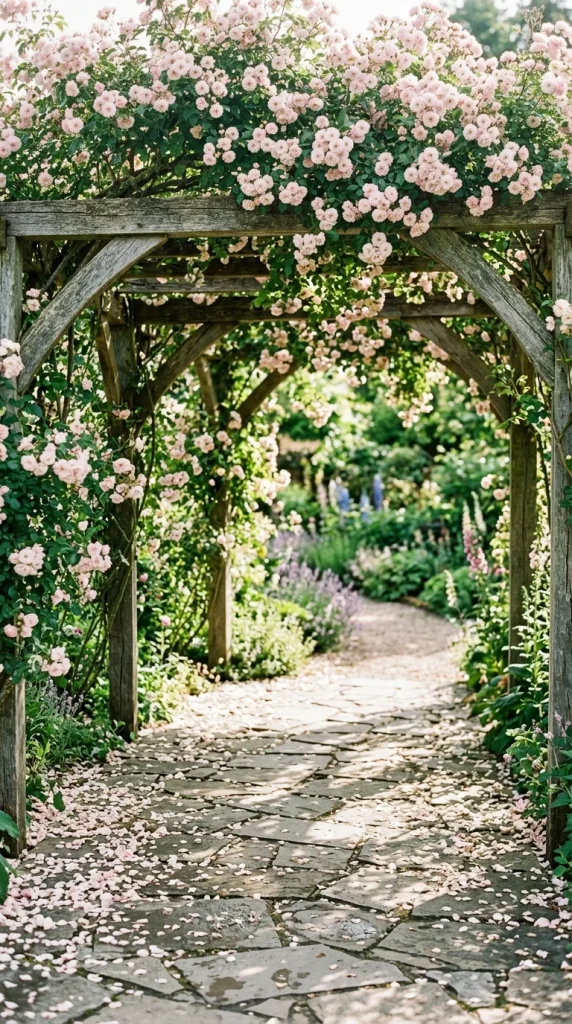
Climbing roses add height, fragrance, and an undeniable touch of romance to a farmhouse garden. Train them to grow over an arbor, up a trellis, or across the side of a porch. Unlike bush roses, climbers can reach impressive heights, helping to soften the vertical lines of your home. Classic varieties like ‘Eden’ or ‘New Dawn’ offer the soft, pastel palettes often associated with country cottages. For the best effect, pair them with dark green ivy or clematis for a layered, lush appearance.
13. Rustic Lighting
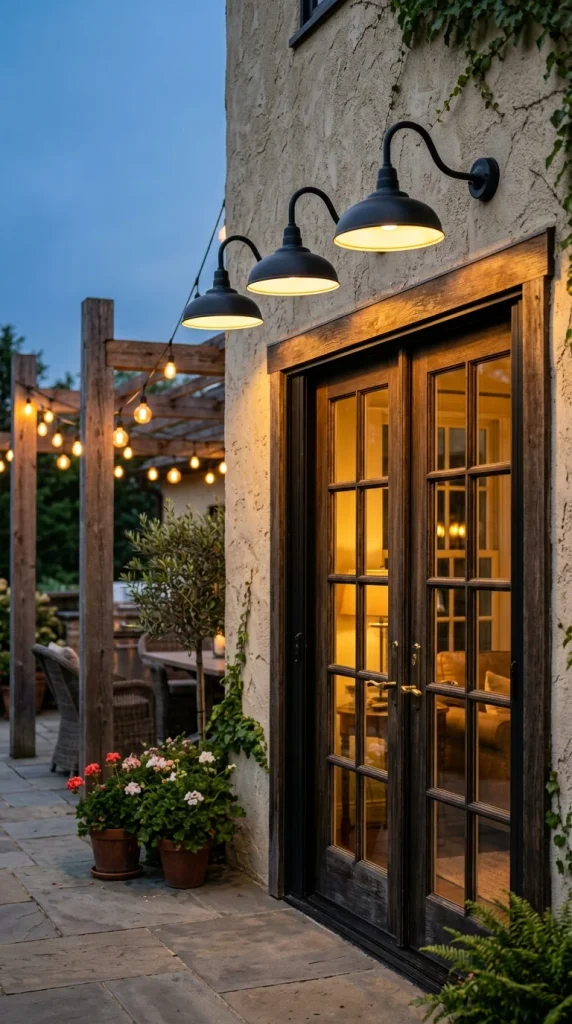
Proper lighting allows you to enjoy your farmhouse landscape long after the sun goes down. To stay true to the theme, choose fixtures with a “vintage industrial” or “barn” aesthetic. Gooseneck lamps with wide metal shades are perfect for illuminating entryways and garages. For seating areas, string lights (often called café or bistro lights) draped overhead create a festive, magical ambiance. Soft, warm-toned bulbs are essential for maintaining a cozy, inviting feel rather than a harsh, modern one.
14. Vegetable Patches
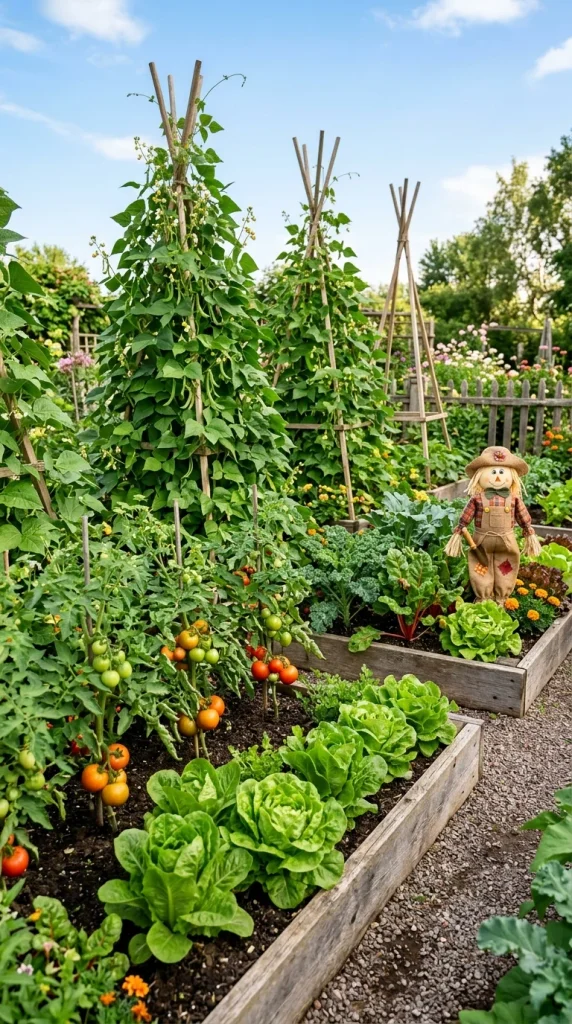
The heart of any farmhouse is the bounty it produces. A well-maintained vegetable patch is the ultimate expression of country charm. To keep it looking like part of the landscape rather than a messy utility area, use structured raised beds and decorative supports like bamboo stakes or wooden obelisks. Mixing in some flowers—like marigolds or nasturtiums—among your vegetables not only helps deter pests but also adds pops of color, making the vegetable patch as beautiful as it is productive. This “potager” style garden blends the lines between ornament and utility, which is the very essence of farmhouse living.