
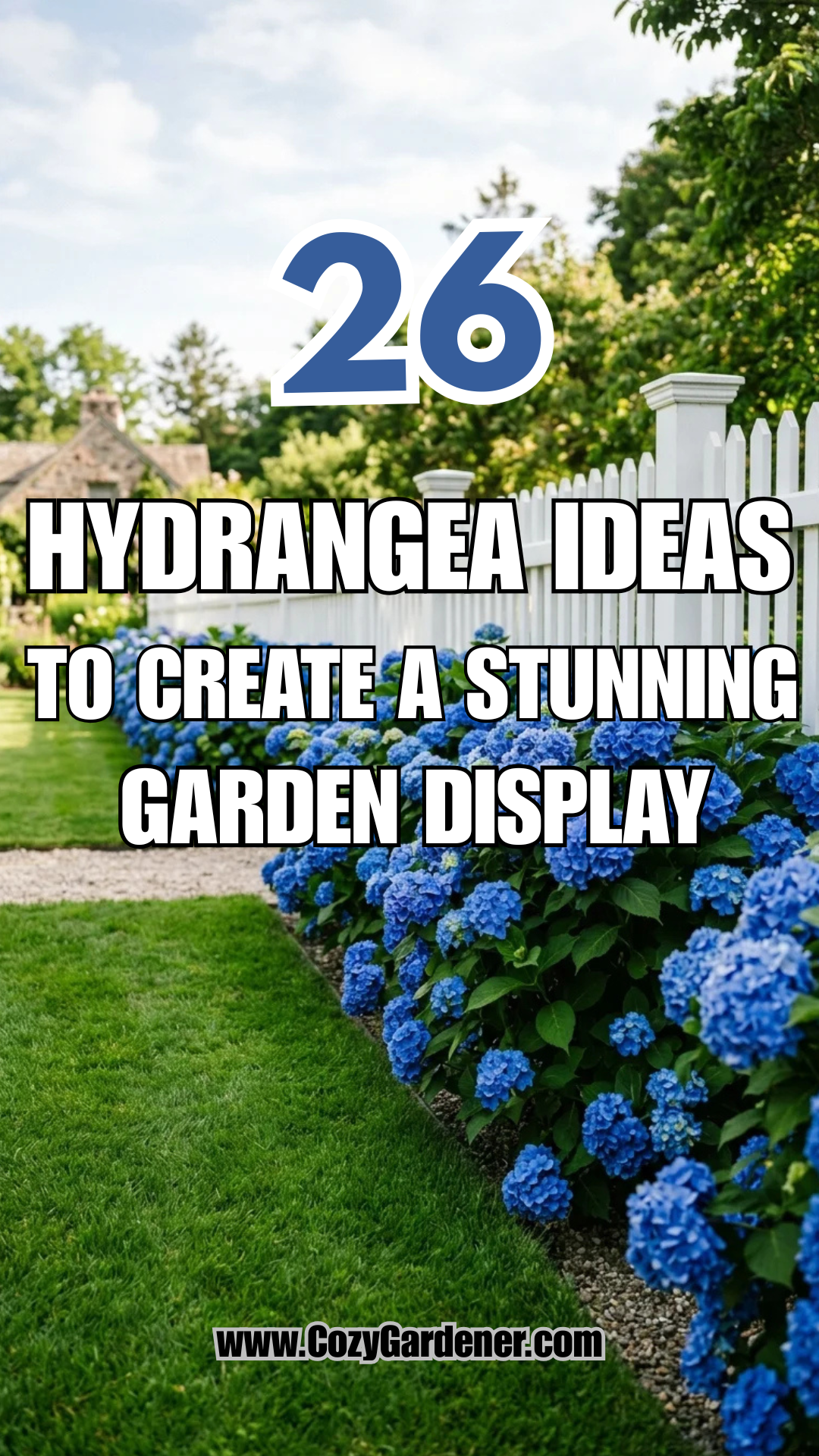
Hydrangeas are the undisputed royalty of the summer garden. Known for their massive, billowy blooms and lush foliage, these versatile shrubs can transform any outdoor space into a romantic sanctuary. Whether you are looking to create a formal English garden, a rustic cottage retreat, or a sleek modern landscape, hydrangeas offer a variety of textures, colors, and sizes to suit your needs. From the classic mopheads to the delicate lacecaps and the towering panicles, there is a hydrangea for every corner of your yard.
In this guide, we explore 26 creative ways to use hydrangeas to elevate your garden display, providing inspiration for layouts, pairings, and styling.
1. Classic Borders
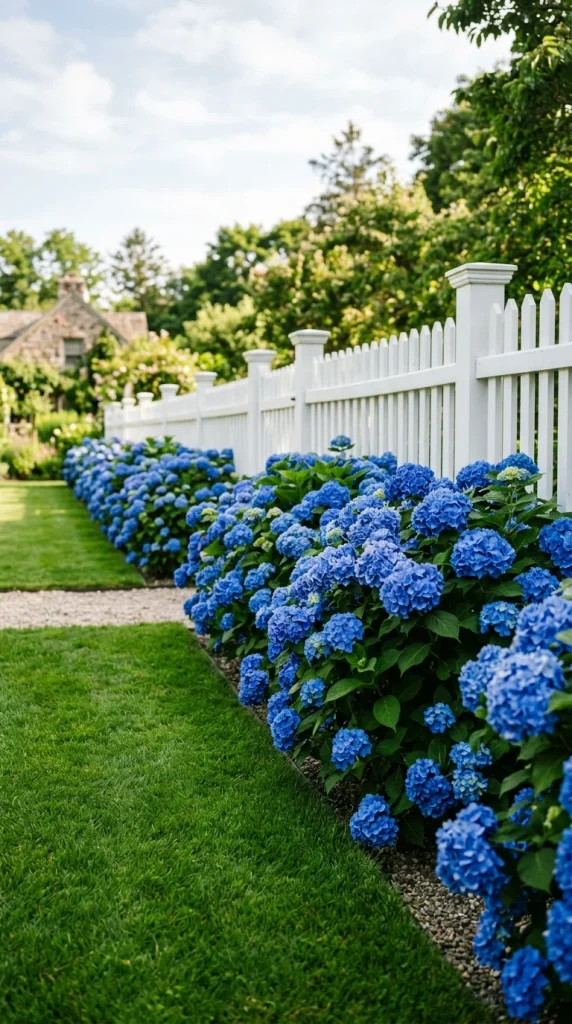
One of the most traditional and effective ways to use hydrangeas is as a border plant. Planting a single variety in a long row creates a sense of rhythm and continuity. Blue Macrophylla hydrangeas are particularly striking when set against a white fence or a light-colored wall, providing a pop of color that lasts from early summer through the fall.
2. Potted Statements
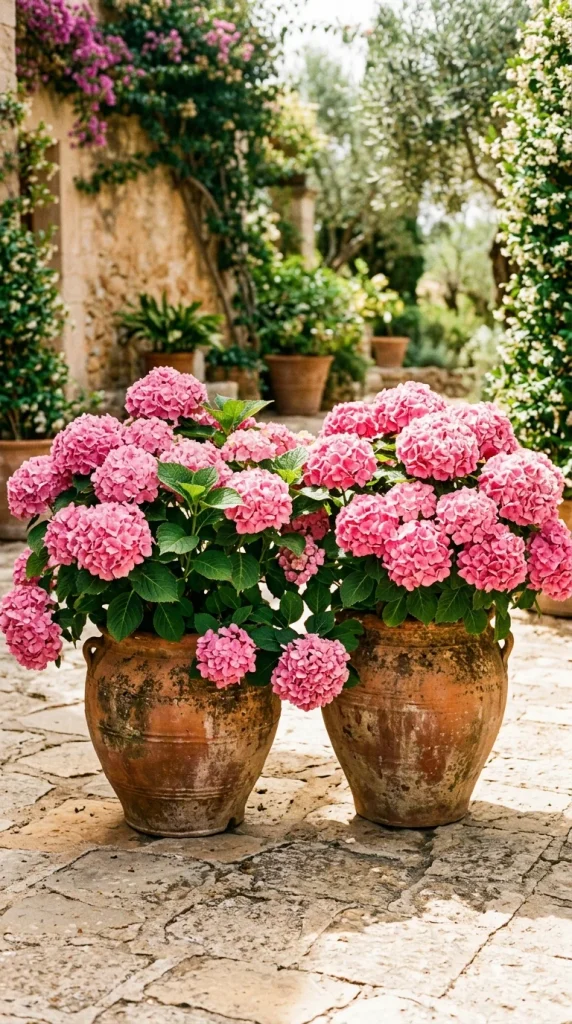
If you have limited ground space, hydrangeas thrive in containers. Use large, heavy pots to accommodate their root systems and prevent them from tipping over in the wind. Potted hydrangeas are perfect for flanking an entrance, decorating a patio, or adding a splash of color to a balcony.
3. Climbing Vines
For vertical interest, the Climbing Hydrangea (Hydrangea anomala petiolaris) is an excellent choice. Unlike many vines, it is self-clinging, using aerial rootlets to attach to sturdy surfaces. It produces beautiful white lacecap flowers and offers attractive peeling bark in the winter, making it a four-season interest plant.
4. Privacy Hedges
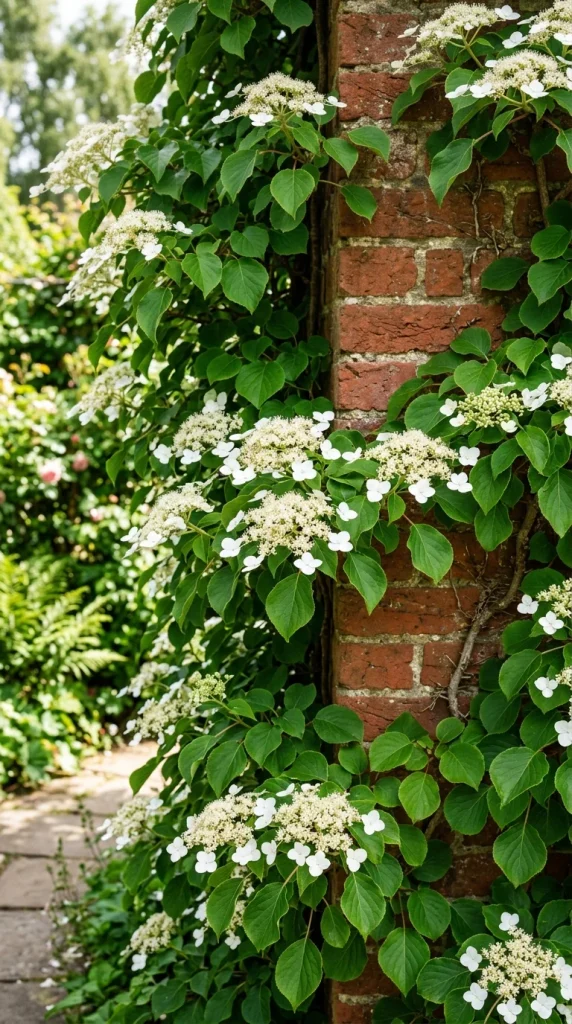
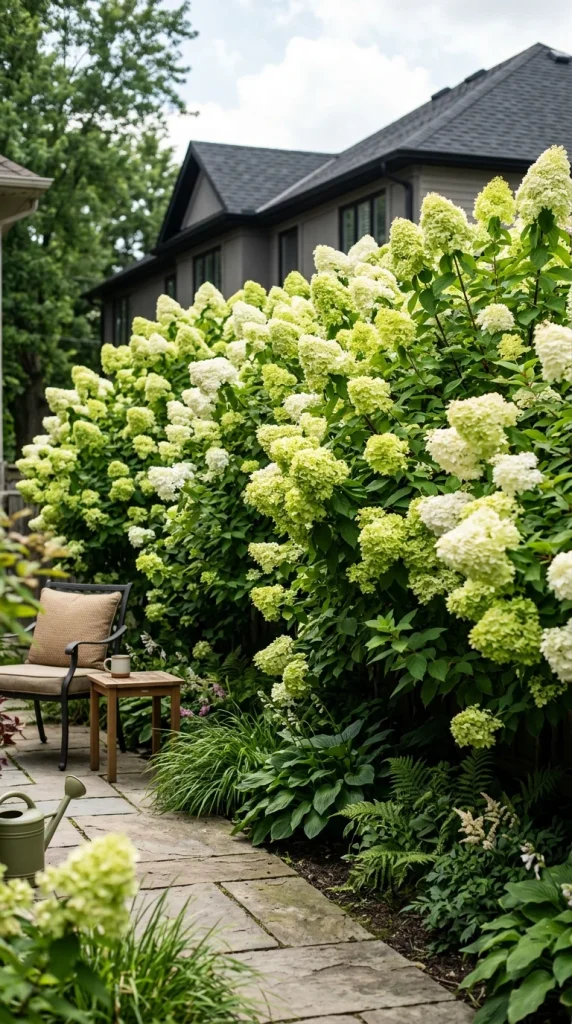
Hydrangeas like the ‘Limelight’ or ‘Annabelle’ varieties grow quickly and densely, making them ideal for soft privacy screening. Because they can reach heights of 6 to 8 feet, they provide an elegant alternative to wooden fences or traditional evergreen hedges, offering a wall of flowers during the peak of summer.
5. Shade Companions
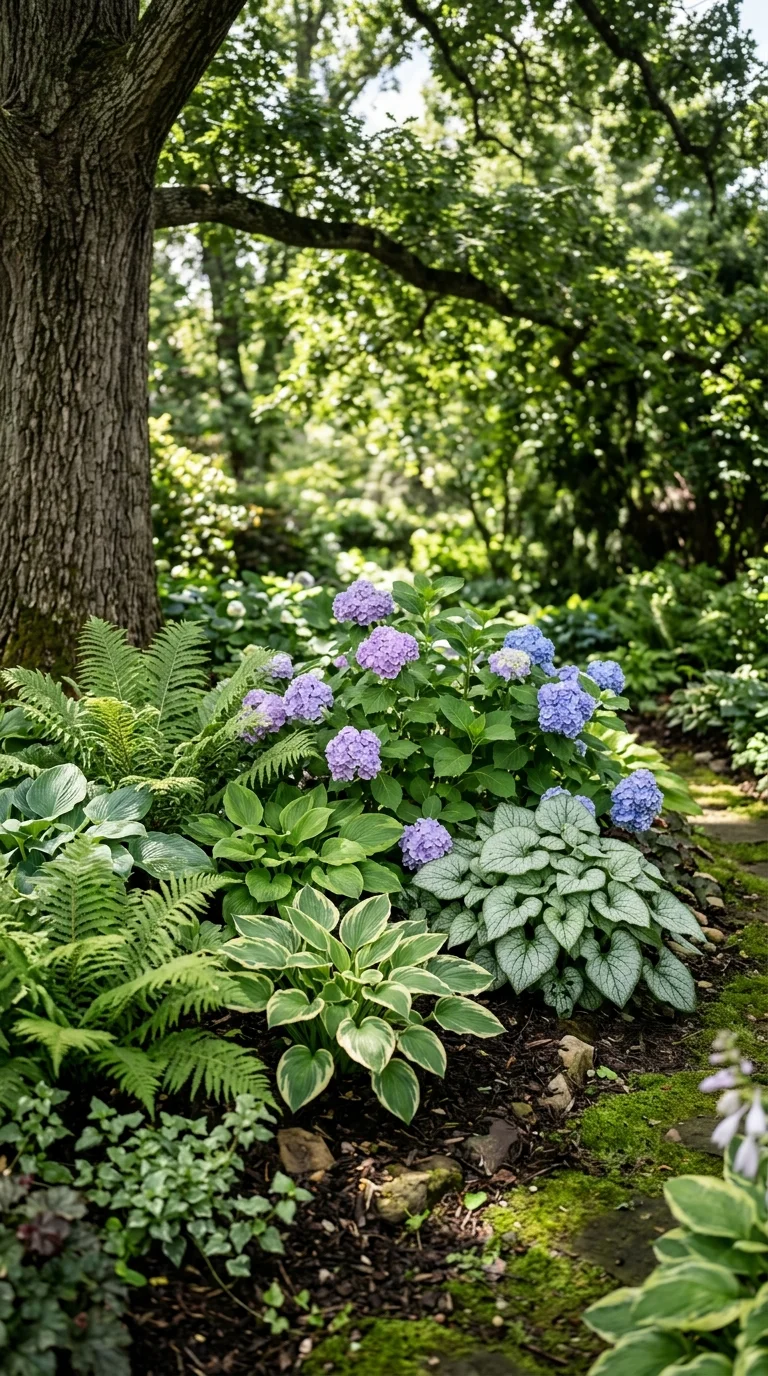
Many hydrangeas, especially the Bigleaf and Mountain varieties, thrive in partial shade. Pair them with other shade-loving perennials like hostas, ferns, and heucheras. The contrast between the large hydrangea blooms and the varied leaf textures of these companions creates a sophisticated, woodland aesthetic.
6. Oakleaf Texture
The Oakleaf Hydrangea (Hydrangea quercifolia) is prized for its architectural foliage and stunning autumn color. Its leaves resemble those of a red oak tree, turning brilliant shades of bronze, crimson, and purple in the fall. This variety is perfect for adding structural interest and late-season vibrance to your garden.
7. Woodland Walkways
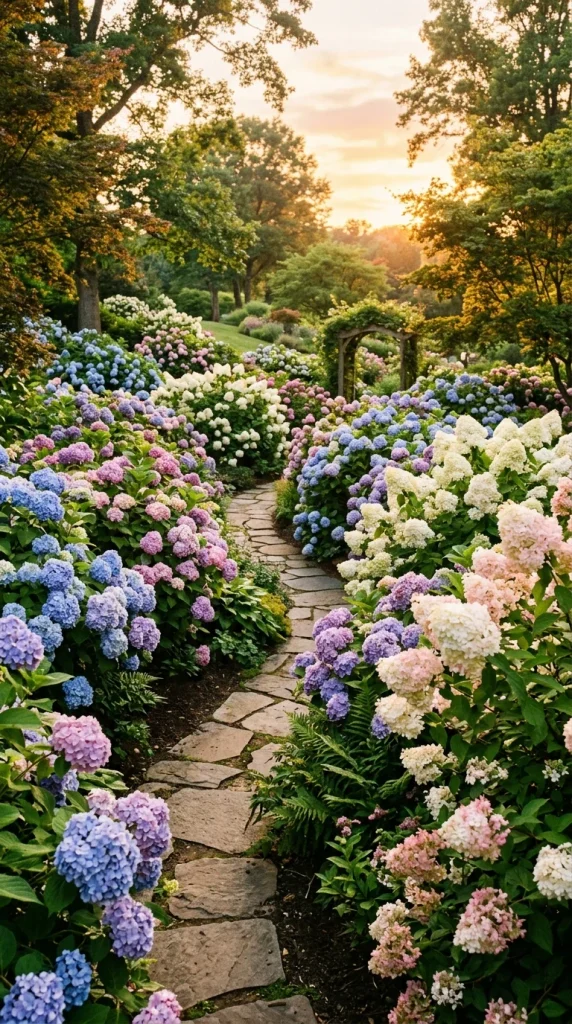
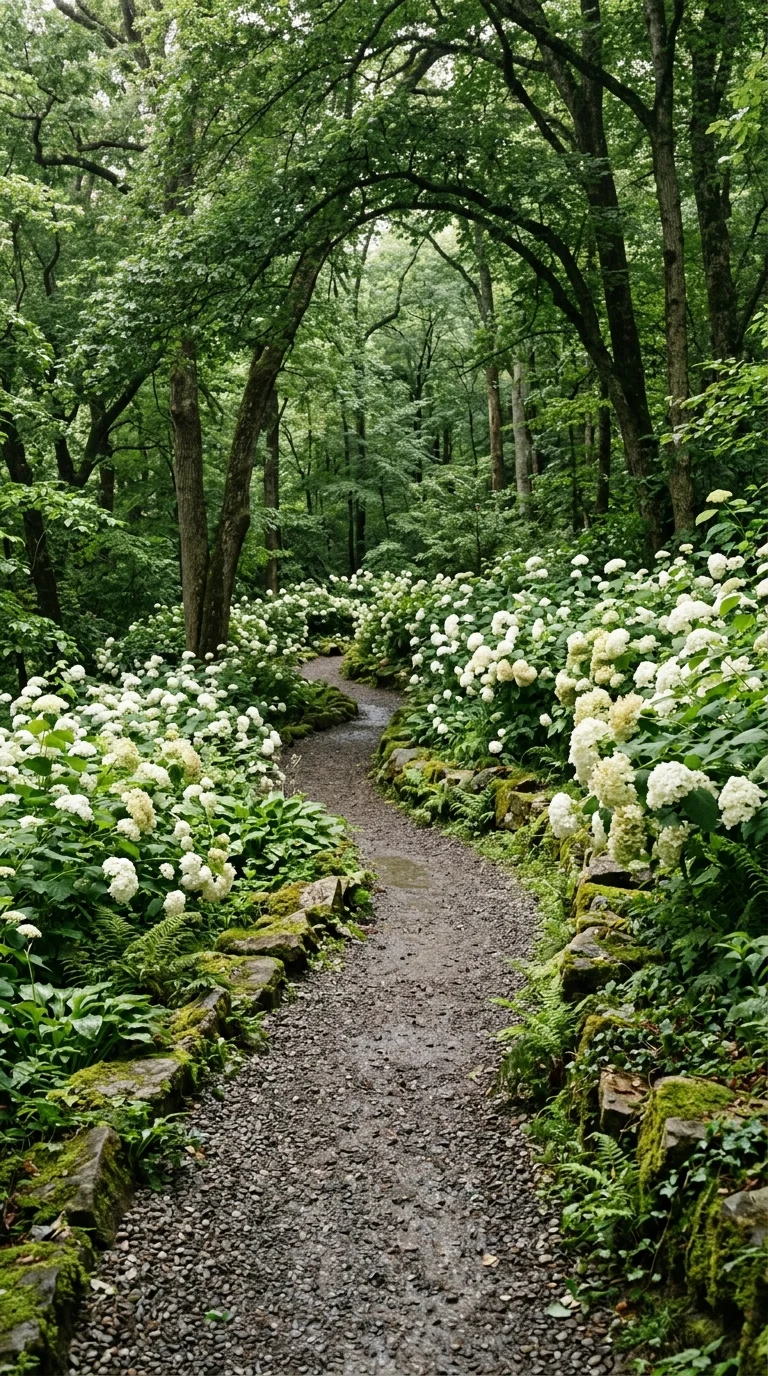
Create a magical atmosphere by lining a woodland path with hydrangeas. The white blooms of Hydrangea arborescens (like ‘Annabelle’) glow in the low light of a shaded area, lighting up the walkway and creating a sense of tranquility and mystery.
8. Mixed Containers
Don’t limit your pots to just hydrangeas. Treat them as the “thriller” in a thriller-filler-spiller arrangement. Surround a central hydrangea with trailing plants and smaller flowering annuals to create a multi-layered, professional-looking display that adds depth to your porch or deck.
9. Cottage Charm
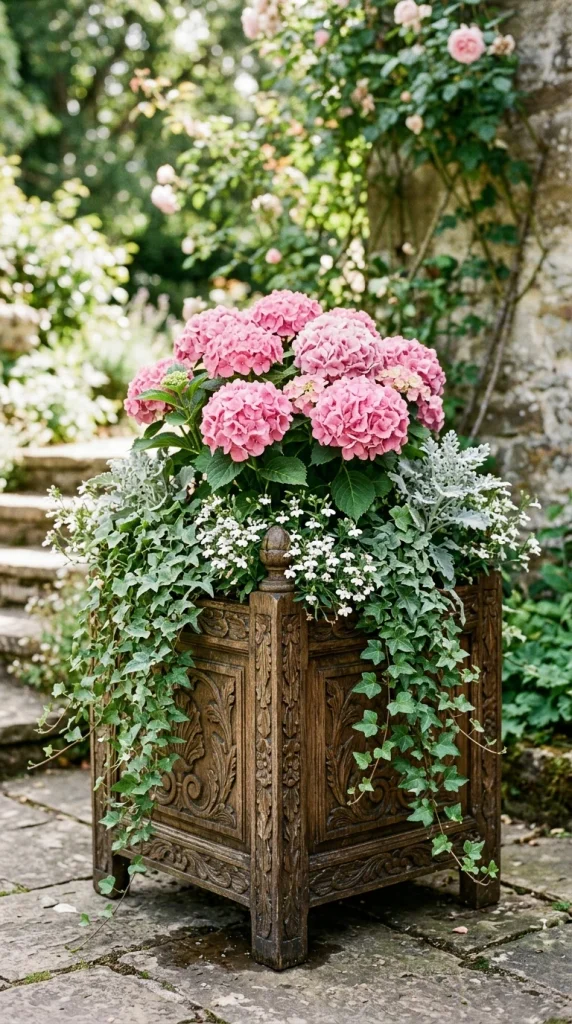
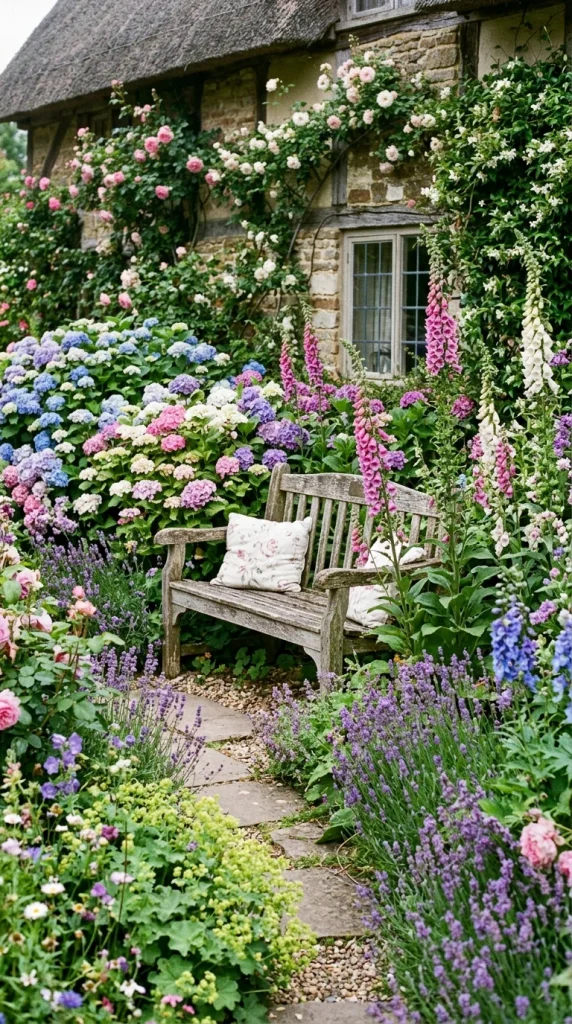
Hydrangeas are a staple of the cottage garden style. To achieve this look, avoid rigid lines and instead plant them in informal clusters. Let them mingle with other classic blooms like roses, delphiniums, and peonies for a lush, “organized chaos” that feels cozy and timeless.
10. Modern Minimalism
For a modern aesthetic, stick to a monochromatic palette and geometric shapes. Use white-flowering varieties like ‘Bobo’ or ‘Little Lime’ in sleek, minimalist containers. This clean look emphasizes the form of the plant and provides a calming, sophisticated environment.
11. Color Grading
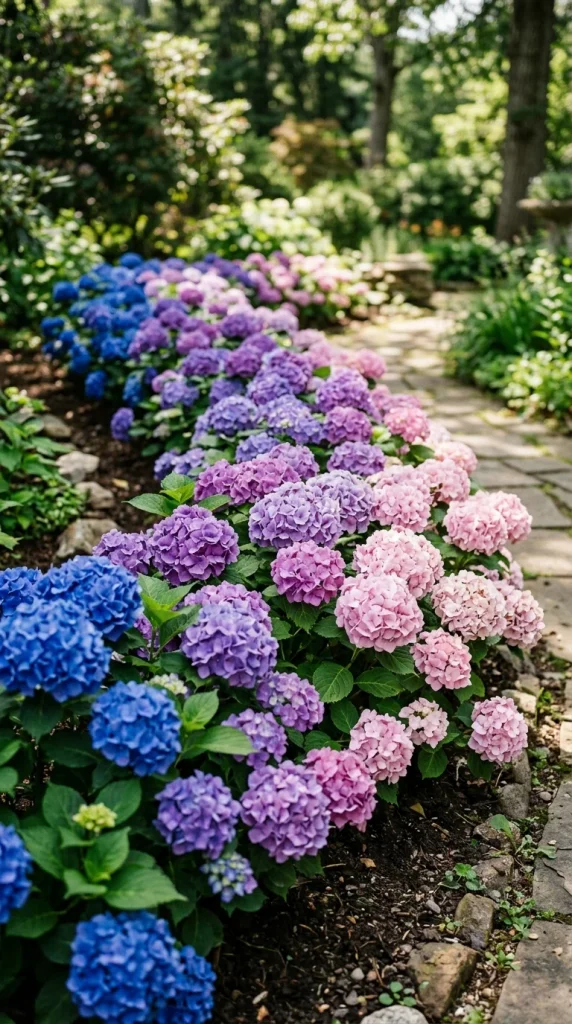
Because the color of many hydrangeas depends on soil acidity, you can play with the chemistry to create a gradient effect. By adjusting the pH in different sections of a large bed, you can encourage a transition of colors, creating a “rainbow” of blooms that is sure to be a conversation starter.
12. Standard Trees
Hydrangea paniculata varieties can be trained into “standards” or small trees. This elevates the blooms to eye level and creates a formal focal point. These hydrangea trees are perfect for small gardens where ground space is limited but you still want the impact of a large flowering shrub.
13. Entryway Welcome
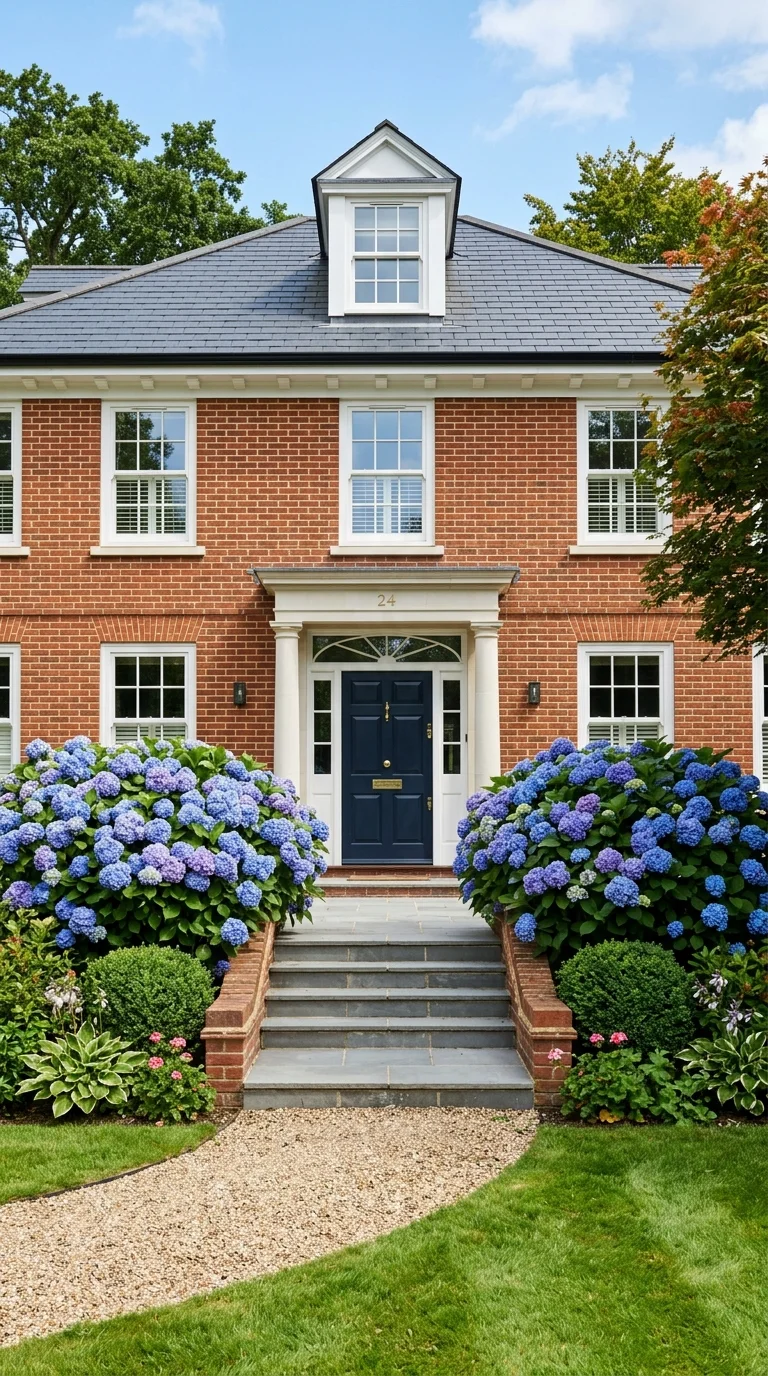
Create an inviting entrance by planting hydrangeas symmetrically. Whether in the ground or in large pots, flanking your front door with these lush plants provides a sense of grandeur and a warm, floral welcome for guests.
14. Garden Arbors
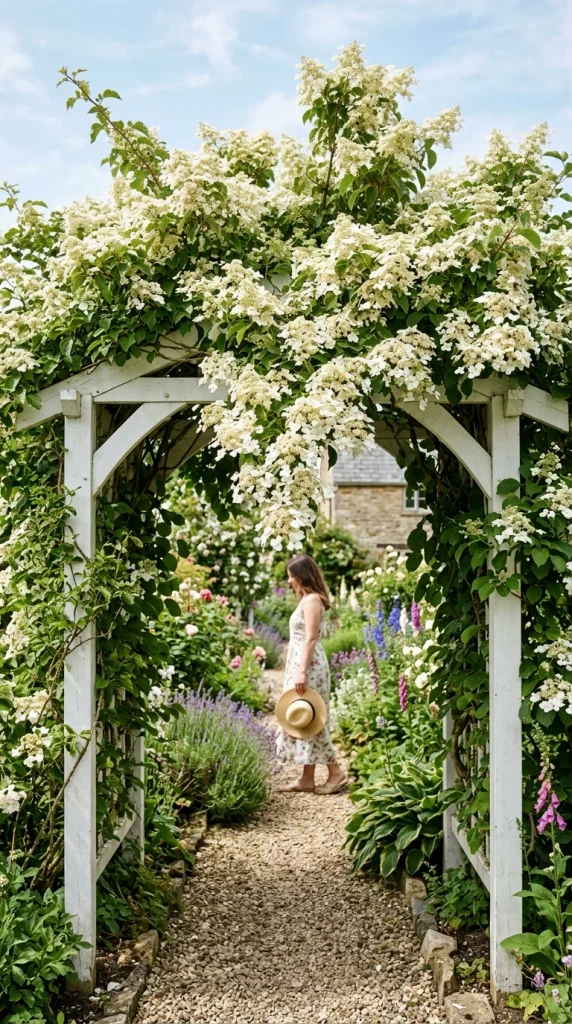
An arbor covered in climbing hydrangeas creates a beautiful transition between different areas of the garden. It provides a sense of enclosure and romance, especially when the fragrant white flowers are in full bloom during the early summer months.
15. Dried Arrangements
The beauty of hydrangeas doesn’t have to end when the season does. Many varieties, especially paniculatas and mopheads, dry exceptionally well. Leave the flower heads on the bush until they feel papery, then cut them for long-lasting indoor arrangements that bring a touch of the garden inside for the winter.
16. Moon Gardens
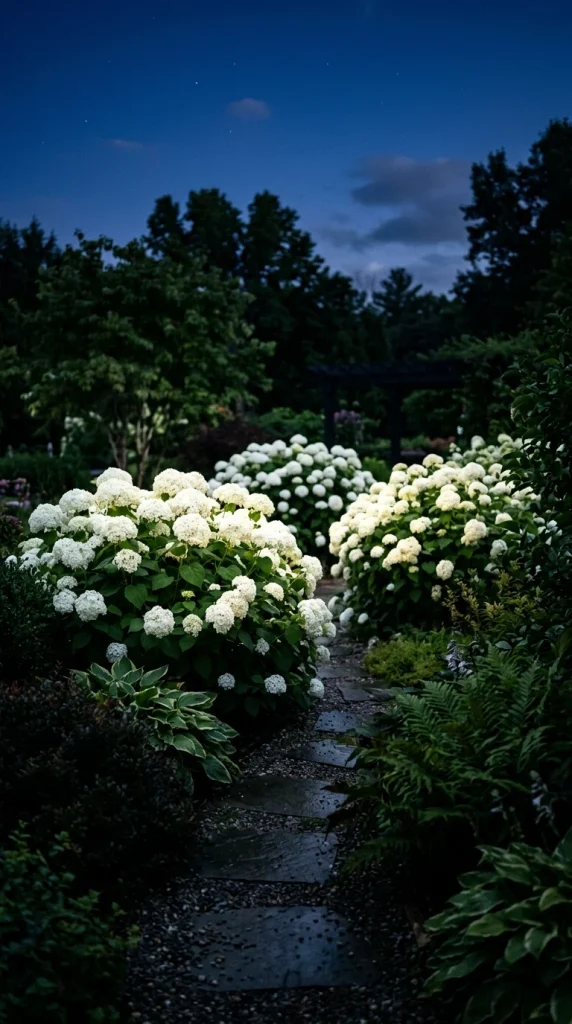
A “moon garden” is designed to be enjoyed at night, using plants with white or reflective flowers. White hydrangeas are the stars of such a display. Their large, pale flower heads catch the moonlight, creating a luminous and ethereal effect that is perfect for evening relaxation.
17. Window Boxes
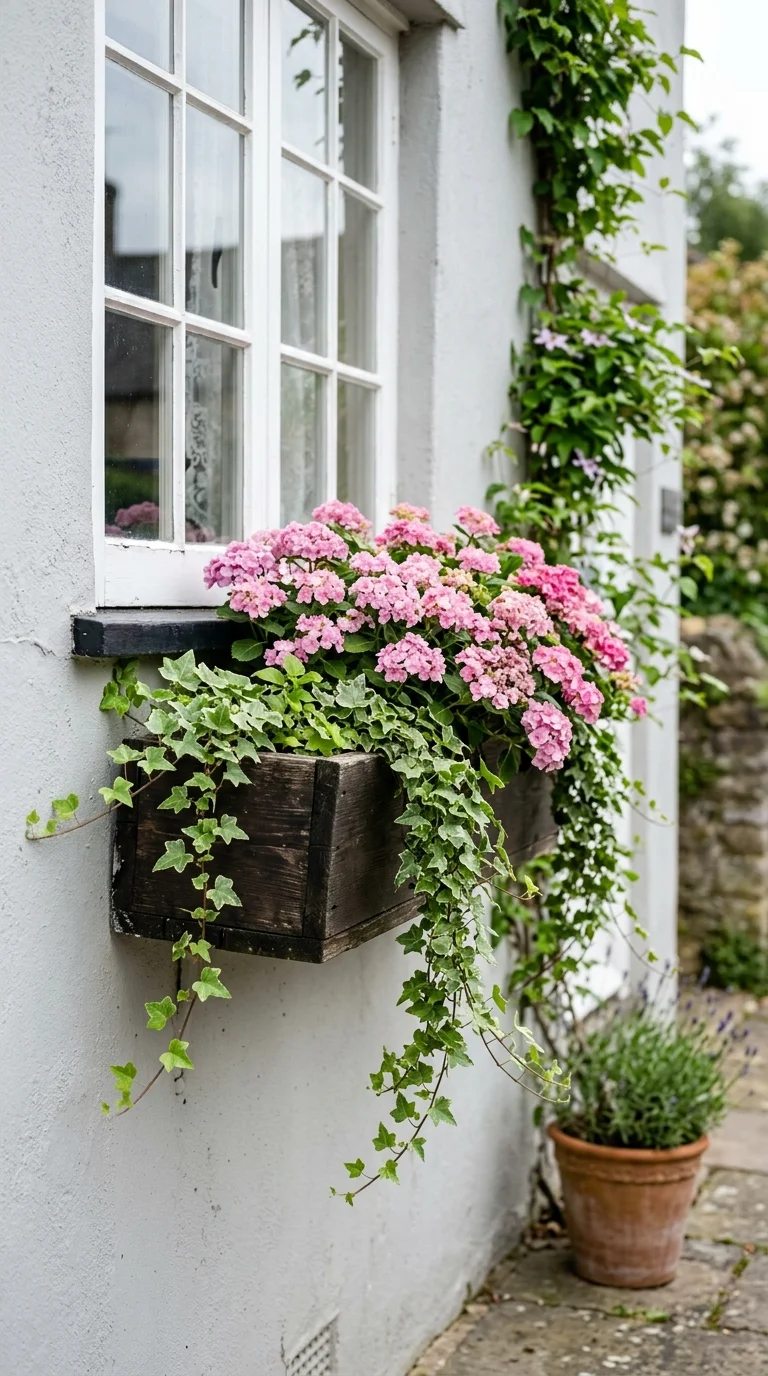
For a charming European look, use dwarf hydrangea varieties in window boxes. Newer cultivars stay compact and offer the same stunning floral display as their larger counterparts. Pair them with trailing vinca or ivy to soften the edges of the box.
18. Rock Garden Contrast
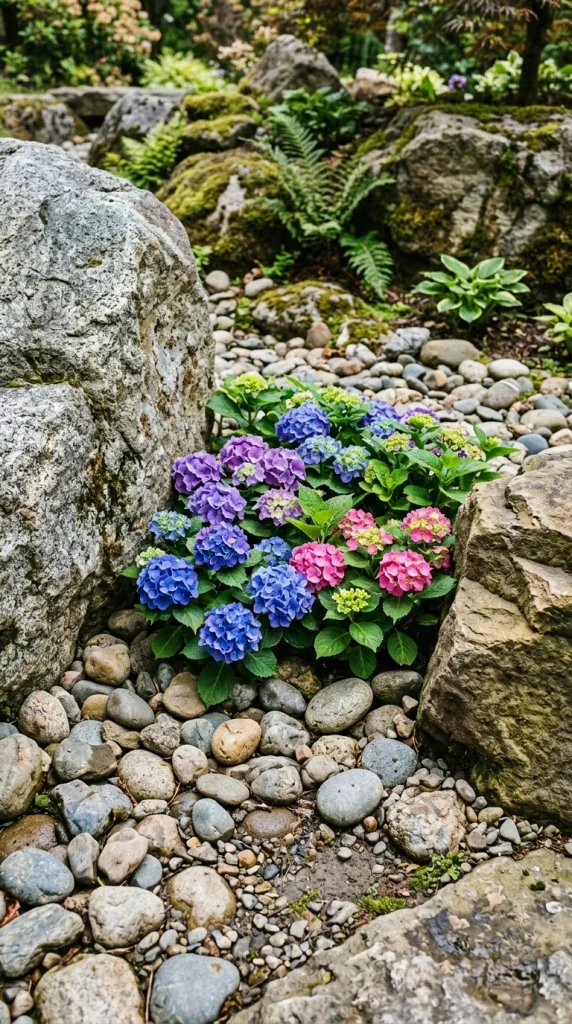
The soft, pillowy texture of hydrangea blooms provides a wonderful contrast to the hard, rugged surface of large garden rocks. Use them in a rockery or near a stone retaining wall to balance the landscape and add a touch of softness to the “hardscape.”
19. Vertical Interest
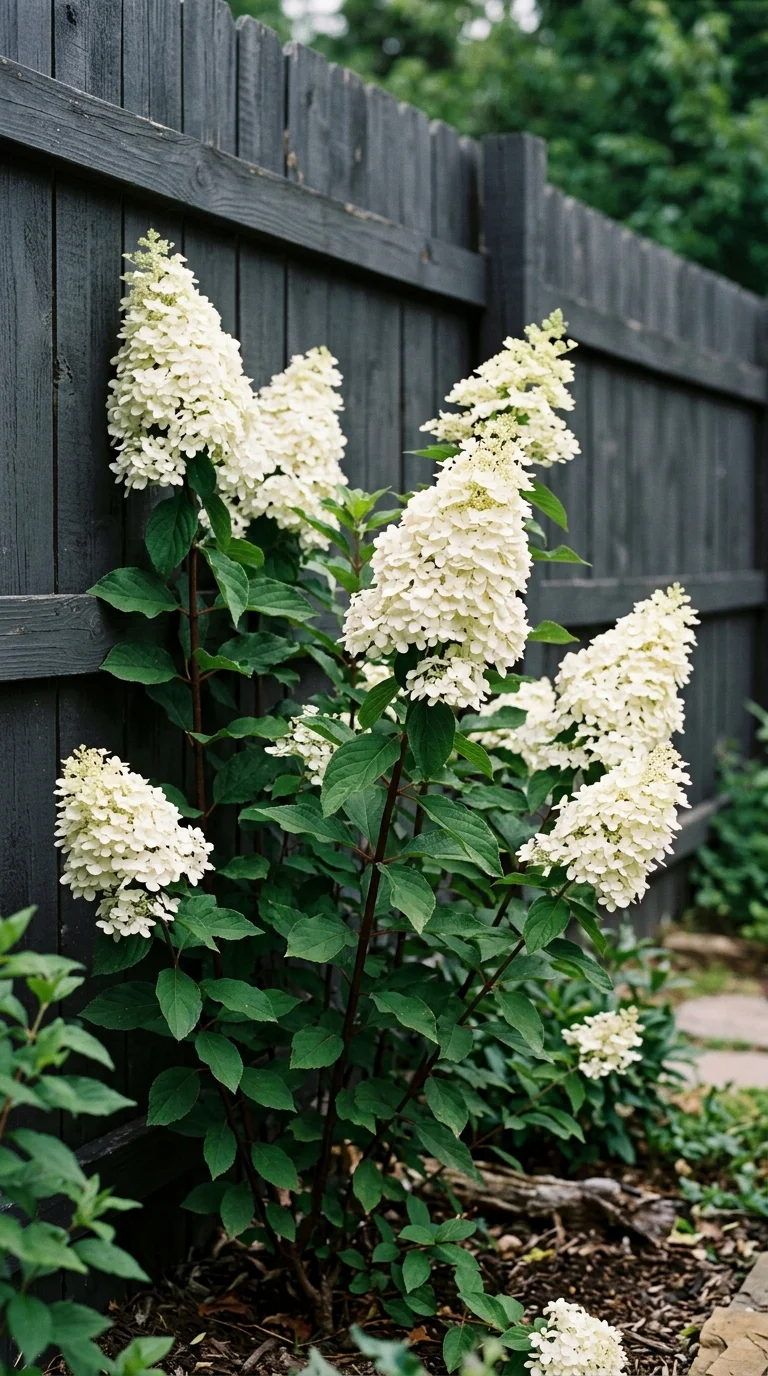
Panicle hydrangeas are known for their upright growth habit. Use tall varieties like ‘Phantom’ or ‘Silver Dollar’ to add verticality to your garden beds. Their cone-shaped flowers draw the eye upward and provide a strong structural element in the back of a border.
20. Cutting Gardens
If you love fresh flowers in the house, dedicate a portion of your garden to a hydrangea cutting patch. By planting a variety of species, you can have a steady supply of blooms for bouquets from June through September. Choose varieties with strong stems for the best vase life.
21. Formal Parterres
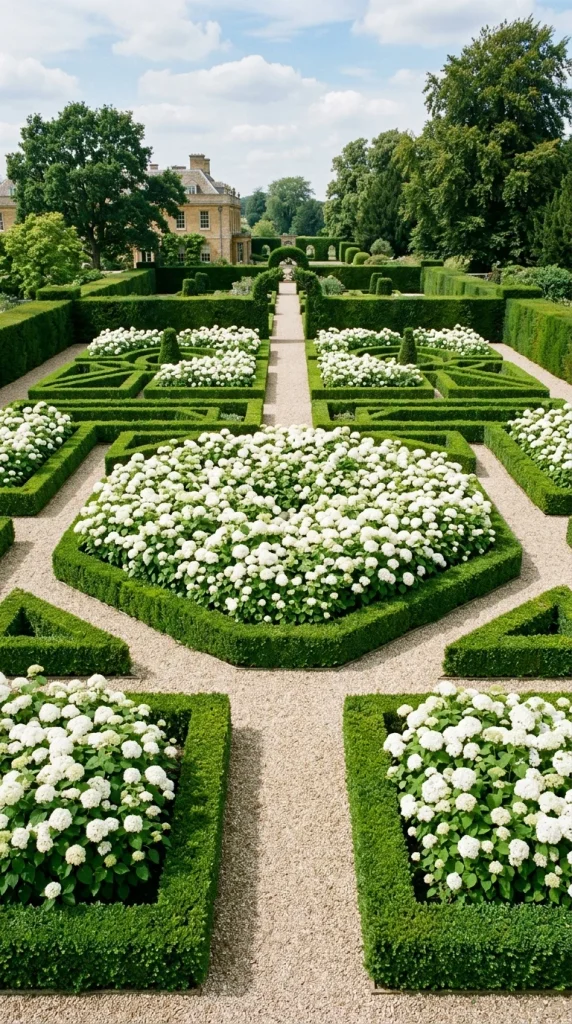
Hydrangeas can fit surprisingly well into formal garden designs. When planted within the structured confines of a low boxwood hedge, the wild, billowing nature of the hydrangea is tamed, creating a look that is both elegant and lush.
22. Coastal Vibes
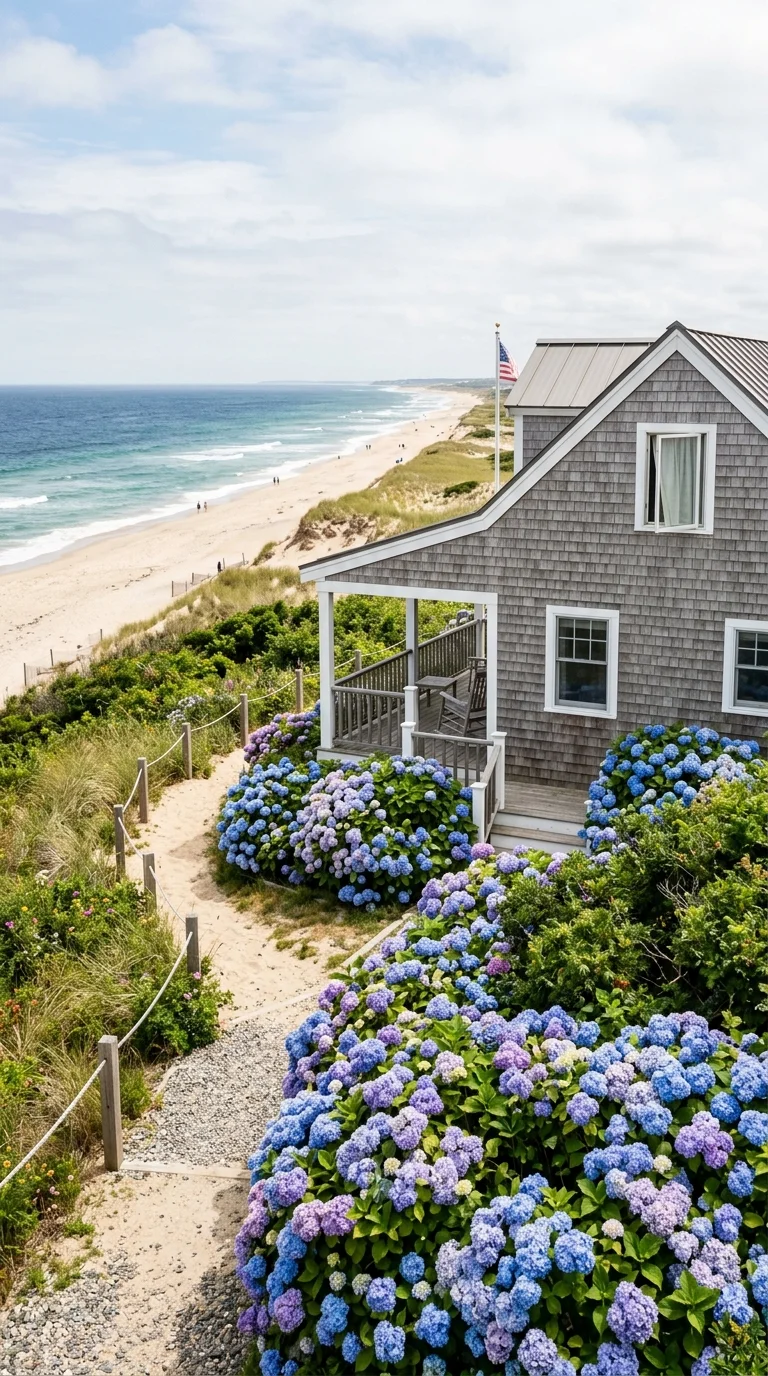
Hydrangeas are iconic in coastal landscapes, particularly in places like Cape Cod or the Hamptons. They are remarkably salt-tolerant and thrive in the humid, misty air of the coast. Plant them in mass to complement the blues of the ocean and the neutrals of the sand.
23. Fall Foliage
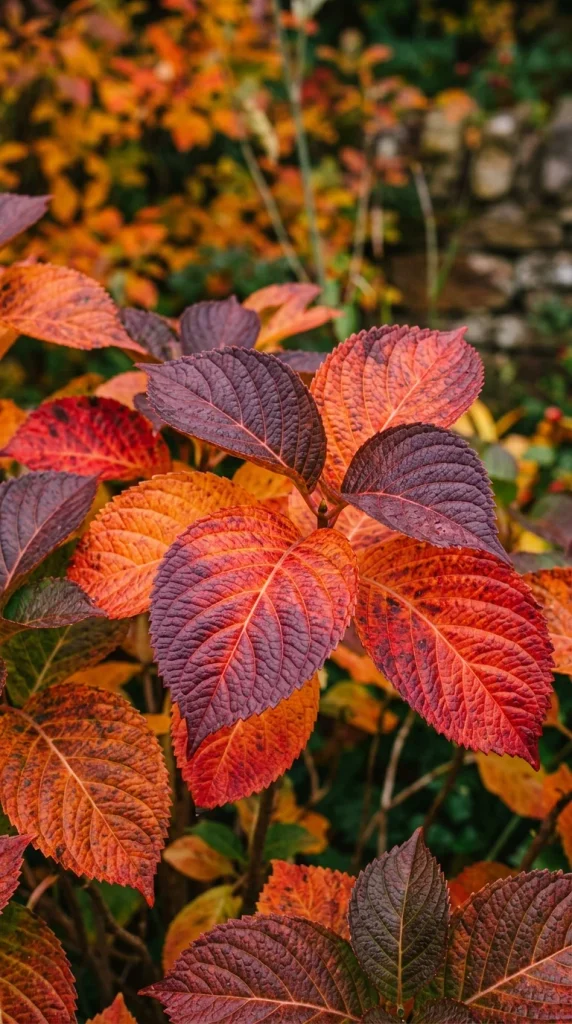
While we usually think of hydrangeas for their flowers, many varieties offer spectacular fall foliage. Oakleaf hydrangeas and some serrata (mountain) varieties turn deep mahogany and scarlet, extending the garden’s beauty well into the cooler months.
24. Lacecap Elegance
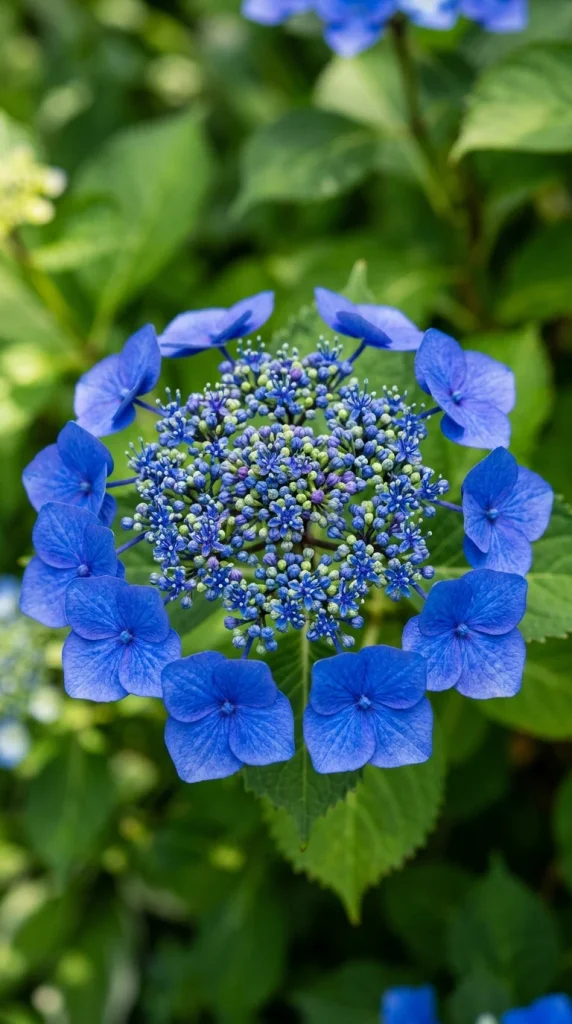
For a more delicate and refined look, choose lacecap hydrangeas (Hydrangea macrophylla f. normalis). These have a flat flower head that looks like a ring of petals around a center of tiny buds. They offer a more subtle, airy texture than the heavy mophead types and are highly attractive to pollinators.
25. Urban Balconies
You don’t need a sprawling backyard to enjoy hydrangeas. Compact varieties like ‘Pia’ or ‘Tuff Stuff’ are perfect for urban dwellers. A few well-placed pots on a balcony can provide a lush, green screen and a burst of color in a concrete environment.
26. Mass Planting
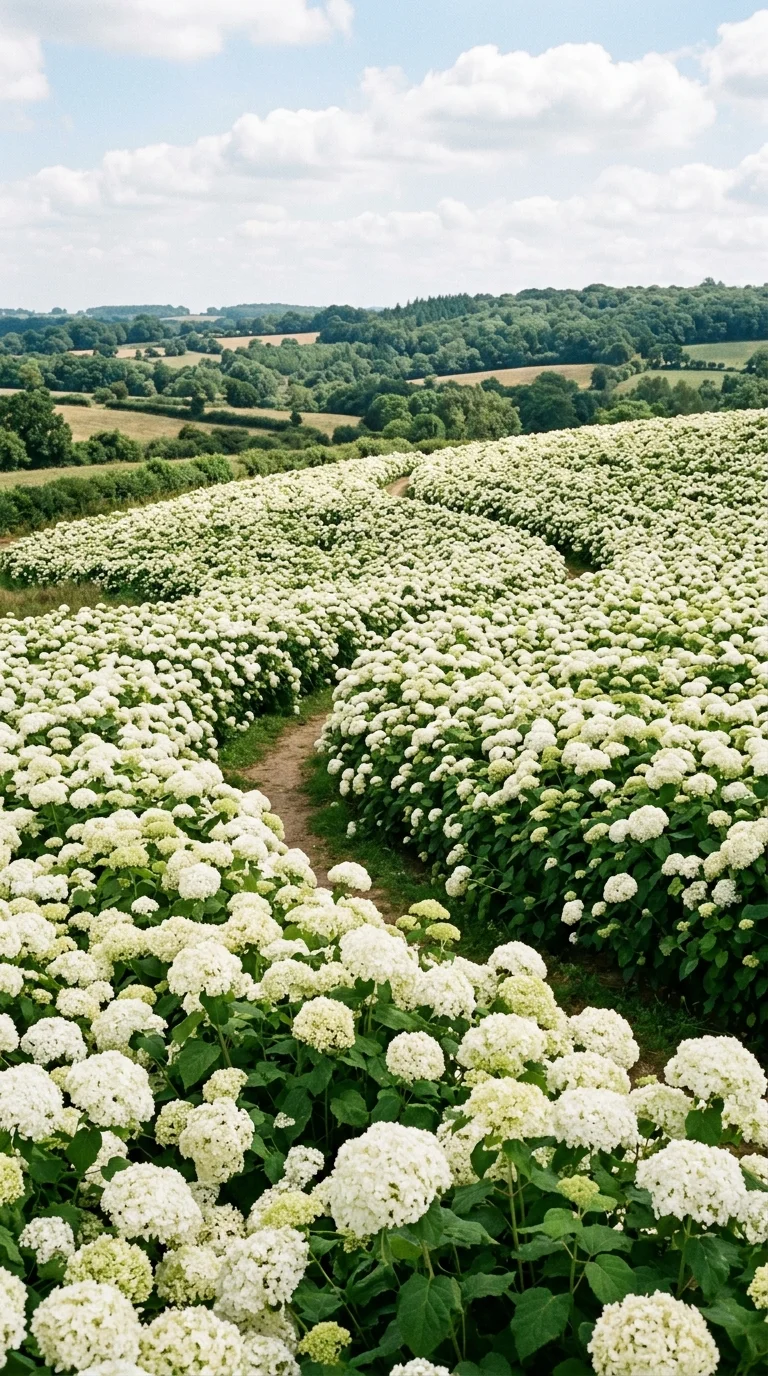
If you have the space, nothing beats the impact of a mass planting. Filling a large area with a single variety of hydrangea creates a breathtaking sea of color. This technique is often used in public parks and large estates to create a high-impact visual that is both simple and stunning.