Nothing beats the taste of a sun-ripened strawberry picked directly from the vine. For those with sprawling backyards, a dedicated berry patch is a dream come true. However, if you are working with a tiny balcony, a compact patio, or a small urban courtyard, you might think your fruit-growing dreams are out of reach.
The good news is that strawberries are among the most versatile and adaptable plants in the botanical world. They have shallow root systems and a natural tendency to trail, making them the perfect candidates for creative container gardening. By thinking vertically and utilizing every nook and cranny, you can yield a massive harvest in a remarkably small footprint. Here are 13 strawberry planter ideas that prove you don’t need a farm to enjoy the sweetness of summer.
1. Hanging Baskets
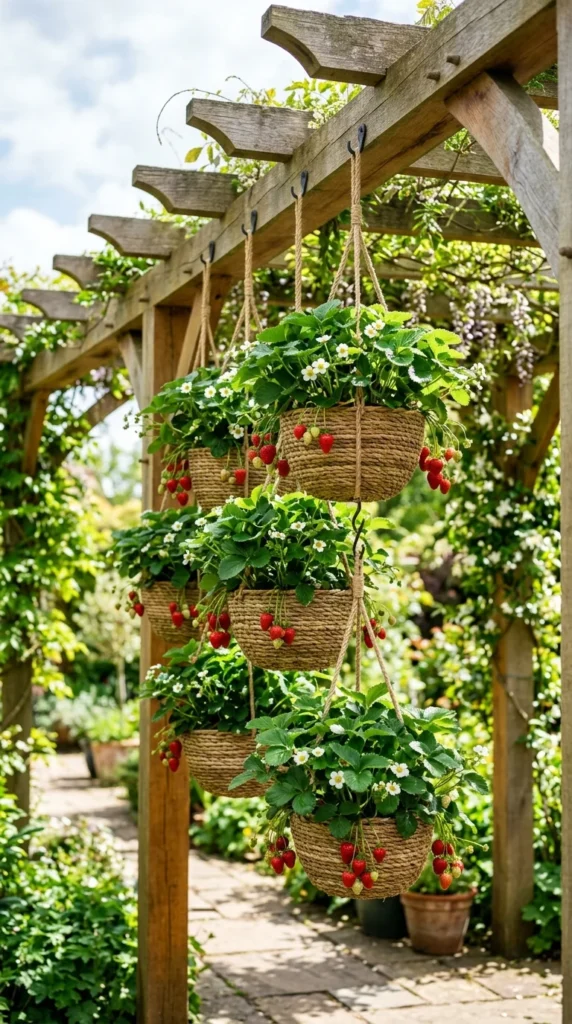
Hanging baskets are the gold standard for small-space strawberry gardening. Because strawberries are naturally trailing plants, they love being elevated. This method utilizes “dead” air space above your patio or balcony, leaving your floor space free for furniture or other plants.
Beyond the space-saving benefits, hanging baskets offer a strategic advantage against pests. Slugs and snails, the traditional enemies of the strawberry, find it much harder to reach fruit that is suspended several feet in the air. Furthermore, the increased air circulation around the foliage helps prevent fungal diseases and rot. When choosing a basket, opt for one with a coco-fiber liner to ensure excellent drainage while retaining enough moisture to keep the roots cool.
2. Vertical Towers
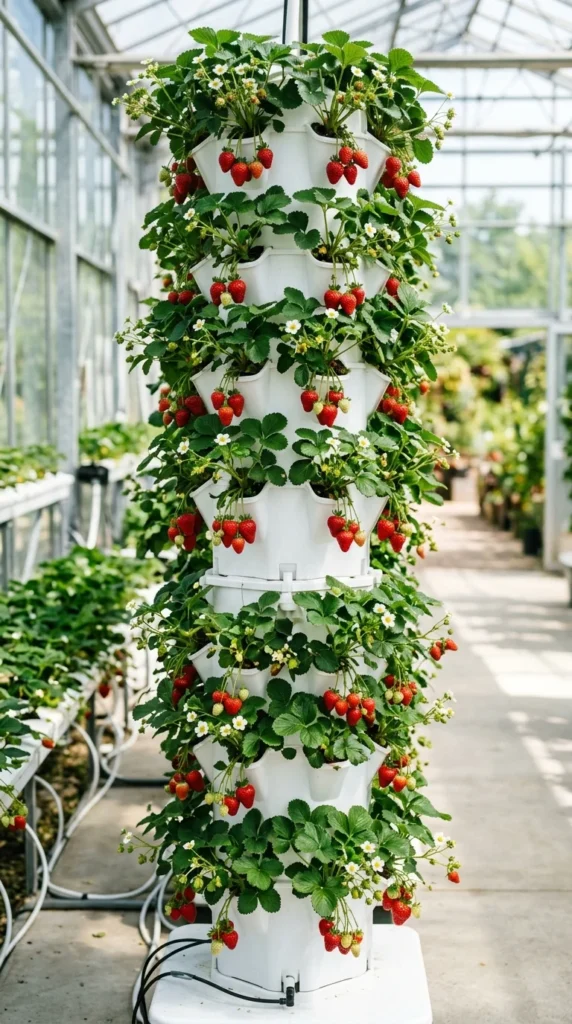
If you have a corner that is only a few square feet in size, a vertical tower can turn that small patch of ground into a massive production center. These towers are designed to stack planting “pockets” on top of one another, allowing you to grow twenty or thirty plants in the space normally occupied by just one or two.
Vertical towers are particularly effective because they often feature internal irrigation systems. Water added to the top reservoir trickles down through the center, ensuring that every plant receives its share of nutrients and hydration. This setup is perfect for “Everbearing” strawberry varieties, which produce fruit consistently throughout the growing season.
3. PVC Pipes
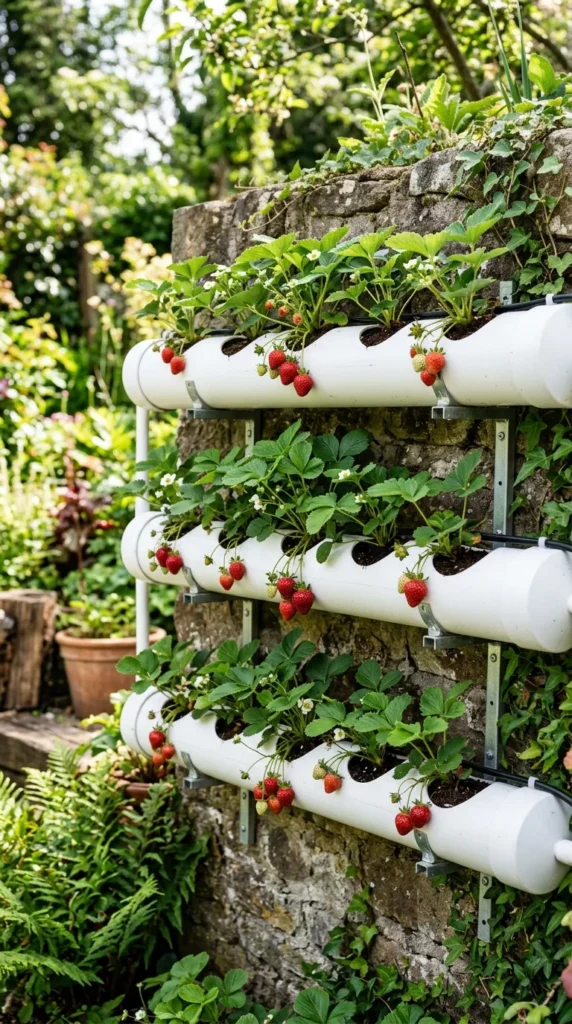
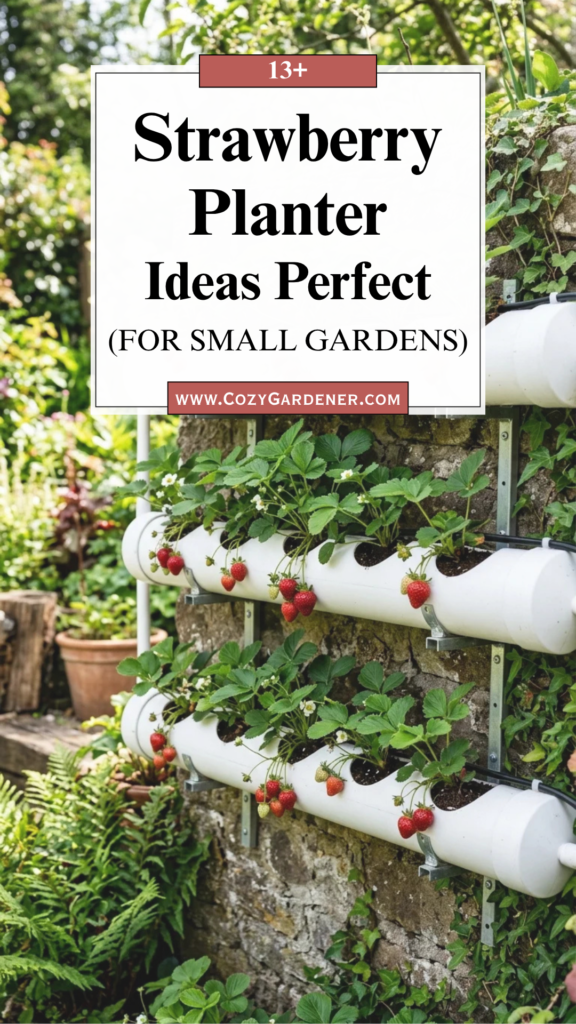
For the DIY enthusiast, PVC pipe planters are an affordable and highly customizable solution. By taking a wide-diameter PVC pipe and cutting circular holes at regular intervals, you create a long, sleek planter that can be mounted horizontally along a fence or stood up vertically in a corner.
This method is incredibly efficient for irrigation. If you set the pipes up horizontally, you can run a single drip line through the entire length of the pipe. If you go vertical, you can insert a smaller perforated tube inside the large pipe to distribute water evenly to the bottom roots. It’s a clean, modern look that fits perfectly in minimalist or industrial-style gardens.
4. Pallet Planters
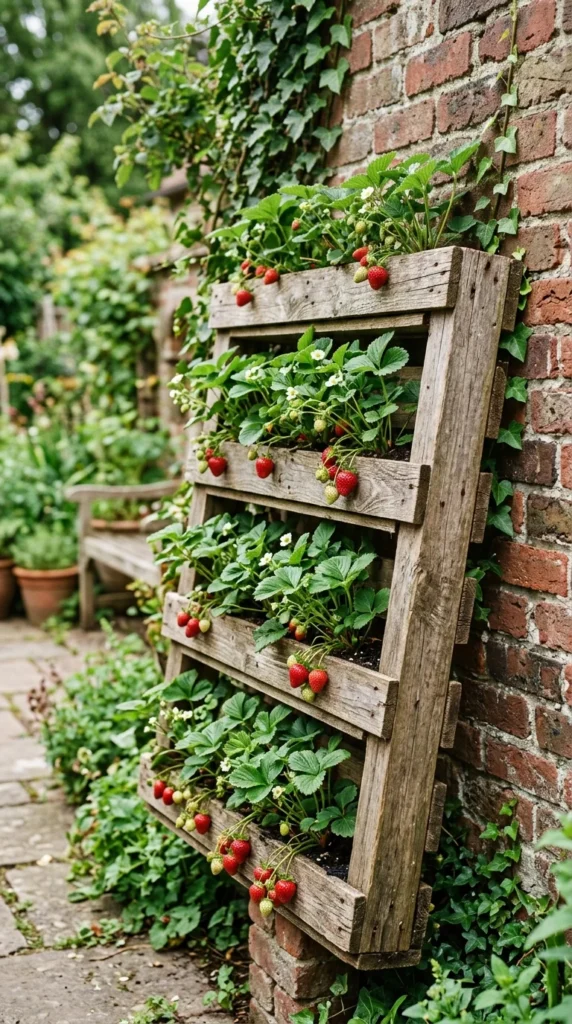
Upcycling a wooden pallet is a fantastic way to create a rustic, wall-mounted garden. By attaching landscape fabric to the back and bottom of the pallet’s internal slats, you create shallow troughs perfect for the strawberry’s non-invasive root system.
Leaning a pallet against a wall or securely mounting it allows you to grow a “living wall” of fruit. This not only looks stunning but also acts as an insulator for your home or a privacy screen for your balcony. Just ensure that the pallet you choose is heat-treated (marked with “HT”) rather than chemically treated, to keep your fruit safe for consumption.
5. Gutter Gardens
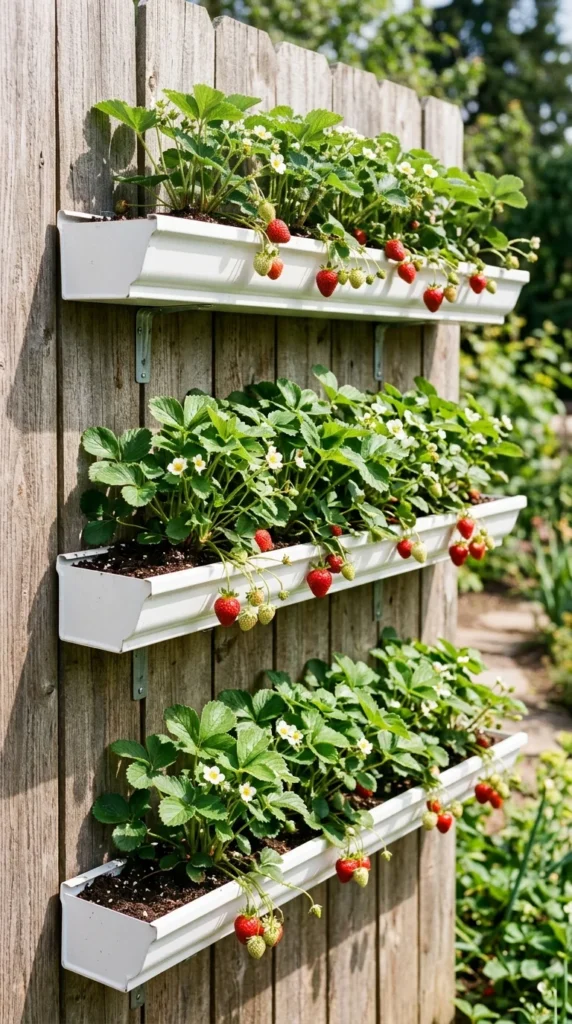
Rain gutters are an often-overlooked tool for the small-scale gardener. Because they are narrow and shallow, they fit perfectly on the railings of a deck or the side of a garden shed. When mounted in parallel rows, they create a striking “stadium seating” effect for your plants.
Gutter gardens are excellent for keeping the fruit off the soil, which prevents rot and keeps the berries clean. Since they hold a relatively small volume of soil, they do tend to dry out faster than deep pots, so consider installing a simple automated mister or being diligent with your watering can.
6. Strawberry Jars
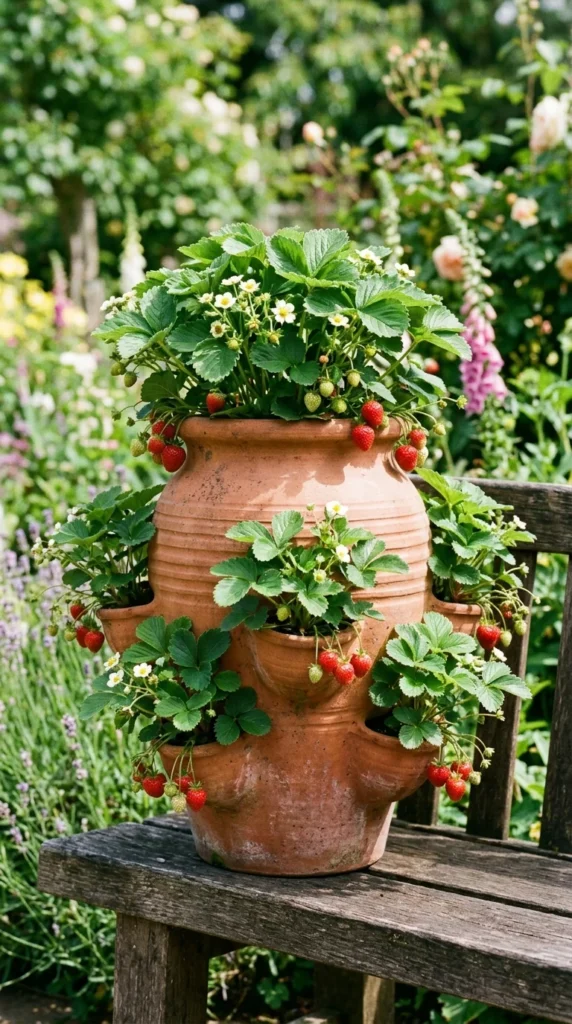
The classic terracotta strawberry jar is a timeless design for a reason. These pots feature “pockets” protruding from the sides, allowing you to plant multiple crowns in a single vessel. The clay material is breathable, which helps regulate soil temperature and moisture levels.
When using a strawberry jar, a common trick is to place a perforated tube (like a small PVC pipe with holes drilled in it) down the center of the pot before filling it with soil. This allows you to pour water directly into the tube so that the plants in the lower pockets get as much water as the ones at the top. It’s a beautiful centerpiece for a patio table.
7. Tiered Steps
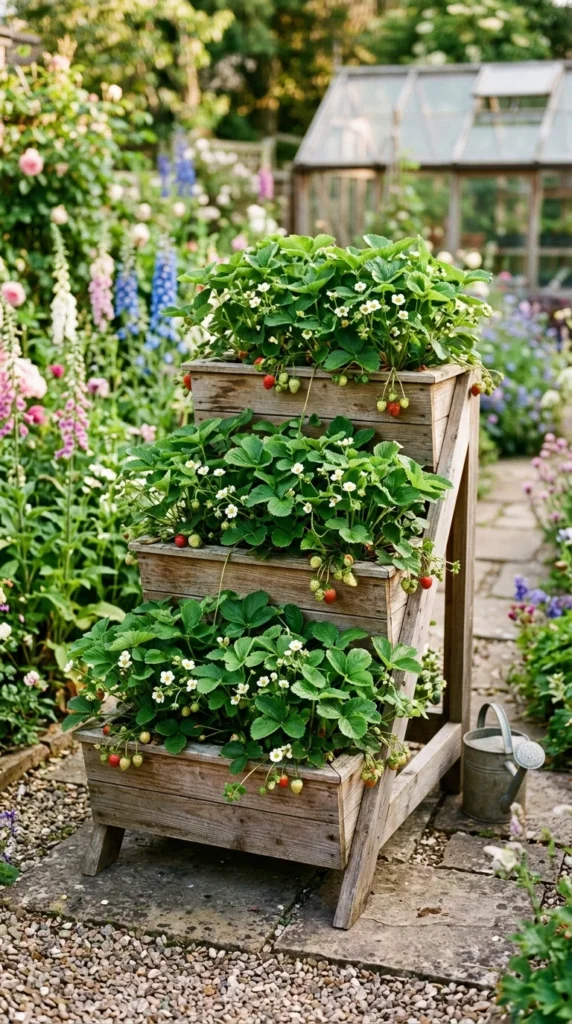
Tiered step planters are perfect for maximizing sunlight. In a small garden, shadows from walls or furniture can be a problem. A tiered system allows the plants at the back to sit higher than the ones in the front, ensuring that every leaf gets its fair share of Vitamin D.
These planters are also very ergonomic. Instead of bending down to the ground to harvest your berries, the tiered levels bring the fruit closer to waist height. This makes maintenance, such as pinching off runners or checking for pests, much easier on your back.
8. Window Boxes
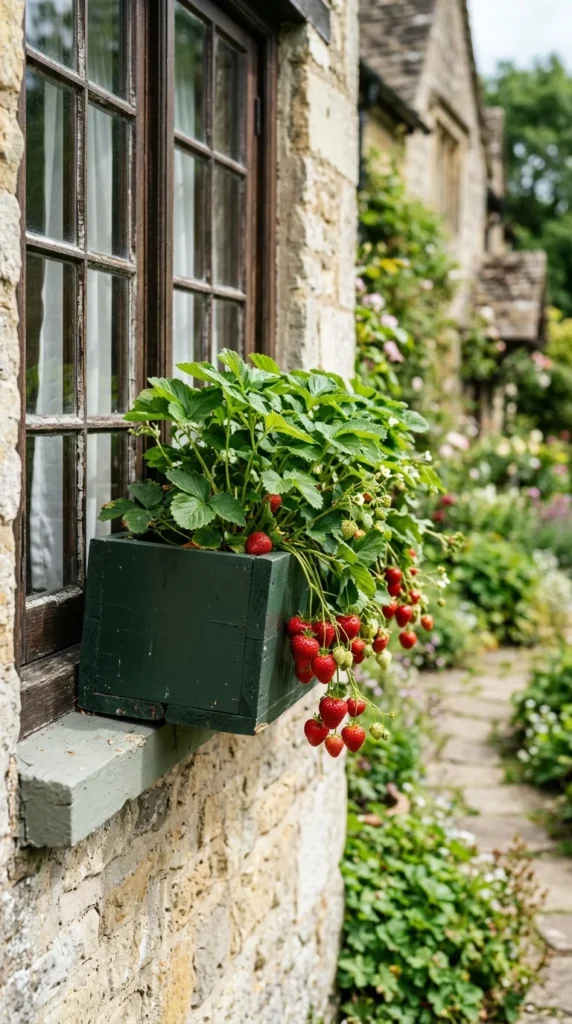
You don’t even need a balcony to grow strawberries; a sturdy windowsill will do. Window boxes are the ultimate solution for apartment dwellers. Strawberries thrive in these long, narrow containers because they can sprawl out along the length of the box.
The aesthetic of red berries dangling against the side of your home is charming and quintessentially “cottage-core.” Plus, having your garden right outside your window makes it incredibly easy to reach out and grab a few berries for your morning cereal or yogurt.
9. Stackable Pots
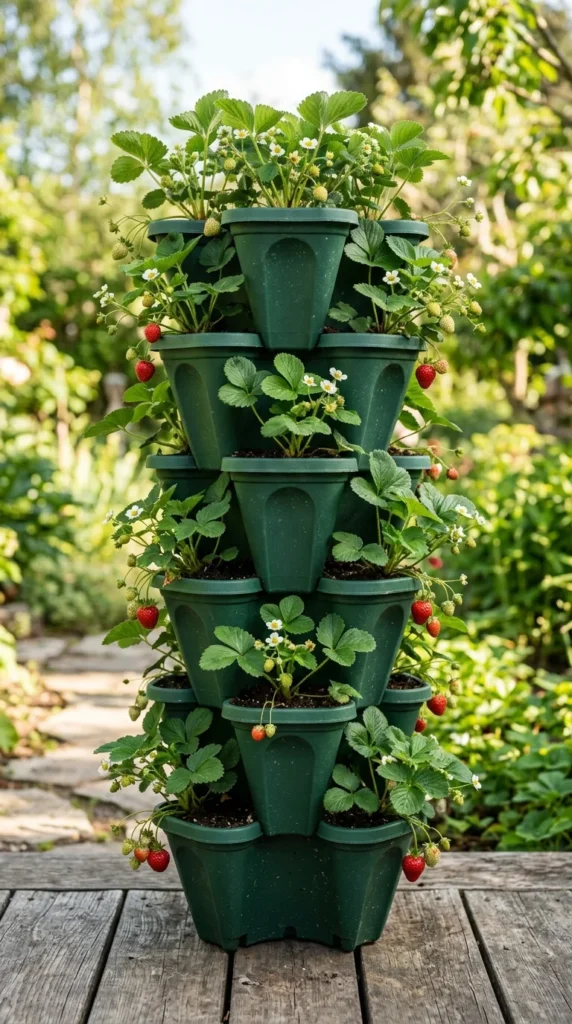
Stackable pots are a modular solution that grows with your ambition. These planters usually come in sets of three or five and are designed to lock into one another. You can start small and add more layers as your garden expands.
The clover-leaf shape of most stackable planters provides the perfect little “balcony” for each strawberry plant. This keeps the fruit from touching the soil of the layer below, reducing the risk of mold. Because they are typically made of lightweight plastic, they are easy to move around to follow the sun throughout the day.
10. Pocket Organizers
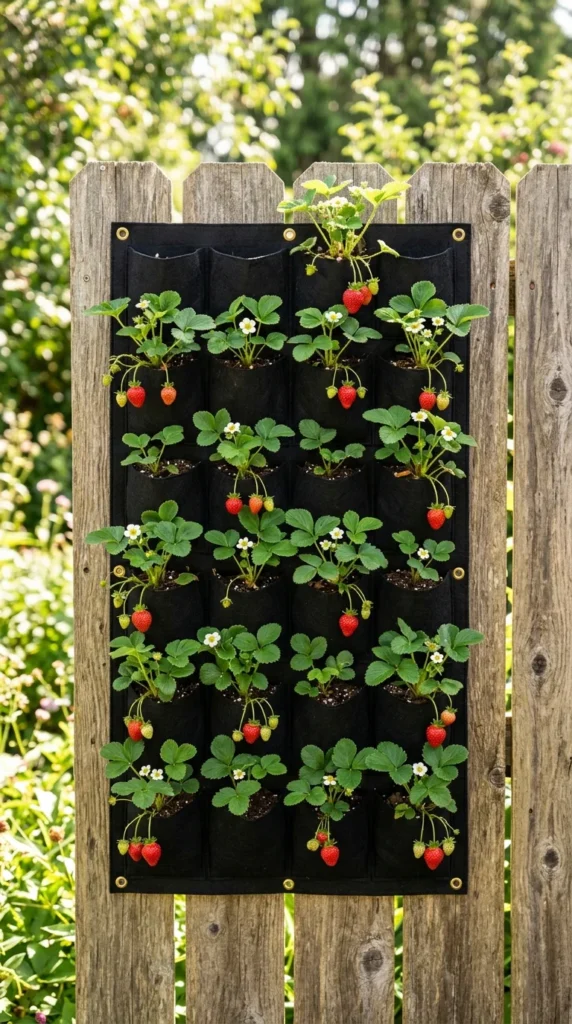
Using a fabric pocket organizer (similar to an over-the-door shoe rack but made of heavy-duty felt) is a brilliant way to create a vertical berry farm on a budget. The felt material is breathable and provides excellent drainage, which prevents the roots from becoming waterlogged.
These fabric walls are incredibly lightweight, making them ideal for fences that might not support the weight of heavy wooden or ceramic planters. As the strawberries grow, the foliage will eventually cover the fabric, creating the illusion of a solid wall of greenery and fruit.
11. Half Barrels
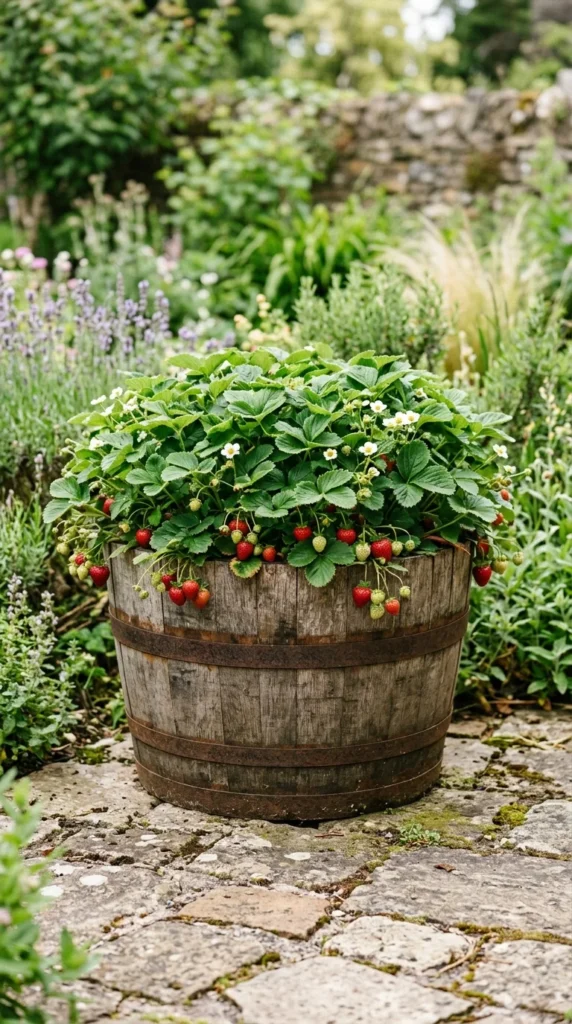
For those who want a more substantial, rustic look, a half-wine barrel provides a large surface area for a “strawberry carpet.” While a barrel takes up more floor space than a vertical tower, it allows you to grow a significant number of plants in one concentrated spot.
Half barrels are deep enough to hold a lot of soil, which means they don’t dry out as quickly as smaller containers. This stability is great for the plants’ health. You can also plant a taller “thriller” plant in the center (like a blueberry bush) and surround it with strawberries as the “spiller” to maximize your fruit production in one footprint.
12. Raised Bed Kits
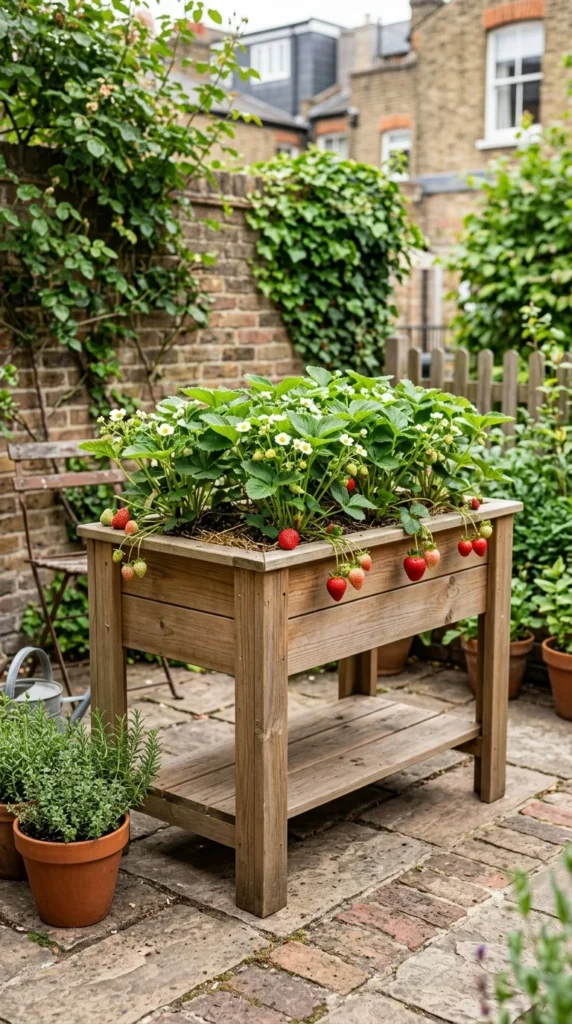
Small, elevated raised bed kits are perfect for modern patios. Being elevated on legs means you don’t have to crouch, and it keeps the plants away from ground-dwelling critters. These kits often come with built-in covers or netting frames, which are essential for keeping birds away from your ripening harvest.
Because you control 100% of the soil in a raised bed, you can create the perfect acidic environment that strawberries crave. A mix of high-quality potting soil, compost, and a bit of peat moss will result in much larger, sweeter berries than standard garden soil.
13. Recycled Tins
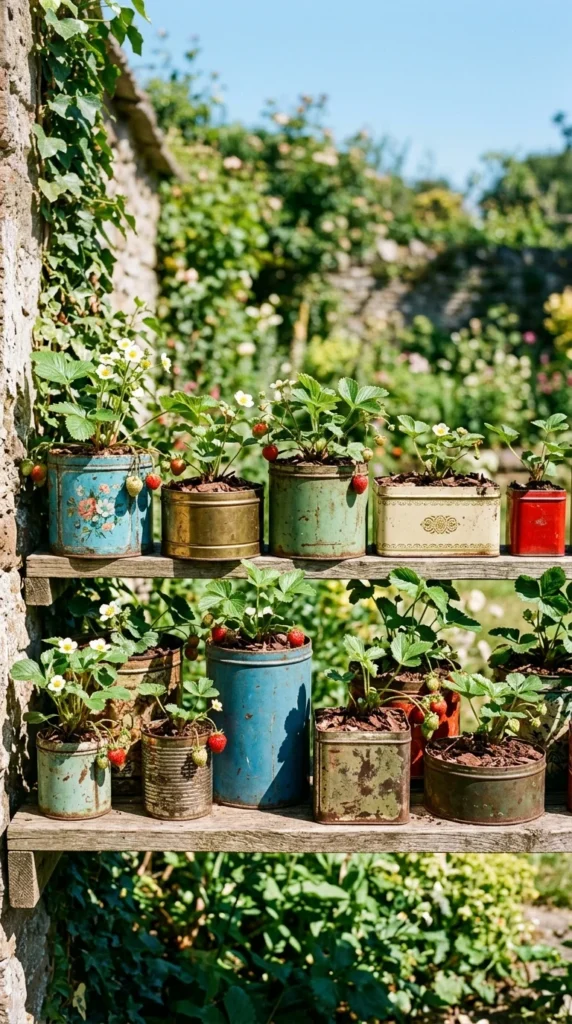
If you are short on space and money, look no further than your recycling bin. Large tin cans (like those used for bulk coffee or tomatoes) can be cleaned, painted, and turned into charming individual strawberry pots. Just be sure to drill several drainage holes in the bottom.
This eclectic, “shabby-chic” approach allows you to tuck strawberry plants into any tiny gap in your garden. You can place them on steps, shelf units, or even hang them with wire. It’s a great way to experiment with different strawberry varieties—like Alpine strawberries or Pineberries—without committing to a massive planting system.