
Strawberries are the crown jewels of the home garden. There is simply no comparison between the watery, tart berries found in plastic clamshells at the grocery store and the sun-warmed, sugar-sweet fruit picked directly from your own vine. However, for many urban gardeners or those with small backyards, the traditional method of growing strawberries in sprawling rows is often impossible.
The good news is that strawberries are incredibly versatile. Because they have relatively shallow root systems, they are the perfect candidates for container gardening and vertical DIY projects. By thinking “up” instead of “out,” you can maximize your harvest even on a tiny balcony or a narrow patio. Here are 21 innovative strawberry planter ideas to help you grow an abundance of berries in limited space.
1. Strawberry Pots
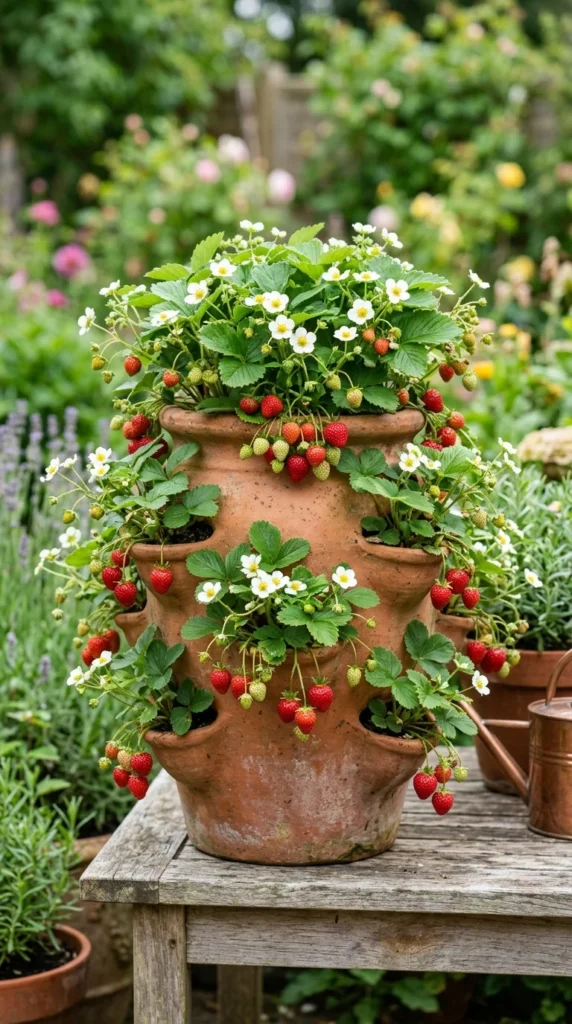
The classic terracotta strawberry pot is a timeless choice for a reason. These urn-shaped vessels feature several small openings or “pockets” along the sides, allowing you to plant multiple starts in a single footprint. The vertical arrangement ensures that the fruit stays off the ground, reducing the risk of rot and keeping the berries away from slugs. When using these, ensure you use a high-quality potting mix and consider placing a perforated PVC pipe down the center to ensure water reaches the roots at the bottom levels.
2. Vertical Towers
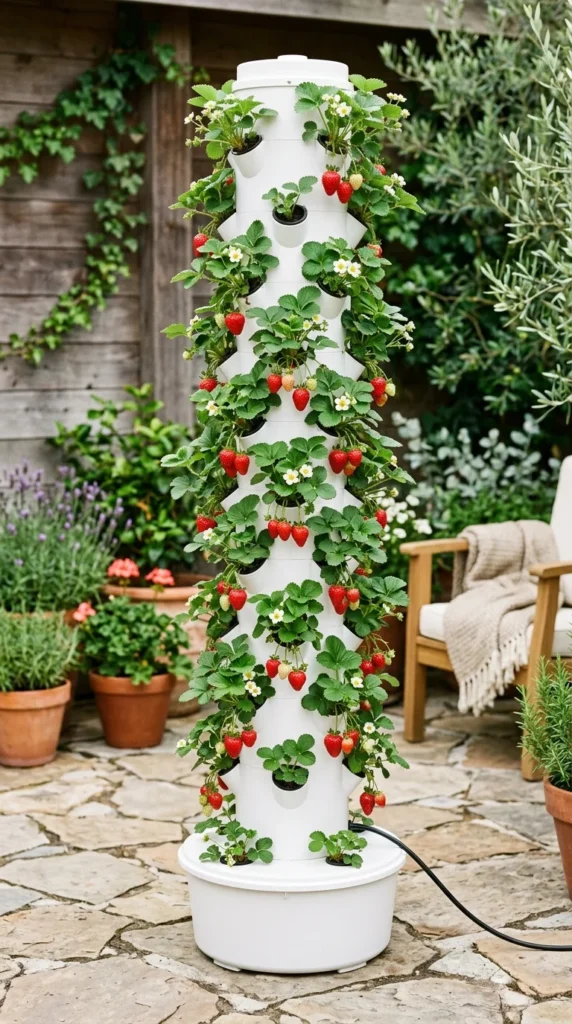
If you want to maximize every square inch of vertical space, a stacking tower is the way to go. These systems involve interlocking tiers that can be stacked five or six levels high. They are excellent for small patios because they provide the growing surface area of a large garden bed while occupying only a couple of square feet of floor space. Many commercial versions come with internal drainage systems that allow water to trickle down from the top level to the bottom, ensuring even moisture.
3. PVC Pipes
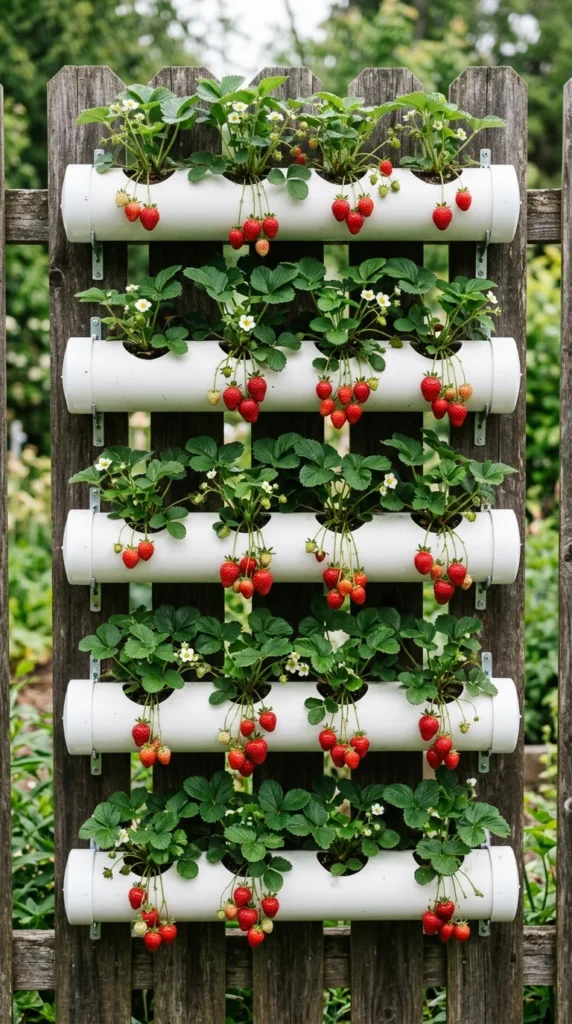
For the DIY enthusiast, PVC pipe planters are an affordable and highly efficient solution. By drilling large holes every few inches into a wide PVC pipe, you create a long, linear planter. These can be mounted horizontally along a fence or stood vertically in a bucket of gravel. Vertical PVC planters often use a “pipe-within-a-pipe” irrigation system to prevent the soil at the bottom from becoming waterlogged while the top stays dry.
4. Hanging Baskets
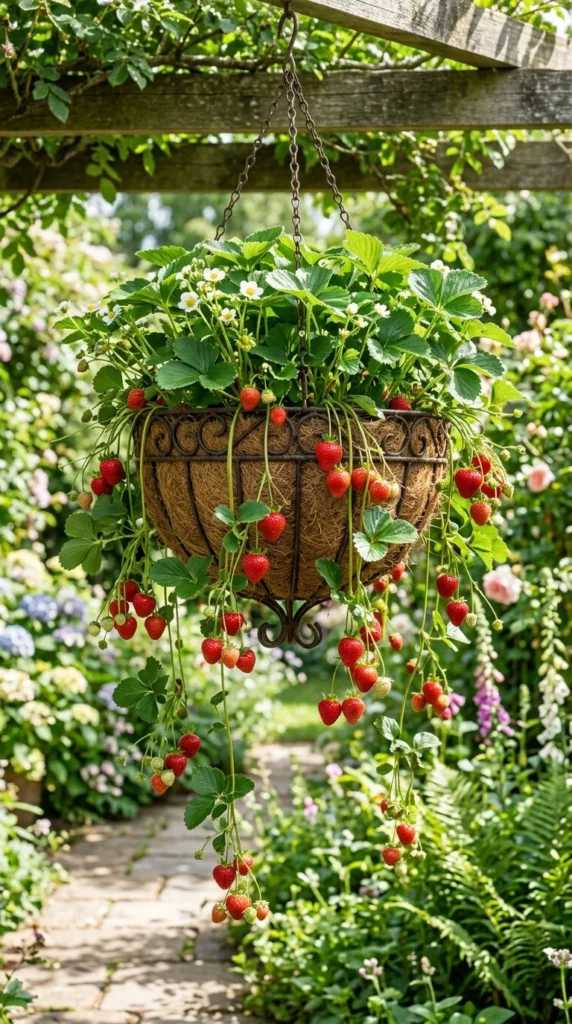
Strawberries are naturally trailing plants, making them ideal for hanging baskets. Suspending your plants from a porch overhang or a shepherd’s hook keeps the fruit entirely away from ground-dwelling pests. To get the best results, use “everbearing” varieties like ‘Albion’ or ‘Seascape,’ which produce fruit throughout the summer. Using a coco-fiber liner helps with drainage while retaining enough moisture to keep the plants hydrated during hot afternoons.
5. Pallet Gardens
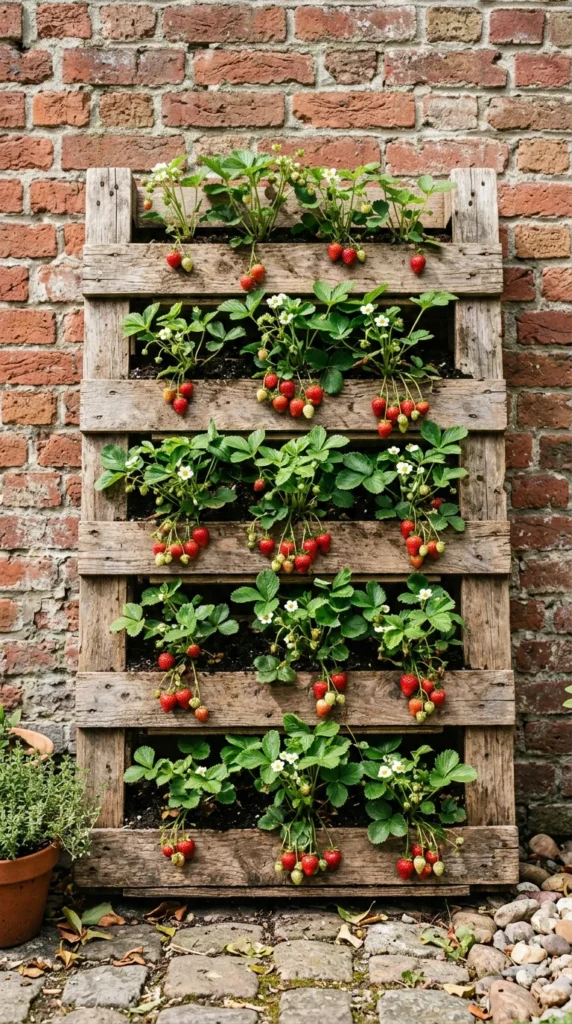
Upcycling a wooden pallet is a budget-friendly way to create a massive vertical strawberry wall. By stapling landscape fabric to the back and bottom of the pallet openings, you create narrow troughs perfect for strawberry roots. Once the pallet is filled with soil and plants, it creates a “living wall” effect. Ensure the pallet is heat-treated (marked with “HT”) rather than chemically treated to ensure your berries are safe for consumption.
6. Rain Gutters
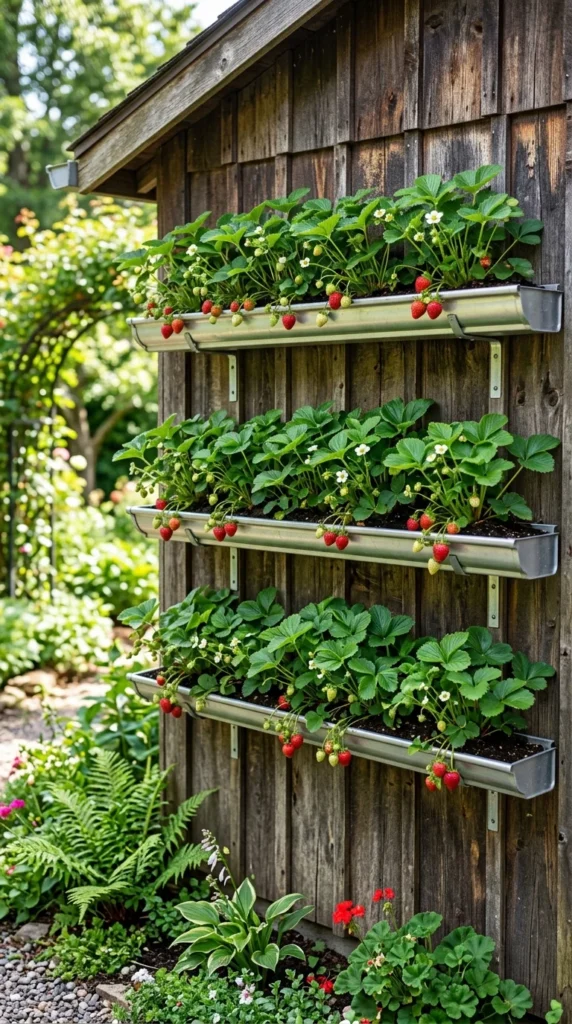
Rain gutters offer a sleek, modern look for vertical gardening. By mounting sections of aluminum or plastic guttering to a wall or fence, you create long, shallow planting beds. This method is particularly effective for strawberries because their roots don’t require deep soil. Make sure to drill drainage holes every few inches and angle the gutters slightly to prevent water from pooling in one spot.
7. Window Boxes
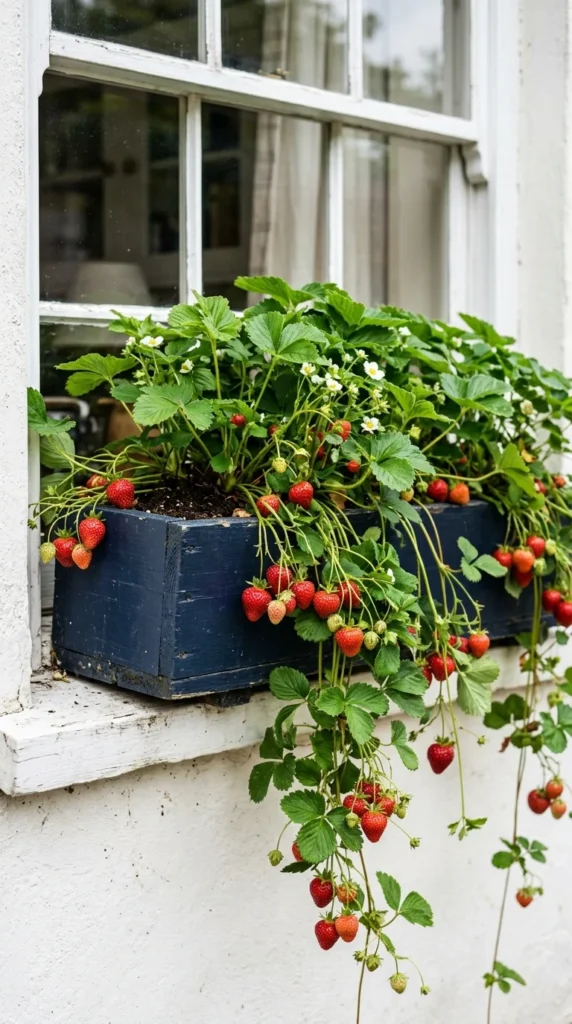
Window boxes aren’t just for petunias. Planting strawberries right outside your kitchen window makes harvesting as easy as opening the glass. Since window boxes are usually at eye level, they are easier to maintain and monitor for pests. They add a charming, cottage-core aesthetic to any home while providing a consistent supply of fresh fruit for your morning cereal.
8. Tiered Beds
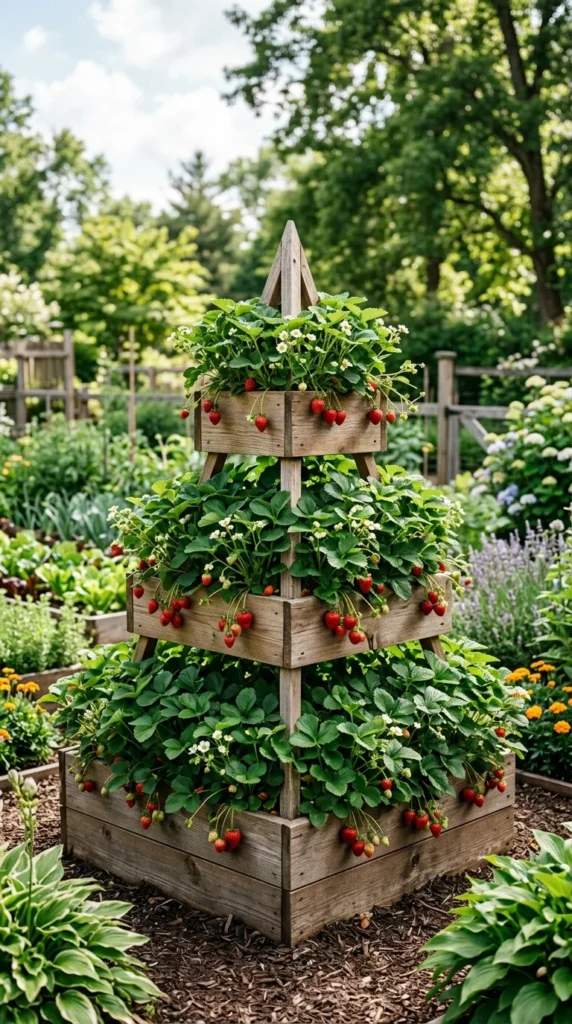
Tiered or “stair-step” garden beds allow you to grow a large volume of berries in a compact footprint. This design resembles a wedding cake, with several levels of soil. The tiered structure provides excellent drainage and allows each plant to receive maximum sunlight without being shaded out by its neighbors. This is a great permanent fixture for a small backyard or a corner of a deck.
9. Reused Tires
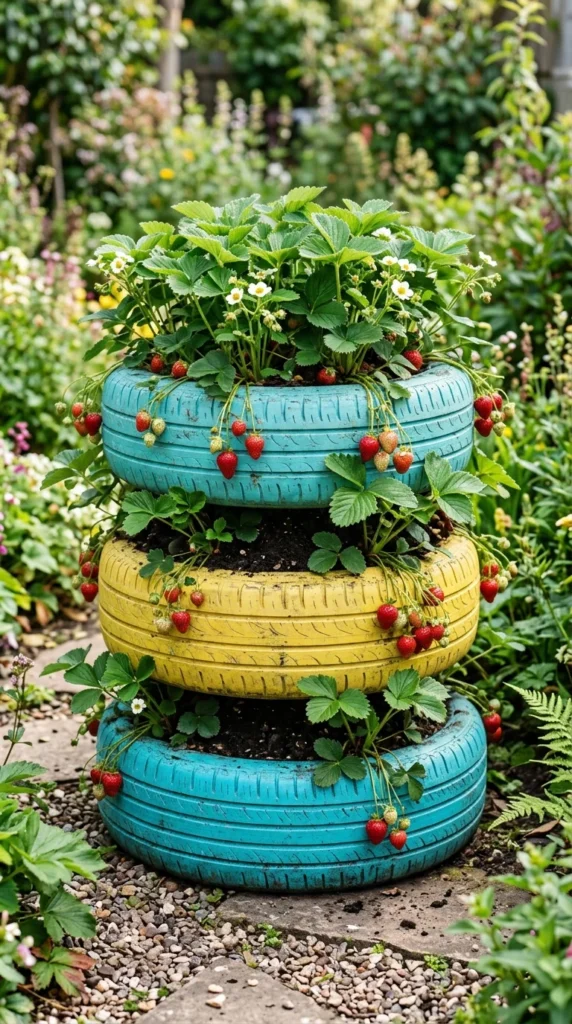
For a quirky and sustainable approach, old tires can be stacked and filled with soil. Many gardeners paint the tires in bright colors to add a pop of personality to the garden. The rubber holds heat well, which can help jumpstart strawberry growth in the early spring. To ensure safety, many gardeners line the interior of the tires with plastic to prevent any potential chemical leaching into the soil.
10. Shoe Organizers
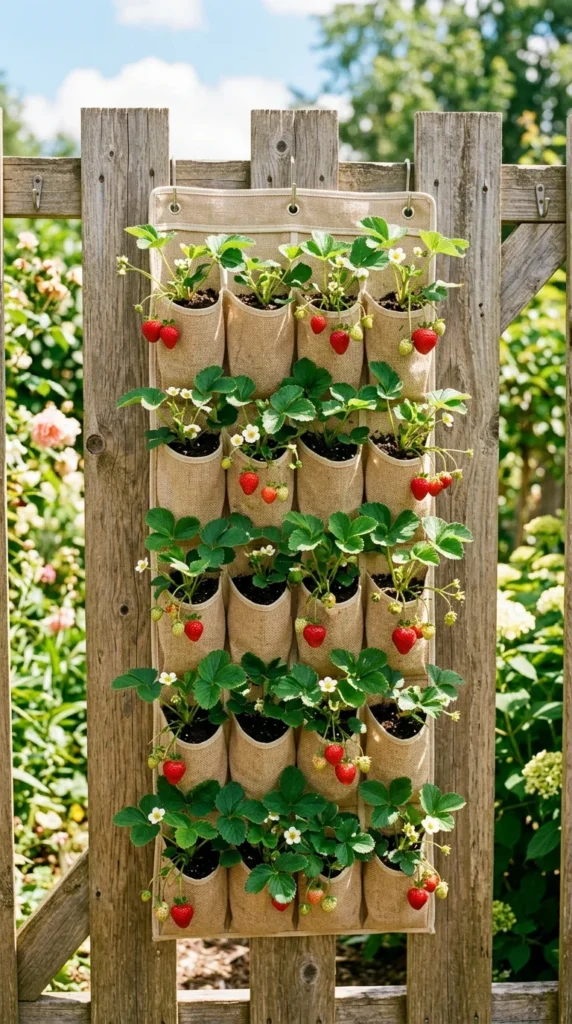
One of the most creative “low-space” hacks involves using a heavy-duty fabric shoe organizer. These hanging organizers have dozens of pockets that are the perfect size for individual strawberry starts. The fabric is breathable, allowing for excellent air circulation around the roots. This is perhaps the most space-efficient method on the list, as it takes up zero floor space and can be moved easily to follow the sun.
11. Galvanized Tubs
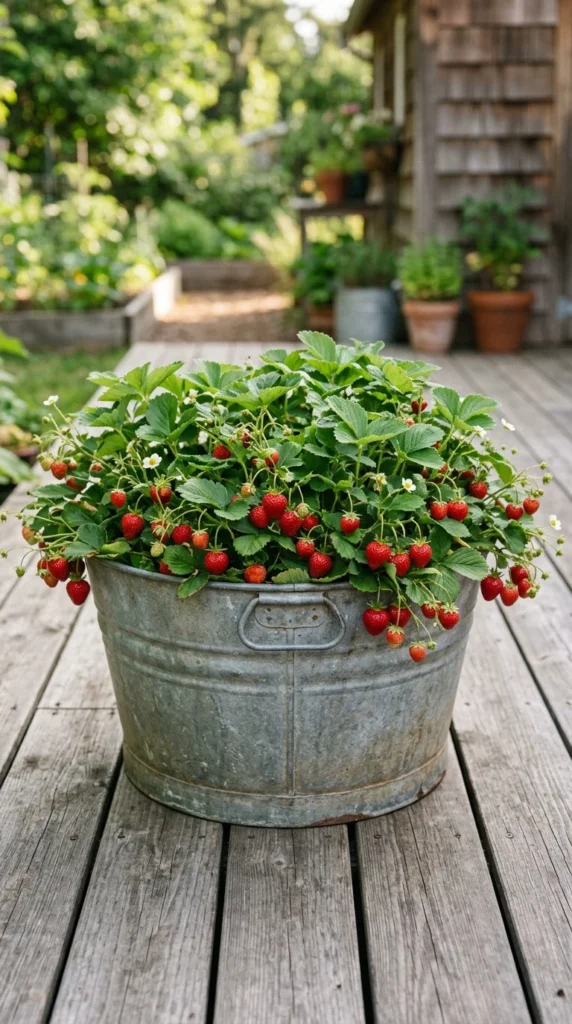
Galvanized steel tubs or “stock tanks” provide a deep, sturdy environment for strawberries to thrive. These tubs are excellent for creating a “strawberry patch” feel without actually digging into the ground. They are extremely durable and can last for decades. Be sure to drill plenty of drainage holes in the bottom, as metal doesn’t breathe like terracotta or wood.
12. Cinder Blocks
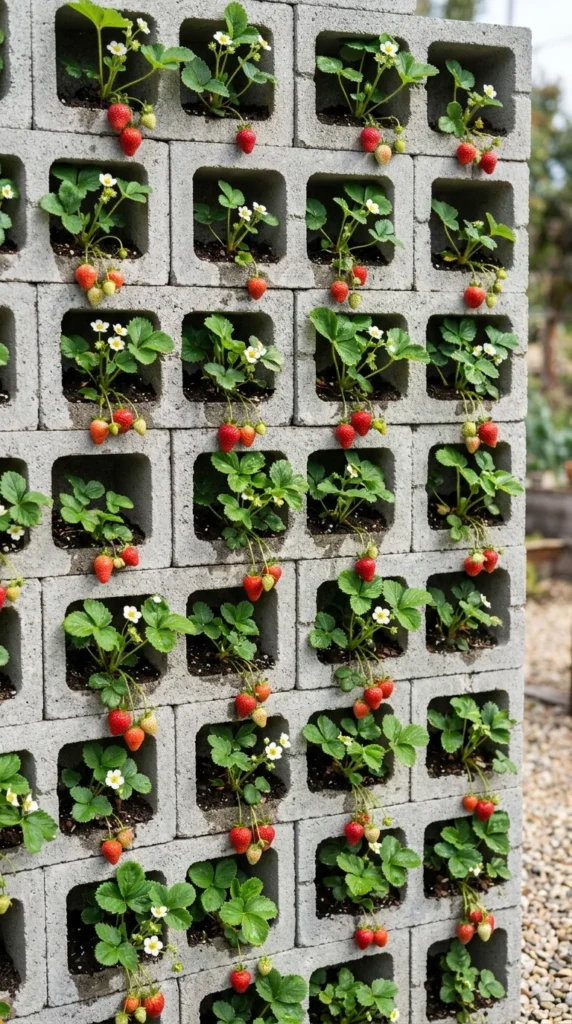
Cinder blocks are an incredibly versatile building material for gardeners. By stacking them in various configurations, you can create a customized vertical garden. The “holes” in the blocks act as individual planters. This is a very stable option that won’t blow over in the wind, and the concrete absorbs the sun’s heat, keeping the soil warm for the berries.
13. Vertical Felt Bags
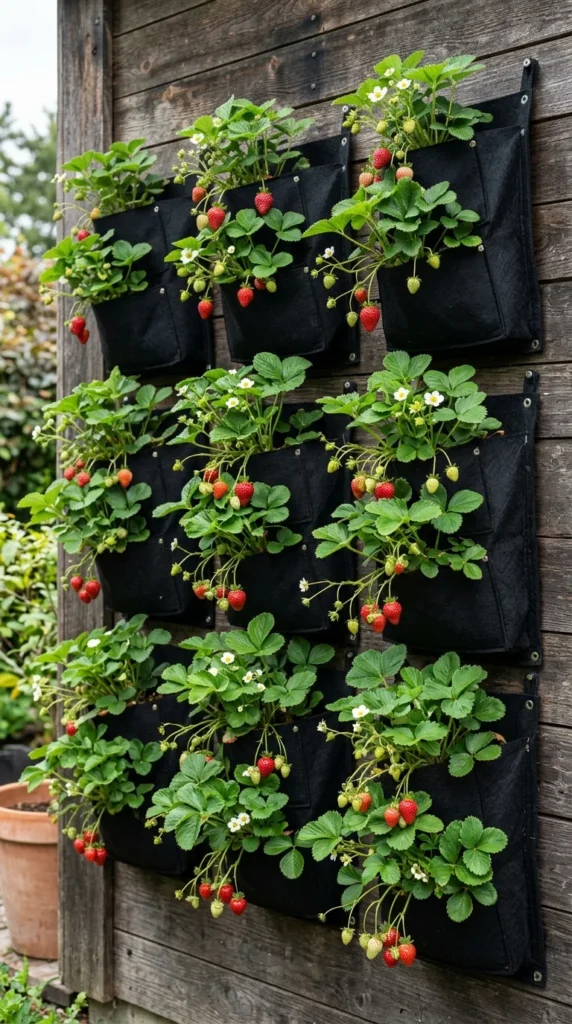
Felt grow bags are a favorite among professional urban farmers. The “breathable” nature of the felt fabric prevents roots from becoming “root-bound” by naturally air-pruning them. These wall-mounted felt systems are lightweight and can be easily attached to a balcony railing or a brick wall, turning a vertical surface into a productive harvest zone.
14. Plastic Bottles
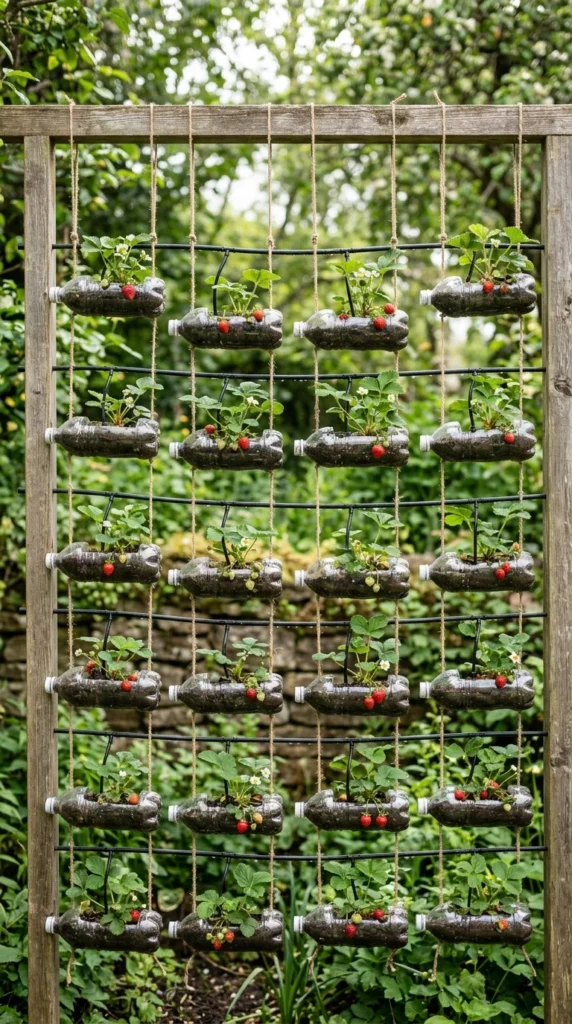
If you are looking for a zero-cost project, recycled plastic bottles can be transformed into a vertical hydroponic or soil-based system. By cutting windows into the sides of 2-liter bottles and stringing them together, you can create a cascading garden. This is a fantastic educational project for kids and a great way to repurpose plastic waste.
15. Wooden Ladders
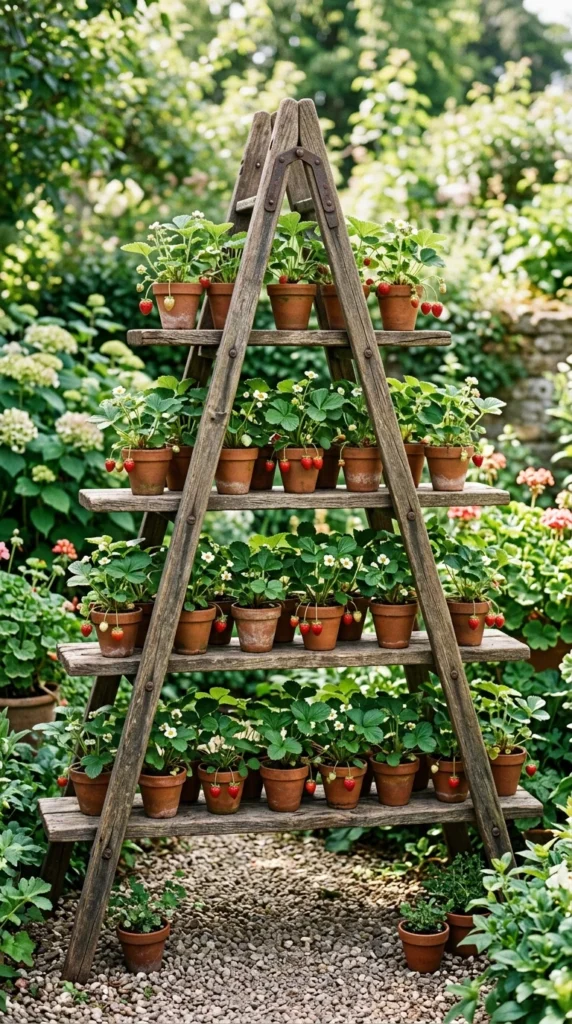
An old wooden ladder can be repurposed into a beautiful and functional plant stand. By placing boards across the rungs, you create a multi-level display for various strawberry pots. This allows you to move the pots around individually if one plant needs more sun or is suffering from a pest, while still utilizing vertical space effectively.
16. Birdcages
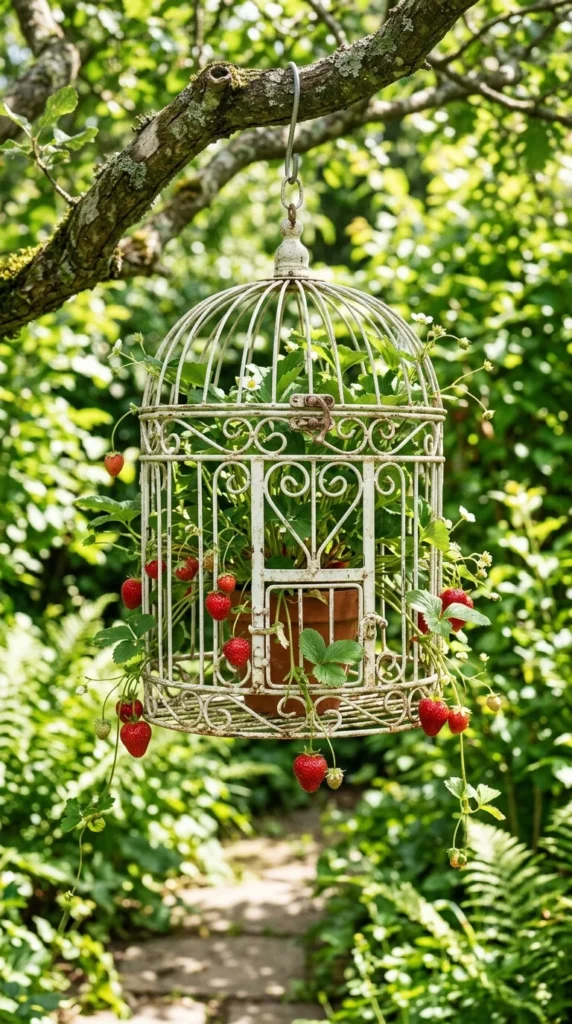
For a touch of whimsy, vintage birdcages make excellent strawberry planters. The wire bars provide a natural support for the fruit to hang through, and the cage itself offers some protection against larger birds who might want to steal your harvest. Lining the bottom with moss or coconut coir creates a rustic, enchanted garden look.
17. Burlap Coffee Sacks
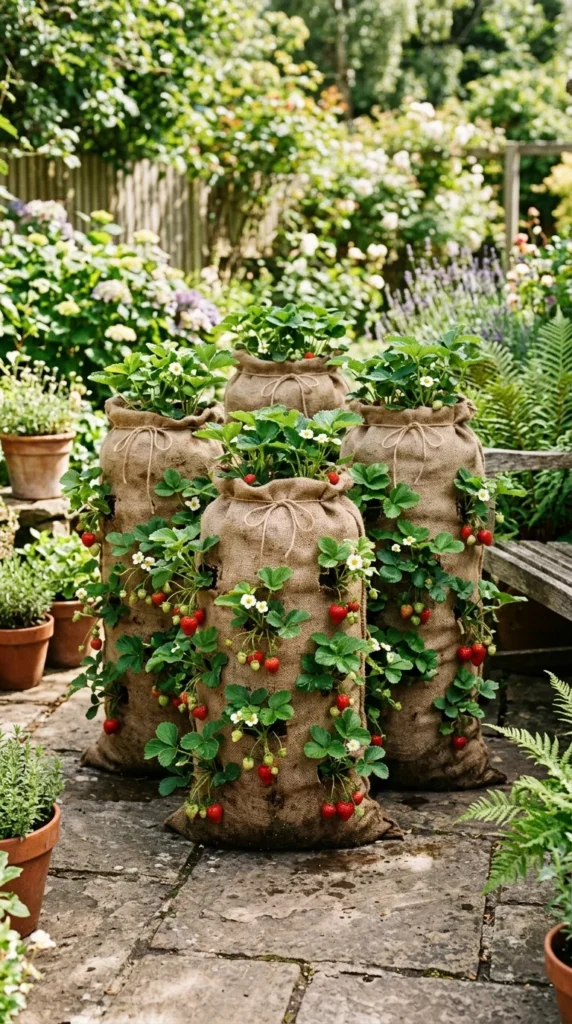
Burlap sacks provide a rustic, organic look and excellent drainage. You can fill a large sack with soil and cut small “X” shapes into the sides to tuck in strawberry starts. This creates a “strawberry tower” effect using soft materials. Burlap is biodegradable, so these planters usually last for one or two seasons before needing replacement.
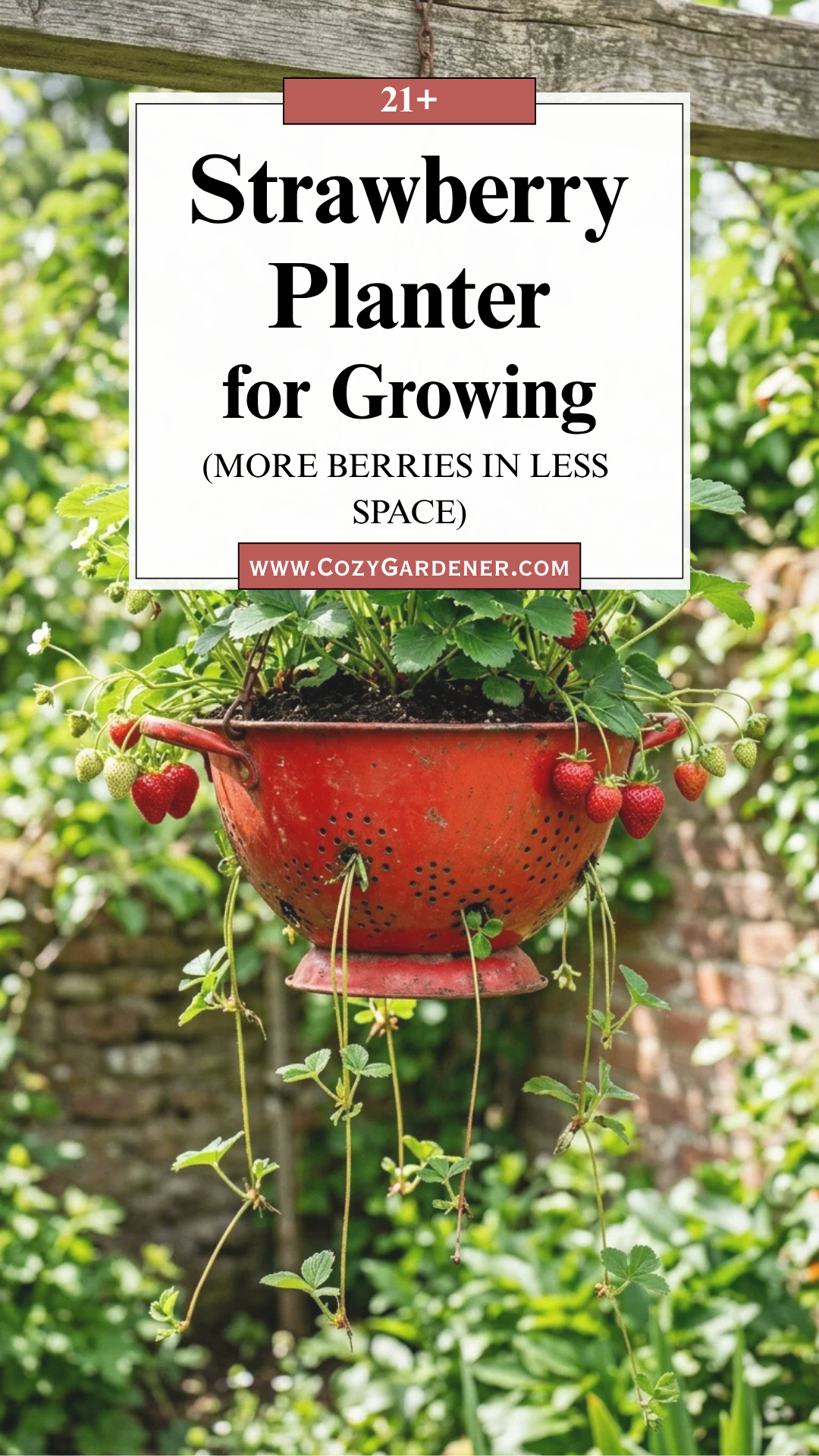
18. Metal Colanders
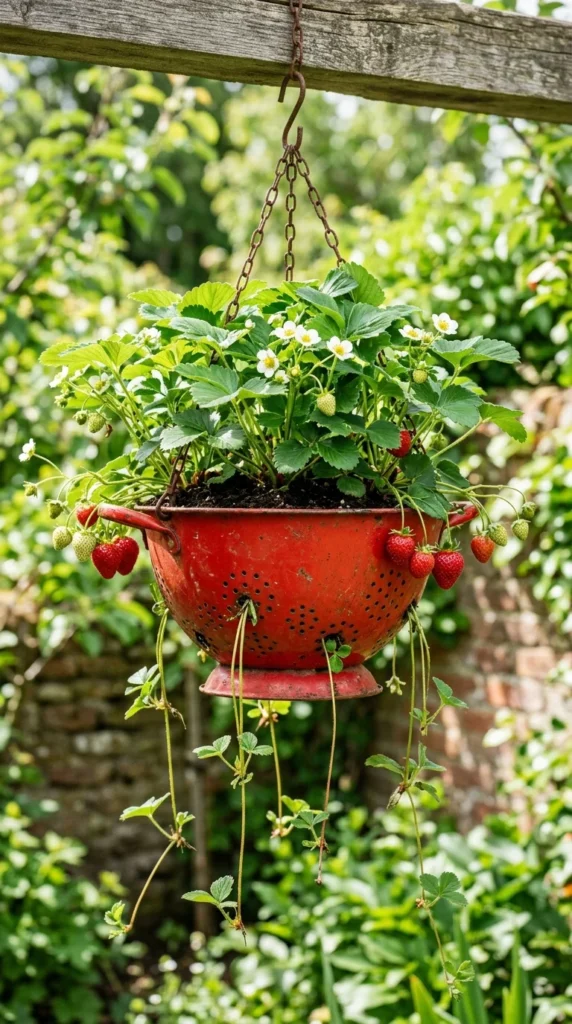
Kitchen colanders are essentially “pre-drilled” planters. They have built-in drainage holes and often come with handles that make them easy to hang. Their metallic finishes—whether stainless steel or colorful enamel—add a vintage or industrial vibe to your garden. They are particularly good for smaller alpine strawberry varieties.
19. Old Wheelbarrows
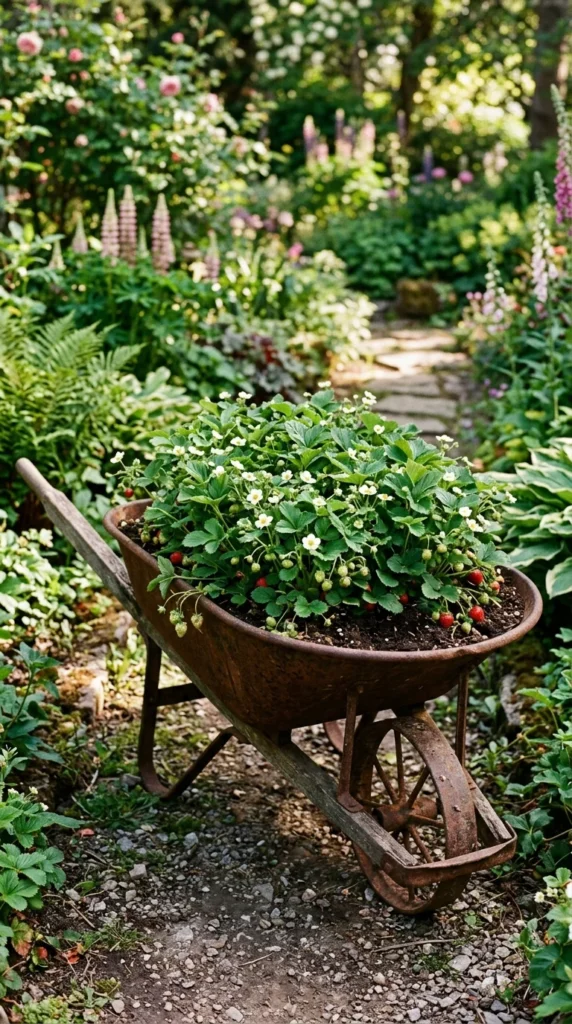
A retired wheelbarrow makes a fantastic mobile strawberry bed. Because it’s on wheels, you can move your “strawberry patch” to follow the sun as the seasons change. It provides a large, shallow surface area that allows strawberries to spread their runners and create a dense mat of fruit-producing foliage.
20. Herb Spirals
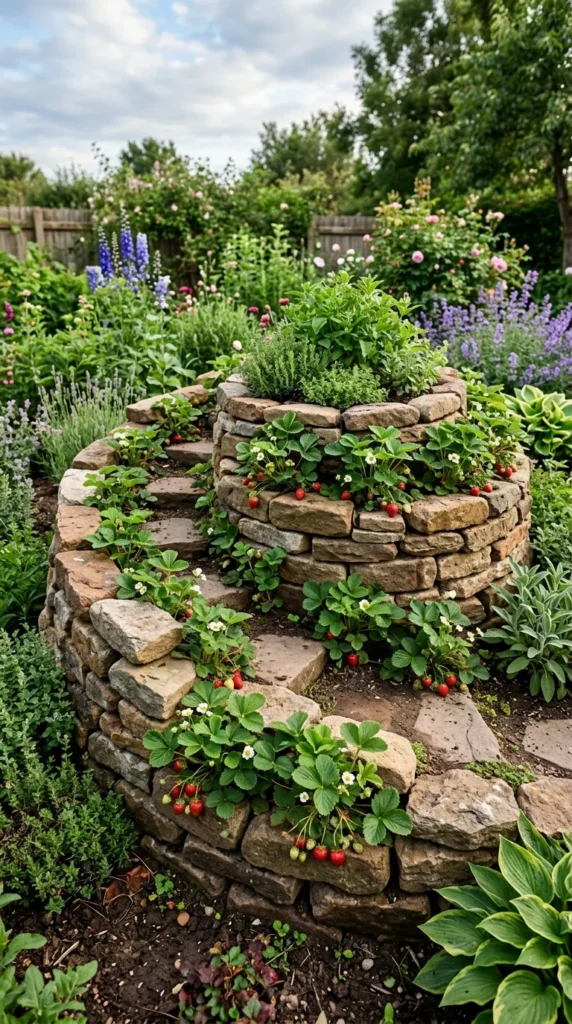
While usually used for herbs, a stone or brick spiral is perfect for strawberries. The spiral design creates different microclimates; the top is drier and sunnier, while the bottom stays cooler and moister. You can plant different varieties of strawberries at different levels of the spiral to see which ones thrive best in your specific environment.
21. Trellis Nets
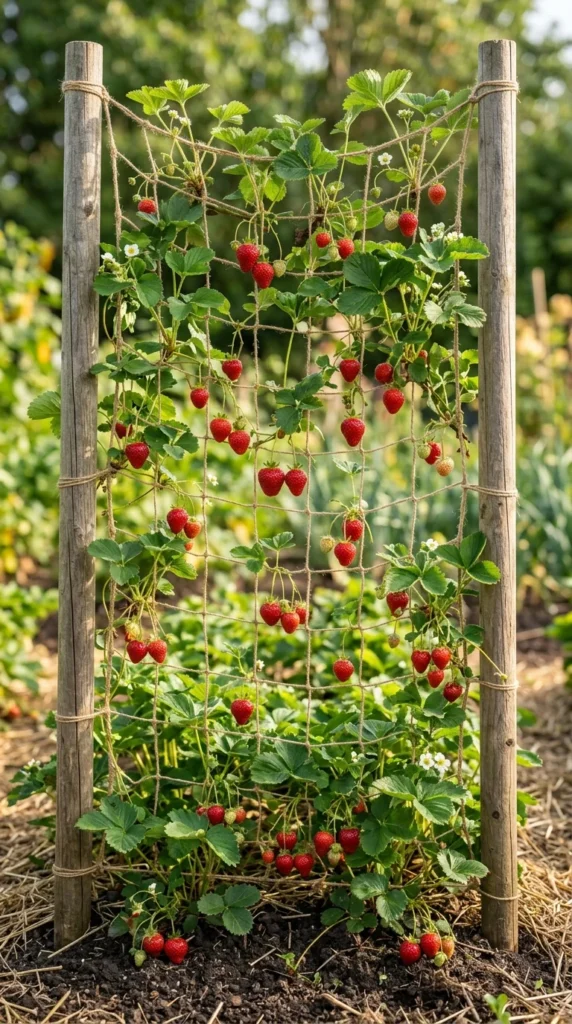
While strawberries don’t naturally “climb” like peas, certain varieties produce long, vigorous runners that can be tied to a trellis or net. This “climbing” method keeps the entire plant off the ground and allows for maximum airflow, which virtually eliminates fungal diseases. It creates a stunning vertical green screen draped in red berries.