
Succulents have taken the world of interior design by storm, and for good reason. These resilient, fleshy plants are not only incredibly easy to care for but also come in an astounding array of shapes, colors, and textures. When you combine the natural beauty of succulents with the artistic flair of a terrarium, you create a living piece of art that can brighten any corner of your home.
Whether you are a seasoned “plant parent” or a complete novice with a history of accidental plant homicide, succulent terrariums are the perfect project. They require minimal water, thrive in indirect light, and offer a world of customization. From sleek modern designs to whimsical miniature landscapes, here are 13 DIY succulent terrarium ideas to inspire your next weekend project.
1. Geometric Shapes
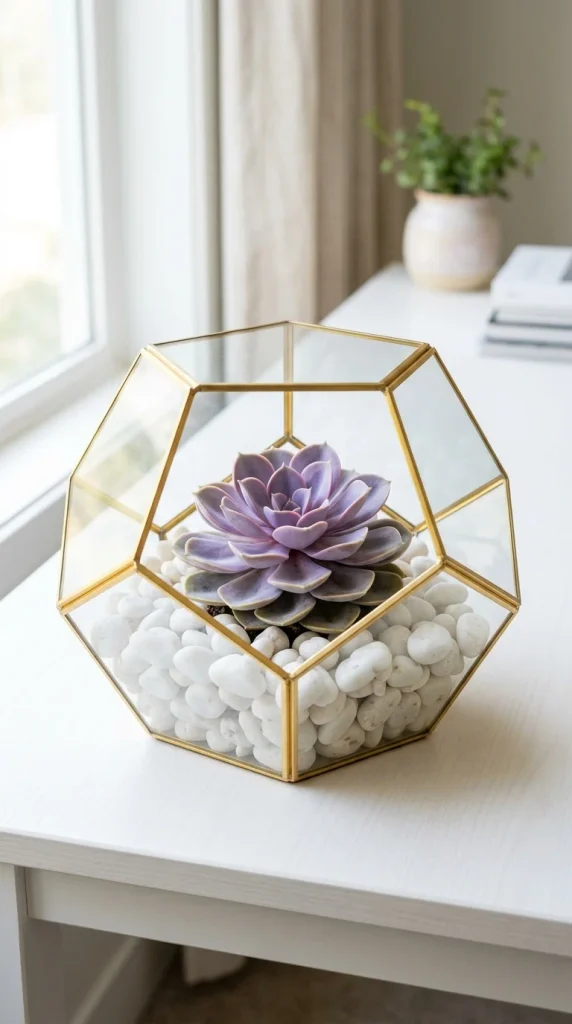
Geometric terrariums are the height of contemporary decor. These structures, often made of glass panes joined by thin strips of brass, copper, or black metal, provide a structured contrast to the organic, flowing shapes of succulents. Because they are often open-sided, they provide excellent airflow, which is crucial for preventing rot in succulent species.
- Best for: Modern or industrial-themed living rooms.
- Pro Tip: Use a single, large “hero” succulent like a Graptopetalum to create a focal point within the sharp angles of the glass.
2. Hanging Orbs
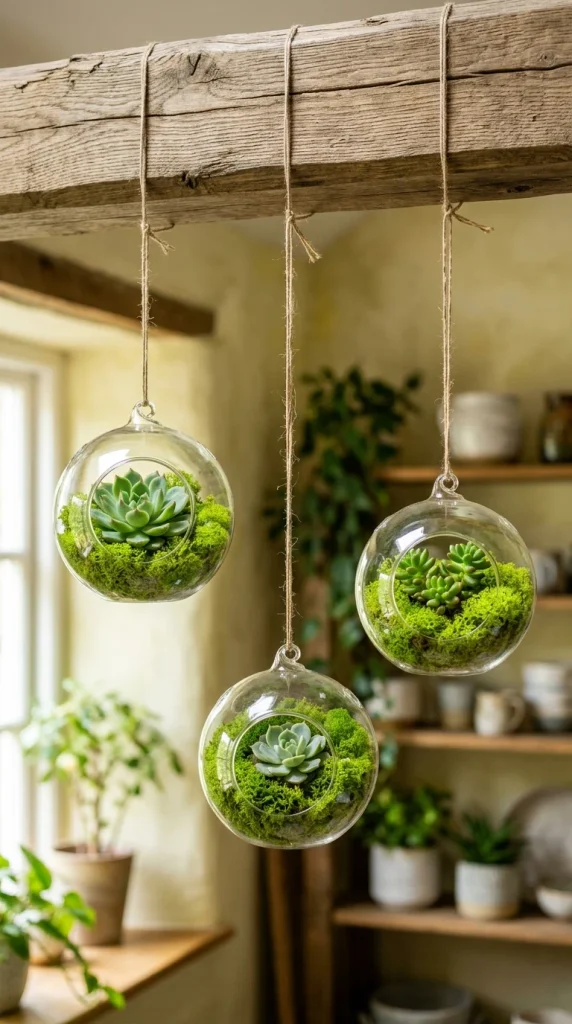
If you are short on surface space, look upward. Hanging glass orbs create a “floating garden” effect that feels ethereal and magical. These are particularly effective near windows where they can catch the light, though you must be careful to avoid direct, scorching midday sun which can turn the glass into a magnifying glass and burn your plants.
- Best for: Small apartments or adding visual interest to empty corners.
- Pro Tip: Use lightweight materials like pumice or perlite instead of heavy rocks to keep the weight manageable for the hanging hardware.
3. Coffee Pots
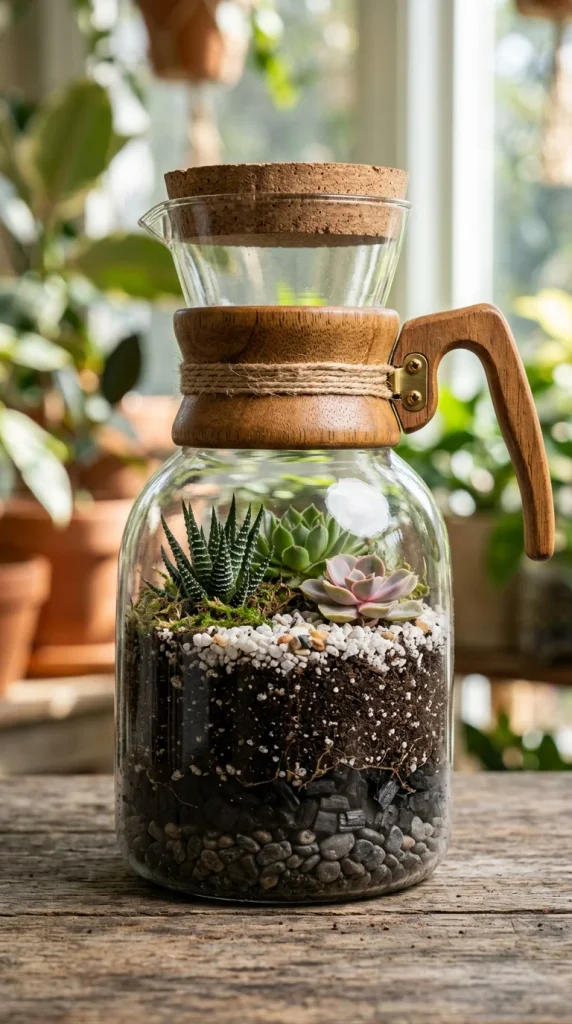
Give your old kitchenware a second life by turning a glass coffee pot or a French press into a botanical display. The wide bottom and tapered neck of a coffee carafe create a unique microclimate while offering a vintage, “mad scientist” aesthetic. It’s a conversation starter that looks fantastic on a kitchen counter or a breakfast nook.
- Best for: Kitchen decor or as a unique gift for a coffee lover.
- Pro Tip: Ensure you use a long-handled spoon or tweezers to arrange the plants through the narrow neck of the pot.
4. Layered Sands
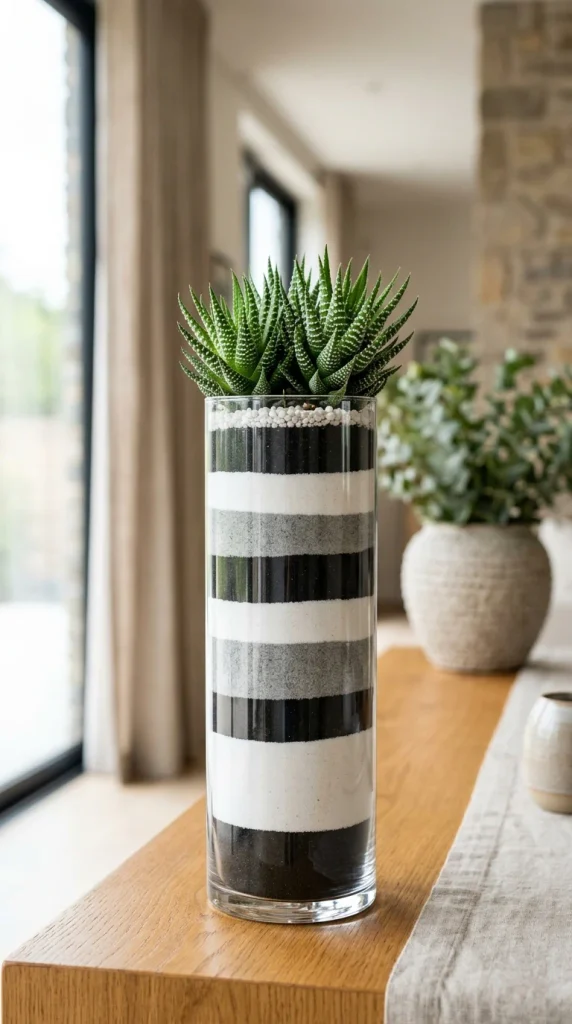
While soil is necessary for the roots, the sides of a glass terrarium offer a blank canvas for artistic layering. By using colored sands or different textures of grit, you can create a “sand art” effect that mimics the geological strata of a desert. This adds a sophisticated, professional look to even the simplest plant arrangement.
- Best for: Adding a pop of color to a neutral room.
- Pro Tip: Use a funnel to pour the sand against the glass carefully so the layers stay crisp and don’t mix.
5. Fairy Gardens
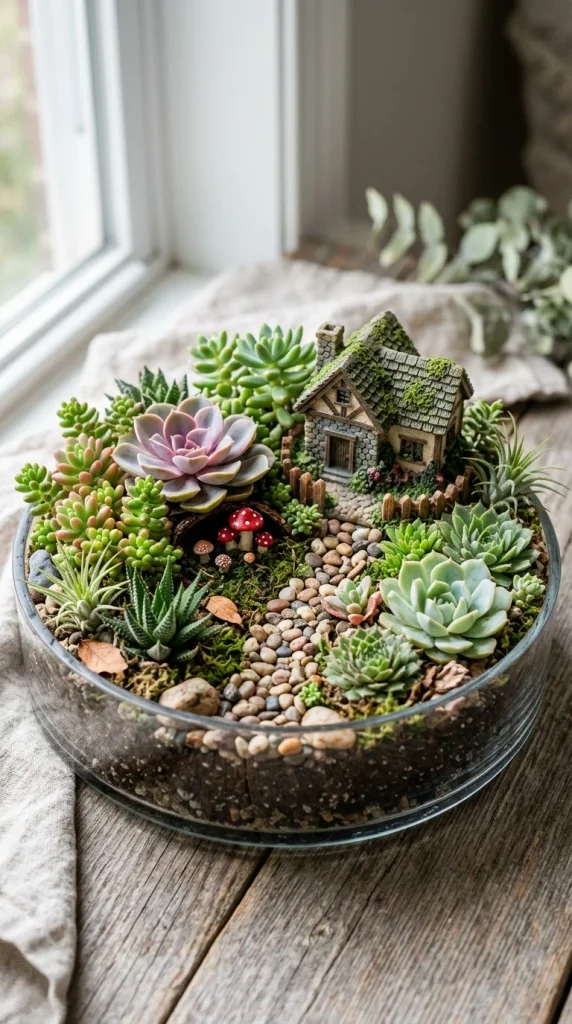
For those who love storytelling, a fairy garden terrarium allows you to create a miniature world. By adding small figurines, tiny benches, or “pebble paths,” you transform a simple planter into a whimsical scene. This is an excellent project to do with children, as it combines gardening with imaginative play.
- Best for: Children’s rooms or as a playful centerpiece.
- Pro Tip: Choose succulents that look like miniature trees, such as Crassula ovata (Jade Plant), to enhance the scale of the scene.
6. Mason Jars
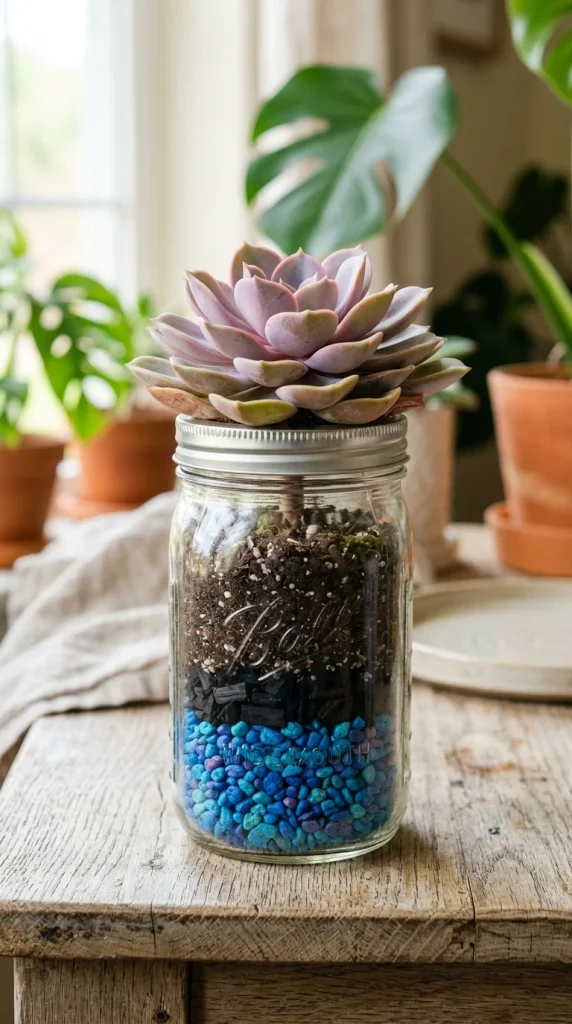
The humble mason jar is a DIY staple for a reason. It is accessible, inexpensive, and fits perfectly with farmhouse or rustic decor. Because mason jars are relatively deep, they are great for succulents with slightly longer root systems. Since they lack drainage, a thick layer of pebbles at the bottom is essential to keep the roots from sitting in water.
- Best for: Quick, budget-friendly DIY projects.
- Pro Tip: Leave the lid off! Succulents need dry air, and a closed mason jar will create too much humidity, leading to rot.
7. Glass Lanterns
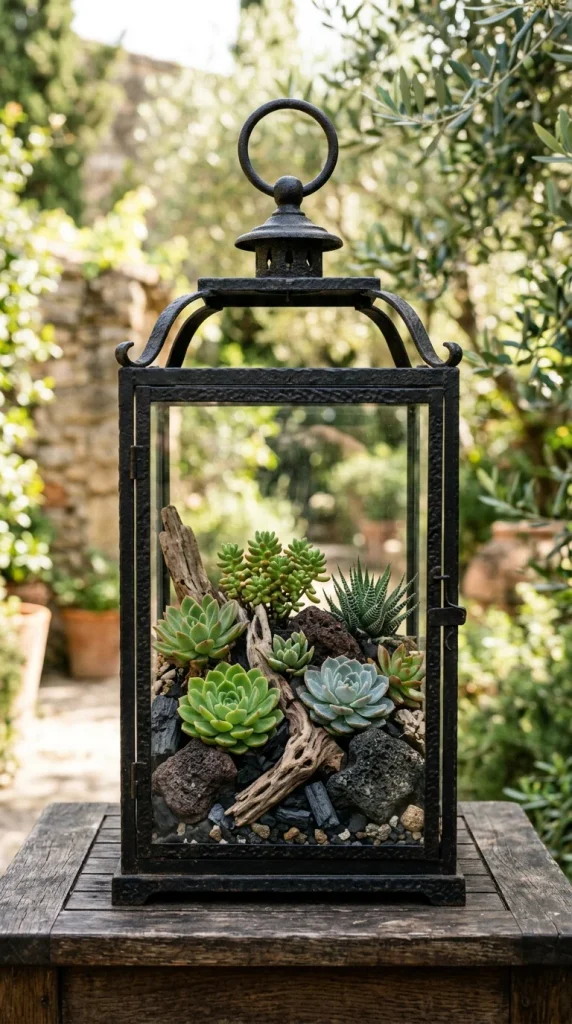
Lanterns aren’t just for candles anymore. A large glass lantern can house a substantial succulent garden, providing a “contained” look while still allowing for plenty of airflow through the gaps in the frame. This style works beautifully as a centerpiece for an outdoor patio table or a fireplace mantle.
- Best for: Rustic or “shabby chic” interior styles.
- Pro Tip: Use a variety of heights—place some succulents on small “pedestals” made of flat rocks to create depth within the lantern.
8. Tea Cups
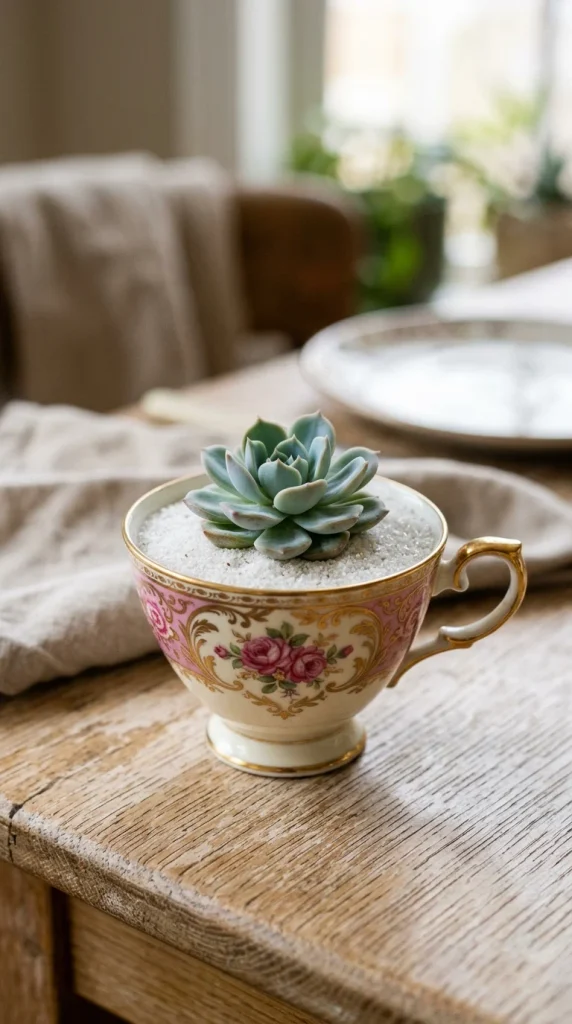
If you want to make a statement, go big with an old fish tank. This allows you to create a full-scale landscape with different elevations and a wide variety of plant species. You can even incorporate larger decorative elements like driftwood or large stones that wouldn’t fit in smaller containers.
- Best for: Large coffee tables or as a primary room focal point.
- Pro Tip: Since tanks are deep, ensure you use a significant “drainage layer” of rocks and charcoal—at least 2 inches—to manage moisture.
10. Wine Bottles
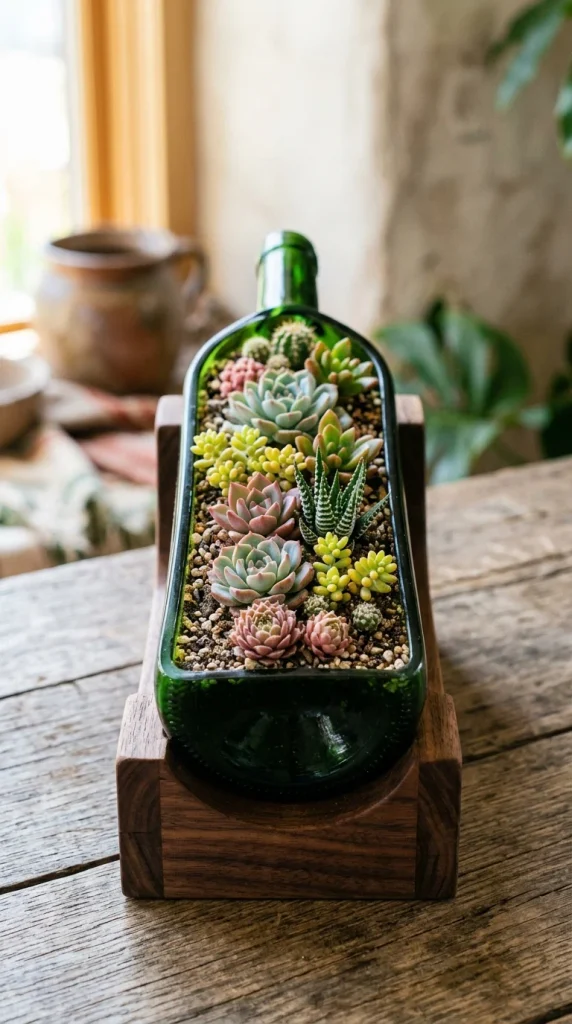
Repurposing wine bottles into terrariums is a fantastic way to recycle. A bottle cut lengthwise creates a unique, long planter that looks incredibly sleek on a long dining table. Alternatively, you can use the bottom half of a cut bottle for a more traditional vertical look.
- Best for: Eco-conscious decorators and minimalist homes.
- Pro Tip: If you don’t have a glass cutter, many craft stores sell pre-cut bottles specifically for this purpose.
11. Bird Cages
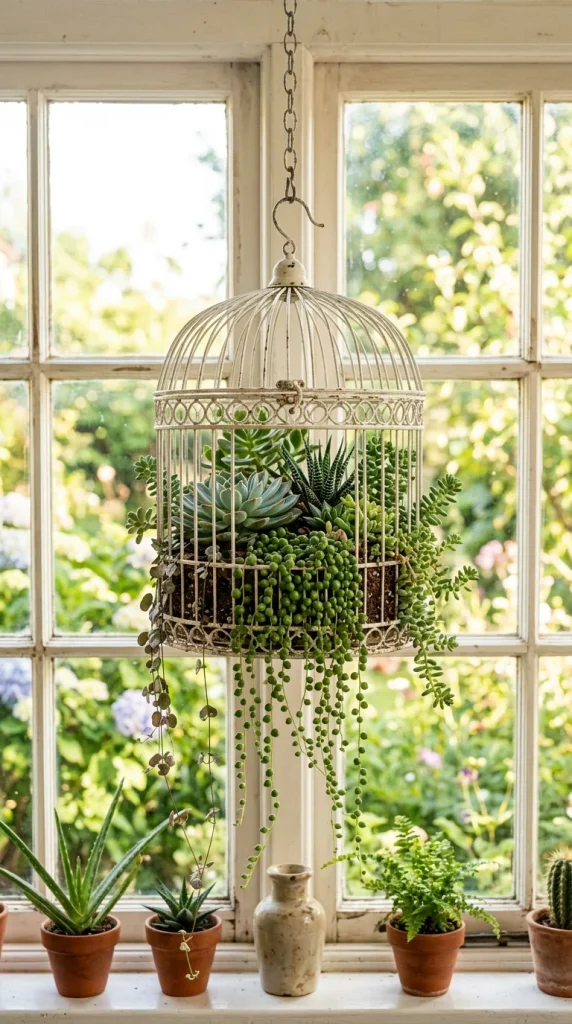
For a Victorian or bohemian vibe, a birdcage terrarium is unmatched. You can line the bottom with coco coir or moss to hold the soil and then plant your succulents inside. The best part is watching trailing succulents grow through the bars and “spill” out of the cage, creating a lush, overgrown look.
- Best for: Porches, sunrooms, or bohemian-inspired spaces.
- Pro Tip: This is one of the best ideas for “String of Pearls” or “Burro’s Tail” succulents, as they love to hang.
12. Wood Slices
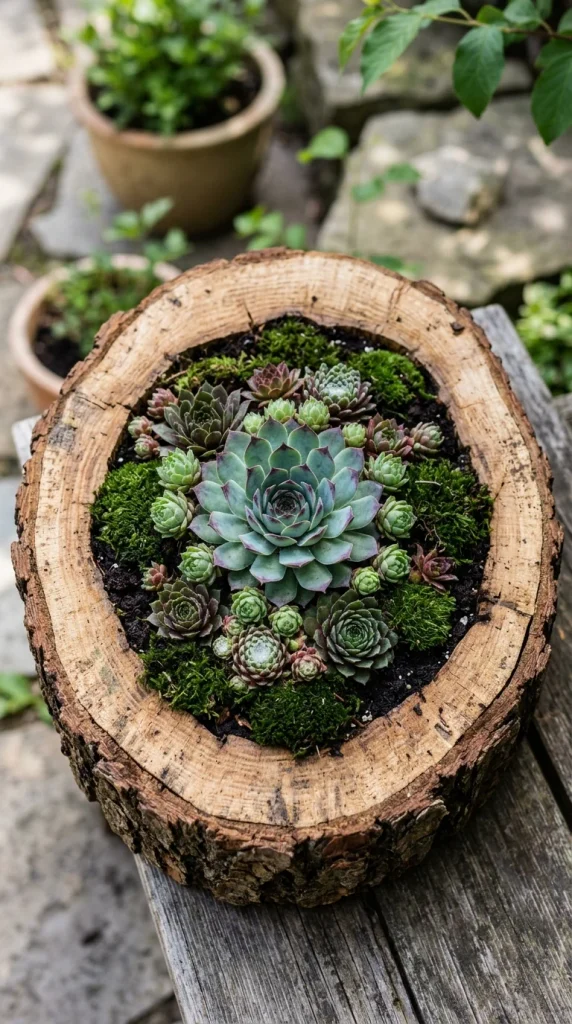
Bringing the outdoors in is easy with a wood-based terrarium. You can find “live edge” wood slices with hollow centers or even use a piece of found driftwood with a natural indentation. This creates an earthy, grounded feel that works perfectly in a study or a cabin-style home.
- Best for: Nature lovers and rustic aesthetics.
- Pro Tip: Line the wood with a small piece of plastic or a shallow liner to prevent the wood from rotting or soaking up all the moisture from the soil.
13. Dessert Bowls
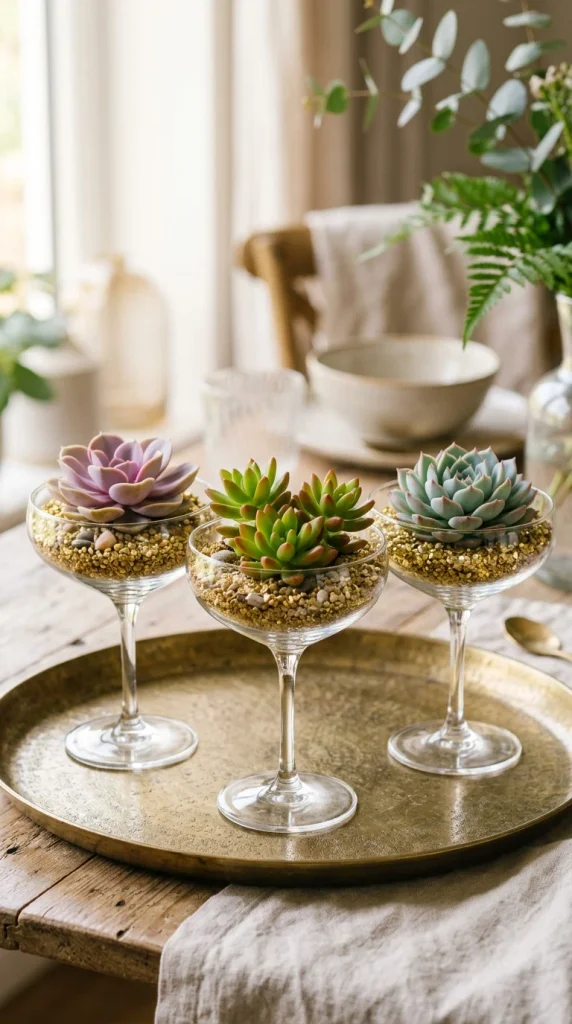
Use your fancy glassware for something other than ice cream! Dessert coupes, martini glasses, or trifle bowls make excellent vessels for small succulent arrangements. The stem of the glass elevates the plants, making them feel like a prized display. They are perfect for festive table settings.
- Best for: Party decor or formal dining room accents.
- Pro Tip: Because these are often top-heavy, use heavy decorative stones at the bottom of the glass to provide a low center of gravity and prevent tipping.
Quick Tips for Succulent Terrarium Success:
- Drainage is Key: Since glass containers don’t have holes, always start with a layer of pebbles or gravel at the bottom.
- Charcoal is Your Friend: Add a thin layer of horticultural charcoal above the pebbles. It keeps the water fresh and prevents odors caused by bacteria.
- Special Soil: Use a cactus or succulent potting mix. Regular potting soil retains too much moisture.
- Water Sparingly: Use a spray bottle or a small dropper to water the base of the plants only when the soil is bone dry.
- Light Matters: Place your terrarium in a spot that gets bright, indirect light for at least 6 hours a day.