Transforming your outdoor space doesn’t require a massive bank account or a team of professional contractors. With a little sweat equity and some creative thinking, you can turn a lackluster yard into a stunning oasis. The key to budget landscaping is leveraging recycled materials, choosing low-maintenance plants, and focusing on high-impact visual changes.
Whether you have a sprawling lawn or a tiny urban courtyard, these 14 DIY ideas will help you maximize your garden’s potential without breaking the bank.
1. Gravel Paths
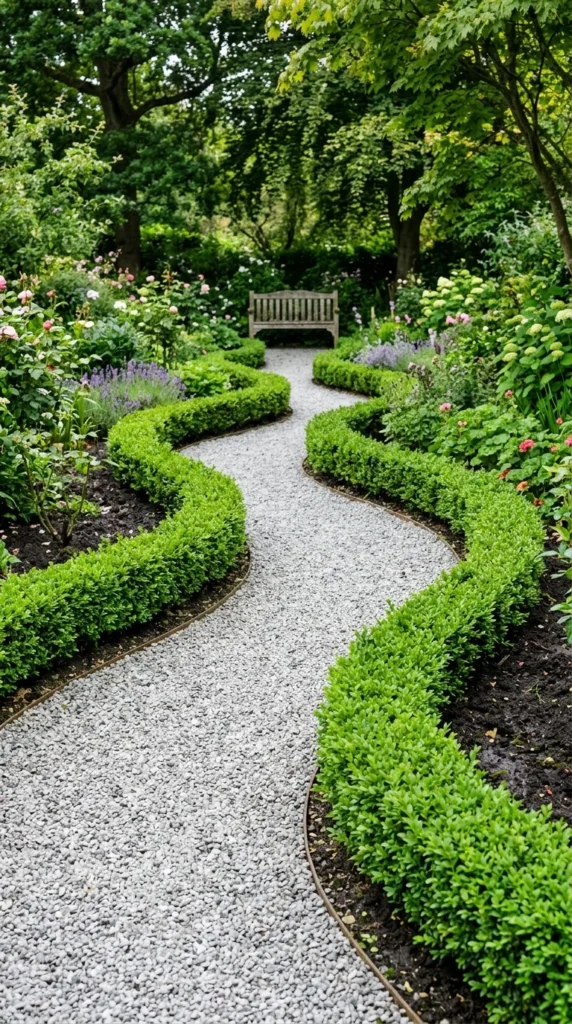
Gravel is one of the most cost-effective and versatile materials for garden landscaping. Unlike pavers or poured concrete, gravel is forgiving, easy to install, and provides excellent drainage. It creates a satisfying crunch underfoot and can be used to define different zones in your yard.
To install a gravel path on a budget, start by mapping out your walkway with a garden hose or spray paint. Dig out the top two inches of soil, lay down a layer of landscape fabric to prevent weeds, and pour your gravel on top. For a high-end look, use “pea gravel” for its smooth texture or “crushed granite” for a more modern, angular aesthetic.
2. Pallet Vertical Garden
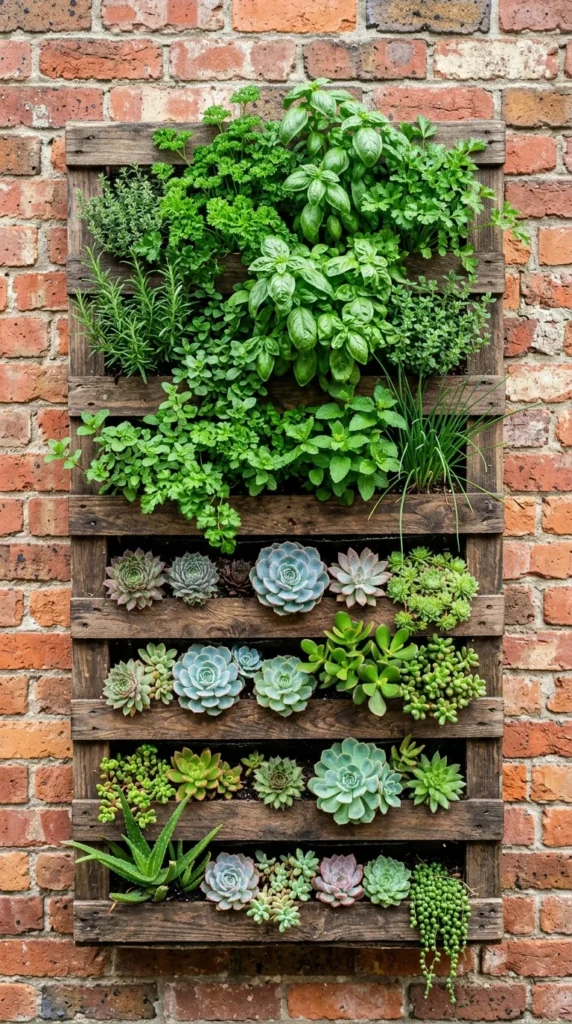
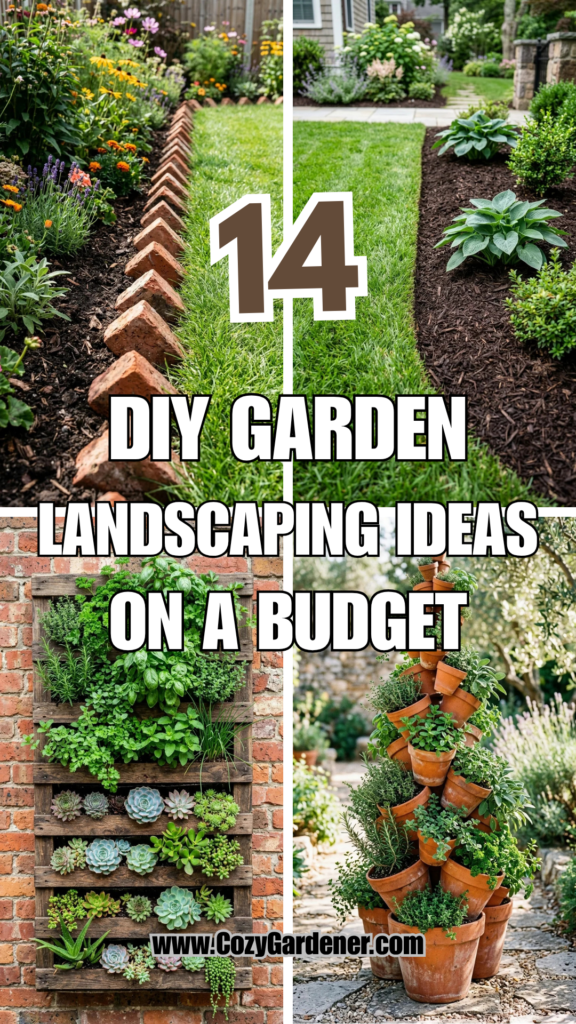
If you’re short on horizontal space, look upward. Upcycling wooden pallets is a staple of budget gardening. You can often find these for free behind local businesses or on online marketplaces. Once cleaned and sanded, they become the perfect vessel for a vertical herb or flower garden.
To build one, staple landscape fabric to the back and bottom of the pallet to create “pockets.” Fill these pockets with high-quality potting soil and tuck in your plants. This is an ideal solution for growing a kitchen garden right outside your back door, keeping your cooking essentials within arm’s reach.
3. Recycled Planters
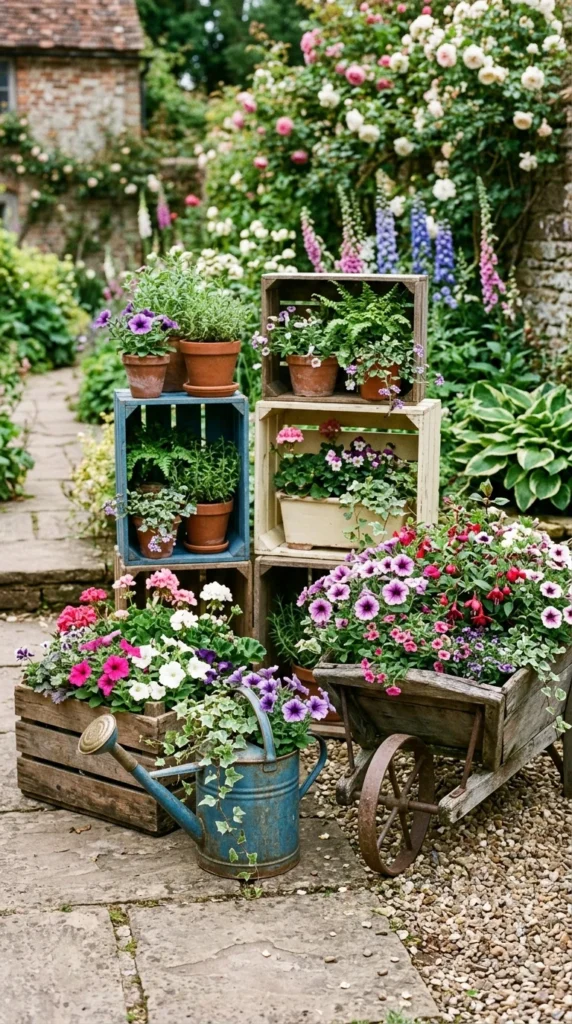
Traditional ceramic pots can be surprisingly expensive. Instead, look for everyday items that can be repurposed into unique planters. Old colanders, galvanized buckets, wooden crates, and even discarded tires can be given a second life with a fresh coat of paint and some drainage holes.
The beauty of recycled planters is the character they add to your garden. They break the monotony of standard nursery pots and serve as conversation starters. Just ensure that any container you use has proper drainage to prevent root rot.
4. Mulch Borders
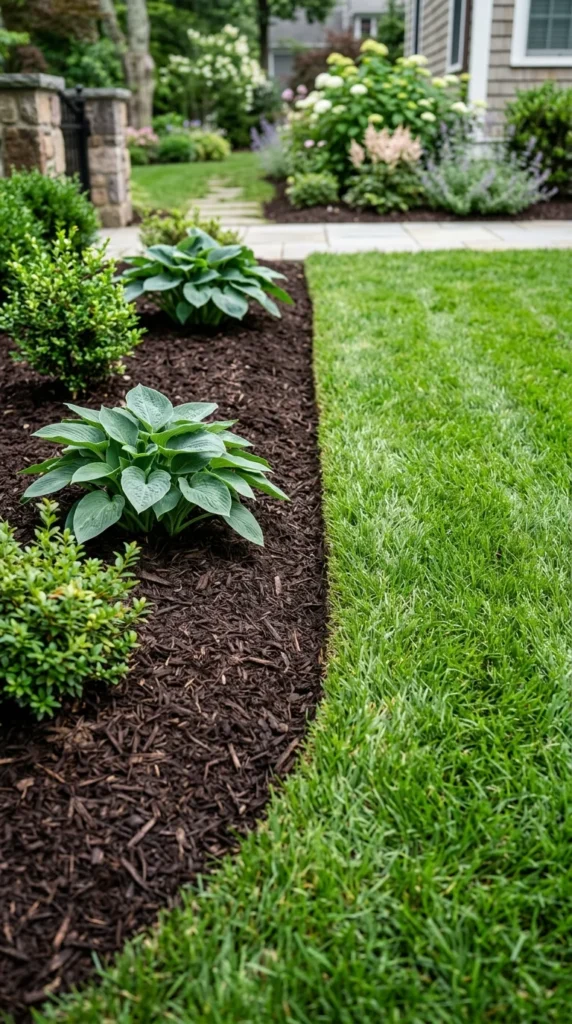
Never underestimate the power of fresh mulch. It is perhaps the cheapest way to make a garden look instantly “finished.” Mulch provides a clean, uniform backdrop that makes the colors of your plants pop, while also serving the practical purpose of retaining moisture and suppressing weeds.
To save money, check with your local municipality; many cities offer free mulch or wood chips from tree-trimming services. Apply a layer about 2-3 inches thick, making sure to leave some space around the base of your plants to allow them to breathe.
5. Stone Fire Pit
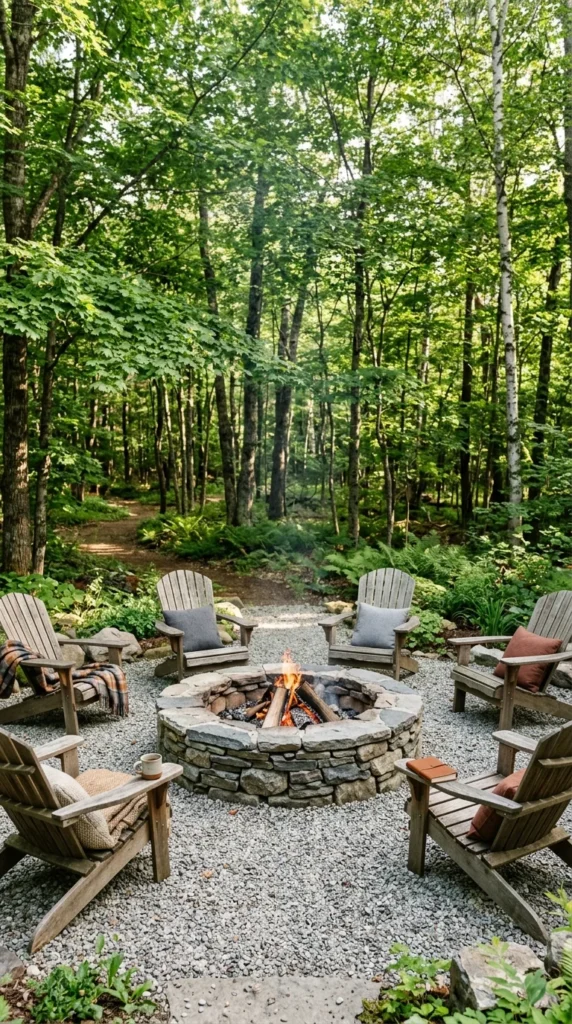
A fire pit creates an immediate focal point and a social hub for your backyard. While pre-made kits can cost hundreds, you can build a stunning version using stones found on your property or inexpensive wall blocks from a hardware store.
The secret to a safe and long-lasting DIY fire pit is the base. Dig a shallow pit, fill it with gravel for drainage, and then stack your stones in a circle. Ensure the stones are stable and level. This simple addition extends the usability of your garden into the cooler evening hours and late autumn.
6. Edging with Bricks
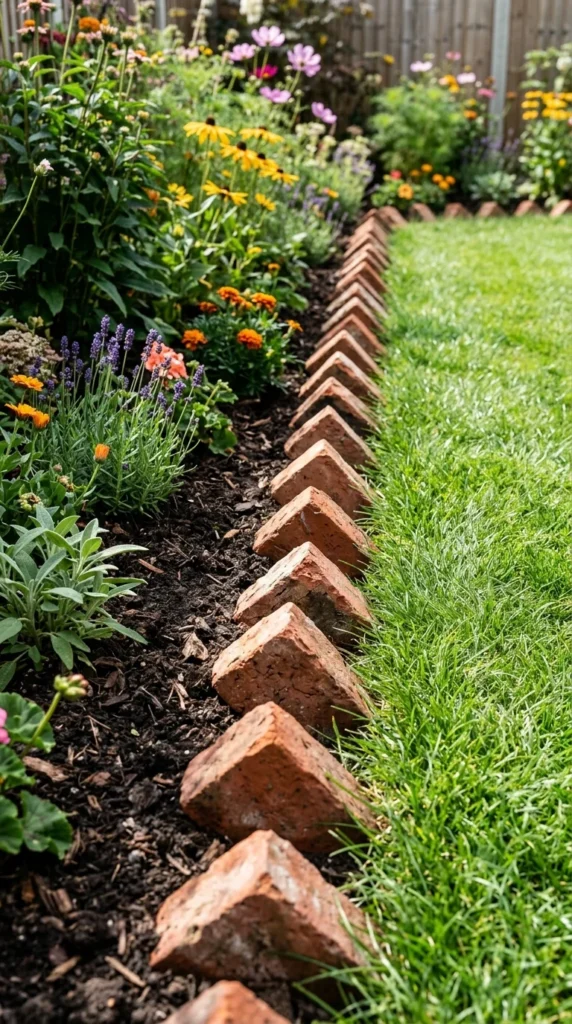
Clean lines are the hallmark of a well-landscaped yard. Edging prevents grass from creeping into your flower beds and makes mowing much easier. Instead of buying expensive plastic or metal edging, look for old bricks.
You can often find reclaimed bricks for pennies, or even for free, from construction sites or renovation projects. Burying them vertically or at an angle creates a classic, timeless look that adds structure to your garden. It’s a labor-intensive project, but the material cost is nearly zero.
7. Wildflower Meadow
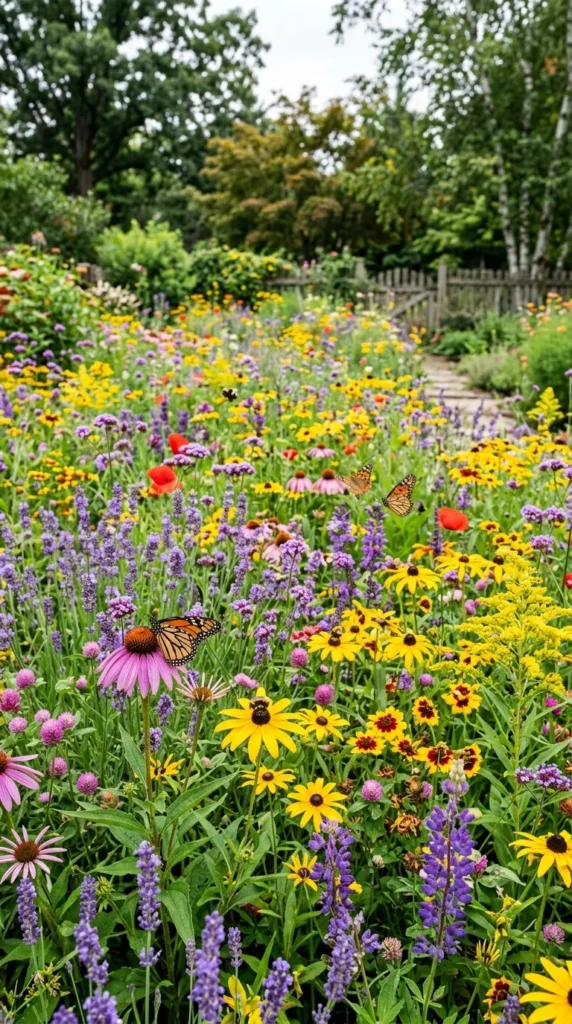
If you have a large area of lawn that is difficult to mow or simply looks boring, consider replacing it with a wildflower meadow. This is a “set it and forget it” landscaping strategy that is incredibly cheap to implement—all you need is a few packets of native seeds.
Wildflower meadows are excellent for local biodiversity, attracting pollinators like bees and butterflies. They require significantly less water and no fertilizer compared to a traditional lawn. Once established, they provide a changing tapestry of color throughout the seasons.
8. Upcycled Furniture
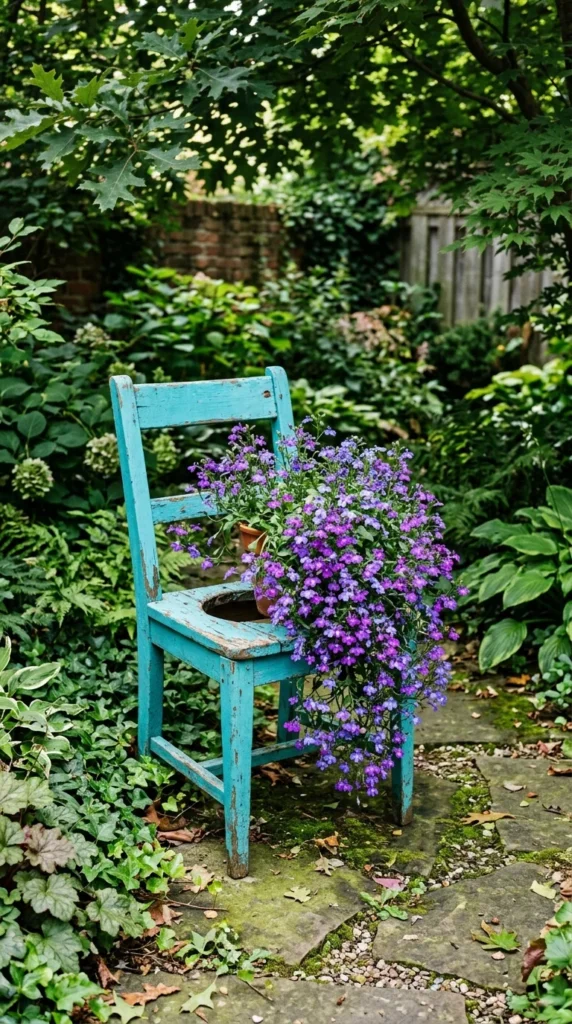
Landscaping isn’t just about the plants; it’s about the “hardscaping” and decor as well. Instead of buying new outdoor sets, scour garage sales or thrift stores for old wooden chairs, benches, or tables.
A bright pop of color from a painted piece of furniture can brighten up a dark corner of the garden. Even if the furniture is no longer sturdy enough to sit on, it can serve as a charming plant stand or a decorative element that adds height and interest to your flower beds.
9. String Lighting
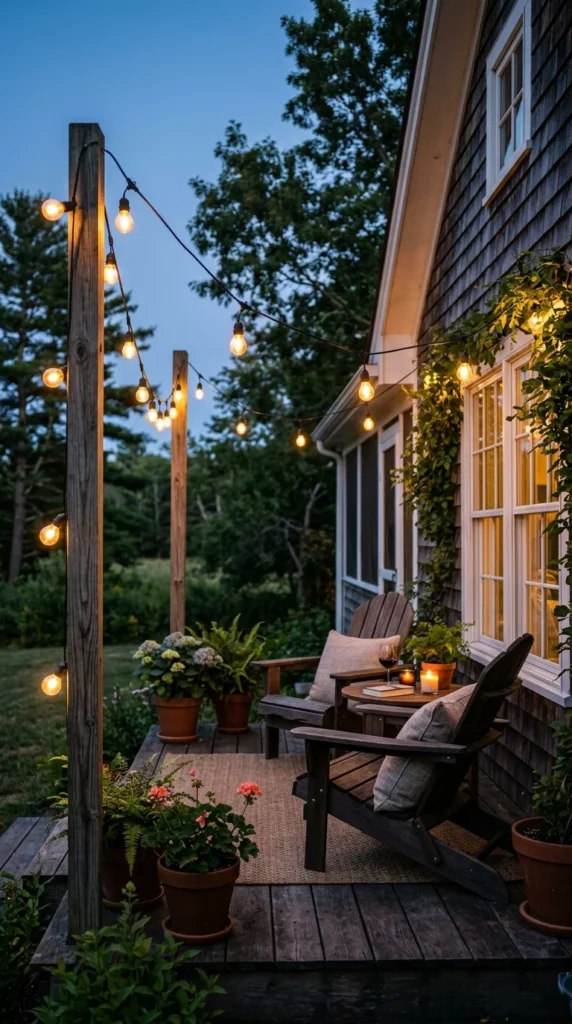
Lighting is the “secret sauce” of landscaping. It transforms the mood of the garden as soon as the sun goes down. High-end landscape lighting is expensive to install, but string lights (often called bistro or festoon lights) are affordable and easy to hang yourself.
Solar-powered options are particularly budget-friendly as they require no wiring and cost nothing to run. Drape them over a fence, weave them through tree branches, or hang them over a seating area to create an enchanting, high-end atmosphere instantly.
10. Potted Herb Spiral
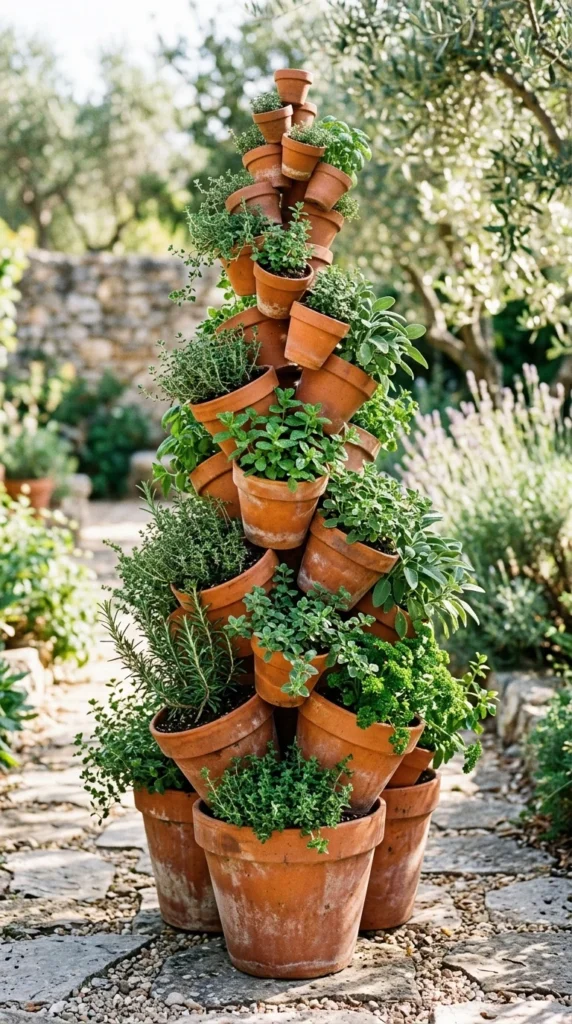
An herb spiral is a brilliant way to grow a lot of produce in a tiny footprint. While often built from stone, a “potted” version using various sizes of terracotta pots is much cheaper and easier to assemble.
The spiral design creates different microclimates: the top is drier and sunnier (perfect for rosemary), while the bottom stays cooler and moister (ideal for mint or parsley). It’s a functional piece of garden art that looks as good as it tastes.
11. Tree Ring Flowerbeds
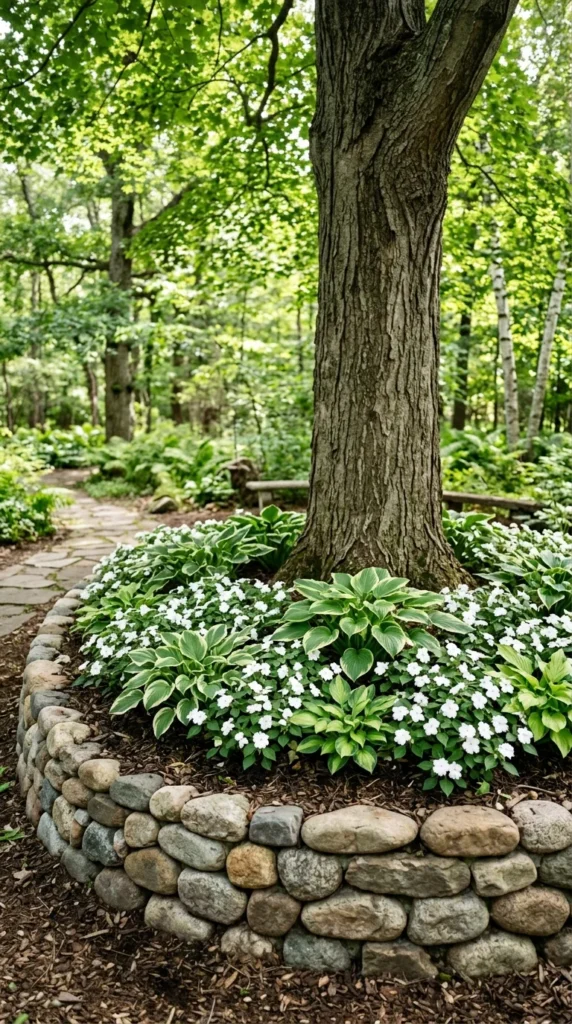
The area under large trees is often a “dead zone” where grass struggles to grow due to shade and root competition. Turn this problem area into a feature by creating a tree ring flowerbed.
Define the circle with stones or bricks and fill it with shade-tolerant perennials. Be careful not to pile soil too high against the tree trunk, as this can cause bark rot. Using mulch and a few well-placed plants makes the tree look like a deliberate part of the landscape rather than an obstacle to mow around.
12. Log Stepping Stones
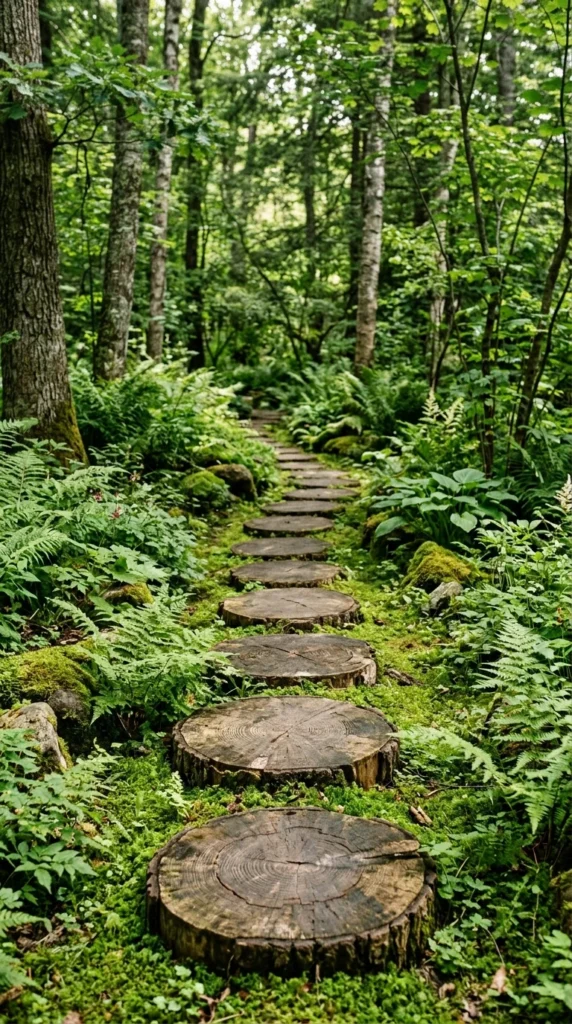
For a natural, woodland aesthetic, use “tree cookies” (cross-sections of logs) as stepping stones. If you or a neighbor has recently had a tree removed, you can get these for free.
To ensure they last, sand the surfaces and apply a clear wood sealer to protect them from moisture. Dig a shallow indentation for each log slice so they sit flush with the ground, preventing tripping hazards. They offer a rustic charm that store-bought concrete stones simply can’t match.
13. Gabion Retaining Walls
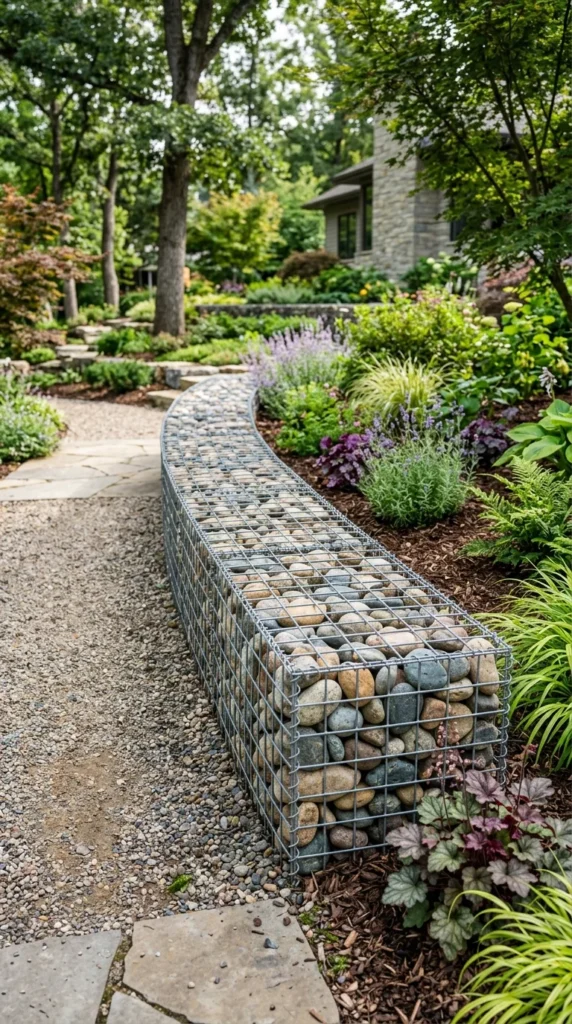
Retaining walls are usually one of the most expensive landscaping features. However, a “gabion” wall—which is essentially a wire cage filled with rocks—is a much more affordable DIY alternative.
You can buy the wire mesh kits online and fill them with rocks found locally or purchased in bulk. They are incredibly sturdy, provide excellent drainage, and have a unique, modern look that fits well in both contemporary and rustic garden designs.
14. Birdbath Focal Point
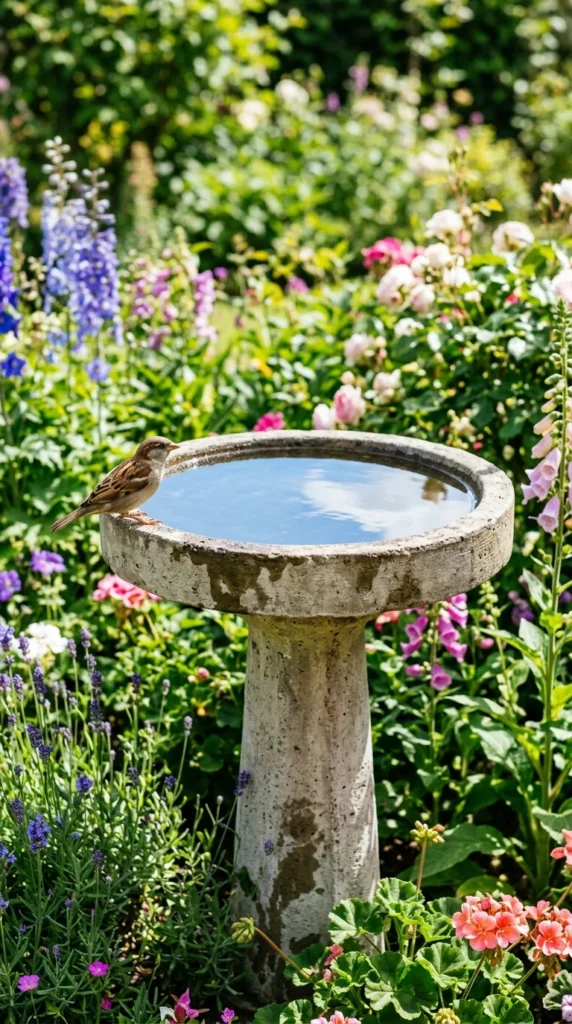
Every garden needs a focal point—something for the eye to rest upon. A birdbath is a classic choice that serves a dual purpose: it adds a decorative element and provides a vital water source for local wildlife.
You can make a budget-friendly birdbath by stacking two large terracotta pots and placing a wide, shallow saucer on top. Paint them to match your garden’s color scheme. Adding water to your garden brings movement and life, as you’ll soon find your yard filled with the songs of visiting birds.