

Vertical gardening is more than just a space-saving technique; it is an art form that transforms a flat landscape into a three-dimensional masterpiece. By introducing a trellis into your garden, you provide a skeleton for nature to dress, allowing vines, vegetables, and flowers to reach for the sun while creating privacy and visual interest. Whether you are aiming for a rustic farmhouse vibe or a sleek modern aesthetic, the right support structure can elevate your greenery from simple ground cover to a breathtaking focal point.
1. Bamboo Teepees
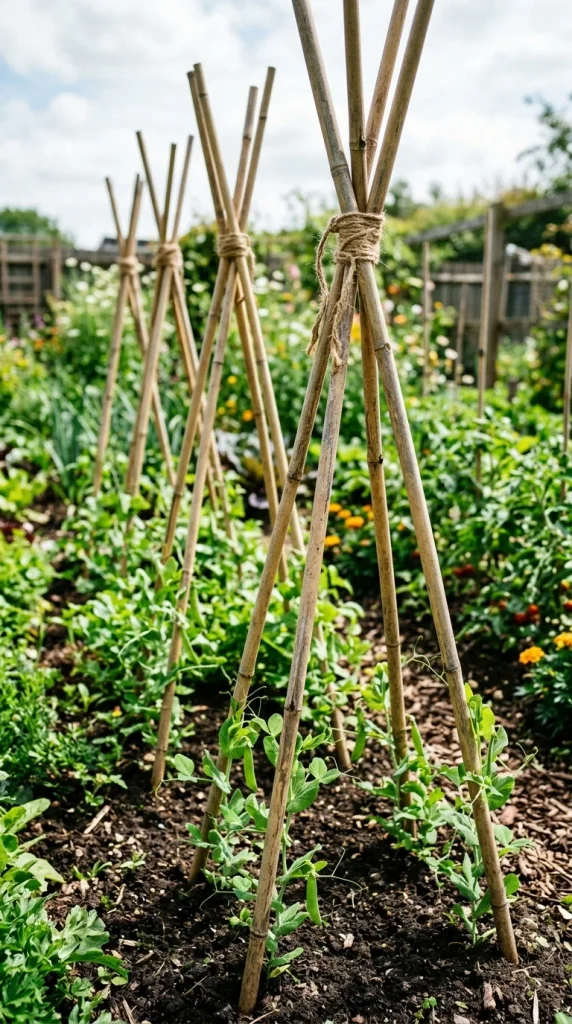
Bamboo teepees are the quintessential choice for gardeners who appreciate natural materials and simplicity. These structures are incredibly easy to assemble—requiring only three to five bamboo poles and a sturdy piece of garden twine. Their conical shape is perfect for lightweight climbers like sweet peas, pole beans, or morning glories.
Beyond their functionality, bamboo teepees add a sense of height and rhythm to the garden. Because they are lightweight, they can be easily moved from one season to the next, supporting crop rotation. When the plants reach the peak of the teepee, they create a lush green pyramid that hides the structure entirely, resulting in a beautiful, organic sculpture in the middle of your garden beds.
2. Cattle Panels
Cattle panels are the unsung heroes of the vertical gardening world. Made from thick, galvanized wire, these panels are incredibly strong and resistant to rust. When bent into a “cattle panel arch,” they create a stunning walk-through tunnel that can support heavy crops like pumpkins, melons, and large gourds.
The beauty of the cattle panel lies in its durability and the “hanging fruit” effect. As your plants grow over the top of the arch, the fruit hangs down through the wire grids, making harvesting a breeze and keeping the produce off the ground where pests and rot usually strike. It turns a functional garden path into a magical, shaded corridor of greenery.
3. Cedar A-Frames
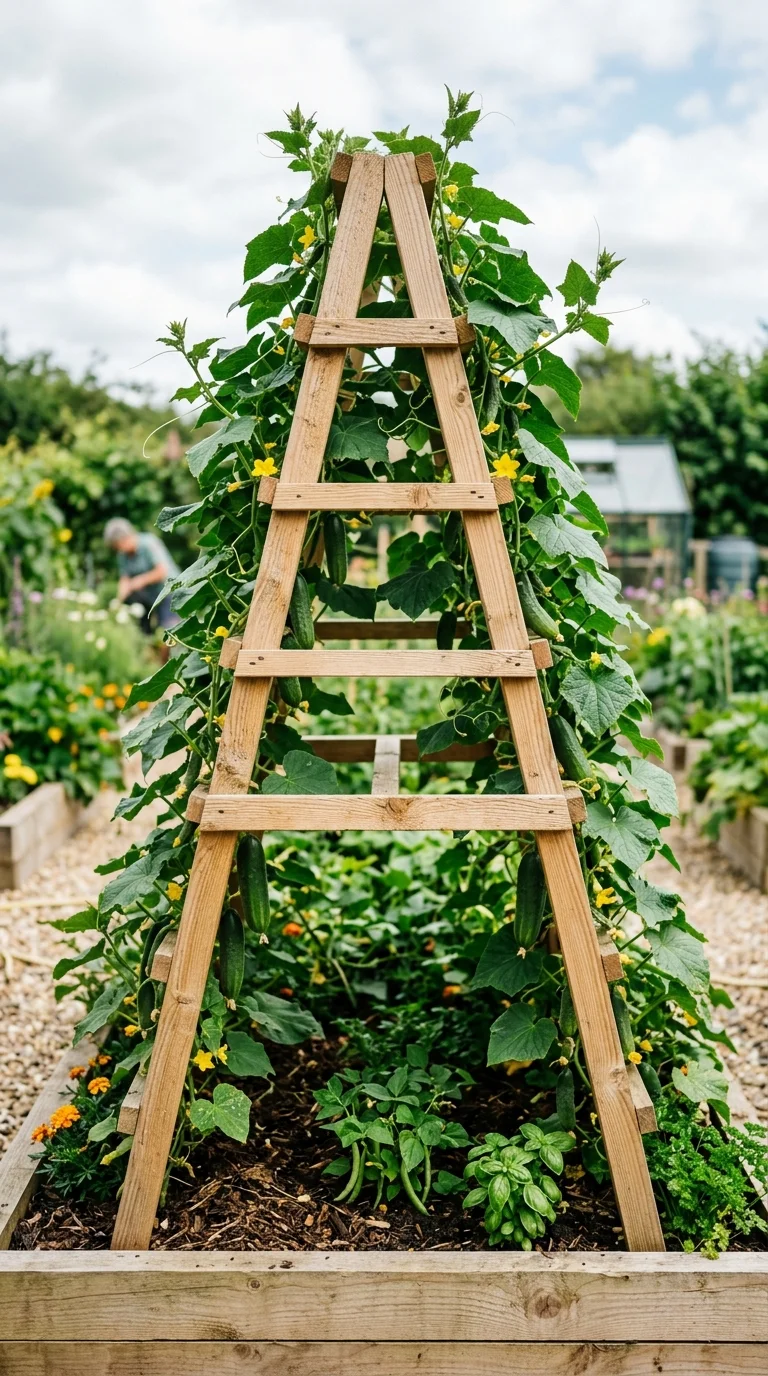
Cedar is naturally rot-resistant and features a beautiful grain that weathers into a soft silver-grey over time. A-frame trellises are particularly popular for heavy-duty vegetable gardening. Because they sit at an angle, they provide an excellent surface area for “scramblers” like cucumbers or squash to grip onto.
The space underneath the A-frame provides a unique microclimate. It remains shaded and cooler than the rest of the garden, making it the perfect spot to grow heat-sensitive crops like spinach or lettuce. This dual-purpose design maximizes every square inch of your garden real estate while maintaining a clean, architectural look.
4. Copper Pipes
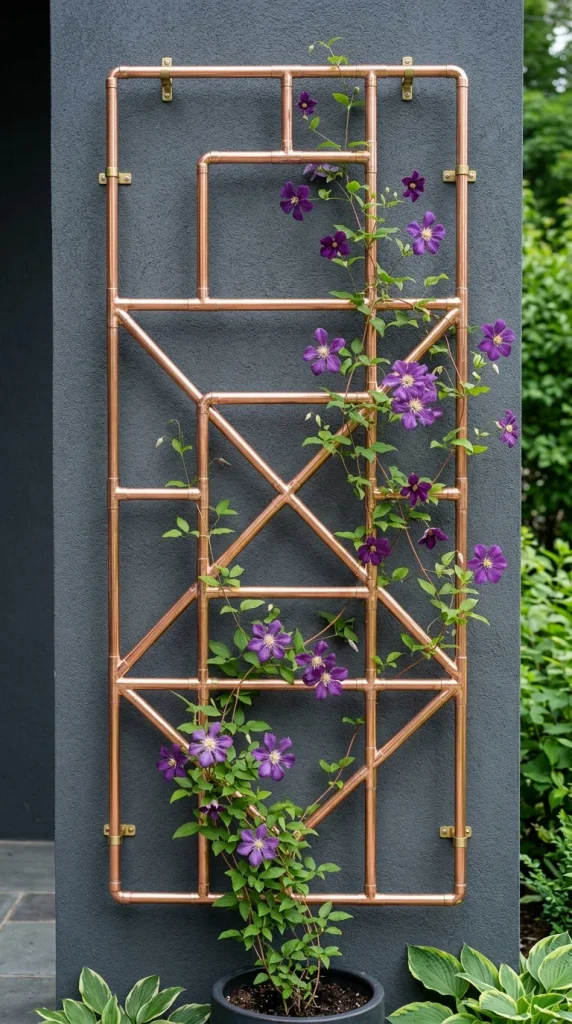
For a garden that leans toward the modern or industrial, copper pipe trellises are a high-end choice. Copper starts with a bright, metallic glow and eventually develops a stunning green patina that blends perfectly with garden foliage. Because you can use various joints and connectors, you can design a custom geometric pattern—triangles, hexagons, or a simple grid.
Copper is not only beautiful but also beneficial for the garden. It is a long-lasting material that won’t degrade like wood or plastic. When used as a wall-mounted trellis, it acts as a piece of living art, providing a sharp, metallic contrast to the soft, organic textures of climbing roses or ivy.
5. Wrought Iron
Wrought iron trellises evoke the feeling of a classic English estate or a hidden secret garden. These structures are often heavy and permanent, providing a sense of history and stability to your outdoor space. They are the ideal choice for perennial climbers that grow thick woody stems over many years, such as wisteria or climbing hydrangea.
The detailed scrollwork of wrought iron remains visible even during the winter months when the plants have lost their leaves, ensuring your garden has “good bones” year-round. They can be used as standalone focal points in a flower bed or as decorative screens to hide unsightly utility areas.
6. Ladder Trellis
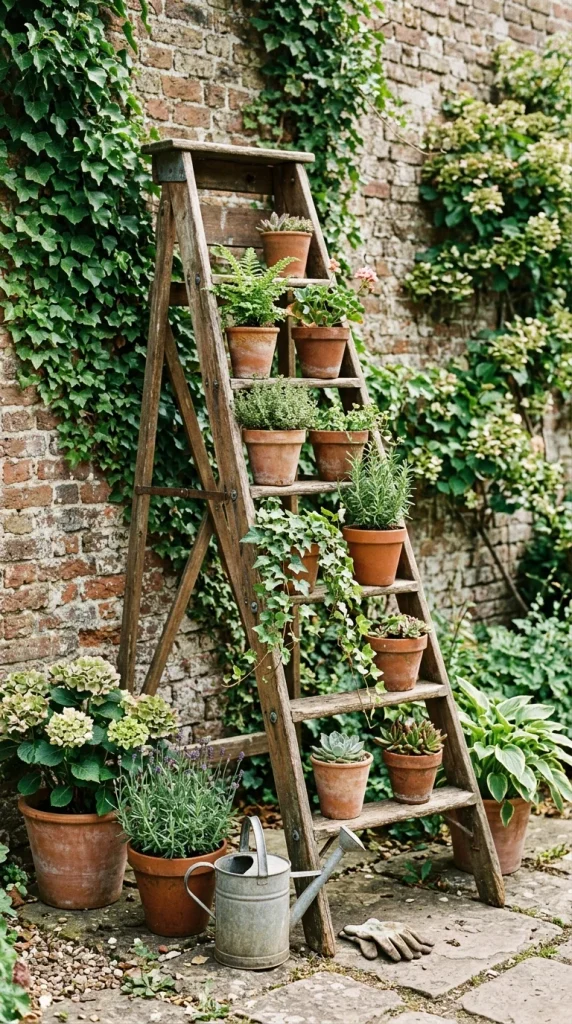
The ladder trellis is the ultimate “upcycled” garden project. Whether you use a vintage wooden ladder found at a flea market or build a simple “lean-to” style ladder from scrap wood, this structure adds instant vertical charm. It is particularly effective for small-space gardeners or those with urban balconies.
You can use the rungs of the ladder to tie up tall plants like tomatoes, or you can place potted herbs on the steps. The vertical orientation allows you to stack your greenery, creating a wall of plants that draws the eye upward and makes a small patio feel much more expansive and lush.
7. Obelisk Structures
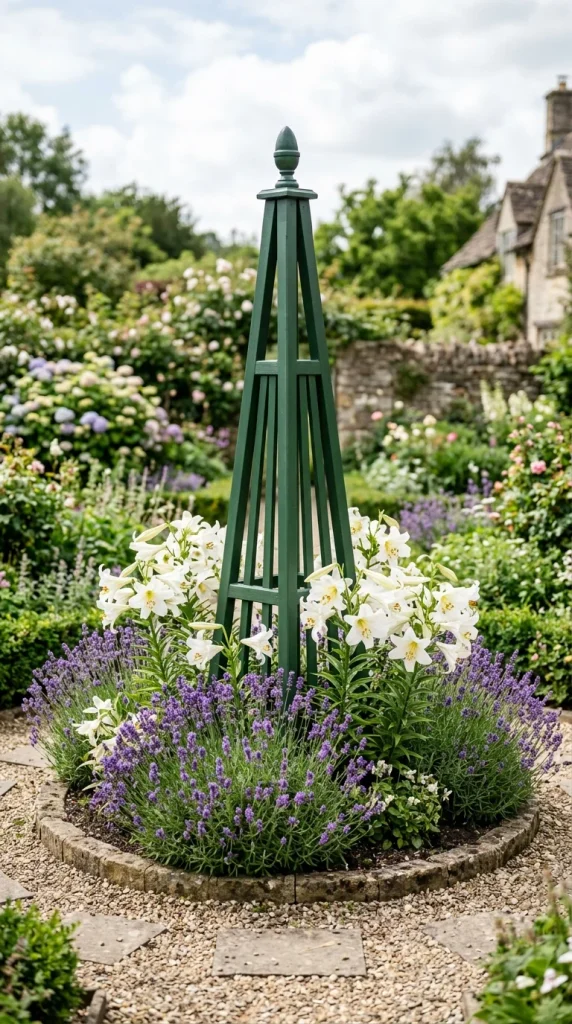
Obelisks are the “exclamation points” of the garden. These tall, four-sided structures provide a formal, structural element to any landscape. They are typically used in pairs to frame an entrance or placed in the center of a flower bed to provide a vertical anchor.
Wood and metal are common materials for obelisks, and they often feature a decorative finial at the top. They are perfect for vines that like to twine, such as mandevilla or black-eyed Susan vines. Because of their footprint, they take up very little ground space while providing several feet of vertical climbing area, making them perfect for tight corners.
8. Wall Grids
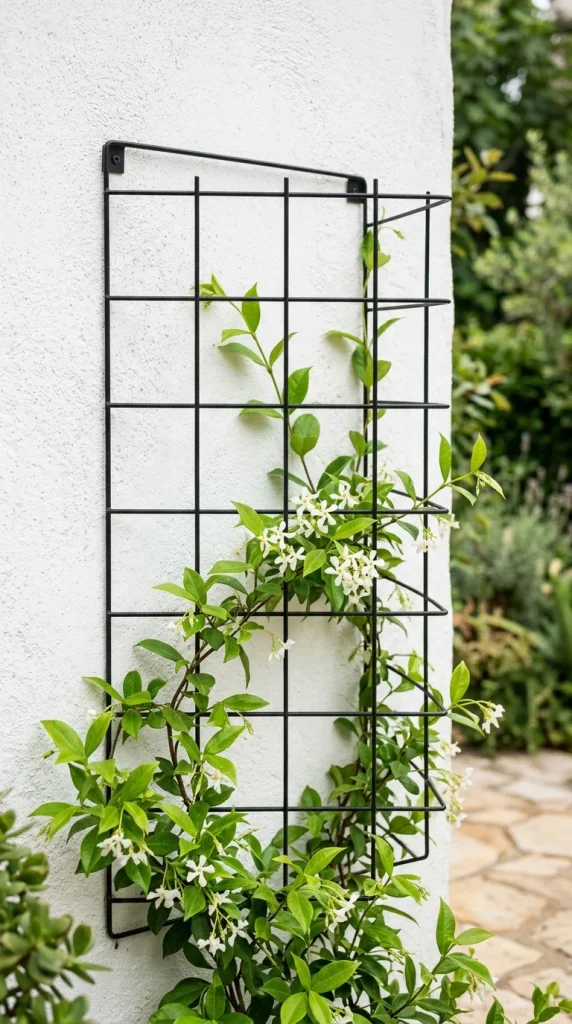
Wall grids are the go-to solution for transforming a boring exterior wall into a vertical forest. By mounting a grid—whether made of wire, wood, or plastic—directly to the side of a house or garage, you create a support system for “clinging” vines.
A key tip for wall grids is to mount them an inch or two away from the wall using spacers. This allows air to circulate behind the plants, preventing mold on the foliage and moisture damage to your home’s siding. As the plants fill in, the grid disappears, leaving you with a lush, green “living wall” that provides natural insulation and incredible fragrance.
9. Living Willow
One of the most unique and sustainable trellis ideas is the living willow structure. Willow whips are flexible and can be pushed directly into the moist ground, where they will eventually take root and grow. By weaving these whips together in a diamond lattice pattern, you create a trellis that is literally alive.
As the willow grows, you simply prune it to maintain the shape. This “fedge” (a cross between a fence and a hedge) provides a soft, organic boundary for your garden. It is an excellent choice for cottage gardens and works beautifully as a backdrop for colorful perennials or as a support for lighter annual vines.
10. Repurposed Windows
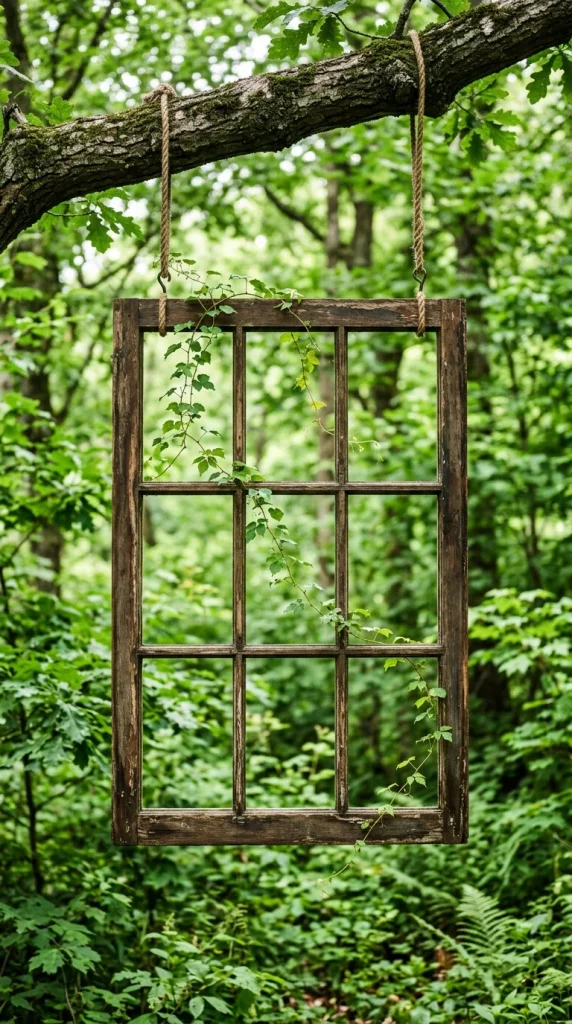
Repurposed windows offer a whimsical, “shabby chic” look that fits perfectly in a casual garden setting. By removing the glass and leaving the wooden muntins (the dividers), you create a ready-made grid for plants to climb. You can paint the frames in bright, bold colors to add a pop of interest or leave them distressed for a more weathered look.
These trellises work exceptionally well when hung against a fence or even suspended from a porch ceiling. They act as a “picture frame” for your plants, highlighting the beauty of individual blooms and adding a touch of vintage personality to your outdoor living space.
11. String Art
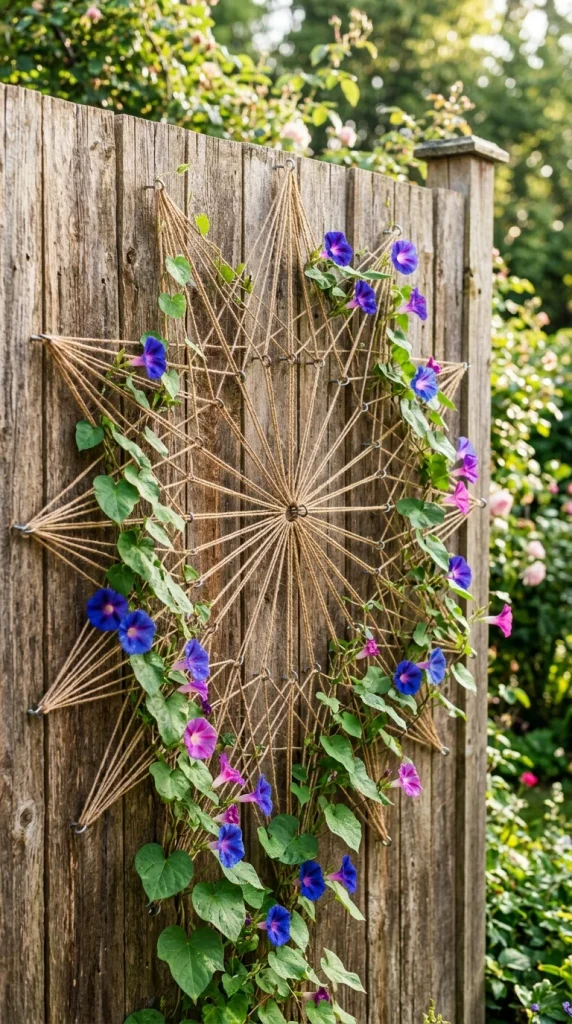
String art trellises are the most customizable and cost-effective option on this list. By using galvanized wire or high-strength twine and a series of eye-hooks, you can “draw” any shape you want on a wall or fence. From simple vertical lines to complex sunburst patterns, the possibilities are endless.
This method is especially great for delicate vines that use tendrils to climb, such as clematis or passionflower. Because the string is thin, the plants appear to be floating against the wall. At the end of the season, you can simply snip the strings, pull down the dead vines, and start with a fresh design the following year.
12. Fan Trellis
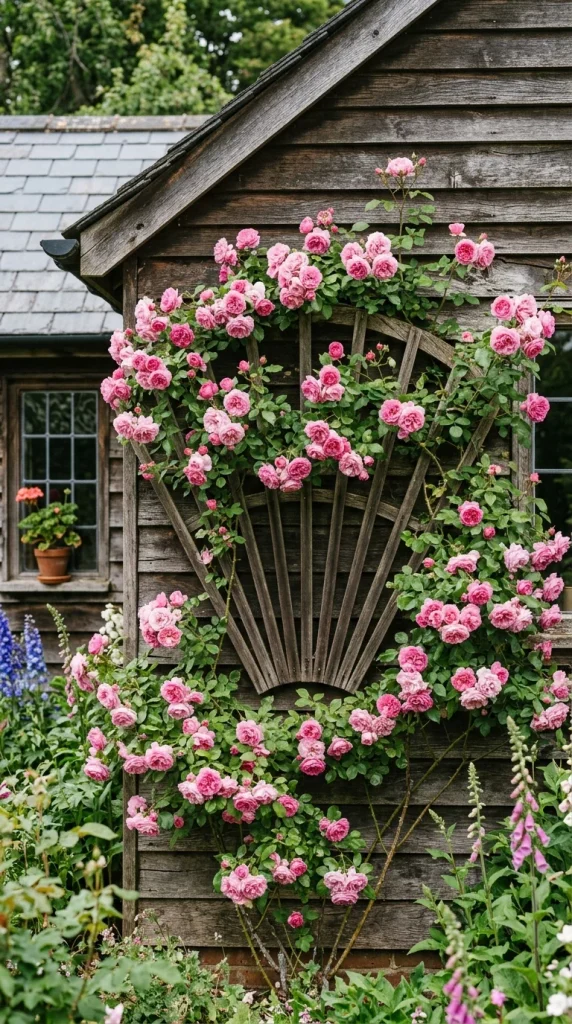
The fan trellis is a classic for a reason. Its wide top and narrow base make it ideal for planting in narrow spaces where you want the plant to spread out as it grows taller. It is the perfect shape for training roses, as it encourages the canes to grow horizontally, which in turn stimulates more flower production.
Fan trellises are often sold in pre-made wooden or plastic versions, making them one of the most accessible options for new gardeners. They look particularly striking when mounted on the side of a garden shed or used to fill the gaps between windows on a home’s exterior.
13. Chevron Lattice
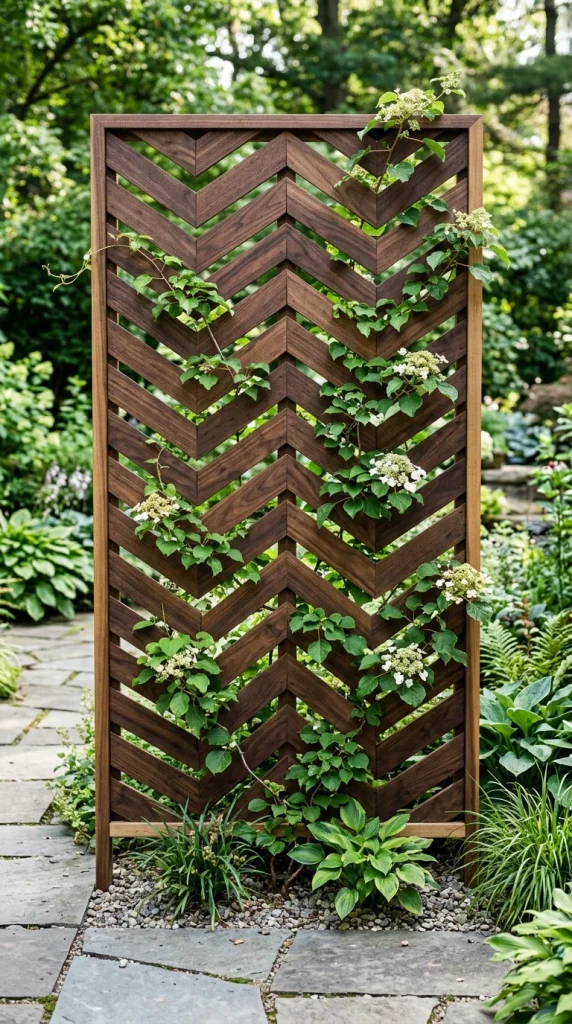
Lattice doesn’t have to be the standard diamond pattern you see at every hardware store. A chevron lattice—where horizontal slats are arranged in a V-shape—offers a contemporary and high-end look. This design provides excellent privacy while still allowing light and air to pass through.
The chevron pattern creates a sense of movement in the garden, guiding the eye across the landscape. It is a sturdy choice that can handle the weight of heavy perennial vines. When painted a dark charcoal or black, it makes the bright greens of your garden foliage pop with dramatic intensity.
14. Branch Screens
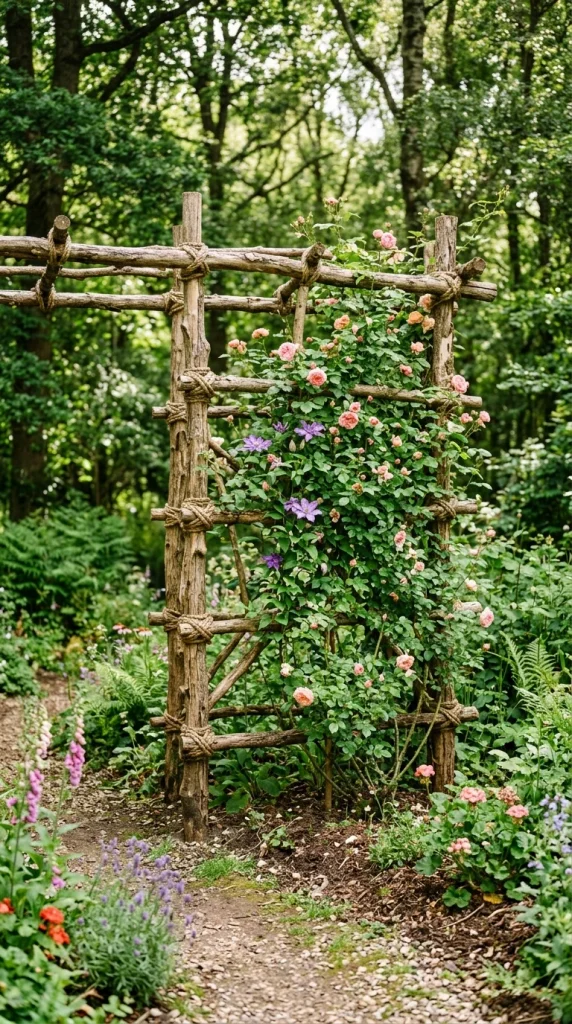
For those who want a garden that looks like it was plucked straight from a forest, a branch screen is the answer. Using fallen branches or pruned limbs from your own trees, you can lash together a rustic trellis that costs absolutely nothing. The irregularities of the wood add character and a sense of “wabi-sabi” to the garden.
Branch trellises are particularly effective in woodland gardens or “wild” landscapes. They blend seamlessly into the environment, making the garden feel established and natural. They are perfect for supporting native climbing plants like honeysuckle or wild grapes, providing a habitat for local birds and pollinators.
15. Archway Arbors
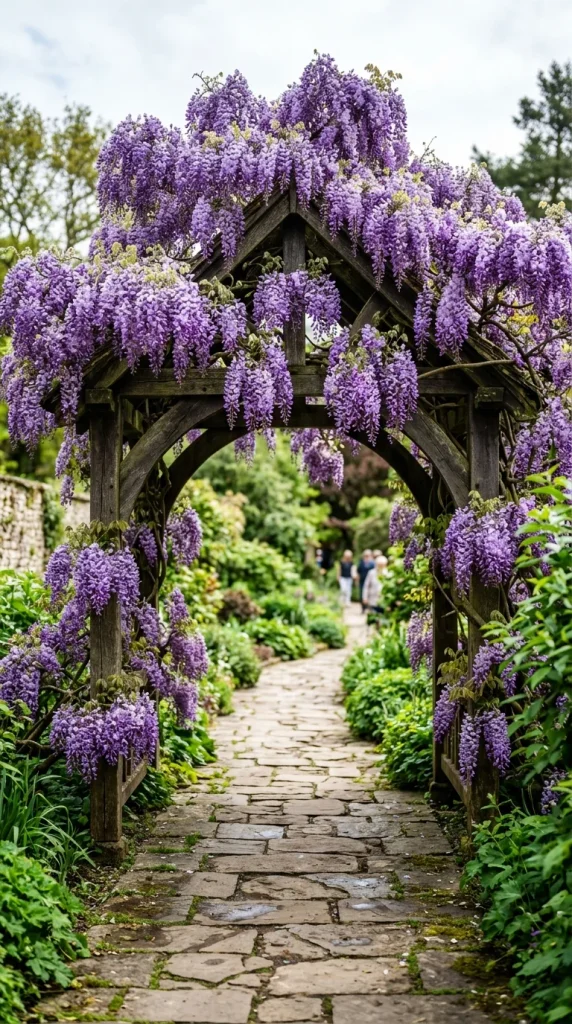
The archway arbor is the ultimate statement piece. It marks a transition from one “room” of the garden to another, creating a sense of mystery and invitation. While smaller trellises support individual plants, an arbor creates an entire environment, offering shade and a canopy of flowers overhead.
Constructing a sturdy archway allows you to grow the most vigorous of climbers, such as wisteria, trumpet vine, or climbing roses. Walking under a fully bloomed arbor is a sensory experience, surrounding you with fragrance and color. It is the pinnacle of vertical gardening, turning a simple path into an unforgettable journey through your landscape.