

Vertical gardening is more than just a space-saving hack; it is an architectural art form that transforms a flat plot of land into a multi-dimensional sanctuary. Whether you are aiming to maximize your vegetable yield or create a romantic, flower-filled retreat, the right trellis serves as the backbone of your garden’s success. By lifting plants off the ground, you improve air circulation, discourage pests, and make harvesting a breeze.
From rustic DIY projects using reclaimed materials to elegant, permanent structures, there is a trellis design for every aesthetic. Here are 24 inspiring garden trellis ideas to elevate your outdoor space.
1. Classic Wood
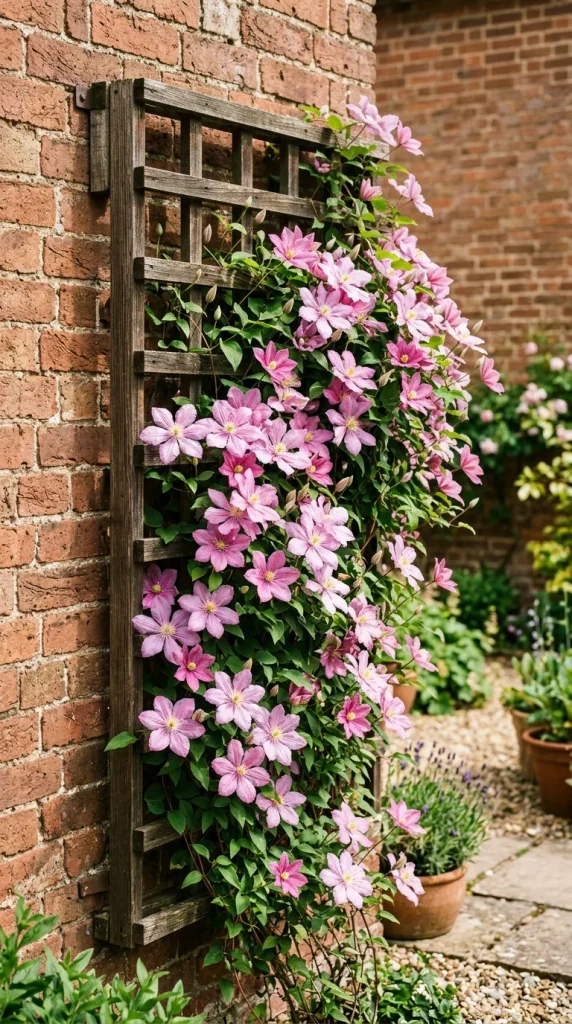
The classic wooden lattice is a staple for a reason. It provides a timeless, structured look that complements almost any architectural style. Typically made from cedar or pressure-treated pine, these trellises offer numerous small contact points for “twiners” like clematis or morning glories to grab onto. You can paint them white for a cottage-core vibe or leave them natural to weather into a beautiful silvery gray.
2. A-Frame
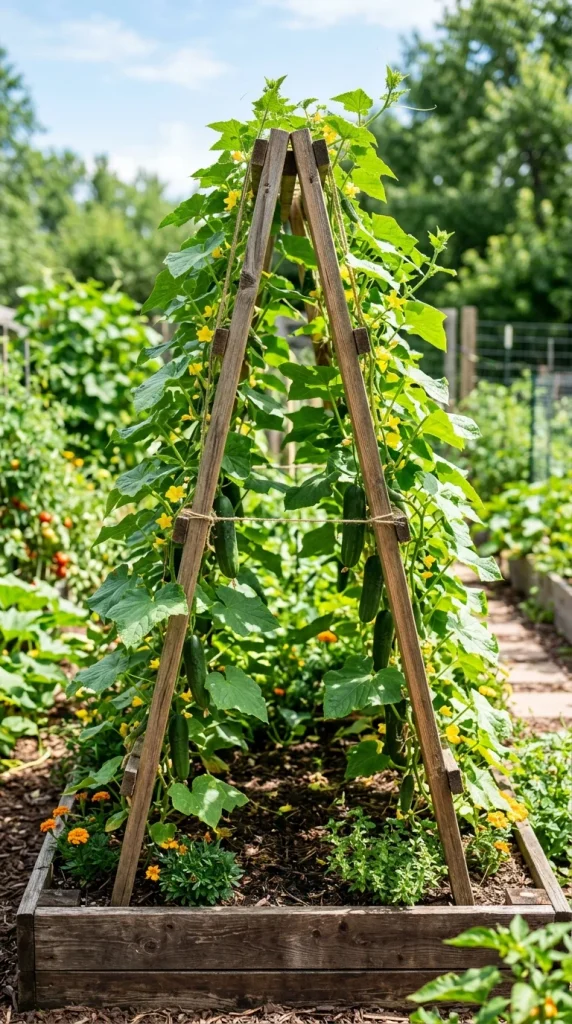
The A-frame is the workhorse of the vegetable garden. Its slanted design allows heavy-fruiting plants like cucumbers and squash to hang their fruit downward, keeping them straight and clean. It also creates a shady micro-climate underneath, perfect for growing heat-sensitive greens like spinach or lettuce during the height of summer.
3. Cattle Panels
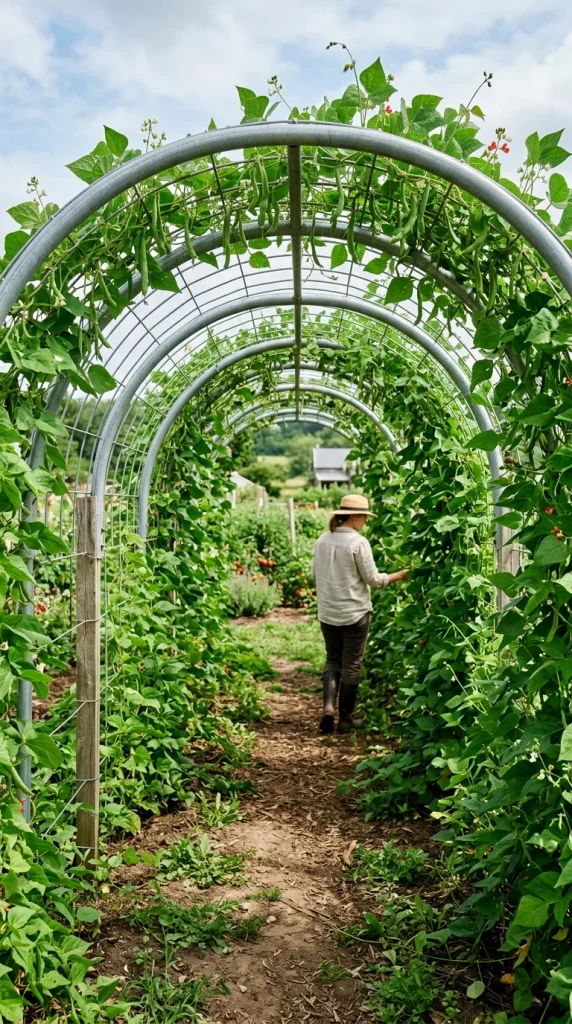
Cattle panels are incredibly durable and surprisingly affordable. By arching a 16-foot panel between two raised beds, you create a stunning “living tunnel.” This is ideal for pole beans, small pumpkins, or even heavy gourds. The thick gauge of the wire ensures the structure won’t sag under the weight of a massive harvest.
4. Bamboo Tepees
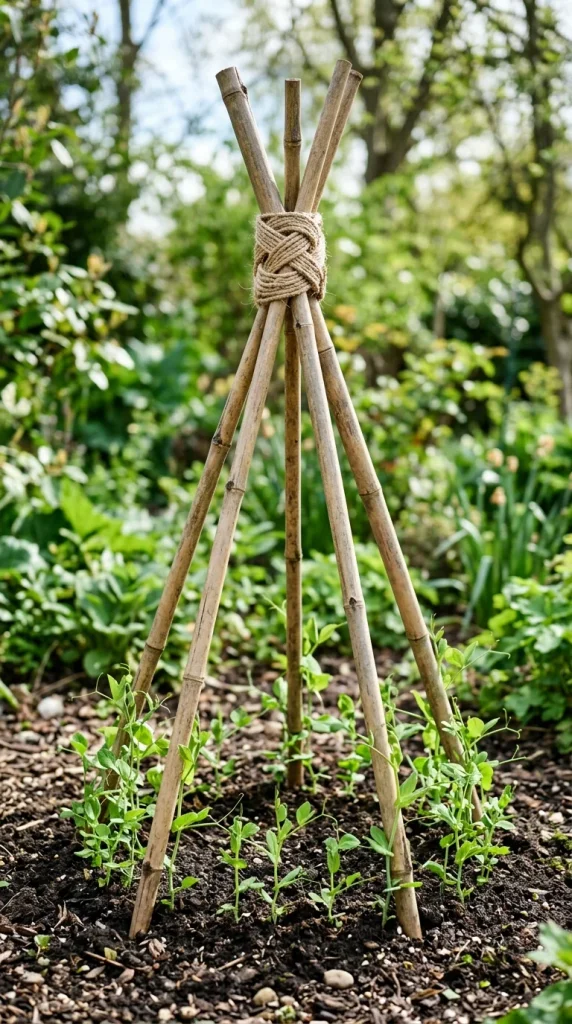
For a quick, eco-friendly, and portable solution, look no further than the bamboo tepee. These structures add height and a touch of whimsy to the garden. They are particularly effective for light climbers like sweet peas or scarlet runner beans. Because they are lightweight, you can easily move them around your garden from year to year to follow your crop rotation plan.
5. Wall-Mounted Wire

If you prefer a modern, minimalist aesthetic, a wall-mounted wire system is the way to go. Using eye-bolts and aircraft cable, you can create custom patterns—diamonds, squares, or even chevrons—on a blank wall. Once the plants fill in, the hardware becomes nearly invisible, making it look as though the greenery is floating against the building.
6. Arched Entryway
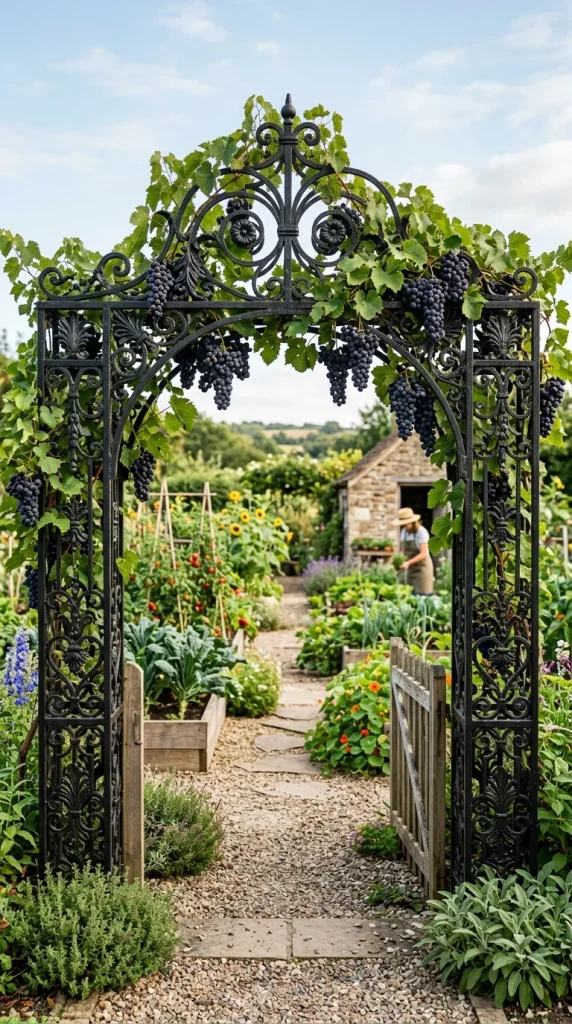
An arched trellis at the entrance of your garden creates a sense of transition and “arrival.” It frames the view of your garden and invites people to enter. Beyond aesthetics, arches are perfect for long-vining plants like grapes or climbing roses, allowing you to walk beneath a canopy of fruit or flowers.
7. Obelisk Towers
Obelisks are the exclamation points of the garden. These tall, four-sided structures provide a strong vertical element even in the middle of winter when nothing is growing. They work beautifully in large containers or as a focal point in the center of a perennial bed. Use them for vigorous climbers like Black-eyed Susan vines or Mandevilla.
8. Copper Pipes
Copper pipe trellises are as much a piece of modern art as they are a garden tool. Over time, the bright copper will develop a stunning turquoise patina, adding a sense of history to your garden. They are incredibly strong and won’t rot like wood, making them a great permanent choice for a contemporary landscape.
9. Branch Wattle
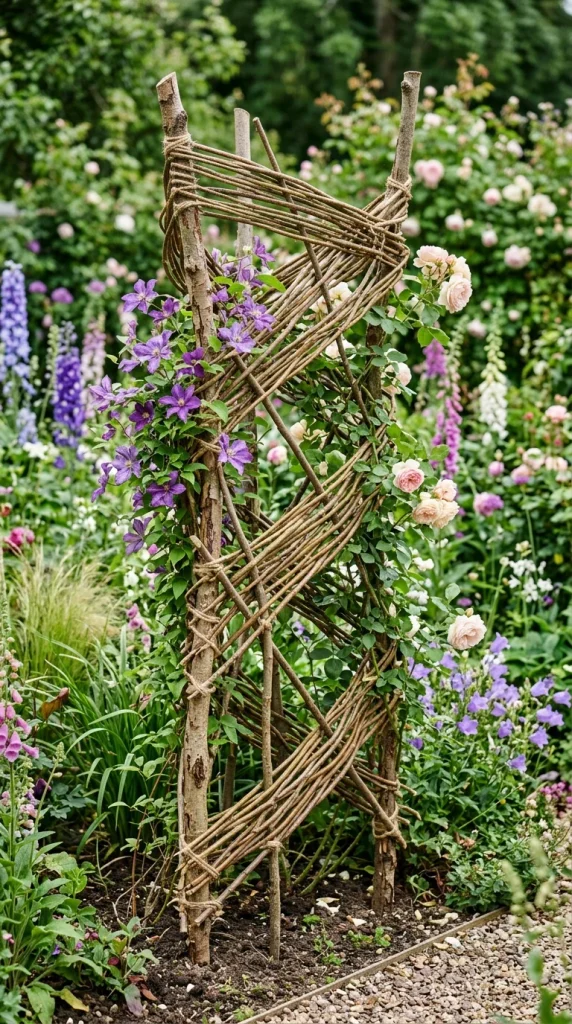
For the ultimate “secret garden” look, try building a wattle trellis. This involves weaving flexible branches—like willow, hazel, or dogwood—around vertical stakes. The result is a rustic, organic structure that looks like it grew right out of the soil. It’s a fantastic way to use garden prunings and costs absolutely nothing to make.
10. Lattice Panels
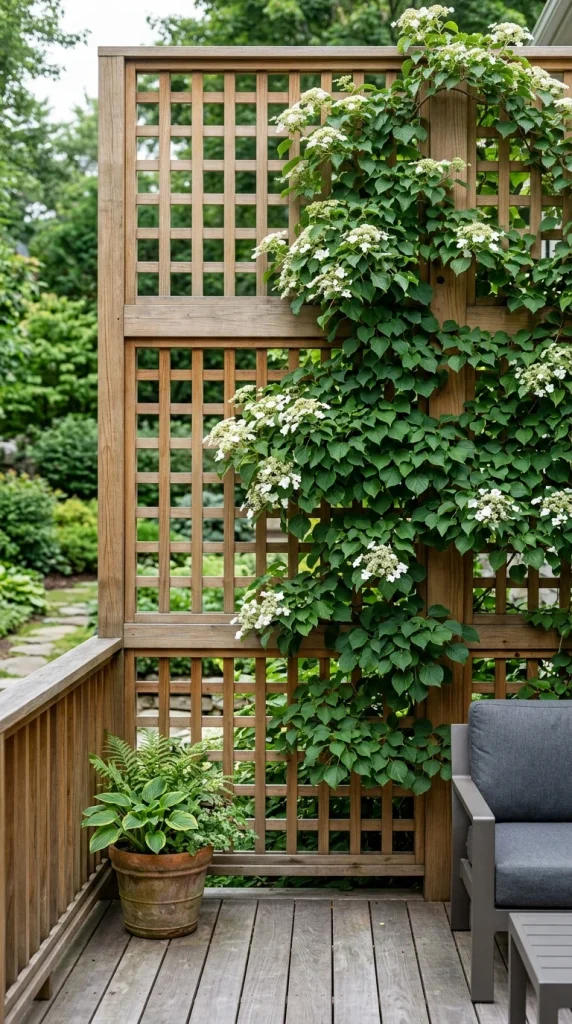
Lattice panels aren’t just for plants; they double as excellent privacy screens. If you have a neighbor’s house or an unsightly utility area you’d like to hide, a tall lattice panel covered in a fast-growing vine like hops or trumpet vine provides a lush, green barrier that feels much friendlier than a solid fence.
11. Repurposed Windows
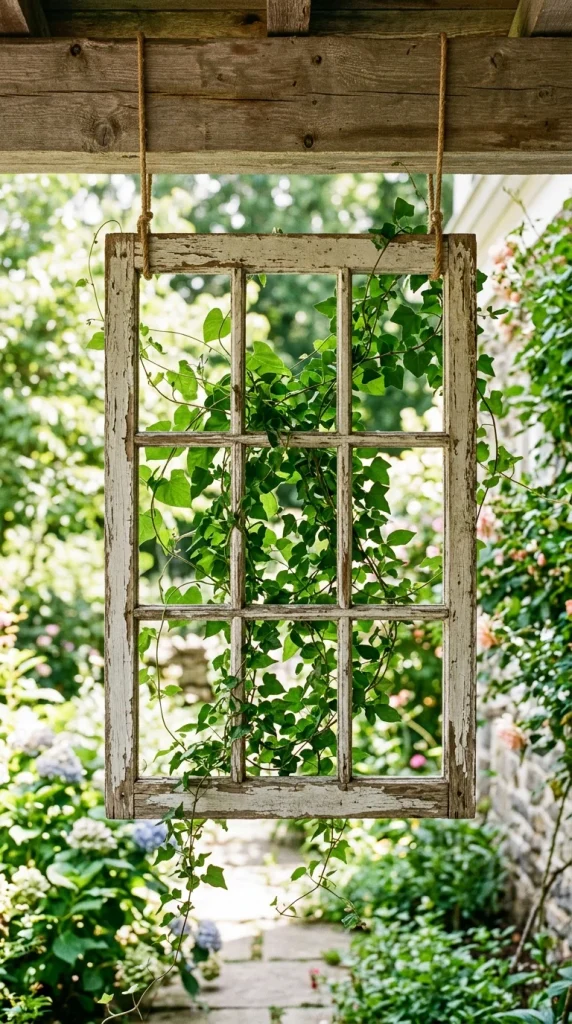
Upcycling old building materials is a great way to add character. An old wooden window frame, stripped of its glass, makes a charming trellis for a porch or balcony. It adds a vintage, farmhouse feel and provides a perfect “frame” for your plants.
12. String & Stake
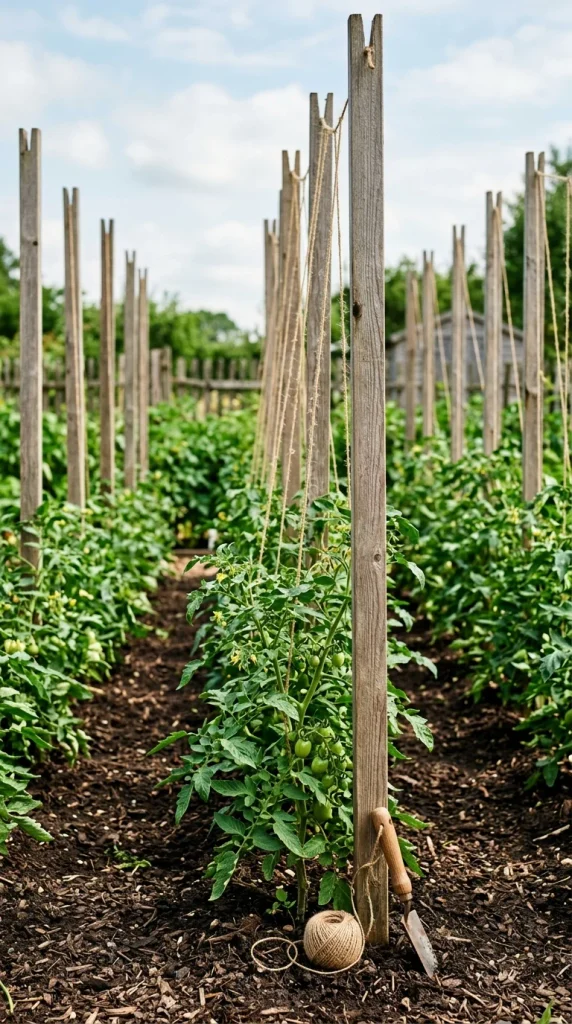
The “Florida Weave” or a simple string-and-stake system is the preferred method for many professional tomato growers. It is inexpensive and highly effective. As the plants grow, you simply add more horizontal or vertical twine to keep them supported. At the end of the season, you can compost the twine and store the stakes, making cleanup a breeze.
13. Metal Spokes
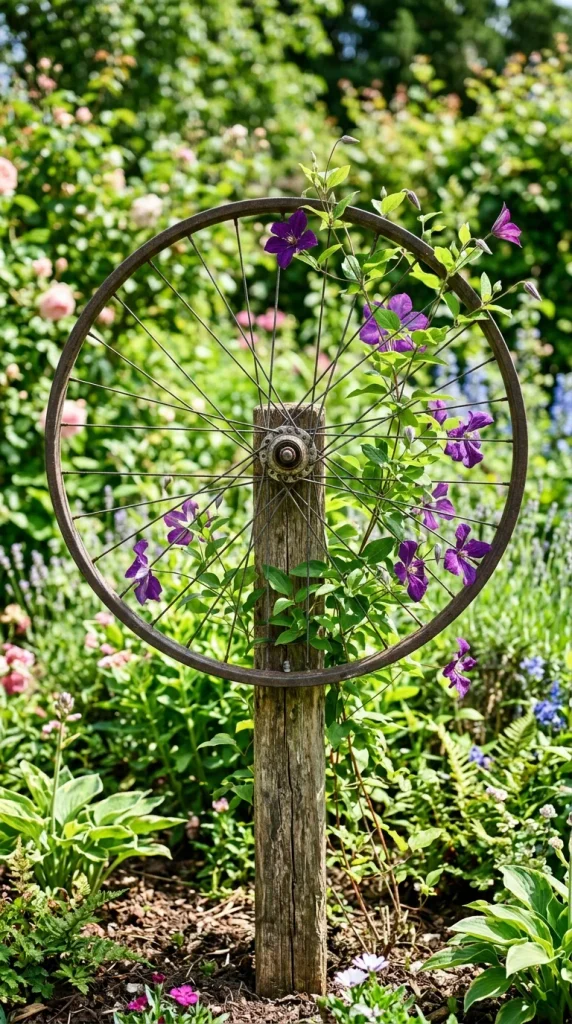
Give your garden a bit of industrial flair by using repurposed metal wheels or spokes. An old bicycle wheel or a wagon wheel can be mounted to a post to create a unique circular trellis. These work particularly well for plants that like to spread out in all directions, like certain varieties of ivy or climbing nasturtiums.
14. Folding Screens
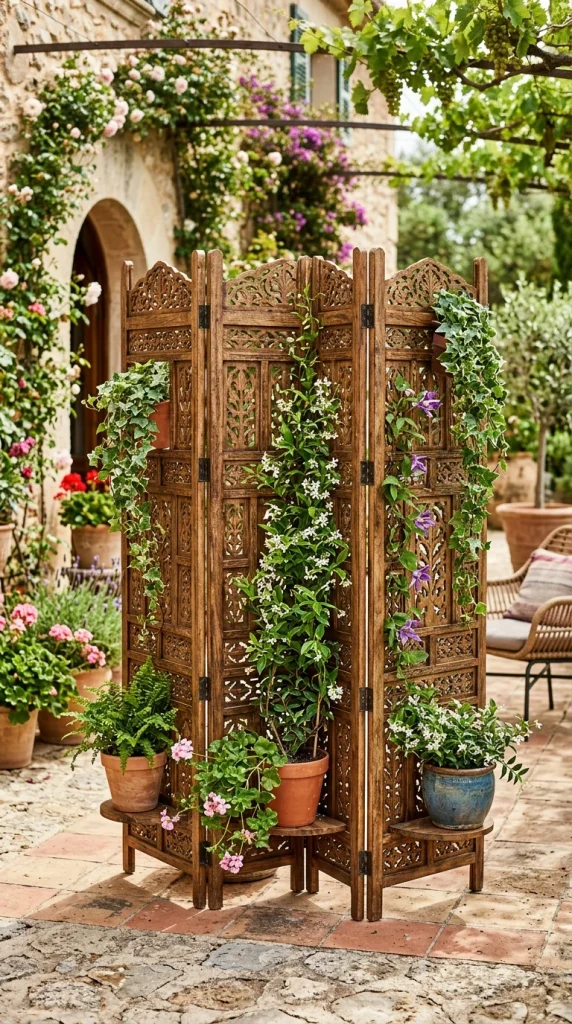
Folding screen trellises offer maximum flexibility. Because they are hinged, you can angle them to fit into a corner or use them to wrap around a large planter. They are an ideal solution for renters or those with limited patio space who want the benefits of vertical gardening without digging permanent holes.
15. Garden Arbors
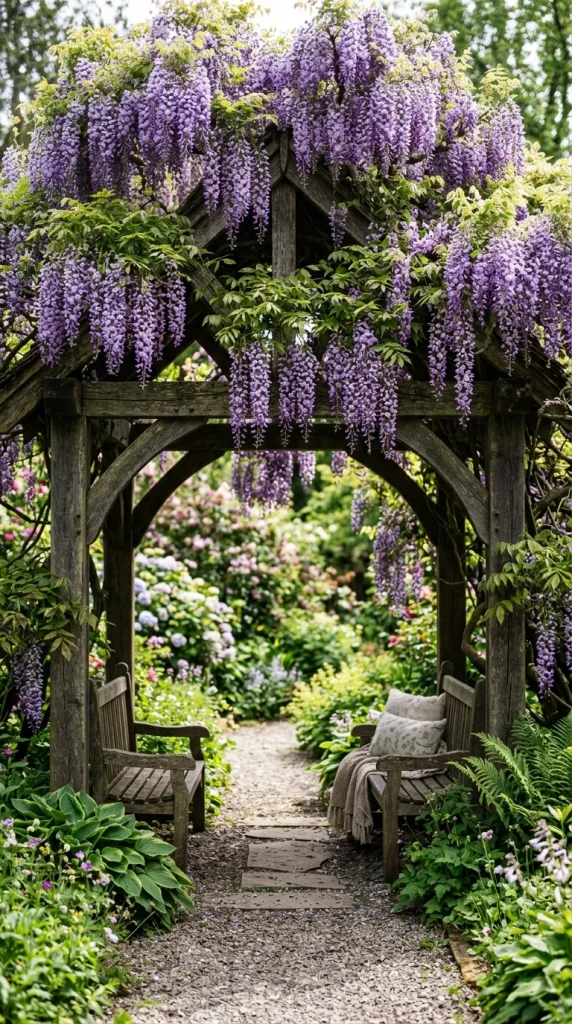
An arbor is a larger, more substantial version of an archway, often featuring a built-in bench or a wider top. It serves as a destination within the garden—a place to sit and enjoy the scent of whatever is growing overhead. Wisteria, with its heavy, fragrant blooms, is the classic choice for a sturdy wooden arbor.
16. Tiered Planters
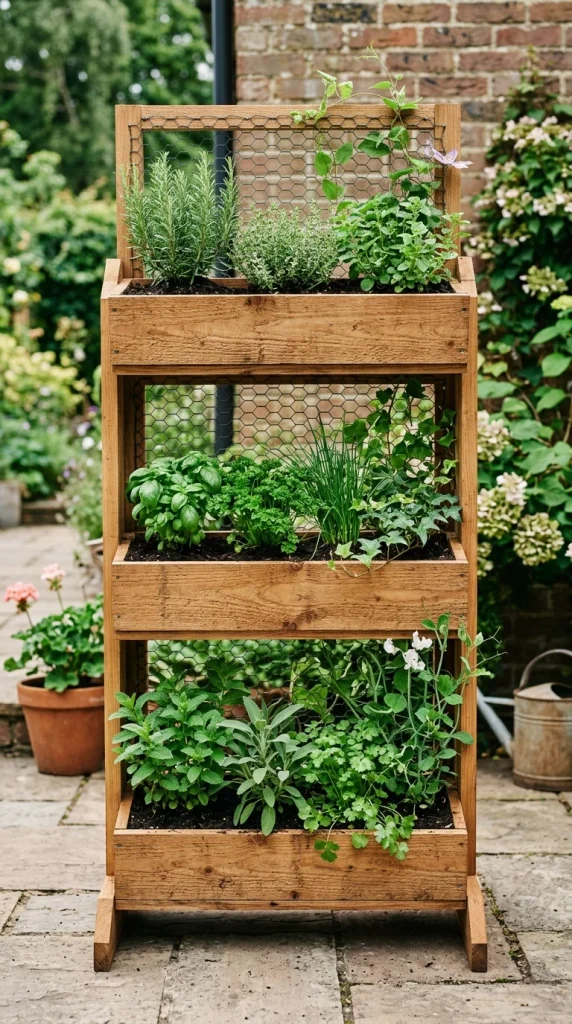
Tiered planters are perfect for small-space gardeners. By integrating a trellis into the back of a stacked planter box, you can grow root vegetables in the bottom and climbing peas or beans in the top, effectively doubling your harvest per square foot.
17. Circular Hoops
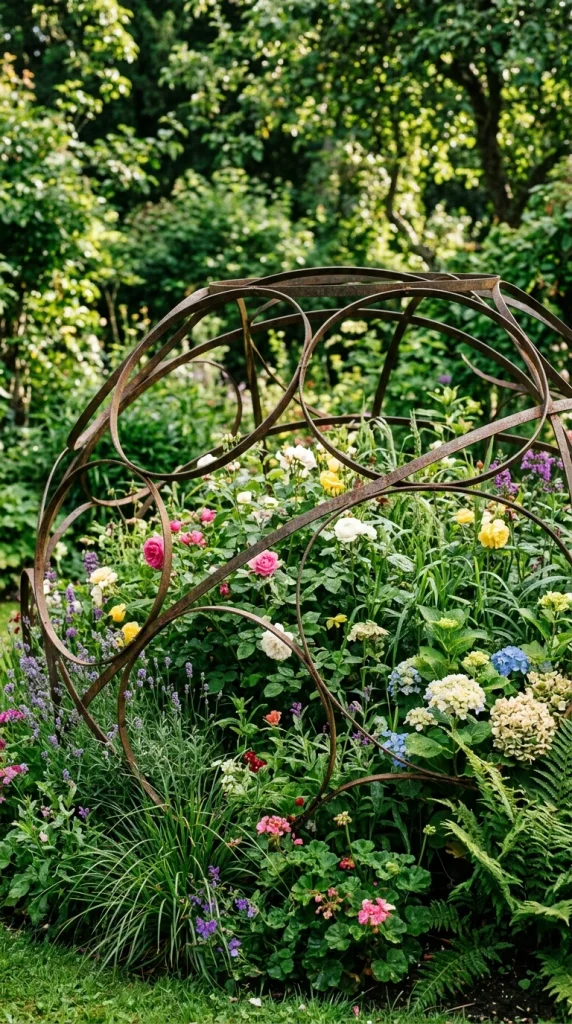
While most trellises are flat or angular, circular hoops add a different geometric dimension. They are excellent for “corralling” bushy plants that tend to flop over, such as peonies or heavy-headed dahlias. They keep the garden looking tidy while providing the support the stems need to stay upright.
18. Pyramid Frames
Pyramid frames, often called tuteurs, add a formal, French-inspired elegance to a kitchen garden (potager). Their wide base makes them very stable in high winds, while the narrowing top encourages plants to bunch together, creating a dense pillar of greenery or fruit.
19. Fan Trellis
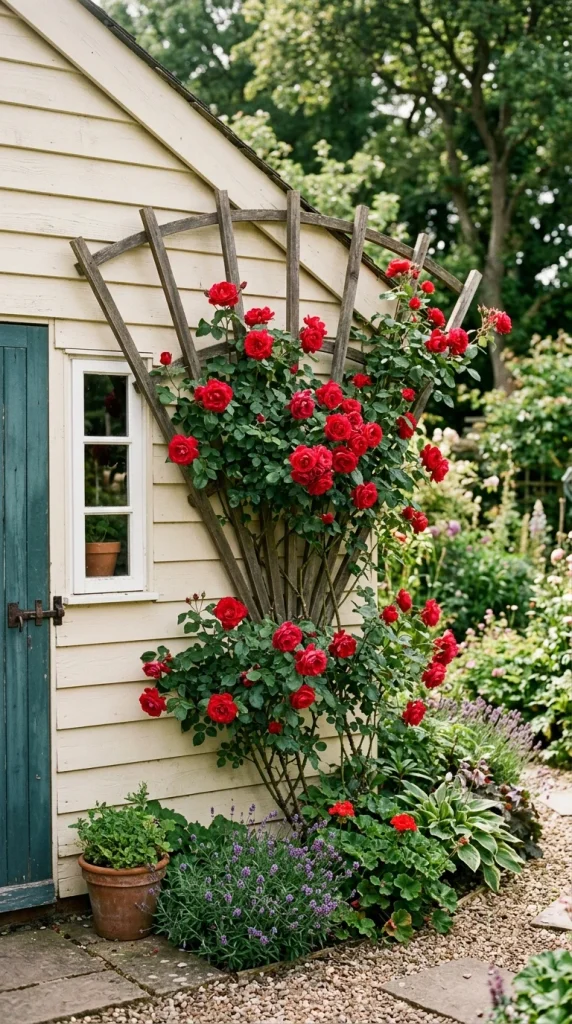
The fan trellis is a space-efficient design specifically intended for walls or fences. The radiating slats allow you to spread a plant’s branches out horizontally, which actually encourages many species to produce more flowers or fruit along the length of the stems.
20. Chevron Pattern
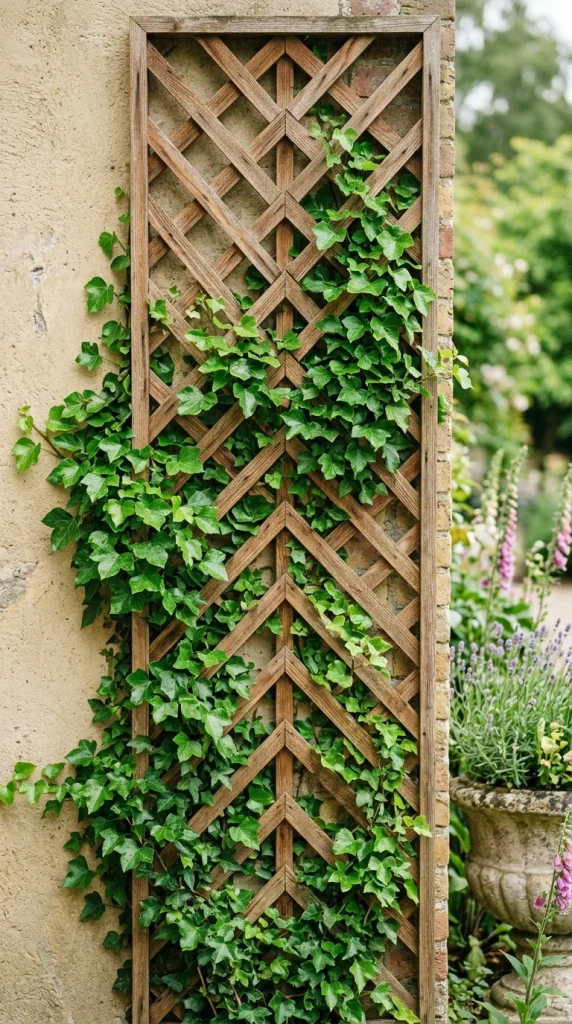
If you want your trellis to look beautiful even in the winter, choose a pattern-heavy design like the chevron. It creates a bold, graphic look on a wall and provides a sophisticated backdrop for any climbing plant. It’s a great DIY project for someone comfortable with a miter saw.
21. Pallet Wood
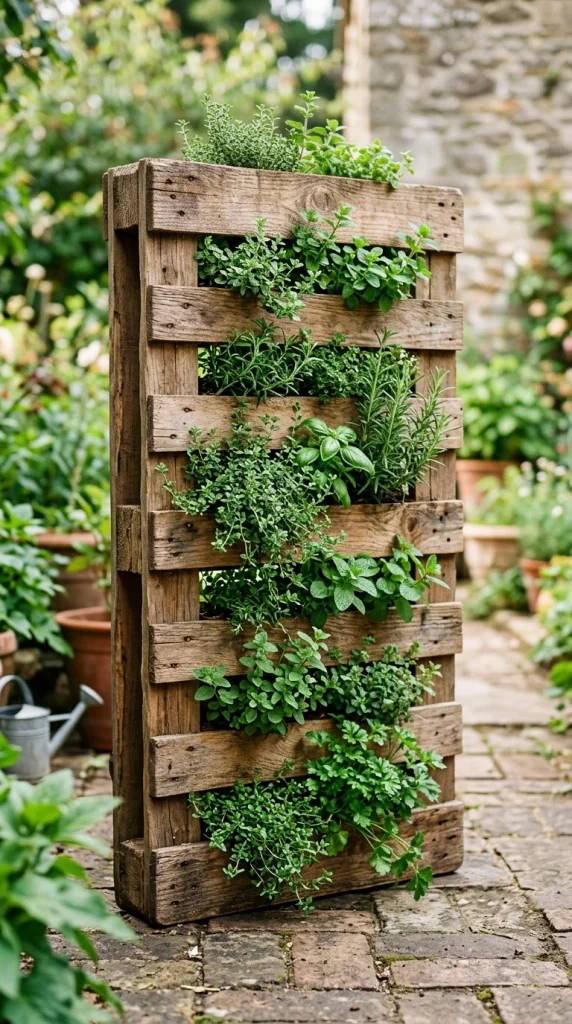
The humble shipping pallet is a DIY favorite. By standing a pallet on its end and securing it, you have an instant, heavy-duty trellis. You can even tuck small landscape fabric “pockets” into the slats to grow non-climbing herbs alongside your vertical vines.
22. Fishing Net
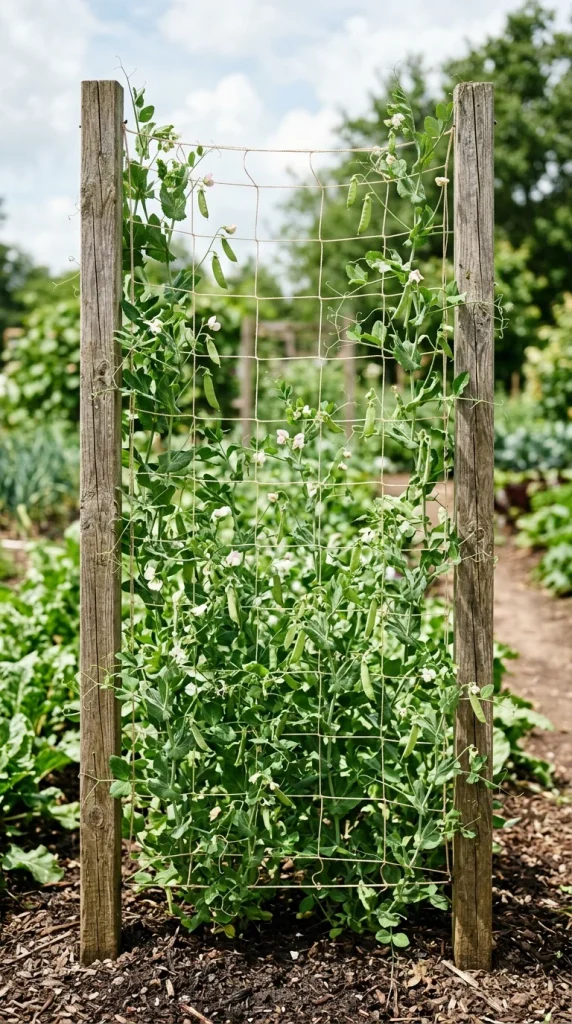
For delicate plants with thin tendrils, like peas, a soft net trellis is ideal. The flexible mesh allows the plant to find a grip easily. Since the netting is practically invisible from a distance, it allows the beauty of the plants to take center stage without the distraction of a heavy structure.
23. Wrought Iron
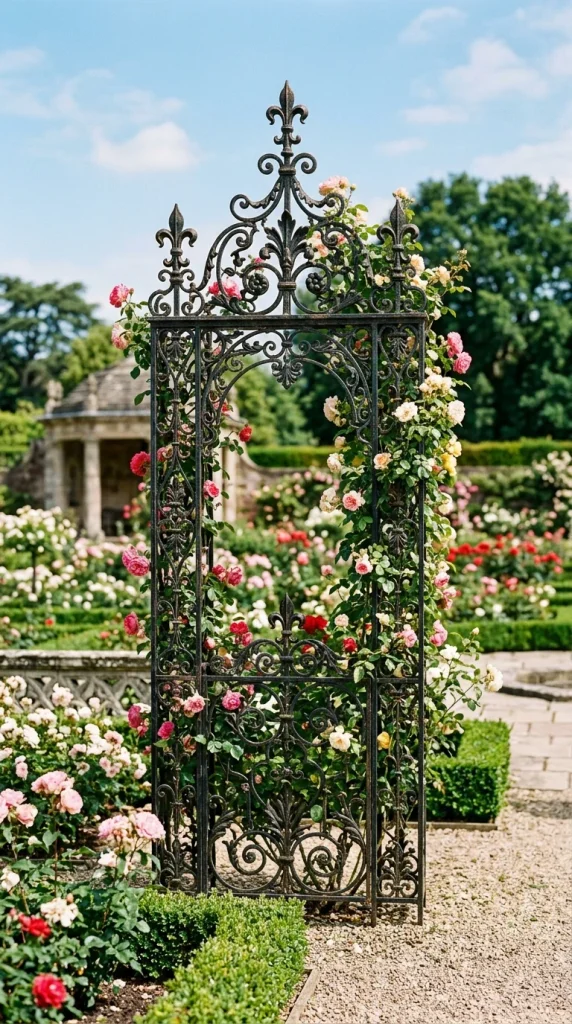
Wrought iron trellises bring a sense of history and permanence to the garden. They are heavy, durable, and can handle the weight of the most vigorous woody vines, like honeysuckle or trumpet creeper. Their intricate scrollwork adds a decorative element that works well in traditional or formal landscapes.
24. Living Walls
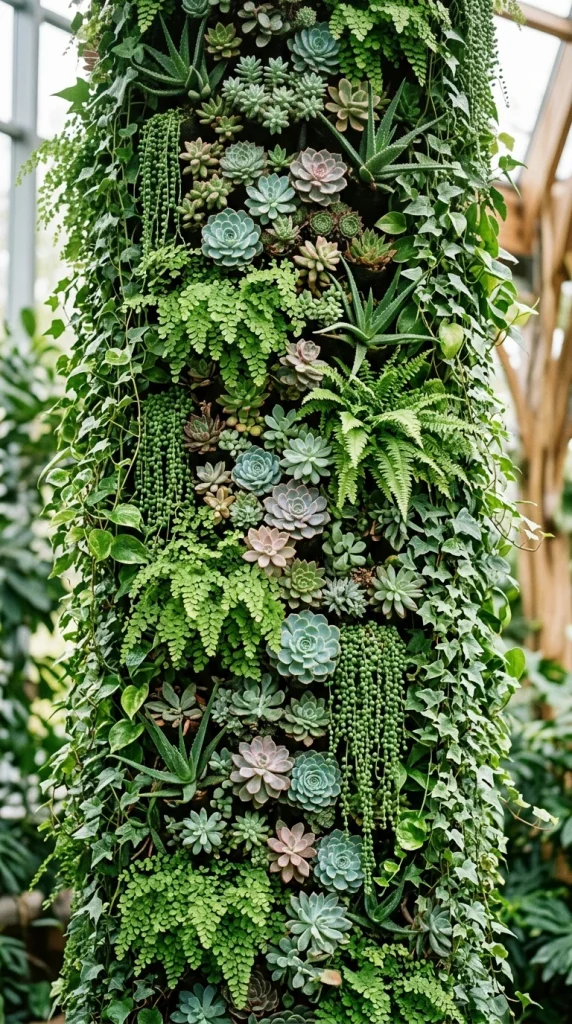
A living wall is the ultimate expression of vertical gardening. Using a modular system of felt pockets or plastic trays, you can cover an entire vertical surface in plants. While technically a series of tiny trellises/planters, the effect is a seamless carpet of life that provides incredible insulation and aesthetic impact.