
The Ceropegia woodii, affectionately known as the String of Hearts, is the crown jewel of the trailing plant world. With its delicate, heart-shaped leaves, purple-toned stems, and remarkable ability to grow several feet in a single season, it has become a must-have for indoor gardeners. While it looks fragile, this South African native is surprisingly resilient—if you know its secrets. To transform your modest pot into a cascading waterfall of botanical love, follow these fifteen essential care tips.
1. Light
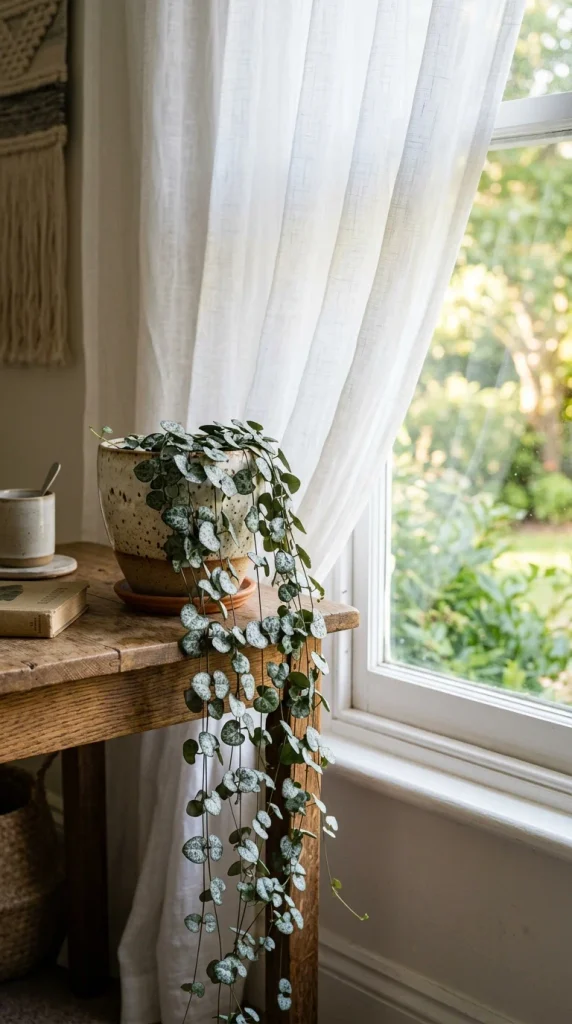
Light is the fuel that drives those long, vigorous vines. The String of Hearts thrives in bright, indirect light. In its natural habitat, it grows under the dappled shade of shrubs, so it appreciates a “bright but protected” spot. If the plant doesn’t get enough light, the “internodes” (the space between the leaves) will stretch out, making the vines look leggy and sparse. Conversely, too much direct afternoon sun can scorch the delicate leaves. A south or west-facing window with a sheer curtain is often the “Goldilocks” zone for this beauty.
2. Watering
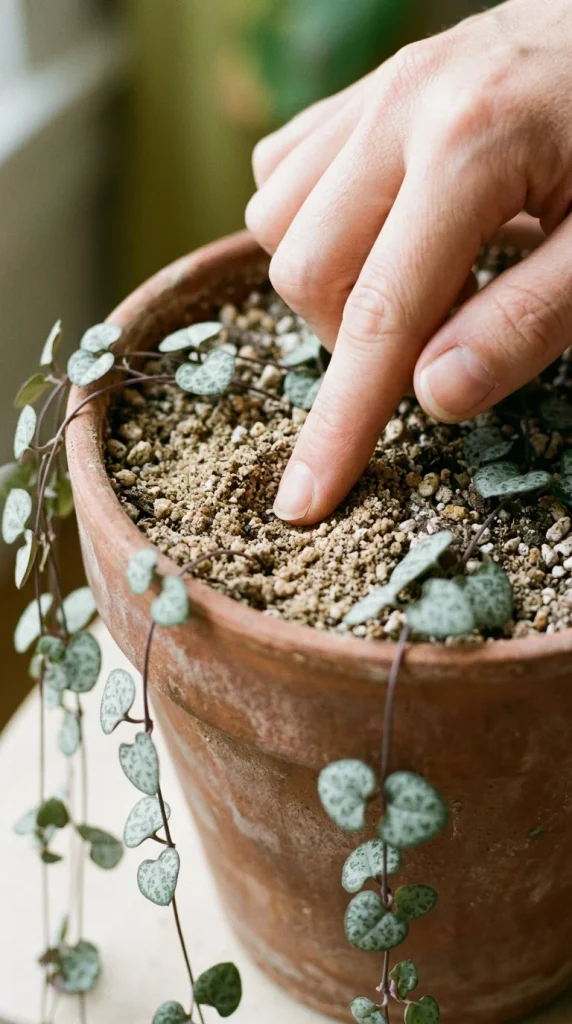
The most common way to kill a String of Hearts is through kindness—specifically, overwatering. These plants are semi-succulent, meaning they store water in their fleshy leaves and underground tubers (the little potato-like balls). You should follow the “soak and dry” method. Wait until the soil is completely dry throughout the pot before watering again. When you do water, give it a thorough drenching until water runs out of the drainage holes, then let it dry out again. In the winter, you can cut back watering significantly.
3. Soil
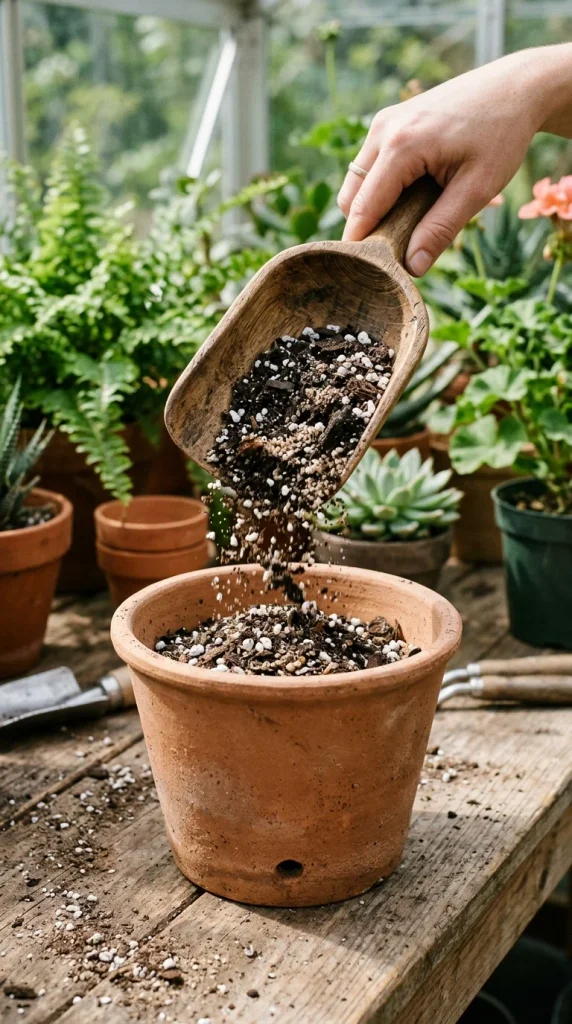
Drainage is non-negotiable for Ceropegia woodii. If the roots sit in heavy, wet soil, they will rot within days. To keep your vines lush, use a high-quality cactus or succulent mix. If you only have regular potting soil on hand, amend it with plenty of perlite, pumice, or coarse sand (a 50/50 ratio is usually safe). This ensures that oxygen can reach the roots and that excess water can escape quickly.
4. Potting
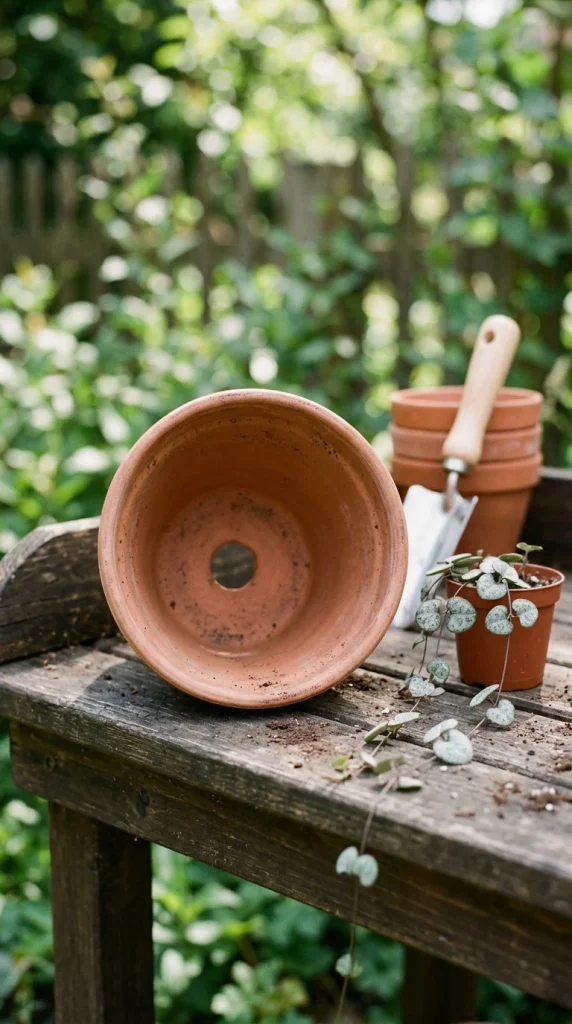
When it comes to the container, size and material matter. String of Hearts have relatively shallow root systems, so they don’t need a massive pot. In fact, a pot that is too large will hold onto too much moisture, increasing the risk of root rot. Terracotta is an excellent choice because it is porous and allows the soil to breathe. Always ensure your pot has at least one functional drainage hole at the bottom.
5. Temperature
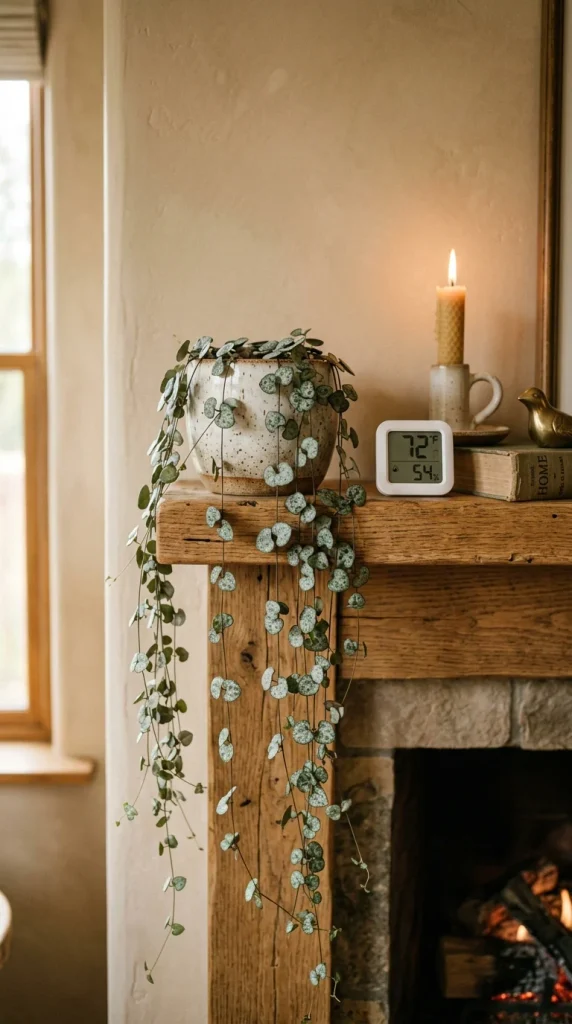
The String of Hearts is a fan of moderate indoor temperatures. It is happiest between 65°F and 80°F (18°C–27°C). It can tolerate slightly cooler temperatures at night, but it is not frost-hardy. Keep your plant away from cold drafts, such as those from air conditioning vents or drafty windows in the winter, as sudden temperature drops can cause the plant to drop its leaves.
6. Humidity
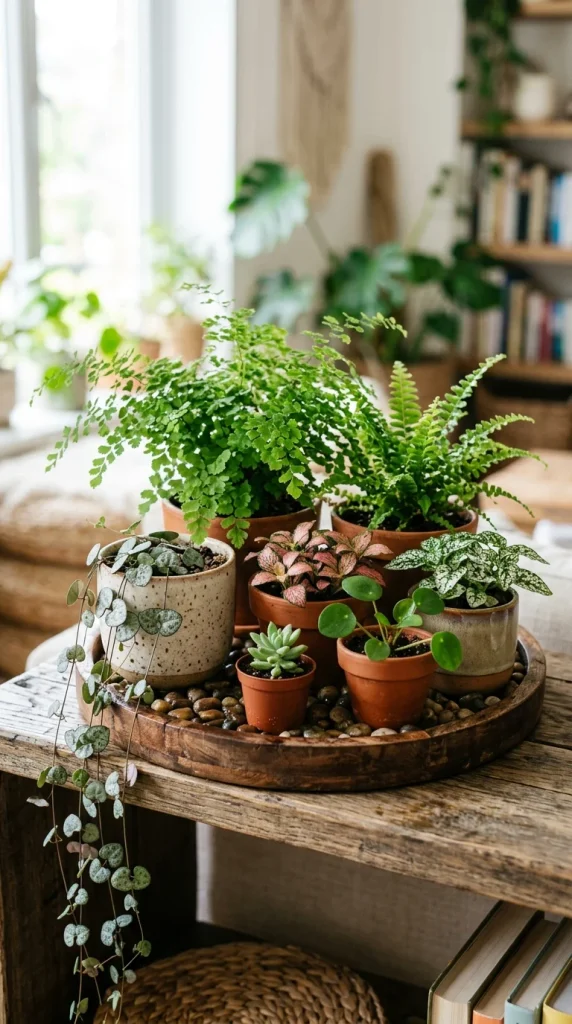
Unlike many tropical houseplants, the String of Hearts is quite forgiving when it comes to humidity. It handles average household humidity levels (around 30-40%) just fine. However, if your home is exceptionally dry, especially during the winter months when the heater is on, your plant may appreciate a slight boost. You can place it near a humidifier or group it with other plants to create a pocket of moisture. Avoid misting the leaves directly, as trapped water can lead to fungal issues.
7. Fertilizing
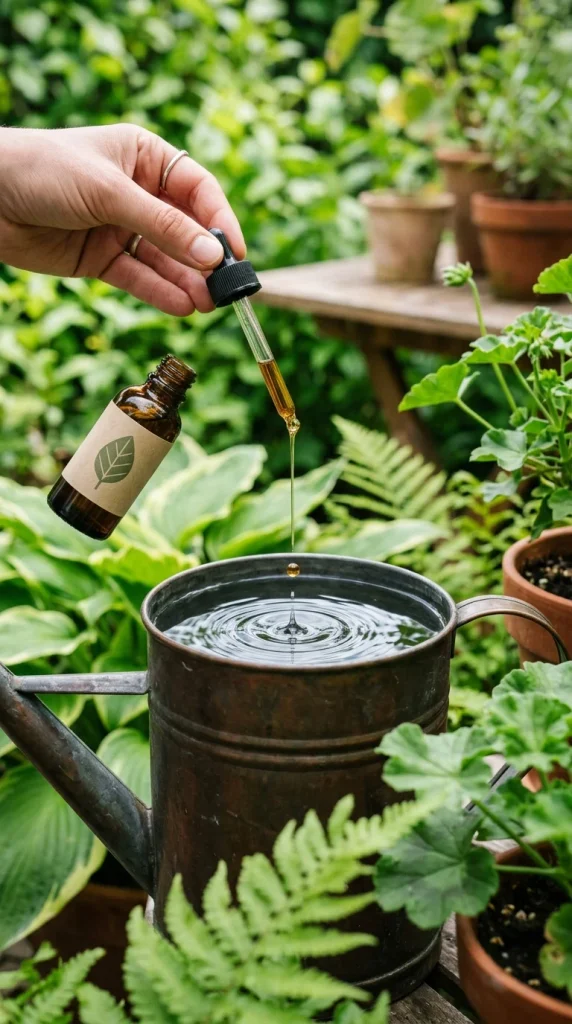
Because the String of Hearts is a relatively slow feeder, you don’t need to go overboard with nutrients. During the active growing season (spring and summer), use a balanced, water-soluble fertilizer diluted to half-strength once a month. This provides enough nitrogen for foliage growth without risking fertilizer burn. Stop fertilizing entirely during the fall and winter when the plant enters its natural resting phase.
8. Propagation
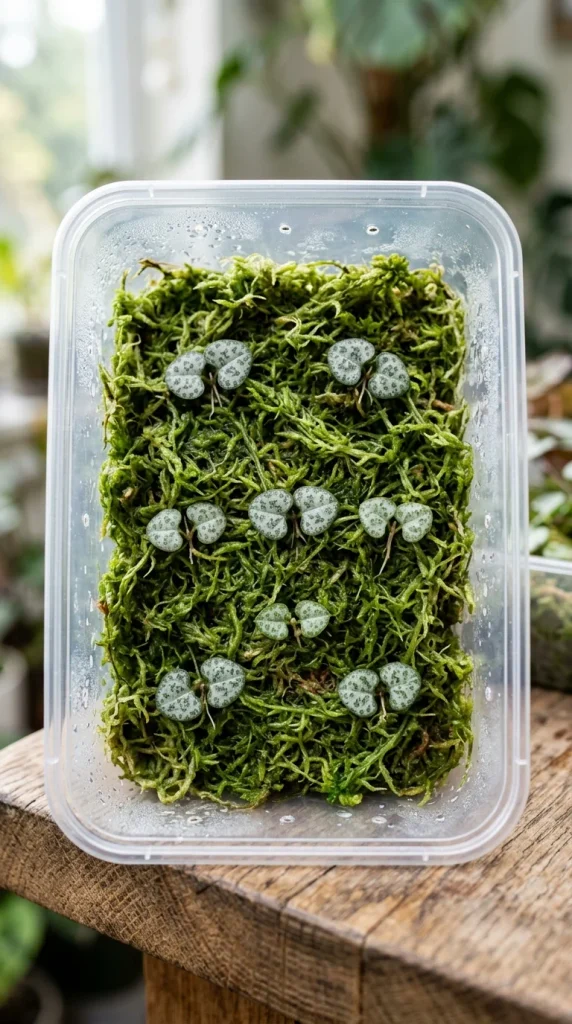
One of the most rewarding aspects of owning this plant is how easily it propagates. There are two main methods: water propagation and the “butterfly” method. For water propagation, snip a vine and place the nodes (the joints where leaves grow) in water. For the butterfly method, cut a pair of leaves with a small bit of stem and place them directly onto moist soil or moss. Before long, you’ll see tiny white roots and tubers forming, allowing you to fill out your pot or share with friends.
9. Pruning
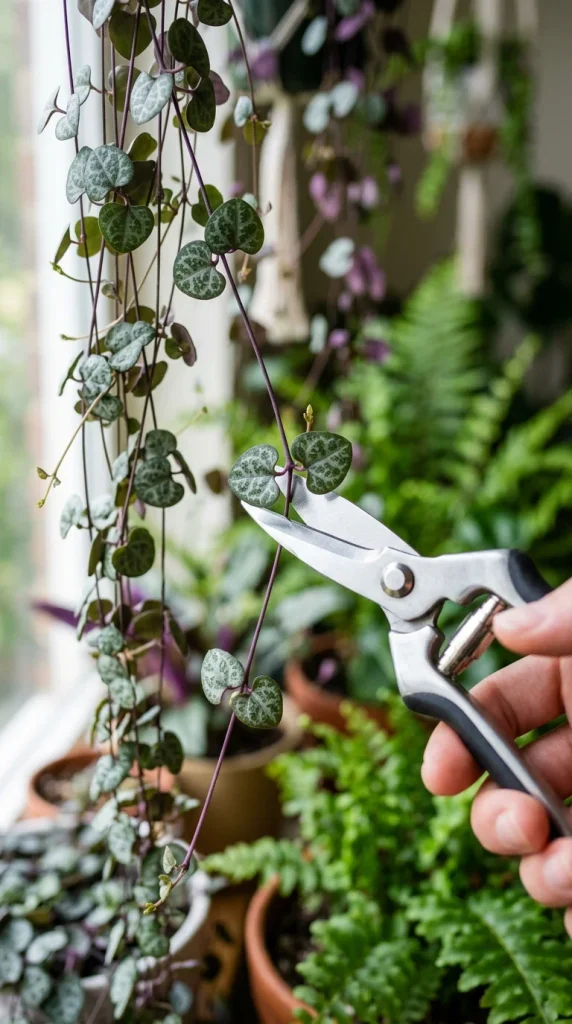
Don’t be afraid to give your plant a haircut! Pruning is the best way to encourage a fuller, bushier plant. When you snip a vine, the plant often responds by branching out from the node above the cut, resulting in two vines instead of one. If your plant is looking a bit thin at the top, you can even take those cuttings and pin them back into the top of the soil to create a denser canopy.
10. Pests
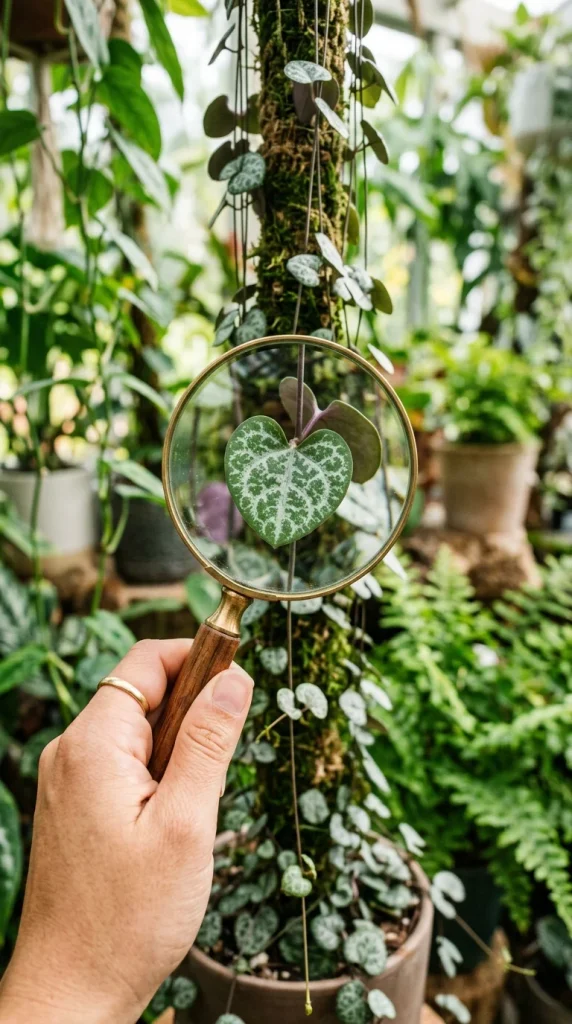
While generally hardy, String of Hearts can occasionally attract common houseplant pests like mealybugs or aphids. Mealybugs look like tiny bits of white cotton tucked into the leaf axils. If you spot them, treat the plant immediately by dabbing the pests with a cotton swab dipped in rubbing alcohol. Keeping the leaves clean and ensuring good airflow around the plant is the best preventative measure.
11. Dormancy
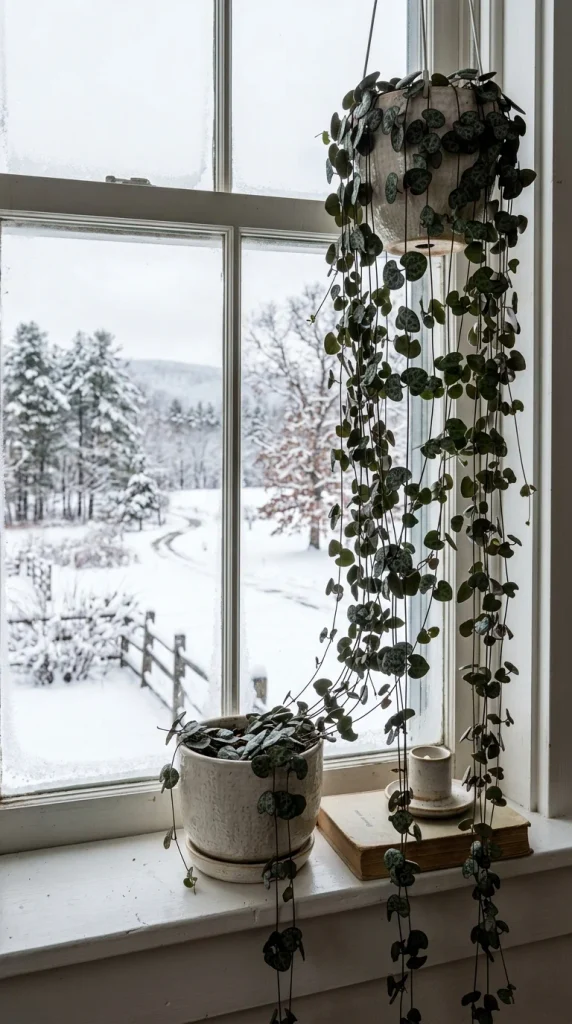
In the winter months, the String of Hearts goes into a semi-dormant state. During this time, its growth will slow down significantly, and it won’t require as much water. It is vital to respect this cycle. Overwatering during dormancy is a leading cause of plant death. Let the soil stay dry for a bit longer than you would in the summer, and hold off on any repotting or heavy pruning until the first signs of spring.
12. Flowering
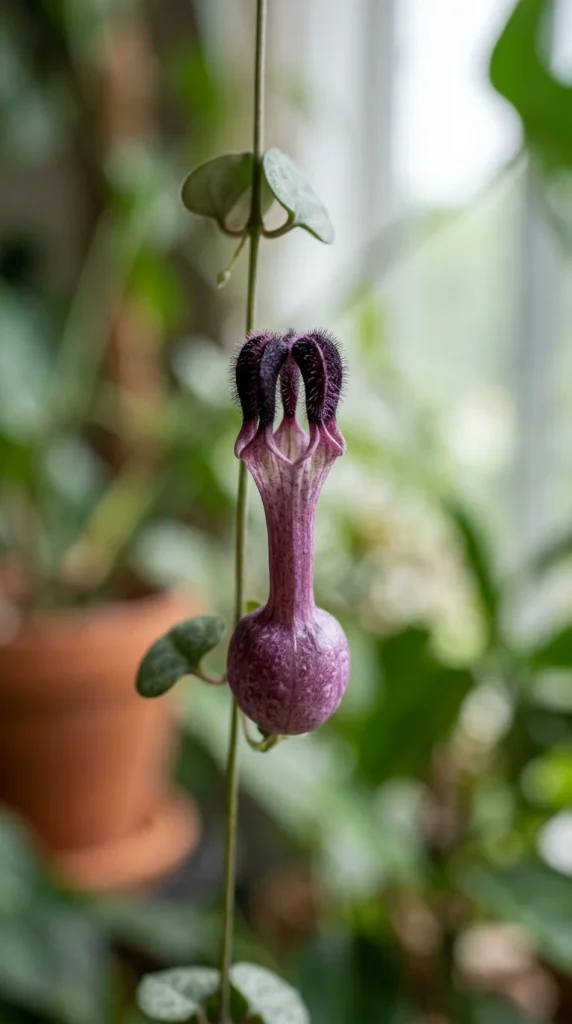
When a String of Hearts is particularly happy, it will produce unusual, tubular flowers. These blooms are often described as “lanterns” or “parachutes.” They are a pale purple or pinkish color with a hairy, dark interior designed to temporarily trap small flies for pollination. While not “pretty” in the traditional sense, they are fascinating botanical structures and a sign that you are providing excellent care.
13. Variegation
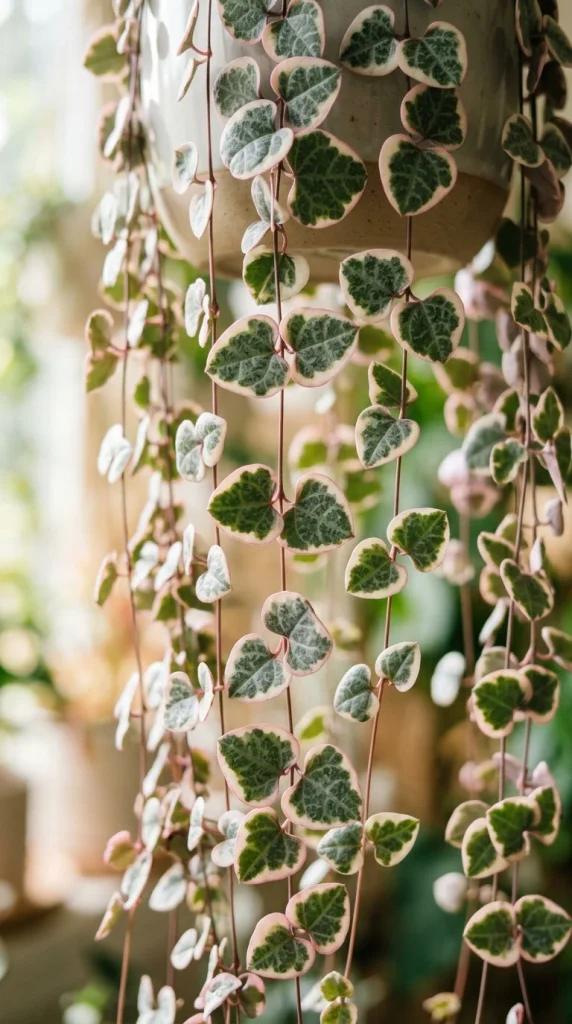
The Variegated String of Hearts (Ceropegia woodii f. variegata) is a stunning variation featuring pink and white margins. This variety is slightly more demanding than the standard green version. Because the white parts of the leaves lack chlorophyll, the plant needs even more light to maintain its color and growth rate. If it’s kept in too much shade, the pink hues will fade, and the plant may revert to mostly green.
14. Tangle Management
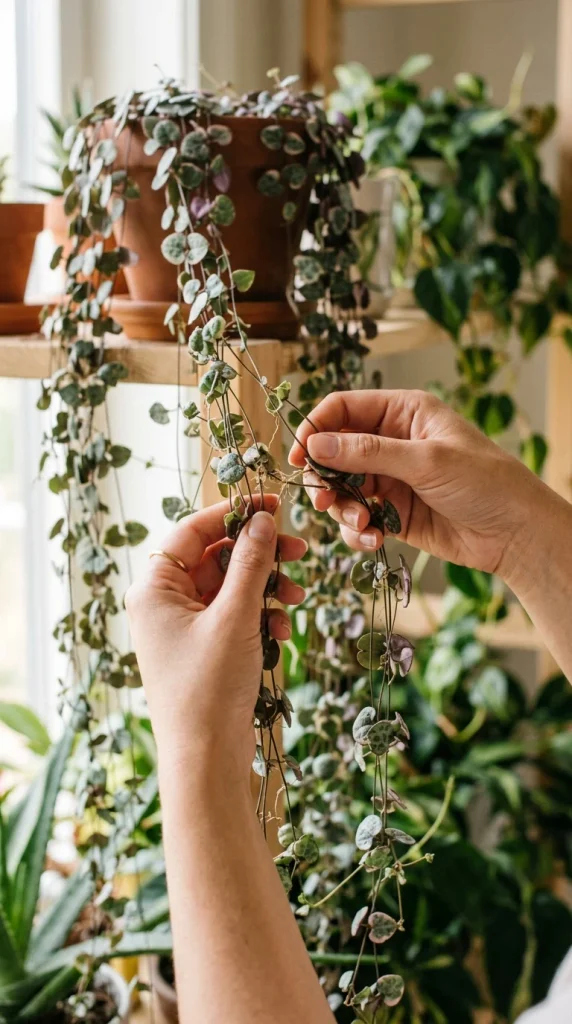
As the vines grow longer, they have a tendency to tangle with one another, especially if the plant is moved or caught in a breeze. When detangling, be incredibly patient. The stems are thin and can snap easily. If you find a massive knot, it’s sometimes better to leave it alone or gently use a chopstick to tease the vines apart. To prevent tangling, try to keep the plant in a low-traffic area where the vines can hang freely.
15. Re-potting
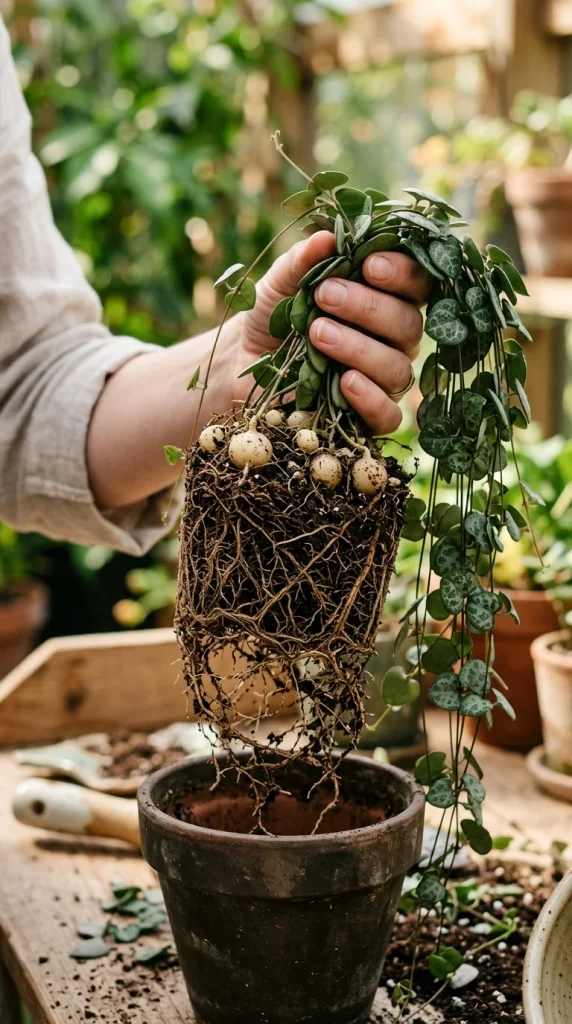
String of Hearts plants don’t need frequent repotting; they actually prefer being slightly root-bound. You should only repot every 2-3 years, or when you see roots growing out of the drainage holes. The best time to do this is in the spring. When you repot, choose a container only one size larger than the current one. This is also a great time to inspect the tubers; healthy tubers should be firm and light-colored. If they are mushy, it’s a sign of overwatering.