
The cottage garden is the ultimate expression of botanical romance. Unlike the rigid lines and manicured hedges of formal landscaping, the cottage style embraces chaos, color, and a delightful lack of restraint. It is a garden that feels lived-in, deeply personal, and inherently welcoming. Originally born out of necessity—where rural laborers mixed medicinal herbs, fruit trees, and flowers in small plots—today’s cottage garden is a sanctuary of sensory delights.
To create your own charming outdoor escape, you don’t need a sprawling estate in the English countryside. With the right elements, even a small suburban backyard or an urban courtyard can be transformed into a floral wonderland. Here are 16 cottage garden ideas to inspire your transformation.
1. Winding Paths
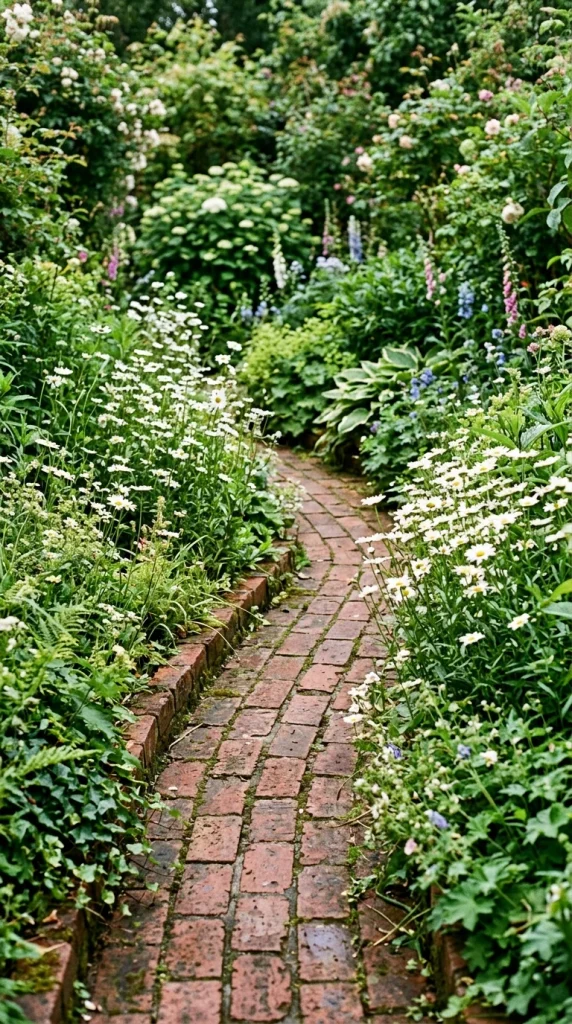
In a cottage garden, the journey is just as important as the destination. Avoid straight, concrete sidewalks that cut through the space. Instead, opt for winding paths that disappear around corners, encouraging a slow, mindful walk. Materials like reclaimed brick, weathered flagstone, or simple pea gravel work best. Allow low-growing plants like creeping thyme or moss to fill the gaps between stones, softening the edges and making the path look like it has been there for decades.
2. Climbing Roses
No cottage garden is complete without the vertical drama of climbing roses. These plants add height, fragrance, and an undeniable sense of old-world charm. Train them to grow over doorways, up the sides of the house, or across a sturdy trellis. Choose “old-fashioned” varieties known for their heavy petal counts and intoxicating scents, such as David Austin roses. The sight of roses cascading over a wall is the hallmark of a romantic escape.
3. Picket Fences
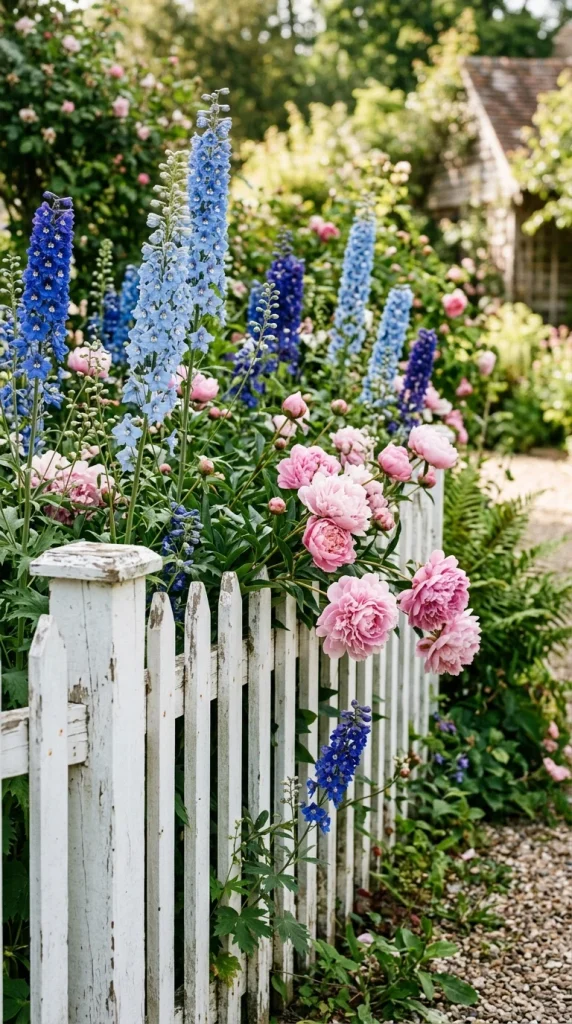
The white picket fence is the quintessential backdrop for a cottage-style landscape. It provides a sense of enclosure and structure without feeling heavy or imposing. The gaps between the pickets allow light and air to circulate, while the height is perfect for propping up tall perennials. For an authentic look, don’t worry if the paint is slightly weathered; the “shabby chic” aesthetic only adds to the garden’s character.
4. Perennial Borders
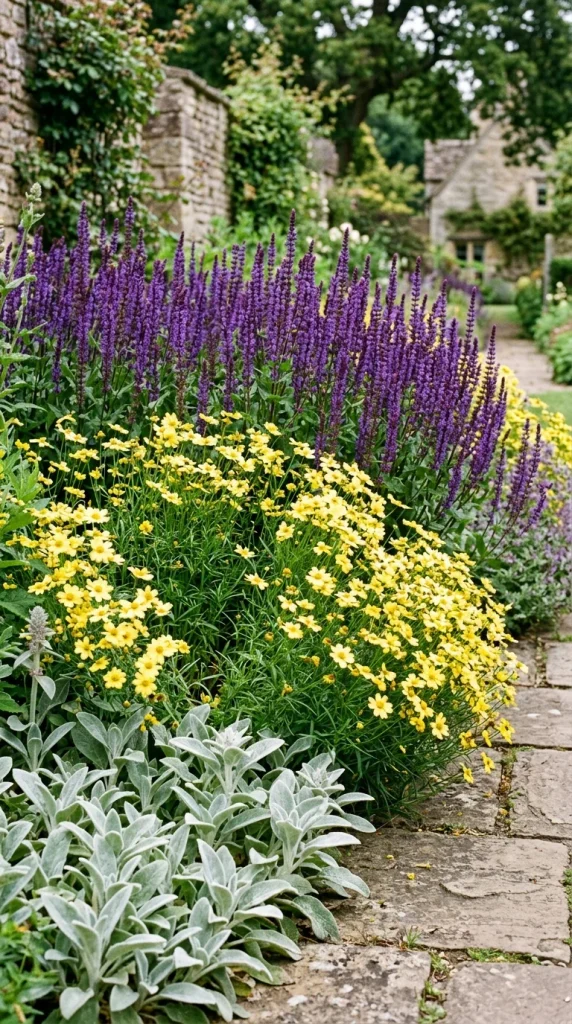
The “crowded” look is a key feature of cottage gardening. Instead of leaving large gaps of mulch between plants, aim for a dense tapestry of perennials. Layer your plants by height: place tall varieties like delphiniums and lupines at the back, mid-sized plants like coneflowers and Shasta daisies in the middle, and low creepers like hardy geraniums at the front. This creates a lush, exuberant border that changes throughout the seasons.
5. Wildflowers
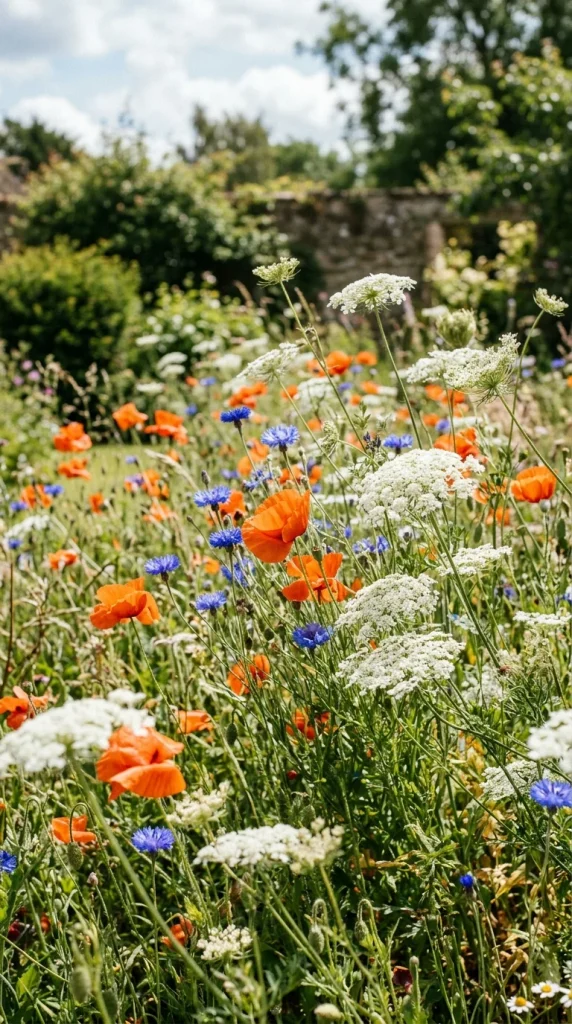
Embrace the informal spirit by dedicating a section of your garden to wildflowers. These plants are often self-seeding, meaning they will pop up in unexpected places year after year, adding to the garden’s spontaneous feel. Poppies, cornflowers, and cosmos are excellent choices. Not only do they provide a “meadow” aesthetic, but they also act as a magnet for bees, butterflies, and other essential pollinators.
6. Weathered Benches
A cottage garden should be a place for contemplation. Integrate seating that looks like it belongs in nature. A weathered teak bench, a rusted wrought-iron chair, or a mossy stone seat provides a focal point and a place to rest. Tucking these seating areas into “hidden” spots—perhaps under a large tree or at the end of a winding path—enhances the sense of discovery and privacy.
7. Edible Accents
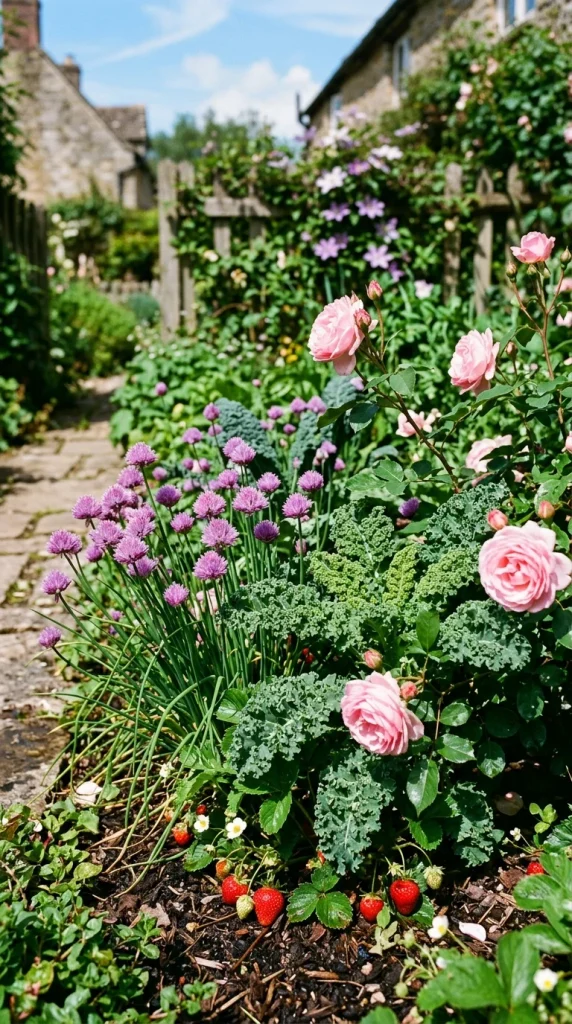
The origins of the cottage garden were functional, and modern interpretations should still nod to that heritage. Mix edible plants directly in with your flowers. Pair purple-leafed kale with orange marigolds, or let runner beans climb a decorative obelisk. Herbs like rosemary, sage, and thyme are not only useful in the kitchen but also provide beautiful textures and scents that complement flowering perennials.
8. Garden Arches
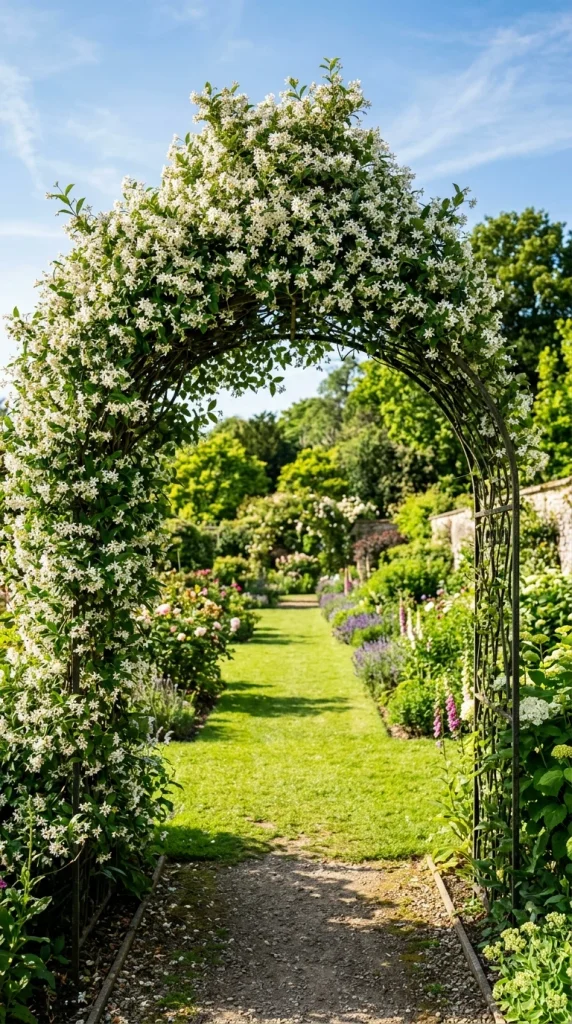
Arches act as gateways, signaling a transition from one part of the garden to another. Whether made of wood, willow, or metal, an arch covered in sweet peas, jasmine, or clematis adds a sense of verticality and mystery. Walking under a blooming archway feels like entering a secret world, making your outdoor space feel larger and more layered than it actually is.
9. Bird Baths
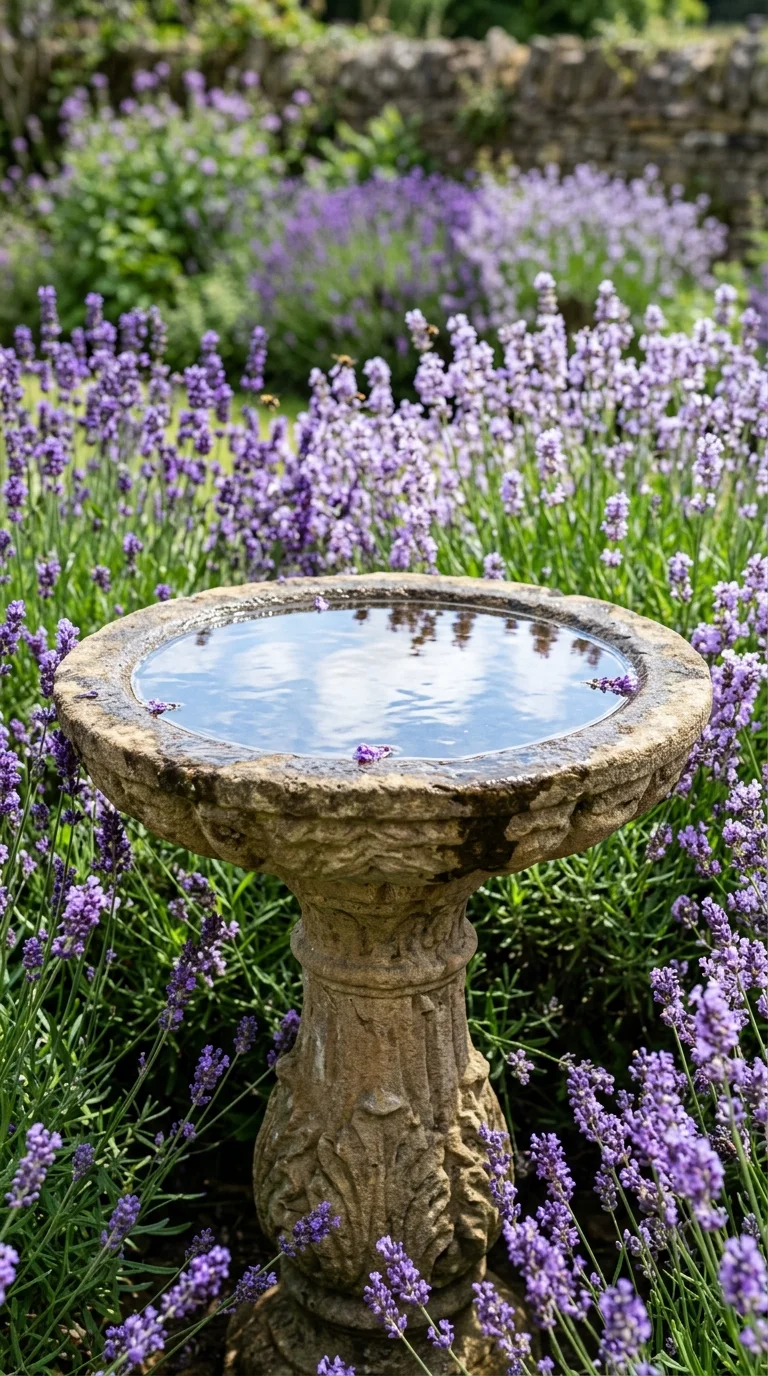
A cottage garden is a living ecosystem. Adding a bird bath introduces the soothing sound of water and invites local wildlife into your sanctuary. Choose a simple, classical design in stone or ceramic. Placing the bird bath in the center of a flower bed ensures that the birds feel safe among the foliage, while providing you with a beautiful focal point to admire from a distance.
10. Rustic Gates
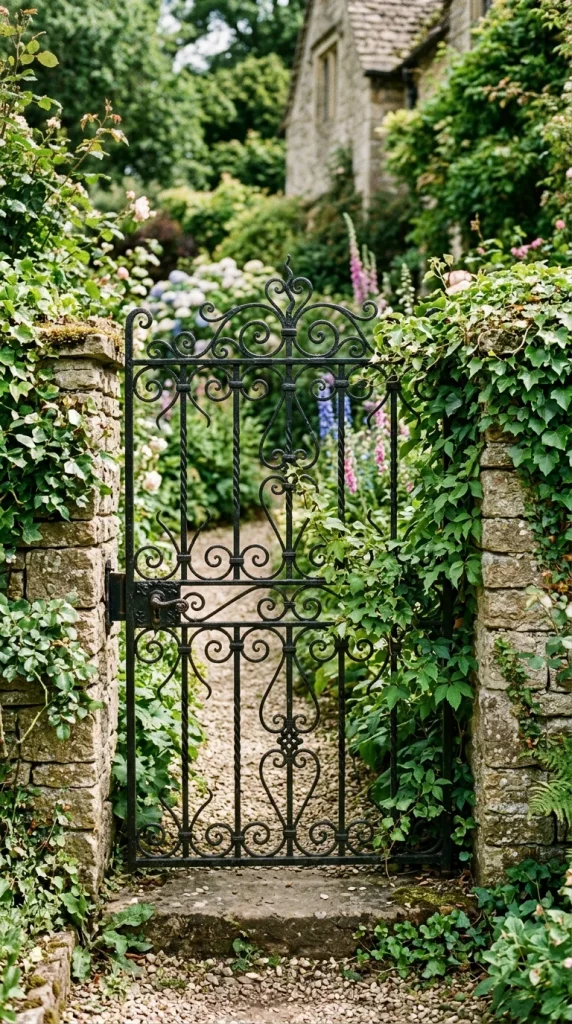
The entrance to your garden sets the tone for the entire experience. A rustic gate—whether it’s a simple wooden latch gate or an ornate piece of reclaimed ironwork—creates a sense of arrival. Allow ivy or climbing vines to partially obscure the gate to give it an aged, “found” look. A gate that creaks just a little only adds to the nostalgic charm.
11. Tall Spires
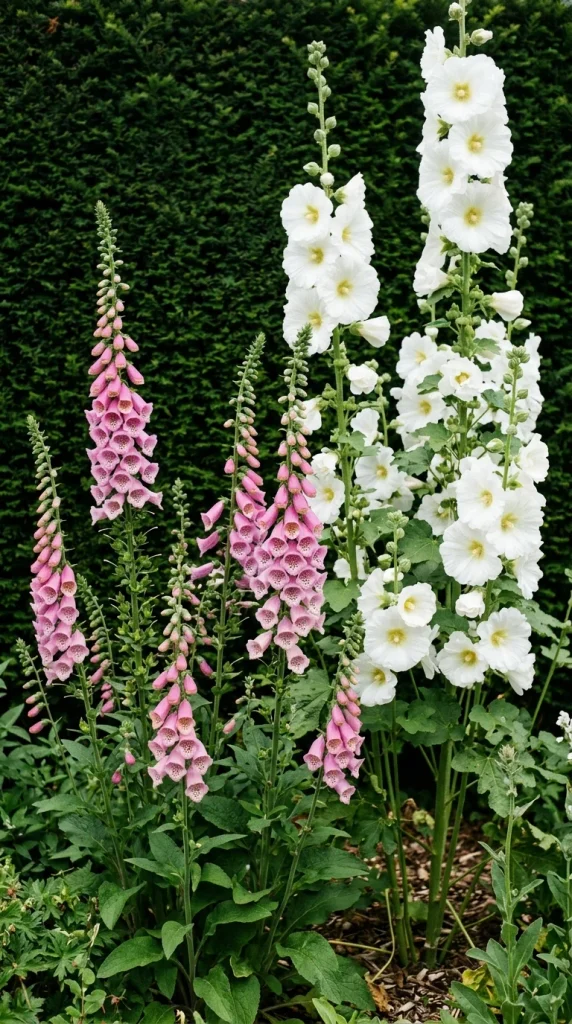
Vertical interest is vital in a garden that is otherwise quite low and bushy. Plants with “spike” shapes, such as foxgloves, hollyhocks, and verbascum, provide a dramatic contrast to the rounded shapes of roses and peonies. These tall spires draw the eye upward and can be used to hide unsightly fences or to create a sense of scale against the sky.
12. Gravel Patios
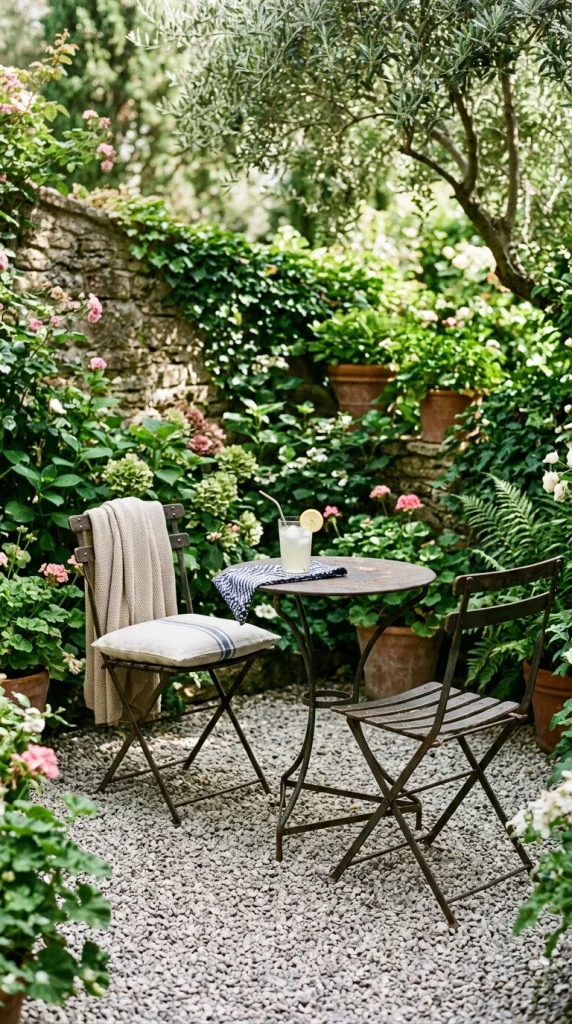
Hardscaping in a cottage garden should be soft and permeable. Instead of large concrete pads, use pea gravel or crushed stone to create casual patio areas. Gravel crunching underfoot is a quintessentially English garden sound. It’s an easy DIY project that provides a perfect base for a small bistro set, where you can enjoy your morning tea surrounded by the scent of blooming flowers.
13. Repurposed Planters
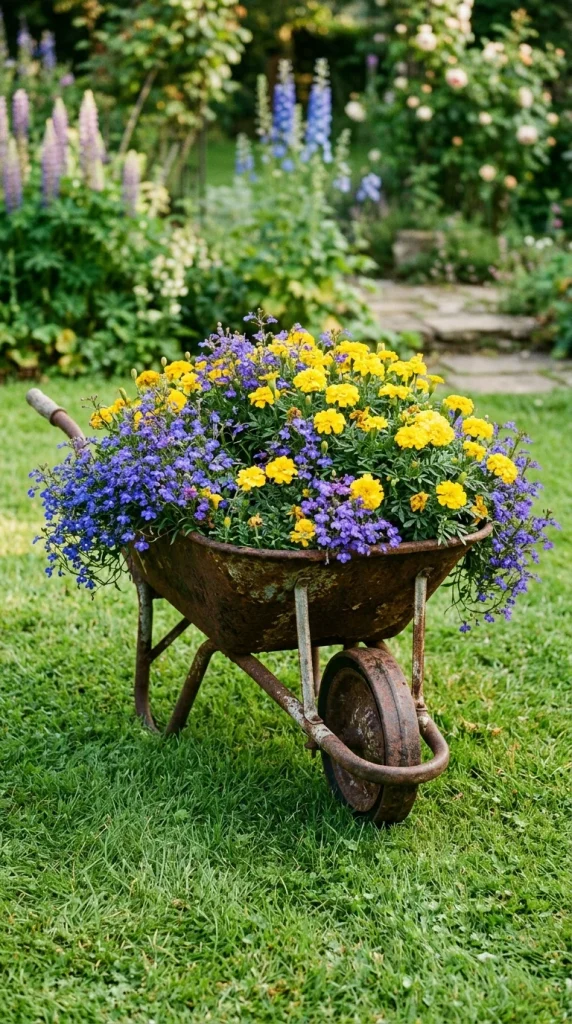
Creativity and whimsy are encouraged here. Use unexpected items as planters to add personality. An old galvanized bucket, a rusted wheelbarrow, or even a pair of vintage leather boots can become a home for petunias or lobelia. These repurposed items tell a story and prevent the garden from feeling too “polished” or commercial.
14. Soft Lighting
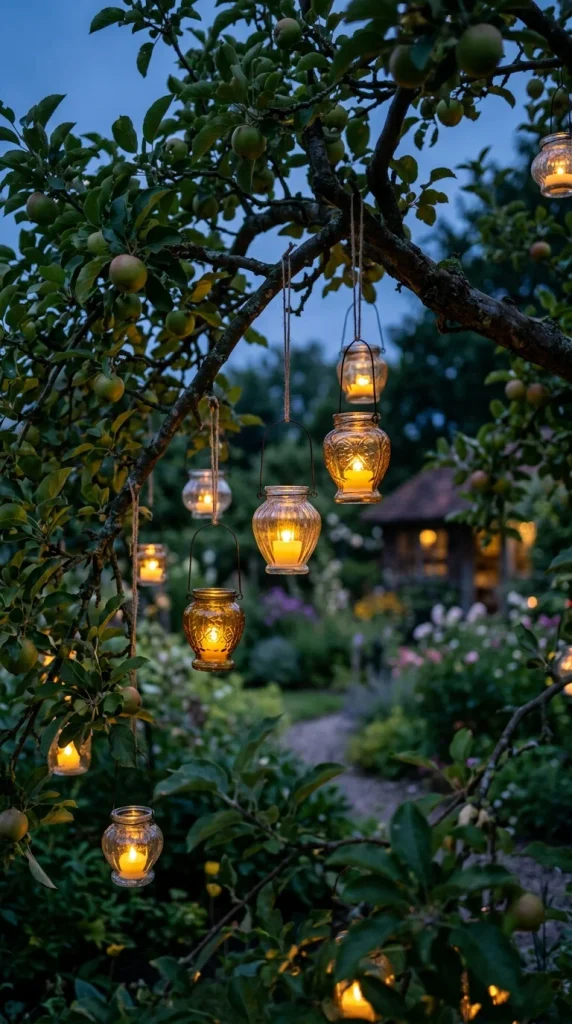
To enjoy your escape after the sun goes down, incorporate soft, atmospheric lighting. String lights draped through tree branches or copper lanterns placed along a path create a magical glow. Avoid harsh floodlights or modern LED strips; the goal is to mimic the soft light of candles or the moon, keeping the atmosphere cozy and intimate.
15. Lavender Hedges
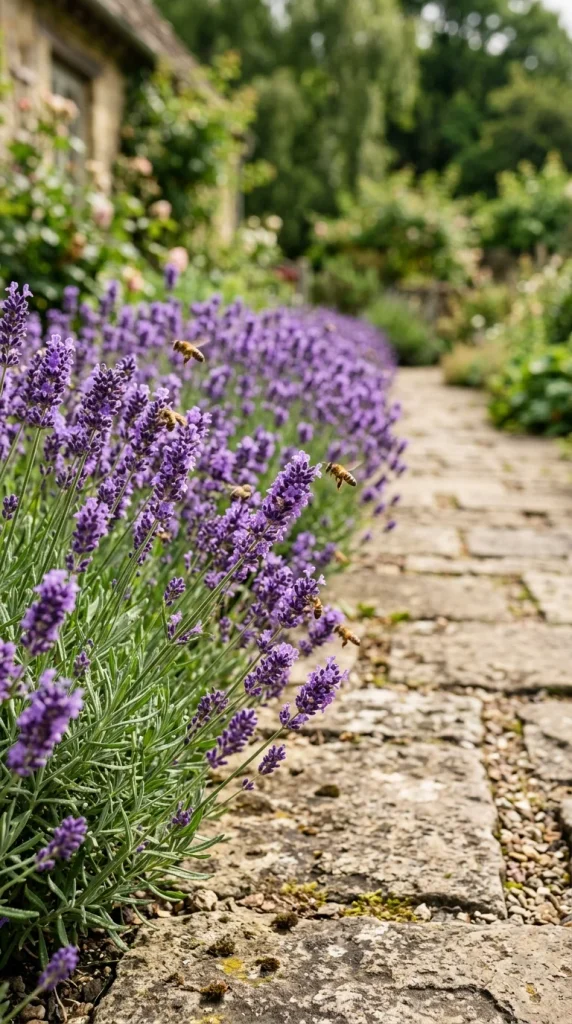
Lavender is a staple of the cottage garden for good reason. It provides a silvery foliage that looks great even when not in bloom, and its purple spikes offer an incredible fragrance. Planting lavender in a row creates a “soft” hedge that can define the edge of a path or a garden bed. It’s also incredibly hardy and drought-tolerant, making it a practical choice for sun-drenched spots.
16. Secret Nooks
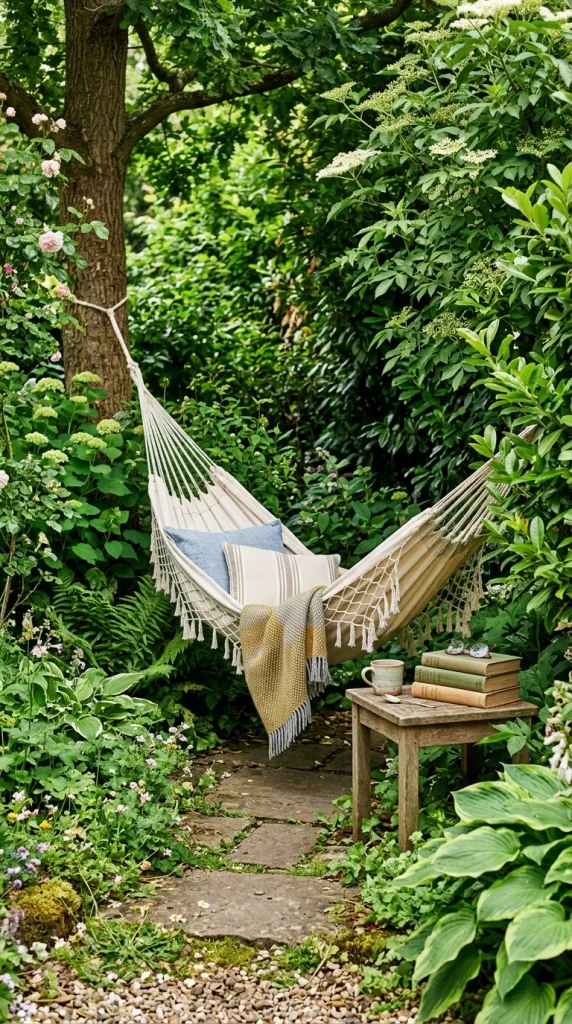
Finally, every cottage garden needs a secret nook—a place where you can truly escape the world. This could be a small hammock tucked between two trees, a hidden bench behind a tall hedge of hydrangeas, or a tiny deck tucked into a corner. By creating a space that isn’t immediately visible from the house, you provide yourself with a private retreat for reading, napping, or simply breathing in the fresh air.