
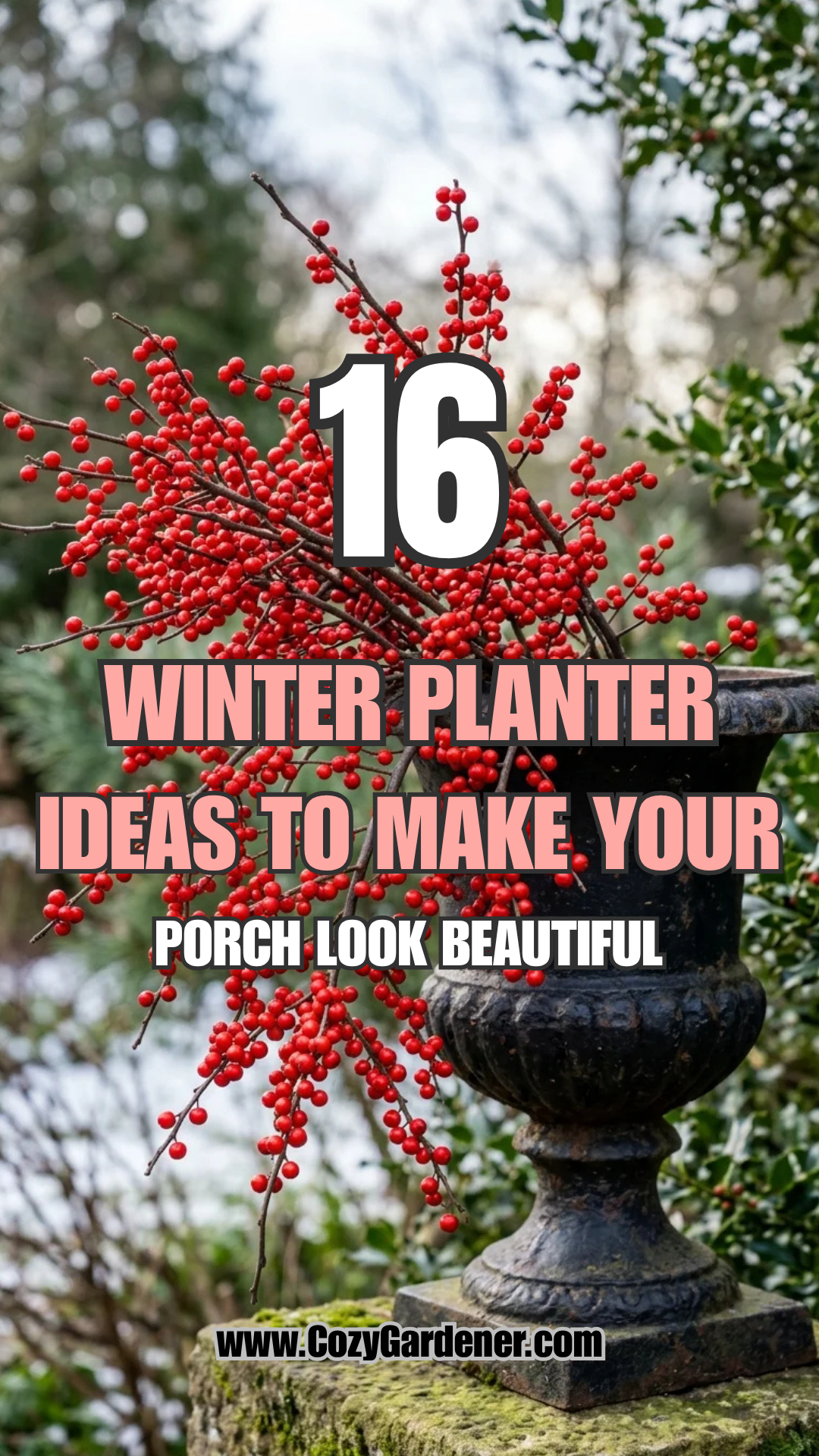
When the vibrant blooms of summer fade and the crisp leaves of autumn have finally settled, the front porch can often feel a bit desolate. However, winter offers a unique opportunity to embrace a different kind of beauty—one defined by rich textures, resilient evergreens, and pops of festive color. Creating a winter planter isn’t just about surviving the cold; it’s about celebrating the quiet elegance of the season.
Whether you are looking for a rustic farmhouse aesthetic or a sleek, modern display, these 16 winter planter ideas will transform your entryway into a welcoming sanctuary that defies the frost.
1. Spruce Tops
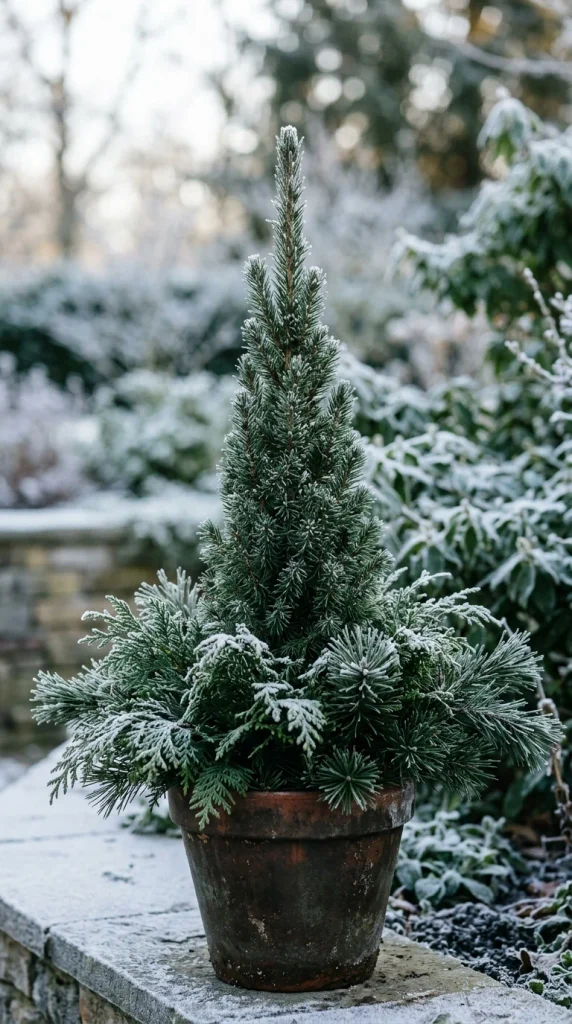
Spruce tops are the “thrillers” of the winter container world. These small, upright evergreen trees provide immediate height and a structural focal point. Because they are often sold as cut tops, you can simply “plant” them into your existing potting soil or floral foam. They stay green throughout the entire season, providing a sturdy backbone for other decorative elements like ribbons or berries.
2. Red Dogwood
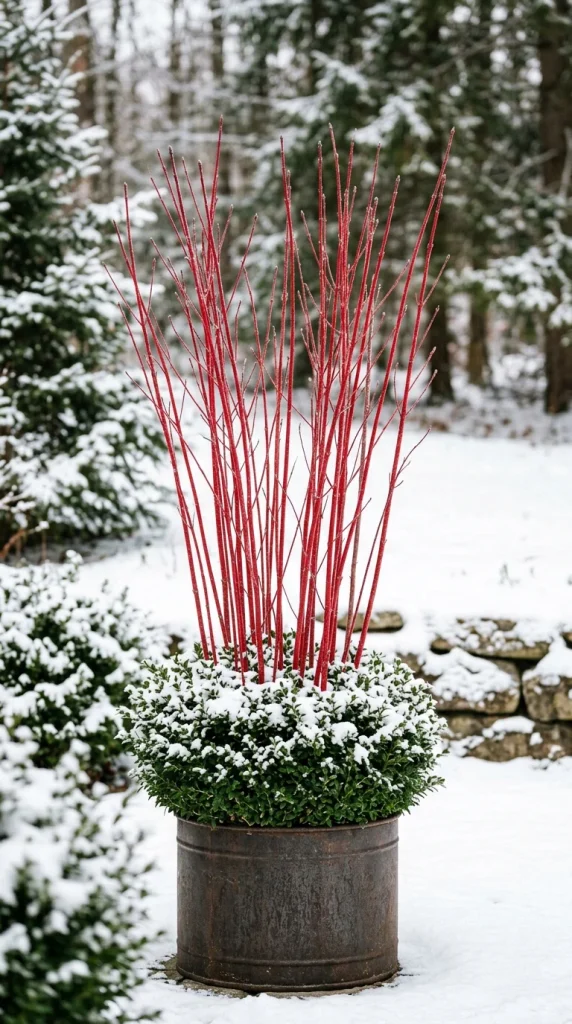
If you want to inject a shot of high-contrast color into your porch decor without using plastic, red-twig dogwood stems are the answer. These slender, leafless branches boast a naturally brilliant red bark that looks stunning against a backdrop of white snow. Group them in the center of your arrangement for a vertical “burst” effect that adds architectural interest and a modern flair.
3. Birch Logs
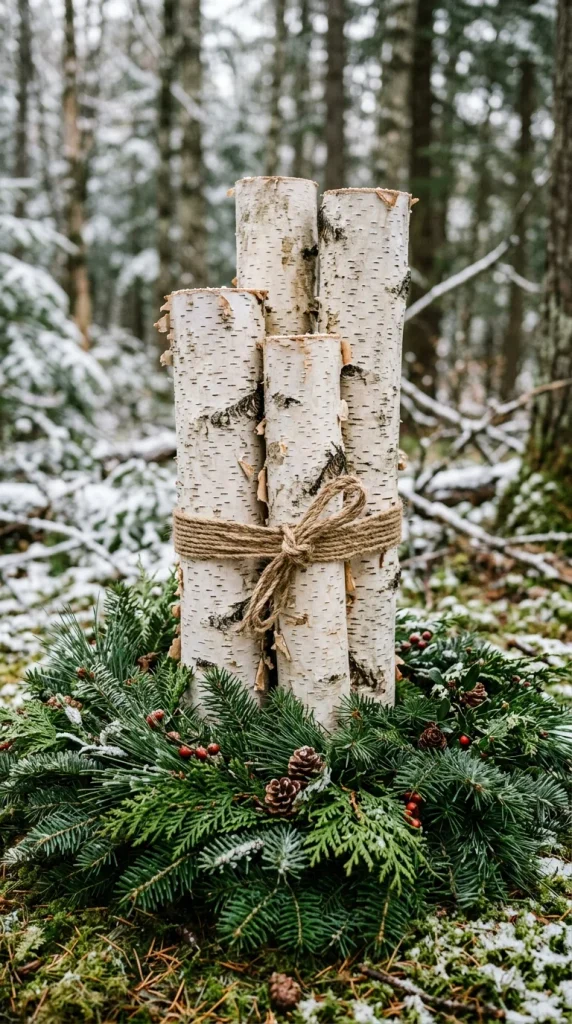
White birch poles or logs are a staple of “Winter Woodland” design. The stark white, papery bark provides a beautiful textural contrast to the dark greens of pine and spruce. By using logs of varying heights and diameters, you create a sense of depth and dimension. They evoke a cozy, cabin-like feel that works perfectly in galvanized buckets or large ceramic pots.
4. Winterberry Stems
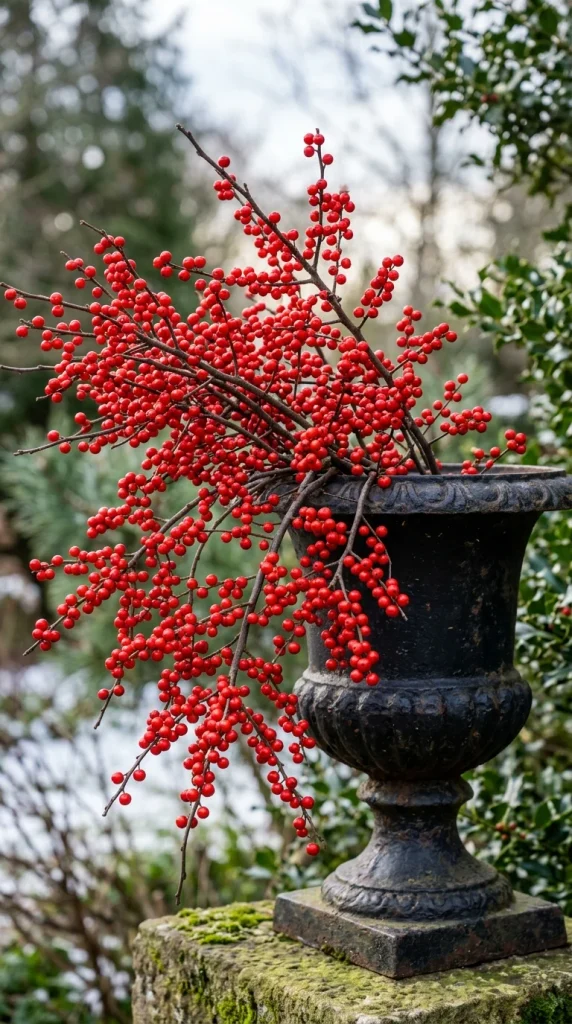
While most plants go dormant, Winterberry (Ilex verticillata) shines. These stems are loaded with tiny, vibrant red berries that remain on the branch even in sub-zero temperatures. They are excellent for adding a “filler” element to your planters. Not only do they provide a traditional holiday look, but they also act as a natural bird feeder, attracting local songbirds to your porch for a bit of winter wildlife watching.
5. Giant Pinecones
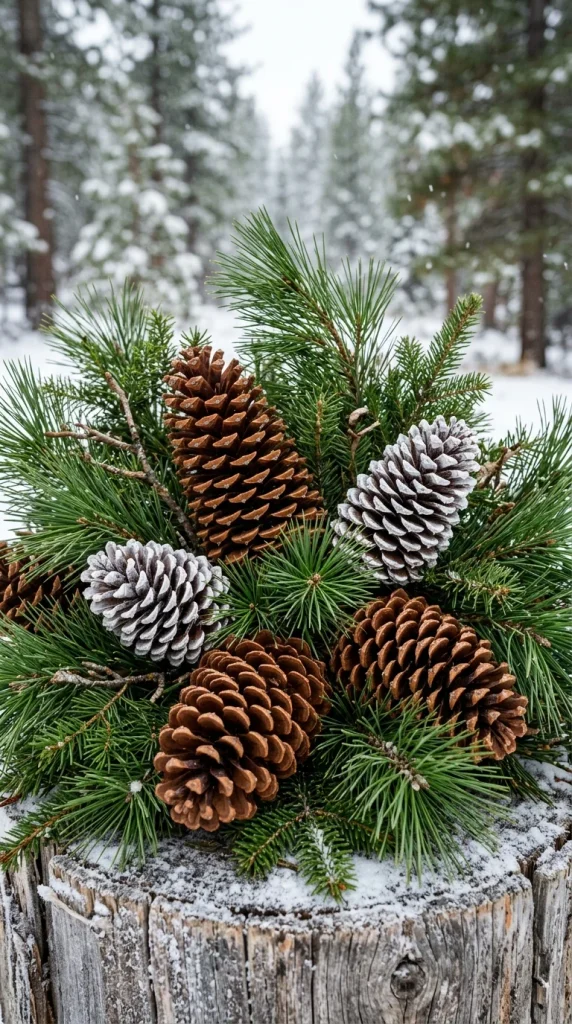
Pinecones are the ultimate budget-friendly winter accessory. For a truly dramatic look, seek out oversized varieties like Sugar Pine or Ponderosa cones. Nestling these large textures into your greenery creates focal points that are much more effective than dozens of tiny cones. You can leave them natural for a rustic look or spray them with a light coat of silver or gold for a touch of elegance.
6. Magnolia Leaves
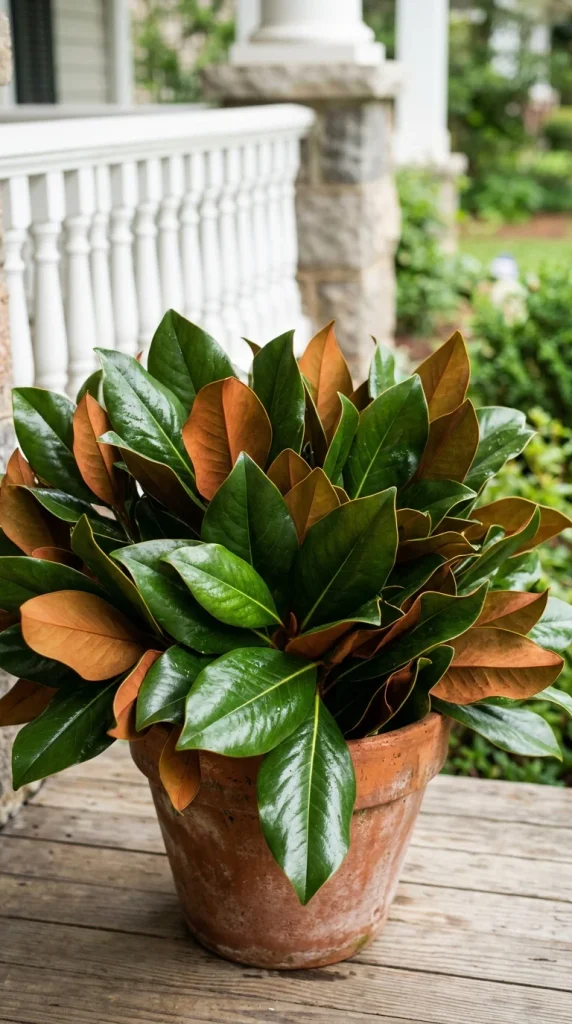
Magnolia leaves offer a sophisticated, Southern-inspired aesthetic. What makes them so unique for winter planters is their dual-tone appearance: the tops are a shiny, leathery green, while the undersides are a fuzzy, warm cinnamon brown. Mixing these into your evergreens adds a luxurious “filling” that feels more substantial than traditional needle-based greens.
7. String Lights
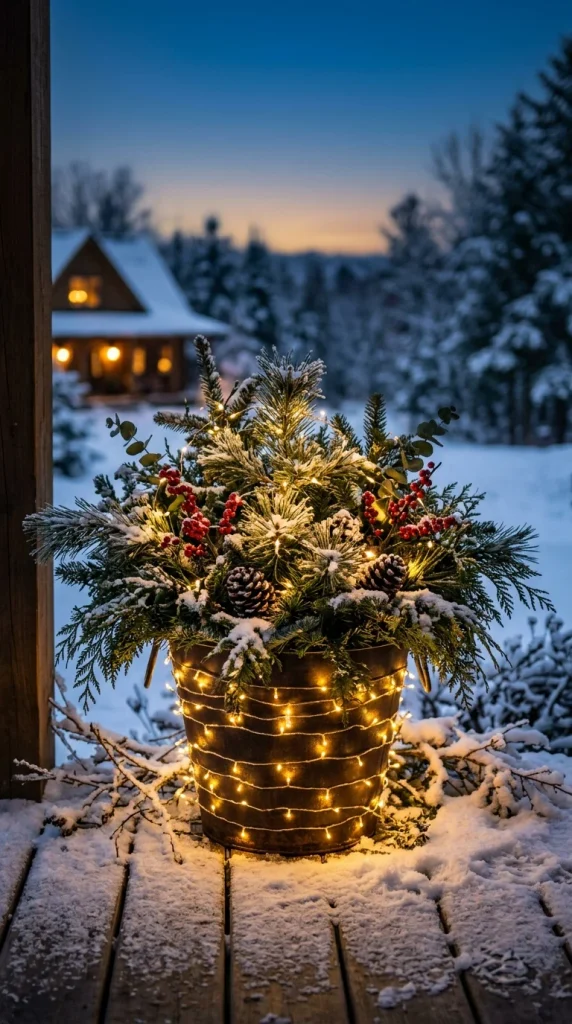
As the days get shorter, lighting becomes a crucial element of curb appeal. Integrating battery-operated or solar-powered LED string lights into your planters ensures they look just as beautiful at 5:00 PM as they do at noon. For the best effect, weave “fairy lights” deep into the branches so the light glows from within the arrangement rather than just sitting on top.
8. Boxwood Sprigs
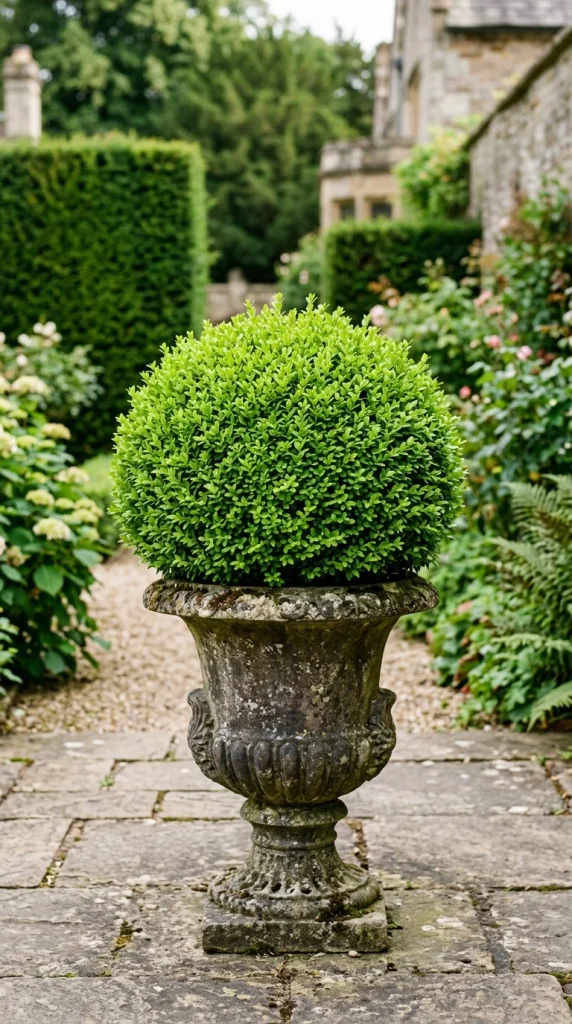
For those who prefer a more formal or “English Garden” look, boxwood is the way to go. Its small, rounded leaves stay a vibrant, lime-to-forest green all winter long. Boxwood is incredibly versatile; it can be used to create a tidy border around the edge of a planter or grouped together to form a lush, mounded shape that feels very high-end.
9. Oversized Ornaments
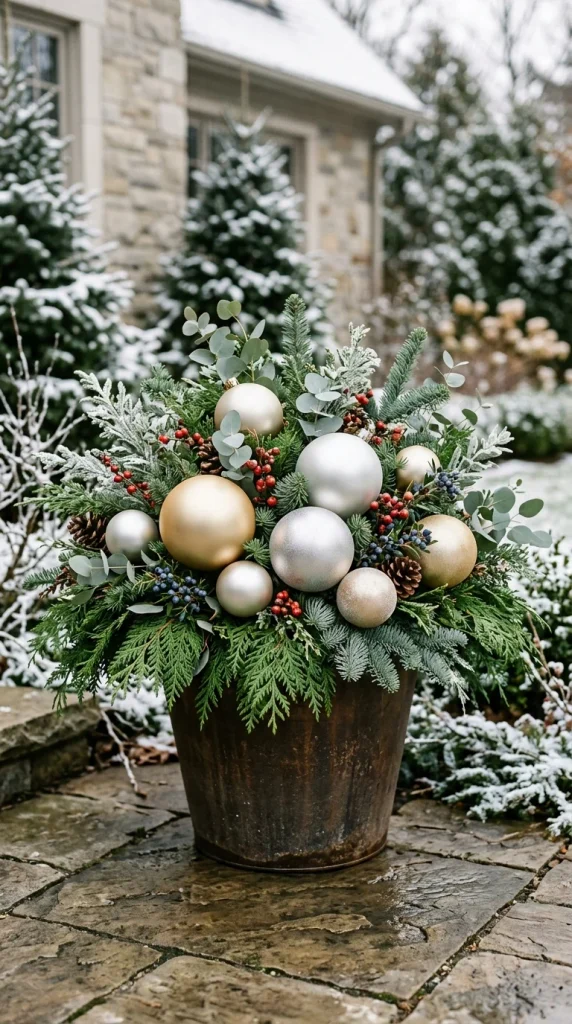
If you want your porch to scream “holiday cheer,” don’t be afraid to take indoor decorations outside. Large, shatterproof Christmas ornaments can be wired into your winter boughs to add color and shine. Mixing different finishes—such as matte, glitter, and gloss—in a single color palette (like all gold or all blue) creates a professional, designer-quality look.
10. Eucalyptus Stems
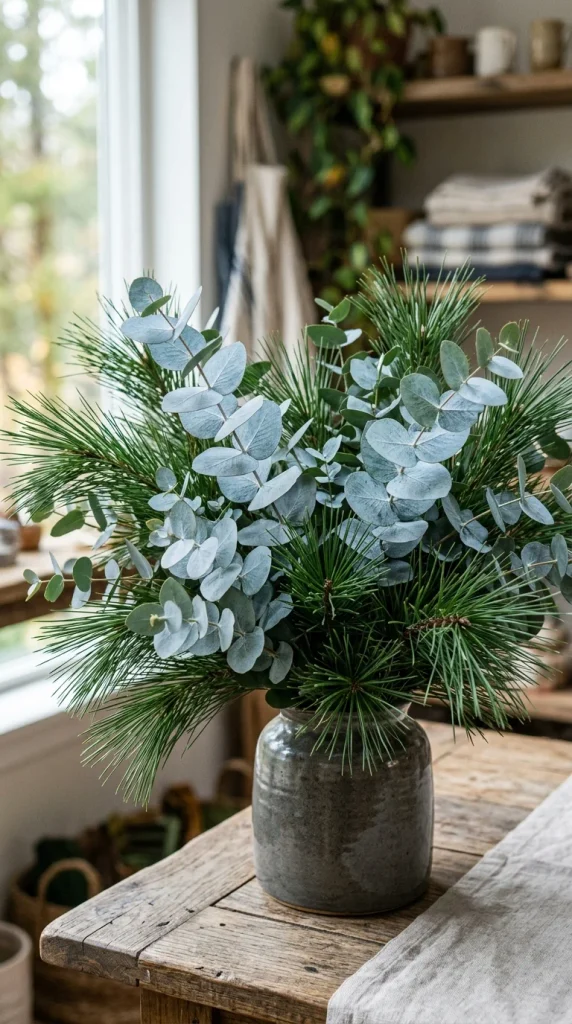
Eucalyptus isn’t just for floral bouquets. Dried or preserved eucalyptus stems are fantastic for winter containers because of their unique silvery-blue hue and intoxicating scent. The round “Silver Dollar” variety adds a soft, whimsical shape that breaks up the sharp lines of evergreen needles. It’s an excellent choice for a “Winter Wonderland” theme featuring cool tones and whites.
11. Dried Hydrangeas
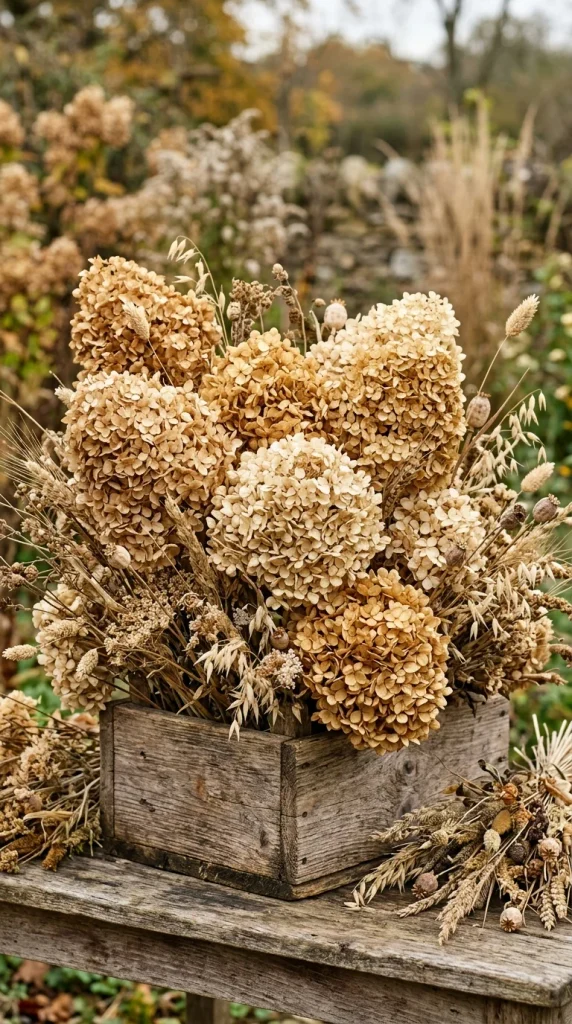
Don’t throw away those faded hydrangea blooms from the fall! Once dried, hydrangea heads become structural masterpieces. In a winter planter, they act as large, puffy “flowers” that fill gaps and add a vintage, romantic feel. Because they are delicate, it is best to spray them with a clear acrylic sealer to help them withstand the wind and snow.
12. Ornamental Kale
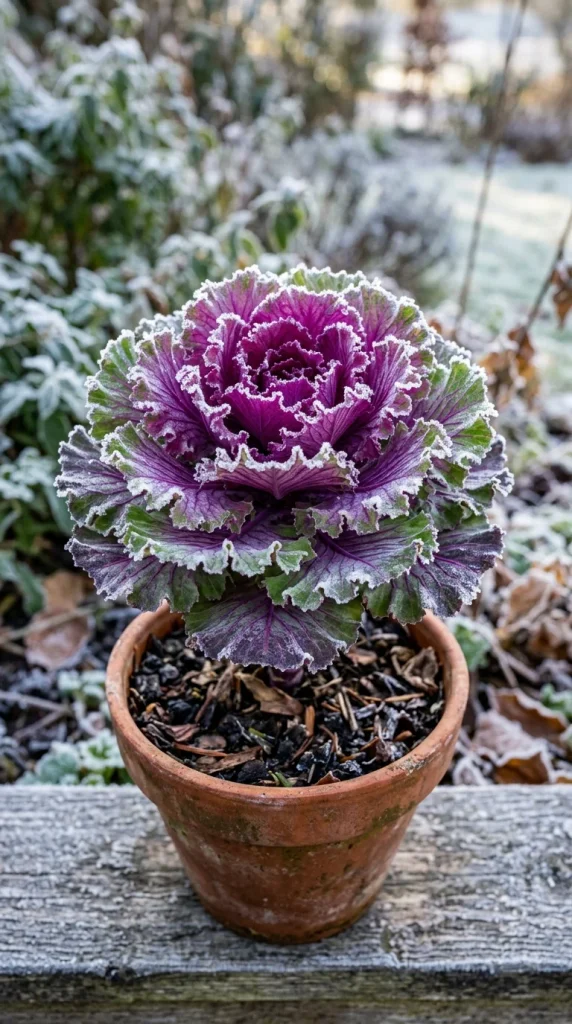
Ornamental kale and cabbage are some of the toughest plants in the garden. They actually look better as the temperature drops, as the cold intensifies their purple, pink, and white centers. While they may eventually succumb to a deep freeze, they will last well into the early winter months, providing a “living” element that most other winter planters lack.
13. Galvanized Buckets
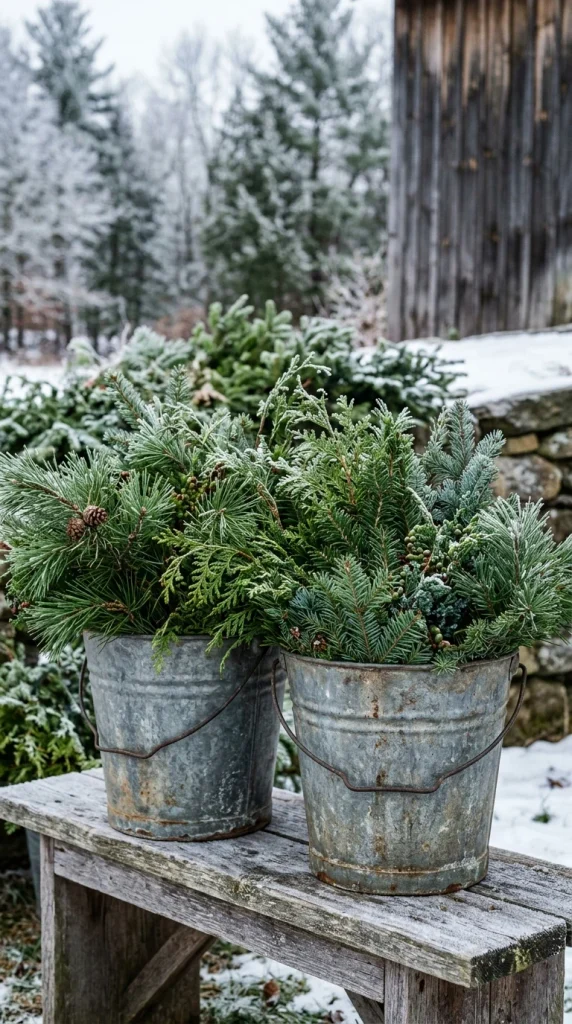
The container you choose is just as important as what you put inside it. Galvanized metal buckets or troughs offer a farmhouse-chic vibe that is perfect for the season. The cool grey of the metal harmonizes with winter light and provides a sturdy, wind-resistant base for heavy branches and logs. It’s a look that feels effortless and timeless.
14. Burlap Wraps
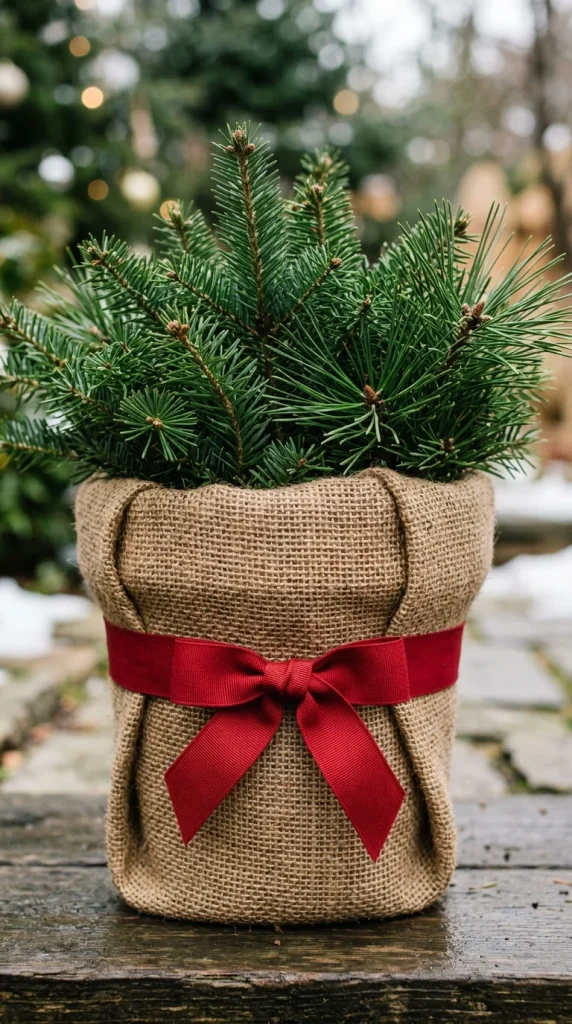
If your summer pots aren’t quite “winter-ready” in terms of style, you can easily transform them with burlap. Wrapping your planters in burlap and securing them with twine or a festive ribbon adds a warm, textural layer to your porch. This look is particularly effective for protecting pots from cracking in the cold while giving your entryway a cozy, gift-wrapped appearance.
15. Grapevine Balls
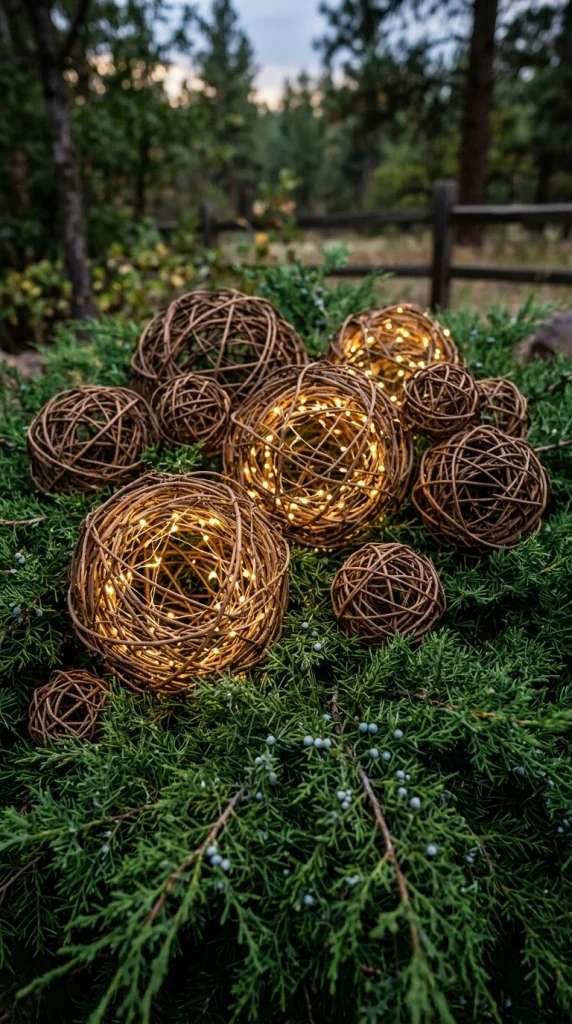
To add a sense of movement and shape to your arrangements, consider grapevine balls. These spherical accents provide a “mid-century modern meets rustic” look. They fill space effectively without being heavy, and their tangled brown vines provide a wonderful contrast to the soft needles of cedar or the sharp needles of pine.
16. Skimmia japonica
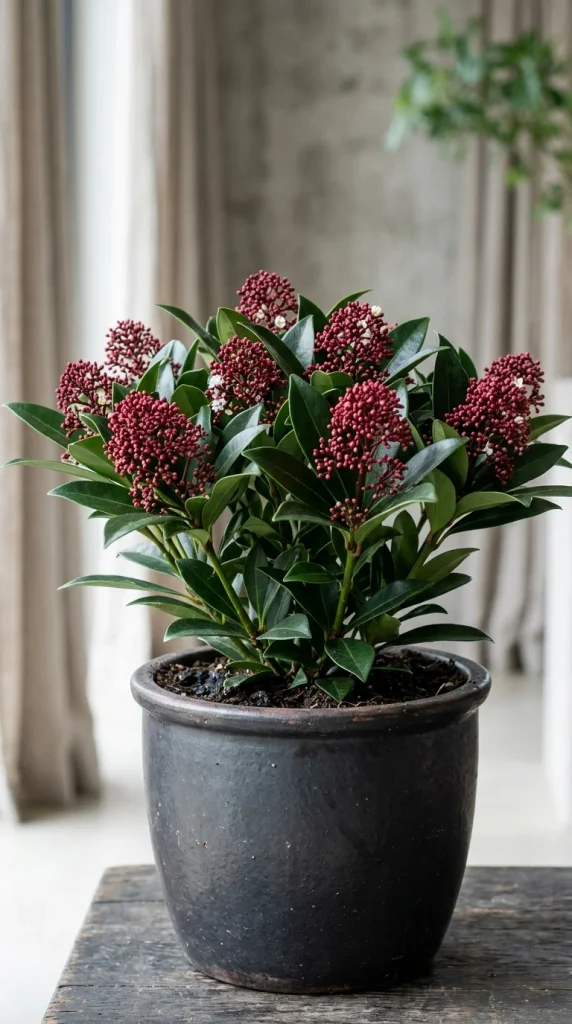
Skimmia japonica is a hidden gem for winter gardening. This evergreen shrub produces clusters of tiny red buds throughout the winter that look like berries from a distance. The buds stay closed all season, providing a consistent pop of color until they finally bloom in the spring. It’s a sophisticated choice for gardeners who want something a little different from the standard holly or pine.