

The entrance to your property sets the tone for everything that lies beyond. Often, however, that first impression is marred by a functional but unsightly culvert—that necessary pipe that handles drainage under your driveway. Many homeowners view culverts as an eyesore, but with the right landscaping, they can be transformed into stunning architectural features. From rustic stone walls to lush rain gardens, these 20 culvert landscaping ideas will help you blend functionality with high-end curb appeal.
1. Natural Boulders
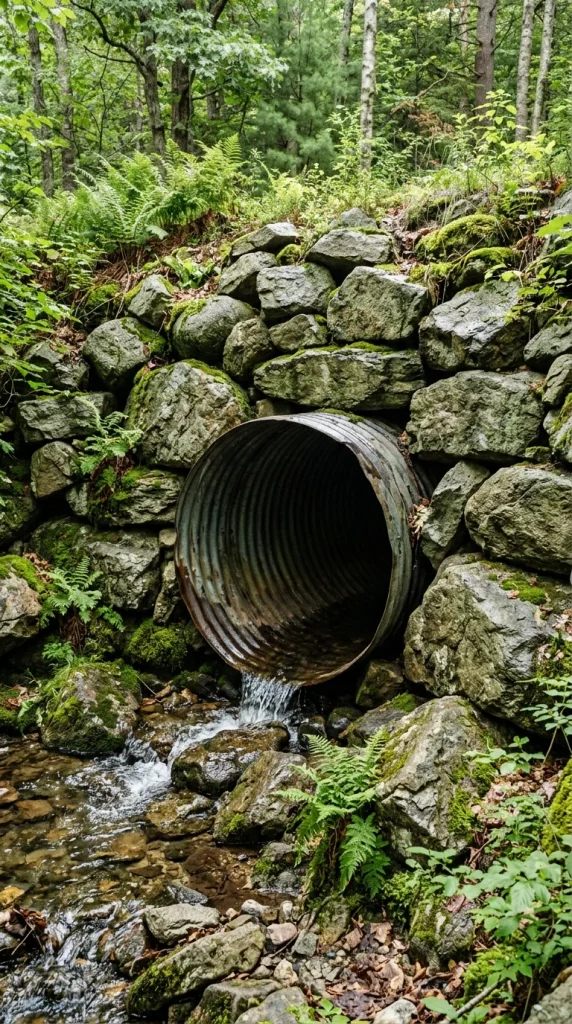
Integrating large, natural boulders is one of the most effective ways to hide a culvert pipe while providing structural stability. Boulders mimic the look of a natural stream bed, making the drainage area look like an intentional part of the landscape rather than a utility. Choose stones that are native to your area to ensure the colors blend seamlessly with your surroundings. Heavier rocks also act as a physical barrier, protecting the culvert from accidental damage by vehicles or lawn equipment.
2. Fieldstone Walls
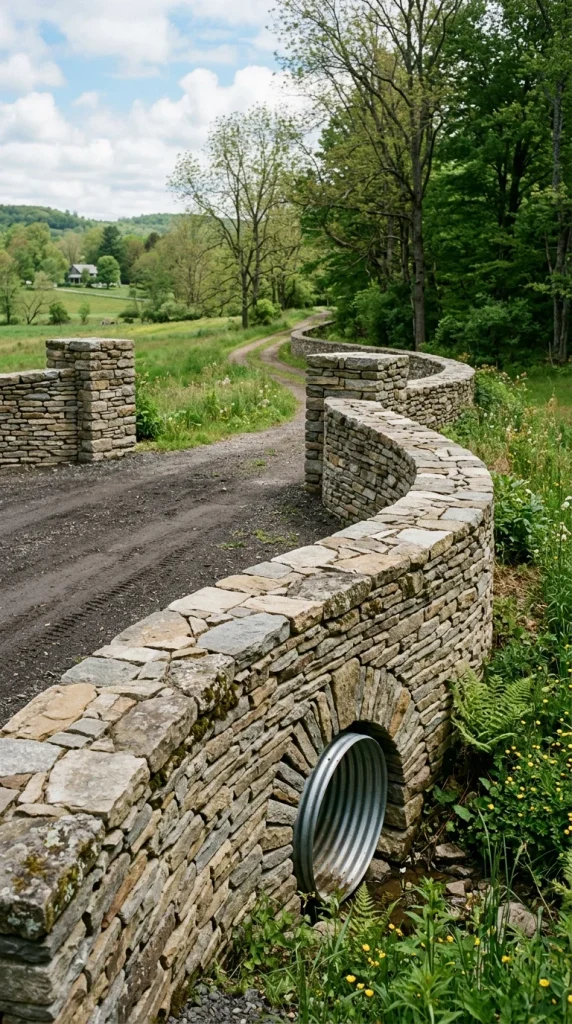
A fieldstone wall offers a timeless, farmhouse-style aesthetic. By building a low retaining wall around the culvert opening, you create a defined “headwall” that prevents soil erosion. This approach works particularly well for properties with a slight slope. Using the dry-stack method—where stones are fitted together without mortar—allows for natural drainage and gives the entrance an organic, handcrafted feel.
3. Native Grasses
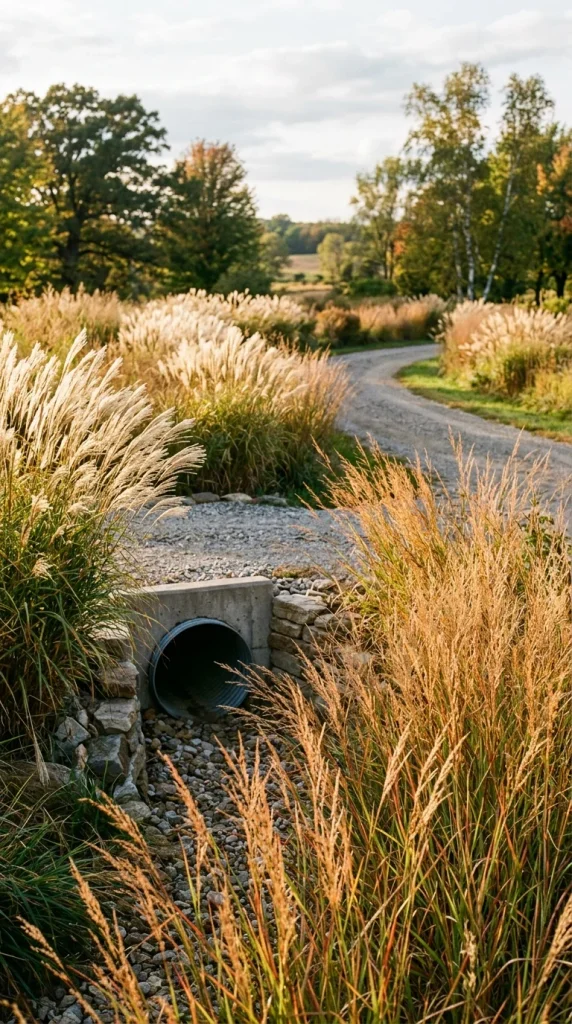
Native grasses are a low-maintenance solution for culvert landscaping. Varieties like Muhly grass, Switchgrass, or Fountain grass have deep root systems that hold the soil in place, preventing the steep banks around the culvert from washing away during heavy rains. These grasses provide year-round interest, offering vibrant greens in the summer and architectural tawny plumes in the winter, all while swaying gracefully in the wind.
4. Gabion Baskets
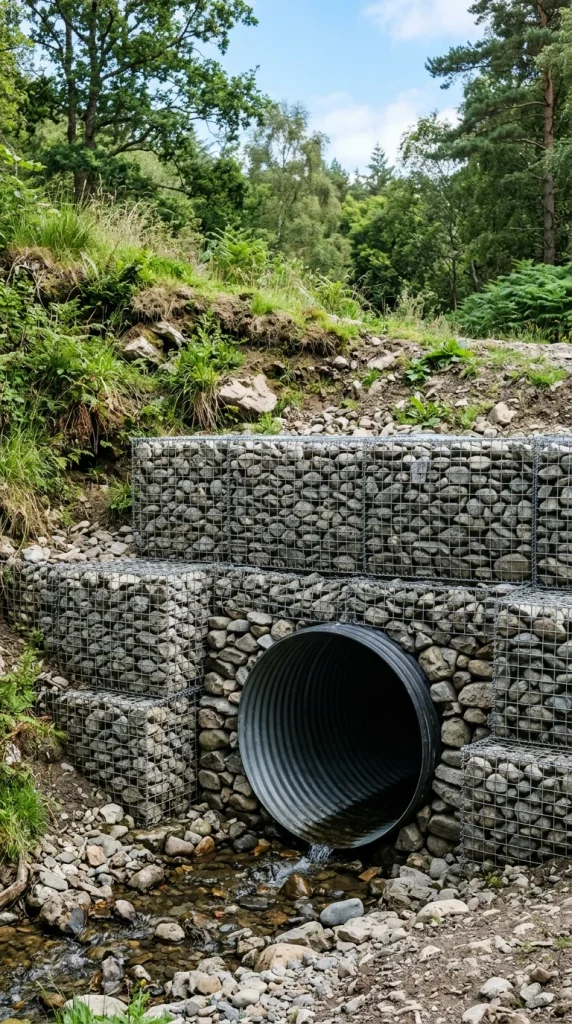
For a modern or industrial look, gabion baskets are an excellent choice. These are wire mesh cages filled with rocks or stones. They are incredibly durable and allow water to flow through freely, which reduces pressure on the structure during floods. Gabions provide a clean, straight line that looks fantastic against a contemporary home or a minimalist gravel driveway.
5. River Rock
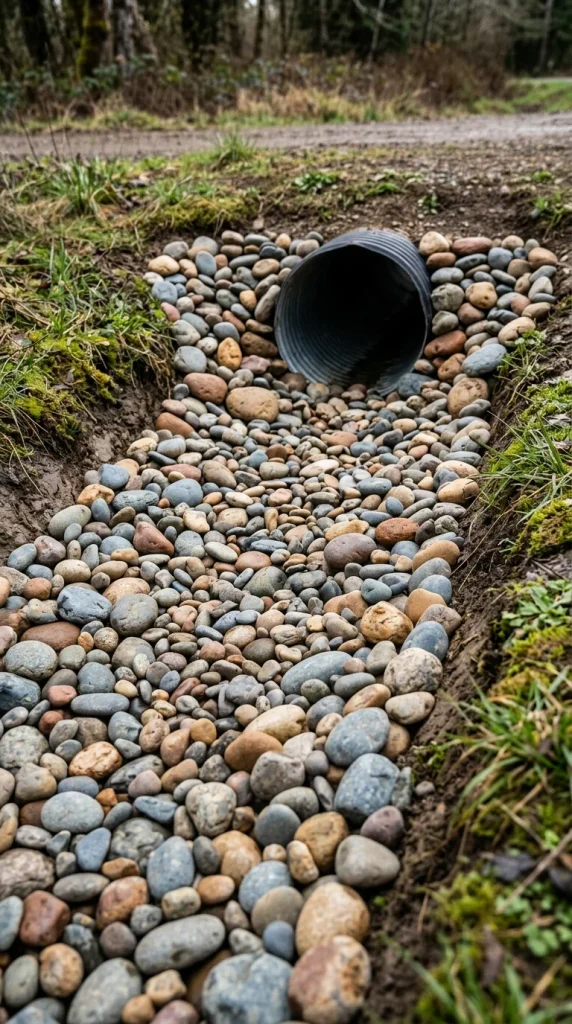
River rocks are the classic choice for drainage areas. Because they are naturally smoothed by water, they look right at home in a culvert. Use a mix of sizes—from small pebbles to larger cobbles—to create a “dry creek bed” effect. This not only looks beautiful but also slows down the velocity of incoming water, which helps prevent erosion and sediment buildup inside the pipe.
6. Retaining Walls
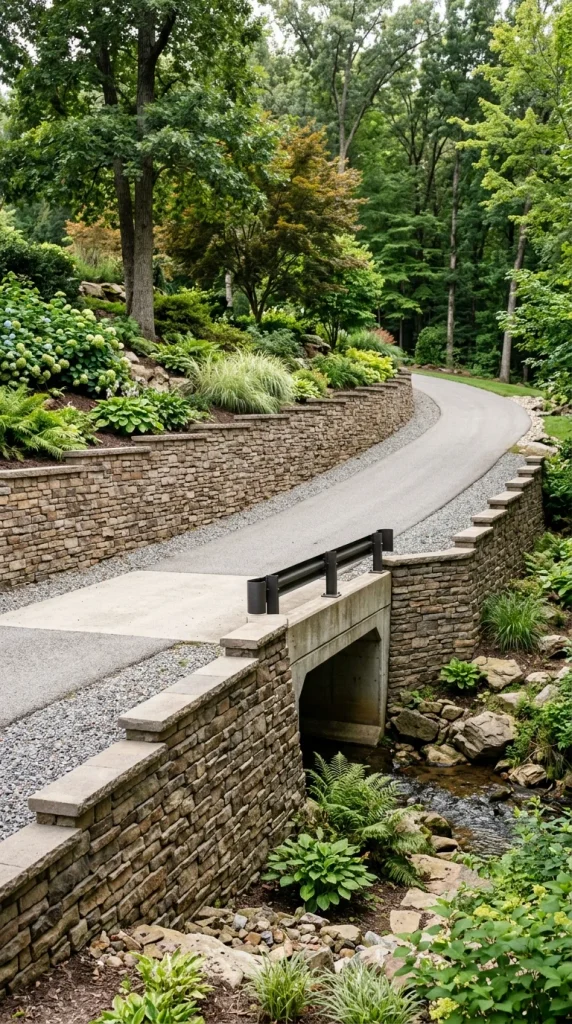
If your driveway has a significant drop-off, a formal retaining wall might be necessary. Using tiered blocks or poured concrete with a decorative stone veneer creates a polished, upscale look. This is a highly functional choice that maximizes the usable space at the end of your driveway and provides a sturdy foundation for adding further decorative elements like planters or lighting.
7. Wooden Bridges
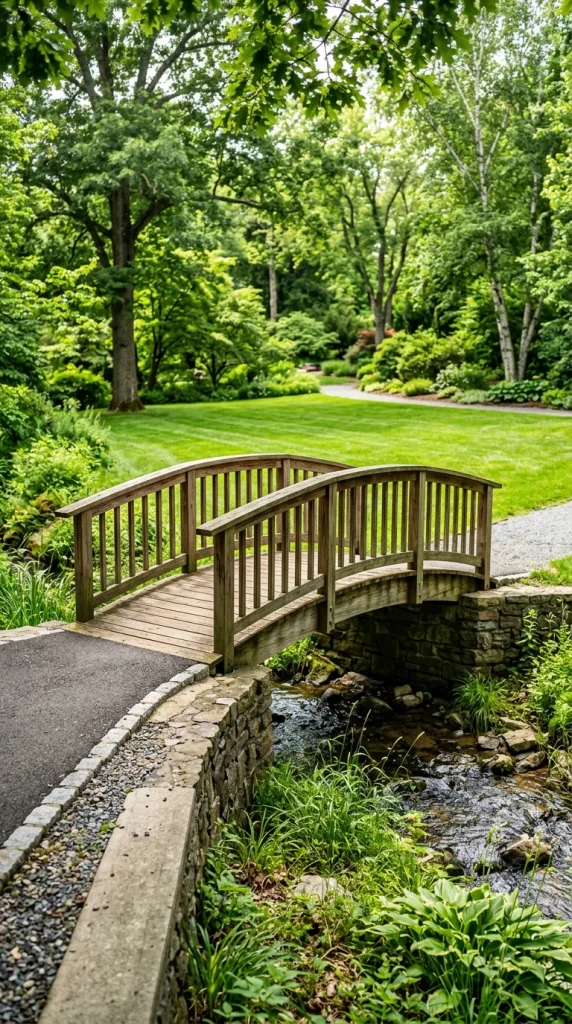
Sometimes the best way to handle a culvert is to build over it. A small decorative wooden bridge can span the drainage ditch, turning a utility area into a charming focal point. Whether you choose a rustic timber design or a sleek, painted bridge, this addition adds a sense of whimsy and “curb appeal” that is hard to beat.
8. Solar Lighting
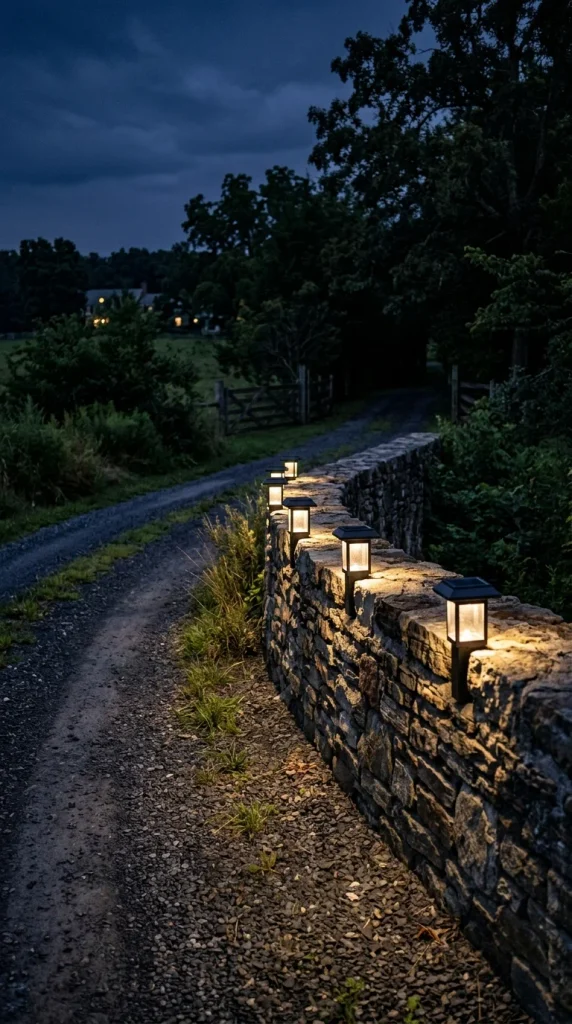
Safety and beauty go hand-in-hand with lighting. Installing solar-powered lights along the culvert walls or tucked among the boulders ensures that the entrance is clearly marked at night. This prevents visitors from accidentally driving into the ditch and highlights your beautiful stonework after the sun goes down. Choose warm-toned LEDs for a welcoming glow.
9. Rain Gardens
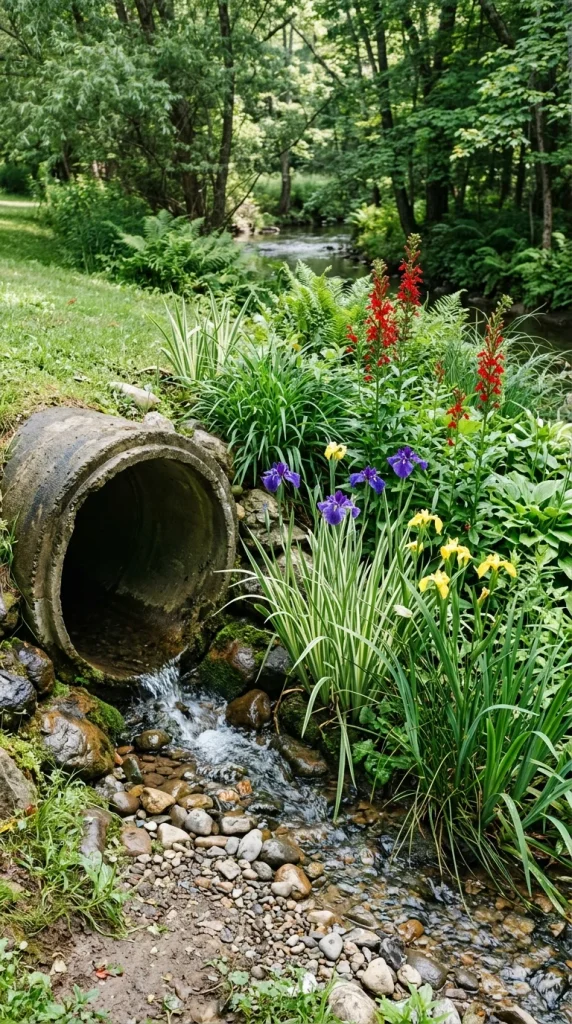
A culvert is essentially a water delivery system, making it the perfect spot for a rain garden. By planting water-loving species like Siberian Iris, Joe-Pye Weed, and various sedges, you can create a mini-ecosystem that filters runoff water before it soaks into the ground. This eco-friendly approach turns a muddy ditch into a vibrant, blooming garden.
10. Groundcover Plants
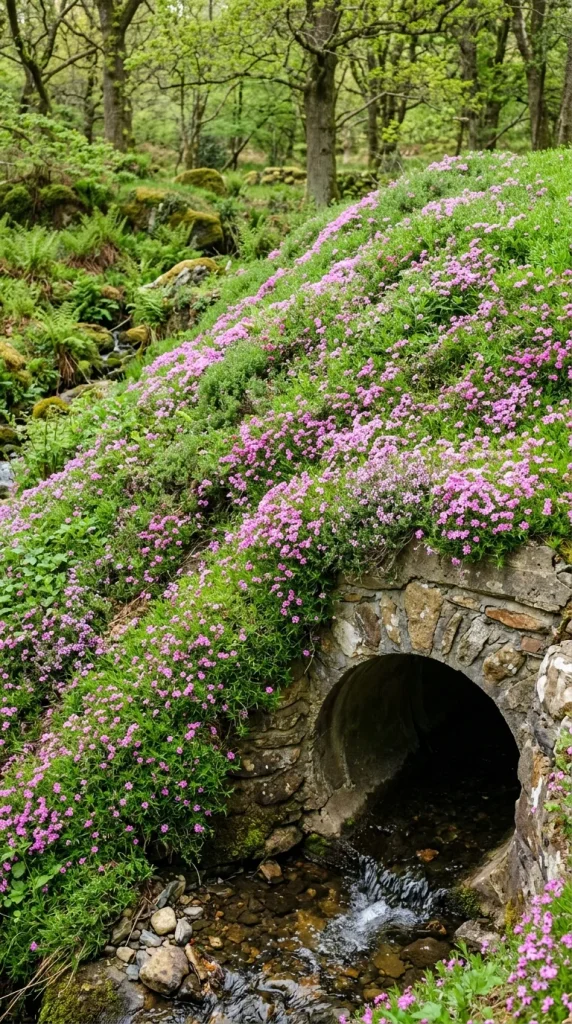
If you want to avoid mowing steep slopes near the culvert, groundcovers are your best friend. Plants like Creeping Thyme, Sedum, or Juniper will spread across the soil, creating a living mat that suppresses weeds and prevents erosion. These plants are generally drought-tolerant and can handle the occasional deluge of water that comes through a culvert.
11. Decorative Railings
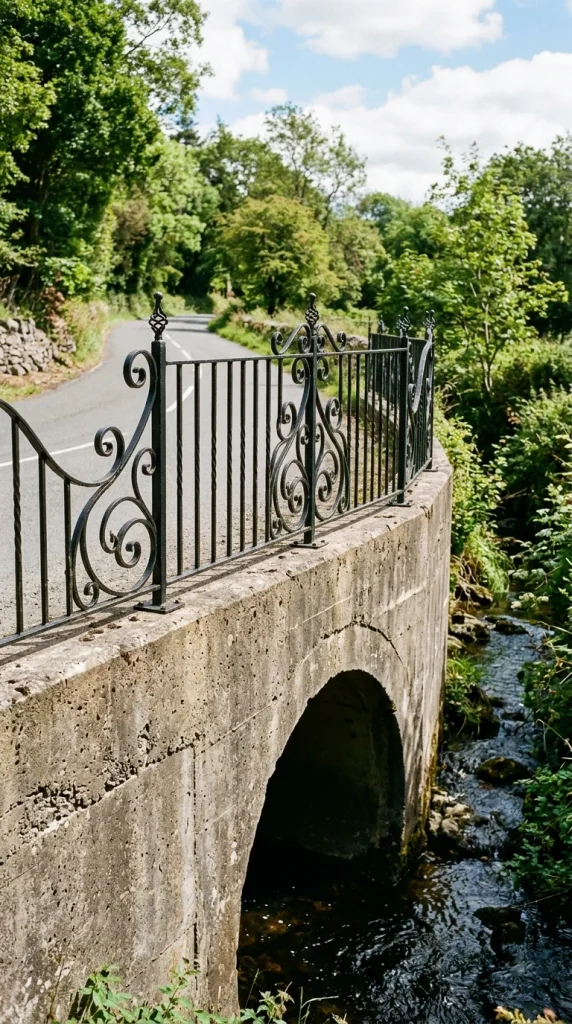
If your culvert headwall is high, adding a railing is a smart safety move that also provides a decorative opportunity. Wrought iron, powder-coated steel, or even heavy nautical rope can be used to create a barrier. This adds a level of sophistication to the entrance and makes the transition from the road to your property feel more secure.
12. Flagstone Paving
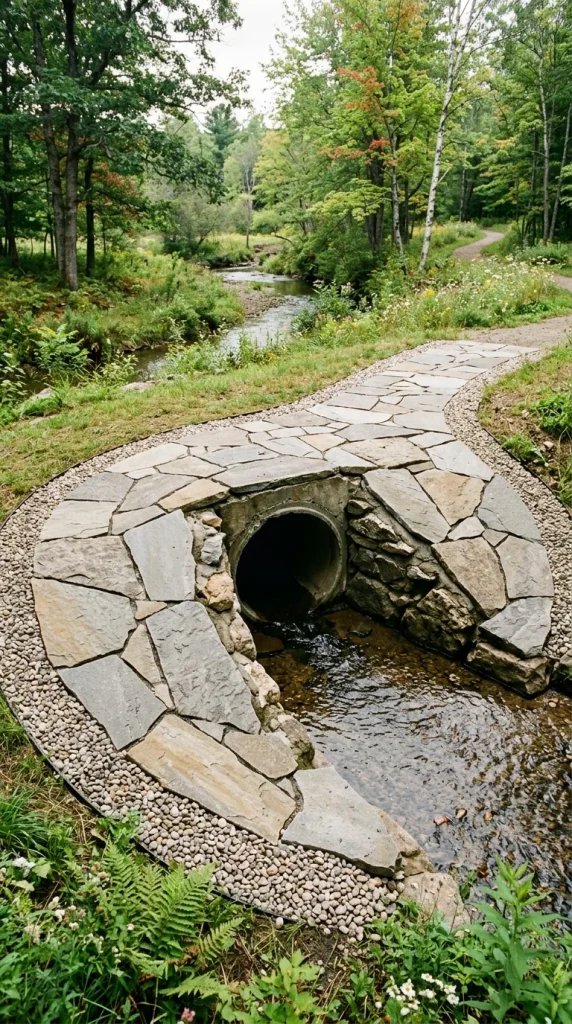
Using flagstone to pave the area immediately around the culvert opening provides a clean, finished look. It prevents weeds from growing right at the mouth of the pipe, which can cause clogs. Flagstone is available in various colors—from earthy tans to cool blues—allowing you to match the stone to your home’s exterior.
13. Mailbox Integration
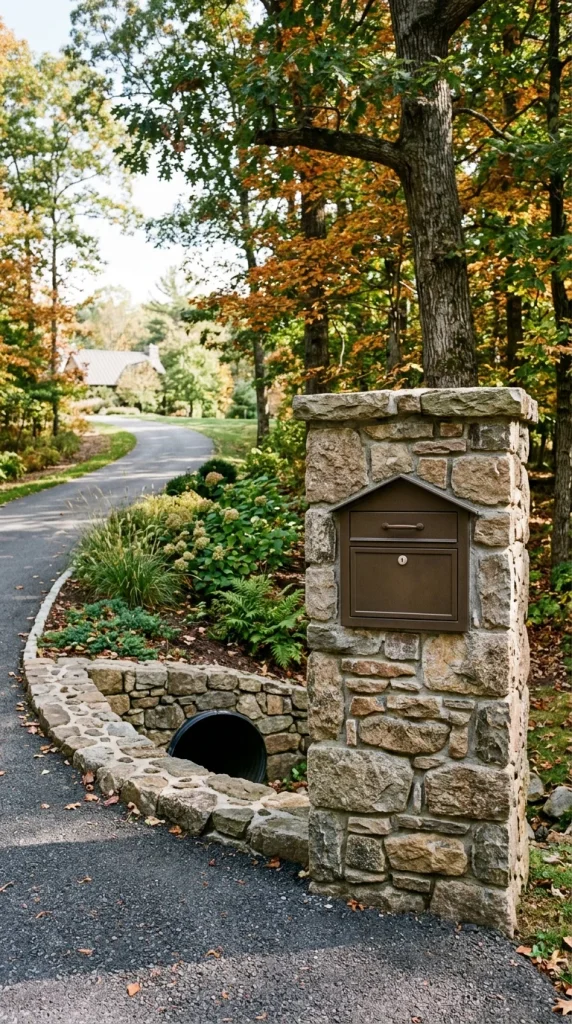
Why have a separate mailbox post when you can integrate it into your culvert landscaping? Building a stone or brick pillar that serves as both the culvert’s end-wall and the mailbox support creates a cohesive, high-end look. This “built-in” feel suggests a custom-designed property and adds significant structural mass to the entrance.
14. Evergreen Shrubs
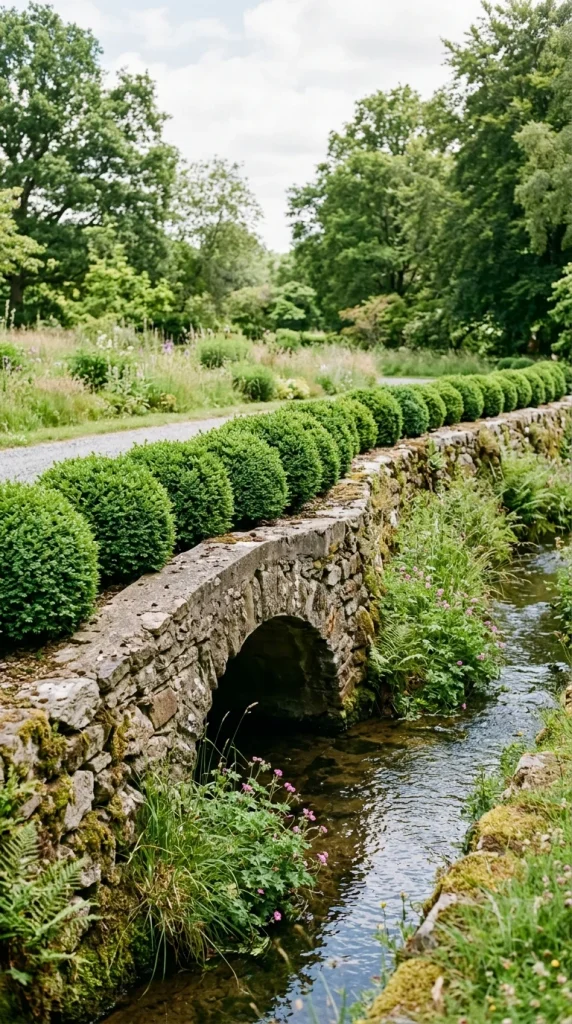
Evergreens provide year-round structure and color, which is vital for a driveway entrance that needs to look good in the winter. Choose dwarf varieties that won’t grow large enough to block the pipe or obstruct the view of oncoming traffic. Boxwoods, Spreading Junipers, or Mugo Pines are excellent choices for adding a permanent green frame to your culvert.
15. Cascading Flowers
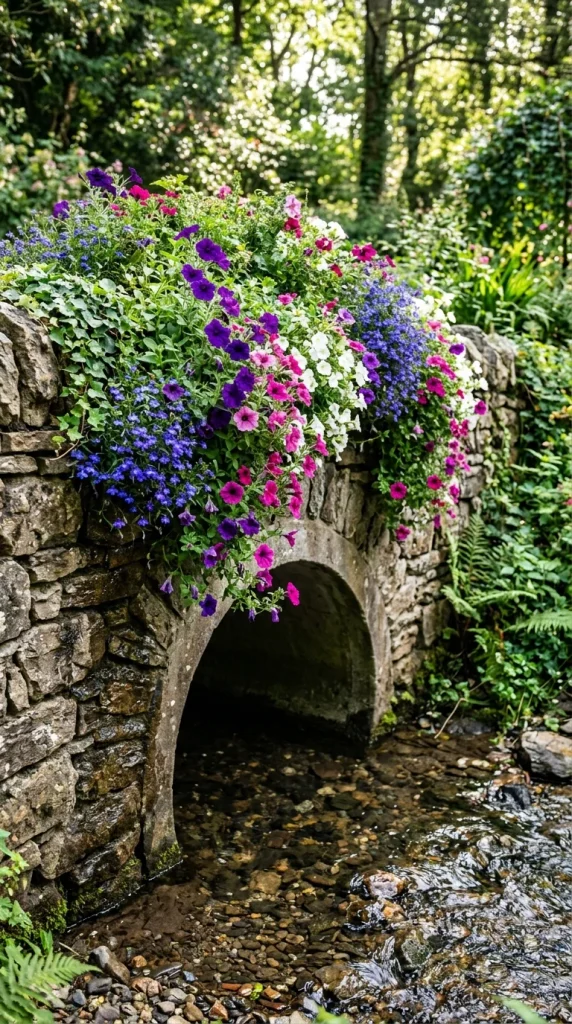
To soften the hard edges of stone or concrete, use “spiller” plants. Flowers that trail or cascade, such as Trailing Verbena or Wave Petunias, can be planted at the top of the culvert wall. As they grow, they will drape down over the rocks, creating a waterfall of color that hides the transition between the land and the drainage area.
16. Concrete Planters
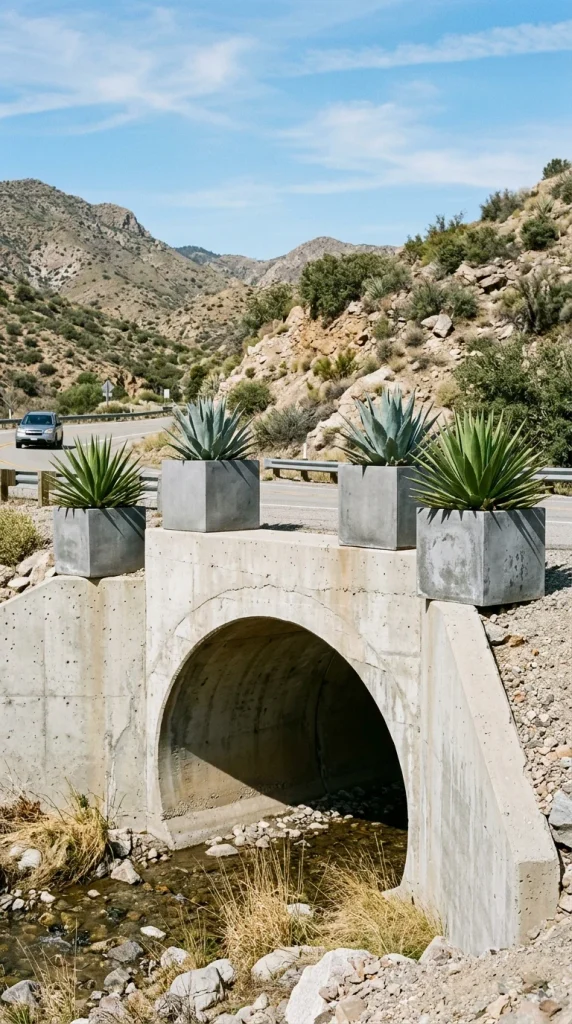
If you have a modern home with a concrete culvert, lean into the aesthetic with geometric concrete planters. Placing large, heavy planters on the flat sections of the culvert walls adds height and interest. This allows you to change out seasonal flowers or keep architectural plants like Yucca or Agave as a permanent fixture.
17. Dry Creek Bed
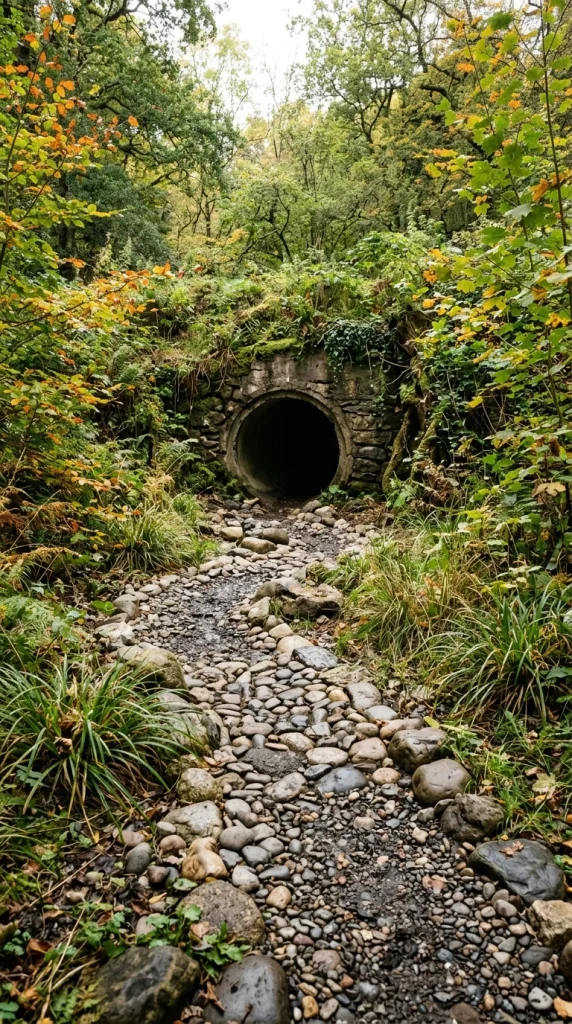
A dry creek bed is a functional landscaping technique that uses rocks of various sizes to channel water. Instead of a simple ditch, design a winding path of stone that leads to the culvert. This disguises the drainage area as a natural landscape feature and is particularly effective at managing high-velocity water flow during storms.
18. Tiered Gardens
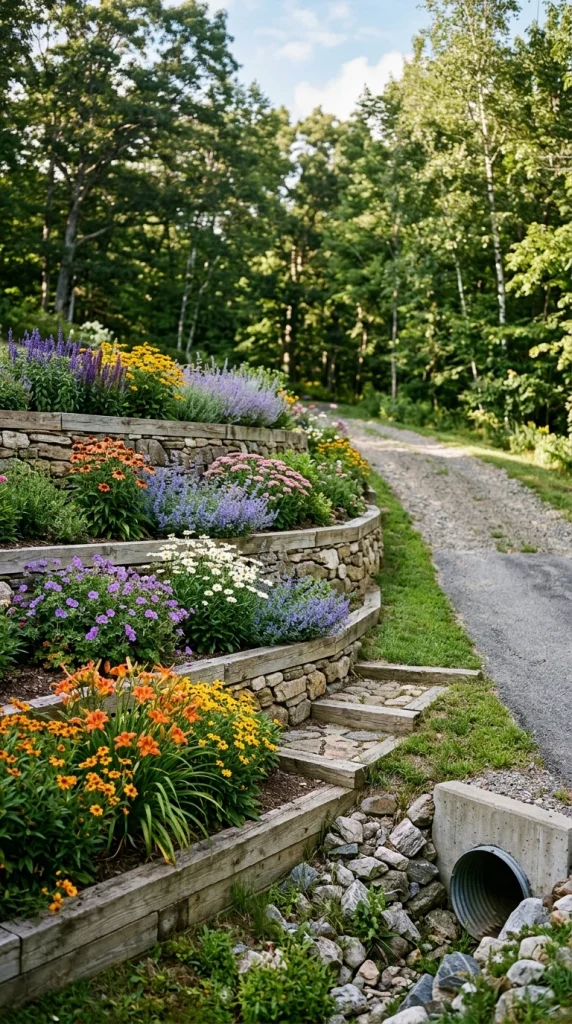
If the area around your culvert is very steep, a single wall might not be enough. Tiered gardens use a series of small “steps” or terraces to break up the slope. This makes the area much easier to plant and maintain, and it allows you to create a lush, multi-level garden that greets you every time you pull into your driveway.
19. Ornamental Trees
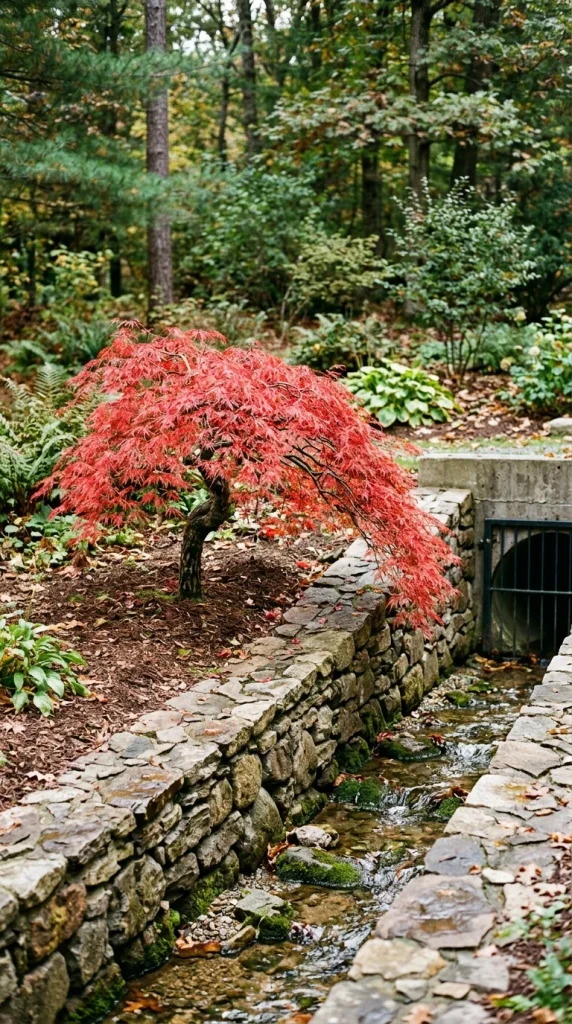
Adding a focal point tree can draw the eye away from the culvert pipe itself. A small ornamental tree, such as a Redbud, Serviceberry, or Weeping Willow (if space allows), provides vertical interest. Just be sure to plant the tree far enough away from the pipe so that the roots do not eventually clog or damage the drainage system.
20. Paver Edging
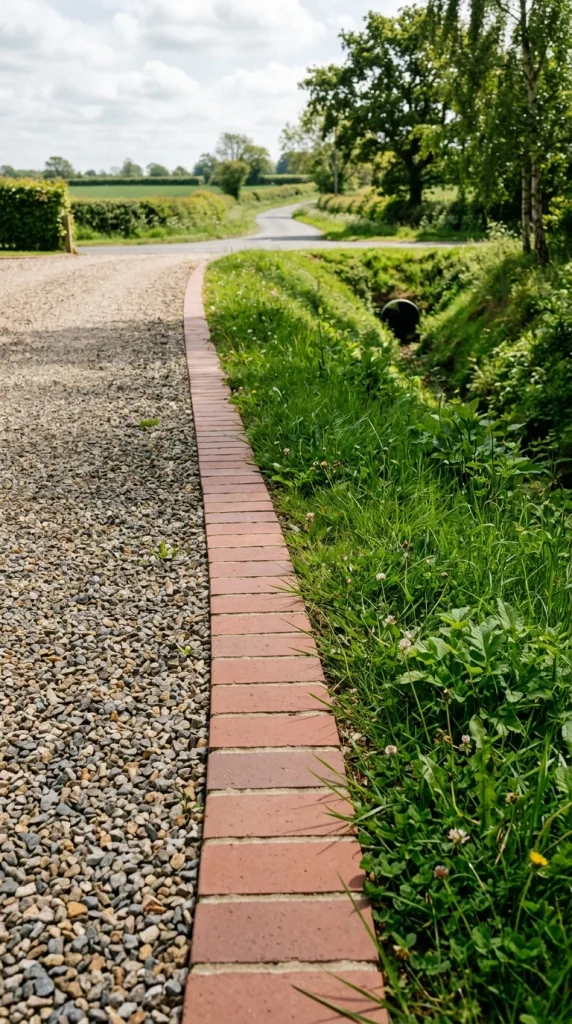
Sometimes, the best approach is simplicity. A clean edge made of brick or stone pavers can separate your driveway from the culvert area, providing a manicured look. This “frame” makes the transition look intentional and helps keep gravel or mulch from washing into the drainage ditch, maintaining a tidy entrance year-round.