The transition from your home to your backyard is more than just a functional necessity; it is an architectural opportunity. The “front steps” of your backyard—those primary stairs that lead from your back door, deck, or patio down into the garden—set the tone for your entire outdoor living space. Whether you are aiming for a sleek modern aesthetic, a rugged naturalistic look, or a cozy cottage feel, the right steps can bridge the gap between your indoor comfort and outdoor serenity.
In this guide, we explore 23 stunning ideas for backyard steps that will elevate your landscaping and provide a beautiful, safe, and inviting path to your private oasis.
1. Natural Flagstone
Natural flagstone is a perennial favorite for backyard steps because of its organic shapes and earthy color palette. Unlike uniform pavers, flagstone offers a “found in nature” look that blends seamlessly with gardens and wooded lots. By varying the thickness and size of the stones, you can create a rugged, textured staircase that feels as though it has been part of the landscape for decades.
2. Floating Concrete
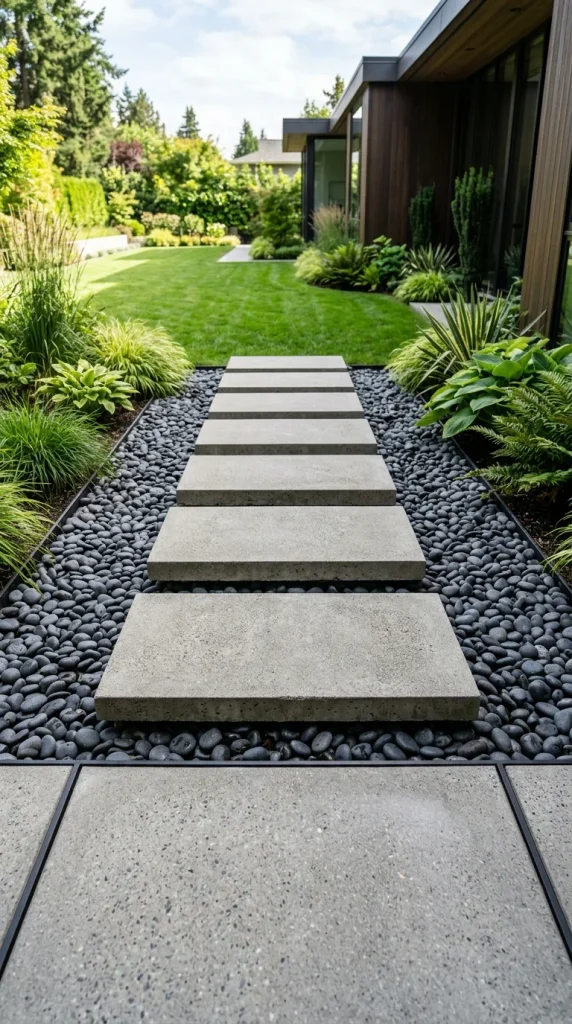
For those who love contemporary design, floating concrete steps are the ultimate choice. These steps are typically cantilevered or set on hidden supports to create a “levitating” effect. When paired with a base of dark river rocks or ground-cover plants, the contrast between the heavy industrial concrete and the soft textures below creates a striking visual impact.
3. Classic Red Brick
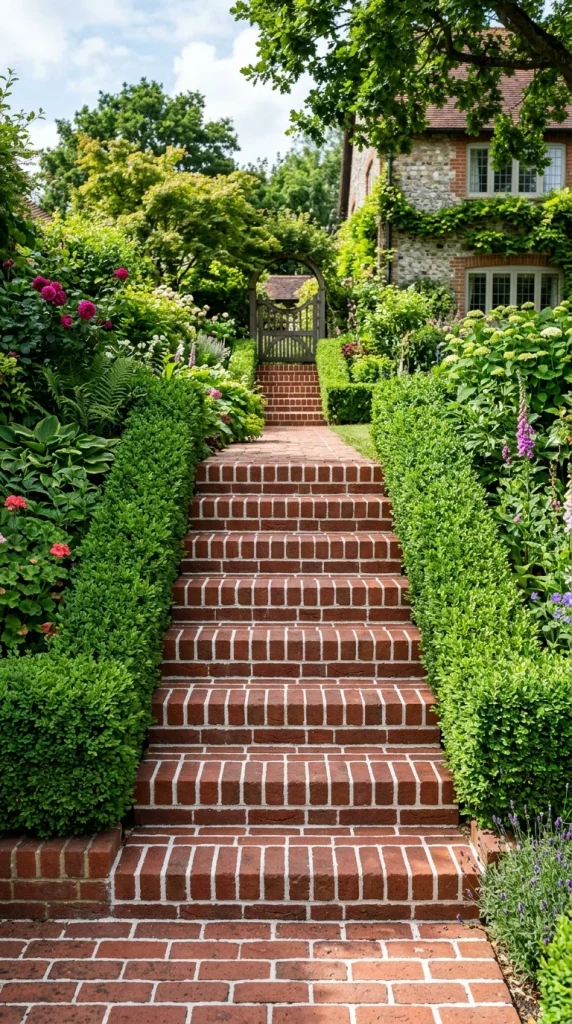
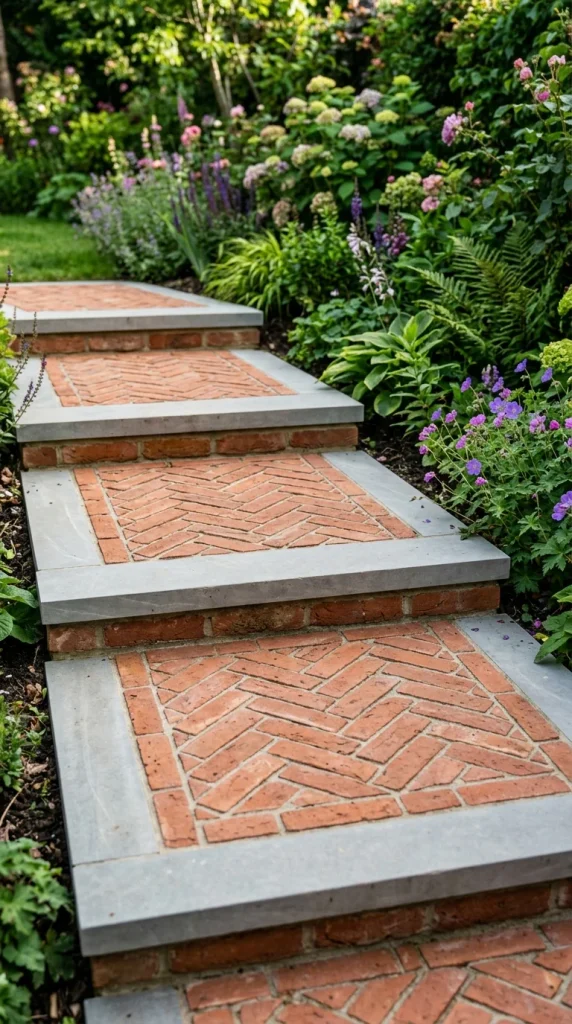
Nothing says “timeless” quite like red brick. Whether your home is a colonial, a bungalow, or a modern farmhouse, brick steps offer a sense of permanence and warmth. You can experiment with different patterns, such as herringbone or basketweave, on the treads to add a layer of sophisticated detail to the entrance of your yard.
4. Timber Beams
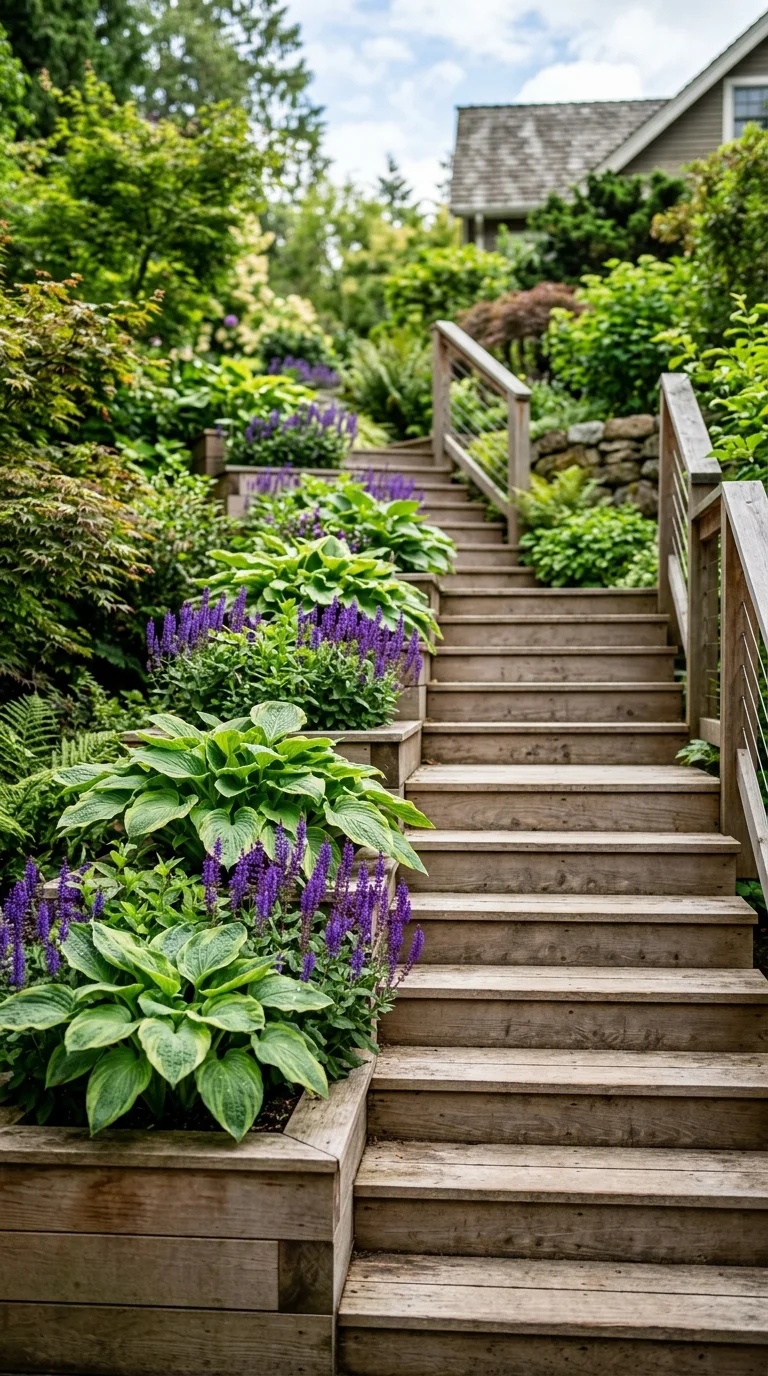
If you have a sloping backyard, timber beams or railroad ties provide a sturdy and cost-effective solution. The chunky, oversized nature of the wood creates a sense of scale and rustic charm. This style is particularly effective in wooded areas or “wilder” gardens where stone might feel too cold or formal.
5. Wrapped LED Lighting
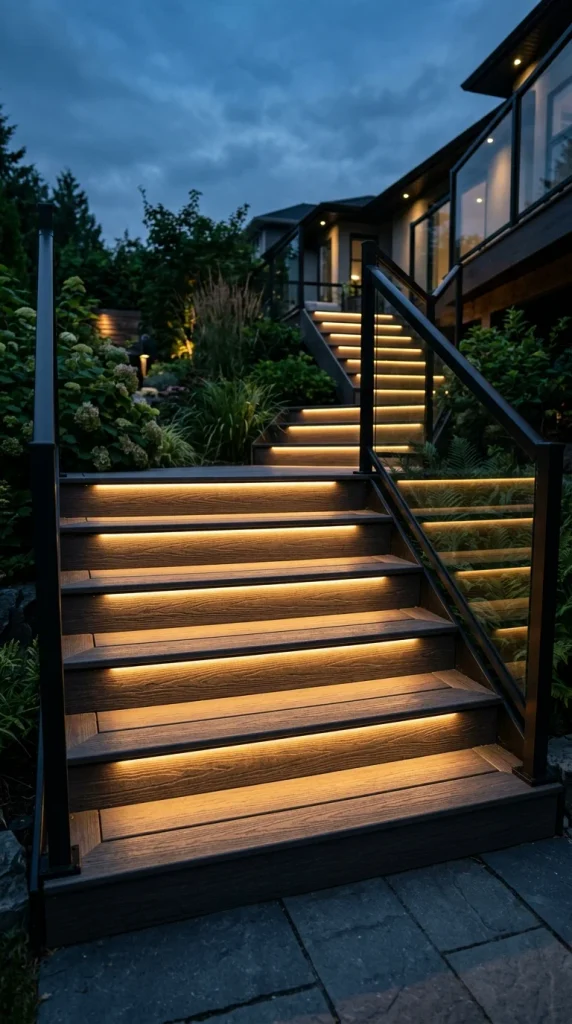
Safety and style go hand-in-hand with integrated lighting. By “wrapping” your steps with LED strips or installing small recessed puck lights, you transform your backyard into a 24-hour living space. The downward-facing light highlights the texture of your steps while ensuring that guests can navigate the yard safely after the sun goes down.
6. Bluestone Slabs
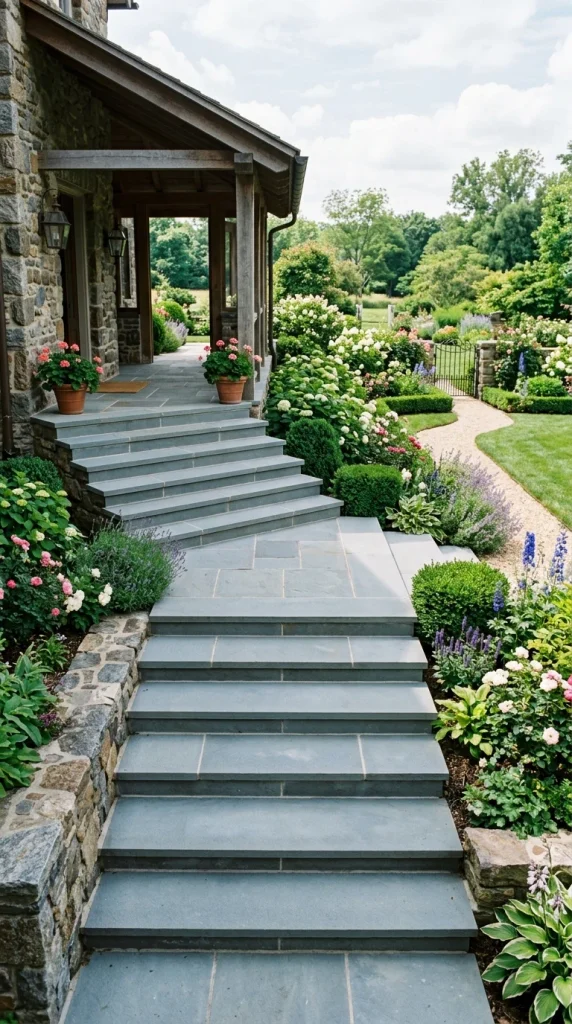
Bluestone is prized for its elegant, cool-toned hues and its incredible durability. Using large, uniform slabs for your backyard steps provides a high-end, clean look that works beautifully in both formal and transitional landscapes. The stone’s natural grip makes it an excellent choice for areas near pools or spots that receive frequent rain.
7. Grand Sweeping Curves
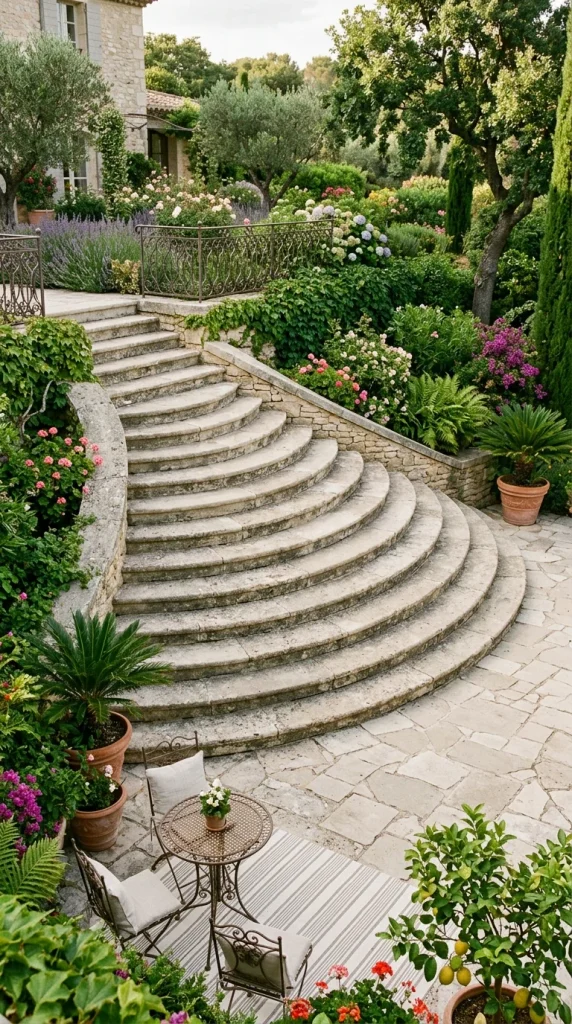
Why stick to straight lines when you can embrace the curve? Sweeping, circular steps create a sense of grandeur and movement. This design “opens up” the space, making the transition between levels feel less like a corridor and more like a stage. It’s a perfect choice for homeowners who frequently entertain large groups.
8. Gabion Stone Cages
Gabion baskets are a unique way to incorporate stone into your backyard steps without traditional masonry. By filling wire cages with rocks and topping them with a flat material like wood or stone, you create a modern, industrial look that also offers excellent drainage—perfect for rainy climates.
9. Built-in Planters
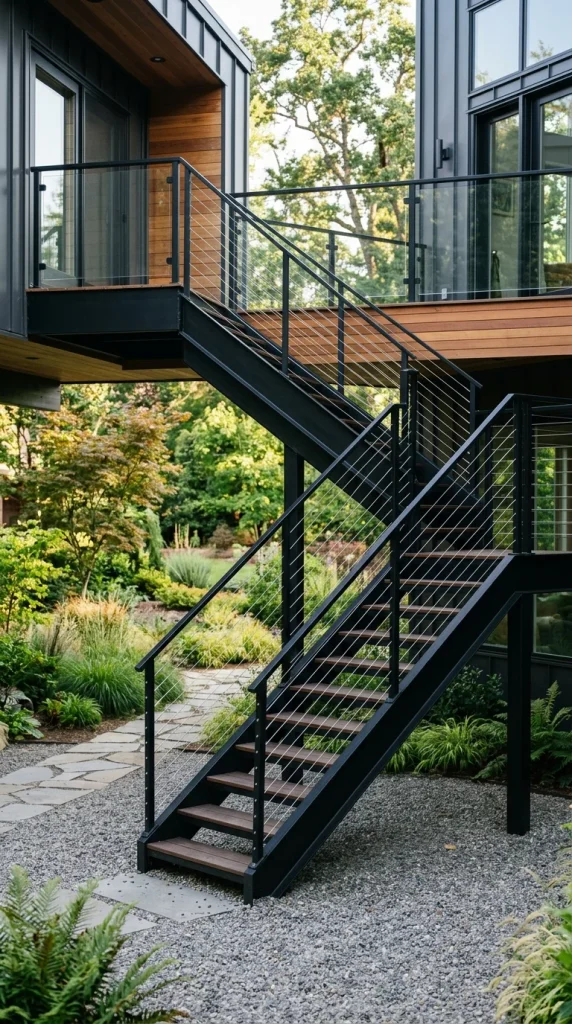
Maximize your greenery by integrating planters directly into your step design. This “living staircase” approach softens the hard edges of the construction and brings your garden closer to the house. It’s an ideal way to grow fragrant herbs like rosemary or lavender right where you walk past them every day.
10. Modern Steel

In urban backyards or ultra-modern homes, steel steps offer a lightweight, high-strength solution. The open-riser design allows light to pass through, preventing the staircase from feeling bulky or blocking the view of the yard below. It’s a clean, minimal look that pairs well with glass and metal accents.
11. Grass Inlays
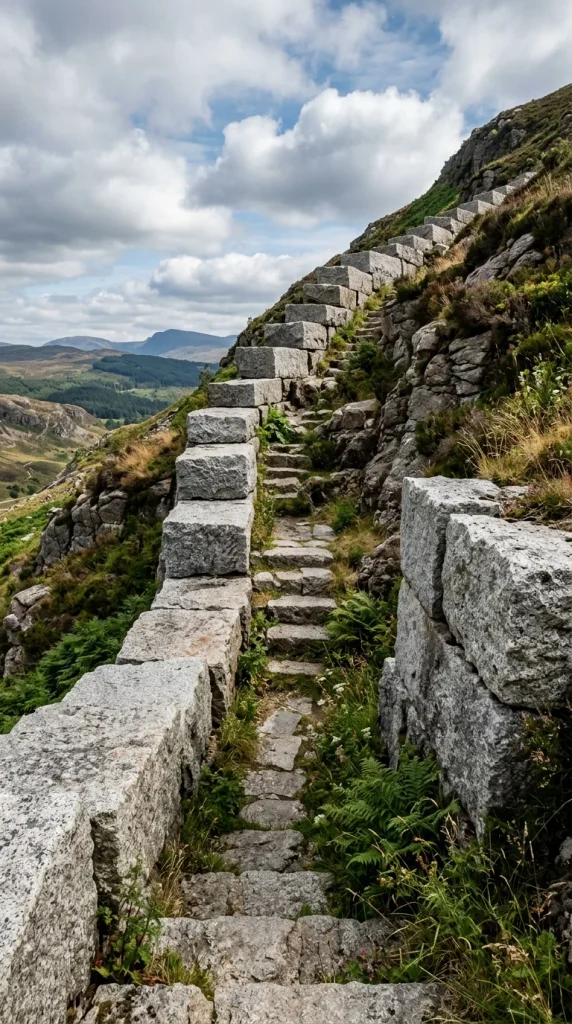
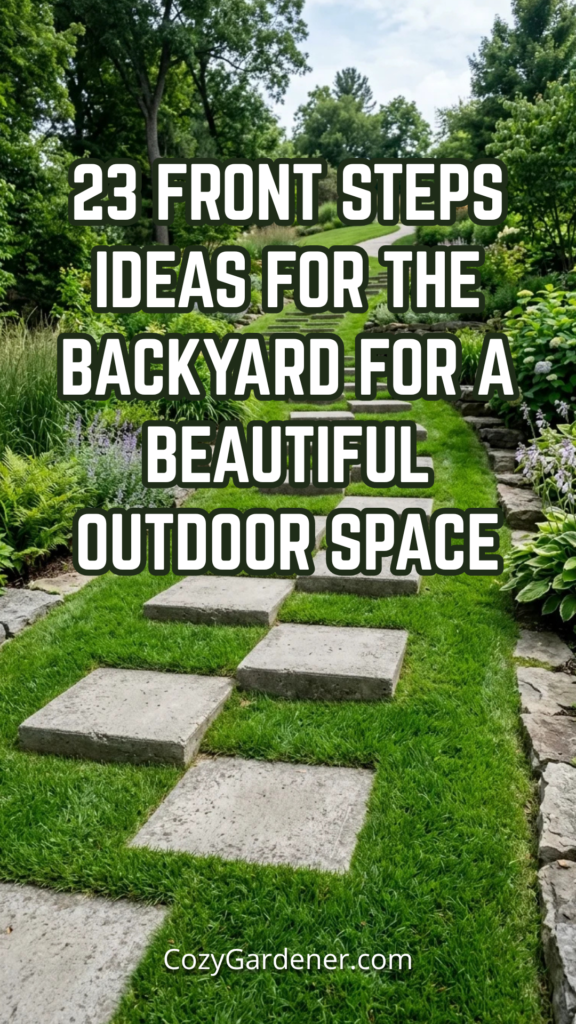
For a look that is both modern and soft, consider grass inlays. By placing large pavers at intervals and allowing grass or “steppable” ground cover (like creeping thyme) to grow between them, you blur the line between the hardscaping and the lawn. This is a great way to reduce the “heat island” effect of large stone surfaces.
12. Granite Blocks
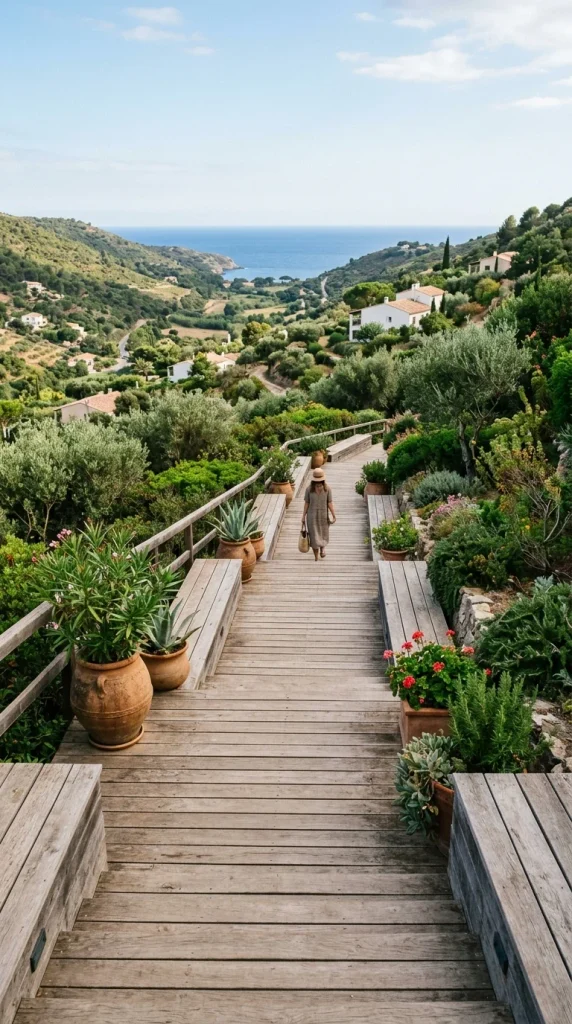
Granite is one of the toughest materials on earth, making it an “install it once and forget it” option for backyard steps. Its speckled texture and natural sparkle provide a subtle luxury. Using thick, solid blocks gives the staircase a sense of weight and architectural significance.
13. Terraced Wood

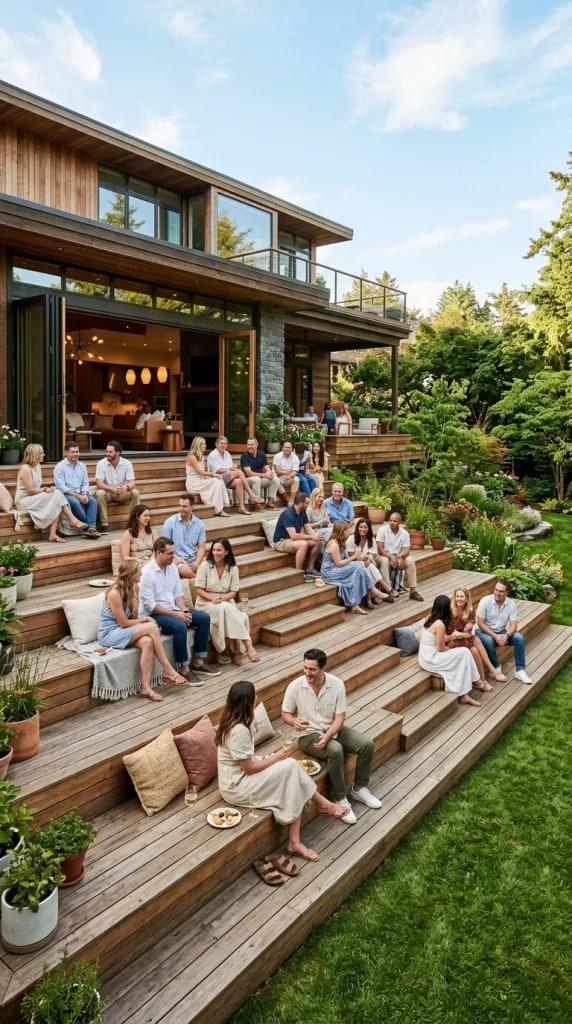
If your backyard has a significant drop, don’t just build a ladder; build a terrace. Terraced wooden steps act as mini-decks on the way down, providing spots to sit, place décor, or enjoy the view. This design turns a steep transition into a functional living space.
14. Mosaic Tiles
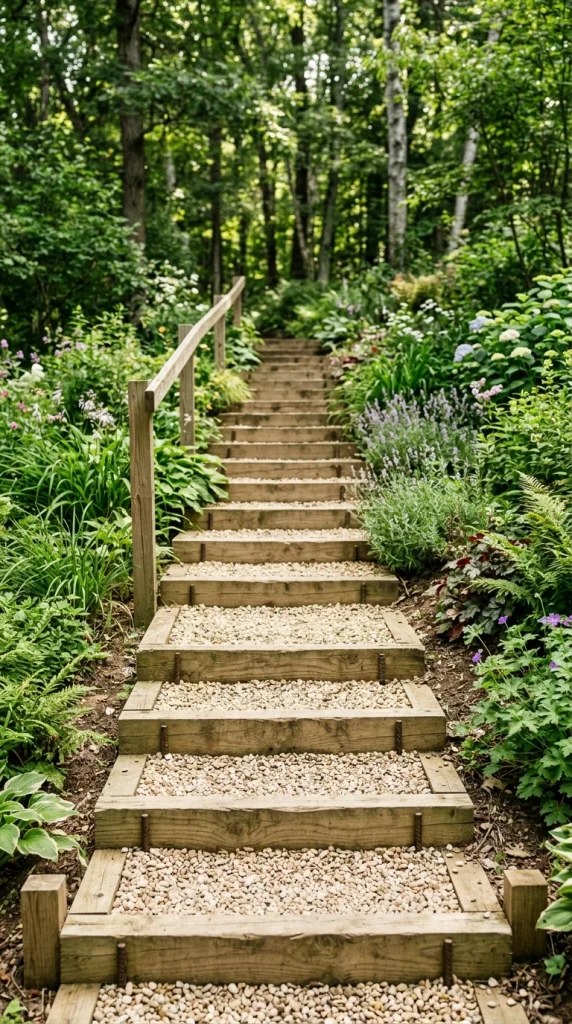
Inject some personality and art into your backyard by decorating the risers of your steps with mosaic tiles. This technique is popular in Spanish and Mediterranean design. While the flat part of the step remains slip-resistant stone, the vertical face provides a canvas for patterns, colors, and textures that pop against the greenery.
15. Gravel and Timber

Building beautiful steps doesn’t have to break the bank. A timber-framed gravel staircase is a classic DIY-friendly option that looks professional and provides excellent drainage. The “crunch” of gravel underfoot adds a sensory element to your garden walk, and the materials are easily accessible.
16. Polished Concrete
For the minimalist purist, polished concrete offers a seamless and sculptural look. These steps are often cast in place to create a monolithic appearance. The smooth finish is incredibly easy to clean and provides a “gallery” feel to your outdoor space, making it look curated and sophisticated.
17. Wide Amphitheater Steps
If your backyard is the neighborhood hub for parties, consider “amphitheater” steps. These are extra-wide and deep steps that transition from the house to the yard while doubling as bleacher-style seating. It’s an ingenious way to handle large crowds without cluttering the lawn with chairs.
18. River Rock Edging
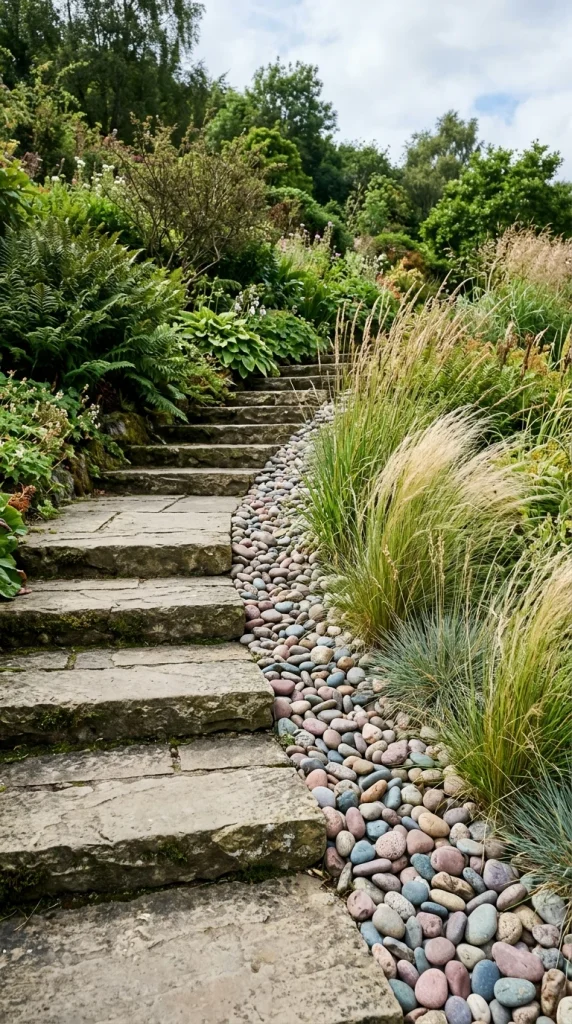
Softness is key in a backyard setting. By edging your steps with smooth river rocks, you create a transition zone that blends the hard stone or wood into the surrounding soil. This “fuzzy” edge makes the steps feel more integrated into the garden rather than just sitting on top of it.
19. Herringbone Brick
The herringbone pattern is a hallmark of fine craftsmanship. Using this layout for your brick steps adds visual interest and a sense of luxury. When framed with a contrasting material, like limestone or granite “headers,” the steps become a focal point of the backyard’s architecture.
20. Glass Railings
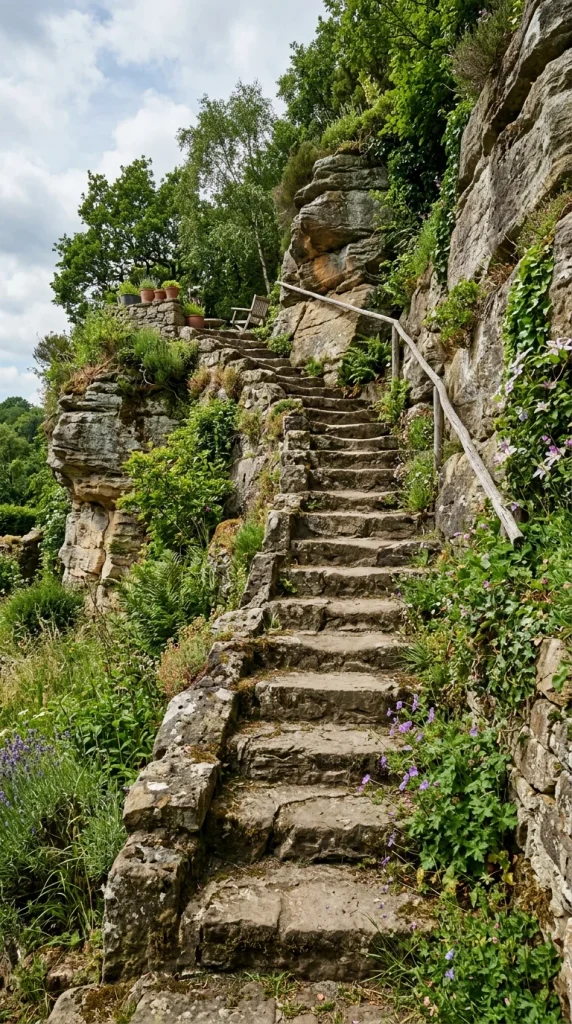
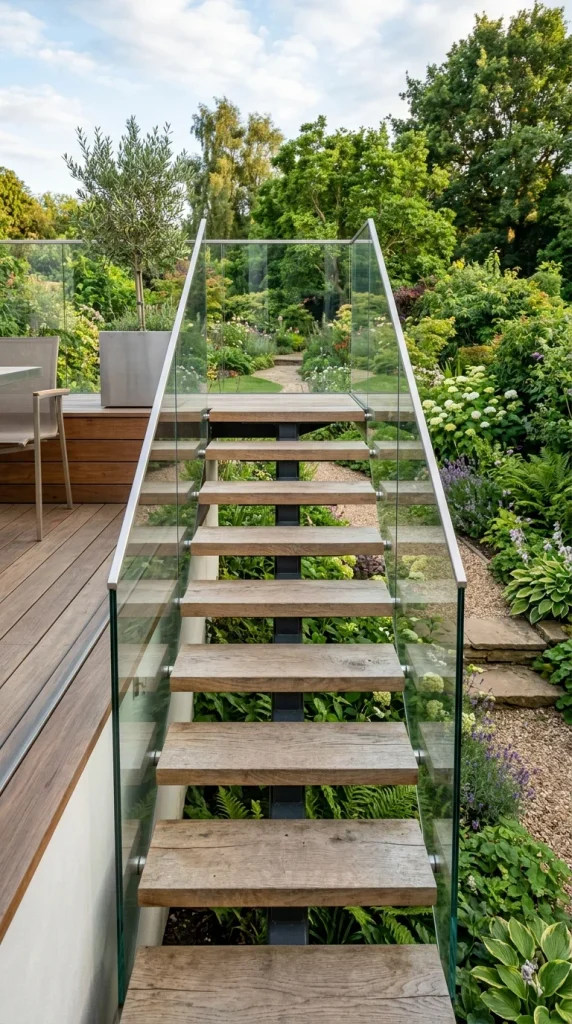
If you have a beautiful view, don’t hide it behind bulky wooden or metal railings. Glass railings paired with modern steps provide safety without the visual weight. They make small backyards feel larger and ensure that your landscaping is the star of the show, not the staircase.
21. Sunken Stone

In some landscapes, the best steps are the ones that look like they’ve always been there. Sunken stone steps involve excavating into the existing earth or rock to create a path. This “subterranean” look is perfect for Japanese-inspired gardens or rugged, mountainous properties.
22. Painted Accents
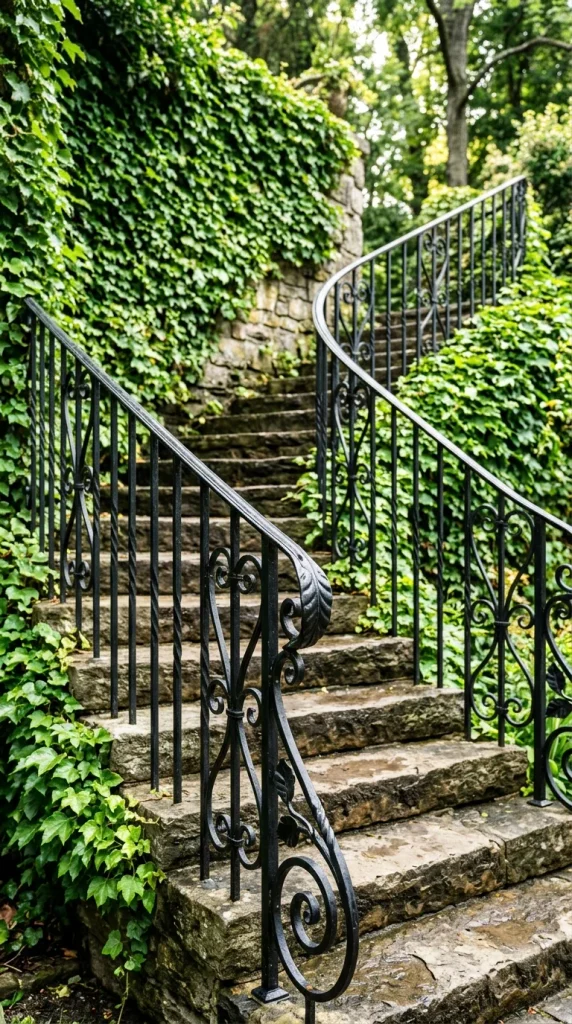
Never underestimate the power of a coat of paint. If you have existing wooden steps that look a bit tired, a two-tone paint job can completely revitalize them. Painting the risers a bold color while staining the treads a natural wood tone adds a playful, customized touch to your outdoor space.