
When the vibrant blooms of summer fade and the autumn leaves have finished their final dance, the garden can often feel a bit stark. However, winter is no reason to abandon your outdoor décor. In fact, it is the perfect season to lean into textures, rich greens, and pops of festive color. Creating a winter planter is about more than just surviving the frost; it is about celebrating the quiet beauty of the colder months. From the architectural elegance of bare branches to the resilient charm of winter-flowering plants, there are endless ways to make your doorstep or patio feel warm and inviting. Here are 23 creative ideas to transform your outdoor space into a winter wonderland.
1. Evergreen Mix
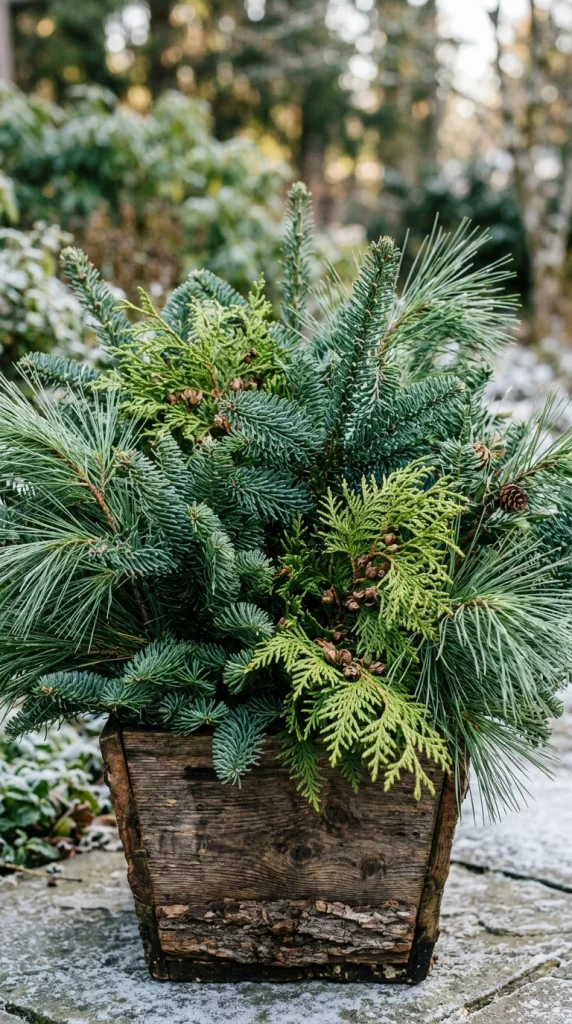
The foundation of any great winter planter is a lush mix of evergreens. Instead of sticking to just one type of foliage, combine different species to create depth and visual interest. Noble fir provides a sturdy, blue-green base, while white pine adds a soft, feathery texture that drapes beautifully over the edges of the pot. Cedar branches often have a slightly yellowish tint and a delicate, scaling texture that fills in gaps perfectly. This combination ensures your planter looks full and vibrant even on the grayest January days.
2. Red Berries
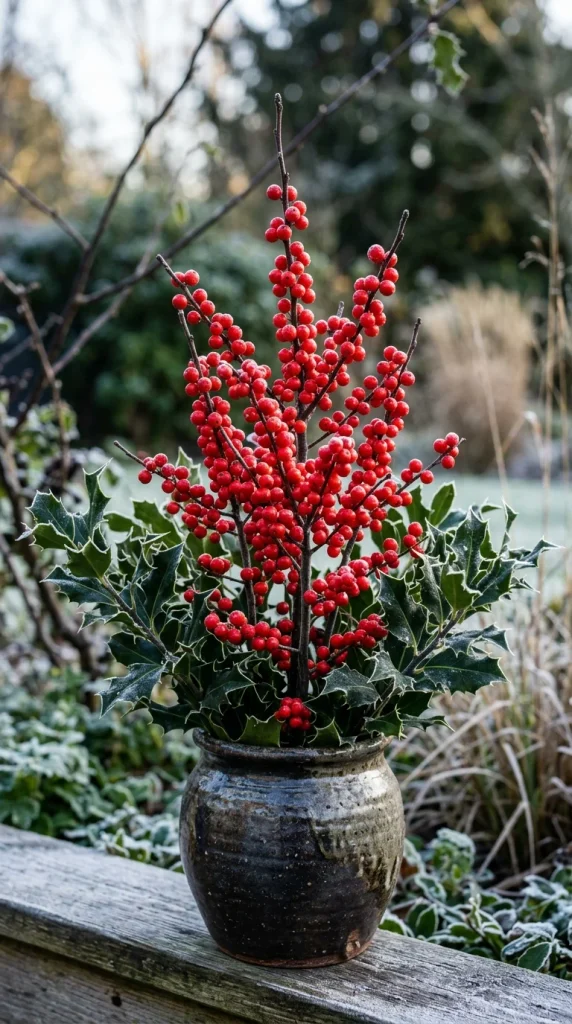
Nothing says winter quite like the contrast of bright red against a snowy backdrop. Winterberry (Ilex verticillata) or bittersweet stems are classic choices for adding a vertical pop of color. These berries are incredibly hardy and will maintain their pigment throughout the season. They act as a focal point, drawing the eye toward your entryway and providing a much-needed burst of energy when the rest of the landscape is dormant.
3. Birch Branches
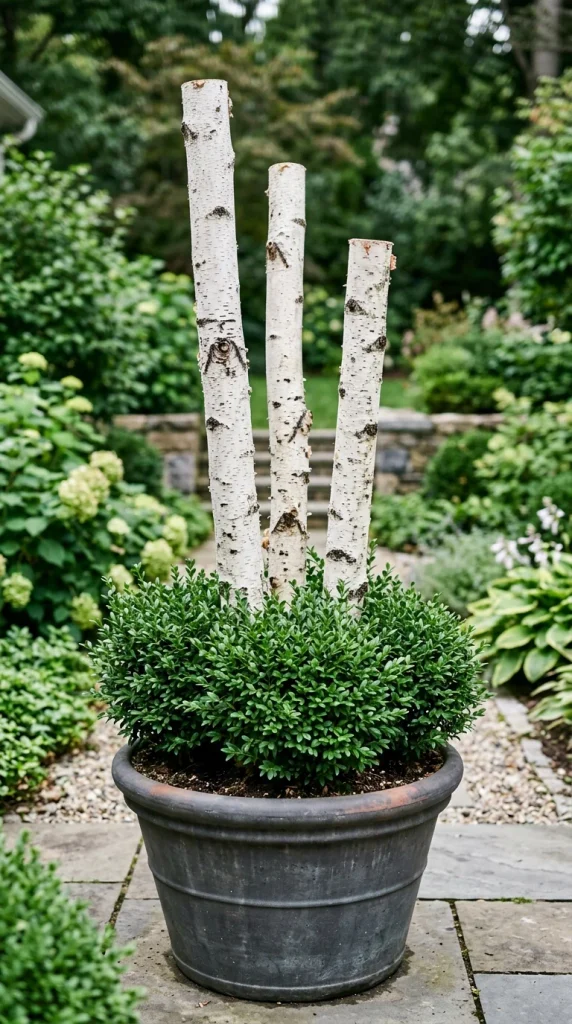
Birch branches bring a sense of height and architectural elegance to outdoor containers. Their stark white bark offers a clean, Scandinavian-inspired look that pairs beautifully with almost any plant. You can use tall, thick logs for a rustic feel or slender “twigs” for a more delicate appearance. Grouping them in the center of the pot creates a “thriller” element that anchors the entire arrangement.
4. Pine Cones
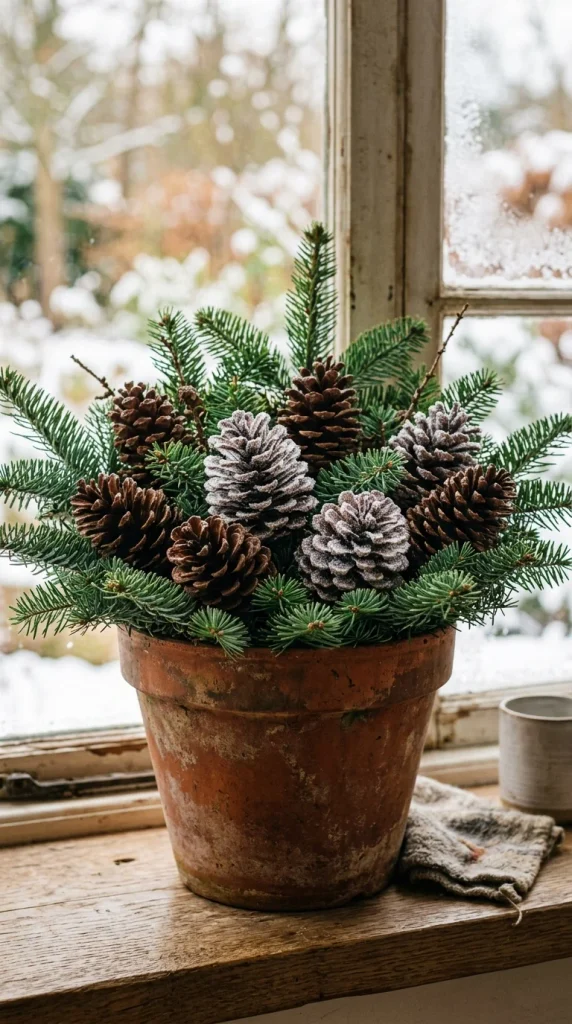
Pine cones are the ultimate budget-friendly filler for winter pots. They add an organic, earthy texture that complements green foliage perfectly. You can leave them in their natural brown state for a woodland look or lightly spray the tips with white or silver paint to mimic the appearance of fresh snow. Use oversized cones for a dramatic effect, or scatter smaller ones to fill in the “soil” area of your planter.
5. Winter Pansies
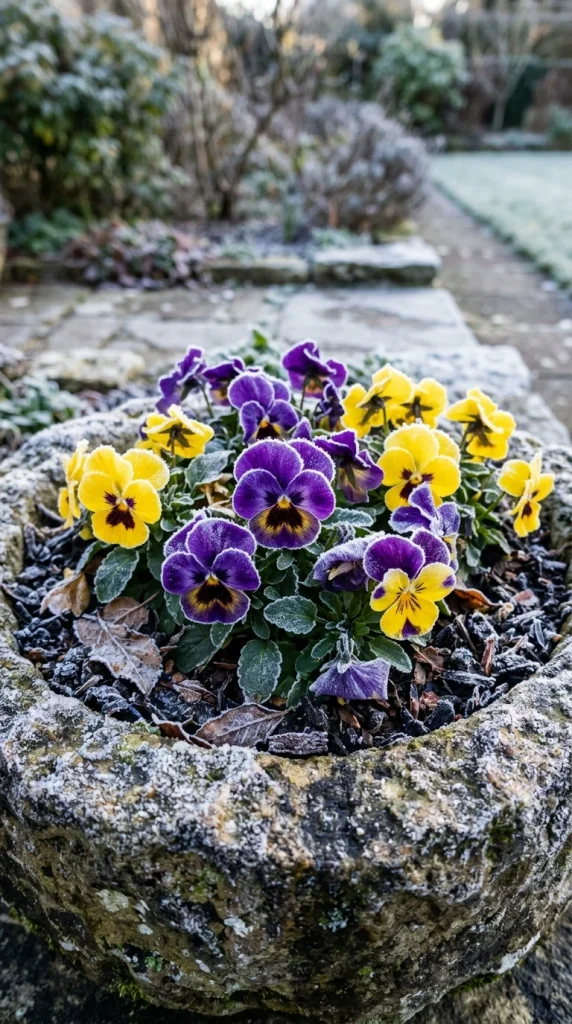
While most flowers retreat during the cold, pansies are surprisingly resilient. Certain varieties are bred specifically to handle chilly temperatures and even light frosts. Planting them near the rim of your container adds a splash of unexpected color. They may droop during a hard freeze, but they often “wake back up” as soon as the sun hits them, providing a cheerful reminder that spring is never too far away.
6. Ornamental Kale
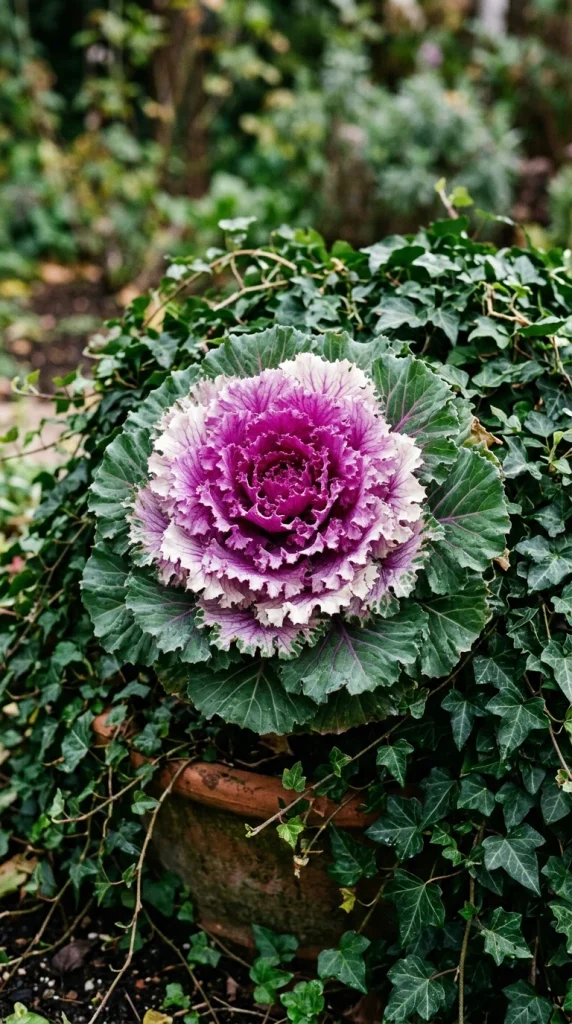
Ornamental kale and cabbage are the unsung heroes of the winter garden. Their colors—ranging from deep plum to creamy white and sage green—actually become more intense as the temperature drops. The ruffled, leathery leaves provide a fantastic structural element that holds up well against wind and snow. Pair them with trailing ivy for a sophisticated, multi-textured look.
7. Boxwood Globes
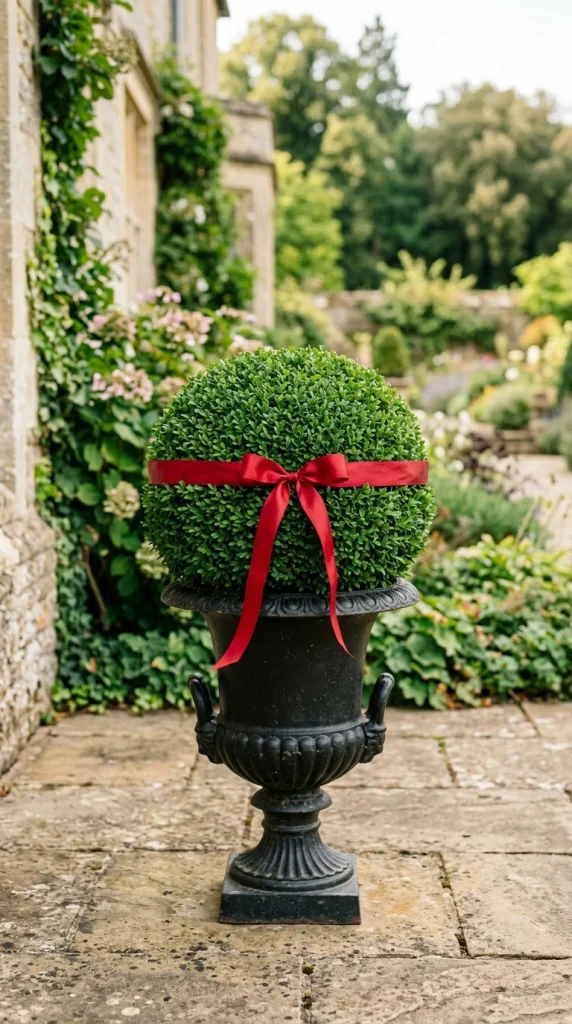
For those who prefer a minimalist or formal aesthetic, a simple boxwood globe is the way to go. These hardy evergreens maintain their shape year-round and provide a clean, polished look. During the winter, you can dress them up with a strand of lights or a simple bow, and when spring arrives, they transition seamlessly back into your regular garden décor.
8. Dogwood Stems
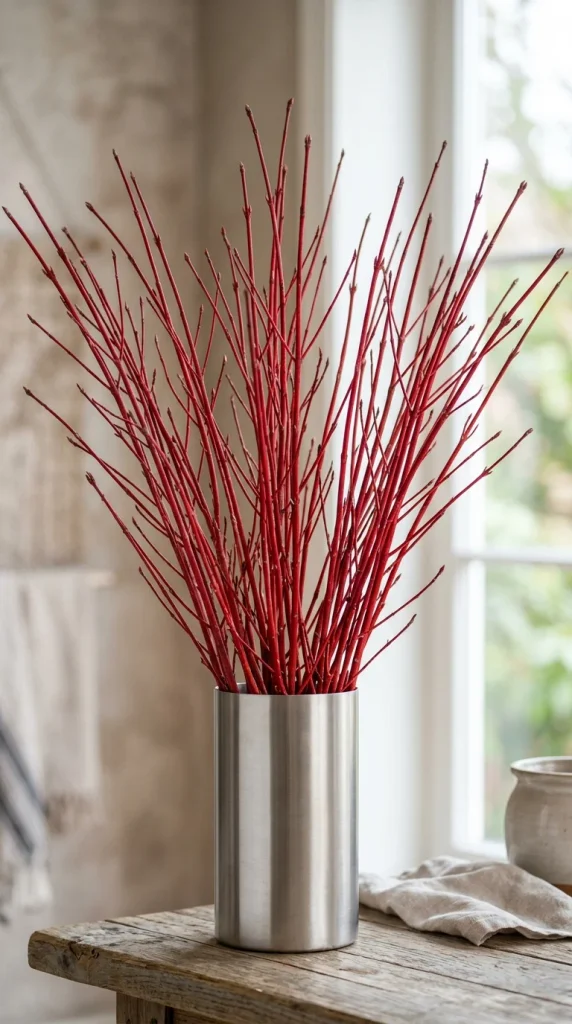
Red-twig or yellow-twig dogwood stems are prized for their vibrant bark. Once the leaves fall, the stems reveal intense shades of crimson or gold. Placing these stems in the center of your planter creates a striking sunburst effect. They are particularly effective when placed against a neutral-colored wall or a snowy yard, where their color can truly shine.
9. Hellebores
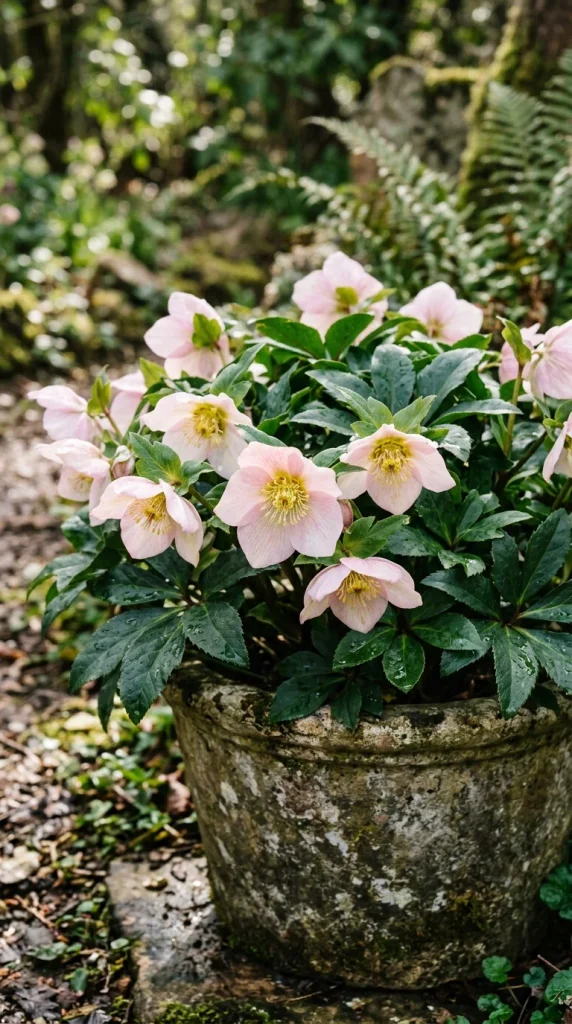
Commonly known as the “Christmas Rose,” Hellebores are one of the few plants that bloom in the heart of winter. Their nodding, cup-shaped flowers come in elegant shades of white, dusty rose, and deep purple. They prefer a bit of shelter, so placing them in a planter near the house is ideal. They add a touch of delicate beauty to an otherwise rugged winter arrangement.
10. Magnolia Leaves
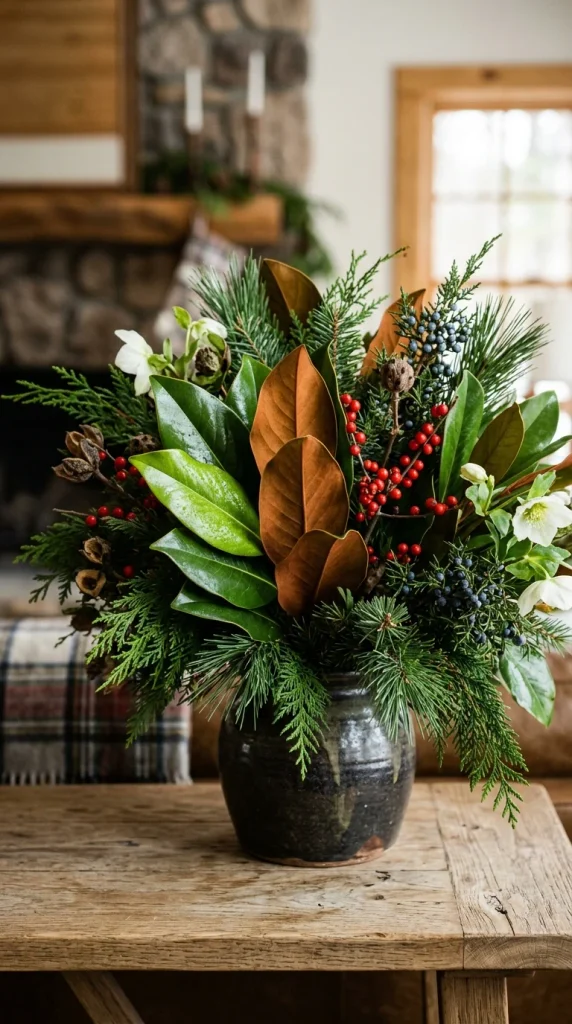
Magnolia leaves offer a dual-toned aesthetic that is incredibly rich. The top of the leaf is a shiny, deep emerald, while the underside is a soft, velvety cinnamon brown. This color combination is perfect for a “natural luxury” theme. Tucking these leaves into your evergreen mix adds a sense of fullness and a variety of scale that smaller needles cannot provide.
11. String Lights
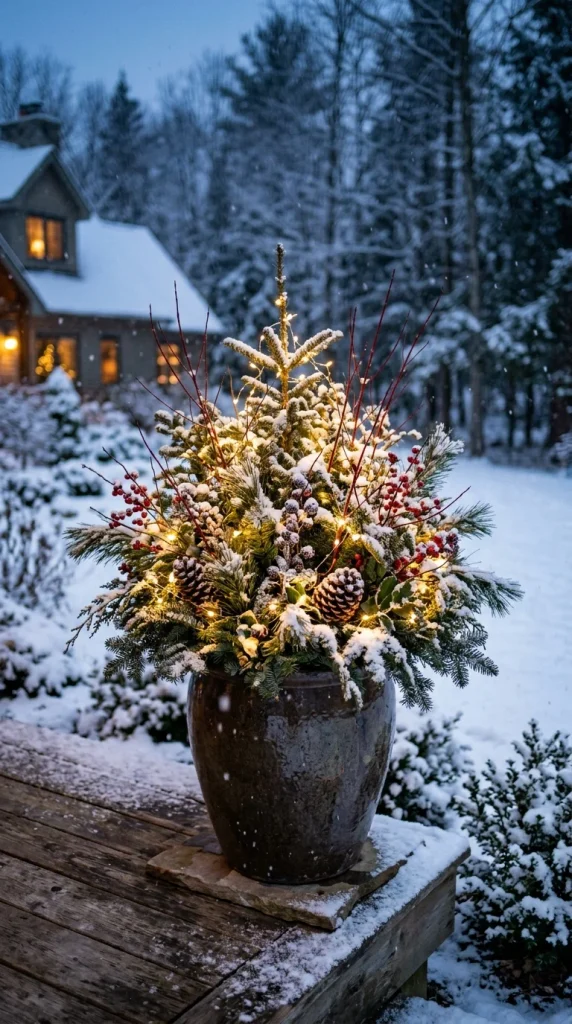
As the days get shorter, lighting becomes an essential element of outdoor décor. Battery-operated or solar-powered fairy lights can be woven through your branches to create a magical, glowing effect. This not only highlights the textures of your plants at night but also makes your home feel warm and lived-in from the street.
12. Frosted Accents
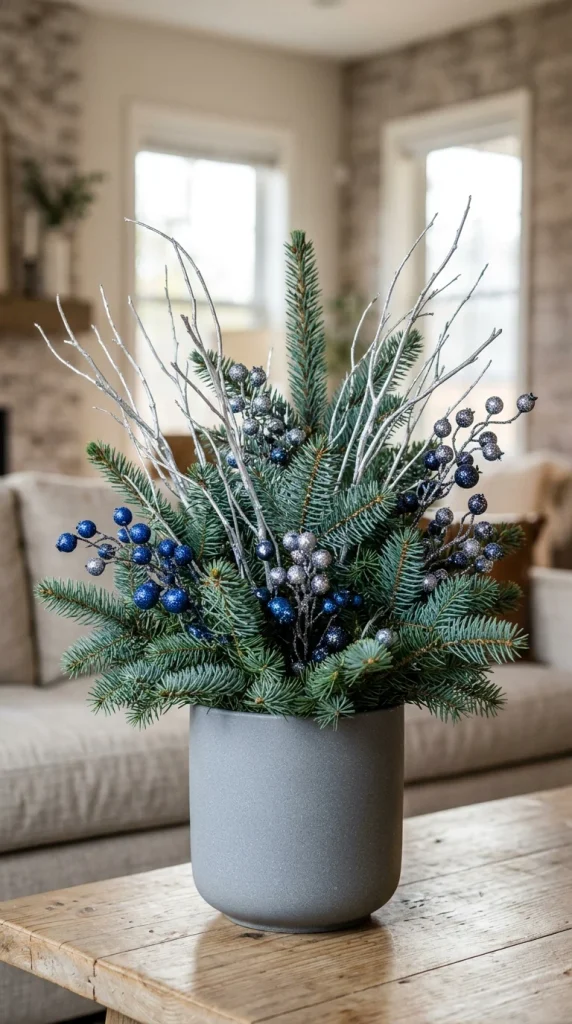
If you live in a region without much snow, you can “fake it” with frosted accents. Use silver-sprayed branches, glittered ornaments, or faux-snow-dusted picks to give your planter a wintry, crystalline look. These elements catch the light beautifully and add a bit of glamour to the organic greens.
13. Eucalyptus Bunches
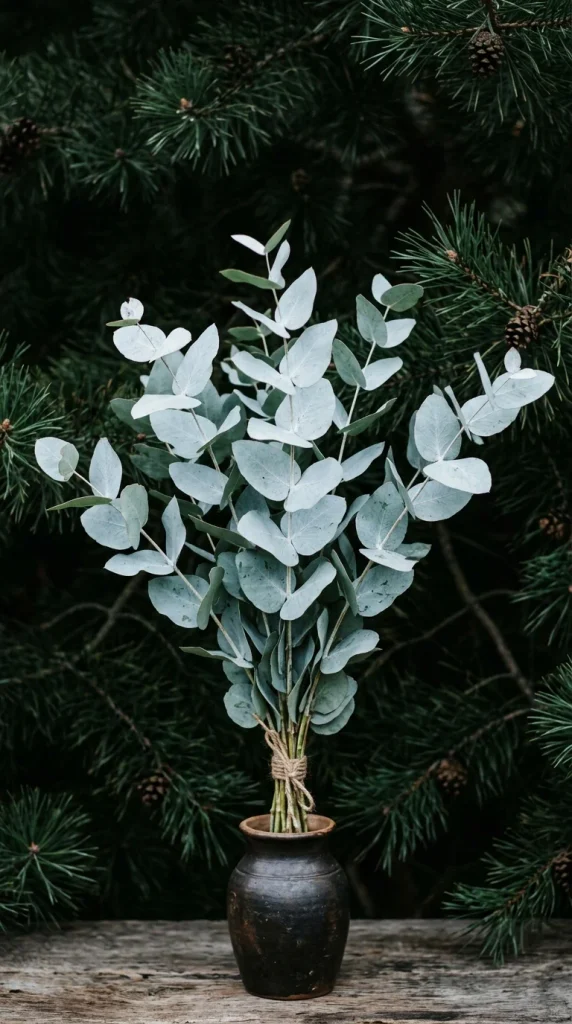
Eucalyptus isn’t just for indoor bouquets. The silvery-blue hue of “Silver Drop” or “Baby Blue” eucalyptus provides a stunning contrast to traditional forest greens. It adds a sophisticated, cool-toned palette to your planter and releases a subtle, refreshing scent when you walk past.
14. Rustic Lanterns
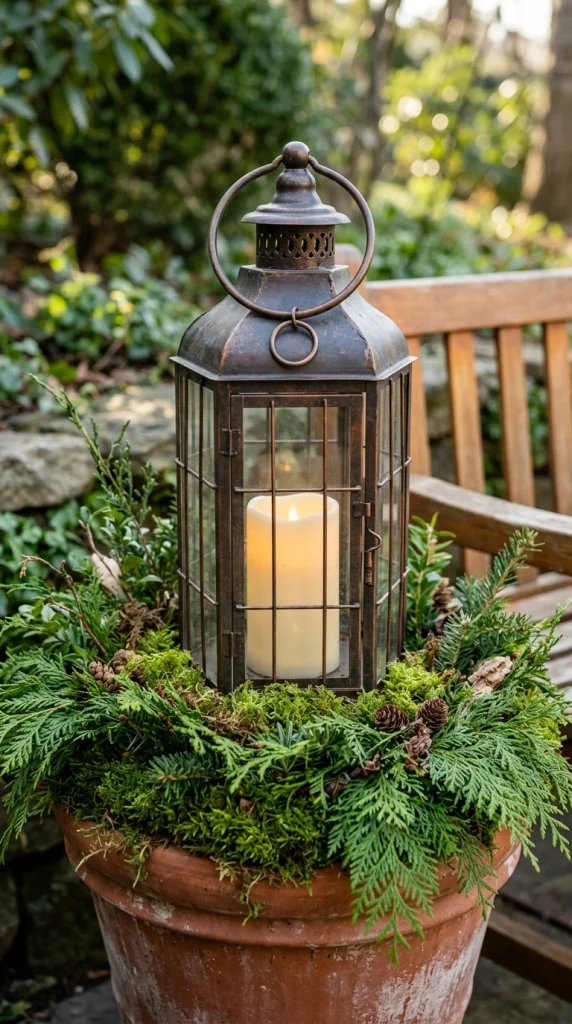
Integrating non-plant elements like lanterns can elevate your planter’s design. A rustic metal or wooden lantern placed directly into the potting soil (or on top of the greens) creates a cozy focal point. Use a flameless LED candle with a timer so your planter glows every evening without any effort.
15. Holly Foliage
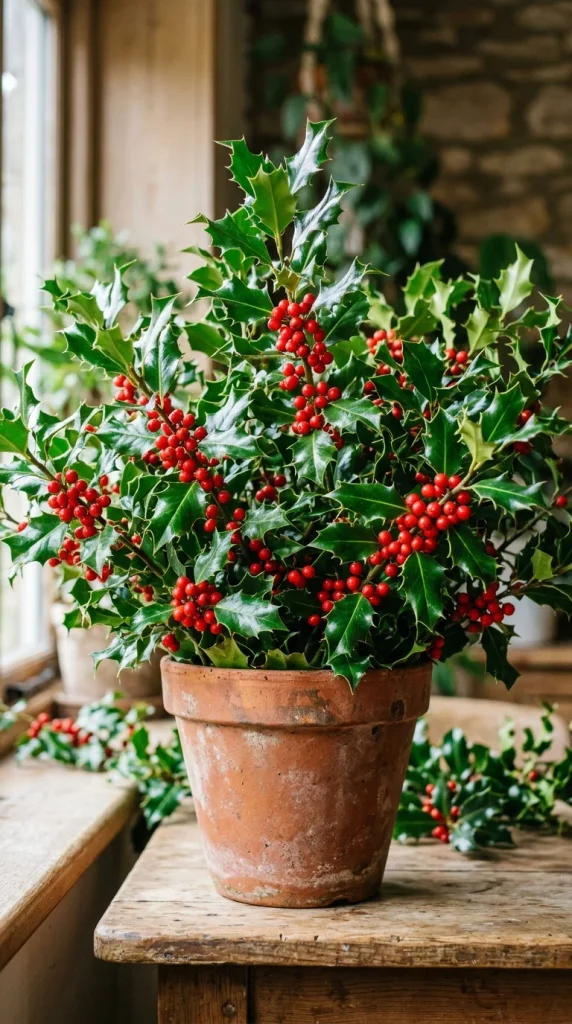
Holly is the quintessential winter plant. Its sharp, glossy leaves reflect light, and the iconic red berries provide instant festive cheer. Because holly is so structurally strong, it holds up excellently in wind. It’s a great choice for “filler” and “spiller” roles in your container design.
16. Cedar Branches
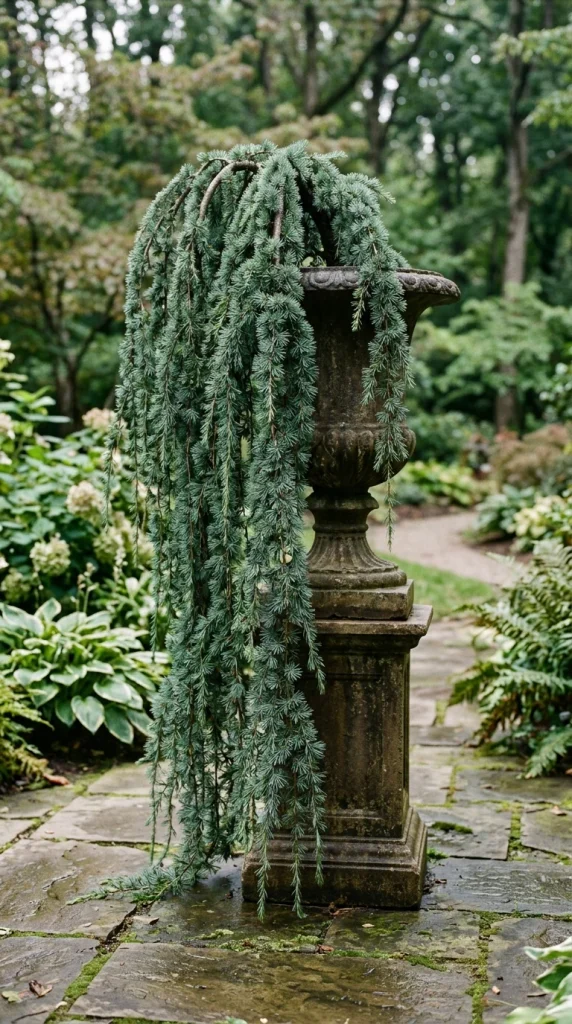
Cedar is the ultimate “spiller.” Its long, flat fronds have a natural drape that looks incredibly elegant when allowed to hang over the edges of a tall pot. It softens the lines of the container and adds a sense of movement to the arrangement, swaying gently in the winter breeze.
17. Skimmia japonica
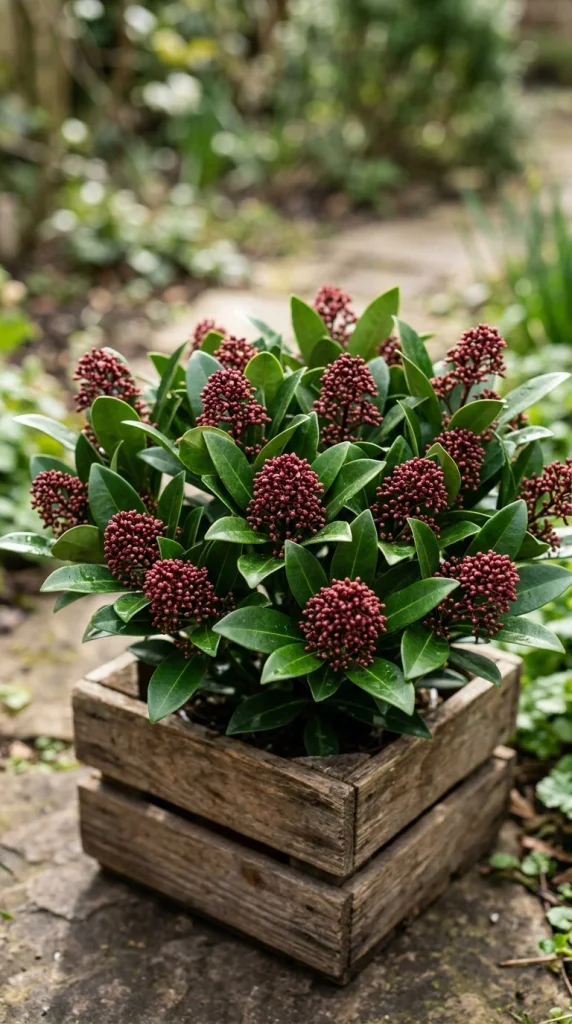
Skimmia is a fantastic winter shrub for containers because it produces dense clusters of tiny red buds in late autumn that stay closed all winter long. These buds provide a consistent texture and color that looks like tiny jewels set against the leathery green foliage. It’s a compact plant, making it perfect for smaller doorstep displays.
18. Dried Oranges
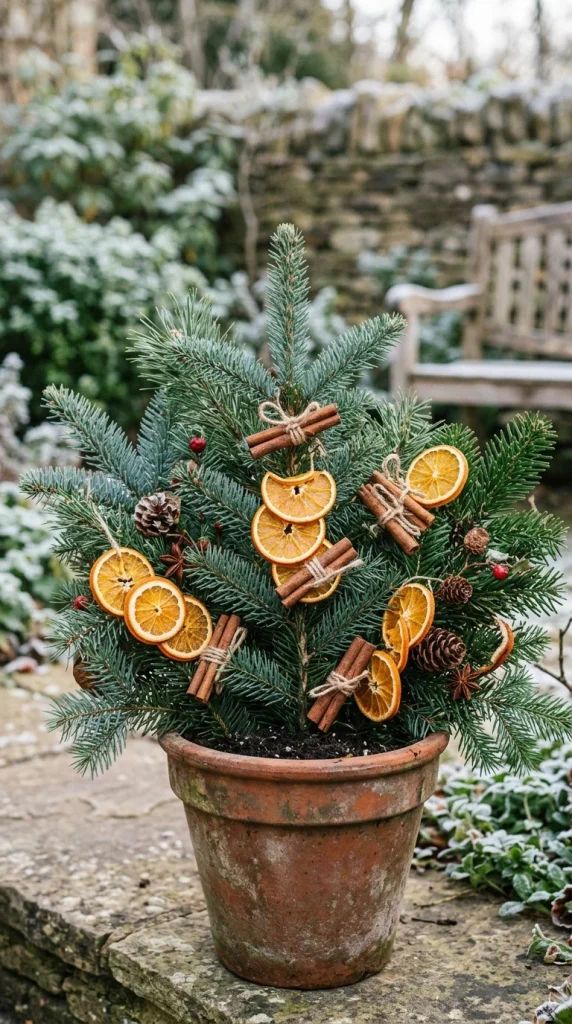
For a Victorian or farmhouse-inspired look, use dried citrus slices and cinnamon sticks. These biodegradable decorations add a warm, amber glow and a touch of nostalgia. You can easily wire them onto the branches of your evergreens. They look particularly charming when paired with pine cones and burlap accents.
19. Potted Junipers
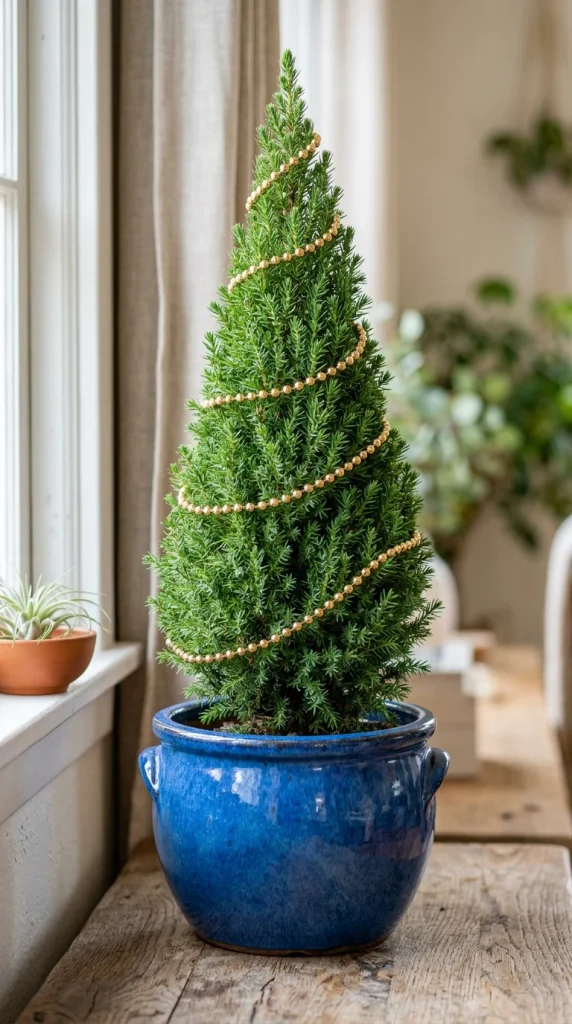
Junipers come in many shapes and sizes, but the upright, conical varieties act as perfect miniature Christmas trees for your porch. Their dense, prickly foliage is very hardy. You can keep them simple or decorate them with small outdoor-safe ornaments for a festive touch that lasts from December through February.
20. Silver Cineraria
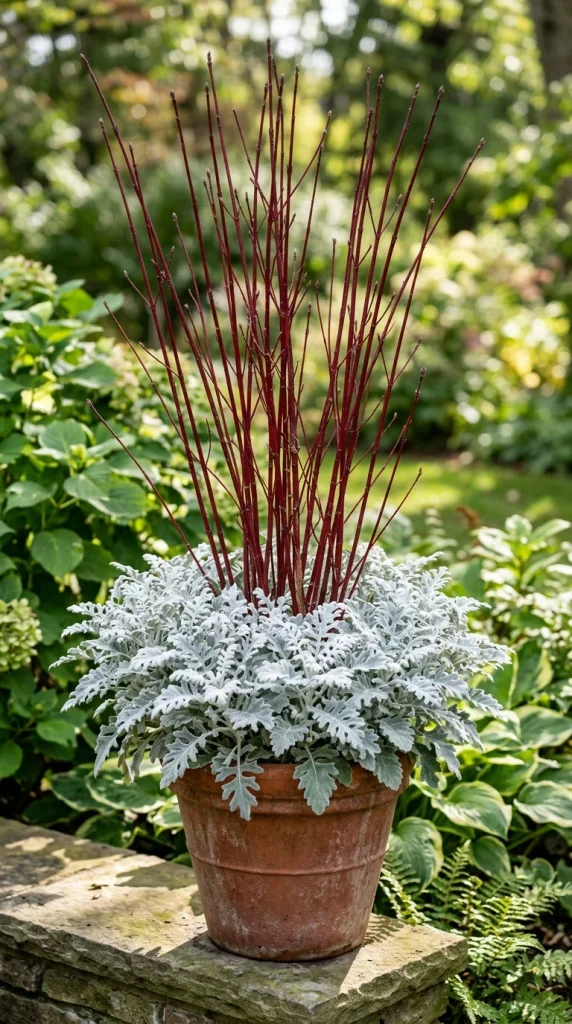
Often used in summer beds, “Dusty Miller” (Cineraria) is surprisingly tough and can survive well into the winter in many climates. Its woolly, silver-white foliage looks exactly like it has been coated in a permanent layer of hoarfrost. It provides a bright, light-reflective quality that contrasts beautifully with dark greens and reds.
21. Winter Heather
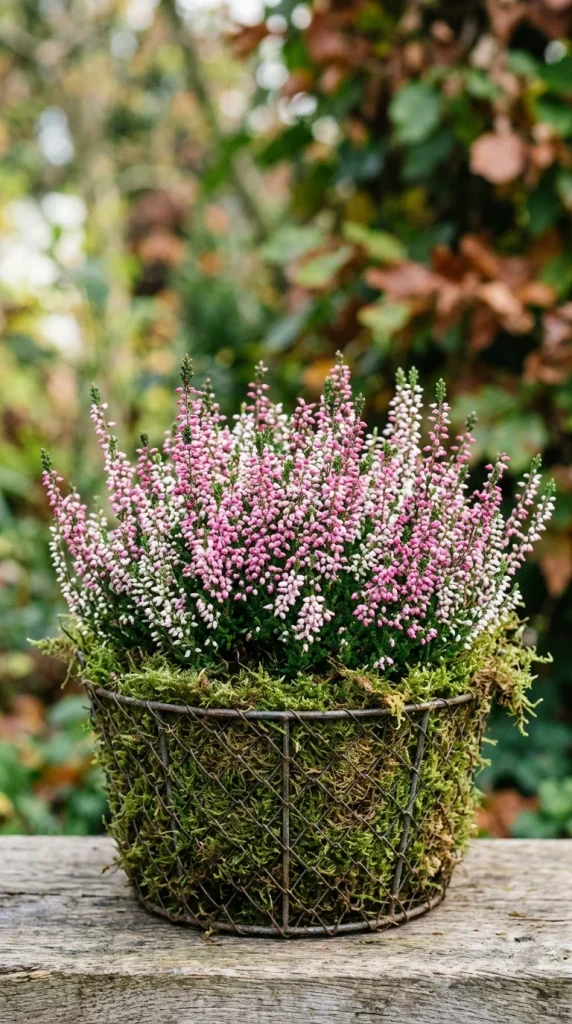
Winter heather (Erica carnea) is a low-growing evergreen that produces a carpet of tiny, bell-shaped flowers in shades of pink, white, or purple throughout the coldest months. It’s an excellent “filler” plant for the front of a planter, adding a soft texture and a delicate pop of color that defies the freezing weather.
22. Velvet Bows
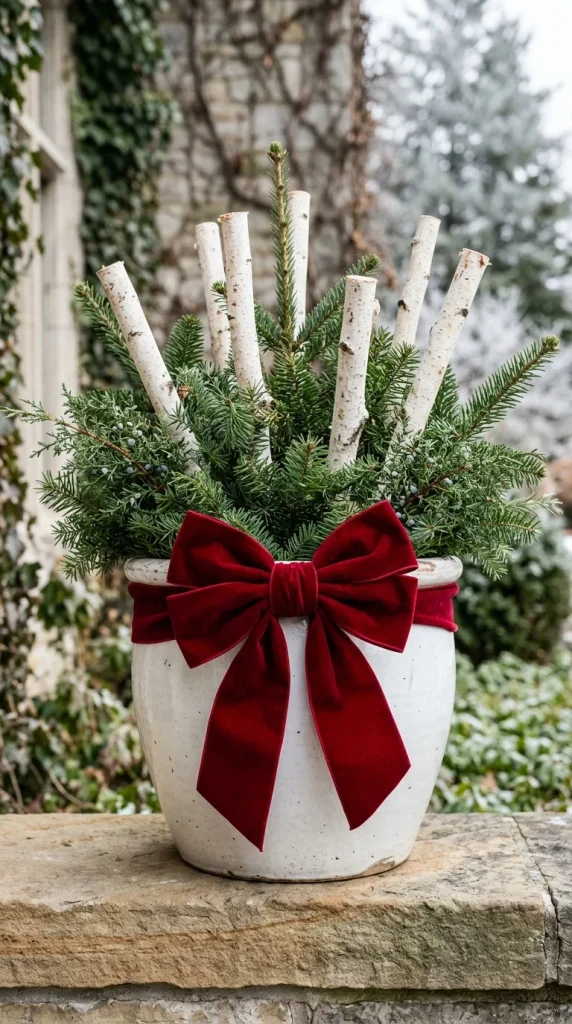
Sometimes, the best way to add color is through accessories. A large, weather-resistant velvet bow in deep crimson or forest green can tie an entire look together. It adds a touch of “softness” to the wood and needles, making the outdoor space feel as decorated and cared for as the interior of your home.
23. Gold Accents
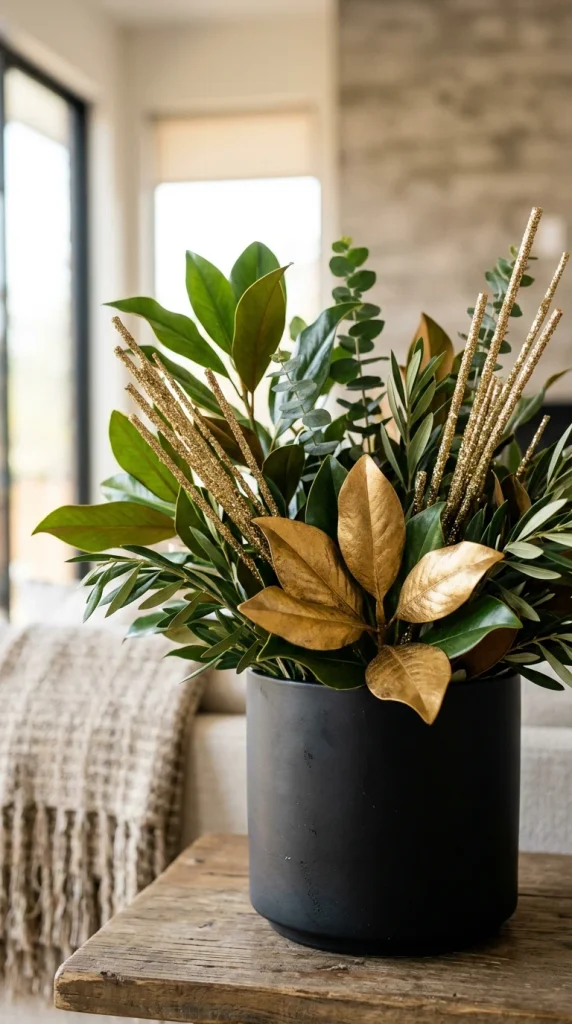
If you want to move away from the traditional red and green, try a “glam winter” theme. Incorporate gold-painted leaves, metallic baubles, or gold-tinted willow branches. Gold reflects the warm light of lanterns and fairy lights beautifully, creating a sophisticated and high-end look for your outdoor space that carries you all the way through to the early signs of spring.