
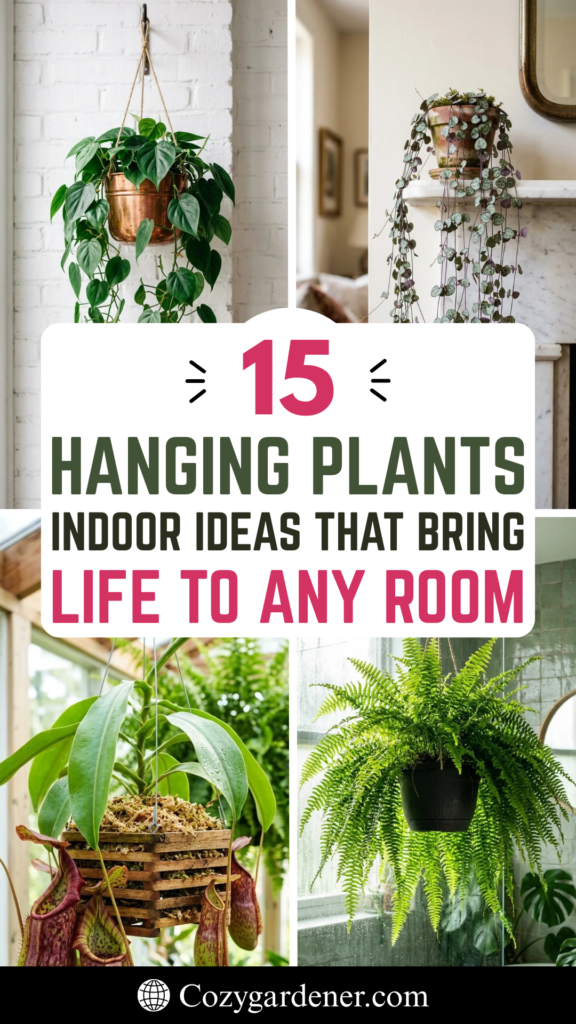
Transforming a living space from a sterile environment into a vibrant, breathing sanctuary often comes down to one simple design choice: greenery. While floor plants and tabletop succulents have their charm, nothing captures the imagination quite like hanging plants. They utilize vertical space, draw the eye upward, and create a “jungle canopy” effect that feels both luxurious and cozy.
Whether you live in a tiny studio apartment or a sprawling suburban home, incorporating trailing vines and suspended foliage can mask awkward corners, soften architectural lines, and even purify the air you breathe. Here are 15 hanging plant ideas to revitalize your interior decor.
1. Spider Plant
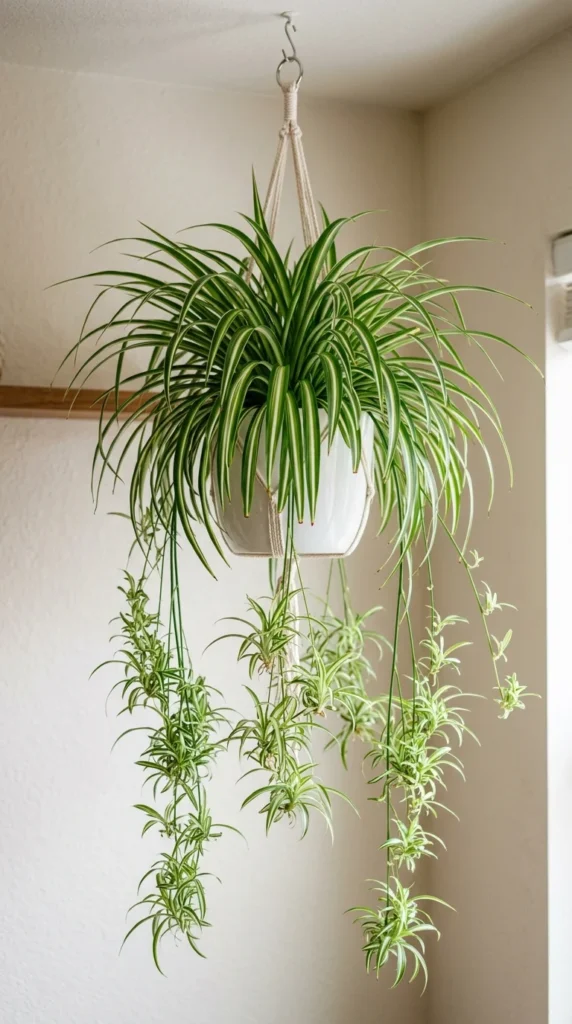
The Spider Plant (Chlorophytum comosum) is perhaps the most iconic hanging plant in history. Known for its arching, ribbon-like leaves and its prolific nature, it produces “pups” or “spiderettes” that dangle from the mother plant like tiny paratroopers.
- Why it works: It’s incredibly resilient and adapts to various lighting conditions, though it thrives in bright, indirect light.
- Design Tip: Use a tiered hanger to allow the spiderettes to cascade down multiple levels, creating a waterfall of green.
- Care: Water when the top inch of soil is dry and watch out for brown tips, which usually indicate fluoride in the tap water.
2. String of Pearls
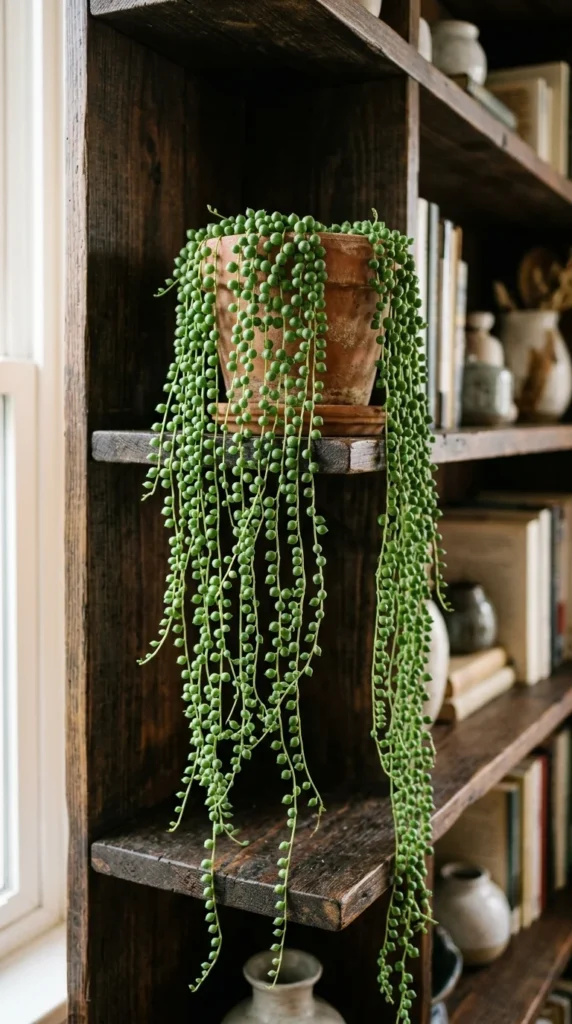
For those who love a minimalist or modern aesthetic, the String of Pearls (Senecio rowleyanus) is a masterpiece of nature. This succulent features tiny, pea-shaped leaves strung along thin, trailing stems.
- Why it works: Its unique geometry makes it a conversation piece. It looks stunning in hanging glass globes or simple ceramic bowls.
- Design Tip: Place this plant on a high shelf where the “pearls” can hang freely without being bumped, as the beads can be fragile.
- Care: Like most succulents, it needs bright light and very little water. Let the soil dry out completely between waterings.
3. Golden Pothos
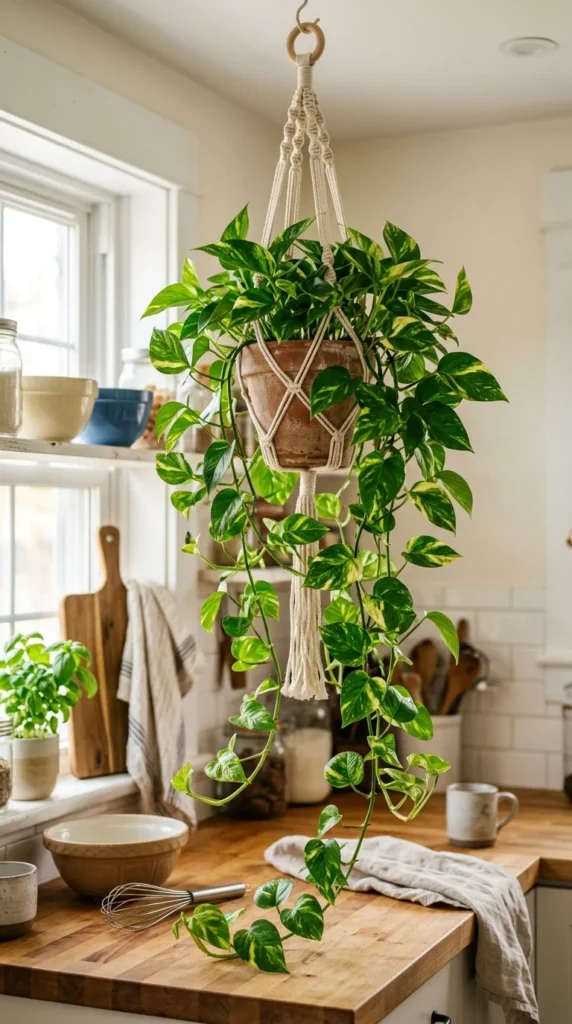
Often called the “cubicle plant” because of its near-indestructibility, the Golden Pothos (Epipremnum aureum) is the gold standard for beginners. Its heart-shaped leaves feature beautiful yellow variegation that brightens up dim corners.
- Why it works: It grows incredibly fast. You can trail it across curtain rods, wrap it around mirrors, or let it tumble down from a high wardrobe.
- Design Tip: Train the vines to grow along the wall using small clear hooks to create a living “wallpaper” effect.
- Care: It tolerates low light but thrives in medium to bright indirect light. Water when the leaves start to look slightly wilted.
4. Boston Fern
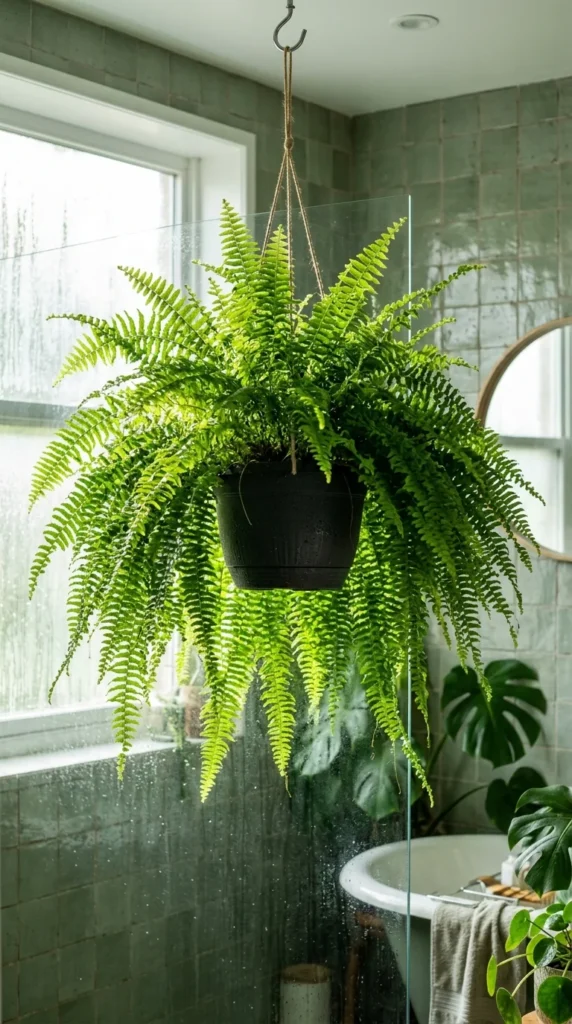
If you want to evoke the feeling of a Victorian conservatory or a tropical rainforest, the Boston Fern (Nephrolepis exalta) is your best friend. Its feathery, sword-shaped fronds create a massive volume of green.
- Why it works: It’s a natural humidifier and air purifier. It fills up large empty spaces with ease.
- Design Tip: These thrive in high-humidity areas, making them the perfect choice for a master bathroom with a window.
- Care: Keep the soil consistently moist (but not soggy) and provide plenty of humidity through misting or a pebble tray.
5. Heartleaf Philodendron
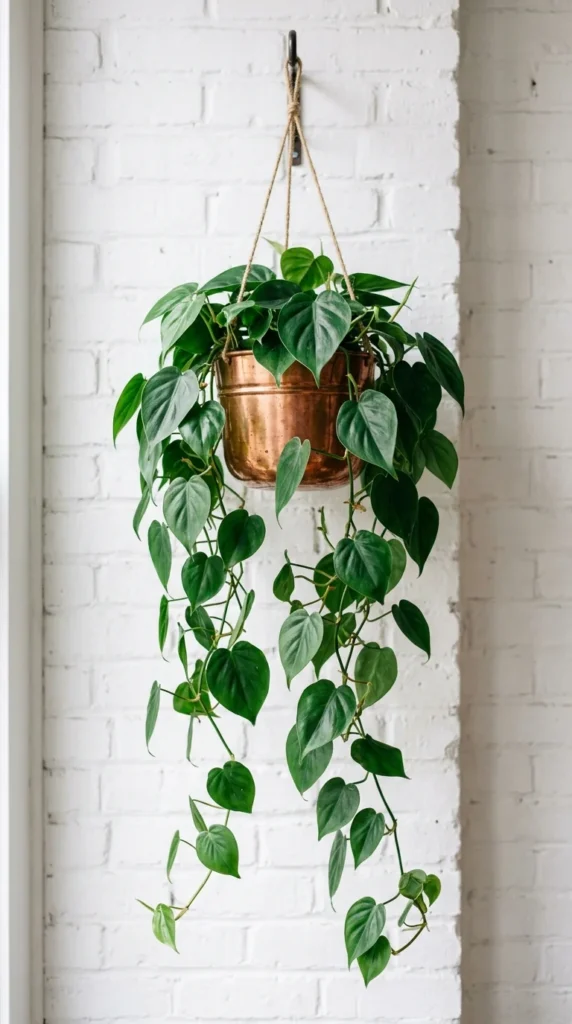
Similar in appearance to the Pothos but with a more delicate, romantic silhouette, the Heartleaf Philodendron (Philodendron hederaceum) is a timeless classic. Its leaves are perfectly heart-shaped and have a slightly matte finish compared to Pothos.
- Why it works: It is extremely versatile and can handle lower light levels than many other trailing plants.
- Design Tip: Group three of these together at varying heights to create a lush, green focal point in a corner of your living room.
- Care: Water when the top half of the soil is dry. It’s very forgiving if you forget a watering now and then.
6. English Ivy
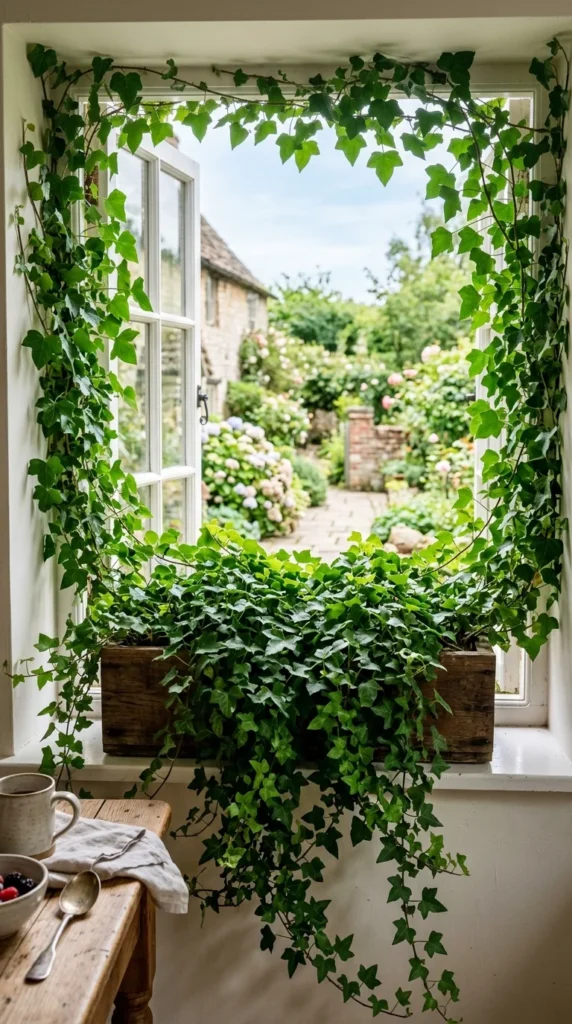
English Ivy (Hedera helix) brings an air of classic elegance and European charm to any room. While often seen climbing the exterior of stone cottages, it makes a magnificent indoor hanging plant.
- Why it works: It can be trained into shapes or allowed to trail in a dense, leafy curtain.
- Design Tip: Hang it near a window where it can catch a breeze; the movement of the delicate leaves adds a dynamic feel to the room.
- Care: It prefers cooler temperatures and bright, indirect light. Be sure to wash the leaves occasionally to prevent spider mites.
7. Burro’s Tail
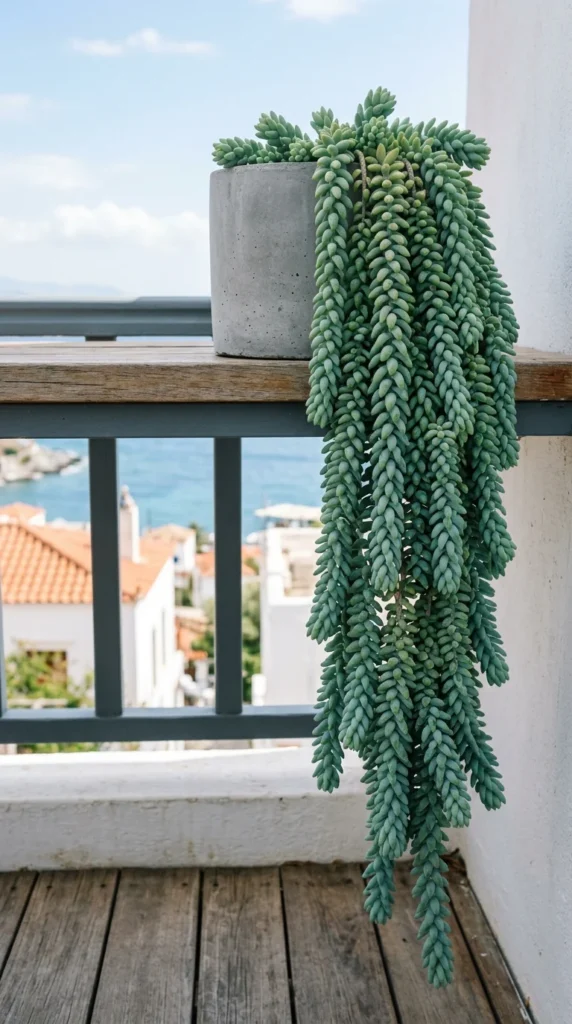
The Burro’s Tail (Sedum morganianum) is a showstopper. This succulent produces thick, heavy stems covered in fleshy, teardrop-shaped leaves that look like braided tails.
- Why it works: The texture is unlike any other plant, offering a chunky, architectural look that contrasts well with wispy ferns.
- Design Tip: Use a sturdy ceiling hook, as a mature Burro’s Tail can become quite heavy due to the water stored in its leaves.
- Care: Needs lots of sunlight and very infrequent watering. Be careful when handling it, as the leaves fall off easily if touched.
8. Staghorn Fern
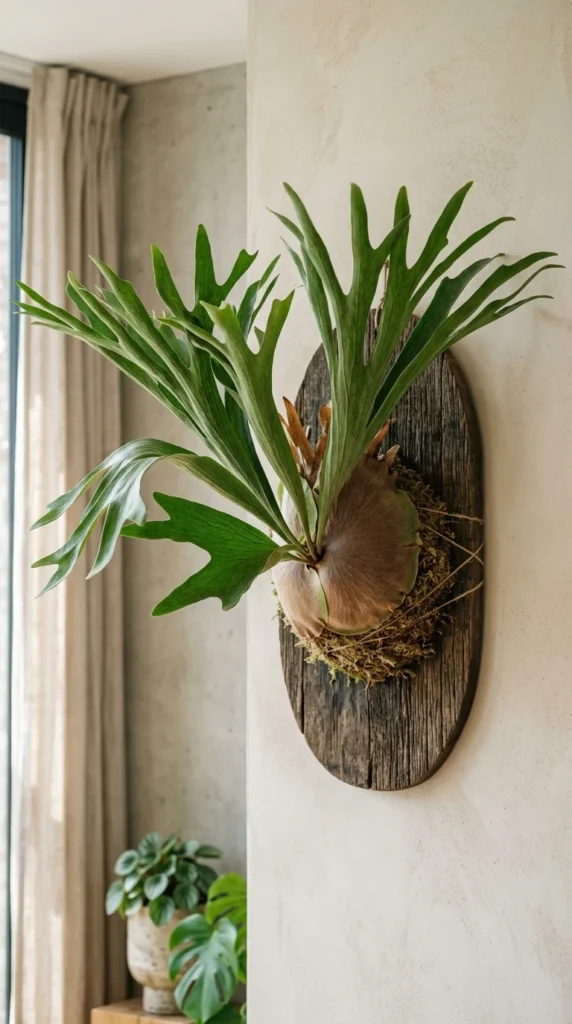
The Staghorn Fern (Platycerium) is more of a living sculpture than a standard houseplant. In nature, they grow on trees, making them perfect for mounting on wooden boards or hanging in wire baskets lined with moss.
- Why it works: It breaks the mold of the “potted plant” and serves as a piece of wall art.
- Design Tip: Mount it on a piece of reclaimed wood to lean into a rustic or industrial interior design theme.
- Care: It loves humidity and filtered light. Instead of standard watering, you usually soak the entire mount in a sink once a week.
9. String of Hearts
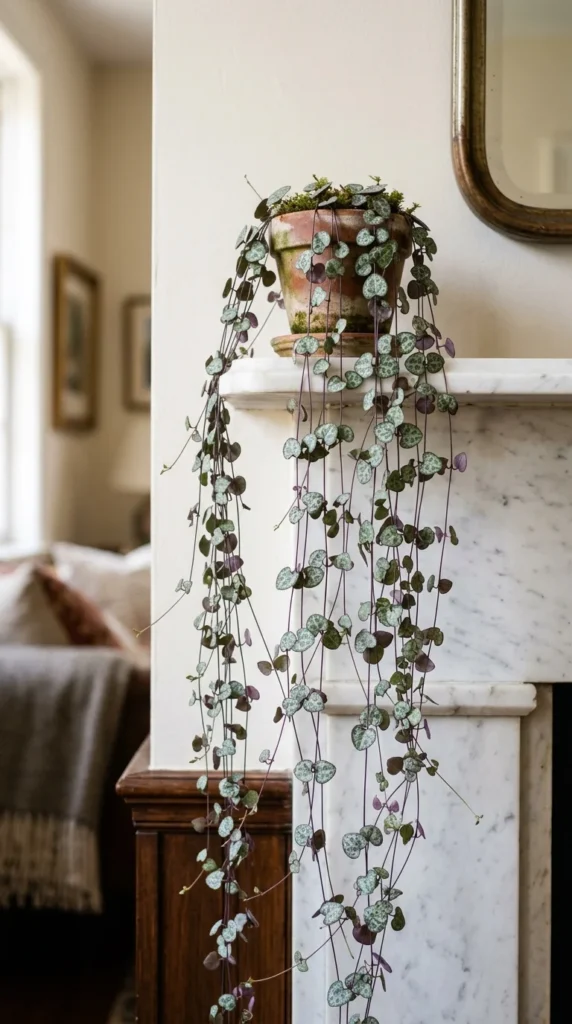
The String of Hearts (Ceropegia woodii) is the epitome of dainty beauty. Its thin, purple-toned vines are adorned with small, succulent, heart-shaped leaves that feature a silvery marbled pattern.
- Why it works: It creates a very fine, “curtain” effect that doesn’t overwhelm a space. It’s perfect for small apartments.
- Design Tip: Hang it in front of a mirror to double the visual impact of its delicate, trailing vines.
- Care: It prefers bright, indirect light and well-draining soil. Let it dry out completely between waterings.
10. Pitcher Plant
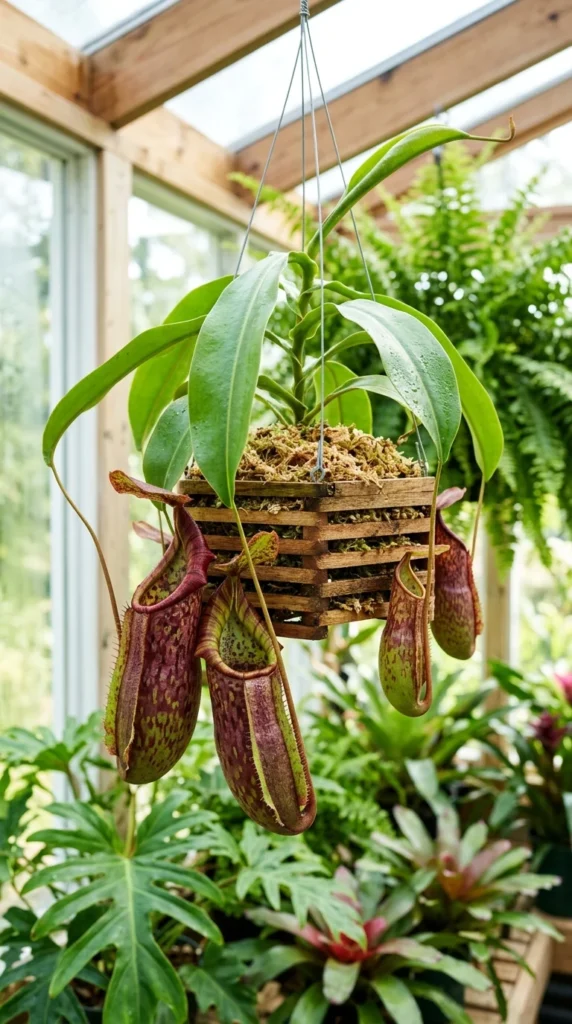
For the adventurous gardener, the Pitcher Plant (Nepenthes) adds an exotic, prehistoric flair. These are carnivorous plants that grow “pitchers” at the end of their leaves to catch insects.
- Why it works: It’s a total conversation starter and adds a splash of unusual color (often deep reds and purples).
- Design Tip: Hang it in a sunroom or a kitchen where its unique silhouette can be appreciated at eye level.
- Care: They require high humidity and must be watered with distilled water or rainwater, as they are sensitive to minerals in tap water.
11. Lipstick Plant
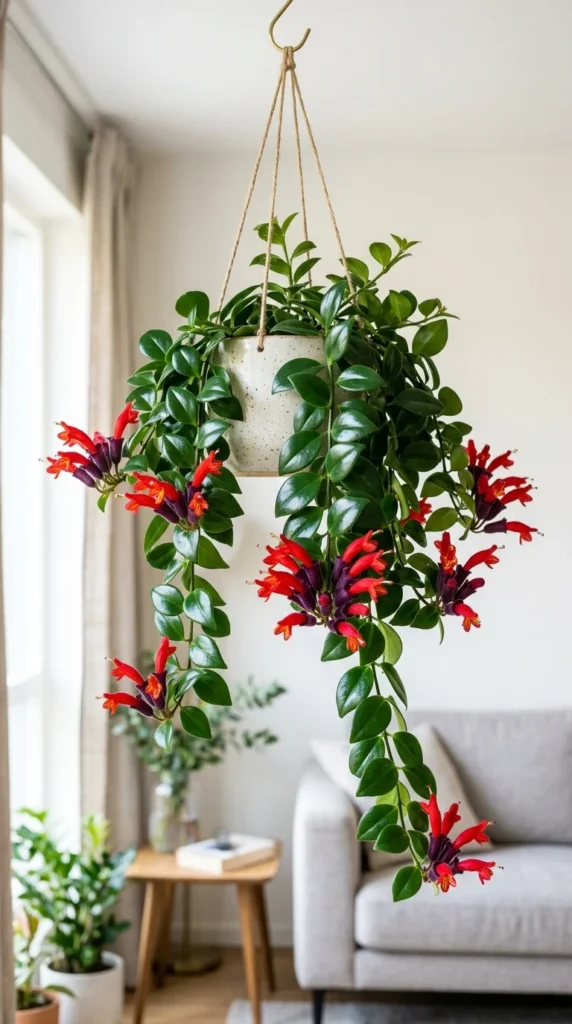
The Lipstick Plant (Aeschynanthus radicans) gets its name from its brilliant red tubular flowers that emerge from dark “tubes,” looking just like a tube of lipstick.
- Why it works: Most hanging plants are prized for their foliage, but this one brings a stunning pop of floral color.
- Design Tip: Pair it with dark-colored pots (like charcoal or navy) to make the vibrant red flowers stand out even more.
- Care: It needs bright, indirect light to bloom. Keep the soil moist but not wet, and give it plenty of warmth.
12. Air Plants

Air plants (Tillandsia) are the ultimate low-maintenance hanging option because they don’t require soil. They take in nutrients and moisture through their leaves from the air.
- Why it works: Because they don’t need pots of dirt, you can hang them in geometric wire frames, glass globes, or even tied to pieces of driftwood.
- Design Tip: Create a “floating garden” by hanging several air plants at varying heights using invisible fishing line.
- Care: Give them a bright spot and “water” them by soaking them in a bowl of water for 20-30 minutes once a week.
13. Marble Queen Pothos
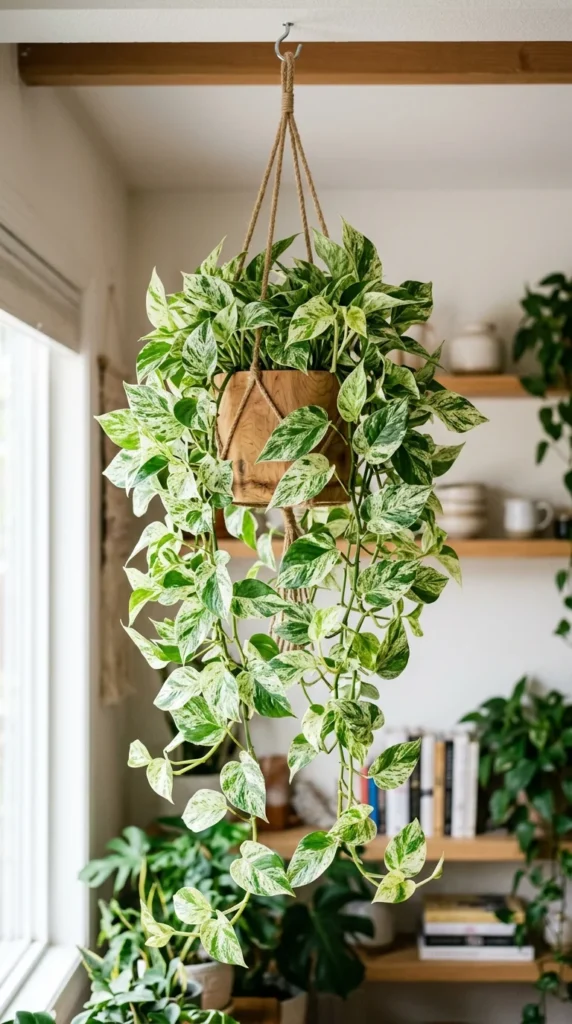
If you like the ease of the Golden Pothos but want something a bit more sophisticated, the Marble Queen is the answer. Its leaves are heavily variegated with creamy white and mint green.
- Why it works: The high percentage of white in the leaves gives it a very “bright” and clean look that suits Scandinavian or “All-White” decor.
- Design Tip: Place this in a room with white walls; the green-on-white variegation creates a subtle, layered aesthetic.
- Care: Similar to Golden Pothos, but it needs slightly more light to maintain its white variegation.
14. Peperomia Hope
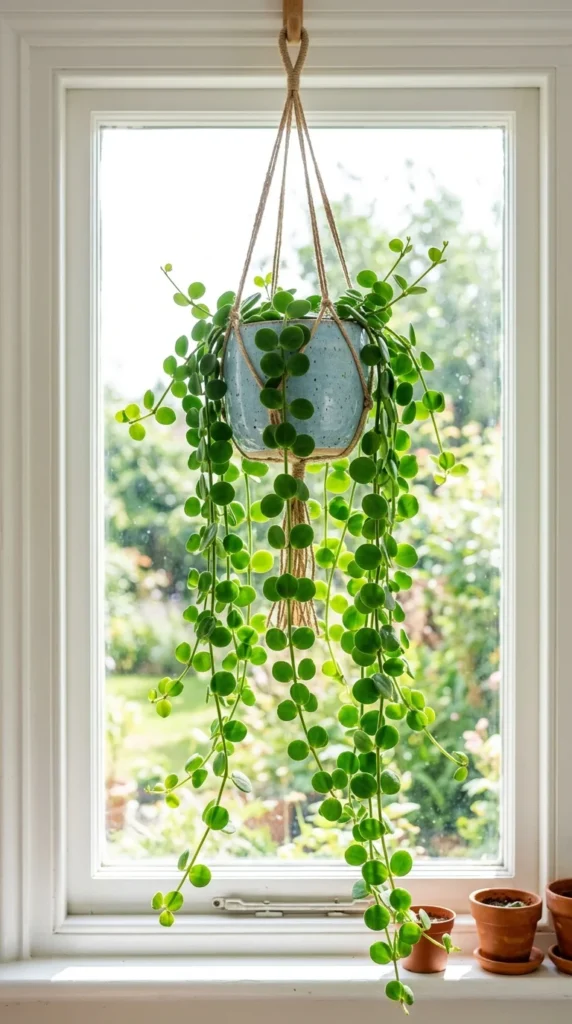
Peperomia ‘Hope’ is a charming, understated trailing plant. It features thick, succulent, round leaves that grow in clusters of three or four along a trailing stem.
- Why it works: It has a very structural, organized look compared to the wilder growth patterns of ferns or ivies.
- Design Tip: Its small scale makes it perfect for hanging over a desk or in a small reading nook.
- Care: It stores water in its thick leaves, so it’s quite drought-tolerant. Let the soil dry out significantly before watering again.
15. Hoya Carnosa
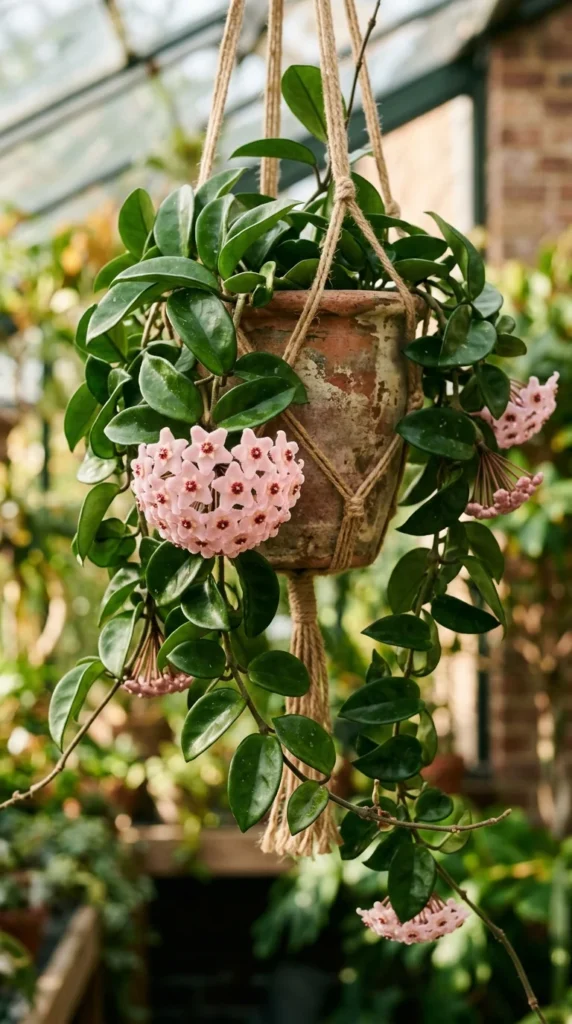
Often called the “Wax Plant,” the Hoya Carnosa is a long-lived heirloom plant. Its leaves are thick, waxy, and often speckled with silver. When it blooms, it produces stunning, star-shaped, fragrant flowers.
- Why it works: It’s a slow grower, meaning it won’t take over your room overnight, and the flowers are truly spectacular.
- Design Tip: Use a vintage or antique hanging pot to complement the Hoya’s classic, old-world vibe.
- Care: Hoyas love to be root-bound, so don’t rush to repot them. Give them bright light and let them dry out between waterings to encourage blooming.
Pro-Tips for Hanging Plants
To ensure your elevated garden thrives, keep these three things in mind:
- Check the Weight: Soil is heavy, and wet soil is even heavier. Ensure your ceiling hooks are screwed into a joist or use heavy-duty toggle bolts if you’re going into drywall.
- The Watering Struggle: Watering hanging plants can be messy. Consider using pots with “internal” reservoirs or take the plants down to the sink once a week for a deep soak.
- Light Levels: Remember that light levels are often different near the ceiling than they are at floor level. Ensure the top of the plant—not just the trailing vines—gets enough light to prevent the plant from going “bald” on top.