
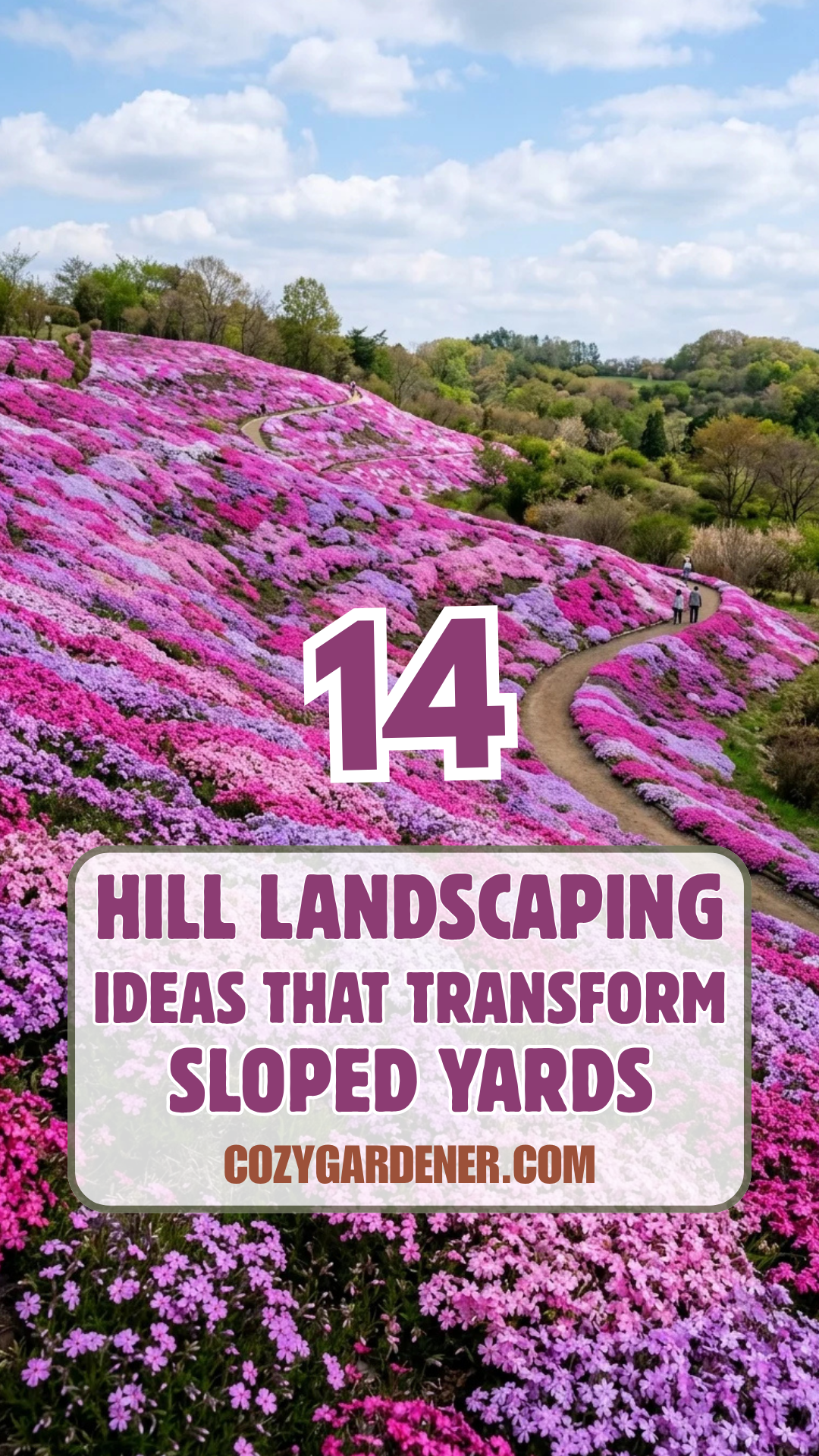
A sloped yard is often viewed as a landscaping nightmare, plagued by drainage issues, soil erosion, and unusable space. However, professional designers view a hillside as a blank canvas with incredible vertical potential. Unlike a flat lot, a sloped yard offers the opportunity to create distinct “rooms,” dramatic focal points, and dynamic movement that a level surface simply cannot provide. By embracing the incline rather than fighting it, you can turn a challenging grade into the most stunning feature of your property.
From structural engineering feats to soft, naturalistic plantings, here are 14 transformative hill landscaping ideas to turn your vertical space into an outdoor sanctuary.
1. Retaining Walls
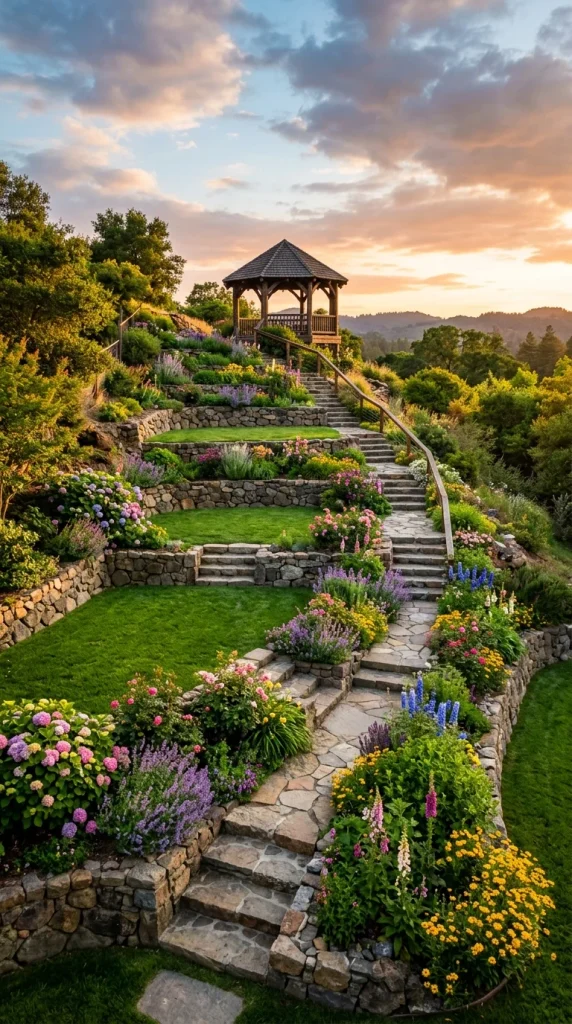
Retaining walls are the backbone of hillside landscaping. They serve the dual purpose of preventing soil erosion and creating flat, usable “shelves” of land. By using materials like natural stone, poured concrete, or pressure-treated timber, you can dictate the aesthetic of your yard. A series of low, tiered walls is often more visually appealing and easier to build than one massive, towering wall. These tiers allow for varied planting pockets, where you can mix textures and colors to soften the hardscape.
2. Stone Steps
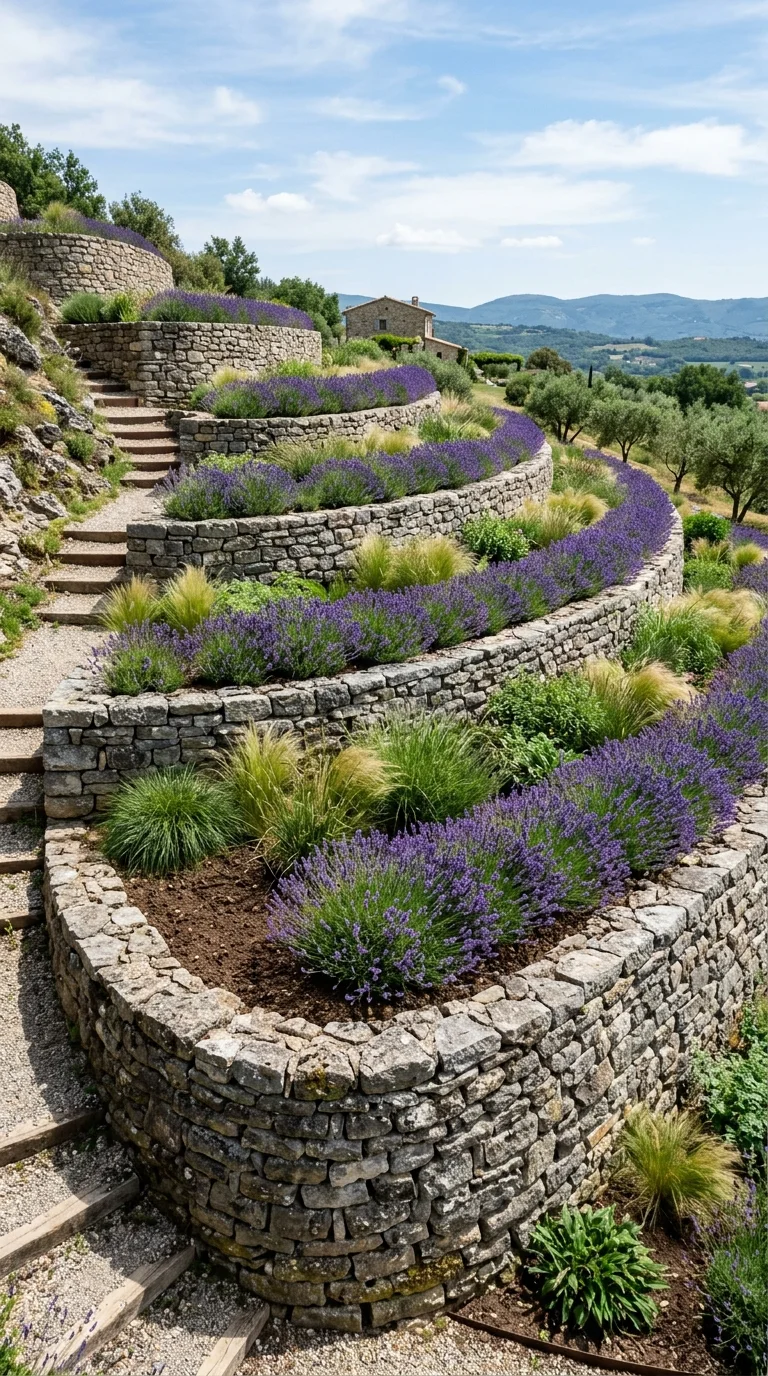
When dealing with a slope, safe and attractive navigation is paramount. Stone steps provide a permanent, rugged solution for traversing the grade. Using oversized flagstones or “snapped” limestone treads gives the appearance that the staircase has been there for centuries. To ensure the steps feel integrated into the landscape, tuck low-growing ground covers like creeping thyme or sedum into the crevices between the stones. This “living staircase” look bridges the gap between masonry and nature.
3. Cascading Waterfalls
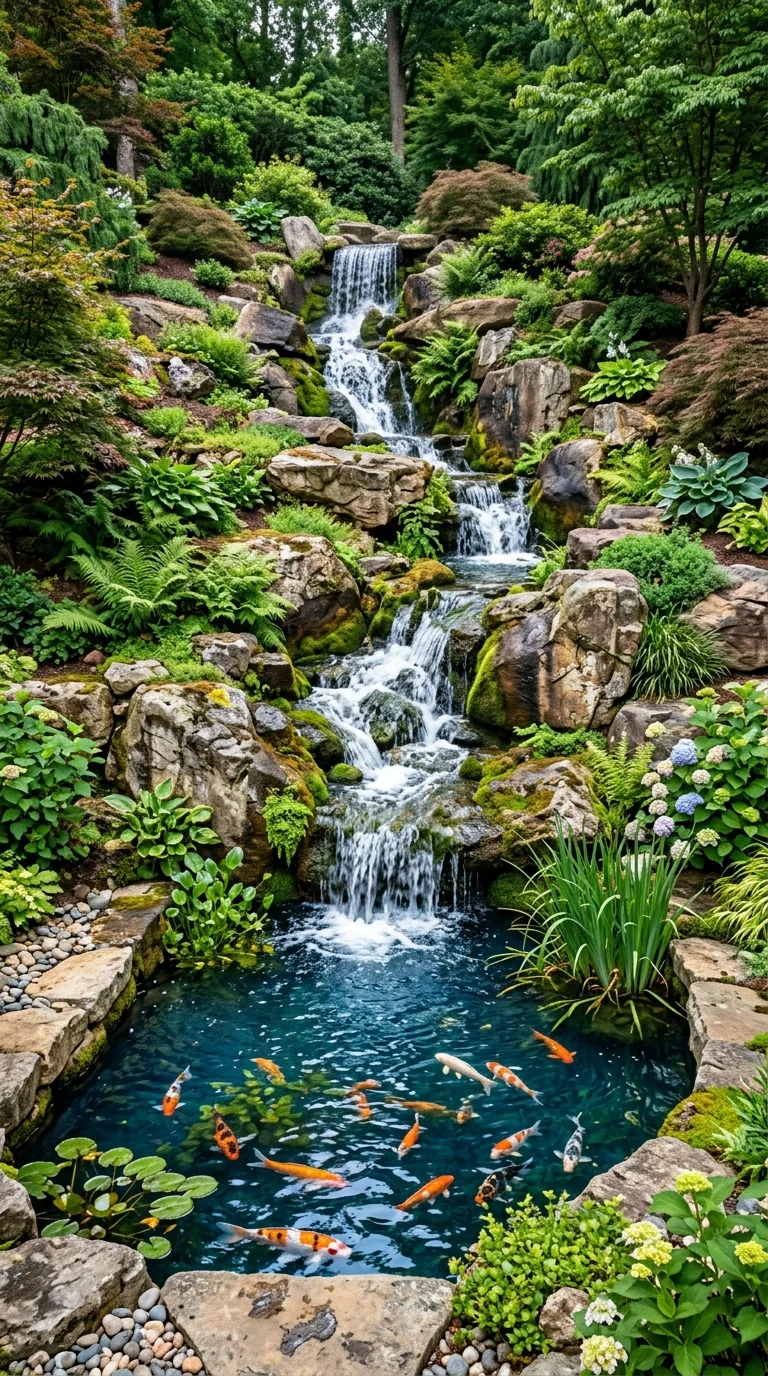
Gravity is your best friend when it comes to water features. A sloped yard is the perfect setting for a recirculating waterfall or a bubbling brook. The natural incline allows the water to tumble over rocks, creating both visual drama and the soothing white noise of splashing water. Because the feature is built into the hill, it looks organic—as if a natural spring has emerged from the earth. Incorporating LED pond lights can make the water shimmer and glow long after the sun goes down.
4. Ground Covers
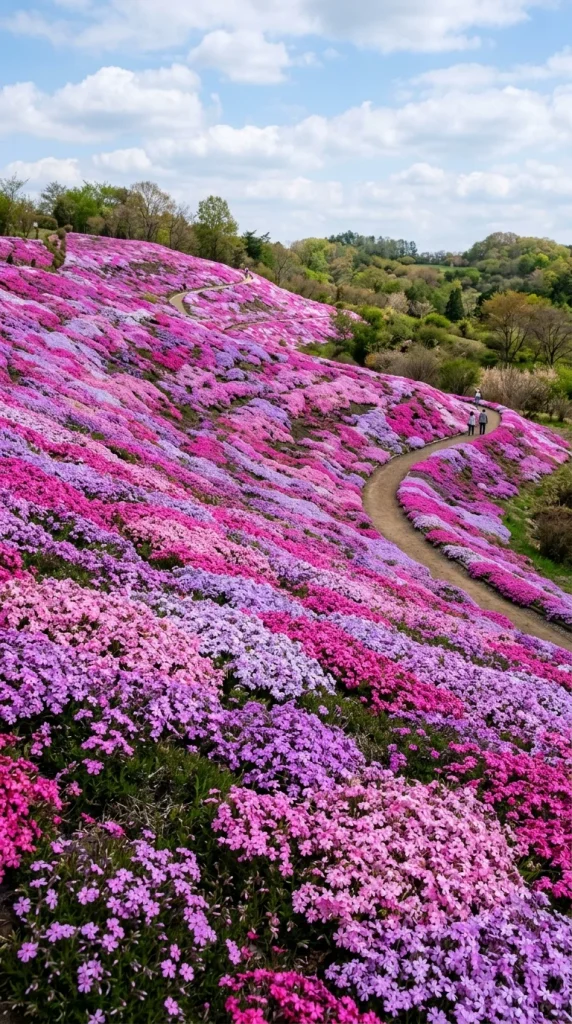
Mowing a steep hill is not only difficult; it can be dangerous. Replacing turf grass with dense ground covers is a low-maintenance way to manage a slope. Plants like pachysandra, vinca minor, or creeping juniper have extensive root systems that “knit” the soil together, significantly reducing erosion. During the spring and summer, these plants can provide a carpet of color, and because they rarely require pruning or mowing, they are a “set it and forget it” solution for difficult-to-reach areas.
5. Sunken Fire Pit
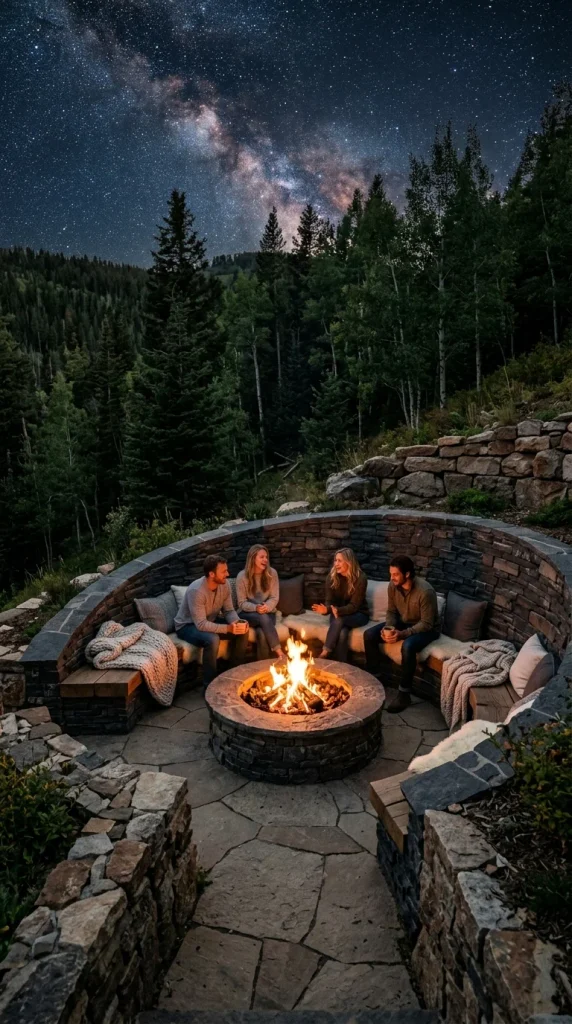
Carving a flat “niche” into a hillside creates an intimate, protected feel for a fire pit. By excavating into the slope and using the uphill side as a natural backrest (often reinforced with a stone wall), you create a cozy amphitheater effect. This design naturally shields the fire from the wind and provides built-in seating. It transforms a previously unusable portion of the slope into the primary social hub of the home, offering a unique perspective of the rest of the landscape.
6. Wildflower Meadow
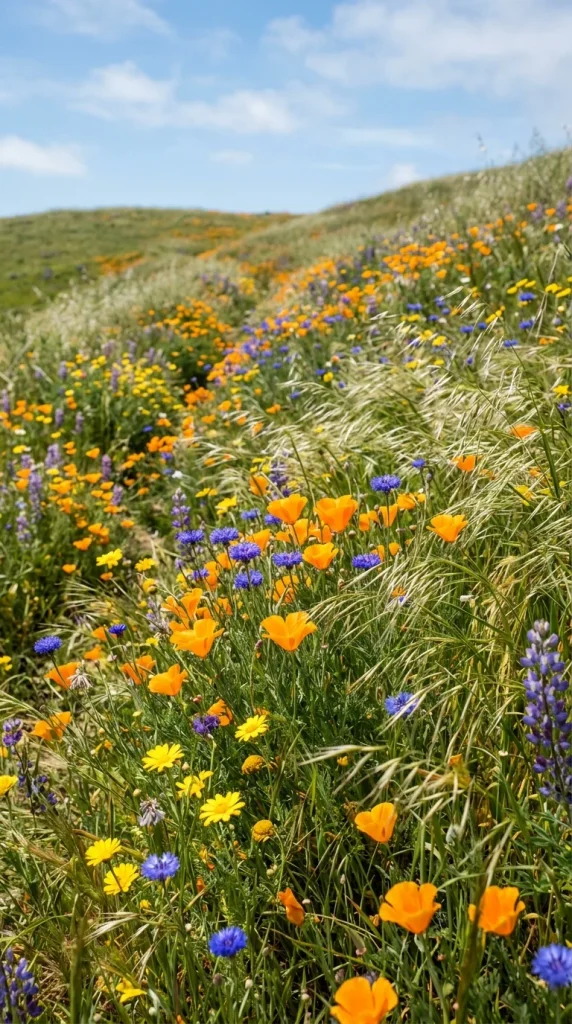
For a more “rewilding” approach, consider turning your slope into a native wildflower meadow. This is particularly effective for very large or very steep hills where formal landscaping is impractical. Native wildflowers are hardy, drought-tolerant, and provide a vital habitat for pollinators like bees and butterflies. The deep roots of native grasses help stabilize the hill, and the ever-changing colors throughout the seasons provide a dynamic, naturalistic beauty that requires very little intervention.
7. Terraced Gardens
Slopes often get excellent sun exposure, making them ideal for growing vegetables and herbs. By terracing the hill with wooden or stone frames, you create level beds that prevent water and nutrients from washing away. These “stair-step” gardens are easier on the back, as the elevation brings the plants closer to waist height. A terraced edible garden turns a logistical challenge into a productive and organized farm-to-table feature.
8. Multi-Level Decks
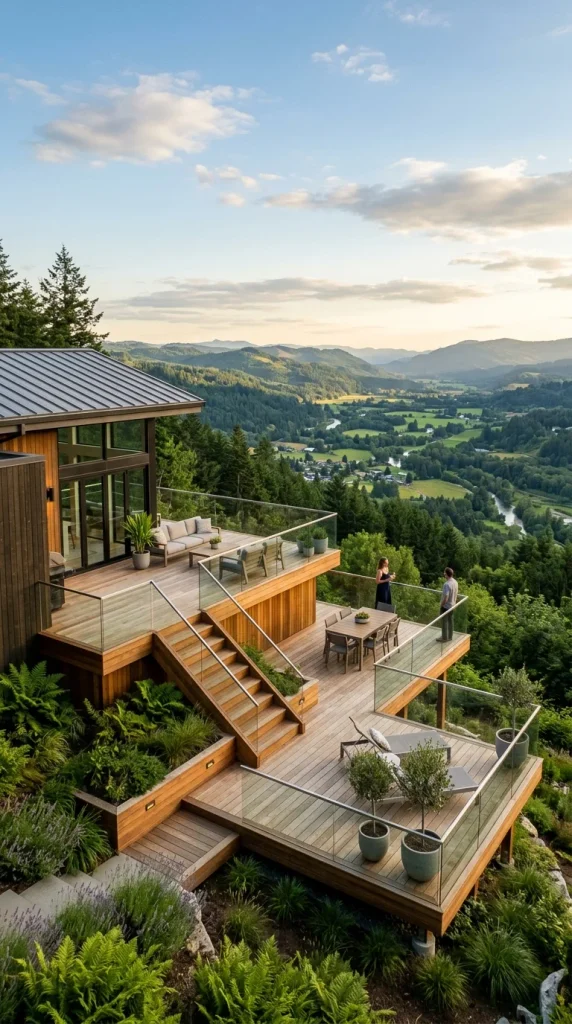
If the slope is too steep for traditional earthmoving, a multi-level deck is the answer. Instead of trying to level the ground, you “float” the living space above it. This architectural approach minimizes the impact on the land and provides stunning “treehouse” views. You can designate different levels for different activities—one for outdoor dining, another for lounging, and perhaps a lower level for a hot tub. The space beneath the deck can also be used for discreet storage.
9. Rock Garden
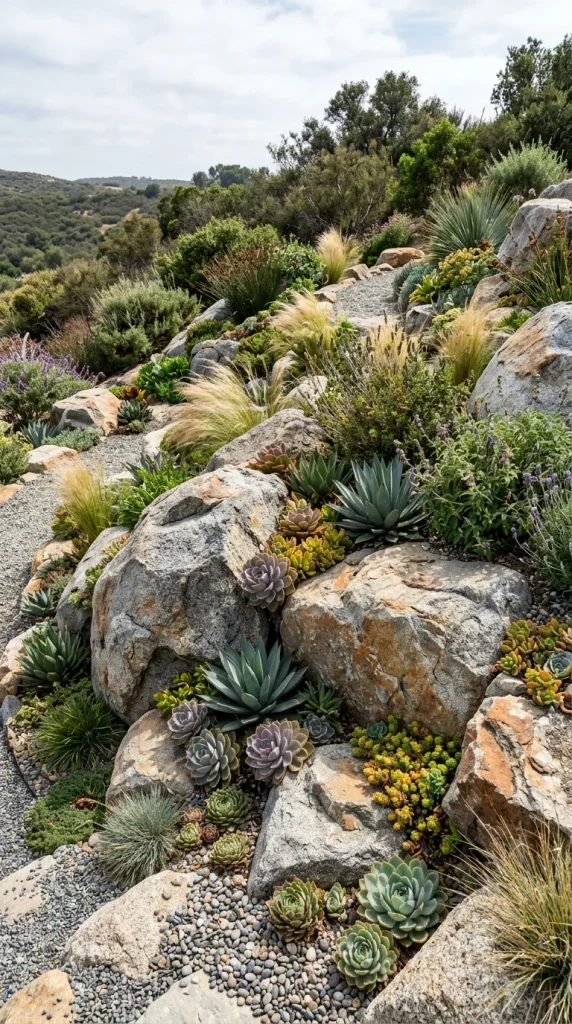
A rock garden celebrates the ruggedness of a hillside. By strategically placing large boulders and smaller river rocks, you create a sense of permanence and weight. This is an excellent choice for arid climates or areas where water conservation is a priority. Intersperse the rocks with alpine plants or succulents that thrive in well-drained soil. The contrast between the hard, static stones and the soft, organic plants creates a balanced and zen-like atmosphere.
10. Curving Pathways
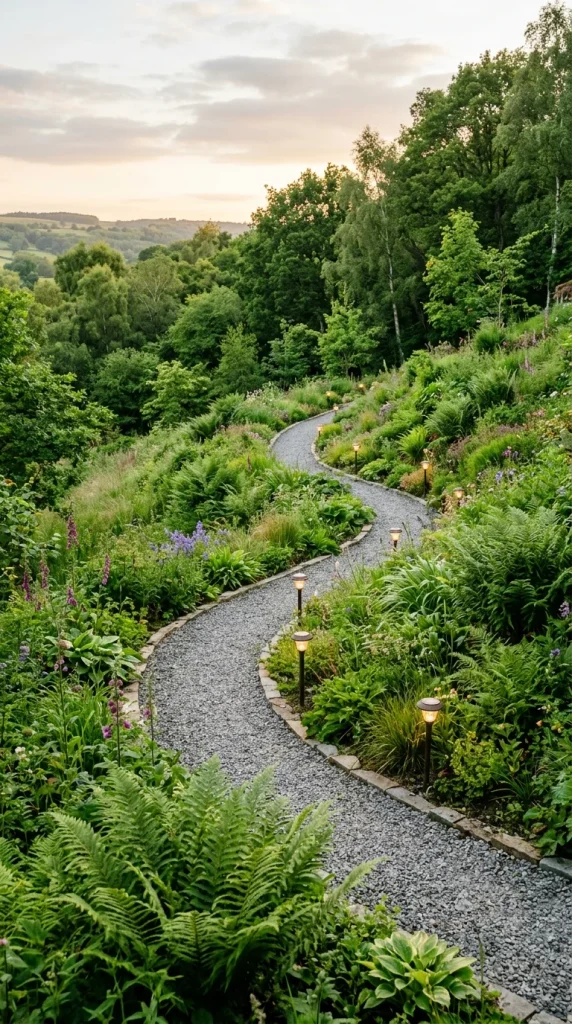
A straight path up a steep hill is exhausting and contributes to runoff. A “switchback” or curving path is much more functional and visually intriguing. By meandering across the face of the slope, the path reduces the perceived steepness and encourages a slower, more contemplative pace. This allows visitors to enjoy the various plantings and views along the way. Using materials like decomposed granite, mulch, or pea gravel helps the path feel grounded and natural.
11. Dry Creek Bed
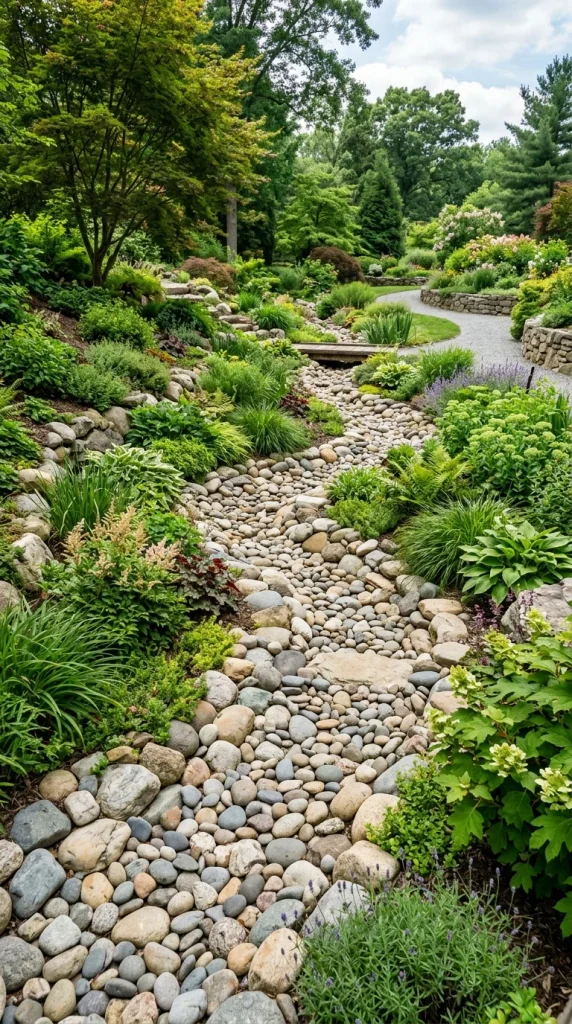
One of the biggest issues with hills is managing rainwater. A dry creek bed is a functional drainage solution disguised as a landscape feature. During heavy rains, the stones channel water away from the house and prevent it from carving gullies into the soil. When it’s dry, the variegated colors and textures of the stones add a beautiful “riverine” aesthetic to the yard. Bordering the creek with moisture-loving plants like iris or sedges completes the look.
12. Strategic Lighting
Hillside landscapes take on a whole new dimension at night with the right lighting. Up-lighting trees on the slope creates dramatic shadows and emphasizes the height of the yard. Path lights along steps ensure safety, while “moonlighting”—placing lights high in the trees to shine downward—mimics the soft glow of a full moon. Lighting the different tiers of a slope adds depth and prevents the yard from looking like a dark, looming wall of shadows after sunset.
13. Hillside Slide

Why walk down a hill when you can slide? For families with children, a slope is a built-in playground. By installing a custom slide directly onto the grade, you turn a difficult terrain feature into a source of endless fun. This “built-in” look is much more aesthetically pleasing than a freestanding plastic playset and utilizes the natural elevation for speed. Surround the slide with soft turf or rubber mulch to ensure a safe landing at the bottom.
14. Viewing Platform
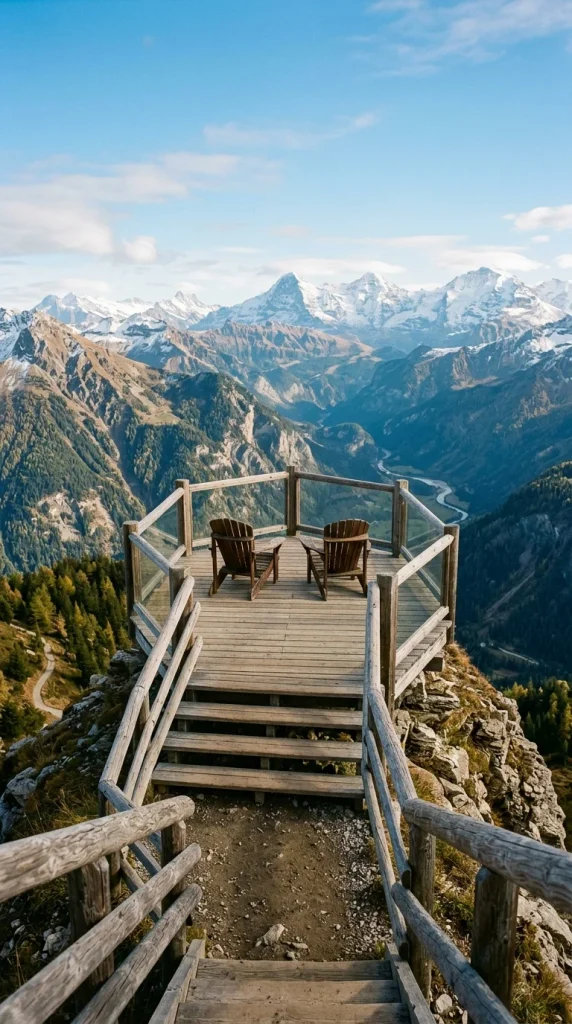
The greatest advantage of a sloped yard is almost always the view. Capitalize on this by creating a dedicated viewing platform or “lookout” at the highest point of the property. This doesn’t need to be a large space; a simple small deck or a flat area with a pair of comfortable chairs and a small table is enough. It provides a destination within the yard—a place to retreat, have a morning coffee, and appreciate the perspective that only a hillside home can offer.